

Benefits of Non-Toxic Decor for Allergies: 2026 Guide
Yuatinia LeakTable of Contents
- Why Non-Toxic Decor Matters for Allergy Sufferers
- Understanding VOCs and Indoor Air Quality
- Hypoallergenic Home Decor Materials That Perform
- How to Identify VOC-Free Home Goods Before You Buy
- Certifications and Labels That Verify Non-Toxic Claims
- Best Sustainable Luxury Home Decor 2026: What to Look For
- Budget-Friendly Non-Toxic Swaps for Every Room
- The Psychological Impact of Non-Toxic Living
- Frequently Asked Questions
Last Updated: September 22, 2026
Why Non-Toxic Decor Matters for Allergy Sufferers
Indoor air can carry more respiratory irritants than outdoor air, and furnishings are often the hidden source. The benefits of non-toxic decor for allergies begin with what you cannot see: the finishes, adhesives, and synthetic fibers releasing fumes into your home. This guide from Fluent Trends explains how to choose pieces that support cleaner air and calmer breathing.
Allergy sufferers react to more than pollen. Dust mites, mold spores, and chemical vapors all accumulate in upholstery, bedding, and wall finishes. When you swap synthetic materials for natural fibers and non-toxic finishes, you reduce the load on your immune system. That shift is the quiet foundation of health-conscious design.
Most guides treat this as an aesthetic choice. It is not.
Understanding VOCs and Indoor Air Quality
Volatile organic compounds (VOCs) are carbon-based chemicals that evaporate into the air at room temperature, and they are among the most common respiratory irritants found indoors. New furniture, paint, and pressed-wood products release these compounds through a process called off-gassing. That smell of a freshly unwrapped sofa is off-gassing at work.
The EPA's indoor air quality research identifies furnishings, finishes, and cleaning products as major sources of indoor VOC exposure. Ventilation helps, but it does not eliminate the source. Some materials keep releasing vapors for weeks or months after delivery.
Formaldehyde-free and low-VOC options exist across nearly every category. The challenge is knowing which claims are verified and which are marketing. Chemical sensitivity makes that distinction urgent, not optional.
Hypoallergenic Home Decor Materials That Perform
The best hypoallergenic home decor materials share three traits. They have tight weaves, low chemical treatment, and surfaces that resist dust mite colonization. Organic cotton, linen, wool, and milk casein fiber all meet that bar. Each one works through a different physical mechanism.

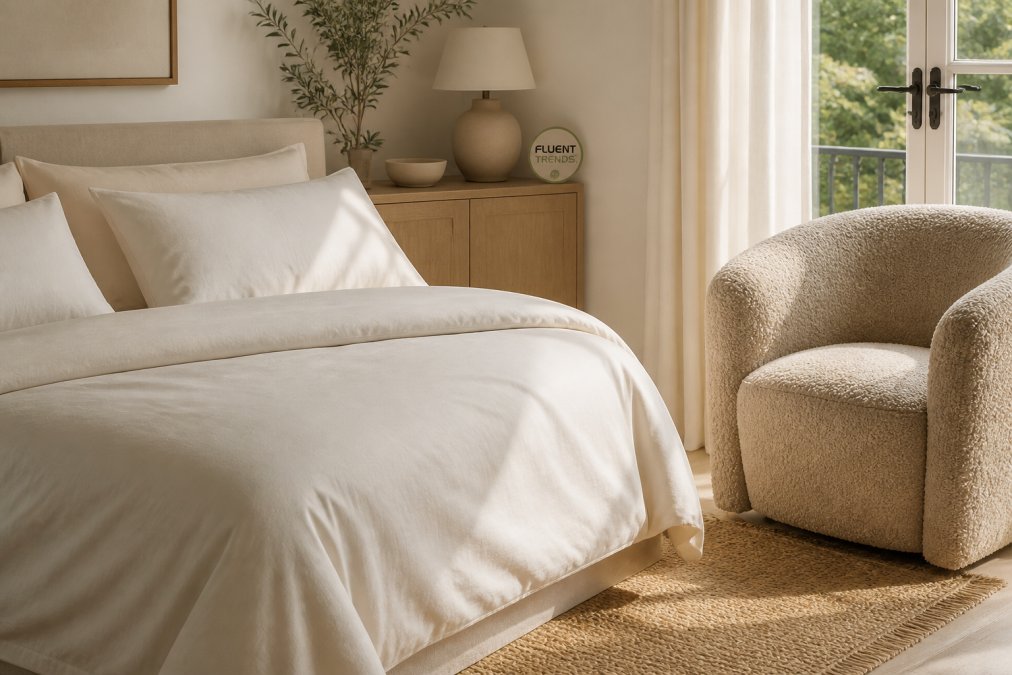
Selecting these breathable, low-emission textiles ensures that your living space remains a sanctuary for sensitive respiratory systems while integrating seamlessly into the broader aesthetic of modern home decor.
Natural Fibers: Organic Cotton, Linen, and Wool
Natural fibers breathe and regulate humidity. That moisture management is the real allergy benefit. Dust mites need relative humidity above 50 percent to thrive, and breathable fibers keep surface moisture lower than synthetic alternatives.
Organic cotton skips the pesticide residue and harsh finishing agents found in conventional cotton. Linen wicks moisture away from the body, which denies mold spores a foothold. Wool naturally repels dust mites because its fibers are too coarse for them to burrow into. Milk casein fiber, a regenerated protein textile, mirrors skin pH and resists bacterial buildup without chemical antimicrobials.
The OEKO-TEX certification standards test textiles for harmful substances at every stage of production. A certified organic cotton or wool piece carries verified assurance, not a vague promise.
One trade-off worth knowing: natural fibers can cost more upfront and may require gentler washing. That care cost buys lower chemical exposure and better humidity control over years of use.
Boucle and Bone Inlay: Durable, Low-Emission Choices
Boucle furniture has earned its place in health-conscious interiors. The nubby wool or cotton loops resist dust accumulation better than tight synthetic velvet. Natural boucle also releases minimal VOCs because it skips the solvent-based backing and synthetic foam common in mass-market upholstery.
Bone inlay furniture, when made with sustainably sourced materials and non-toxic sealants, offers the same low-emission profile with far greater durability. The inlay sits under a water-based or plant-based finish rather than a solvent lacquer. That distinction matters more than the material itself.
Commercial-grade furniture built to these standards lasts decades. That longevity is itself a sustainability argument. Fewer replacements mean fewer manufacturing cycles and less toxic exposure over time. A well-built boucle or bone inlay piece can outlast three or four fast-furniture equivalents, which compounds the air quality benefit year after year.
Matching Material to Room
Not every room needs the same material strategy. Bedrooms benefit most from milk casein fiber and organic cotton because you breathe those surfaces for eight hours. Living rooms benefit from wool boucle and linen because those fibers handle traffic and resist particulate buildup. Kitchens and bathrooms benefit from hard, non-porous surfaces that do not harbor mold.
How to Identify VOC-Free Home Goods Before You Buy
A VOC-free claim means little without third-party verification. Ask three questions before any purchase: What is it made of, how was it finished, and who tested it?
Look for these signals on the label or listing:
- CertiPUR-US certified foam in mattresses and cushions
- OEKO-TEX Standard 100 on textiles and bedding
- GREENGUARD Gold for low chemical emissions
- Formaldehyde-free adhesives and pressed-wood cores
- Water-based or plant-based finishes instead of solvent-based sealants
A common mistake is trusting the word "natural" on packaging. Natural does not mean tested. It means the material started as a plant or mineral, which says nothing about the finish applied later.

Certifications and Labels That Verify Non-Toxic Claims
Third-party labels are the closest thing to a guarantee in this market. They cost manufacturers real money and require independent lab testing. That cost is why greenwashing rarely survives the process. But not all labels test the same thing, and knowing the difference is how you avoid paying a premium for a meaningless seal.
What Each Major Label Actually Tests
The UL GREENGUARD certification program tests finished products for chemical emissions in controlled chambers. GREENGUARD Gold applies stricter limits and is designed for sensitive environments like schools and nurseries. If a sofa carries GREENGUARD Gold, the finished piece was tested, not just the foam inside it.
CertiPUR-US verifies foam content and emission limits for mattresses and upholstery. It covers what goes into the foam and what comes out of it. It does not cover the fabric, the frame, or the adhesive, so a CertiPUR-US mattress can still sit on a formaldehyde-laden pressboard foundation.
OEKO-TEX Standard 100 screens textiles for substances that harm health. It tests at every stage of production, from raw fiber to finished fabric. For bedding and upholstery, this is the label that matters most because it covers the surface you actually touch.
How to Spot Greenwashing
A common pattern is a label that sounds official but has no independent testing behind it. Watch for these signals:
- Self-declared claims with no third-party verifier named
- Vague terms like "eco-friendly" or "green" with no standard cited
- Certifications that cover only one component while the marketing implies the whole product
- Missing certificate numbers that you cannot look up in a public database
The FTC Green Guides set the legal standard for environmental marketing claims. A company that cannot point to a specific certification or test result is making a marketing statement, not a factual one.
A Simple Verification Routine
Before any purchase, run three checks. First, find the certification name and the certificate number. Second, look up that number in the certifying body's public database. Third, confirm the certification covers the finished product, not just a raw material.
That routine takes about five minutes. It separates verified non-toxic decor from premium pricing theater.
Verification matters most for the pieces you touch every night. Mattresses, bedding, and upholstered seating sit closest to your skin and lungs for the longest hours. Spend your verification effort there first.
Best Sustainable Luxury Home Decor 2026: What to Look For
The best sustainable luxury home decor in 2026 pairs verified materials with genuine craftsmanship. Three criteria separate real quality from premium pricing theater.
First, traceable sourcing. You should be able to name where the fiber, wood, or clay originated. Second, non-toxic finishing throughout, not just on visible surfaces. Third, construction built for decades, since commercial-grade durability is the most honest form of sustainability.
Fluent Trends curates its Artisan Collection around exactly these standards. Every piece is ethically made, sustainably sourced, and crafted by women-owned businesses and global makers. The FTC Green Guides set the legal standard for environmental marketing claims, which is why verified labels matter more than adjectives.
Budget-Friendly Non-Toxic Swaps for Every Room
You do not need to refurnish everything at once. Start with the pieces closest to your body and your breath.
Room |
Swap This |
For This |
Why It Matters |
|---|---|---|---|
Bedroom |
Synthetic bedding |
Organic cotton or casein fiber |
Reduces dust mites and off-gassing |
Living room |
Polyester throw pillows |
Cuts particulate matter and static |
|
Nursery |
Standard crib mattress |
CertiPUR-US certified foam |
Lowers chemical exposure during sleep |
Kitchen |
Plastic storage |
Ceramic or Glass |
Eliminates leaching and fumes |
Walls |
Solvent-based paint |
Low-VOC water-based paint |
Cuts airborne irritants sharply |
The bedroom swap delivers the biggest return because you spend roughly a third of your life there. A hypoallergenic bedding set in casein fiber, like the Portugal-woven options, mirrors your skin's natural pH and resists bacterial buildup without chemical treatments.
The Psychological Impact of Non-Toxic Living
Cleaner materials change how a room feels, not just how it smells. There is a documented calm that comes from knowing your home is not working against your body. People describe sleeping better, waking with less congestion, and feeling less anxious about the air they breathe.
That psychological shift is real and underrated. A home built from sustainably sourced, non-toxic materials becomes a genuine sanctuary rather than a space you tolerate. For allergy sufferers, that relief compounds daily.
Frequently Asked Questions
How do volatile organic compounds in furniture trigger allergy symptoms?
VOCs are chemicals released as gases from synthetic materials, adhesives, and finishes. When inhaled, they irritate airways and can worsen asthma and allergy symptoms. Furniture made with formaldehyde-free glues, natural latex, and organic cotton reduces off-gassing. Look for CertiPUR-US certified foam and OEKO-Tex textiles to limit toxic exposure in your home environment.
What are the best hypoallergenic materials for luxury home textiles?
Organic cotton, linen, wool, and casein-based milk fibre are strong choices. These natural fibers resist dust mites and mold spores better than synthetics. Portugal-woven bedding made from milk fibre offers a smooth, breathable surface for sensitive skin. Check for OEKO-Tex certification to confirm the fabric is free from harmful substances and safe for allergy-sensitive households.
How does OEKO-Tex certification ensure safer home environments?
OEKO-Tex tests textiles for harmful substances like formaldehyde, heavy metals, and pesticides. Products carrying this label meet strict limits for chemical residue. For allergy sufferers, this means less exposure to respiratory irritants and airborne allergens. When shopping for hypoallergenic home decor materials, prioritize OEKO-Tex certified items to verify safety claims and reduce indoor air quality risks.
Can non-toxic decor reduce indoor air pollution in modern homes?
Yes. Non-toxic decor limits the release of VOCs and particulate matter into your indoor air. Choosing formaldehyde-free furniture, low-VOC paints, and natural fiber textiles lowers chemical sensitivity triggers. Pair these choices with proper ventilation and HEPA filtration for cleaner air. Sustainably sourced pieces from artisan makers often use traditional, low-waste techniques that further reduce environmental toxins.
Breathing easily at home should not require constant vigilance. Fluent Trends makes that easier by curating hypoallergenic, ethically made pieces you can trust. Our Portugal-woven milk and casein fiber bedding supports sensitive skin, while our organic cotton and wool selections meet OEKO-Tex standards. Explore the Artisan Collection and build a home that supports your health as beautifully as it reflects your values.