

The Best Materials for Outdoor Furniture Revealed
Donna MaloneIf you’re looking for the best all-around materials for outdoor furniture, the conversation almost always starts with teak, powder-coated aluminum, and HDPE plastic. These three are the heavy hitters for a reason. They nail the sweet spot of durability and weather resistance, which means they deliver serious long-term value for just about any patio or deck.
But the "best" choice is ultimately your choice—it’s all about finding the perfect match for your home and lifestyle.
Finding the Perfect Material for Your Outdoor Space

Picking out outdoor furniture is so much more than a style decision. It’s a genuine investment in how you enjoy your home. The material you choose is hands-down the most critical factor, dictating how long your furniture will last and how much weekend time you’ll spend keeping it up. Think of it like buying a coat: a light windbreaker is great for a breezy day, but it won’t do you much good in a blizzard.
What works beautifully in a dry, sunny climate like Arizona might completely fall apart in the humidity of the Florida coast. There really is no single "best" material for everyone. It's a trade-off—a balance between your local weather, the look you want, and how much maintenance you’re willing to put in.
A material’s performance is completely tied to its environment. For instance, teak is legendary in damp, rainy climates because its natural oils act as a built-in water repellent. On the other hand, powder-coated aluminum is the undisputed champion in salty, coastal air where rust is the primary enemy.
Key Factors to Consider
Before we get into the nitty-gritty of specific materials, let's break down the four key things you’ll be weighing. Every material offers a different mix of these qualities, and knowing your priorities will make the final decision a whole lot easier.
- Durability: How tough is it? You need to know if it can handle daily life—kids, pets, dropped glasses, and general wear and tear—without cracking or breaking.
- Weather Resistance: This is the big one. Can it stand up to relentless sun, pouring rain, snow, and humidity without warping, rotting, or rusting into oblivion?
- Maintenance: How much work are you signing up for? Some materials just need a quick wipe-down, while others require annual sealing or special treatments to stay in good shape.
- Cost: What's the initial price tag? More importantly, how does that upfront cost stack up against the furniture’s expected lifespan? Sometimes, paying more now saves you money down the road.
As you map out your perfect backyard retreat, checking out local outdoor living solutions can give you some great ideas on how different materials look in a fully designed space.
And for many of us, sustainability is a huge part of the decision. If you're looking to make an eco-conscious choice, our guide to sustainable furniture brands is a great place to start. Now, let’s clear up the confusion and find the perfect foundation for your outdoor oasis.
The Enduring Appeal of Natural Wood Furniture
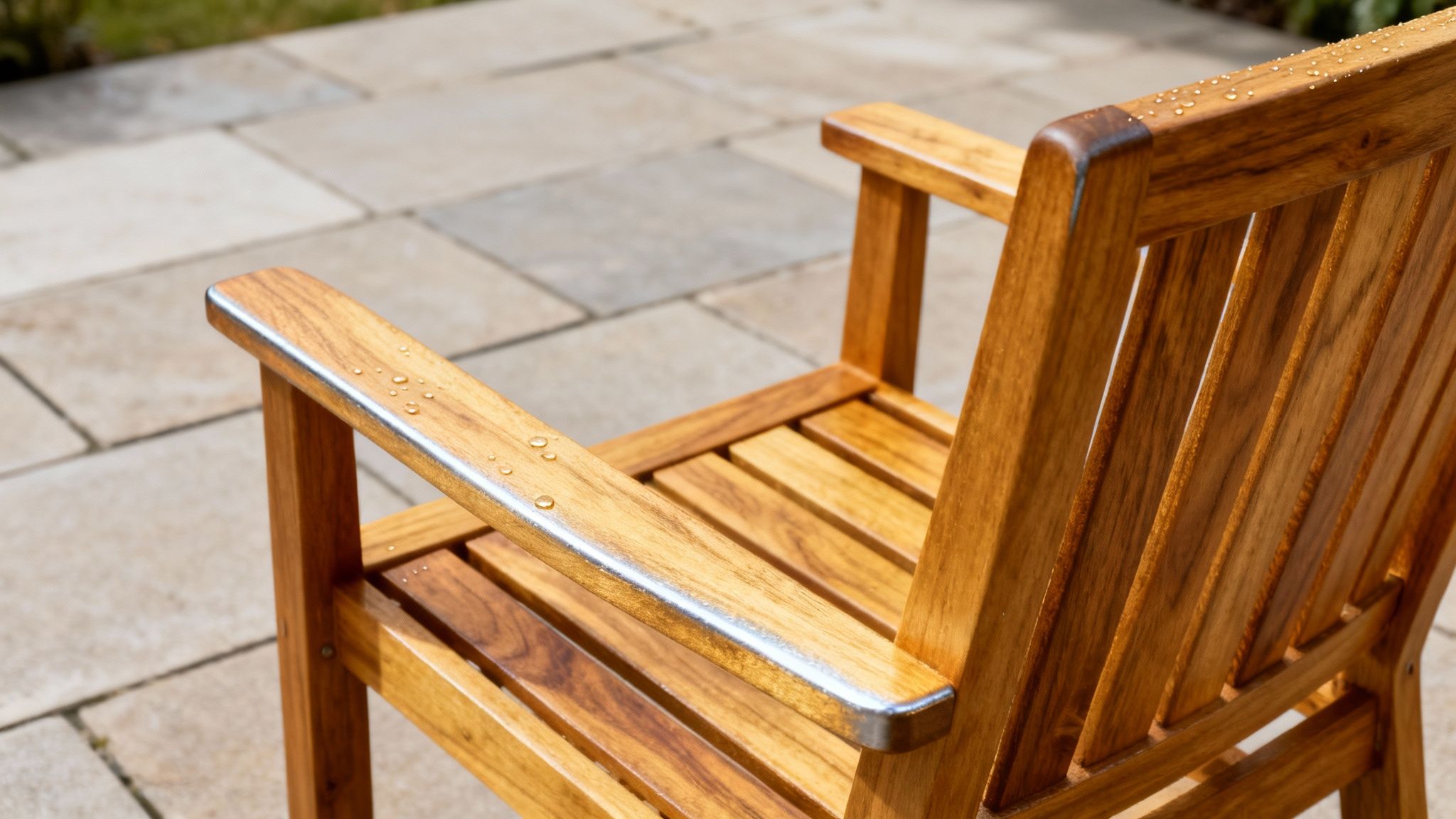
There’s just something about natural wood. It has a classic, undeniable warmth that brings an organic beauty to any outdoor space. While synthetic materials often try to mimic its look, they can never quite replicate the authentic charm of real wood blending into a garden landscape.
It's no surprise, then, that wood has long been the cornerstone of the industry. Historically, it has commanded a huge slice of the market, accounting for roughly 46% of the U.S. outdoor furniture market revenue. Hardwoods like teak, acacia, and eucalyptus are the real drivers here, prized for their natural good looks and built-in toughness. You can dig deeper into these trends in the full outdoor furniture market analysis from Mordor Intelligence.
Of course, not all wood can handle a life outdoors. When it comes to braving the elements, you need to be selective. The best materials for outdoor furniture are dense hardwoods, celebrated for their natural resistance to whatever nature throws their way. Let’s look at the top players.
Teak: The Gold Standard of Outdoor Woods
When people talk about the best outdoor wood, they’re usually talking about teak—and for good reason. Harvested from tropical hardwoods, teak is incredibly dense and packed with natural oils and silica. Think of these oils as a built-in, all-weather defense system that makes the wood inherently resistant to water, rot, and pests like termites.
There’s a reason it’s been the material of choice for shipbuilding for centuries. If it can handle constant exposure to saltwater on the high seas, it can certainly handle the rain on your patio.
Key Takeaway: Teak's high oil content acts like a natural waterproofing agent, preventing the wood from warping, cracking, or turning brittle. This makes it an exceptional, though premium, choice for any climate, especially rainy or humid ones.
If you leave it to its own devices, teak will gracefully age from its initial honey-gold color to a beautiful, silvery-gray patina. This elegant, weathered look is highly sought-after and doesn’t compromise the wood’s strength one bit. Prefer the original golden hue? A light sanding and a coat of teak sealer once a year is all it takes.
Acacia: A Strong and Stylish Contender
If you love the aesthetic of teak but not the price tag, acacia is a fantastic alternative. This dense hardwood brings its own impressive durability to the table, with natural oils that provide great resistance to water and insects.
Acacia is also known for its stunning and often dramatic grain patterns. Its color can vary from a light brown to a deep, rich reddish-brown, adding a lot of visual character to your outdoor setup. While it doesn't have the legendary, near-invincible reputation of teak, it holds up exceptionally well with a little bit of care.
To keep acacia furniture looking its best, a yearly treatment with an outdoor sealant or oil is a good idea. This simple step helps it hold onto its vibrant color and protects it from UV rays and moisture, ensuring it remains a beautiful centerpiece for years to come.
Eucalyptus: An Eco-Friendly and Affordable Choice
Eucalyptus is another great hardwood that strikes a perfect balance between durability, style, and value. It shares many of the same winning traits as teak, including a high oil content that gives it a natural defense against moisture and decay. It typically has a lovely reddish-brown hue and a straight, consistent grain.
One of the biggest draws for eucalyptus is its sustainability. As a fast-growing tree, it’s a much more renewable resource than slow-growing hardwoods like teak, making it a smart, eco-conscious choice.
Much like acacia, eucalyptus benefits from an annual coat of protective sealant to maintain its rich color. If you skip this step, it will also weather to a soft, silvery-gray over time. For anyone looking for one of the best materials for outdoor furniture that is both earth-friendly and budget-friendly, eucalyptus is tough to beat.
How Metal Furniture Blends Modern Style and Strength

While wood brings an undeniable organic warmth, metal introduces a sleek, modern edge to outdoor living. For anyone drawn to clean lines, architectural forms, and serious, long-lasting performance, metal furniture is a fantastic choice. It’s incredibly strong, often surprisingly light, and can be shaped into the kind of intricate, sculptural designs that other materials just can't pull off.
The appeal of metal isn't just aesthetic; it’s a dominant force in the market, currently capturing 39.3% of the global outdoor furniture share. And it's not slowing down. Projections show the U.S. market growing at a compound annual rate of around 5.6% through 2030. You can dig into more of the numbers in this outdoor furniture market report from Market Data Forecast.
But let's be clear: "metal" isn't one-size-fits-all. The three main players you'll encounter—aluminum, powder-coated steel, and wrought iron—each have their own distinct personality. Getting to know their individual quirks is the key to choosing the right one for your space.
Aluminum: The Lightweight Champion
Think of aluminum as the agile, rust-proof hero of the patio. Its natural resistance to corrosion makes it the undisputed champion for coastal areas where salty, humid air is a constant battle. Here's the magic of aluminum: unlike steel or iron, it simply will not rust, even if the finish gets scratched.
This material is also unbelievably lightweight. That’s a massive practical advantage if you like to rearrange your layout for a party or chase the last rays of sun across the deck. Moving an aluminum dining set is an easy one-person job, not a back-breaking workout.
Key Advantage of Aluminum: Its combination of being completely rust-proof and lightweight makes it one of the lowest-maintenance and most versatile best materials for outdoor furniture, especially in wet or coastal climates.
Most quality aluminum furniture also features a powder-coated finish, which adds another tough layer of durability and opens up a world of color options. It’s a true set-it-and-forget-it material that delivers clean, modern style without demanding much in return.
Powder-Coated Steel: Strength with a Shield
Steel is famous for two things: strength and value. This makes it a go-to choice for sturdy furniture frames. But raw steel has a fatal flaw in the great outdoors—it rusts when it meets moisture. This is where the crucial process of powder-coating comes in.
Don't think of powder-coating as a simple layer of paint. It's more like durable, baked-on armor. During this process, a dry colored powder is electrostatically applied to the steel, then cured under high heat. This melts the powder into a smooth, thick, and incredibly resilient shell that’s far tougher against chipping, scratching, and fading than any conventional paint.
This protective coating is what stands between the steel and the elements, effectively keeping rust at bay. It gives you all the strength and cost-effectiveness of steel without the usual maintenance nightmare. The only catch? You have to be mindful of deep gouges that break through the coating. If that happens, a quick touch-up is needed to prevent rust from getting a foothold.
Wrought Iron: The Timeless Heavyweight
Wrought iron is the classic, old-world artisan of the metal family. It’s incredibly heavy, dense, and strong, which allows craftsmen to create the kind of ornate, hand-forged details you just can't get with other metals. If you're after a sense of permanence and classic European elegance, nothing beats wrought iron.
Its sheer weight is both a blessing and a curse.
- The Pro: Your furniture is not going anywhere, even in a serious storm. This makes it a brilliant choice for windy, exposed patios.
- The Con: It is extremely difficult to move. Once you’ve placed a wrought iron table, it's pretty much staying put for the season.
The main challenge with wrought iron is its vulnerability to rust. It demands more attention than aluminum or a pristine powder-coated steel piece. To keep it looking its best, you’ll need to inspect it for chips or scratches regularly and touch them up immediately to stop rust in its tracks. A full sand-down and repaint might be necessary every few years, but for those who adore its timeless beauty, the effort is a small price to pay.
Understanding Low-Maintenance Synthetic Materials
While natural materials have an undeniable classic charm, the world of engineered synthetics makes a very different, very powerful promise: incredible durability with next to no upkeep. These are modern materials, designed in a lab to shrug off the very elements that break down wood and metal. They're the peak of "set it and forget it" outdoor living.
If you’d rather spend your weekends relaxing on your furniture instead of working on it, synthetics are almost always the answer. Let's take a closer look at two of the most popular and impressive options on the market today: all-weather wicker and solid HDPE lumber.
Don't just think "plastic." These are highly specific polymers engineered for resilience. They’re built to stand up to relentless UV radiation, heavy rain, and wild temperature swings without cracking, fading, or falling apart.
All-Weather Wicker: The Modern Classic, Reimagined
When most people hear "wicker," they picture the delicate, natural rattan furniture you’d find in a sunroom—the kind that would disintegrate after one season outside. But all-weather wicker is a completely different beast. It's not actually a material, but a style of weave.
The magic is what it's made from. We're talking about a high-performance resin, usually High-Density Polyethylene (HDPE). This synthetic material is packed with UV inhibitors that stop the sun from making it brittle and faded. These tough resin strands are then tightly woven over a sturdy, rust-proof aluminum frame.
- UV Resistance: Unlike natural wicker that dries out and cracks, HDPE wicker is made to handle years of direct sunlight without losing its color or strength.
- Moisture Proof: The resin itself is non-porous, which means it simply can't absorb water. This completely shuts down any chance of rot, mold, or mildew.
- Flexible and Strong: You get the beautiful, textured look of traditional wicker, but with the modern resilience to handle daily use without snapping or unraveling.
This combination gives you furniture with timeless style that’s secretly a performance powerhouse. It really is the best of both worlds—classic aesthetics meets minimal maintenance.
HDPE Lumber: The Ultimate Low-Maintenance Material
Do you love the substantial, classic look of painted wood but dread the endless cycle of sanding, staining, and sealing? If so, HDPE lumber is exactly what you're looking for. Often sold under brand names like Polywood, this is a solid, heavy-duty plastic lumber made from recycled materials like milk jugs and detergent bottles.
HDPE is easily one of the best materials for outdoor furniture if your number one goal is to eliminate maintenance from your life. The color isn’t just a coating on the surface; it runs consistently all the way through the board. That means even if it gets scratched, the mark is barely visible because there's no different color underneath to expose.
The HDPE Advantage: Because it is non-porous and contains UV-stabilizing pigments, HDPE furniture is impervious to nearly every common outdoor threat. It will not rot, splinter, crack, or fade, and it cleans up perfectly with just a bit of soap and water.
This material is also exceptionally heavy and dense, giving it a stable, high-quality feel that won't get tossed around by strong winds. It's the ideal choice for anyone who wants to buy a furniture set once and enjoy it for decades with almost zero effort. To pull the space together, consider pairing your rugged HDPE furniture with one of the best indoor-outdoor rugs to soften the look and define your seating area.
Choosing the Right Furniture for Your Climate
You could buy the most gorgeous, well-built patio set in the world, but if it’s not right for your environment, it won’t last. Think of your furniture’s material as its armor—its first line of defense against whatever Mother Nature throws at it. The secret isn't finding one single "best" material, but rather matching a material's inherent strengths to the challenges of your specific backyard.
Getting this right saves you from costly mistakes and ensures your investment brings you joy for years, not just a single season. The wrong material in a harsh climate is a recipe for disappointment, leading to premature rust, rot, or fading.
Hot and Dry Desert Climates
In places with that intense, dry heat and relentless sun, your furniture is fighting two battles: UV radiation and extreme dryness. That constant sun exposure will bleach fabrics in a hurry and can make lower-quality plastics brittle enough to crack. Meanwhile, the arid air is literally pulling moisture out of natural wood, causing it to warp and split.
For these desert environments, you need materials that can take the heat and ideally reflect, rather than absorb, all that solar energy.
- Top Performers: Powder-coated aluminum is a fantastic choice. It holds its strength in high heat and stays cooler to the touch than darker metals. HDPE lumber and all-weather wicker are also champions here, as they're specifically engineered with UV inhibitors that fight off fading and cracking.
- Use with Caution: Natural woods like teak can certainly survive, but they’ll demand more frequent oiling or sealing to keep them from drying out and looking thirsty.
Humid and Rainy Regions
In regions with sticky humidity and frequent downpours, the main enemy is moisture. Constant dampness is the perfect breeding ground for mold, mildew, and rot, especially in porous materials. For metals, that same moisture is jet fuel for corrosion and rust, particularly if a protective coating gets scratched or chipped.
Your best defense here is a material that's either naturally waterproof or completely non-porous.
- Top Performers: This is where teak truly shines. Its naturally high oil content acts as a built-in water repellent, preventing rot from ever taking hold. In the same vein, HDPE and powder-coated aluminum are totally impervious to moisture, making them zero-maintenance heroes in wet weather.
- Use with Caution: Untreated steel and wrought iron are incredibly vulnerable to rust in these conditions. They’ll need vigilant upkeep to stop corrosion in its tracks.
If you’re leaning toward a low-maintenance lifestyle, this decision guide can help cut through the noise.
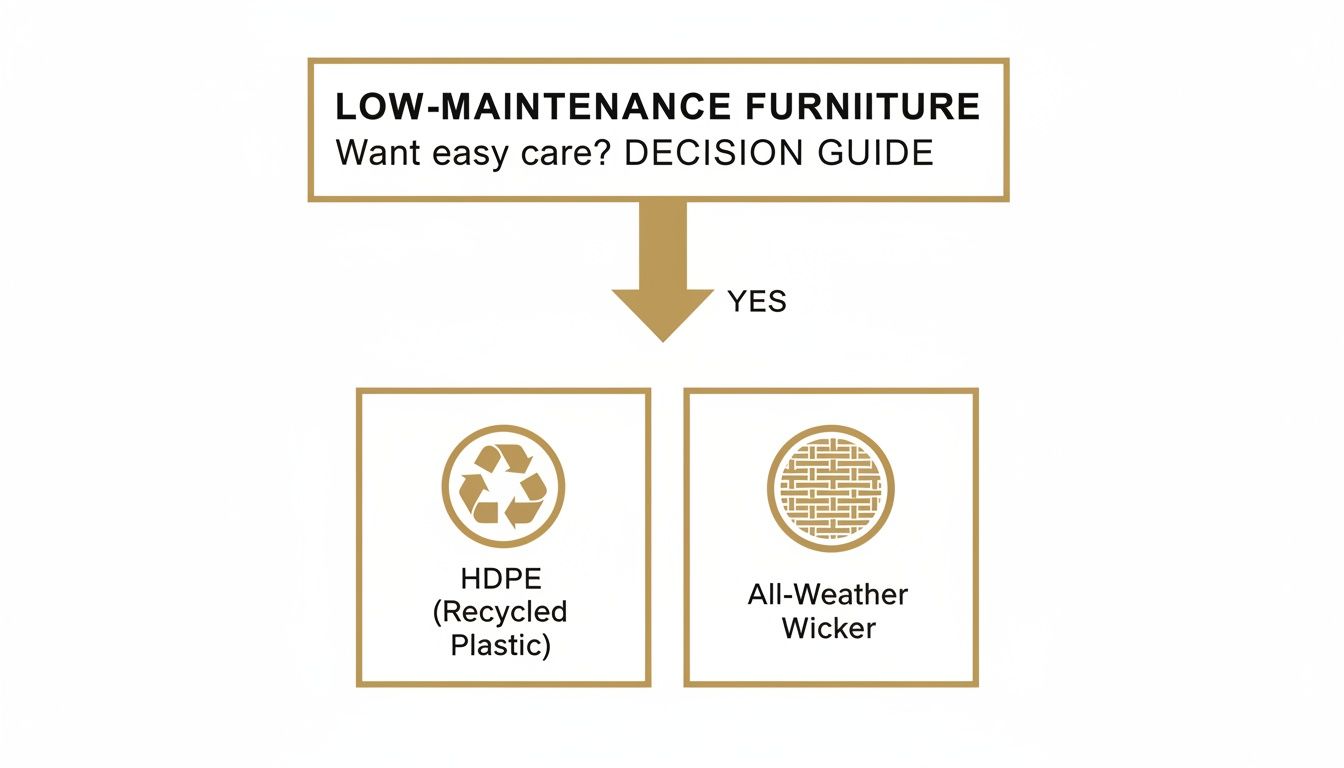
As you can see, if a hassle-free experience is your top priority, synthetic materials like HDPE and all-weather wicker are often the most direct path to get there.
Coastal and Salty Air Environments
Living near the coast presents a unique and surprisingly potent challenge: salt. The salt carried in the sea breeze is highly corrosive and will aggressively attack most metals. It also has a knack for drying out wood and settling on every surface, creating a gritty film that you'll be wiping away constantly.
Expert Insight: In a coastal setting, rust resistance isn't just a feature—it's a non-negotiable requirement. Any material that corrodes will fail, and it almost always starts at the joints and welds where moisture and salt can collect.
- Top Performers: Marine-grade polymers and powder-coated aluminum are the undisputed kings of the coast. Aluminum naturally forms an invisible oxide layer that protects it from the elements, essentially making it rust-proof from the start.
- Materials to Avoid: You should avoid unprotected steel and wrought iron entirely. The salty air will overwhelm their defenses in no time, leading to rapid and irreversible rusting.
Snowy and Freezing Climates
For those of us in regions with cold, snowy winters, the biggest threat is the freeze-thaw cycle. When moisture seeps into a porous material, it freezes and expands, creating microscopic cracks. As this cycle repeats winter after winter, those tiny cracks can grow, eventually splitting wood, breaking down wicker, and compromising the structural integrity of your furniture.
- Top Performers: Solid HDPE lumber is an absolute star performer here. It’s non-porous, so it can’t absorb water, making it completely immune to cracking from ice. High-quality teak and powder-coated aluminum also hold up exceptionally well in the cold.
- Use with Caution: Natural wicker and certain softer woods can be easily damaged by ice and heavy snow. It’s best to store them indoors or in a covered area during the winter months.
To make this even clearer, here’s a quick-reference table summarizing which materials work best for each climate.
Best Outdoor Furniture Materials by Climate Zone
| Climate Type | Best Fit Materials | Materials to Use with Caution or Avoid |
|---|---|---|
| Hot & Dry | Powder-Coated Aluminum, HDPE, All-Weather Wicker | Natural Woods (require frequent sealing) |
| Humid & Rainy | Teak, HDPE, Powder-Coated Aluminum | Untreated Steel, Wrought Iron (prone to rust) |
| Coastal & Salty | HDPE, Powder-Coated Aluminum, Marine-Grade Polymers | Wrought Iron, Most Steels (corrode rapidly) |
| Snow & Freeze | HDPE, Teak, High-Quality Powder-Coated Aluminum | Natural Wicker, Softer Woods (can crack) |
Matching your furniture to your climate is the first and most important step in creating an outdoor space that not only looks great but is built to last.
Protecting Your Investment with Proper Care
Picking the right material is a huge first step, but making your outdoor furniture last comes down to proper care. Think of it like a new car—even the best-built models need a wash and an oil change to keep running smoothly. A little bit of upkeep goes a very long way, guaranteeing your investment stays beautiful and functional for years to come.
Thankfully, caring for modern outdoor furniture is easier than you might think. Most of the top-tier materials we've discussed are designed for minimal fuss. Still, each one has its own quirks and needs to really maximize its lifespan and keep it looking sharp season after season.
Essential Care for Wood Furniture
Wood, with its natural charm, asks for a bit more attention than other materials. The main goal here is to manage its exposure to moisture and harsh sunlight.
-
Teak Care: If you love that warm, honey-gold color, you'll want to clean it with a soft brush and some mild, soapy water, then apply a teak sealer once or twice a year. But if you're a fan of the elegant, silvery-gray patina that teak develops over time, your job is even easier. Just give it a good wash now and then to clear off any dirt. No sealer required.
-
Acacia and Eucalyptus: These hardwoods really thrive with an annual cleaning followed by a fresh coat of outdoor furniture oil. This simple routine replenishes their protective layer, keeping the color rich and preventing the wood from drying out and cracking.
Maintaining Metal Furniture
We choose metal furniture for its incredible strength, but its Achilles' heel is rust—especially around joints and welds. The secret to its longevity is protecting that outer coating.
Maintenance Pro-Tip: The second you notice a chip or a deep scratch on your powder-coated steel or wrought iron, jump on it. Clean the area, give it a light sanding to get rid of any new rust, and dab on some rust-inhibiting touch-up paint. It’s a quick fix that stops corrosion in its tracks.
Aluminum is the exception here, as it's naturally rust-proof. A quick wipe-down with soap and water is pretty much all it ever needs. For steel and iron, however, make it a habit to check for any dings or breaks in the finish, particularly after a big storm or before you put things away for the winter.
Keeping Synthetics Looking New
If you’re looking for the easiest possible upkeep, synthetics like all-weather wicker and HDPE are your champions. They're non-porous and built with UV inhibitors, so you don't have to worry about rot, fading, or brittleness.
Cleaning is a breeze. Most of the time, a soft cloth with a bit of mild dish soap and warm water is all it takes to handle dirt and spills. If you have some stubborn grime on your HDPE furniture, a soft-bristled brush will lift it right off without scratching the surface.
And for any type of furniture, investing in high-quality, durable outdoor furniture covers is one of the smartest things you can do. Using them during the off-season or harsh weather is the ultimate way to protect your investment and extend its life.
Final Questions About Outdoor Furniture Materials
As you get closer to choosing your perfect outdoor set, a few last questions usually pop up. It's smart to get these sorted out now to make sure you’re investing in pieces you'll enjoy for years, not just for a single season. Let’s clear up some of the most common queries so you can make that final call with total confidence.
What's the Toughest, Most Durable Outdoor Furniture Material?
When you’re looking for something that can truly take a beating from Mother Nature and still look great, two materials stand out from the pack: high-quality teak and solid HDPE lumber. Think of them as the heavyweights of the outdoor world.
Teak’s incredible durability isn't magic; it comes from a dense grain and a high concentration of natural oils. This combination acts as a built-in defense system against water, rot, and insects, which is why you see teak pieces lasting for decades with very little fuss. On the other hand, HDPE is a modern marvel. It’s a non-porous, solid plastic that’s practically indestructible—it simply can’t rot, splinter, or absorb moisture, making it the undisputed champion of low-maintenance longevity.
Which Material Is Best for Rainy and Coastal Areas?
If you live somewhere with constant rain, high humidity, or salty sea air, your number one enemy is moisture and rust. For these challenging environments, your best bets are HDPE, powder-coated aluminum, and teak.
The Coastal Rule: In salty air, rust resistance isn't just a nice-to-have feature; it's a necessity. Materials that corrode will fail, and they'll fail fast.
HDPE and aluminum are fantastic because they're non-porous and physically cannot rust or degrade when they’re always damp. While teak is a wood, its natural oils do an amazing job of repelling water, which prevents the kind of decay that would destroy other woods in the same conditions.
Can I Leave My Furniture Outside All Year Long?
Whether you can leave your furniture out 365 days a year really comes down to the material. Pieces made from HDPE, teak, and high-quality powder-coated aluminum are built from the ground up to handle the elements year-round.
Even with these workhorse materials, though, tossing on a waterproof cover during the off-season is always a good idea to protect your investment and keep it looking its best. Materials like wrought iron or lesser-quality steel, however, absolutely need to be covered or stored during wet or snowy months to prevent the inevitable rust and structural damage.
Ready to find the perfect, long-lasting pieces for your outdoor oasis? Explore the curated collections at Fluent Trends, where designer-approved style meets exceptional durability.