

Finding the Best Online Home Decor Stores
Donna MaloneShopping for home decor online has opened up a world of possibilities. Gone are the days of spending weekends trekking to different showrooms. Now, with amazing stores like Wayfair, West Elm, and Fluent Trends, you can find curated collections for any style, right from your couch. The very best online furniture stores are the ones that nail the trifecta: unique style, trustworthy quality, and genuinely helpful customer service.
How To Find Your Perfect Online Home Decor Store
The way we decorate our homes has completely changed. What used to be a local affair is now a global hunt for the perfect piece. With just a few taps, you can explore thousands of items from artisans and designers all over the world, putting a massive catalog of design trends right at your fingertips.
This shift is all about convenience and our growing desire for personalized spaces. The numbers don't lie: the global online home decor market is expected to balloon to around USD 348.1 billion by 2034—a huge leap from USD 120.4 billion in 2024. With over 90% of the industry's growth happening online, it’s safe to say e-commerce is the new frontier for home styling. You can dive deeper into these trends over at market.us.
Your Personal Shopping Strategy
With so many choices, finding the right store can feel like searching for a needle in a haystack. But with a clear strategy, it's more like following a map to a hidden gem. The secret is to evaluate every store against a set of criteria that actually matter to you. This simple trick helps you cut through the marketing noise and focus on what makes a store a great fit.
It's about looking beyond the pretty pictures. You need to dig a little deeper and ask the right questions:
-
Does the style resonate? Does their collection genuinely match your personal taste?
-
What's the real quality? Look for details on materials. Do the customer reviews talk about how well things hold up over time?
-
Is it budget-friendly? Are the prices clear and within your spending plan?
-
What are their policies? How much is shipping, and what happens if you need to make a return?
A great online decor store doesn’t just sell products; it curates an experience that inspires confidence. It provides detailed information, transparent policies, and responsive service that make you feel secure in your purchase, even from hundreds of miles away.
An Evaluation Checklist for Smart Shopping
To make your search even easier, I've put together a quick checklist. Use this simple framework to size up any online store before you commit. It’s a reliable way to spot the best retailers for your project, whether you're decorating a whole house or just hunting for that one perfect accent piece.
Quick Evaluation Checklist for Online Decor Stores
Here’s a breakdown of what to look for and why each point is so critical to making a smart online purchase.
| Evaluation Criteria | What to Look For | Why It Matters |
|---|---|---|
| Style & Curation | A focused aesthetic (e.g., modern, rustic, bohemian) | Ensures you find pieces that fit your home's cohesive look. |
| Quality & Materials | Detailed product descriptions, material specifics, close-up images | Helps you judge durability and value without seeing the item in person. |
| Price & Value | Clear pricing, regular sales, transparent shipping costs | Prevents surprise fees and ensures you get the best deal for your budget. |
| Customer Service | Easy-to-find contact info, responsive support, helpful FAQs | Provides peace of mind that help is available if issues arise. |
| Shipping & Returns | Fair shipping fees, clear return policy, reasonable timeframes | Protects your investment if an item doesn't work out as planned. |
Think of this table as your go-to guide. By keeping these five pillars in mind, you'll be able to shop with confidence and find online stores that you'll return to again and again.
How to Judge Quality and Craftsmanship Online
Let's be honest: buying furniture online can feel like a gamble. You can't run your hand over the wood grain or sink into a sofa to test its comfort. You’re essentially trusting photos and descriptions to guide a decision on something you'll live with for years. The trick is to stop being a hopeful shopper and start thinking like a digital detective. You need to learn how to spot the subtle clues that separate a future heirloom from fast-fashion furniture.
Think of yourself as an art appraiser, but for your home. Instead of looking at brushstrokes, you're examining joinery, fabric weaves, and material specs through your screen. The best online stores know this and give you all the evidence you need. They want you to see the quality.
Decode the Language of Materials
The first place to hunt for clues is the product description. Vague language is a huge red flag. Specificity, on the other hand, is a very good sign. Don’t let a store get away with just "wood table." You need to know what kind of wood and how it's put together.
Here’s a quick rundown of what those terms actually mean in the real world:
-
Solid Wood: This is the gold standard. It's made from whole pieces of wood—think oak, walnut, or acacia. It’s heavy, durable, can be sanded and refinished, and has a natural beauty that just can't be faked. It's an investment.
-
Veneer: This is a hybrid. A thin, high-quality slice of real wood is bonded to a core of a more stable, less expensive material like MDF (medium-density fiberboard) or plywood. You get the look of solid wood for less money, but deep scratches can be a pain to repair.
-
Laminate/Manufactured Wood: This is an image of wood grain printed and fused onto a composite core. It’s usually the most budget-friendly option and is often highly resistant to spills and stains, but it lacks the authentic feel and longevity of the real deal.
A good retailer will be upfront about these details. If that information is buried or missing entirely, they might be hoping you won't look too closely.
Become a Photo Inspector
High-resolution images are your magnifying glass. A store that’s proud of its products will offer tons of crisp, zoomable photos from every conceivable angle. This is your chance to get forensic.
When you can't touch an item yourself, the quality of a store's product photography is a direct reflection of the product's quality. Clear, detailed images signal transparency and confidence.
Look for close-ups of the joints on tables or chairs. Are they tight and seamless, or can you spot sloppy glue and gaps? Zoom in on the finish of a console table. Does it look rich and even, or thin and plasticky? For sofas and armchairs, inspect the seams and welting. They should be perfectly straight and taut, not puckered or wavy.
Analyze Customer Reviews for Durability Insights
Customer reviews are an absolute goldmine, but you need to know how to pan for the gold. Skip past the initial "5 stars, I love it!" comments posted the day it arrived. You're looking for the reviews written six months, or even a year, later. Those are the ones that tell the real story of how a piece holds up.
Filter reviews for keywords that give you the inside scoop on quality:
-
"Sturdy" vs. "wobbly"
-
"Fading" or "colorfast"
-
"Pilling" (a dead giveaway for low-quality upholstery)
-
"Scratches easily"
Pay attention to how the piece handled the chaos of real life—kids, pets, dinner parties. A single bad review could just be a fluke, but a pattern of complaints about the same structural flaw or fabric issue is a warning you shouldn't ignore. This is how you make sure you're buying something that will look good for years, not just for its first Instagram post.
Matching an Online Store to Your Personal Style
Think of finding the right online home decor store like finding the perfect pair of jeans. You’re looking for a fit that just gets you—your personality, your quirks, and your unique point of view. A great home is a reflection of who you are, so connecting with a retailer that understands your personal aesthetic is the first and most important step.
But before you find that perfect match, you have to know what you’re looking for. Your personal style is your design compass; without it, you’re just adrift in a sea of endless digital showrooms. Are you all about clean lines and calm, neutral palettes? Or do rich textures and a jumble of eclectic patterns make your heart beat a little faster?
Pinpointing Your Design DNA
Don't worry, figuring out your style isn't about cramming yourself into a neat little box like "modern farmhouse" or "coastal grandmother." It's more about noticing the common threads in the things you naturally gravitate towards. A great way to start is by creating a mood board on a platform like Pinterest or just saving images of rooms that catch your eye.
After a week or so, take a step back and look for patterns. You'll likely see some themes emerge:
-
Neutral Colors and Natural Materials: If you're pinning lots of light woods, simple shapes, and cozy textiles, you're probably leaning toward Scandinavian, minimalist, or organic modern styles.
-
Bold Patterns and Global Textures: Seeing a lot of vibrant colors, mixed patterns, and pieces from around the world? You might have a bohemian, eclectic, or even maximalist soul.
-
Timeless Silhouettes and Antique Pieces: If your board is full of classic furniture shapes, aged patinas, and a touch of floral, you likely have a soft spot for traditional, rustic, or grandmillennial design.
Once you have a better handle on your core style, you can hunt down stores that speak that language. This focused approach saves you a ton of time and, more importantly, keeps you from buying random pieces that just don't feel right in your space.
How Stores Curate a Vibe
Online retailers are incredibly savvy when it comes to creating a specific atmosphere. Everything—from the font on their website to the way they photograph a simple ceramic vase—is meticulously planned to attract a certain type of customer. For example, a store like Fluent Trends uses clean, airy photography and a minimalist site layout to immediately signal its focus on modern, designer-approved pieces.
On the flip side, a brand that specializes in rustic decor will probably use warm, moody lighting and showcase its products in a cozy cabin setting. Their branding, product descriptions, and social media presence all work in concert to tell a story. When you find a store whose story clicks with yours, you've probably found your match.
Think of an online store's website as its home. The way it’s decorated, organized, and presented tells you everything you need to know about its personality. If a store feels like a place you’d want to hang out, it's probably a store you’ll love shopping with.
This visual guide breaks down how to look past the pretty pictures and evaluate what really matters when you're shopping online.
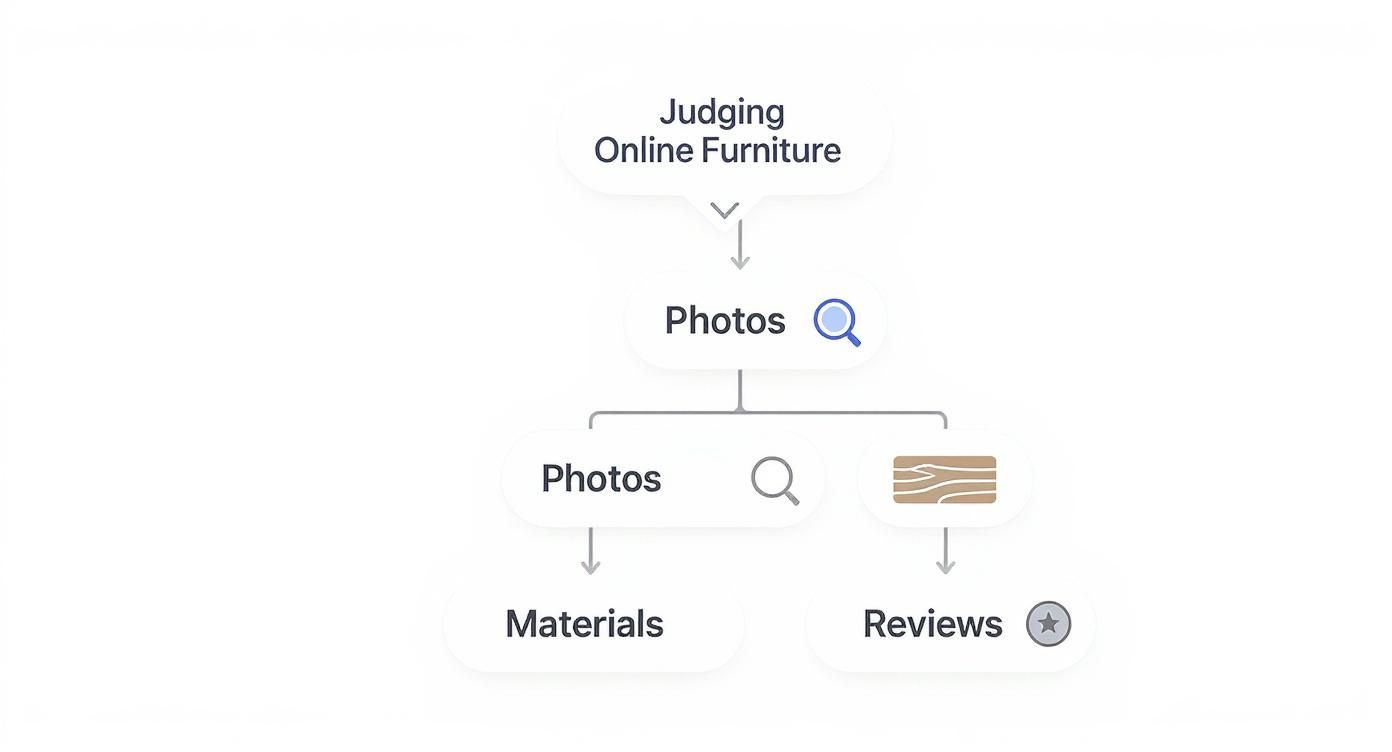
As the infographic shows, a confident purchase really comes down to three things: great photos from every angle, clear details about the materials, and honest reviews from real people.
Finding Your Perfect Retail Match
To make your search even easier, it helps to know which stores excel at which styles and price points. Some retailers are go-to's for high-end investment pieces, while others are absolute goldmines for affordable, trendy accessories. Knowing where to look for what you need is the secret to decorating your home without all the stress.
To get you started, I've put together a quick guide that categorizes some of the most popular online decor stores. Think of it as your cheat sheet for finding the right shop for your style and budget.
Online Decor Store Style and Price Guide
| Store Name | Primary Style | Price Range ($, $$, $$$) | Best For |
|---|---|---|---|
| West Elm | Mid-Century Modern, Contemporary | $$ | Stylish sofas, Fair Trade Certified goods, and modern lighting. |
| CB2 | Modern, Edgy, Minimalist | $$ | Sleek furniture for smaller spaces, unique art, and bold decor. |
| Anthropologie | Bohemian, Eclectic, Whimsical | $$$ | Artistic furniture, unique textiles, and one-of-a-kind hardware. |
| Lulu and Georgia | Chic, Trendy, California Modern | $$$ | High-quality rugs, statement furniture, and designer collaborations. |
| Article | Mid-Century Modern, Scandinavian | $$ | Quality leather sofas, solid wood dining tables, and direct-to-consumer value. |
| Fluent Trends | Modern, Elevated, Curated | $$ | Designer-approved essentials, handcrafted serveware, and timeless decor. |
This table should help you narrow down the options and shop with a clear focus, ensuring you find pieces you'll absolutely love for years to come.
Navigating Shipping Costs and Return Policies
There’s nothing quite like the excitement of finding the perfect armchair online. But that feeling can vanish in an instant when you get to the checkout and see a shipping fee nearly as high as the chair itself.
Let's be real: the sticker price is rarely the final price. To be a smart shopper and truly compare the best online home decor stores, you have to look past the item's cost and figure out what it will actually cost to get it into your home. This means factoring in shipping, taxes, and any sneaky surcharges for big, bulky items. Sometimes, the store with a slightly higher price but free shipping is the real winner.
The True Cost of Getting Decor to Your Door
Shipping fees are a wild card. Some stores keep it simple with a flat rate, while others get complicated, basing the cost on weight, size, and where you live. For big-ticket items like a sofa or dining table, you’ll often run into freight delivery charges that can easily tack on hundreds of dollars. My advice? Always hunt down the shipping calculator or policy page before you fall in love with something.
As more and more of us shop for home goods online, the market is booming. Retailers are constantly adjusting their shipping and pricing to compete, which means we, the shoppers, need to be on our toes. To get a feel for just how big this market is, you can explore these insights from Coherent Market Insights.
Here are a few common fees to keep on your radar:
-
Standard Shipping: The basic cost to get your order from their warehouse to your door.
-
Oversized/Freight Surcharges: That extra charge for heavy or awkward items needing special handling.
-
White-Glove Delivery: A premium service where the delivery team does all the heavy lifting—they’ll bring the item inside, unbox it, set it up, and haul away the trash.
Decoding the Return Policy
A store’s return policy tells you everything you need to know about its confidence in its products and how much it values you as a customer. A rigid or expensive return process can turn a simple change of heart into a massive headache, especially when you’re dealing with a giant piece of furniture.
Think of a good return policy as a safety net. It gives you the confidence to buy something major, like a sofa, sight unseen. You know that if it’s not quite right, you have a way out.
Before you click that "buy" button, ask yourself these crucial questions about the store's policy:
-
What’s the return window? You want a generous timeframe to live with the item and make sure you love it. 30 days or more is a good sign.
-
Who pays for return shipping? Free returns are the dream. If you have to cover it, try to get an estimate. Sending a large rug back can cost a fortune.
-
Are there restocking fees? Some companies charge a fee—often a percentage of the price—just to put the item back in their inventory. This can take a big bite out of your refund.
-
How are oversized items handled? The last thing you want to do is figure out how to re-package and ship a sectional sofa. Look for stores that arrange for freight pickup.
Ultimately, a store with a slightly higher price tag but a stellar, hassle-free return policy often delivers more value and, just as importantly, a lot more peace of mind.
What a Great Customer Experience Looks Like
Style and quality are important, but the actual shopping experience can be the deciding factor. We’ve all been there: a clunky website or a ghost of a support team can turn what should be a fun purchase into a total headache. The best online home décor stores really put in the work to make your journey smooth and supportive, from the second you land on their site to long after the delivery truck pulls away.
It's like the difference between a restaurant with an amazing server who anticipates your every need and one where you have to practically send up a flare to get a water refill. A great customer experience feels effortless and makes you feel like they actually care.
Spotting a High-Quality User Experience
The first clue you're in the right place is a well-designed website. I'm not just talking about pretty pictures; I mean real functionality that saves you time and frustration. A great décor site feels less like a static catalog and more like a personal shopper, guiding you straight to what you’re looking for.
This is more important than ever. With more people living in cities and lifestyles changing, the home décor market is projected to grow at a steady CAGR of 4.5%. As urban living increases the demand for smart, space-saving furniture, a website that helps you find those specific solutions is a game-changer. You can dig deeper into how market trends are influencing home decor on this research site.
So, what should you look for? Here are a few tell-tale signs of a top-notch user experience:
-
Powerful Search Filters: Being able to instantly narrow your search by color, size, material, price, and even customer rating is a must.
-
Detailed Product Views: You want to see multiple high-resolution photos, 360-degree views, and maybe even videos showing the item in a real home.
-
Helpful Shopping Tools: Features like augmented reality (AR) that let you virtually "place" a sofa in your living room are a clear sign of a brand that’s invested in its customers.
Vetting a Store's Reputation and Support
A great website is just one piece of the puzzle. The real test of a company's character comes down to its people—the customer service team. Before you click "buy" on a big-ticket item, it’s smart to do a little recon on their support channels. If a store makes it hard to talk to someone before they have your money, imagine how hard it will be after.
A company’s customer service is a direct reflection of its values. Stores that prioritize clear communication, quick resolutions, and genuinely helpful support are the ones that earn long-term loyalty.
Try a simple test: send a question through their contact form or live chat. Did they get back to you quickly? Was the answer actually helpful, or did it sound like it was copied and pasted from a script? A response within 24 hours is a pretty good standard.
Don't just take their word for it, either. Look for social proof that isn't on their own website. Check independent review sites like Trustpilot or Google Reviews. A few bad reviews are normal for any business, but you're looking for patterns. If you see recurring complaints about shipping disasters, damaged items, or radio silence from support, consider those serious red flags. A little digging upfront ensures you end up with one of the truly best online home decor stores—one that stands by its products and its promises.
Spotting Sustainable and Eco-Friendly Brands
Shopping for your home is more than just filling a space; it's a chance to make choices that are good for you and the planet. The best online stores are recognizing this, moving beyond fast-fashion trends to offer pieces with a real story and a conscience. This isn’t about sacrificing style—it’s about finding beauty in responsibility.
But how do you spot a genuinely eco-friendly brand? It means looking past vague claims like "green" or "all-natural." You have to become a bit of a detective, digging into the entire lifecycle of a product. Think of it like reading the ingredients on a food label; you want to know what’s in it, where it came from, and how it was made.
The whole point is to support companies building a more circular economy, where resources get a second life and waste is designed out of the system. That way, the beautiful things you bring into your home also contribute to a healthier world.
What to Look for in Sustainable Materials
The heart of any eco-friendly product is what it’s made of. The most conscious brands are getting creative with materials that lower their environmental footprint, and they’re not shy about telling you. Keep an eye out for product descriptions that get specific.
-
Reclaimed or Recycled Content: This is a big one. It could be a dining table crafted from old barn wood or a surprisingly soft rug woven from recycled plastic bottles. Using what we already have is a game-changer.
-
Rapidly Renewable Resources: Think materials like bamboo, cork, and jute. These plants grow incredibly fast, making them a much more sustainable option than slow-growing hardwoods that take decades to mature.
-
Third-Party Certifications: These labels are like a seal of approval from an expert. For anything made of wood, the FSC (Forest Stewardship Council) certification is the gold standard—it guarantees the timber came from a responsibly managed forest.
A truly sustainable brand is transparent. They won't just tell you a product is eco-friendly; they will show you why with clear details about its materials, certifications, and production. That level of honesty is the hallmark of a company you can trust.
Ethical Production and Longevity
What a piece is made of is only half the story. How it’s made is just as important. Ethical production means the artisans and factory workers behind your favorite décor are treated fairly and work in safe conditions. The best brands are open about their supply chain and who they partner with.
And here’s something we often forget: sustainable design is built to last. The most eco-friendly product is the one you don’t have to replace every few years. This is why you see smart trends like modular furniture taking off—these are pieces designed to adapt as your life changes, saving them from an early trip to the landfill.
If you’re ready to dive deeper, our guide to the top sustainable furniture brands is a great place to start. It’s full of innovators who prove you don’t have to choose between beautiful design and responsible practices. Ultimately, investing in well-made, timeless pieces is one of the most powerful things you can do. It’s a shift from disposable decorating to creating a home filled with things you’ll love for a lifetime.
Still Have Questions About Buying Decor Online?
Even with all the right research, clicking “buy” on a sofa you’ve never sat on can feel like a huge leap of faith. That's perfectly normal. Let's walk through some of the most common questions and worries that come up, so you can feel less like you're gambling and more like the savvy shopper you are.
This is your final gut-check, where we tackle those last-minute "what ifs" and turn them into "I've got this."
How Can I Trust the Colors on My Screen?
This is probably the number one concern for anyone shopping for decor online. That gorgeous emerald green velvet on your monitor can suddenly look like a dull forest green on your phone. Why? Because every single screen is calibrated differently.
So, what’s the fix? The best online stores know this is a problem and have a brilliantly simple solution: fabric swatches. For a small fee, which is often refunded with your purchase, they’ll mail you a little piece of the real material.
Getting a physical swatch is the only foolproof way to see how a color and texture will actually behave in your home's unique light. It takes all the guesswork out of the equation and is an absolute must for big-ticket items like a new armchair or sofa.
What if an Item Arrives Damaged?
It's the nightmare scenario: your beautiful new coffee table shows up with a massive scratch right across the top. First thing's first—don't panic. Any store worth its salt has a system in place for exactly this situation. The trick is to act fast and get your proof ready.
Here’s what to do:
-
Inspect Immediately: If you can, give the box a quick once-over for any major dents or tears before the delivery team even leaves.
-
Take Photos: Snap clear pictures of everything—the damaged box, the flawed item—from a few different angles.
-
Contact Support ASAP: Get in touch with customer service within 24-48 hours. Have your order number and photos ready to go.
A good company won’t give you the runaround. They'll jump right in with a solution, whether that’s a brand-new replacement, a partial refund, or sending a professional to fix it. How they handle this tells you everything you need to know about them.
How Do I Return Something Huge Like a Sofa?
The very idea of returning a sofa can be overwhelming. You can’t exactly stuff it in a box and drop it off at the post office. This is where you really need to pay attention to a store's return policy for oversized items.
The best online home decor stores have this down to a science. You won’t be expected to haul it anywhere yourself. If you’re within the return window, the store will arrange for a freight company to come and pick it up right from your home. Just be aware that you might have to cover the return shipping fee, which can be pricey. Always, always clarify that cost before you buy to avoid any nasty surprises. It makes sending back something that isn't quite right a completely manageable process.
Ready to shop with confidence? The collections at Fluent Trends are curated with an eye for quality and timeless style, backed by customer service that puts you first. Explore our designer-approved furniture and decor today.