

Finding the Best Quality Dinnerware Sets
Donna MaloneWhen you're looking for the best quality dinnerware, you'll find it in sets made from durable, high-fired materials like bone china and porcelain. These aren't just fancy names; they signify superior strength and a beautifully refined finish.
But a truly great set is about more than just the material. It has to strike that perfect balance between elegant design and everyday practicality. After all, what good is a beautiful plate if you're afraid to use it? The best sets are chip-resistant, dishwasher-safe, and microwave-safe—built to handle the realities of a modern home.
Your Guide to Finding Lasting Dinnerware
Choosing the right dinnerware is so much more than just picking out a pretty pattern. Think of it as an investment in your daily life—it affects every meal, from a quiet breakfast to a lively dinner party, and sets the tone for your home. This guide is here to help you look past the surface and understand the real markers of quality that separate a fleeting trend from a collection you'll treasure for years.
To find the best quality dinnerware sets, you have to know what to look for. It all starts with the materials and the small signs of true craftsmanship. For those who appreciate the finer details, resources on handcrafted ceramic dinnerware sets with artisan quality can offer a deeper dive into what makes a piece truly special.
Consider this your complete roadmap. We'll walk you through everything you need to know, so you can:
-
Decode the materials: Finally understand the real differences between bone china, porcelain, and stoneware to pick what's right for your table.
-
Spot true craftsmanship: Learn to identify the subtle clues—from the evenness of the glaze to the feel of a plate in your hands—that signal a well-made set.
-
Focus on practicality: We'll show you how to check for the features that really matter for daily use, like chip resistance and dishwasher safety.
-
Match your lifestyle: Find a set that feels like you and fits perfectly with your home, dining habits, and entertaining style.
By the time we're done, you'll feel confident enough to walk into any store, evaluate any set, and make a choice you’ll be happy with for a long, long time. Let’s get started.
Decoding the Core Dinnerware Materials
Choosing the right dinnerware starts with what it’s made of. The material is the foundation for everything—its strength, its feel in your hands, and how it stands up to daily life. It’s a bit like picking out a good coat; you need to know if you're getting something for a blizzard or a light spring rain.
All dinnerware is part of the ceramic family, but the differences are huge. It all comes down to the type of clay used and, critically, how hot it gets in the kiln. The higher the firing temperature, the stronger and less porous the final dish will be. Let’s walk through the four main players you'll find on the shelf.
The Elegance of Bone China
Bone china is the gold standard for fine dinnerware, and for good reason. It’s famous for being incredibly strong yet surprisingly light, with a beautiful, warm translucency. The true test? Hold a piece up to the light. If you see a soft glow shining through, you’re looking at quality bone china.
So what's the secret? Bone china is a type of porcelain, but with a special ingredient mixed into the clay: bone ash. This is what gives it that signature milky-white color and makes it so resistant to chipping, even with its delicate, thin profile. It’s the strongest of all ceramic dinnerware, making it a luxurious choice that’s tough enough for more than just special occasions.
The Workhorse Porcelain
If you’re looking for a true powerhouse, you’ve found it in porcelain. This material is fired at scorching hot temperatures—often over 2,300°F (1,260°C)—which transforms the clay into a glass-like, non-porous material. The end result is a bright white dish that’s incredibly tough and resistant to chipping, staining, and scratching.
There’s a reason restaurants and hotels almost exclusively use porcelain. It can take a beating from heavy, commercial use and come out of an industrial dishwasher looking brand new. At home, that translates into a set of dishes that stays pristine for years, handling the microwave and daily clean-up without a fuss.
Trying to decide between the two? Our comprehensive guide on stoneware versus porcelain dinnerware breaks it down even further to help you find the perfect match for your lifestyle.
The Rustic Charm of Stoneware
Think of stoneware as your favorite cozy sweater. It’s thicker, heavier, and has an earthy, handcrafted feel that just begs for a hearty meal. Fired at high temperatures, it's quite durable and much less porous than its more delicate cousin, earthenware.
Its substantial weight and rustic appeal make it perfect for casual, everyday dining. Imagine your favorite soups, stews, and pasta dishes served in these sturdy, welcoming bowls. While strong, keep in mind that some glazes might show scratches from flatware over time. It's always a good idea to double-check if a specific set is microwave and dishwasher safe, as it can vary. The growing demand for beautiful, functional materials like stoneware helped the ceramic dinnerware market become a USD 2.22 billion industry in 2020.
The Casual Nature of Earthenware
Earthenware is one of the oldest forms of pottery, with a history stretching back thousands of years. It’s fired at the lowest temperatures of the four, which leaves it more porous, thicker, and not quite as durable. The classic terra-cotta pot is a perfect example of earthenware.
Because it can chip more easily and absorb liquids if not fully glazed, earthenware is best for decorative pieces or very casual use. It has a wonderful, rustic charm, but it requires a gentle touch. It's often not the best candidate for the dishwasher or microwave. For those who love vintage finds, learning about identifying china patterns can be a great way to understand the history and material of older sets you might come across.
To help you see it all at a glance, here’s a simple breakdown of how these four materials stack up.
Dinnerware Material Comparison Guide
This quick reference guide highlights the key differences to help you choose the right material for your table.
| Material | Key Characteristics | Durability | Best For | Care Level |
|---|---|---|---|---|
| Bone China | Thin, lightweight, translucent, and exceptionally strong. | Very High | Formal dining and elevated everyday use. | Moderate |
| Porcelain | Non-porous, bright white, and highly resistant to chips. | Very High | Everyday use, families, and restaurants. | Low |
| Stoneware | Opaque, thick, and has a rustic, earthy feel. | High | Casual dining and everyday meals. | Low-Moderate |
| Earthenware | Porous, thick, and has a charming, rustic look. | Moderate | Decorative use and very casual dining. | High |
By understanding these fundamentals, you’re in a much better position to choose a dinnerware set that not only looks fantastic but also fits perfectly with how you live and eat.
Spotting the Signs of High-Quality Craftsmanship
The type of clay is just the starting point. The real story of a dinnerware set's quality is told in the finishing touches—the small details that separate a good choice from a great one. This is where you can train your eye to see beyond the price tag and assess a piece like a pro.
It all starts with the glaze, which is that glossy, protective coating. A top-notch glaze should be perfectly smooth and even, with no weird bubbles, tiny pinholes, or cloudy spots. Go ahead and run your fingers over the surface; it should feel like flawless glass. This isn't just about looks.
A well-applied glaze acts as a protective shield. It seals the porous ceramic underneath, making the dish non-absorbent and far more resistant to stains from coffee, tea, or tomato sauce.
Think of it like the clear coat on a car. Without it, the paint is left vulnerable to scratches and fading. In the same way, a poor-quality glaze can lead to those frustrating gray cutlery marks and a dull finish over time, which is often a dead giveaway of shortcuts in the manufacturing process.
The Importance of the Firing Process
The transformation from a lump of soft clay to a durable plate all happens inside a kiln. The firing process—how hot the kiln gets and for how long—is one of the most critical steps in creating lasting, high-quality dinnerware.
Simply put, higher firing temperatures create a stronger, denser product. This process is called vitrification, which is just a fancy way of saying the clay particles melt and fuse together. This fusion eliminates the tiny pores that can trap water and bacteria, which is precisely why high-fired materials like porcelain are so incredibly durable and non-absorbent.
Here are a few tell-tale signs of a proper firing:
-
Uniform Color: Hold the piece up to a good light source. The color should be consistent across the entire plate or bowl, with no dark or light patches. Inconsistent color can mean the kiln had hot and cold spots.
-
A Clear Ringing Sound: Gently tap the edge of a plate with your knuckle. Well-fired, high-quality ceramics will produce a clear, high-pitched ring. A dull thud, on the other hand, can suggest it was fired at a lower temperature or might even have internal flaws.
-
No Crazing: Crazing is that fine network of cracks you sometimes see in the glaze. It happens when the glaze and the clay body shrink at different rates during cooling. It’s a defect that weakens the protective barrier of the dish.
This diagram helps visualize how different ceramic materials are products of specific clays and firing techniques.
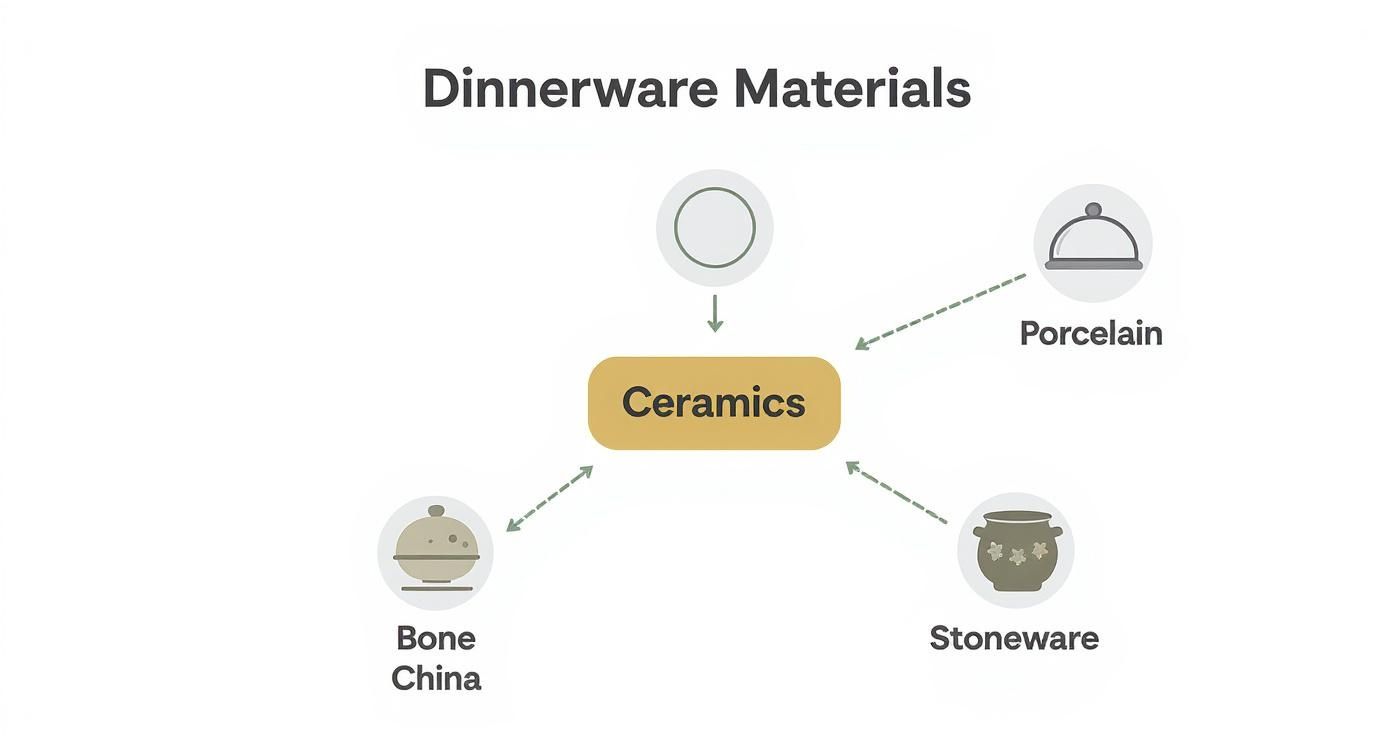
As you can see, materials like porcelain and bone china sit at the top end. They're refined products of high-temperature processes, which gives them superior strength and that desirable non-porous finish.
Hands-On Quality Checks
If you have the chance to shop in person, use your senses! The feel and balance of a piece can tell you a surprising amount about its construction and the care that went into making it.
First, pick it up and check the weight. Good dinnerware should feel substantial, but not clunky or awkward. A porcelain plate, for example, will feel surprisingly dense and strong for how thin it is, while a great piece of stoneware will have a pleasing, earthy heft. The key here is balance—it should feel comfortable and stable in your hands, not lopsided.
Next, flip it over and inspect the bottom. A well-made dish will have a smooth, polished foot or rim, which is crucial for preventing it from scratching your dining table. A rough, unfinished bottom is a clear red flag that corners were cut. By looking for these small but significant details, you can confidently pick a dinnerware set that’s truly built to last.
2. Is It Built for Real Life? Durability and Practicality Checks
A gorgeous dinnerware set is useless if you’re too scared to actually use it. Beyond the beautiful materials and finishes, the true test of quality is how well your plates and bowls stand up to the daily grind. This is where we separate the showpieces from the workhorses.
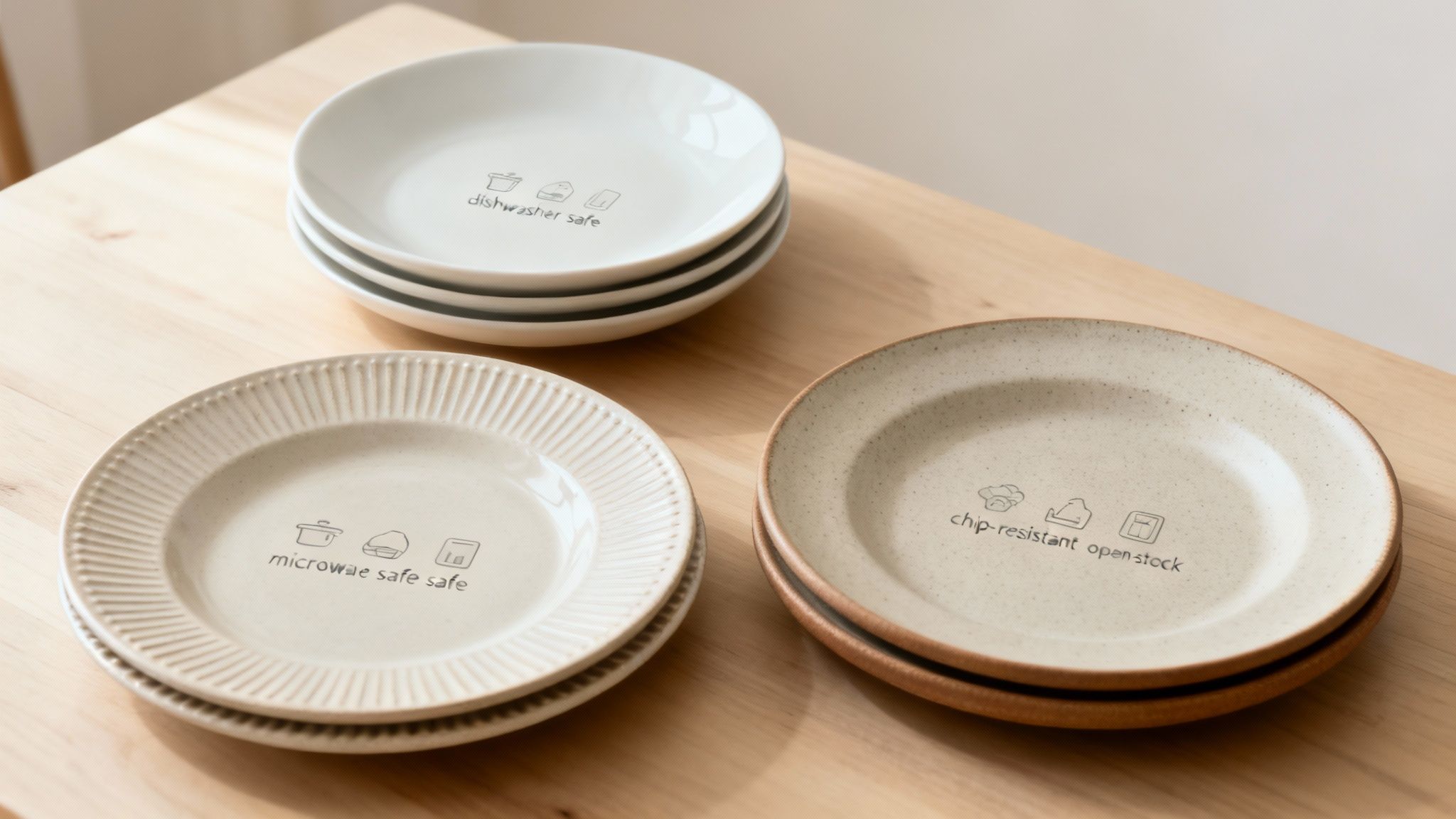
You’ve seen the labels on the box: “dishwasher safe,” “microwave safe,” and “chip-resistant.” But what do they really mean? These terms aren’t just checkboxes; they represent a promise of resilience. Let's look at what separates a truly durable set from one that just looks good on the shelf.
Putting Those "Everyday Use" Claims to the Test
First off, not all "dishwasher safe" claims are equal. A lower-quality set might survive a few cycles, but soon you'll notice the colors fading, the glaze developing tiny cracks (a phenomenon called crazing), or the edges chipping from the intense heat and harsh detergents. Truly high-quality dinnerware, however, is fired and glazed to handle hundreds of washes without losing its luster.
“Microwave safe” is another non-negotiable for most of us. A well-made dish heats your food, not itself. If you've ever grabbed a plate from the microwave and found it hotter than the meal on it, you've experienced poor-quality ceramic. It's a sign the material is porous and absorbing too much microwave energy.
Chip resistance is the ultimate mark of day-in, day-out durability. It’s not just about a strong material like porcelain; it’s also about smart design—like subtly reinforced or rolled edges that can take a bump against the countertop without shattering.
This obsession with durability is why the commercial tableware market—the stuff used in busy restaurants and hotels—is projected to hit USD 16.6 billion by 2034. Restaurants need dinnerware that looks pristine after constant, punishing use. That’s the same standard you should be looking for in your own home.
A Quick Checklist for Gauging Durability
Whether you’re shopping in a store or browsing online, here’s a practical checklist to help you see past the marketing claims:
-
Dishwasher Performance: Dive into customer reviews. Are people complaining about fading or chipping after six months of dishwasher use? For certain materials, like the beautiful, earthy options in our guide to the best stoneware dinner sets, glaze quality is everything.
-
Microwave Safety: Again, check reviews. Do users mention the plates becoming dangerously hot? A top-tier ceramic plate should stay cool enough to handle.
-
Stain and Scratch Resistance: The glaze is the armor. A hard, non-porous glaze will shrug off stains from things like coffee, tea, and tomato sauce. It also shouldn't develop those ugly grey utensil marks after a few meals.
-
Stackability: Do the plates and bowls nest neatly without teetering? Uneven, wobbly stacks are a sign of inconsistent manufacturing and are far more likely to get chipped in the cupboard.
The Hidden Value of "Open Stock"
Here’s a pro tip: always look for dinnerware that is sold as open stock. This simply means you can buy individual pieces—a single bowl, one dinner plate, a replacement mug—long after you’ve bought the initial set.
Life happens. A bowl gets dropped, a plate meets a tragic end in the sink. With an open-stock collection, that’s just a minor inconvenience, not a disaster. You can easily buy a replacement piece and keep your set complete for years. It’s a tell-tale sign of a brand that stands behind its product, offering long-term support instead of just a one-and-done boxed set.
Matching Your Dinnerware to Your Lifestyle
The best dinnerware isn't just about high-quality materials; it's about finding a set that feels like it was made just for you. It should seamlessly blend into the rhythm of your life. Before you get swept away by a beautiful pattern, take a moment to think about how you'll actually use it. This is where you find that perfect marriage of style and everyday practicality.
Think about what your days look like. Are mornings a frantic dash out the door, or a slow, quiet cup of coffee? Do you host big, lively family gatherings, or are most of your meals intimate and relaxed? Your answers are the best roadmap to finding a set that won't just sit in the cabinet but will serve you well, day in and day out.

Aligning Style with Your Home Decor
Your dinnerware is just as much a part of your home’s decor as the art on your walls. Just as you’d pick a sofa that fits your living room's vibe, your plates and bowls should feel right at home on your table.
-
For the Minimalist: Think clean lines and simple forms. Neutral palettes of white, grey, or even matte black let the food take center stage. This style is all about understated elegance.
-
For the Rustic Farmhouse: This is where stoneware truly shines. Look for earthy tones, organic shapes, and glazes with a bit of texture. These pieces feel warm, handcrafted, and wonderfully inviting.
-
For the Classic Traditionalist: You can't go wrong with elegant porcelain or bone china. Timeless details like a delicately scalloped edge or a simple, refined border elevate every single meal.
It’s about more than just matching colors. It’s about choosing a set that enhances the atmosphere you've already created, making every meal feel more cohesive and intentional.
Getting the Size and Shape Just Right
Beyond the look, the actual size and shape of your dinnerware can make or break its usefulness. There’s no one-size-fits-all answer here, so think about how you and your family eat.
Do you love serving big, family-style meals? If so, you'll appreciate a larger dinner plate that has plenty of room for everything. If you're more mindful of portion control, a standard-sized plate can be a helpful visual guide.
The global tableware market was projected to hit USD 60.4 billion by 2025, which shows just how much people care about finding sets that are both beautiful and perfectly functional. This focus on personal dining habits is a huge trend, which you can see in market analyses of consumer preferences. You can dive deeper into these trends by exploring reports about the global tableware market on grandviewresearch.com.
The depth and shape of your bowls are just as important. A wide, shallow pasta bowl is incredibly versatile for everything from salads to stews, while a deeper, narrower bowl is perfect for keeping soups and cereals hot.
How Many Place Settings Do You Really Need?
Finally, let's talk numbers. It's easy to get talked into a huge 16-piece set, but it’s far better to be realistic about your needs. A great rule of thumb is to aim for eight to twelve place settings.
This gives an average-sized family plenty of dishes for daily use while also covering you for guests—no more frantic washing between courses. For smaller households or anyone tight on cabinet space, a set of four or six might be all you need. Buying what you’ll actually use is the smartest way to invest.
Simple Care for Long-Lasting Dinnerware
You’ve just invested in a beautiful new dinnerware set—something that will be at the center of countless meals and memories. Keeping it as stunning as the day you unboxed it doesn't require a lot of effort, just a little bit of mindful care. It's really all about building simple habits that protect your pieces from the daily grind of use, washing, and storage.
Think of the glaze on your dinnerware as its protective shield. Keeping that finish intact is the secret to preventing scratches, stopping stains in their tracks, and avoiding that dull look that can happen over time. This means steering clear of abrasive scouring pads or gritty cleansers, which can easily wear down the surface, especially on more delicate materials like bone china.
When you're handwashing, always reach for a soft sponge or cloth and a gentle dish soap. If you’ve got some stubborn, stuck-on food, just let the dish soak in warm, soapy water for a bit. A few minutes of patience will do all the heavy lifting for you, so you won't be tempted to scrub aggressively and damage the glaze.
Smart Dishwasher Loading and Cleaning
Even though many high-quality sets are proudly labeled "dishwasher safe," how you load the machine makes all the difference. Careless stacking is the number one culprit behind chips and cracks. The goal is to prevent pieces from banging into each other during the wash cycle.
Give each item a little breathing room. Never overcrowd the racks, and make sure plates, bowls, and mugs aren’t actually touching. This one small adjustment drastically cuts down the risk of chipping.
Here are a few more tips for getting it right:
-
Pick a Gentle Detergent: Steer clear of detergents with lemon or other citrus additives. Their high acidity can be surprisingly harsh, potentially damaging glazes and causing patterns to fade over time. A mild, non-abrasive detergent is always your best bet.
-
Avoid Thermal Shock: If you have dishes coming straight out of a hot oven, especially stoneware, let them cool down on the counter before rinsing them with cold water or loading them into the dishwasher. That sudden, extreme temperature change is a classic cause of cracking.
-
Beat Stubborn Stains: For those persistent coffee or tea rings in your favorite mugs, a simple paste of baking soda and water works wonders. It's a fantastic, non-abrasive solution—just gently rub it on the stain, let it sit for a minute, and rinse it clean.
Remember, the dishwasher’s job is to clean, not to test the structural limits of your dinnerware. A little thought before you hit "start" goes a very long way.
Proper Storage to Prevent Scratches
How you store your dinnerware is just as crucial as how you wash it. The biggest threat lurking in your cabinet is the rough, unglazed foot on the bottom of a plate grinding against the smooth, glazed surface of the one below it. This is where most of those frustrating little scratches and scuff marks come from.
Thankfully, the fix is incredibly simple and effective: just create a soft buffer between each piece.
You don’t need anything fancy. Placing paper plates, coffee filters, or soft felt plate liners between each dish in the stack provides a vital cushion. This tiny habit will keep your best quality dinnerware sets looking pristine for years to come.
As for mugs and cups, try to avoid hanging them by their handles. This can put stress on the joints over time and lead to weakening. Storing them right-side-up on a shelf is always the safest approach.
Common Questions About Buying Dinnerware
Let's face it, diving into the world of dinnerware can bring up more questions than you'd expect. To make sure you feel great about your final choice, we’ve put together answers to a few of the questions we hear most often from shoppers looking for the perfect set.
What Is the Most Durable Type of Dinnerware?
When you’re looking for sheer, everyday strength, porcelain and bone china are the clear winners. The secret is in the firing process—they're baked at incredibly high temperatures, which makes the material non-porous, incredibly strong, and very resistant to chipping.
There’s a reason you see porcelain and bone china in busy restaurant kitchens and at fancy dinner parties. They're designed to handle constant, heavy use and still look fantastic year after year.
Should I Buy a Boxed Set or Open Stock?
Buying a full, boxed set is almost always the cheapest way to get started, giving you a complete service all at once. That said, the smartest move for the long run is to pick a pattern that’s also sold as "open stock."
Open stock simply means you can buy individual pieces later on. This is an absolute lifesaver. It lets you replace that one bowl that inevitably gets dropped or add a few more plates as your family grows, all without having to scrap the whole set. It’s the best way to protect your investment.
Think of open stock as an insurance policy for your dinnerware. A single accident doesn't mean the end of your beautiful set; it’s just a minor issue that’s simple and affordable to fix.
How Can I Judge Quality When Shopping Online?
You can absolutely spot top-notch dinnerware online if you know where to look. The trick is to become a bit of a detective and read the product descriptions and specs very carefully.
Here’s what you should zero in on:
-
Specific Material: Look for clear language like "high-fired porcelain" or "vitrified stoneware," not just a vague term like "ceramic." Quality brands are proud of their materials.
-
Customer Reviews: Don't just look at the star rating. Dig into what people are saying about durability. Are there complaints about chipping, scratching, or colors fading after just a few washes?
-
Brand Reputation: A well-known brand with a solid warranty and a clear return policy is always a safer bet. They have a reputation to uphold.
-
Safety Certifications: Seeing labels like dishwasher and microwave safe is a good sign. It means the pieces were made to a higher standard to withstand temperature changes.
How Many Place Settings Should I Get?
The right number really comes down to your lifestyle—how big your household is and how often you have people over. For most homes, a great rule of thumb is to aim for between eight and twelve place settings.
This gives you enough dishes for daily meals with the family, plus plenty of extras for guests. It also means you won't be in a panic on those days when the dishwasher hasn't been run. If you're living on your own, as a couple, or in a smaller apartment, a set of four to six place settings is usually all you need.
At Fluent Trends, we believe your dinnerware should make every meal feel a little more special. Come explore our curated collections of high-quality, beautifully crafted dinnerware designed to fit your life and your style. Find your perfect set at https://www.fluenttrends.com.