

Best Sustainable Fashion Accessories 2026: Top Picks
Yuatinia LeakTable of Contents
- Why Sustainable Fashion Accessories Matter in 2026
- Quick Comparison: Best Sustainable Accessories
- Ethical Fashion Accessories: What to Look For
- Sustainable Bags: Durability Meets Design
- Sustainable Jewelry: Small Pieces, Big Impact
- Minimalist Sustainable Fashion: Building a Capsule
- How to Spot Greenwashing in Accessories
- Price-Per-Wear: The Real Cost of Sustainable Accessories
- Caring for Your Sustainable Accessories
- Conclusion: Invest in Pieces That Last
- Frequently Asked Questions
Last Updated: October 6, 2026
Why Sustainable Fashion Accessories Matter in 2026
Sustainable fashion accessories are items like bags, jewelry, and hats made with ethical labor, eco-friendly materials, and low-waste production methods. They matter in 2026 because more shoppers want pieces that last for years, not just one season. Fluent Trends has built its Artisan Collection around exactly this idea.
Here is the shift most people miss. Five years ago, "sustainable" meant beige and boring. Today, the best sustainable fashion accessories 2026 has to offer look luxurious and feel personal. They carry a story about the maker and the material.
So what changed? Conscious consumerism grew up. Shoppers now ask harder questions about supply chain accountability. They want traceability, not vague promises. And they want pieces that survive real daily use.
That is where this guide helps. We will walk through materials, certifications, and greenwashing traps. We will also show you how to calculate price-per-wear, so you know what a piece truly costs you over time.
Quick Comparison: Best Sustainable Accessories
The table below summarizes our top picks by category, material, and best use case. Use it to scan fast, then read the full sections for detail.
| Piece | Material | Best For | Price |
|---|---|---|---|
| Atlas Day Tote | Vegetable-tanned cowhide | Daily work carry | $149 |
| Cannes Rattan Top Handle Bag | Cow leather and rattan | Warm-weather outfits | $131 |
| Round Rattan Leather Crossbody | Lambskin and rattan cane | Hands-free travel | $110 |
| Biscotty Tote Bag | Handwoven raffia | Beach and market days | $250 |
| Louisa Woven Straw Clutch | Buntal straw | Evening events | $265 |
| Orla Gold Straw Clutch | Buntal straw and wood beads | Statement evenings | $275 |
A quick note on why we lead with bags. Bags take the most abuse of any accessory. They get thrown on floors, stuffed past capacity, and rained on. If a bag survives that, it earns its place.

Ethical Fashion Accessories: What to Look For
Ethical fashion accessories are pieces made with fair wages, safe working conditions, and honest material sourcing. The label matters less than the paper trail behind it. Ask who made the piece and where the material came from.
Start with three questions before you buy anything:
- Who made this, and were they paid fairly?
- What is the material, and is it natural, recycled, or synthetic?
- Can I repair it, or does it fall apart and get replaced?
If a brand cannot answer those clearly, that tells you something. Real ethical production leaves a trail you can follow.
Certifications That Matter
Third-party certification is your shortcut past marketing language. A logo from an independent body carries more weight than a brand's own claim.
Look for these when you shop:
- OEKO-Tex Standard 100 confirms textiles are tested for harmful substances (OEKO-TEX® STANDARD 100). This matters most for anything touching your skin.
- Fair trade certification verifies fair wages and safe conditions in the supply chain.
- Global Organic Textile Standard tracks organic cotton and natural fibers from farm to finished product.
Here is the catch. Certification costs money, and small artisan workshops often cannot afford it. A maker without a certificate is not automatically unethical. Look for transparency instead. A workshop that names its artisans and shows its process is often more honest than a big label with a logo.
Sustainable Bags: Durability Meets Design
Sustainable bags are built from materials that age well instead of wearing out. Full-grain leather, rattan, raffia, and buntal straw all fall into this group. Each one develops character over time rather than looking worn.
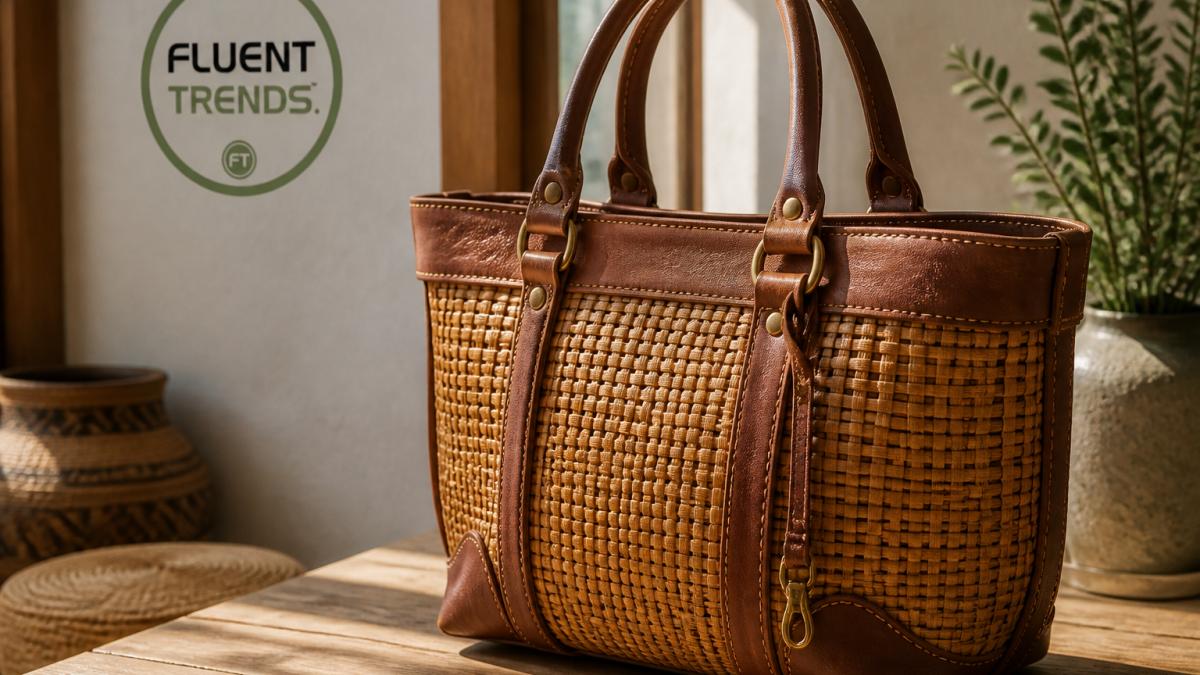
Take our Atlas Day Tote. It is cut from thick raw cowhide and vegetable-tanned using centuries-old techniques. That process takes longer than chrome tanning. It also skips the heavy chemical load. The result is a tote that stiffens, darkens, and patinas into something personal.
The Cannes Rattan Top Handle Bag pairs genuine cow leather with honey-brown organic rattan. It is roomy at 15.5 inches wide, so it handles a full day out. The Round Rattan Leather Crossbody flips that idea into a compact circle of lambskin and rattan cane webbing.
Leather and Rattan: A Timeless Pair
Leather and rattan work together because they age at similar speeds. Both soften and deepen with use. Neither looks dated after two seasons.
This pairing shows up across our collection. The Classic Rattan and Black Leather Tote uses genuine calf leather with woven cane mesh. It has a dedicated side pocket for your phone. That small detail says a lot about how the bag was designed.
Handwoven Straw and Raffia
Handwoven straw and raffia are among the oldest low-waste materials in fashion. Weavers use what the plant gives them, with almost no scrap. The Biscotty Tote Bag is a raffia bucket bag handmade in Madagascar by local women artisans. Braided straps make it comfortable to carry all day.

Then there is buntal straw, a traditional Filipino craft. The Louisa Clutch uses it in navy and cream stripes. The Orla Bag uses a gold weave with a half-moon shape and wooden bead handle. Both come with detachable crossbody straps.
Sustainable Jewelry: Small Pieces, Big Impact
Sustainable jewelry is made from recycled metals, responsibly sourced stones, or reclaimed materials. Small pieces carry a large footprint because mining is resource-heavy. Choosing recycled gold or vintage stones cuts that impact sharply.
But here is what most guides skip. The real sustainability win happens after you buy. Repair and care extend a piece's life by decades.
Think about a simple ring resizing. A jeweler can stretch or shrink a band for a fraction of the cost of a new ring. That one trip saves gold, saves energy, and keeps a meaningful piece in rotation.
A broken clasp on a necklace is another easy fix. Most jewelers replace clasps while you wait. The same goes for restringing a pearl strand or tightening a stone setting.
For wooden and bone inlay pieces, repair looks different. A loose bead on a bag handle can be reattached with clear craft glue.
Bone inlay jewelry and accessories deserve special mention. This craft uses discarded animal bone, a byproduct of the food industry. Artisans cut and shape it by hand.
Acacia wood and sheesham wood are sustainably sourced and built to last.
The same logic applies to accessories. A wooden bead handle or a hand-carved clasp supports craft heritage instead of mass production. Bone inlay and acacia wood show up in home decor for the same reason. They use natural material and skilled handwork.
Minimalist Sustainable Fashion: Building a Capsule
Minimalist sustainable fashion is a small wardrobe of versatile pieces that mix and match. The goal is fewer items, each one earning its space. A capsule built this way reduces waste and decision fatigue at once.
Here is how we would build one:
- Pick two bags: one structured tote for work, one crossbody for weekends.
- Choose natural materials that age well, like leather, rattan, or organic cotton.
- Stick to a tight color range so everything pairs together.
- Add one statement piece for evenings, like a woven straw clutch.
- Repair before you replace, every single time.
A capsule does not mean boring. It means intentional. When each piece has a job, you stop buying duplicates you never use.
How to Spot Greenwashing in Accessories
Greenwashing is when a brand exaggerates or fakes its environmental claims. It is common in fashion because the words "eco" and "natural" are barely regulated. Here is how to catch it.
Watch for these red flags:
- Vague words like "eco-friendly" with no certification or proof
- A single green collection from a brand that mostly sells fast fashion
- Recycled content claims with no percentage stated
- No information about where or how the item was made
The strongest signal is specificity. A brand that names its workshop, its material source, and its process is usually telling the truth. A brand that just prints a leaf on the tag is not.
Price-Per-Wear: The Real Cost of Sustainable Accessories
Price-per-wear is the purchase price divided by the number of times you use an item. It is the most honest way to judge whether an accessory is worth buying. A cheap bag worn twice costs more per wear than a quality one worn for years.
Run the math on two bags. A $40 bag worn 10 times costs $4 per wear. A $131 rattan tote worn 200 times costs about $0.66 per wear. The higher upfront price wins by a wide margin.
This is why we push durability over discounts. The Atlas Backpack at $199 is built from thick raw cowhide with brass snaps and a laptop compartment. It is made to be carried daily for years, not months.

Apply the same math to furniture. A solid acacia wood or sheesham wood table costs more than a particleboard one. It also outlives three of them. That is the whole argument in one sentence.
Caring for Your Sustainable Accessories
Caring for natural materials is simple, and it doubles their lifespan. Leather, rattan, and straw each need slightly different handling. Get these basics right and your pieces will look better in year five than year one.
For leather:
- Wipe with a dry cloth after heavy use
- Condition two to three times a year
- Keep it away from direct heat, which dries and cracks the surface
For rattan and straw:
- Dust with a soft brush
- Keep away from prolonged damp
- Reshape gently by hand if the weave bends
For textiles like organic cotton and linen, wash cold and air dry.
Now here is the part most guides skip. What happens when a piece reaches the end of its life? Landfills are full of accessories that could have been recycled or composted.
Milk and casein fiber are a newer option. This material comes from milk protein that would otherwise be discarded. It is hypoallergenic. If you find accessories made from casein fiber, treat them like wool. Hand wash cold and lay flat to dry.
Portugal-woven bedding and organic cotton sheets follow the same care rules. Wash cold and air dry.
For furniture, the same principles apply. A solid acacia wood or sheesham wood table can be sanded and refinished instead of replaced. Boucle furniture covers can be spot-cleaned. Bone inlay furniture can be dusted and wiped with a damp cloth.
The goal is simple. Buy less, care well, and repair when you can. That is the full circle of sustainable accessorizing.
Conclusion: Invest in Pieces That Last
The challenge with sustainable accessories is patience. Quality pieces cost more upfront, and the payoff shows up over years, not weeks. That trade is worth making.
At Fluent Trends, we built our collection around this idea. Our Atlas Day Tote is vegetable-tanned from thick cowhide that patinas beautifully. Our Biscotty Tote supports women artisans in Madagascar with every purchase. And our Louisa Clutch keeps a traditional Filipino weaving craft alive.
Every piece is made to order, which means less overproduction and less waste. You get something handmade, durable, and tied to a real maker. Shop the Fluent Trends Artisan Collection and choose accessories built to stay with you.
Frequently Asked Questions
What are the best sustainable fashion accessories for 2026?
The best sustainable fashion accessories in 2026 focus on durability, ethical production, and timeless design. Look for bags made from vegetable-tanned leather, organic cotton, or natural fibers like rattan and raffia. Jewelry should use recycled metals or upcycled materials. Prioritize pieces from brands that support fair trade and women-owned businesses. The goal is to choose items you will wear for years, not just one season.
How can I tell whether a fashion accessory is sustainably made?
Check for third-party certifications like OEKO-TEX or Fair Trade. Look for transparency in the supply chain. A sustainable accessory often lists its materials and production methods clearly. Avoid vague terms like 'eco-friendly' without proof. Reputable brands share where and how items are made. If a company cannot answer basic questions about its sourcing, that is a red flag.
What materials should I look for in sustainable accessories?
Choose natural fibers like organic cotton, linen, and wool. Vegetable-tanned leather is better than chrome-tanned. Recycled polyester and upcycled materials reduce waste. For bags, rattan, raffia, and straw are renewable and biodegradable. Avoid virgin plastics and synthetic fabrics that shed microplastics. Hypoallergenic options like milk casein fiber are also emerging as sustainable alternatives.
How do I care for sustainable fashion accessories so they last longer?
Store leather bags in dust bags away from direct sunlight. Clean rattan and straw with a dry soft brush. For jewelry, wipe with a soft cloth after wearing. Avoid overexposure to moisture. Rotate your accessories to reduce wear. Repair minor damage promptly. Proper care extends the life of your pieces and keeps them out of landfills.