

Your Guide to the Best Toy Storage Solutions That Actually Work
Donna MaloneWhen you’re staring down a mountain of toys, the best solutions are the ones that actually work with your home and your life. It's about finding that sweet spot between function and style—a mix of open bins, clever storage benches, and shelving that reclaims your vertical space.
But the real secret? The system has to be easy for your kids to use. If they can’t manage it, it won’t stick. This means accessible, clearly labeled containers that turn cleanup from a dreaded chore into a simple, everyday habit.
How to Start Organizing Toy Clutter
Before you even think about clicking “add to cart” on a single storage bin, you need to pause and take stock. This first step is everything. It’s not just about tidying a mess; it's about drawing up a realistic plan for a storage system that truly fits your family's daily rhythm.
This initial assessment will tell you if you just need a few cute baskets or if it's time for a full-blown playroom intervention. Start by sizing up your space. Are you working with a dedicated playroom or just a corner of the living room? Get out the measuring tape. Note the dimensions, where existing furniture sits, and look for those overlooked spots—like the empty wall space above a dresser or the area under a bed. This is your canvas.
The Great Toy Sort
Now for the main event: sorting every single toy. I know, it sounds like a massive undertaking, but breaking it down into categories makes it feel much less overwhelming. Start broad, then get more specific.
-
Building Toys: All the LEGOs, Magna-Tiles, and wooden blocks get their own pile.
-
Dolls and Action Figures: Group all characters, big and small, along with their tiny accessories.
-
Art Supplies: Crayons, markers, paper, and play-doh need a dedicated zone.
-
Puzzles and Games: Stack the boxes and hunt down any stray puzzle pieces.
-
Vehicles: Round up every last car, truck, and train.
As you create these piles, you'll instantly see where the real clutter culprits are. Maybe you’ll discover you have three separate bins of random toy cars but only a handful of art supplies. This little inventory is pure gold—it tells you exactly what kind and size of storage you’ll need later. If you need some inspiration to get started, this comprehensive guide to toys organizer storage solutions is a great resource.
Before choosing any storage solutions, it's helpful to have a clear picture of what you're working with. This checklist can guide you through that initial assessment.
Toy Storage Readiness Checklist
| Assessment Area | Key Questions to Ask | Actionable Goal |
|---|---|---|
| Space Evaluation | Where will the toys live? How much floor and wall space is available? | Measure the primary play area and identify 2-3 potential storage zones. |
| Toy Inventory | What types of toys do we have the most of? What are their sizes? | List the top 3 toy categories by volume (e.g., LEGOs, dolls, books). |
| Child Accessibility | How tall is my child? What can they safely reach and open on their own? | Determine the maximum shelf height your child can comfortably access. |
| Cleanup Routine | How can we make cleanup easier? Do we need portable bins? | Decide if toys should be stored in the play area or put away elsewhere. |
This quick check ensures you're buying solutions that solve your specific problems, not just adding more stuff to the room.
Creating Your System: Keep, Donate, Toss
With everything sorted into categories, it’s time to make some decisions. This is the perfect opportunity to involve your kids and teach them a bit about organization and generosity. Grab three boxes and label them: Keep, Donate, and Toss.
Involving children in the decluttering process empowers them to take ownership of their belongings. When they help decide what to keep or donate, they are learning a life skill that fosters responsibility and a healthier relationship with their possessions.
Walk them through it with simple questions. "Do you still love playing with this?" or "Could another kid have fun with this toy now?" For the broken and unusable items, explain why they have to go. This single step can drastically cut down on the amount of stuff you actually need to find a home for. For a deeper dive into this part of the process, check out our full guide on how to organize kids toys.
It’s clear that families everywhere are craving this sense of order. The global toy storage market is on track to hit an incredible $18,909.52 million by 2035, a huge leap from its 2025 valuation. It just goes to show how much we all value creating clean, functional, and safe spaces for our kids to thrive. Getting this initial sort right is what sets you up for long-term success.
Finding the Right Bins and Baskets for Your Toys
Okay, you’ve sorted through the mountain of toys and measured your space. Now for the fun part: picking out the containers that will finally bring some order to the chaos. Bins and baskets are the true workhorses of toy organization, but walking down that aisle at the store can feel a little overwhelming.
The trick is to match the container to the toy, the child, and the room.
Think of it like building a toolkit. You wouldn't use a sledgehammer for a tiny finishing nail, right? In the same way, you don't want a giant, deep chest for those thousands of tiny LEGO pieces. Getting this part right makes cleanup feel natural for everyone, even the little ones.
This quick decision tree can help you figure out a starting point based on where the toys live and what you’re trying to wrangle.
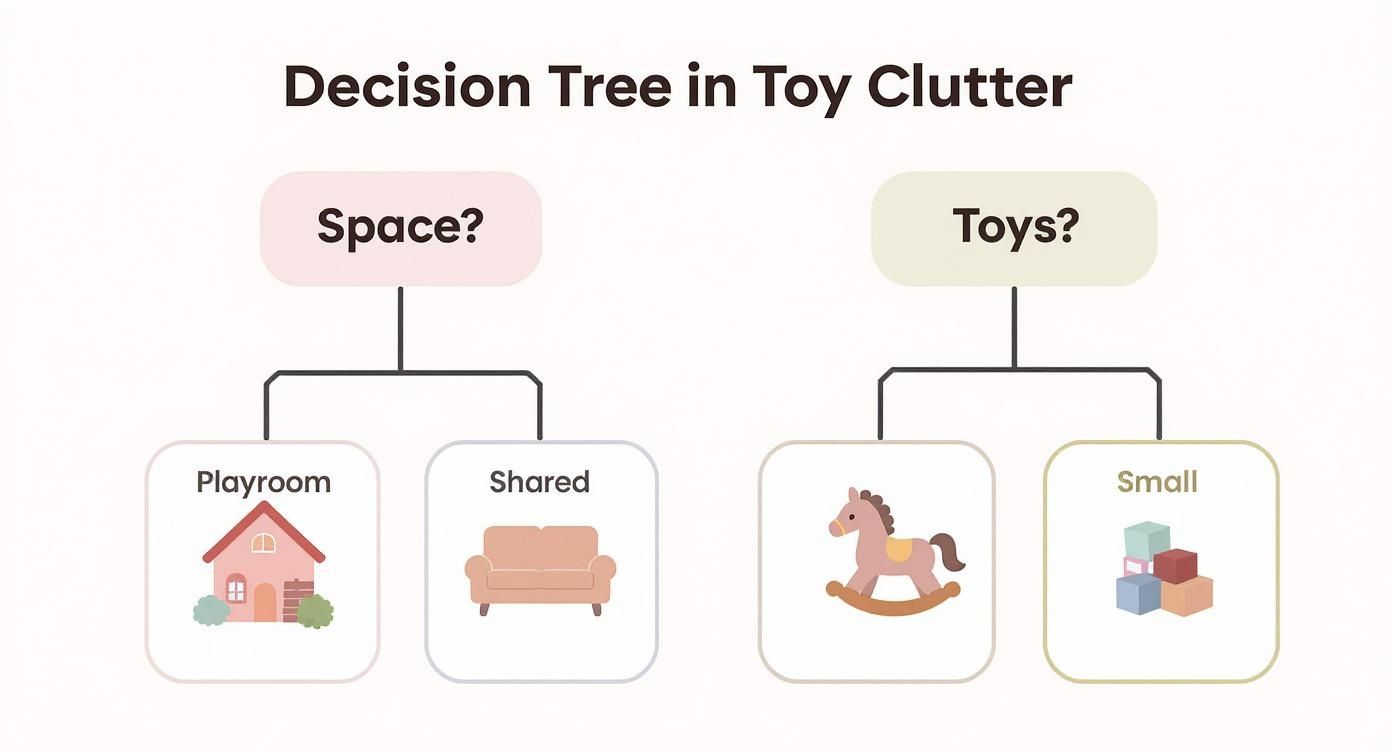
As you can see, the best toy storage solution really depends on whether you have a dedicated playroom or are carving out a corner of the living room, and if you’re dealing with bulky items or collections of small parts.
Open-Top Bins and Baskets
Open-top containers are a lifesaver for quick cleanups and easy access, which makes them absolutely perfect for younger kids. When a toddler can actually see their blocks and easily toss them back in, they’re so much more likely to help tidy up.
-
Fabric Baskets: These add such a soft, cozy feel to a room. They’re great for corralling stuffed animals or a mountain of dress-up clothes. Because they’re flexible, they can handle odd-shaped toys, and they won't scuff your walls if they get dragged around.
-
Woven Baskets (Rattan, Wicker, Seagrass): If you need toy storage in the living room, this is your answer. These baskets blend right in with your decor. Use them to discreetly hide wooden blocks, puzzles, or board books right next to the sofa.
-
Plastic Bins: Nothing beats plastic for durability and ease of cleaning. They are a playroom staple for a reason—they can handle messy art supplies, a fleet of toy cars, and anything else that gets grimy.
The sheer versatility of plastic has made it a giant in the toy storage world. In fact, the plastic toy storage market was valued at an impressive $4.51 billion in 2025 and is projected to hit $7.7 billion by 2032. Why the boom? Busy families need solutions that are affordable, space-saving, and a breeze to clean. You can read more insights about the plastic toy storage market to see why it continues to be a go-to for parents.
Containers with Lids
While open bins are great for the everyday stuff, lidded containers are non-negotiable for anything with a million tiny pieces. Think of them as your first line of defense against lost game pieces and those LEGO bricks you always find with your bare feet.
Pro Tip: For toddlers and preschoolers, steer clear of heavy lids that can pinch little fingers. Look for lightweight plastic lids, soft-sided chests with fabric tops, or bins designed to slide into a shelving unit like drawers.
-
Clear Stackable Tubs: The transparency is a superpower here. Kids can see what’s inside without dumping everything on the floor. These are my absolute favorite for sorting LEGOs, Magna-Tiles, craft supplies, and action figures by category.
-
Soft-Sided Toy Chests: This is the modern, safer answer to the old wooden toy box. They usually have lightweight, attached lids and are amazing for bigger, bulkier items like stuffed animals, large vehicles, or sports gear.
-
Rolling Carts: A mobile art station is a total game-changer. A simple three-tiered cart can hold paper, crayons, markers, and paint. You can just roll it to the kitchen table for craft time and tuck it away in a closet when you’re done, keeping the creative chaos contained.
Ultimately, the secret to a system that actually works is finding the right mix of open and lidded storage. Use open baskets for the high-traffic, most-loved toys and save the lidded containers for special sets that need to stay together. This balanced approach creates a play space that feels both tidy and inviting.
Choosing Smart Furniture with Built-In Storage
The absolute best toy storage solutions are the ones you don’t even notice. They just blend right into your living space, hiding everything in plain sight. Instead of cramming yet another container into a room, why not make your furniture pull double duty? Multifunctional pieces are the secret weapon for saving precious floor space while making visual clutter disappear.
This isn’t just about finding a clever place to hide the mess, either. It’s about investing in versatile pieces that can serve your family for years. Think of a storage bench in the entryway—it’s a handy spot to sit and tie shoes, but it’s also secretly stashing away balls, sidewalk chalk, and sports gear. That kind of dual-purpose design is a game-changer for any busy, family-friendly home.

The Unbeatable Power of Cube Shelving
When you picture furniture as toy storage, one iconic piece probably comes to mind: the cube shelving unit, like IKEA’s famous KALLAX. There’s a very good reason these things are everywhere. They are the chameleons of the storage world, giving you a blank canvas you can customize to fit your exact needs.
The open cubes are perfectly sized for fabric bins, which lets you create a colorful, kid-friendly system that’s easy for little hands to use. You can leave a few cubes open to display favorite books or special toys, then fill the rest with baskets sorted by LEGOs, dolls, or craft supplies.
And the best part? As your child grows, the bins once filled with stuffed animals can be swapped out to hold art supplies, gaming controllers, or school binders. This amazing adaptability makes cube shelving one of the smartest long-term investments for any playroom or living room.
Creative Furniture Options Beyond the Cube
While cube shelves are a fantastic go-to, the world of storage furniture is packed with other clever options that can solve very specific clutter problems. If you think a little outside the box, you can find pieces that add style and function to any room.
-
Storage Benches: These are heroes in entryways, mudrooms, or at the foot of a bed. A lift-top bench is perfect for hiding away bulky items like dress-up clothes or sports equipment.
-
Play Tables with Drawers: A kid-sized table with built-in drawers or shelves is a total game-changer. It creates a dedicated zone for art projects or LEGO building, with all the necessary supplies tucked right underneath.
-
Beds with Underneath Storage: In a small bedroom, every single inch counts. Beds with built-in drawers are brilliant for stashing board games, puzzles, and extra toy sets without taking up any more floor space.
When you're brainstorming, it’s also a great idea to look at practical nursery storage solutions, because so many of those ideas can be adapted for bigger kids’ rooms and play areas.
The market for this kind of furniture is absolutely booming. The kids' storage furniture market, valued at $14.65 billion in 2024, is projected to soar to $17.34 billion in 2025. That kind of growth shows just how much families value smart, dual-function furniture that makes their homes work better.
To help you match the right piece to the right place, here’s a quick breakdown of some popular options.
Furniture Type vs Best Use Case
| Furniture Type | Primary Function | Ideal for Storing | Best Room Placement |
|---|---|---|---|
| Storage Ottoman | Footrest, extra seating | Board games, video game controllers, blankets | Living Room, Family Room |
| Storage Bench | Seating | Outdoor toys, shoes, bulky dress-up clothes | Entryway, Mudroom, Playroom |
| Play Table with Drawers | Activity surface | Art supplies, LEGOs, craft materials | Playroom, Child's Bedroom |
| Bed with Drawers | Sleeping | Puzzles, out-of-season clothes, extra toys | Child's Bedroom |
Choosing the right piece for the right room makes all the difference in creating a system that actually gets used.
Selecting Pieces That Will Last
Investing in storage furniture means you should be looking beyond today’s toy chaos. The real goal is to choose pieces that will grow with your child and stay useful for years to come. That means durability and safety should be at the very top of your checklist.
Look for furniture made from solid wood or high-quality composite materials that can stand up to the reality of daily play. Check for rounded corners and smooth edges to prevent bumps and scrapes. And for any tall units like bookshelves, always use the included wall anchors to prevent tipping—it’s a non-negotiable safety step in any home with kids.
Think of storage furniture as a long-term part of your home's decor. A classic wooden toy chest can later become a beautiful blanket box, and a sturdy shelving unit can transition from holding picture books to housing a teenager's collectibles.
This forward-thinking approach is what makes your investment pay off. By choosing versatile, well-made pieces, you’re creating a storage system that not only solves today’s clutter but also serves your family’s changing needs for years to come.
Building an Organization System That Lasts
Having the perfect bins and furniture is a great first step, but it’s the system behind them that truly wins the war against clutter. The best toy storage solutions are baked into your daily routine, making organization feel almost effortless for the whole family. This is where you build the habits that keep your home tidy long after that first big clean-up.
This isn't about enforcing rigid rules. It's about creating a simple, sustainable framework that teaches your kids responsibility and makes cleanup less of a nightly battle.
Making Labels That Actually Work
Labels are the secret language of an organized playroom. They're the visual cues that tell everyone—from a curious toddler to a tired parent—exactly where everything goes. Without them, even the most beautiful bins quickly become black holes for random junk. The trick is to match the label style to your child's age and reading ability.
-
For Pre-Readers (Ages 2-5): Pictures are your best friend. Seriously. Just take photos of the toys that belong in each bin, print them, and stick them on the front. A picture of LEGO bricks on the LEGO bin is a universal sign that any toddler can decode.
-
For Early Readers (Ages 5-7): Time to level up. Combine pictures with simple, large-print words. This is a fantastic way to reinforce sight-word recognition while still providing that crucial visual clue. Seeing the word "Cars" right next to a picture of a car helps connect the dots.
-
For Older Kids (Ages 7+): At this point, clear text labels are all you need. A simple label maker works wonders for creating a clean, uniform look. They can now handle more specific categories like "Art Supplies," "Board Games," or "Action Figures."
The True Test of a Good System: The goal here is independence. When your child can put their own toys away correctly without asking you where they go, you've officially won.
This one simple step transforms a pile of containers into a self-managing toy library, empowering your kids to take an active role in keeping their space tidy. It’s a tiny detail with a massive impact.
The Magic of Toy Rotation
One of my all-time favorite strategies for long-term organization is toy rotation. The idea is brilliantly simple: keep only a portion of toys out in active play and store the rest out of sight. Every few weeks or once a month, you swap them. This is a total game-changer for a few reasons.
First, it instantly cuts down on the number of toys out at any given time, which makes daily cleanup so much faster and less overwhelming. Instead of staring down a mountain of 100 toys, your child only has to manage 20 or 30.
Second, it keeps their toys feeling fresh and exciting. When a bin of "old" toys reappears after a month in the closet, it feels like Christmas morning all over again. This renewed interest sparks deeper, more focused play and helps you sidestep the "I'm bored!" trap without buying a single new thing.
Creating a Simple Cleanup Routine
A storage system is only as good as the habits you build around it. A consistent, daily cleanup routine is the glue that holds everything together. The secret is to keep it short, predictable, and maybe even a little bit fun.
Here are a few ideas to make "tidy-up time" a positive part of the day:
-
Use a Cleanup Song: Pick a fun, upbeat song that lasts anywhere from 2-5 minutes. The mission? Get as much put away as possible before the music stops.
-
Make It a Game: Turn it into a challenge. Try a "color hunt"—"Let's find everything red and put it in the red basket!" Or see who can put away five things the fastest.
-
Link It to a Transition: Build cleanup right into your daily schedule. A perfect time for this is just before dinner or as part of the bedtime routine. A simple rule like, "We tidy the playroom before we start our bedtime story," creates a clear and reliable expectation.
By weaving these small habits into your day, you're not just cleaning up; you’re teaching your kids essential life skills. They learn to care for their belongings and contribute to the family home, turning your well-designed storage solutions into a lasting success.
Weaving Toy Storage into Your Home’s Fabric
Let's be real: toys have a mind of their own. No matter how organized your playroom is, you'll find that stray LEGO brick, that lone Barbie shoe, or a half-finished coloring book in every room of the house. Instead of waging a constant, losing battle, the secret is to lean into it. Create smart, stylish drop-zones for toys right where your family actually spends their time.
This isn't about surrendering your home to a toy takeover. It's about clever integration. With the right pieces, you can keep your home looking like your home, while making cleanup a breeze for everyone. A kid-friendly space doesn't have to scream "daycare."

Blending Storage into Your Living Room
The living room is family central, which also makes it ground zero for what I like to call "toy creep." The key here is camouflage—choosing storage that blends so seamlessly with your decor, it hides toys in plain sight.
-
The Almighty Storage Ottoman: This is the undisputed champion of double-duty furniture. It's a footrest, it's extra seating for guests, and its hollow core is the perfect hiding spot for board games, video game gear, or a whole collection of Paw Patrol figures.
-
Chic Decorative Baskets: A gorgeous woven seagrass or felt basket sitting next to the sofa adds texture and a cozy vibe to the room. It also happens to be fantastic for corralling stuffed animals, throw blankets, or library books.
-
Sideboards and Media Consoles with Doors: When shopping for a media unit, prioritize ones with solid doors. You can easily dedicate a shelf or two to bins of toys, keeping them completely invisible when it's time to transition to adult time.
Choosing pieces that pull double duty as both furniture and storage is the ultimate win. Toys stay within easy reach for playtime but can be tucked away in seconds, restoring a sense of calm to your main living space.
This approach ensures your living room remains a relaxing haven for everyone. For more inspiration on merging style and function, our guide on nursery storage ideas has some brilliant concepts that work just as well in a living room or bedroom.
Creating Smart Zones in Other Rooms
Beyond the living room, a few other hotspots can benefit from small, dedicated toy zones. This stops the clutter from spreading and gives kids a sense of ownership over their things, no matter where they are.
The Kitchen Art Cart
The kitchen table is the natural hub for all things creative. Rather than letting crayons, glitter, and glue sticks permanently colonize your countertops, set up a mobile art station. A simple three-tiered rolling cart is perfect for this.
Load it up with paper, markers, scissors, and paint. You can wheel it out when inspiration strikes and then tuck it neatly into a pantry or corner when dinner time rolls around.
The Bathroom Toy Tamer
Bath toys are notorious for turning the tub into a slimy, cluttered mess. A mesh bag with suction cups is a classic for a reason—it lets everything drip dry, which helps prevent mildew. For an even slicker solution, a scoop-and-store caddy that hangs on the wall makes gathering up all those floating toys at the end of the night a one-scoop job.
Tackling Car and Outdoor Clutter
Finally, let’s not forget the chaos zones outside the four walls of your home. Your car and entryway are magnets for random toys and gear.
-
In the Car: A simple seat-back organizer with plenty of pockets is a game-changer for road trips or even just daily errands. Create designated spots for coloring books, small toys, and snacks to keep the backseat from descending into chaos.
-
For Outdoor Gear: Place a large, rugged bin or a storage bench right by the back door. It becomes the go-to spot for sidewalk chalk, balls, bubbles, and sand toys, creating a buffer that stops muddy, grassy gear from being tracked all over the house.
By placing these small, thoughtful storage spots throughout your home, you’re not just organizing—you’re building a system that makes tidiness a natural, effortless part of your family’s daily rhythm.
Common Questions About Toy Storage
So, you’ve sorted, purged, and set up a beautiful new system of bins and shelves. But then… real life happens. Getting a system in place is one thing, but making it stick with kids who are busy, creative, and, let’s be honest, masters of chaos, is a whole other challenge.
This is where we get into the nitty-gritty. Think of this as your troubleshooting guide for the questions that always come up, helping you fine-tune your approach so all that hard work actually pays off.
How Do I Get My Kids to Actually Use the New System?
This is the big one, isn't it? The secret isn't nagging or stricter rules—it's about making the system so easy and intuitive that cleaning up becomes a natural part of playing. If it feels like a chore, you've already lost.
First, make everything accessible. Low, open bins are perfect for toddlers who can just toss things in. You can’t expect a three-year-old to carefully stack blocks in a container with a tricky lid. And for pre-readers, picture labels are a game-changer. They need to see a photo of their LEGOs to know where they go, no guesswork required.
Next, turn cleanup into a game. A simple shift in perspective can work wonders.
-
The Cleanup Song: Put on a favorite high-energy song that’s about 3-5 minutes long. The mission? Get everything put away before the music stops.
-
Beat the Timer: Frame it as a race. "Can we get all the cars back in their garage in five minutes? Go!"
-
The One-Set-Out Rule: This is a fantastic habit to build. Before the art supplies can come out, the train tracks need to be put away. Simple.
Ultimately, consistency is your best friend. A quick tidy-up right before dinner or as part of the bedtime routine makes it a predictable habit, not a nightly battle.
What Is the Best Way to Store LEGOs and Small Toys?
Ah, the tiny toy problem. LEGOs, beads, Polly Pockets, doll shoes—these things are a special kind of organizational nightmare. Tossing them all into one deep bin is a recipe for frustration. Kids will dump the entire thing just to find that one tiny piece they need. The key here is smart containment and categorization.
For small, multipart toys, shallow containers are your best friend. They prevent tiny pieces from getting lost at the bottom and allow kids to see their entire collection at a glance, fostering more creative and less frustrating play sessions.
Look for shallow, clear, stackable bins or those divided organizers meant for crafts. This lets you sort by color, set, or type—whatever makes sense for your child. A truly brilliant solution for LEGOs is a large play mat that cinches up into a storage bag. It contains the mess during play and makes cleanup as easy as pulling a drawstring.
My Home Is Small—What Are the Best Space-Savers?
When you’re short on space, every square foot has to work harder. You have to start thinking vertically and multifunctionally. Forget bulky, single-purpose toy chests and look for solutions that climb the walls or hide in plain sight.
Here are a few strategies that make a huge difference in smaller homes:
-
Go Vertical: Tall, narrow shelving units draw the eye up and use wall space that would otherwise go to waste. Wall-mounted shelves or simple picture ledges are perfect for displaying favorite books and special toys without taking up any floor space.
-
Hidden Storage: Under-the-bed drawers, especially those on wheels, are fantastic for stashing puzzles or bigger playsets. And don't forget about over-the-door organizers with clear pockets—they’re amazing for action figures, Barbies, or art supplies.
-
Multifunctional Furniture: This is a non-negotiable for small-space living. A storage ottoman in the living room can secretly hold board games. A small bench by the door can hide shoes and outdoor toys. A play table with built-in drawers keeps crayons and paper contained. These pieces do double duty without adding to the visual clutter.
At Fluent Trends, we believe that a well-organized home is a happy home. Explore our curated collection of stylish storage solutions and multifunctional furniture designed to bring beauty and order to every room. Discover pieces that grow with your family at https://www.fluenttrends.com.