

Boutique Furniture That Elevates Living Spaces in 2026
Yuatinia LeakTable of Contents
- Why Boutique Furniture Elevates Living Spaces and Personal Style
- How Handmade Goods Support Cultural Heritage and Artisan Communities
- Sustainable Luxury Furniture Materials Worth Investing In
- The Durability of Commercial-Grade Furniture in Real Homes
- Statement Pieces That Define a Room: Boucle, Bone Inlay, and Beyond
- Modern Minimalist Design and Transitional Style: Making Boutique Furniture Work
- Caring for Boutique Materials: Maintenance and Longevity
- Budgeting for Investment Furniture Without Compromising Your Vision
- Conclusion
- Frequently Asked Questions
Last Updated: September 20, 2026
Why Boutique Furniture Elevates Living Spaces and Personal Style
Boutique furniture is a small-batch, artisan-made furnishing category defined by limited production runs and traceable craft, rather than mass-market manufacturing. These pieces are built around natural materials, hand-finished details, and ethical sourcing. At Fluent Trends, we see boutique furniture as a way to make a room feel intentional rather than assembled from a catalog.
The difference shows up in how a room reads. A mass-produced sofa fills space. A curved boucle sectional anchors it. That distinction matters to anyone who has ever walked into a well-designed home and felt the calm immediately.

Below, we break down why artisan pieces change a space, how to care for them, and how to budget for furniture built to outlast trends. The goal is simple: help you choose pieces worth keeping.
How Handmade Goods Support Cultural Heritage and Artisan Communities
Handmade goods support cultural heritage by keeping traditional techniques alive across generations. Every bone inlay drawer or hand-thrown ceramic pendant carries a method passed down through families and workshops, not a factory specification sheet.
This is the part most buying guides skip. Craft is a livelihood, and where you spend matters. Fluent Trends works with women-owned businesses and global makers who practice fair-wage production. That commitment preserves skills that would otherwise disappear within a generation.
Consider bone inlay furniture. Each piece of ethically sourced bone is cut and set by hand, one fragment at a time. No machine replicates that rhythm. The result is a coffee table with genuine one-of-a-kind character.

The UNESCO Intangible Cultural Heritage programme documents how craft traditions sustain both economies and identity in maker communities worldwide. Buying artisan furniture is one of the few purchases that directly funds that continuity.
Sustainable Luxury Furniture Materials Worth Investing In
Sustainable luxury furniture materials fall into two groups: natural fibers and responsibly harvested hardwoods. Both reduce environmental impact through traditional, low-waste production methods. Neither sacrifices durability for ethics.
Here is what to look for:
- Organic cotton and linen: Grown without synthetic pesticides, woven for breathability and long wear
- Boucle: A looped-yarn fabric that holds texture over years instead of flattening
- Mango wood and steam-beech hardwood: Fast-growing or well-managed species with dense grain
- Travertine marble: A natural stone with a honed finish that ages gracefully
- Milk/casein fiber: A protein-based textile derived from milk protein, valued for its soft hand
Textiles certified to OEKO-TEX standards have been tested for harmful substances, which matters in bedrooms and nurseries. The OEKO-TEX certification standards explain what those labels verify.
Portugal-woven bedding and hypoallergenic upholstery are valued. They feel better, last longer, and can cause fewer reactions in sensitive households.
The Durability of Commercial-Grade Furniture in Real Homes
Commercial-grade furniture is built to withstand continuous daily use, far beyond standard residential construction. In practice, that means kiln-dried hardwood frames, corner-block-reinforced joinery, and foam that recovers its shape instead of collapsing.
Why does a hotel lobby chair survive daily use? Because it was engineered for it. Residential furniture often is not.
Fluent Trends carries pieces rated commercial grade, including an ivory boucle sectional with a 600 lb weight capacity and reinforced corner blocking. That construction is what separates an investment from a replacement cycle.
A common mistake is judging durability by fabric alone. The frame and joinery matter more.
Statement Pieces That Define a Room: Boucle, Bone Inlay, and Beyond
A statement piece is a single furnishing that draws the eye and sets the tone for an entire room. Boucle furniture, bone inlay furniture, and natural stone tables do this through texture and material contrast rather than color alone. Refined craftsmanship now extends to the pet sanctuary, where designer dog furniture integrates seamlessly into these curated environments to ensure that every inhabitant of the home experiences the same level of aesthetic intentionality.
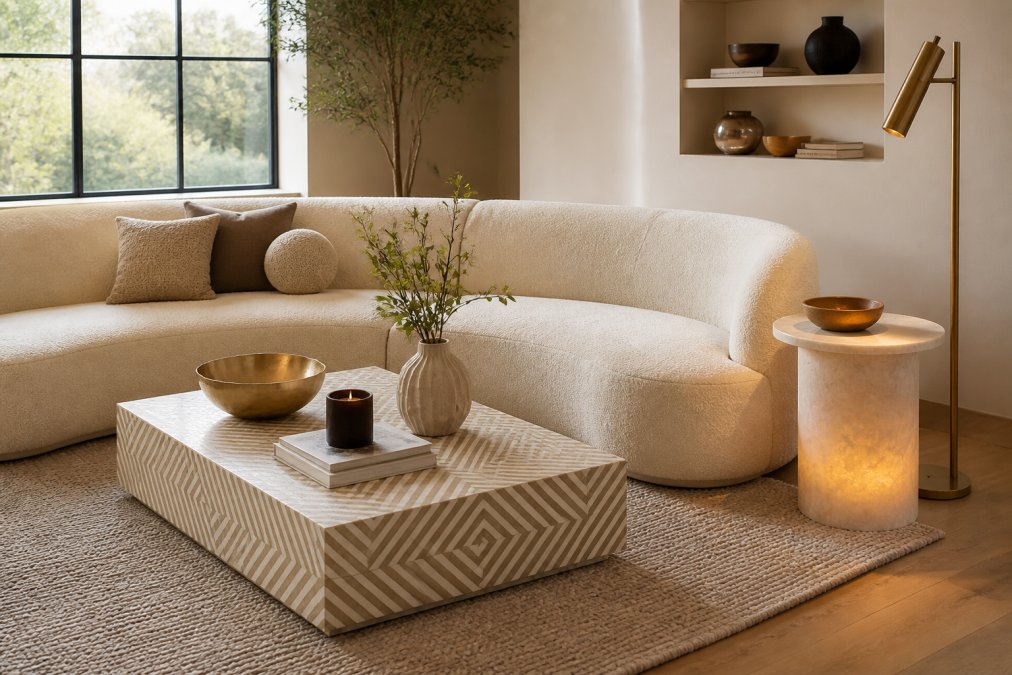
Boucle works because of textural contrast. The looped yarn reflects light unevenly, which gives a white or ivory chair depth that flat fabric cannot match. Pair a boucle accent chair with a smooth leather lounge chair and the room gains visual rhythm instantly.
Bone inlay brings a different energy. The Edessa coffee table pairs solid mango wood with hand-set inlay in a Nordic-inspired pattern. It reads bohemian without tipping into clutter.
Then there is stone. A travertine side table with an integrated LED band adds weight and warmth at once. It works indoors and on a covered patio.

| Piece | Material | Best Placement | Why It Works |
|---|---|---|---|
| Boucle lounge chair | Looped-yarn boucle | Reading nook | Adds soft texture |
| Bone inlay coffee table | Mango wood, bone | Living room center | Handcrafted focal point |
| Travertine side table | Natural stone | Beside a sofa | Grounds the layout |
| Ceramic pendant light | Stoneware | Above a dining table | Sculptural lighting |
Modern Minimalist Design and Transitional Style: Making Boutique Furniture Work
Boutique furniture fits modern minimalist and transitional interiors better than most people expect. The trick is scale, texture, and restraint, not matching a specific aesthetic label.
Minimalist rooms need texture to avoid feeling cold. A single boucle sectional in ivory does more for a bare loft than three patterned cushions ever would. The looped yarn catches light unevenly, so the surface shifts through the day. Flat fabric cannot do that.
Transitional rooms blend traditional and contemporary elements. They absorb artisan pieces even more easily. A bone inlay coffee table sits comfortably beside a clean-lined sofa because the inlay supplies the ornament the sofa lacks.
The Psychology of Texture and Color in a Room
This is where most buying guides stop short. Texture and color are not decoration. They are mood instruments.
White Boucle Solid Wood Arm Chair →
Rough, tactile surfaces can read as grounding. Smooth, reflective surfaces can read as energizing. Boucle, raw linen, and honed travertine lean warm and calm. Polished metal and glass lean cool and alert.
Color works similarly. Warm neutrals like ivory, oatmeal, and clay can support rest. Saturated accents raise visual energy and draw the eye. In a bedroom, that difference matters. In a home office, it can shape focus.
A practical approach is to pick one dominant texture and one accent texture per room. Then let color stay quiet. This is why an ivory boucle sectional with a bone inlay table works. The textures carry the interest. The palette stays calm.
Making It Work in Real Rooms
If you are coming from a strictly modern aesthetic, start with one piece. A sculptural ceramic pendant or a curved modular sofa introduces organic form without disrupting clean lines.
Room flow matters here. Leave at least 18 inches between a coffee table and seating. Measure before you commit to a curved sectional, since those silhouettes need breathing room. A curved piece that fits a straight wall will look cramped, not elegant.
One more habit helps. Live with a piece for a week before you style around it. Boutique furniture can change how a room feels, and that shift takes a few days to read clearly.
Caring for Boutique Materials: Maintenance and Longevity
Boutique materials need less maintenance than people fear, but they need the right kind. Natural fibers, stone, and hardwood all respond badly to harsh chemicals and excess moisture. The reason is simple. These materials are porous or protein-based, so they absorb what you put on them.
A Material-by-Material Care Guide
Most guides treat high-end materials as one category. They are not. Each behaves differently.
- Boucle and wool upholstery: Vacuum weekly with a brush attachment. The looped yarn traps dust deep in the pile, and a brush lifts it without pulling the loops.
- Organic cotton and linen: Wash cool and line dry. Hot water shrinks natural fibers and breaks down the weave over time.
- Milk/casein fiber: Treat it like a delicate protein fiber. Mild detergent only. Enzymes in standard cleaners digest protein fibers.
- Bone inlay furniture: Dust with a dry, soft cloth. Humidity is the real enemy, not use. Keep pieces away from bathroom doors and open windows in wet months.
- Travertine marble: Blot spills immediately. Reseal annually if used outdoors. The stone is porous, so unsealed surfaces stain from the inside.
- Leather: Keep it out of direct sun. Rotate cushions monthly for even wear.
Why the Wrong Cleaner Causes Permanent Damage
Acids etch travertine and bone inlay. That damage cannot be polished out, because the acid changes the surface chemistry, not just the finish. Vinegar, bleach, and abrasive cleaners all fall into this category.
The same logic applies to upholstery. Harsh solvents strip the natural oils from wool and casein fiber, leaving them brittle and dull. A gentle pH-neutral cleaner does the job without that cost.
For deeper cleaning, follow the FTC guidance on caring for textile products and always test any product on a hidden area first.
Longevity as the Real Sustainability Story
Caring for a piece well is the most sustainable choice you can make. A durable sofa avoids the waste of replacements. That is why commercial-grade furniture and durability belong in the same conversation as eco-friendly materials.
Hypoallergenic upholstery and OEKO-TEX certified textiles are tested for harmful substances, which means fewer harsh additives in the weave. Portugal-woven bedding and organic cotton linens follow the same principle. Better fiber, gentler care, longer life.
Budgeting for Investment Furniture Without Compromising Your Vision
Budgeting for investment furniture means planning by room and by decade, not by impulse. A durable piece can cost less per year than frequent replacements.
Start with a simple framework. List the rooms you use daily and rank them by visibility. Living rooms and dining rooms earn the largest share of the budget because you and your guests see them most.
Then decide where to spend and where to save:
- Spend on: seating frames, dining tables, and anything used daily
- Save on: accent decor, mirrors, and seasonal textiles
- Phase it: one anchor piece per room, then layer over twelve to eighteen months
The Consumer Financial Protection Bureau offers household budgeting tools that help you plan a large purchase without straining monthly cash flow.
A common mistake is buying everything at once. Rooms furnished in a single weekend can look like showrooms, not homes. Buying slowly also lets you wait for small-batch pieces, which restock unpredictably.
Conclusion
Furnishing a home with pieces that carry meaning takes patience, and the reward is a space that reflects your values rather than a trend cycle. Fluent Trends curates ethically made furniture and decor from women-owned businesses and global artisans, with materials chosen for longevity. Our collection includes commercial-grade boucle sectionals, handcrafted bone inlay tables, and sustainably sourced stone pieces built for daily life. Explore the Artisan Collection and choose pieces designed to elevate your living space for years, not seasons.
Frequently Asked Questions
How does boutique furniture differ from mass-produced items?
Boutique furniture is made in small batches by skilled artisans, often using traditional techniques passed down through generations. Mass-produced pieces rely on assembly lines and synthetic materials. Boutique pieces use solid woods, hand-applied finishes, and natural fabrics like boucle or top-grain leather. Each piece carries subtle variations that mass production cannot replicate. The result is furniture with a distinct character and a longer functional life.
What materials are best for durable and hypoallergenic furniture?
Look for solid hardwood frames, OEKO-TEX certified textiles, organic cotton, wool, jute, and linen. These materials resist allergens and hold up to daily use. Boucle upholstery in commercial-grade construction offers both texture and resilience. Avoid furniture with unknown synthetic fillers or chemical-heavy finishes. Hypoallergenic options matter most in bedrooms and living areas where you spend extended time.
Why is commercial-grade furniture a smart investment for homes?
Commercial-grade furniture is built to withstand frequent use in hospitality and office settings. That same durability translates to residential spaces where families gather daily. Reinforced joinery, corner-blocked frames, and high-density foam keep cushions from sagging. A commercial-grade sectional rated for 600 pounds and constructed with kiln-dried wood will outlast standard residential sofas by years. You replace it less often, which saves money over time.
How can I verify that sustainability claims about boutique furniture are genuine?
Check for third-party certifications like OEKO-TEX for textiles, HealthRATE for indoor air quality, and CAL TB 117-2013 compliance for flammability safety. Ask whether the brand names its artisan partners and describes where materials are sourced. Transparency about supply chains, fair wages, and low-waste production methods separates real sustainability from marketing language. A brand that shares its makers' stories and certifications is easier to trust.