

Copper Cookware Pros and Cons for the Modern Kitchen
Donna MaloneSo, is copper cookware actually worth it?
The honest answer: it depends entirely on what you value in the kitchen. If you crave lightning-fast heat control and precision, then absolutely. But if you’re looking for no-fuss, low-maintenance convenience, you might want to look elsewhere.
Copper’s biggest selling point is its incredible thermal performance. But that performance comes with a price—both in dollars and in the elbow grease required to keep it looking good.
The Essential Pros And Cons Of Copper Cookware
Choosing new cookware is a big deal. It’s the tool you rely on to bring your culinary ideas to life, so the material really matters. For centuries, serious chefs and passionate home cooks have sworn by copper, and not just because it’s beautiful.
Think of copper cookware as the high-performance sports car of the kitchen. It gives you immediate, hair-trigger responsiveness and incredible precision, but it demands a skilled hand and a commitment to regular upkeep.
This guide will break down the real-world pros and cons of copper cookware, moving past the showroom shine to get into the practical realities of owning it. Is that amazing heat control worth the meticulous polishing sessions? Does its stunning look justify the premium price tag? Let’s find out.
Copper Cookware At a Glance Key Tradeoffs
Before we dive deep, here’s a quick overview of what makes copper so celebrated and, at the same time, so demanding. This table sums up the main trade-offs you'll face.
| Key Pros | Key Cons |
|---|---|
| Instant Heat Response: Heats up and cools down almost immediately for precise temperature control. | High Cost: One of the most expensive cookware materials on the market. |
| Flawless Heat Distribution: Spreads heat perfectly evenly, eliminating annoying hot spots. | Demanding Maintenance: Requires regular polishing to prevent tarnishing and maintain its shine. |
| Unmatched Aesthetics: The warm, rosy glow of polished copper is a stunning addition to any kitchen. | Reactive Surface: Unlined copper can react with acidic foods, affecting taste and color. |
| Naturally Antimicrobial: Copper has properties that can help keep your kitchen more hygienic. | Prone to Dents: Softer than steel or iron, so it can scratch and dent more easily. |
Ultimately, copper cookware represents a trade-off between world-class performance and day-to-day practicality. It truly shines in the hands of cooks who will use its unique abilities and are willing to commit to its care.
Key Factors to Consider
Copper’s defining characteristic is its phenomenal heat conductivity. To put it in perspective, pure copper conducts heat about 20 times faster than stainless steel. This allows for incredibly rapid temperature changes, giving you the kind of precise control needed for delicate sauces, caramelizing sugar, or getting the perfect sear on a steak.
But here’s the catch: copper is also a reactive metal. When it comes into contact with acidic ingredients like tomatoes, citrus, or vinegar, it can leach into the food, sometimes creating a metallic taste. This is why most copper pans are lined with a non-reactive metal like stainless steel or tin.
At the end of the day, it all comes down to your cooking style and priorities. If you value convenience and bulletproof durability above all else, materials like cast iron are probably a better fit. You can explore some fantastic, rugged options in this 5-piece cast iron cookware set.
But if culinary precision is your ultimate goal and you see cooking as a craft, copper’s performance is simply in a league of its own. Learn more about the copper cookware market's growth.
Why Chefs Prize Its Unmatched Heat Control
Ever tried to drive a high-performance sports car with a delayed steering wheel? You turn the wheel, but the car only reacts a few seconds later. That’s what cooking with slow, clunky cookware feels like. Copper, on the other hand, is the race car of the kitchen—it responds to your every command, instantly.
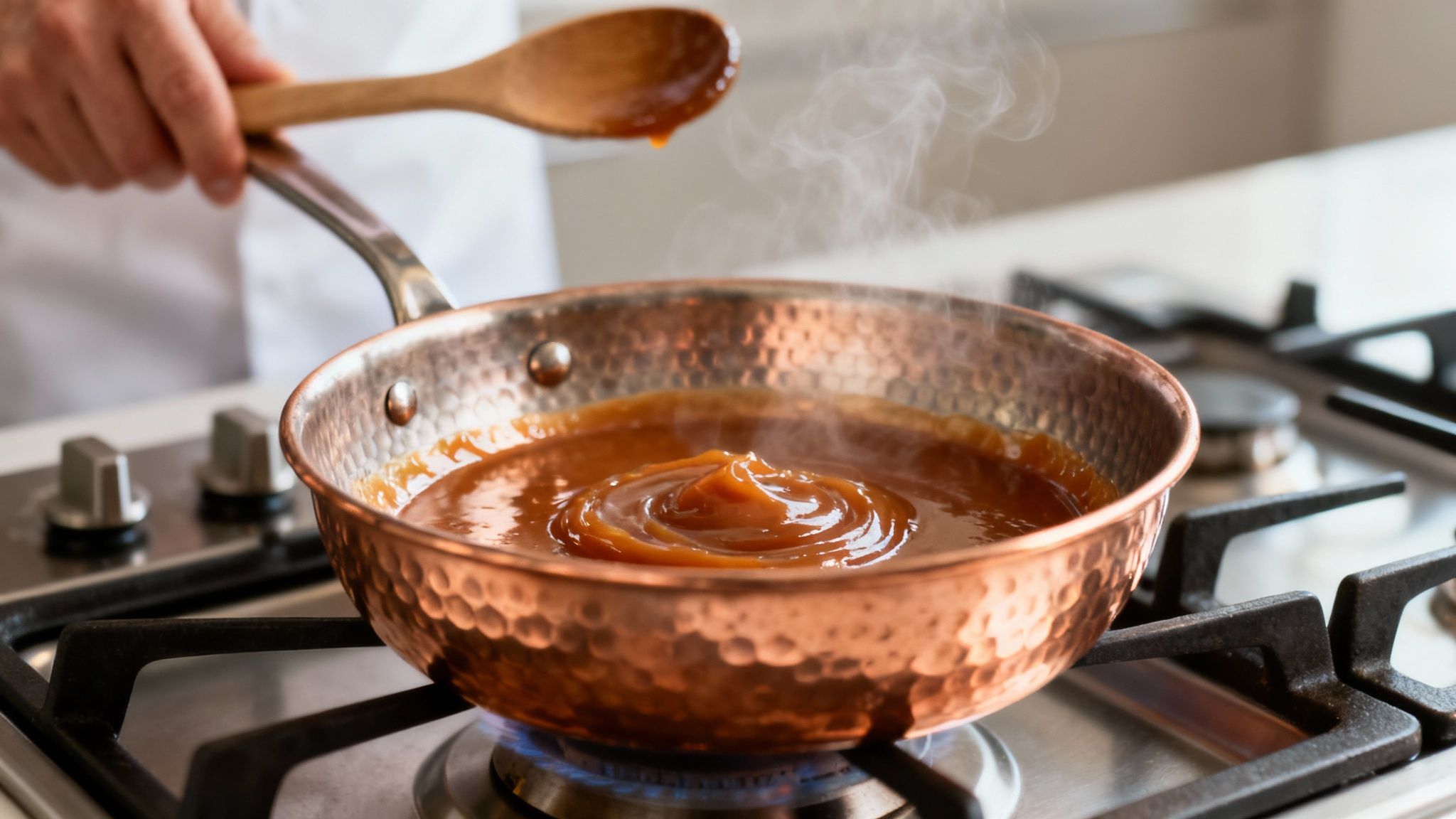
This incredible responsiveness is the single biggest reason professional chefs and serious home cooks are willing to invest in it. The secret is its exceptional thermal conductivity, which is just a fancy way of saying how quickly a material moves heat around.
Pure copper clocks in at around 400 W/mK (Watts per meter-Kelvin). To give you some context, stainless steel is a sluggish 16 W/mK, and even trusty cast iron only manages about 52 W/mK. This means copper heats up and cools down with astonishing speed, giving you a level of command that other materials just can't touch.
Turning Science Into Superior Meals
This isn't just about impressive numbers on a chart; it translates directly into better food on the plate. The precise control you get with copper prevents common kitchen disasters and helps elevate your cooking from good to truly great.
When you turn down the flame under a copper pot, the temperature inside drops almost immediately. This is what stops a delicate sauce from breaking, halts sugar from burning the instant it hits that perfect amber color, and keeps milk from boiling over the sides.
The ability to make micro-adjustments in temperature is what separates a decent meal from a flawless one. With copper, the pan becomes an extension of your intentions, not an obstacle to them.
Real-World Examples of Copper's Performance
Let's move from theory to the delicious results you can actually taste. That even heat distribution and rapid response time open up a whole new world of precision cooking.
Here are a few moments where copper really shines:
- Perfectly Seared Scallops: Copper heats the entire surface of the pan evenly, getting rid of those annoying hot spots. This lets you get a deep, golden-brown crust on your scallops without ever overcooking their delicate centers.
- Flawless Caramel and Confections: Candy making is all about hitting and holding exact temperatures. Copper’s ability to react instantly means your sugar work won’t suddenly crystallize or scorch.
- Velvety Hollandaise Sauce: This notoriously tricky sauce can curdle if the heat gets away from you. A copper saucepan lets you gently cook the egg yolks, allowing you to pull it off the heat the very moment it hits that perfect, silky consistency.
This level of control is also crucial when you're working with different fats and oils. For anyone serious about getting the most out of their cookware, a solid understanding of cooking oil smoke points is key. Copper lets you bring your oil right to the perfect frying temperature without accidentally pushing it past its smoke point.
The Power of Even Heating
Beyond just being fast, copper’s ability to spread heat evenly across the bottom and up the sides of the pan is a massive advantage. This quality is what saves you from so many common cooking frustrations.
In a lesser pan, the spot directly over the burner gets way hotter than the edges, leading to food that's cooked unevenly. You know the drill—one part of your dish is scorched while another is still raw.
Copper solves this by spreading the heat out like ripples in a pond. This uniform temperature ensures everything in the pan cooks at the same rate, from the very center all the way to the rim. It’s this one-two punch of speed and consistency that makes copper a true kitchen powerhouse.
More Than Pans: Functional Kitchen Art
Copper cookware has a unique ability to do something few other kitchen tools can: it completely elevates the feel of the room. It's more than just a high-performance pan; it’s a stunning statement piece. Think of it as functional art that brings a certain warmth and old-world character to your kitchen.
It’s not just another pan; it's a centerpiece.
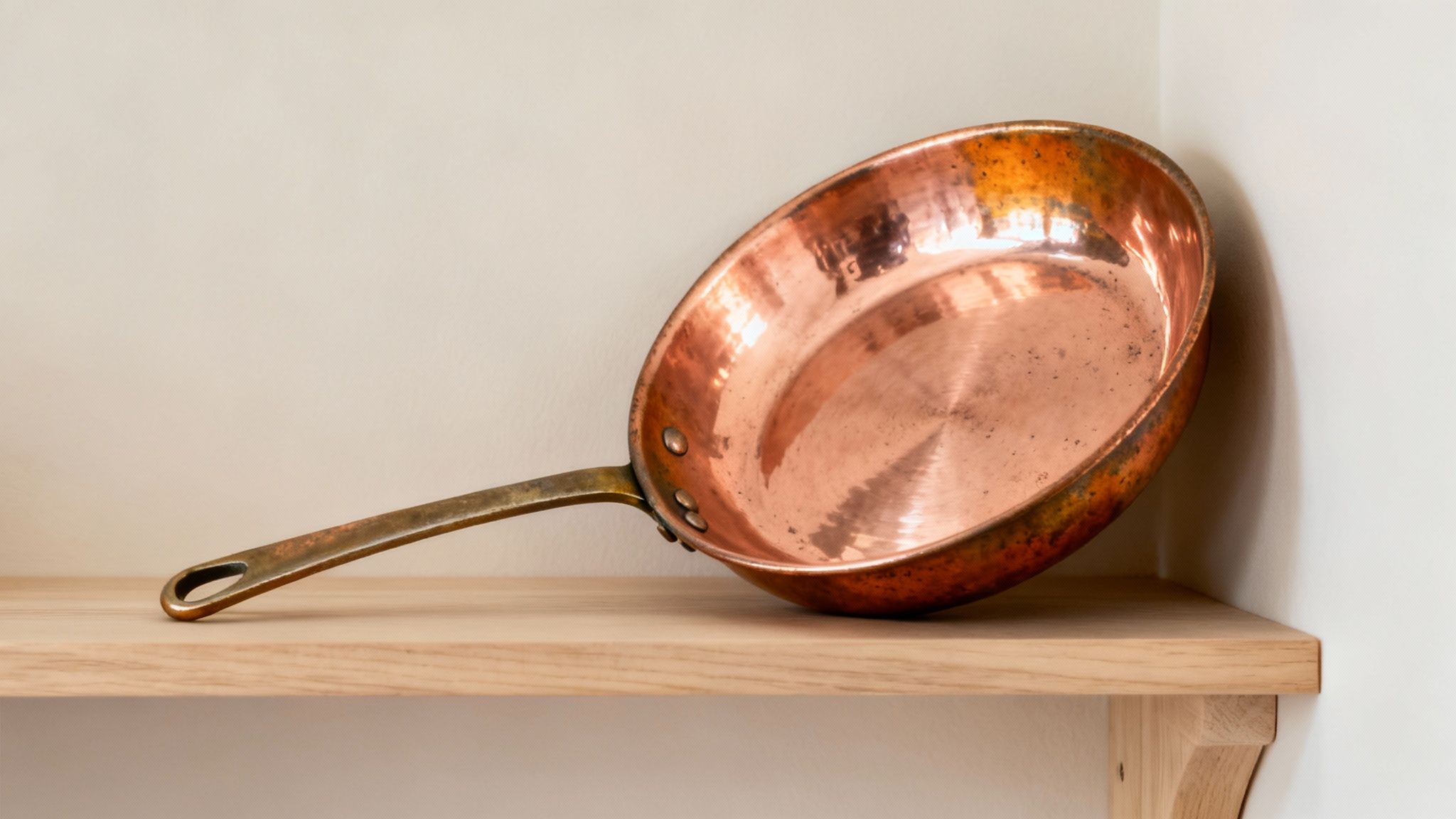
When you own a copper pan, you're also owning a piece of visible history. Brand new, it has that brilliant, almost rosy shine that catches the light beautifully. But over time, with every meal you cook, it starts to tell a story by developing a deep, rich patina.
This natural darkening isn't a flaw. It’s a sign of character, much like how a fine leather wallet softens with use or a classic watch ages with its owner.
An Investment in Enduring Style
This visual appeal is a massive pro for anyone who cares about their home's design, though some might see the upkeep as a con. With a warm patina that darkens beautifully—gaining 10-15% more luster after a year of use—it’s easy to see why copper pieces have graced kitchens for centuries. In fact, North America now accounts for over 40% of the global copper kitchenware market, largely thanks to its popularity in premium homes where style is just as important as function. You can learn more about these trends in the copper kitchenware market.
Unlike trendy gadgets or non-stick pans you have to replace every few years, a well-made copper pan is built to last. The best ones are crafted from thick-gauge copper, usually between 1.5mm and 2.5mm, giving them a satisfying heft and incredible durability. This isn't cookware you throw out; it's cookware you pass down.
Owning copper is a commitment to a different way of thinking. It’s an investment in a single, high-quality tool that can serve your family for generations, rather than a cycle of buying and replacing cheaper alternatives.
This longevity also makes copper a surprisingly sustainable choice. By investing in one pan that lasts a lifetime, you cut down on the waste from discarding worn-out, lower-quality cookware. A single copper skillet can easily outlive dozens of non-stick pans, keeping them out of landfills.
From the Stove to the Dining Table
Copper’s beauty isn’t just for display racks, either. Its natural elegance makes it perfect for serving, effortlessly bridging the gap between the kitchen and the dining room.
Imagine bringing a rich, bubbling coq au vin or a perfectly seared paella straight to the table in the same gleaming pan it was cooked in. It adds a touch of rustic sophistication that makes any meal feel a little more special.
This dual purpose—a high-performance cooking tool that’s also a beautiful serving piece—adds another layer of value. It simplifies cleanup and enhances the whole dining experience, proving that the tools we use every day can be as beautiful as they are effective.
The Reality of Maintenance and Food Reactivity
For all its stunning beauty and world-class performance, copper cookware asks for something in return: a little commitment. In the whole "copper cookware pros and cons" debate, the two biggest things to wrap your head around are its need for regular polishing and its natural reactivity with certain foods.
Getting a handle on these two points is the key to a happy, long-term relationship with your pans. Let's be honest—owning copper is a hands-on experience, but it absolutely doesn't have to be a chore.
Understanding Food Reactivity
That word "reactivity" might sound a bit scientific, but the idea is actually pretty simple. Pure, unlined copper can have a chemical reaction with acidic or alkaline foods. We're talking about ingredients like tomatoes, citrus juices, vinegar, and wine.
When these foods hang out in an unlined copper pan for too long, a tiny amount of copper can leach into your meal. This can sometimes give the food a slightly metallic taste and, in larger amounts, isn't great for you. This is exactly why the vast majority of copper cookware sold today isn't just pure copper; it's lined with a different, non-reactive metal on the inside.
Think of this protective lining as a barrier. It gives you the best of both worlds—that incredible heat control of copper on the outside and a completely safe, stable cooking surface on the inside.
Lined vs. Unlined Copper: A Clear Breakdown
Most of the time, you'll be cooking with lined copper, but it's super important to know the difference. Unlined copper is really a specialty tool, saved for very specific tasks. It’s perfect for whipping egg whites in a mixing bowl (the copper ions actually help create a more stable foam) or for making certain jams and candies where precision temperature is everything.
For all your everyday cooking, you’re going to run into two main types of linings:
- Stainless Steel: This is the modern champion. It's incredibly durable, totally non-reactive, and can handle high heat like a pro. This is the workhorse lining, perfect for searing steaks, sautéing vegetables, and pretty much any daily meal you throw at it.
- Tin: This is the traditional, old-school lining. Tin is much softer and offers an almost non-stick surface that's just wonderful for delicate things like fish or eggs. The catch? It's less durable, scratches easily with metal utensils, and can actually melt if the pan gets too hot while empty (above 450°F). Tin-lined pans also need to be "re-tinned" every few years as the lining eventually wears down.
For most home cooks, a stainless steel lining hits the sweet spot between performance and practicality. It completely removes any worry about food reactivity while being tough enough for the daily grind.
The Ritual of Polishing
Copper tarnishes. There's no getting around it. It’s a natural process where the shiny surface oxidizes from heat and air, developing a deeper, darker patina over time. Some people actually love this aged, vintage look, but most of us want to maintain that signature warm, rosy glow.
Keeping your copper gleaming just requires a bit of regular polishing.
Instead of seeing this as a chore, a lot of copper owners frame it as a mindful ritual—a few quiet minutes of care that keeps a beautiful tool in top shape. The best part? You don't need expensive, harsh chemicals to get the job done.
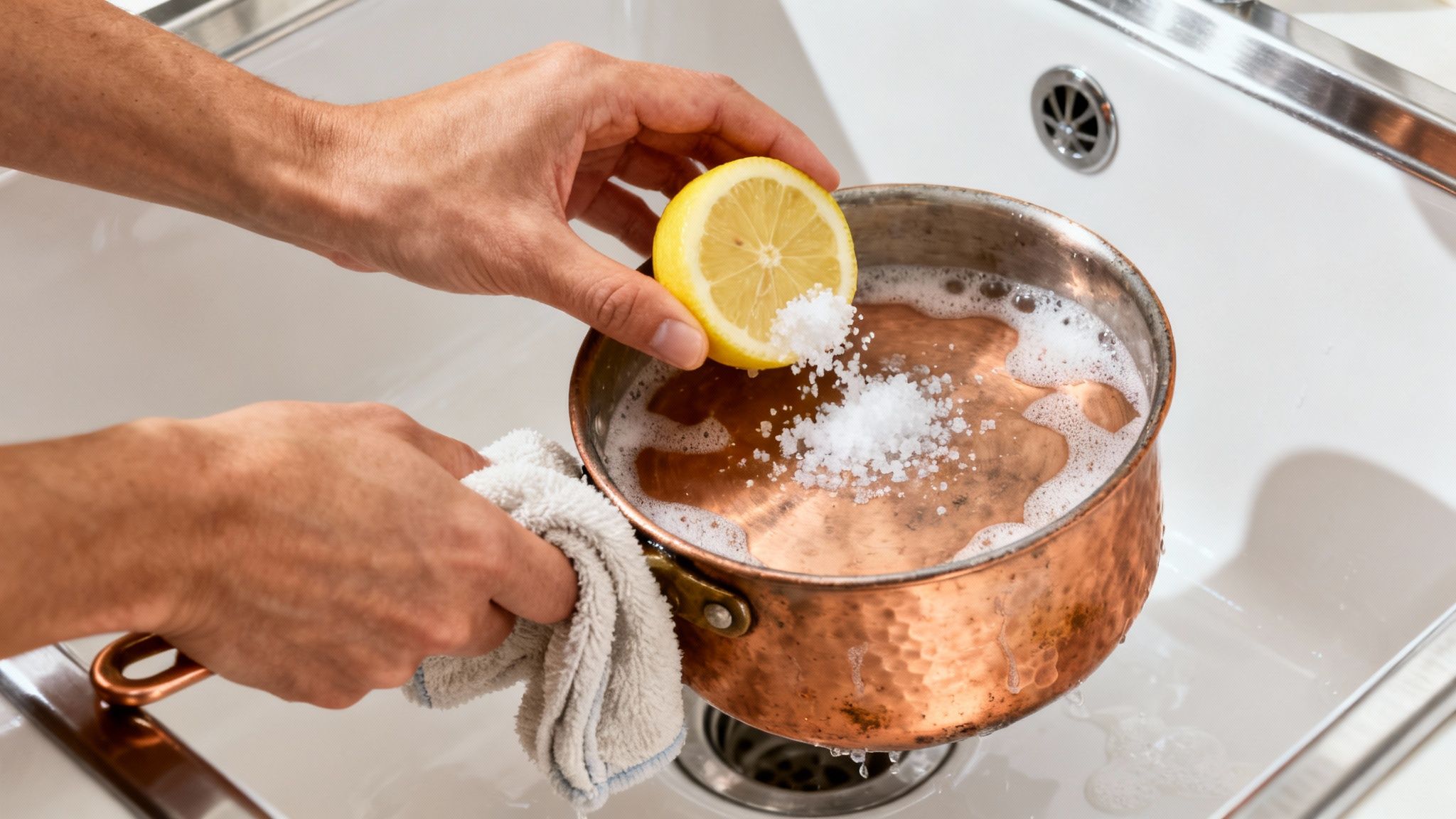
Simple things from your pantry are often the most effective. A quick paste made from salt and either lemon juice or vinegar works wonders. The mild acid cuts right through the tarnish, and the salt acts as a gentle abrasive.
A Simple Polishing Method:
- Make the Paste: In a small bowl, mix roughly equal parts salt and lemon juice (or white vinegar) to form a gritty paste.
- Apply Gently: Use a soft cloth or sponge to apply the paste to the outside of your pan.
- Buff it Out: Rub the paste in small, circular motions. You’ll be amazed at how quickly the tarnish starts to lift, revealing the bright copper underneath.
- Rinse and Dry Completely: Once the shine is back, rinse the pan with warm water and dry it thoroughly with a clean, soft towel. Any leftover moisture can cause new water spots to form, so be meticulous here.
This simple routine, done whenever you notice things getting a little dull, will keep your cookware looking as gorgeous as the day you bought it. It's a small investment of time that protects a significant investment in your kitchen.
The Price Tag: Is Copper Cookware Worth the Investment?
Let's not beat around the bush: copper cookware is expensive. It's one of the biggest hurdles for home cooks, and for good reason—it’s often one of the priciest options on the shelf. But that cost isn't arbitrary. It’s a direct reflection of the quality of the materials and the immense skill needed to create these pieces.
Think of it this way: you're not just buying a pan. You're investing in a high-performance cooking tool. Copper is a valuable metal, and shaping it into a perfectly responsive pan isn't something a machine can do well. It takes an artisan's touch to hammer, shape, and line each piece, and that level of craftsmanship comes at a premium.
A well-made copper pan isn't something you'll replace in a few years. It's designed to last for decades, easily outliving a dozen cheap non-stick skillets. When you look at it that way, the upfront cost starts to make a lot more sense. This is buy-it-for-life cookware.
Why Is Copper So Expensive?
So what really drives up the price? It boils down to a few key factors that set copper apart from mass-market materials like aluminum or stainless steel. Once you see what goes into it, the cost becomes much clearer.
Here’s a quick breakdown of what you're paying for:
- The Raw Material: Copper is a semi-precious metal, making it inherently more valuable than the steel or aluminum used in most cookware.
- Intensive Craftsmanship: It takes serious time and skill to shape thick copper and apply a durable, smooth lining. This is a hands-on process that can't be rushed.
- Performance Engineering: To create a pan that heats with such perfect evenness, manufacturers use complex bonding processes, especially for multi-clad designs that blend copper with other metals.
It’s like choosing between a handmade leather briefcase and a mass-produced nylon one. They both carry things, but one is built for performance, longevity, and timeless style. The price simply reflects that commitment to quality.
Health and Safety: Setting the Record Straight
Now, let’s tackle the big question: is copper cookware safe? The answer is a clear and simple yes, as long as you're using modern, lined pans for your everyday cooking. Any myths you’ve heard about copper toxicity usually come from a misunderstanding of how these pans are made today.
The secret is the protective lining, which is almost always stainless steel or tin. This lining creates a non-reactive barrier between the copper and your food, which is crucial. It stops any copper from leaching into your meal, especially when you're cooking with acidic ingredients like tomato sauce, wine, or citrus.
You can find unlined copper pans, but they are specialty tools, not all-rounders. Their reactivity is actually a benefit for specific tasks, like whipping egg whites to lofty peaks in a mixing bowl or making delicate caramels. For everything else, a lined pan is the safest and best choice.
Copper even has some surprising health benefits. It's naturally antimicrobial and can kill harmful bacteria like E. coli on contact within just a few hours. While the global cookware market continues to grow, copper’s price—often four times that of steel—can be a barrier. However, when you weigh the copper cookware pros and cons, the safety and performance of modern lined pans are a huge plus. You can find more details on copper kitchenware market trends to see how it fits into the broader picture.
Is Copper Cookware the Right Choice for You?
So, we've walked through all the good and the bad of copper cookware. Now for the million-dollar question: is it right for you? This is where it gets personal. It's less about spec sheets and more about how you actually move around your kitchen day-to-day.
Let’s be honest. For some people, a full set of gleaming copper pans is the ultimate kitchen dream. For others, it’s a beautiful but high-maintenance headache waiting to happen. The only way to know is to take a hard look at your own habits before you pull the trigger on a big purchase.
This decision tree can help you map out what really matters to you—whether it's your budget, health considerations, or just getting dinner on the table without a fuss.
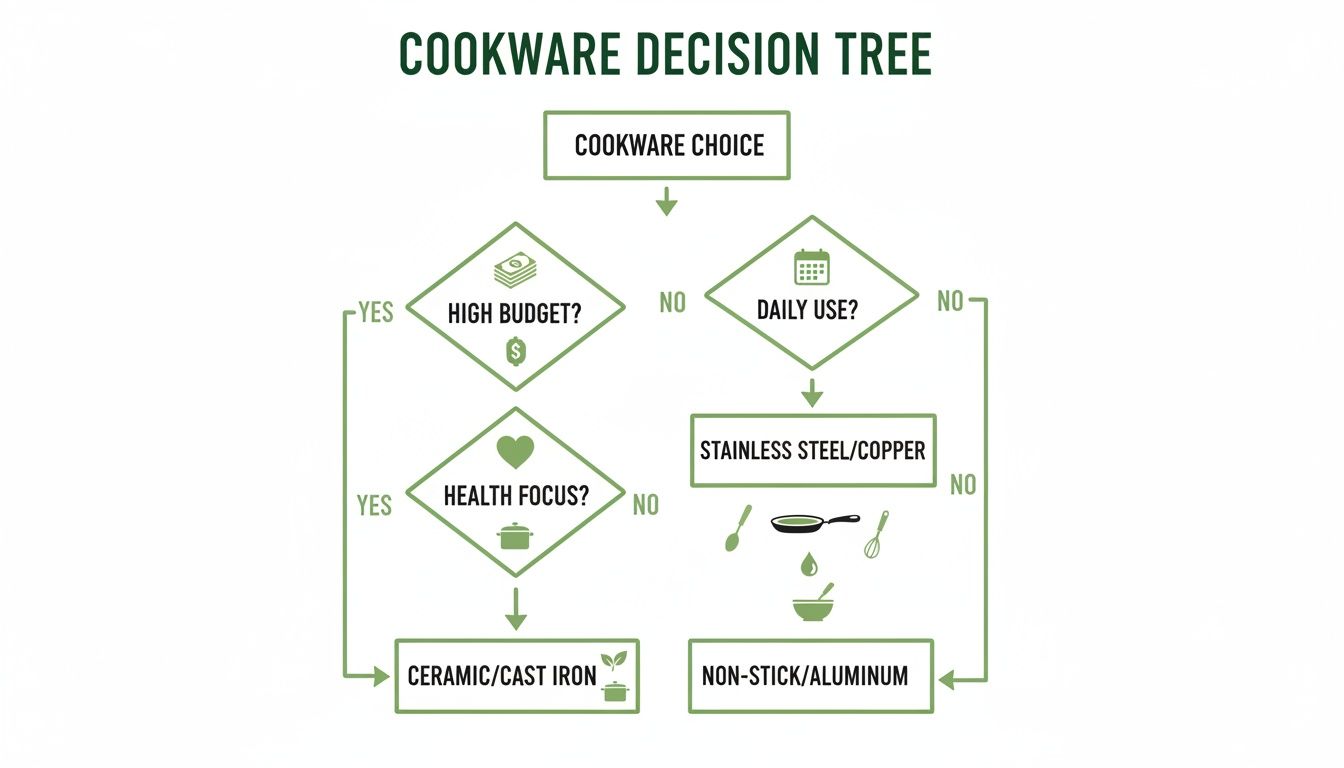
As you can see, different priorities lead you down different paths. Copper really shines for those who value incredible performance and classic looks, and are ready to invest the time and money to get them.
Matching Copper to Your Cooking Style
To figure this out, you need to know what kind of cook you are. Your answer will tell you whether to go all-in on copper, sprinkle it in selectively, or skip it altogether.
-
The Passionate Artisan: You're the one who obsesses over the perfect simmer for a delicate sauce and lives for a flawless, edge-to-edge sear on a steak. Cooking is your craft. Verdict: A top-notch copper skillet or saucepan isn't just a pan; it's a game-changer. That level of heat control will feel like it’s reading your mind.
-
The Design-Driven Curator: Your kitchen is a statement. Every single thing in it is chosen for its beauty as much as its utility. Verdict: For you, copper is practically a must-have. A rack of shimmering copper pots is more than just cookware—it's a timeless piece of functional art.
-
The Busy Weeknight Warrior: Your main goals are getting a healthy meal on the table fast and having a cleanup that doesn't eat up your evening. Efficiency is everything. Verdict: A full copper set will probably drive you crazy. The upkeep will feel like a second job. But! A single copper frying pan with a brass handle could be your perfect piece, giving you that touch of style and performance for specific jobs without the full commitment.
Your cookware shouldn’t fight your cooking style; it should elevate it. The best tools are the ones that make you feel happy and in control at the stove.
Remember, you don't have to choose just one team. Most savvy home cooks build a "mixed-material" kitchen. They use copper for the tasks where it truly excels and then lean on other workhorses for everyday jobs. It's smart to weigh the investment against alternatives, like a durable stainless steel pasta pot that can take a beating. By matching the pan to the plan, you create a kitchen that's not just gorgeous but incredibly effective.
Got Questions About Copper Cookware? We’ve Got Answers.
Let’s clear up a few of the most common questions people have before they take the plunge. Think of this as the final check-in to make sure copper is the right fit for your kitchen.
Can I Use Copper Pans on an Induction Stove?
Usually, no. Copper on its own isn't magnetic, which is what induction cooktops need to generate heat. It's a classic roadblock for anyone with a modern, glass-top stove.
But here’s the good news: many top-tier brands have figured this out. They now make induction-ready copper pans by bonding a magnetic steel plate to the bottom. So, if you have an induction cooktop, you just need to be a savvy shopper. Look for pans explicitly labeled "induction-ready" or "induction-compatible" to get that incredible copper performance on your modern stove.
What's the Real Difference Between Tin and Stainless Steel Linings?
The lining is the unsung hero of a copper pan. It's the protective barrier between your food and the raw copper, and the two main options—tin and stainless steel—are worlds apart.
- Stainless Steel: This is the modern workhorse. It’s tough as nails, totally non-reactive (so no metallic taste in your tomato sauce), and a breeze to clean. While it doesn't transfer heat quite as magically as the copper beneath it, its sheer durability makes it the go-to for most home cooks.
- Tin: This is the old-school, traditional choice. It creates a wonderfully slick surface that’s almost non-stick and offers fantastic heat transfer. The catch? Tin is soft. It scratches easily and can actually melt if a pan gets too hot while empty (above 450°F / 232°C). Tin-lined pans also need to be professionally re-tinned every so often, which is an extra cost to keep in mind.
For most of us, stainless steel is the clear winner, offering the best mix of performance and practicality. It's fuss-free and built for the chaos of a busy kitchen. Tin is really for the culinary purist who appreciates its unique cooking properties and doesn't mind the extra care.
How Can I Spot a High-Quality Copper Pan?
It's easy to be dazzled by that beautiful shine, but not all copper is created equal. To know if you’re holding a serious piece of cookware or just a pretty pan, you need to play detective and check a few key details.
Look for these three things to separate the best from the rest:
- Thickness: This is non-negotiable and the number one sign of quality. A great copper pan should feel substantial, measuring between 1.5mm and 2.5mm thick. Anything thinner will warp under high heat and won’t give you that perfectly even temperature control.
- The Lining: Take a close look inside. Whether it's steel or tin, the lining should be perfectly smooth, with no bubbles, gaps, or funky imperfections. A flawless interior is crucial for safety and longevity.
- The Handles: A heavy pan needs a solid handle. Look for sturdy materials that don’t get hot too fast, like cast iron, bronze, or stainless steel. Most importantly, check how they’re attached—they should be secured with beefy rivets that feel totally solid and well-balanced when you pick the pan up.
At Fluent Trends, we believe the right tools don't just cook food—they transform the entire experience, turning a daily chore into a creative joy. Our collection of high-quality cookware is carefully selected to bring exceptional performance and timeless beauty into your home. Explore our pieces and find the inspiration that will last for years to come.
Discover our designer-approved kitchen and dining collection at Fluent Trends