

10 Essential Decorating Trends for Living Rooms in 2025
Donna MaloneYour living room is more than just a room; it's the heart of your home, a space for relaxation, connection, and self-expression. As we move forward, the way we design this central hub is evolving. Forget rigid rules and one-size-fits-all aesthetics. This year's most influential decorating trends for living rooms are all about personality, comfort, and making conscious choices that reflect your lifestyle.
Whether you're drawn to the bold exuberance of maximalism or the serene calm of Japandi-inspired warm minimalism, there's a movement that speaks to your unique style. We've curated the ten most significant trends shaping our living spaces, from the resurgence of curved furniture to the embrace of moody color palettes. These aren't just fleeting styles; they represent a deeper shift towards creating homes that are both beautiful and genuinely livable. Beyond our specific picks, you can explore the latest interior design trends for 2025 more broadly for additional inspiration.
This guide will provide actionable tips and practical examples to help you implement these concepts effectively. Dive in to discover how to create a space that is not only stylish but also a true reflection of you, filled with pieces and arrangements that support your daily life.
1. Maximalism
Maximalism is a bold and expressive design philosophy that celebrates abundance, pattern mixing, and deeply personal collections. It stands in direct contrast to minimalism, championing a "more is more" approach where spaces are filled with color, texture, and objects that tell a story. This trend allows for a rich, layered aesthetic that reflects the inhabitant's personality, passions, and history, making it one of the most personal decorating trends for living rooms today.
Why It's Trending
This approach has gained popularity as people seek to create homes that feel authentic and joyful rather than sterile or staged. It’s an embrace of individuality, seen in the work of icons like Kelly Wearstler and Justina Blakeney.
How to Implement Maximalism
Achieving a curated maximalist look requires a thoughtful approach to avoid a cluttered feel. It's about intentional layering, not random accumulation.
- Establish a Unifying Palette: Start with a core color scheme of three to five colors. This will create harmony among disparate patterns, furniture styles, and art pieces, ensuring the room feels cohesive rather than chaotic.
- Layer Textures: Combine a variety of materials. Pair a velvet sofa with silk pillows, a shag rug, and a polished metal coffee table to add depth and sensory richness.
- Curate, Don't Collect Randomly: Group similar items together, like a collection of ceramic vases on a mantle or a gallery wall of mismatched frames. This creates impactful focal points.
- Balance with Negative Space: Even in a maximalist room, the eye needs a place to rest. Consider leaving one wall a neutral color or ensuring there is some open floor space to prevent the room from feeling overwhelming.
Explore our collection of bold textiles and unique art to begin your maximalist journey.
2. Sustainable and Eco-Friendly Design
Sustainable and eco-friendly design is a conscientious approach that prioritizes the planet without sacrificing style. It centers on decorating with environmentally conscious materials, repurposed items, and ethically sourced pieces. This trend moves away from fast furniture, focusing instead on longevity, craftsmanship, and reducing our carbon footprint. By choosing sustainable options, you create a living room that is not only beautiful and healthy but also tells a story of mindful consumption.
Why It's Trending
Growing environmental awareness has shifted consumer behavior towards making more responsible choices. Shoppers are actively seeking brands with transparent supply chains and products made from renewable resources. This trend reflects a collective desire to create homes that align with personal values, blending aesthetics with ethics for a space that feels good in every sense.
How to Implement Sustainable Design
Incorporating eco-friendly elements is about making thoughtful, lasting choices rather than a complete overhaul. It's one of the most accessible decorating trends for living rooms.
- Prioritize Vintage and Secondhand: Shop at thrift stores, antique markets, and online marketplaces for unique furniture with a past. A vintage mid-century modern credenza or a pre-loved armchair adds character that new items can't replicate.
- Invest in Quality, Not Quantity: Choose well-made furniture from artisans or reputable brands designed to last for decades. This reduces waste and saves money over time by avoiding the need for frequent replacements.
- Opt for Natural and Recycled Materials: Select sofas upholstered in linen or organic cotton, rugs made from wool or jute, and tables crafted from reclaimed wood. Look for certifications like Forest Stewardship Council (FSC) to ensure responsible sourcing.
- Upcycle and Repurpose: Before buying new, consider how you can refresh existing pieces. A fresh coat of low-VOC paint, new hardware, or updated upholstery can completely transform a tired piece of furniture.
Discover our guide to the best sustainable furniture brands to find pieces that match your style and values.
3. Warm Minimalism (Japandi)
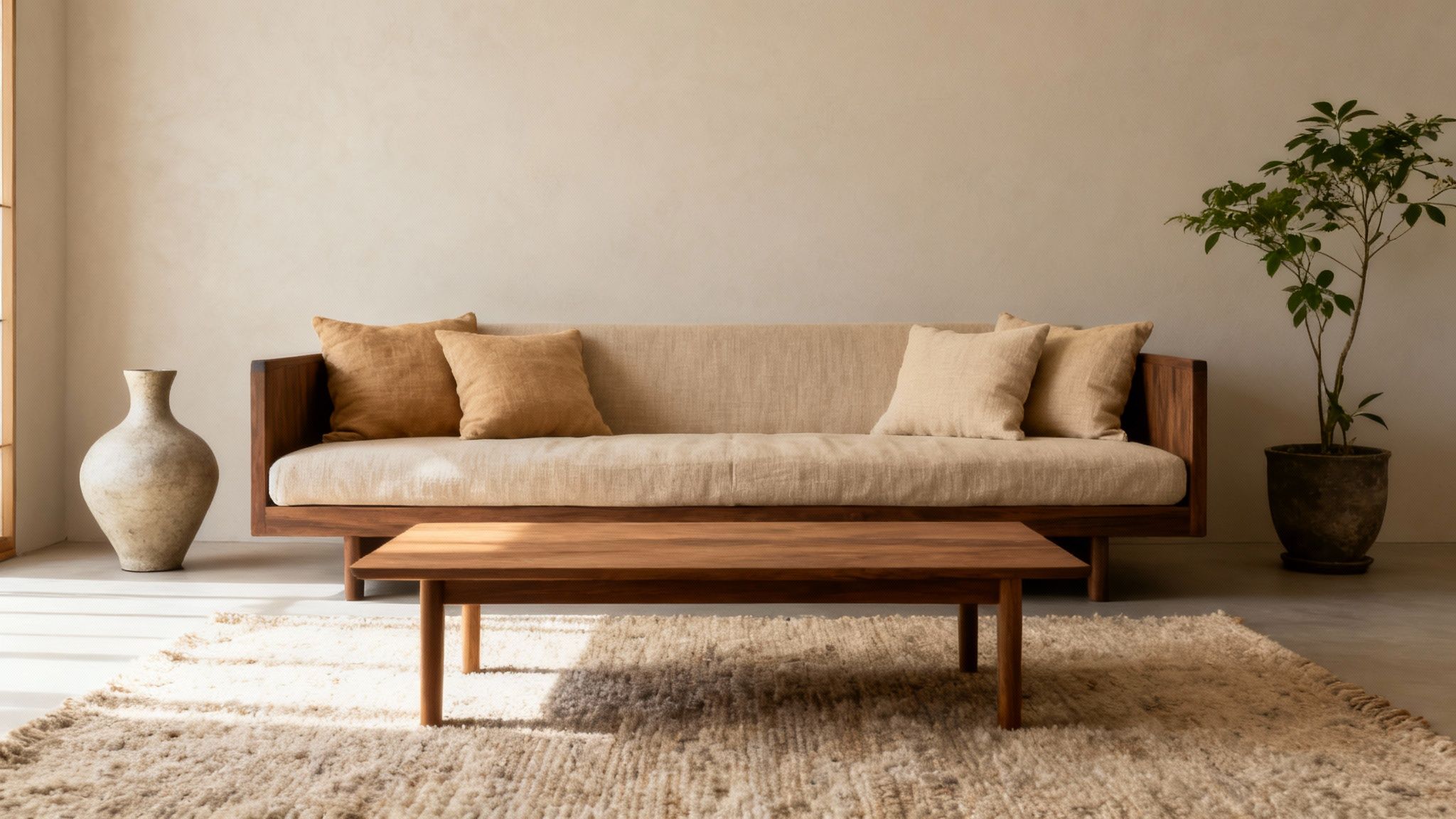
Warm minimalism, often known as Japandi, is a sophisticated hybrid design that merges the sleek functionality of Japanese aesthetics with the rustic coziness of Scandinavian style. This trend moves beyond stark, cold minimalism by embracing natural materials, gentle textures, and a soft, neutral color palette. The result is a living room that feels both uncluttered and deeply inviting, prioritizing tranquility and comfort in a beautifully balanced space.
Why It's Trending
This approach has surged in popularity as people crave homes that serve as peaceful sanctuaries from a chaotic world. Influenced by Marie Kondo’s philosophy of intentional living and the mindful aesthetic of brands like Norm Architects, it offers a sustainable and timeless appeal that is both functional and serene.
How to Implement Warm Minimalism
Achieving the Japandi look is about thoughtful curation and emphasizing natural beauty. The goal is to create a space that is clean but not clinical, and cozy but not cluttered.
- Embrace Natural Materials: Focus on furniture and decor made from warm woods like oak, walnut, or bamboo. Contrast these with organic textures such as linen curtains, wool rugs, and ceramic accessories.
- Use a Subdued Palette: Build your room around a foundation of neutral colors like beige, cream, taupe, and soft gray. Introduce subtle warmth with muted earth tones such as terracotta, sage green, or soft brown.
- Prioritize Functionality and Craftsmanship: Select well-made pieces with clean lines that serve a clear purpose. Each item should be both beautiful and practical, contributing to an uncluttered environment.
- Incorporate Biophilic Elements: Add life and a connection to nature with indoor plants like a fiddle leaf fig or bonsai tree. Natural elements like stone coasters or a simple wooden bowl can also enhance the organic feel.
Browse our collection of natural wood furniture and minimalist decor to create your own serene retreat.
4. Curved Furniture and Rounded Edges
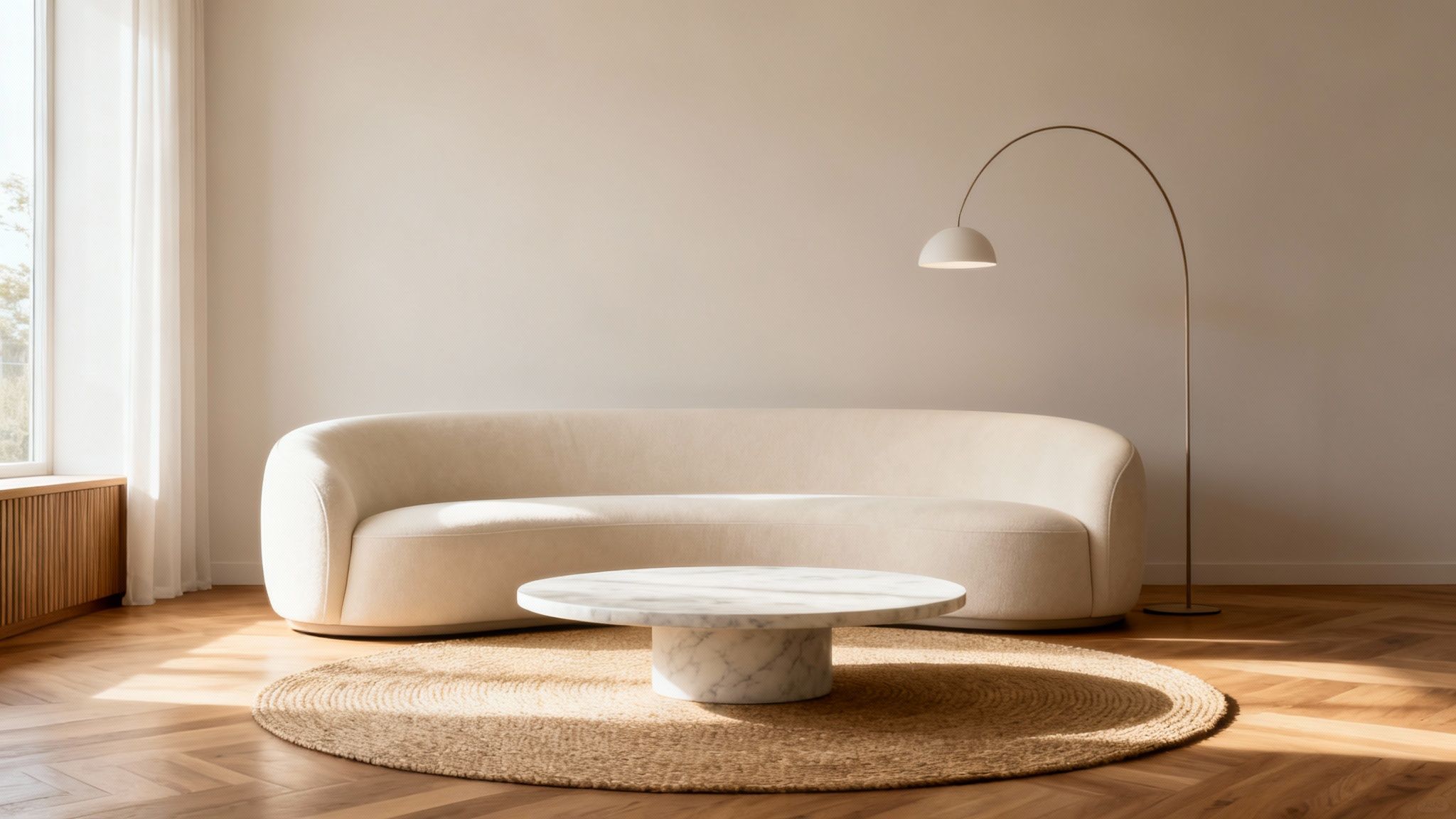
This trend moves away from sharp, rigid lines, embracing the soft, organic flow of curved sofas, rounded tables, and arched silhouettes. Curved furniture creates a more welcoming and conversational atmosphere, softening the overall aesthetic of a room. By eliminating harsh angles, this approach improves visual flow and introduces a sense of gentle movement, making it one of the most inviting decorating trends for living rooms.
Why It's Trending
Rooted in the biophilic design principle of mimicking nature, this trend gained traction as people sought to create comforting, stress-free sanctuaries at home. It’s heavily influenced by mid-century modern designers like Vladimir Kagan and is now a staple in contemporary high-end design.
How to Implement Curved Furniture
Integrating curves effectively is about creating balance and enhancing the room's natural rhythm. It's a way to guide the eye and encourage interaction.
- Anchor with a Statement Piece: A curved sofa or sectional is a perfect starting point. It naturally creates a cozy and intimate seating arrangement ideal for conversation.
- Introduce Complementary Shapes: Pair a curved sofa with a round coffee table or a circular area rug to reinforce the theme. An arched floor lamp can also echo the soft lines beautifully.
- Balance with Straight Lines: To prevent the room from feeling overly whimsical, incorporate some straight-lined elements. A rectangular media console or a structured armchair can provide a pleasing contrast.
- Use Arched Mirrors and Decor: An arched mirror or rounded decorative objects can introduce the trend on a smaller scale, reflecting light and enhancing the room’s gentle flow.
Discover our curated collection of contemporary furniture and statement lighting to bring this elegant trend into your home.
5. Moody Colors and Dark Walls
Moving away from the bright, airy aesthetic of recent years, this trend embraces deep, dramatic hues to create intimate and sophisticated living spaces. Moody colors like charcoal, forest green, navy, and rich burgundy offer a cozy, enveloping feel. These dark walls serve as a stunning backdrop, making art, metallic accents, and lighter furnishings pop with visual intensity. It's a bold choice that adds depth and character, transforming a living room into a luxurious retreat.
Why It's Trending
This trend is a reaction against the prevalence of all-white interiors, with homeowners seeking more personal, cocooning environments. Influential paint brands like Farrow & Ball and designers such as Amber Interiors have championed these saturated palettes, showcasing their ability to make a space feel both grand and comforting.
How to Implement Moody Colors
Successfully using dark colors is all about balance. The goal is to create a chic, inviting atmosphere, not a cavernous one.
- Layer Your Lighting: A single overhead light won't suffice. Use multiple light sources, including floor lamps, table lamps, and sconces, at different heights to create pockets of warm, ambient light.
- Create Contrast with Furnishings: Pair dark walls with lighter-colored furniture, like a cream sofa or a light wood coffee table. This contrast prevents the room from feeling heavy and highlights key pieces.
- Incorporate Reflective Surfaces: Add mirrors, metallic decor, and glass elements. These surfaces bounce light around the room, adding brightness and dimension to the space.
- Test Your Paint: Moody colors can look dramatically different depending on the light. Always test paint swatches on your walls and observe them at various times of the day before committing.
Discover our curated collection of accent lighting and elegant mirrors to complement your dramatic new walls.
6. Biophilic Design and Indoor Plants
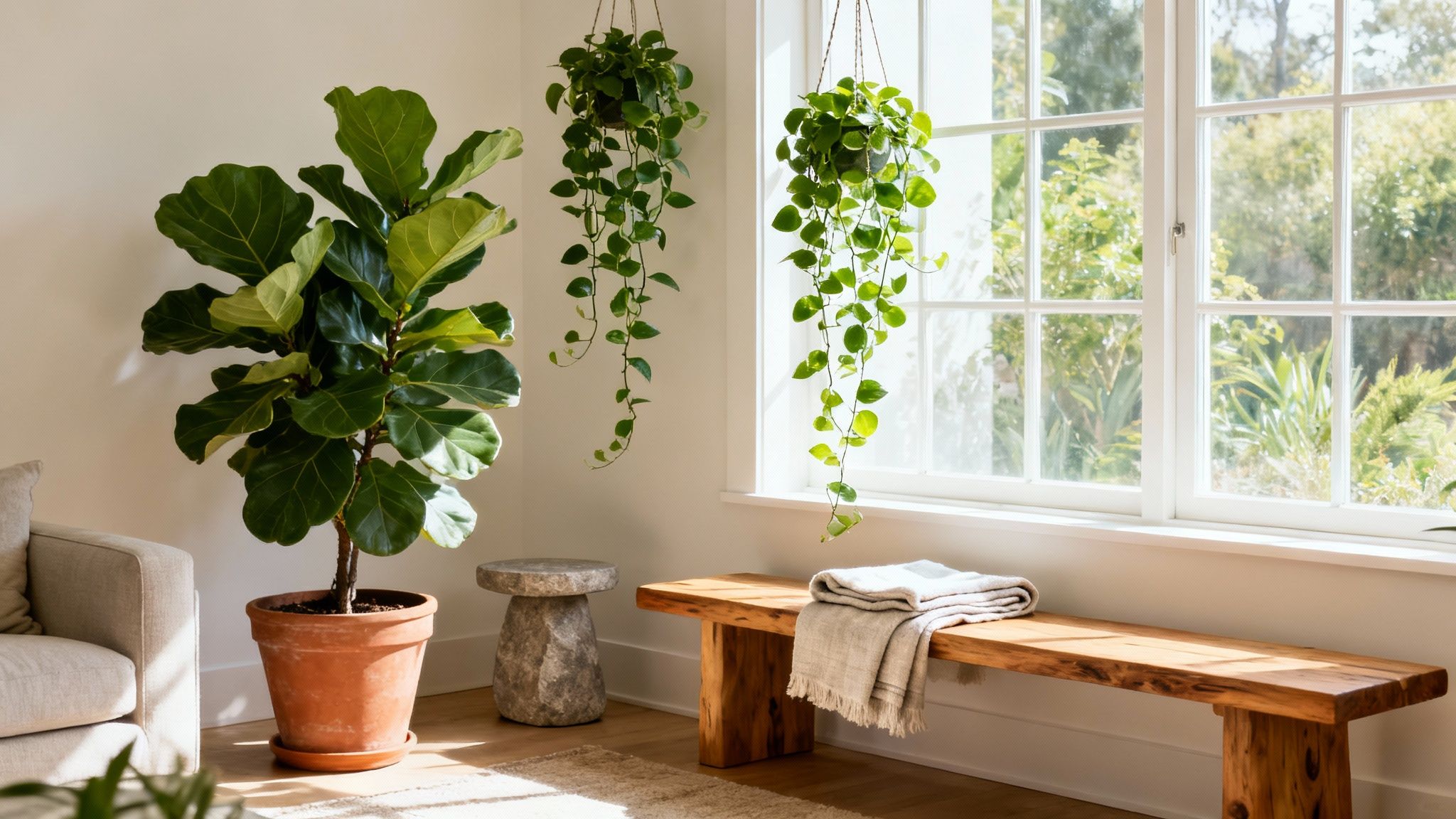
Biophilic design is a powerful trend that strengthens the human connection to the natural world by integrating nature directly into our living spaces. It goes beyond simply adding a few houseplants; it’s an approach that uses natural light, materials like wood and stone, and abundant greenery to create a calming, restorative atmosphere. This philosophy transforms living rooms into serene sanctuaries that enhance wellbeing and aesthetic appeal.
Why It's Trending
The focus on wellness and creating healthier home environments has propelled biophilic design into the mainstream. It’s a response to our increasingly digital lives, offering a way to ground ourselves in nature. Influencers like Justina Blakeney of @jungalowstyle have shown how lush, plant-filled homes are both beautiful and beneficial, making this one of the most popular decorating trends for living rooms.
How to Implement Biophilic Design
Integrating biophilic elements is about creating a layered, natural environment. Success lies in thoughtful placement and care, not just accumulation.
- Start with Easy-Care Plants: If you're new to plant ownership, begin with low-maintenance options like snake plants, pothos, or ZZ plants. These are resilient and thrive in various indoor conditions.
- Vary Plant Types and Sizes: Create visual interest by mixing plant heights, leaf shapes, and textures. Combine a tall fiddle leaf fig in a corner with trailing ivy on a bookshelf and small succulents on a coffee table.
- Group Plants for Impact: Cluster several plants together to create a lush, green focal point. This also helps increase humidity, which is beneficial for many tropical plant species.
- Use Vertical Space: Maximize your green footprint without sacrificing floor space by using hanging planters or wall-mounted shelves. This draws the eye upward and adds dimension.
To ensure your green additions flourish and contribute to a vibrant living space, refer to this comprehensive indoor plant care guide.
7. Vintage and Antique Mixed with Modern
Blending old and new is a timeless design strategy that infuses a living room with character, depth, and a sense of history. This eclectic approach involves thoughtfully combining vintage or antique treasures with contemporary furniture and decor. The result is a space that feels curated and deeply personal, avoiding the one-dimensional look of a room furnished entirely from a single era or store. This trend is one of the most sustainable decorating trends for living rooms, as it encourages the reuse of well-crafted, historical pieces.
Why It's Trending
This trend has surged in popularity as homeowners crave unique interiors that tell a story. Designers like Amber Lewis and the community on Apartment Therapy champion this collected-over-time aesthetic, which moves away from mass-produced uniformity and towards personal expression.
How to Implement a Vintage-Modern Mix
Successfully mixing styles is about creating a conversation between the pieces, not a competition. The key is to find common ground through color, form, or texture.
- Follow the 80/20 Rule: Let one style dominate. For a clean, modern look, make 80% of your furnishings contemporary and introduce 20% vintage pieces as accent chairs, side tables, or a statement mirror.
- Create a Unifying Color Story: Use a consistent color palette to tie disparate pieces together. A modern gray sofa, a mid-century teak credenza, and an antique gilt mirror can all coexist beautifully if they share complementary tones.
- Balance Visual Weight: Pair heavier, more ornate antiques with lighter, sleeker modern items. For example, place a delicate, modern floor lamp next to a substantial antique armchair to create a pleasing visual contrast.
- Focus on a Statement Piece: Let one standout vintage item, like an ornate armoire or a beautifully worn Persian rug, be the focal point. Build the rest of the room around it with more subdued, modern furnishings.
For more detailed guidance, learn how to mix furniture styles like a pro.
8. Statement Lighting Fixtures
Statement lighting elevates fixtures from a purely functional necessity to a central piece of art. This trend focuses on bold, sculptural, and visually striking chandeliers, pendants, and lamps that serve as a living room's focal point. It merges form and function, using light to sculpt space, create ambiance, and express a distinct design personality, making it one of the most impactful decorating trends for living rooms.
Why It's Trending
This trend has surged as homeowners look for ways to add high-impact personality and a touch of luxury without a complete overhaul. Designers like Tom Dixon and studios such as Flos have popularized lighting as a primary decorative element, turning utilitarian objects into coveted sculptures that define a room's character.
How to Implement Statement Lighting
Choosing the right fixture is about balancing scale, style, and function to enhance your existing decor.
- Mind the Scale: Select a fixture proportional to your room's size and ceiling height. A large, dramatic chandelier can anchor a room with high ceilings, while a wide, low-profile fixture works well in smaller spaces.
- Layer Your Lighting: A statement piece shouldn't be your only light source. Complement it with table lamps, floor lamps, and track lighting to create a versatile and layered lighting scheme for different moods and activities.
- Install a Dimmer Switch: Versatility is key. A dimmer allows you to adjust the intensity from bright and functional to soft and atmospheric, making your statement piece suitable for any occasion.
- Consider Placement: Hang chandeliers or pendants over a central point like a coffee table, ensuring adequate clearance for walking underneath (typically at least 7 feet from the floor).
Discover our curated selection of artistic lighting solutions to find the perfect centerpiece for your living room.
9. Textured Walls and Wallpaper
Textured walls and wallpaper are moving beyond simple paint to become a central feature in interior design, adding profound depth, character, and tactile appeal. This trend transforms flat surfaces into dynamic focal points using everything from intricate botanical prints and bold geometric patterns to subtle fabric-like finishes like grasscloth. By treating the wall as a canvas, this approach creates an immersive and visually engaging atmosphere, making it one of the most impactful decorating trends for living rooms.
Why It's Trending
The desire for unique, personalized spaces has fueled the resurgence of wallpaper and textured finishes. Brands like Cole & Son and Farrow & Ball have elevated wallpaper to an art form, offering designs that tell a story. This trend allows homeowners to inject personality and luxury into a room in a way that paint alone cannot achieve.
How to Implement Textured Walls and Wallpaper
Successfully integrating this trend is about balance and strategic application. The goal is to enhance the room's architecture and mood without overwhelming the senses.
- Create a Focal Point: Apply a bold wallpaper to a single accent wall, such as the one behind your sofa or fireplace. This creates a powerful visual statement without committing the entire room to a busy pattern.
- Balance with Neutrals: When using a vibrant or complex wallpaper, keep your primary furniture pieces in solid, neutral colors. This allows the wall to be the star while maintaining a cohesive, uncluttered feel.
- Test Samples: Always order samples and view them in your living room at different times of day. Lighting can dramatically alter the appearance of colors and textures, so it's crucial to see how they look in your specific environment.
- Consider Removable Options: For renters or those who like to change their decor frequently, peel-and-stick wallpaper offers a stylish and commitment-free way to embrace this trend.
Discover our curated selection of artisan wallpapers and wall decor to find the perfect texture for your space.
10. Comfort-First Design and Lived-In Coziness
Comfort-first design is an approach that prioritizes livability, function, and a welcoming atmosphere over rigid aesthetic rules. This trend celebrates the beauty of a well-loved home, where worn textures, personal items, and deep-seated sofas create a space that feels genuinely warm and approachable. It's about designing for how you actually live, making it one of the most practical and inviting decorating trends for living rooms.
Why It's Trending
Reacting against overly polished, "look-but-don't-touch" interiors, this trend has gained traction as people desire homes that support their real lives. Influenced by the Danish concept of hygge and championed by designers like Emily Henderson, it focuses on creating an authentic sanctuary.
How to Implement Lived-In Coziness
Creating a lived-in look is about making thoughtful choices that enhance comfort and reflect your lifestyle, rather than simply letting things get messy.
- Invest in Quality Seating: The foundation of a comfortable living room is a sofa you can truly sink into. Look for deep seats, durable yet soft upholstery, and a frame built to last.
- Embrace Imperfections: Don’t be afraid of a little patina. A worn leather armchair, a faded antique rug, or a coffee table with a few character marks adds history and warmth to a space.
- Layer Soft Textures Liberally: Use multiple textures to build a cozy environment. Combine chunky knit throws, plush area rugs, velvet pillows, and soft linen curtains to create tactile depth.
- Prioritize Flexible, Warm Lighting: Ditch the harsh overhead light. Instead, use a combination of floor lamps, table lamps, and dimmable fixtures to create a warm, adjustable glow for any mood or activity.
Discover our range of plush textiles and comfortable seating to create your cozy retreat.
10-Point Comparison of Living Room Decorating Trends
| Trend | 🔄 Implementation Complexity | ⚡ Resource Requirements | 📊 Expected Outcomes | 💡 Ideal Use Cases | ⭐ Key Advantages |
|---|---|---|---|---|---|
| Maximalism | High — layered curation, pattern mixing | High — many decor pieces; sourcing time | Vibrant, highly personalized; visually stimulating | Homes with collectors; expressive showrooms | Celebrates individuality; flexible styling |
| Sustainable & Eco-Friendly Design | Medium — sourcing, certifications, occasional restoration | Variable — thrifted low-cost or higher for certified goods | Lower environmental impact; unique, durable spaces | Eco-conscious homes; long-term investments | Reduces footprint; supports artisans; longevity |
| Warm Minimalism (Japandi) | Medium — careful material and color selection | Medium — investment in quality wood and textiles | Serene, timeless, functional; low visual clutter | Calm retreats; small homes seeking warmth | Timeless, low-maintenance, comfortable |
| Curved Furniture & Rounded Edges | Medium — layout planning; pairing with angular elements | Medium-high — specialty or custom pieces | Softer, ergonomic spaces; improved flow | Living rooms needing softness; family homes | Inviting, ergonomic, contemporary appeal |
| Moody Colors & Dark Walls | Low — paint application; planning for lighting | Low-medium — premium paint and layered lighting | Intimate, sophisticated backdrops for art | Dining rooms, bedrooms, galleries, feature walls | Creates drama; hides imperfections; art-forward |
| Biophilic Design & Indoor Plants | Medium — plant selection, placement, upkeep | Medium — quality plants, planters, possible installations | Improved wellbeing, air quality; lively aesthetic | Wellness-focused homes; offices; sunlit rooms | Boosts mood and health; connects to nature |
| Vintage & Antique Mixed with Modern | High — careful curation for cohesion | Variable — thrifted finds or costly antiques; restoration time | One-of-a-kind, characterful interiors | Collectors' homes; eclectic or period properties | Unique character; sustainable; timeless appeal |
| Statement Lighting Fixtures | Medium — electrical work and scale considerations | Medium-high — designer fixtures and installation | Dramatic focal point; improved ambiance and flexibility | Entryways, living/dining rooms, high ceilings | Instant impact; functional art; elevates space |
| Textured Walls & Wallpaper | Medium — surface prep and often professional install | Medium — quality materials and labor; peel-and-stick option | Adds depth and dimension; memorable surfaces | Accent walls, entryways, rentals (temporary) | Visual depth; wide stylistic range; hides flaws |
| Comfort-First Design & Lived-In Coziness | Low — emphasis on comfort over perfection | Low-medium — durable seating, layered textiles | Warm, approachable, family-friendly spaces | Family homes, casual living, pet-friendly spaces | Highly livable; forgiving; supports wellbeing |
Making Trends Your Own: Design Your Perfect Living Room
As we've journeyed through the most captivating decorating trends for living rooms, a powerful, unifying theme emerges. The era of rigid design rules is over. Today's most compelling living spaces are not about flawless replication of a single aesthetic but about a thoughtful and personal synthesis of ideas. The goal is to create a room that is not just visually stunning but also deeply resonant with your lifestyle and personality.
From the vibrant, personality-packed layers of Maximalism to the serene, mindful simplicity of Warm Minimalism, the common thread is authenticity. Each trend offers a unique vocabulary for you to express yourself. Whether you are drawn to the grounding presence of Biophilic Design, the sophisticated drama of Moody Colors, or the nostalgic charm of mixing vintage with modern, these concepts are your building blocks, not your blueprints.
Key Takeaways for Your Living Room Transformation
To truly master these trends, remember these core principles:
- Prioritize Personal Connection: The most successful designs stem from what brings you comfort and joy. Use the comfort-first trend as your foundation, ensuring every choice, from a curved sofa to a statement light, enhances your daily life.
- Balance is Your Ally: Even in Maximalism, there is a sense of order. When mixing bold elements like textured wallpaper with statement lighting, find a common color or shape to create cohesion. Conversely, a minimalist space benefits from the subtle warmth of varied textures and natural materials.
- Sustainability is a Style: Integrating eco-friendly design is not a sacrifice. It’s an elevation. Choosing reclaimed wood furniture or organic textiles adds a layer of history and intentionality that makes your space feel richer and more considered.
Actionable Next Steps to Get Started
Feeling inspired? The next step is to translate that inspiration into action. Don't feel pressured to overhaul your entire living room at once. Start small to build momentum.
- Identify Your Core Trend: Which of the trends resonated most with you? Was it the organic curves, the connection to nature, or the allure of dark, cozy walls? Pinpoint one or two as your primary guide.
- Audit Your Current Space: Look at what you already own. Can that inherited armchair become a "vintage" anchor? Can you introduce texture with new pillow covers or a plush rug?
- Create a Mood Board: Collect images, fabric swatches, and paint chips. This visual exercise will help you see how different elements of various decorating trends for living rooms can coexist harmoniously before you make any purchases.
Ultimately, the most important takeaway is that these trends are tools for self-expression. They provide a framework to help you articulate your personal style and create a living room that is a true sanctuary. It’s about crafting a space that not only looks beautiful but also supports your well-being, sparks conversation, and feels unequivocally like home. Your living room should tell your story, and these trends are simply the language you can use to write it.
Ready to translate your vision into reality? Explore the curated collections at Fluent Trends to discover designer-approved furniture, decor, and lighting that perfectly capture these modern aesthetics. Our selection makes it easy to find the key pieces you need to bring the latest decorating trends for living rooms to life in your own home.