

10 Expert Decorating Your Home Tips for 2025
Donna MaloneWelcome to your ultimate resource for transforming your house into a thoughtfully curated home. The art of interior styling is more than just filling a space; it's about creating an environment that reflects your personality, supports your daily lifestyle, and functions with intention. When executed well, a thoughtfully decorated home enhances comfort and brings a sense of personal joy. This guide moves beyond generic advice to provide a comprehensive collection of actionable decorating your home tips, empowering you to make confident and impactful design choices.
We will deconstruct the core principles of interior design, from mastering color theory and strategic lighting to the nuanced art of layering textures and anchoring rooms with the perfect rug. You will learn how to plan your furniture arrangement for optimal flow, create compelling focal points with statement pieces, and properly hang artwork for a professional finish. We will also cover integrating natural elements to enliven your space and managing natural light with effective window treatments. Whether you are undertaking a full-scale renovation or simply seeking to refresh a single room, these expert insights provide the practical framework needed to craft a space that is both beautiful and uniquely yours. Let’s begin the journey toward a more inspired home.
1. Master Color Theory with a Statement Accent Wall
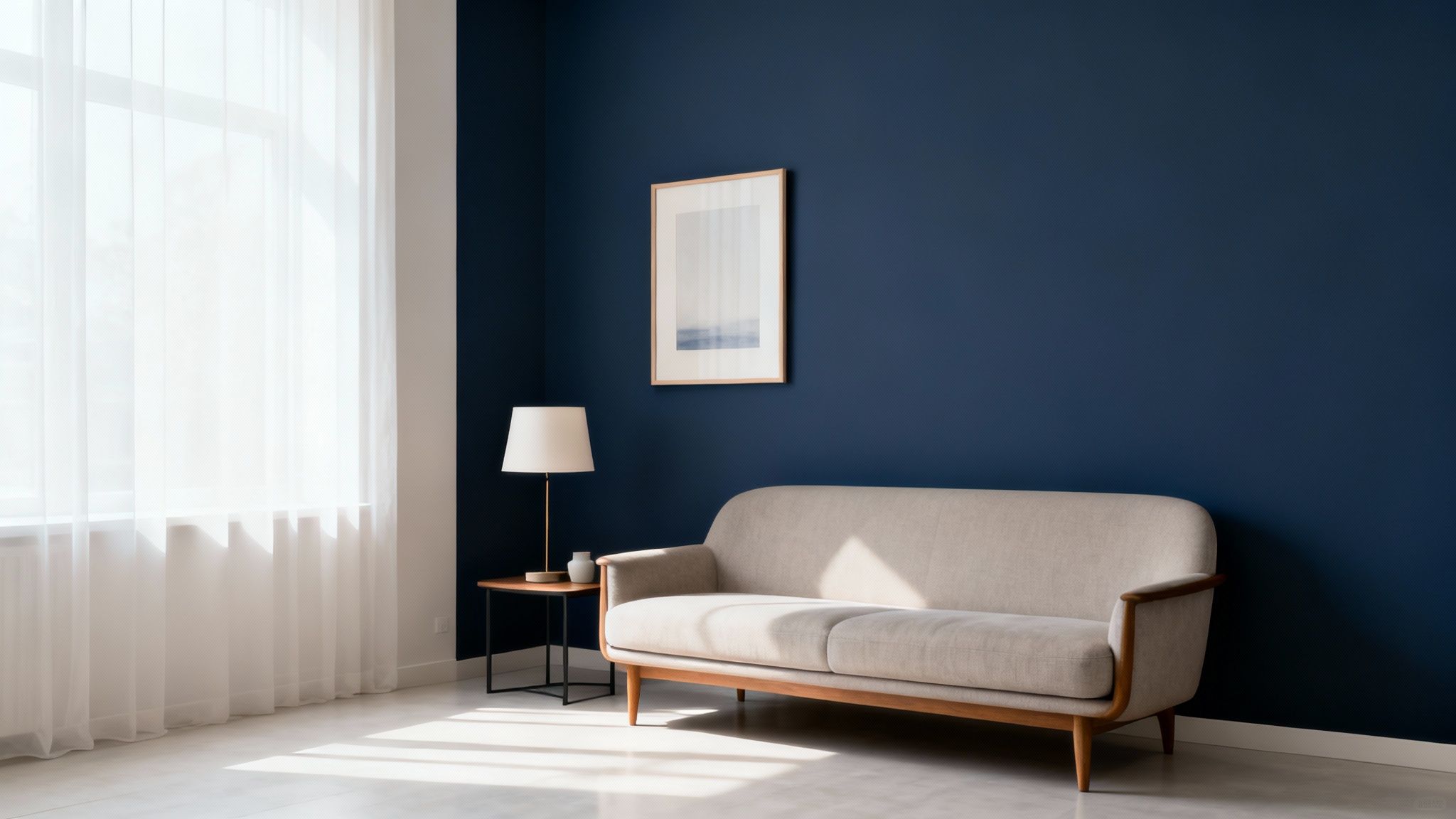
Applying color theory is one of the most effective decorating your home tips, and an accent wall is the perfect canvas. This technique involves painting a single wall in a bold or contrasting color to create a powerful focal point without overwhelming the space. It’s a strategic way to introduce personality, define a specific zone in an open-plan layout, or highlight a room's best architectural feature.
How to Implement an Accent Wall
To ensure a balanced, professional look, apply the 60-30-10 rule:
- 60% Dominant Color: Your main walls and large furniture pieces should be a neutral, foundational hue.
- 30% Secondary Color: Introduce this color through textiles like curtains, rugs, or key furniture like Fluent Trends' Velvet Accent Chair.
- 10% Accent Color: This is your feature wall and small decor items, providing a vibrant pop.
When diving into color theory, consider the impactful role of creating a feature wall to serve as a dramatic focal point or to introduce a bold color statement. For example, a deep charcoal wall behind a bed provides a sophisticated and calming retreat, anchoring the entire room's design. A warm terracotta in a kitchen adds an inviting, earthy feel, while a sage green accent wall brings organic elegance to a living room. Always test paint samples on the wall in different lighting conditions to see how the color shifts throughout the day.
2. Proper Lighting Design
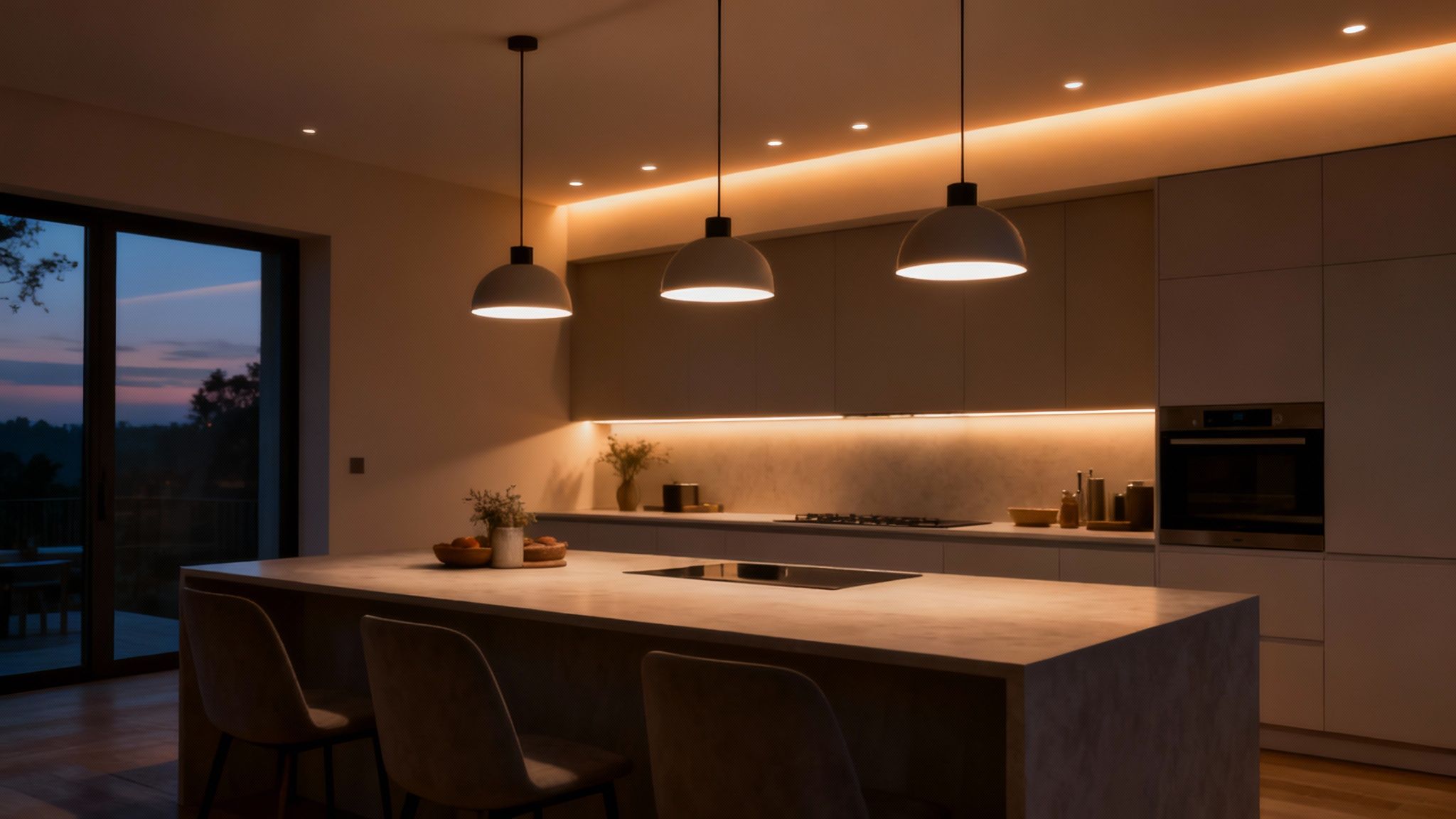
Layered lighting is one of the most transformative decorating your home tips, using multiple light sources to create a functional, inviting, and visually dynamic atmosphere. This approach combines three key types of lighting: ambient (overall illumination), task (focused light for activities), and accent (to highlight specific features). Proper lighting design enhances everything from the color of your walls to the texture of your textiles, setting the mood and improving the room's usability.
How to Implement a Layered Lighting Scheme
To create a balanced and professional lighting plan, strategically combine different fixtures at various heights:
- Ambient Lighting: Start with a foundation of general light from recessed fixtures, flush mounts, or a central chandelier.
- Task Lighting: Add focused light where you need it most. Think pendant lights over a kitchen island, a floor lamp next to a reading chair, or under-cabinet lighting for meal prep.
- Accent Lighting: Use this layer to draw attention to art, architectural details, or decor. Track lighting, picture lights, and uplights are perfect for this purpose.
The key to a successful scheme is control. Install dimmer switches on nearly every light source to allow for complete mood customization, from bright and energetic to soft and intimate. Consider the color temperature: use warm light (around 2700K) in living rooms and bedrooms to create a cozy feel, and cooler light (3000K-4000K) in kitchens and home offices for clarity and focus. Combining a stunning overhead fixture with wall sconces and a statement floor lamp, like Fluent Trends' Arc Floor Lamp, ensures your space is beautifully illuminated from every angle.
3. Furniture Arrangement and Space Planning
Strategic furniture placement is one of the most critical decorating your home tips for creating a room that is both beautiful and functional. It’s about more than just filling a space; it’s about understanding traffic flow, creating conversational zones, and balancing scale to make a room feel intentional and organized. Proper arrangement can make a small room feel larger and a large room feel cozier, directly impacting how you experience your home daily.
How to Implement Strategic Space Planning
Before moving heavy items, sketch a simple floor plan to visualize layouts. This planning stage is essential for a cohesive design.
- Establish a Focal Point: Arrange your main seating, like Fluent Trends' Modern Sectional Sofa, around a natural focal point like a fireplace or a large window.
- Create Clear Pathways: Ensure there are at least 18-24 inches of clear walking space in major traffic routes to avoid a cluttered feel.
- Define Zones: Use area rugs to visually anchor and define specific functional areas, such as a seating area or a dining space, within an open-concept room.
In larger rooms, floating furniture away from the walls creates a more intimate and sophisticated grouping. Start by placing your largest piece first and then arrange smaller items around it. For instance, in a living room, arranging seating in a conversational circle encourages interaction. In a bedroom, floating the bed can create a more luxurious, spacious atmosphere. Proper planning ensures every piece has a purpose and contributes to a harmonious flow.
4. Texture and Material Layering
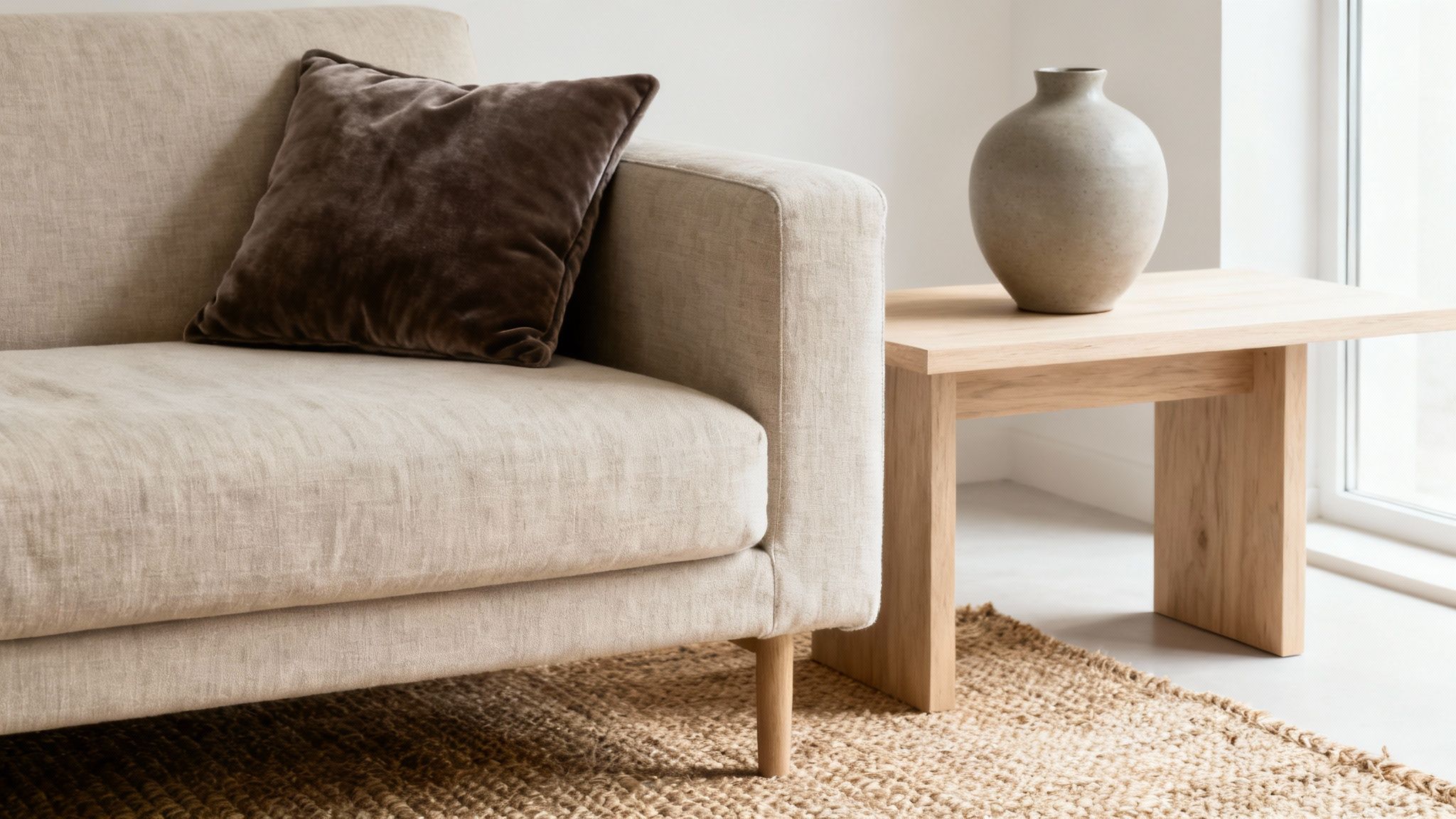
One of the most sophisticated decorating your home tips is to focus on layering different textures and materials. This technique moves beyond color to create a room that feels rich, inviting, and visually dynamic. By intentionally mixing a variety of surfaces like smooth, rough, shiny, and matte, you can add depth and warmth, preventing a space from feeling one-dimensional or sterile.
How to Layer Textures Effectively
To create a cohesive and sophisticated palette, aim to balance contrasting elements without overwhelming the senses. Follow these simple guidelines:
- Start with 3-5 Core Textures: Begin with a manageable number of materials to avoid visual clutter. For example, combine a linen sofa with leather accent chairs and a chunky woven pouf.
- Balance Rough and Smooth: Juxtapose different finishes for a tactile experience. Pair the rough texture of a brick accent wall with smooth plaster, or place a sleek, glossy ceramic vase on a rustic, reclaimed wood console table.
- Mix Fabric Weights: Layer lightweight fabrics like sheer linen curtains with heavier textiles like Fluent Trends’ Chunky Knit Throw Blanket draped over a velvet armchair.
This approach creates a layered, lived-in feel that engages more than just the eye. A well-executed textural design invites touch and makes a room feel complete and thoughtfully curated. Consider how materials interact: a cool, smooth concrete floor feels warmer with a soft area rug, while wooden ceiling beams add organic roughness against clean, painted walls. Repeating a specific texture, like brushed metal on both light fixtures and picture frames, helps tie the entire room together.
5. Decluttering and Minimalist Organization
Embracing decluttering is one of the most transformative decorating your home tips, laying the foundation for a calm, intentional environment. This practice involves removing unnecessary items to reduce visual noise and improve functionality. A minimalist approach champions the "less is more" philosophy, where you retain only items that are either purposeful or bring you genuine joy, resulting in spaces that feel larger, more serene, and easier to manage.
How to Implement Minimalist Organization
To achieve a clean, streamlined aesthetic, focus on creating systems that maintain order. This isn’t just about tidying up; it's about curating your home.
- Adopt the KonMari Method: Go through your belongings category by category and ask if each item "sparks joy." If it doesn't, it’s time to let it go.
- Use the "One In, One Out" Rule: For every new item you bring into your home, an old one must be donated, sold, or discarded to prevent accumulation.
- Prioritize Closed Storage: Use cabinets, drawers, and stylish containers like Fluent Trends' Woven Storage Baskets to conceal items that don’t need to be on display, keeping surfaces clear.
This principle is crucial not just for daily living but also for preparing a home for sale; explore these concepts further by reading our home staging tips for sellers. For example, a minimalist living room might feature only essential seating, a single piece of statement art, and functional storage, creating a powerful sense of tranquility. In the kitchen, stowing away all but daily-use appliances keeps countertops clear and creates an efficient workspace. By giving every item a designated home, you simplify both cleaning and decorating.
6. Create Visual Impact with Statement Pieces and Focal Points
One of the most transformative decorating your home tips is to anchor your design with a deliberate focal point. A statement piece is a bold, eye-catching item, such as artwork, furniture, or a light fixture, that immediately draws attention and sets the tone for the entire room. This strategy provides a clear visual hierarchy, preventing a space from feeling like a random collection of objects and instead giving it a curated, intentional aesthetic.
How to Implement a Statement Piece
To make your focal point effective, it must command attention without causing visual chaos. The key is balance and strategic selection:
- Choose One Hero: Select a single, powerful piece to be the star. This could be a large modern art piece above the sofa, an ornate chandelier in the entryway, or Fluent Trends' Emerald Velvet Chesterfield Sofa anchoring the living room.
- Scale Appropriately: The size of your statement piece should be proportional to the room. A tiny painting will get lost on a large wall, while an oversized sofa can overwhelm a small space.
- Build Around It: Use your statement piece to inform the rest of the room’s decor. Pull colors from a piece of art to use in throw pillows, or echo the metallic finish of a sculptural floor lamp in smaller accents.
By creating a focal point, you give the eye a place to rest and establish a clear starting point for your design narrative. For example, a fireplace mantel serves as a natural architectural focal point, perfect for styling with curated objects. In a dining room, a dramatic light fixture can define the space and add a touch of glamour. This approach ensures your room feels both cohesive and full of personality.
7. Window Treatments and Natural Light Management
Window treatments are a critical decorating your home tip, serving a dual role of function and fashion. More than just covering a window, they control natural light, ensure privacy, and contribute significantly to a room’s atmosphere. The right selection can make a space feel larger, cozier, or more elegant, acting as the finishing touch that pulls an entire design scheme together.
How to Select and Style Window Treatments
Choosing the perfect window treatment involves balancing light control with your aesthetic goals. To truly perfect your windows for both light and style, a comprehensive understanding of how to choose window treatments like a pro is essential.
- Height and Width: Hang curtain rods high above the window frame, close to the ceiling, and extend them wider than the window. This creates an illusion of height and allows panels to frame the window fully when open, maximizing light.
- Fabric Choice: The material dictates the mood. Sheer linen panels offer a soft, diffused glow for a casual, airy feel, while heavy velvet curtains in a bedroom add drama, block light, and provide insulation.
- Layering for Versatility: Combine a sheer curtain for daytime privacy with an opaque drapery or blackout shade for nighttime. This layered approach offers the most flexibility for managing light and ambiance throughout the day.
For a clean, modern look, consider Roman shades in a living room, or install wooden shutters to introduce farmhouse charm and precise light control. A well-dressed window not only completes a room but also enhances its comfort and usability.
8. Artwork and Wall Décor Arrangement
Strategic artwork arrangement is one of the most transformative decorating your home tips, turning blank walls into curated galleries that reflect your personality. This goes beyond just hanging a picture; it involves creating intentional compositions with paintings, prints, mirrors, and even sculptures. Proper placement creates visual interest, balances room proportions, and communicates design sophistication.
How to Implement Wall Décor Arrangement
To achieve a professional, balanced look, focus on scale, spacing, and height. The goal is to create a cohesive display, whether it's a single statement piece or a multi-frame gallery wall.
- Create Templates: Before hammering any nails, trace your frames onto kraft paper. Cut them out and use painter’s tape to arrange the paper templates on your wall until you find the perfect layout.
- Maintain Spacing: Keep a consistent distance between frames, typically 2 to 3 inches, to ensure the arrangement looks unified rather than cluttered.
- Hang at Eye Level: The center of a single artwork or an entire gallery grouping should be positioned at eye level, which is generally 57 to 60 inches from the floor.
A well-executed gallery wall above a sofa can anchor a living room, while a single oversized abstract painting can serve as a stunning focal point in a dining area. Incorporate mirrors to amplify light and create an illusion of spaciousness. Don't be afraid to mix frame styles, sizes, and mediums for a collected, dynamic look that tells a unique story.
9. Plants and Natural Elements Integration
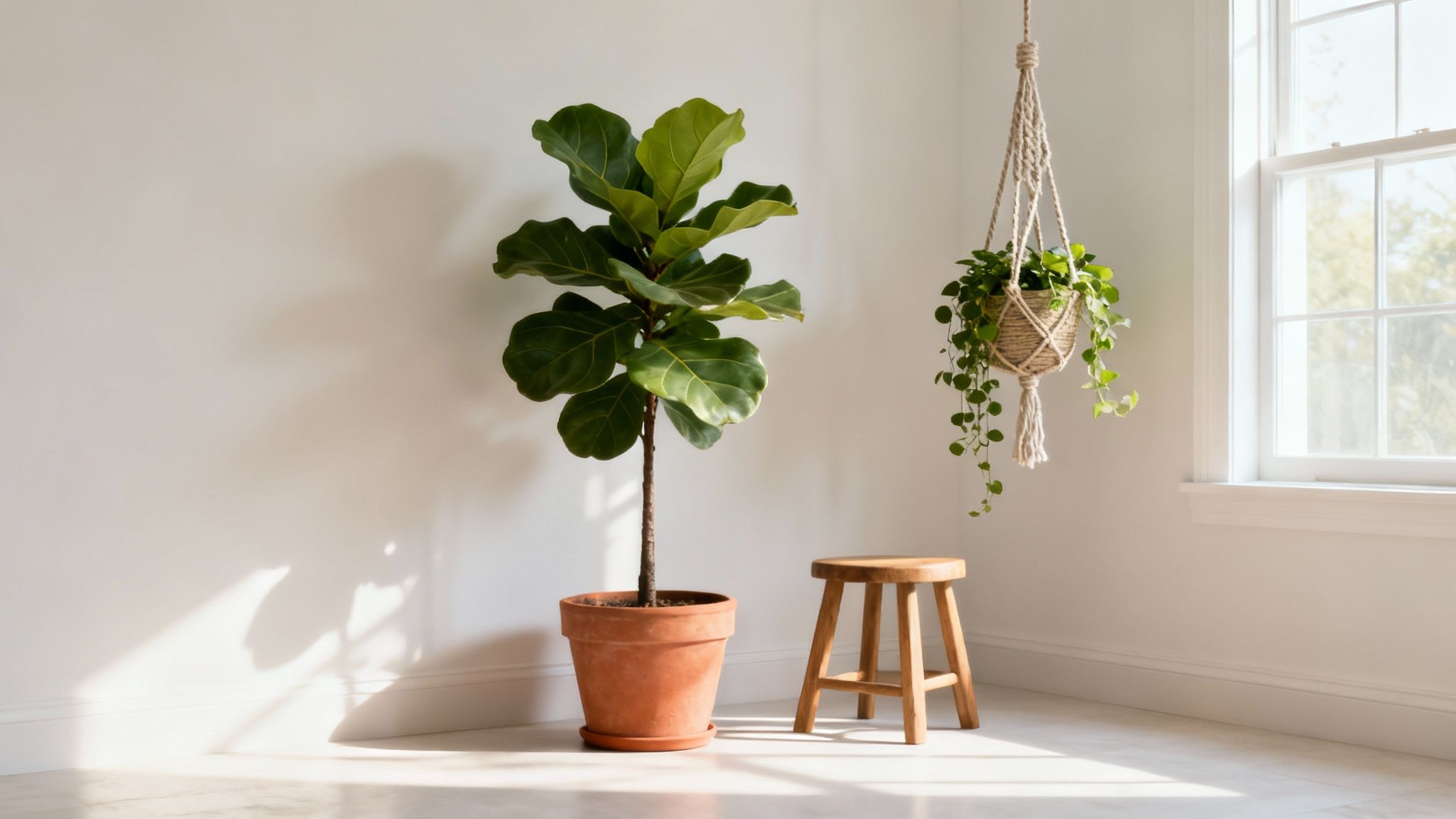
One of the most restorative decorating your home tips is integrating plants and natural materials, a practice known as biophilic design. This approach brings the outdoors in, improving air quality, boosting well-being, and adding life to your decor. By incorporating elements like live plants, natural wood, and stone, you create a space that feels fresh, grounded, and connected to nature.
How to Implement Natural Elements
Successfully adding greenery and nature-inspired textures relies on thoughtful placement and selection to create a harmonious environment.
- Vary Heights and Scales: Combine tall floor plants like a fiddle leaf fig with trailing plants in hanging macramé holders. Place smaller succulents or potted herbs on shelves to create layers of visual interest.
- Group for Impact: Cluster three to five plants of varying sizes together in a corner or near a window. This not only creates a lush focal point but also helps increase humidity, which benefits the plants.
- Choose the Right Planters: Your pots are part of the decor. A minimalist ceramic planter enhances a modern aesthetic, while a textured terracotta pot from Fluent Trends’ Artisan Collection adds rustic charm.
This method is perfect for softening modern interiors or enhancing a boho-chic vibe. A large statement plant can anchor a living room corner, while a collection of small plants on floating shelves adds personality to a home office. Match the plant’s light requirements to the room's conditions, and if you’re a beginner, start with low-maintenance options like snake plants or pothos to build your confidence.
10. Rugs and Floor Anchoring
One of the most transformative decorating your home tips is using an area rug to anchor a space. A well-chosen rug does more than add comfort underfoot; it defines a seating or dining area, introduces color and texture, and unifies disparate furniture pieces into a cohesive whole. It acts as the visual foundation for a room, dramatically improving acoustics, warmth, and overall cohesion.
How to Implement Rugs and Floor Anchoring
To effectively ground your furniture and define a zone, focus on proper scale and placement:
- Size Matters: The rug should be large enough so that at least the front legs of your major furniture pieces (sofa, armchairs) rest on it. A small "floating" rug can make a room feel disjointed.
- Define Zones: In an open-concept space, use a large jute rug to designate the living area and a colorful runner to delineate the hallway.
- Layer for Texture: Place a smaller, patterned rug, like Fluent Trends' Modern Geometric Rug, over a larger neutral one to add depth and visual interest.
Properly sizing a rug is crucial for achieving a professional, well-designed look. For detailed guidance, explore the essentials of how to choose the right rug size to ensure your selection complements your room's proportions. For instance, an 8x10 rug is often ideal for a standard living room, creating a generous foundation. In a bedroom, a plush sheepskin rug adds a touch of cozy luxury, while a durable, low-pile option is best for high-traffic areas like entryways. Always use a quality rug pad to prevent slipping and extend the life of your rug and floors.
10-Point Home Decorating Tips Comparison
| Item | Implementation complexity 🔄 | Resource requirements ⚡ | Expected outcomes ⭐📊 | Ideal use cases 💡 | Key advantages |
|---|---|---|---|---|---|
| Color Theory and Accent Walls | Low–Medium 🔄 (paint prep & selection) | Low ⚡ (paint, brushes, samples) | ⭐⭐⭐⭐ — strong focal point; mood shift | Living rooms, bedrooms, feature walls | Cost-effective; quick visual transformation |
| Proper Lighting Design | Medium–High 🔄 (layer planning, wiring) | Medium–High ⚡ (fixtures, dimmers, installation) | ⭐⭐⭐⭐⭐ — high functional & visual impact | Kitchens, living rooms, galleries, home offices | Enhances usability, mood control, highlights features |
| Furniture Arrangement and Space Planning | Medium 🔄 (measuring, planning layouts) | Low–Medium ⚡ (time, moving help) | ⭐⭐⭐⭐ — improved flow, usability, perceived space | Small rooms, open plans, social areas | Optimizes function without major purchases |
| Texture and Material Layering | Low–Medium 🔄 (styling & balance) | Medium ⚡ (fabrics, finishes, accessories) | ⭐⭐⭐⭐ — adds depth, tactile interest | Minimalist rooms needing warmth; lounges | Increases sophistication; tactile richness |
| Decluttering and Minimalist Organization | Medium 🔄 (sorting, habits) | Low ⚡ (storage, boxes, labels) | ⭐⭐⭐⭐ — calmer, larger-feeling, easier maintenance | Small homes, offices, staging for sale | Reduces stress; lowers maintenance and spending |
| Statement Pieces and Focal Points | Low–Medium 🔄 (selection, placement) | Medium–High ⚡ (investment in quality piece) | ⭐⭐⭐⭐ — high visual impact; anchors design | Entryways, living rooms, feature walls | Instant personality; fewer supporting décor needed |
| Window Treatments and Natural Light Management | Medium 🔄 (measuring, installation) | Medium–High ⚡ (fabric, rods, professional install) | ⭐⭐⭐⭐ — better light control & energy performance | Bedrooms, living rooms, offices | Controls light/privacy; improves insulation & style |
| Artwork and Wall Décor Arrangement | Low–Medium 🔄 (layout planning, hanging) | Low–Medium ⚡ (prints, frames, hardware) | ⭐⭐⭐⭐ — personalizes space; visual interest | Blank walls, galleries, above furniture | Affordable personalization; easily updated |
| Plants and Natural Elements Integration | Low–Medium 🔄 (plant selection & care) | Low–Medium ⚡ (plants, pots, soil) | ⭐⭐⭐⭐ — improved air quality & well‑being | Living spaces, workspaces, bathrooms with light | Biophilic benefits; adds organic texture and color |
| Rugs and Floor Anchoring | Low 🔄 (size & placement decisions) | Low–Medium ⚡ (rug cost, pad, cleaning) | ⭐⭐⭐⭐ — defines zones; adds warmth & acoustics | Living rooms, open plan areas, bedrooms | Grounds furniture; improves comfort and cohesion |
Bringing It All Together for a Home You Love
Embarking on a home decorating journey can feel like a monumental task, but as we've explored, creating a beautiful and functional space is simply a matter of mastering a few key principles. This comprehensive guide has provided you with a powerful toolkit of decorating your home tips, moving from foundational concepts to the final, personalizing touches. By now, you understand that great design isn't accidental; it's a thoughtful process of layering, balancing, and intentional choices.
We've covered the critical groundwork, from mastering furniture arrangement for optimal flow to the strategic use of rugs to anchor a room. You've learned how a well-executed color palette and a layered lighting plan can completely transform the mood and perception of a space. These aren't just abstract ideas; they are the architectural bones of a well-designed interior.
From Blueprint to Beautiful
Remember the impact of layering textures and materials to add depth and warmth, and the power of a single statement piece to create a stunning focal point. You now have the practical knowledge to hang artwork like a professional, choose the right window treatments to manage natural light, and integrate plants to breathe life into every corner. These are the elements that build upon the foundation, adding personality and character.
Ultimately, the most successful interiors are those that reflect the people who live in them. The journey from an empty room to a personalized sanctuary is built on these principles.
Key Takeaway: Decorating is an iterative process. It's about experimenting with placement, observing how light changes throughout the day, and understanding how different elements interact. Don't strive for immediate perfection; aim for progress that feels authentic to you.
Your Actionable Next Steps
Feeling inspired but not sure where to begin? Don't try to tackle everything at once. Instead, choose one room or even one small corner and apply a few of the decorating your home tips we've discussed.
- Assess Your Foundation: Start by evaluating your current furniture layout. Does it serve the room's primary function? Could you improve flow by repositioning a sofa or a chair?
- Introduce a New Element: Select one new piece to invigorate the space. This could be a textured throw pillow from our textile collection, a striking piece of wall art, or an elegant area rug to define a zone.
- Edit and Refine: Take a critical look at your existing decor. Remove one or two items that no longer bring you joy or fit your evolving style. This simple act of decluttering can have a massive impact.
By breaking down the process into these small, manageable steps, you build momentum and confidence. Each successful change reinforces your design instincts, empowering you to take on larger projects. Your home is your canvas, and with these expert tips, you are now equipped to be the artist. The goal is to create a space that not only looks beautiful but also supports your lifestyle and brings you daily happiness.
Ready to put these principles into practice with pieces that are built to last? The curated collections at Fluent Trends offer the perfect blend of timeless design and quality craftsmanship to elevate your home. Explore our designer-approved furniture, decor, and tabletop essentials to find the ideal items that will bring your unique vision to life.