

The Difference between Ceramic and Stoneware: The Quick Guide
Donna MaloneLet’s clear up one of the most common questions in the world of dinnerware: what’s the real difference between ceramic and stoneware? It's simpler than you think. The key takeaway is that stoneware is a type of ceramic, not a completely different material.
Think of ceramic as the broad, umbrella category for anything made from clay that's been hardened by firing in a kiln. Stoneware is just one specific, high-quality member of that family, known for its incredible durability and non-porous finish. This makes it a fantastic choice for plates, bowls, and mugs you'll use day in and day out.
Demystifying Ceramic and Stoneware
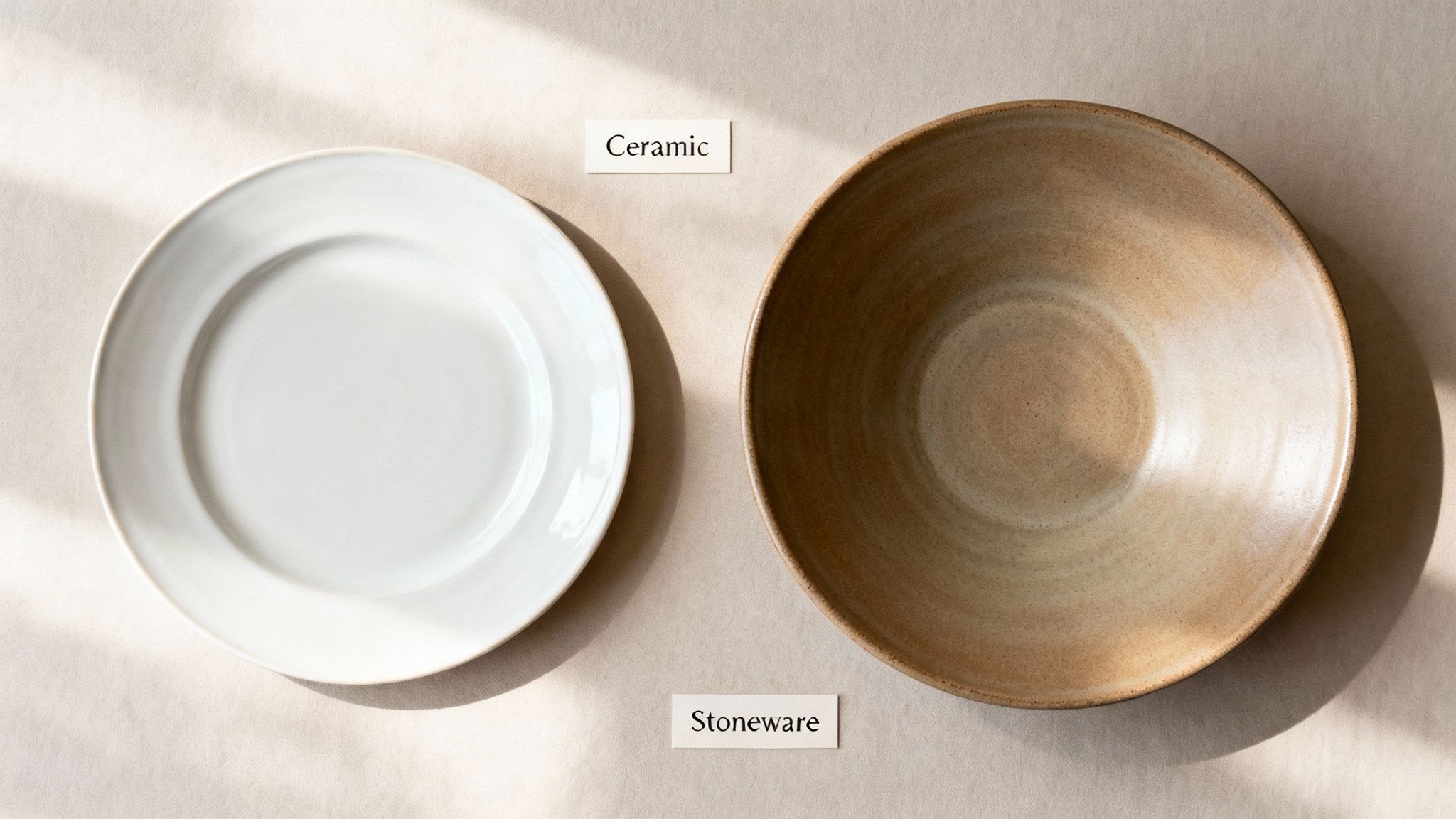
When you're shopping for new tableware, seeing both "ceramic" and "stoneware" can be confusing. The truth is, it’s all about classification. The "ceramic" family is quite large and includes several distinct types of pottery, each with its own personality and purpose.
In the kitchen, you’ll mainly run into three types of ceramics:
-
Earthenware: Fired at the lowest temperatures, which leaves it more porous and a bit more fragile.
-
Stoneware: Fired at high temperatures, creating a dense, strong body that doesn't absorb liquids.
-
Porcelain: Fired at the hottest temperatures of all, resulting in a very hard, fine, and often translucent material.
So, while every piece of stoneware is ceramic, not every ceramic piece is stoneware. The real difference comes down to the specific clay used and, most importantly, the firing temperature. These two factors are what give each type its final look, feel, and strength.
Firing Temperature and Material Composition
The secret to stoneware's tough-as-nails reputation is born in the heat of the kiln. It's fired at extremely high temperatures, typically between 1200°C and 1300°C (2192°F to 2372°F).
This intense heat causes the clay particles to vitrify—a process where the clay essentially melts and fuses into a glass-like, non-porous state. This is what gives stoneware its signature heft and durability. You can feel this quality in pieces like an elegant stoneware gravy boat, which feels substantial and built to last.
The high firing temperature is the game-changer. It’s what makes stoneware so much stronger and less porous than other common ceramics like earthenware. For a deeper dive, check out our guide on what stoneware dinnerware is and all its benefits.
To make the choice crystal clear, let's put stoneware head-to-head with earthenware—one of the most common types of "general" ceramic you'll find. This quick table highlights the essential differences.
Stoneware vs Other Ceramics At a Glance
| Feature | Earthenware (Common Ceramic) | Stoneware |
|---|---|---|
| Firing Temperature | Lower (1000°C - 1150°C) | Higher (1200°C - 1300°C) |
| Durability | Prone to chipping; less sturdy | Highly chip-resistant; very durable |
| Porosity | Porous (absorbs water) | Non-porous (vitrified) |
| Feel and Weight | Lighter, often feels more rustic | Heavier, substantial, and dense |
| Best For | Decorative pieces, casual use | Everyday dinnerware, oven-to-table |
As you can see, stoneware's manufacturing process gives it a clear edge in strength and practicality for everyday kitchen life, while earthenware offers a lighter, more rustic charm better suited for less demanding roles.
How Firing Temperature Defines Your Dinnerware
The real story of any piece of dinnerware isn’t just about the clay it's made from; it’s about the trial-by-fire it goes through. That process, and especially the temperature inside the kiln, is what forges the final character of a plate or mug. It’s this intense heat that truly sets stoneware apart from more common types of ceramic.
Think of the kiln as a crucible where soft, shapeless clay is completely transformed. For stoneware, this change happens at searingly high temperatures, usually between 1200°C and 1300°C (2192°F and 2372°F). This isn't just baking—it's a fundamental chemical and physical metamorphosis.
The Power of Vitrification
At those extreme temperatures, the clay particles in stoneware don't just get hard; they actually start to melt and fuse together. This is called vitrification, a process that makes the clay body so dense it essentially becomes a glass-like material. The result is a non-porous, incredibly strong structure that’s waterproof on its own, even before any glaze is applied.
This is the key manufacturing difference between stoneware and other ceramics. Lower-fired ceramics, like earthenware, are baked at much gentler temperatures, often around 1000°C. While that’s hot enough to harden the clay, it isn’t nearly hot enough to cause vitrification. Because of this, earthenware stays porous, full of microscopic holes that can soak up water. It has to rely completely on its glaze to create a waterproof seal.
It's the high-temperature firing and the resulting vitrification that give stoneware its signature heft and resilience. You're not just holding fired clay; you're holding a solidified, stone-like material built for strength.
From Raw Clay to Finished Product
Knowing this helps you appreciate the craftsmanship behind the durability you can feel in your hands. Let's trace the journey from a lump of clay to a finished dish to see how temperature creates two very different products.
-
Earthenware (Lower Heat): An earthenware piece goes into the kiln and comes out hard, but it can still absorb moisture. Its strength is mostly thanks to its shape and the glaze that coats it. If that glaze chips, the porous clay underneath is exposed, creating a weak spot.
-
Stoneware (Intense Heat): A piece of stoneware is blasted with much higher heat, forcing its very structure to become a single, dense mass. Its strength is baked right into its core. A chip on a piece of stoneware is usually just a cosmetic issue because the body underneath is already waterproof and incredibly hard.
This fundamental difference in manufacturing is why stoneware is so perfect for the chaos of a modern kitchen. The intense heat it was born in prepares it for the high temperatures of your oven and microwave and the daily grind of the dishwasher. It’s a perfect example of how one single variable—temperature—can lead to products with wildly different performance, making stoneware the clear winner for everyday durability.
Comparing Durability, Porosity, and Heat Resistance
When you're choosing new dinnerware, the physical properties of the material are what really count. This is where the difference between ceramic and stoneware truly comes to life—in their durability, porosity, and ability to handle heat. These aren't just technical specs; they directly impact how your dishes will hold up to the chaos of everyday life.
Think about a typical family dinner: plates clanking, silverware scraping, and the occasional bump against the sink. This is the real-world test of durability, and where the a material's true colors show.
Unmatched Durability and Chip Resistance
Stoneware gets its incredible strength from being fired at scorching temperatures, often above 1200°C. This intense heat vitrifies the clay, fusing the particles into a dense, glass-like body that’s exceptionally tough. The result? A plate that stands up to chipping and cracking like a champion.
In contrast, earthenware is fired at lower temperatures, which leaves it more porous and a bit more brittle. It's more likely to show the scars of daily use.
Simply put, stoneware is the workhorse of the kitchen. It can handle being stacked, shoved in a dishwasher, and used by everyone from toddlers to grandparents without looking worn out as quickly as its more delicate ceramic cousins.
The journey from a lump of clay to a durable piece of stoneware is all about that intense firing process, as this diagram shows.
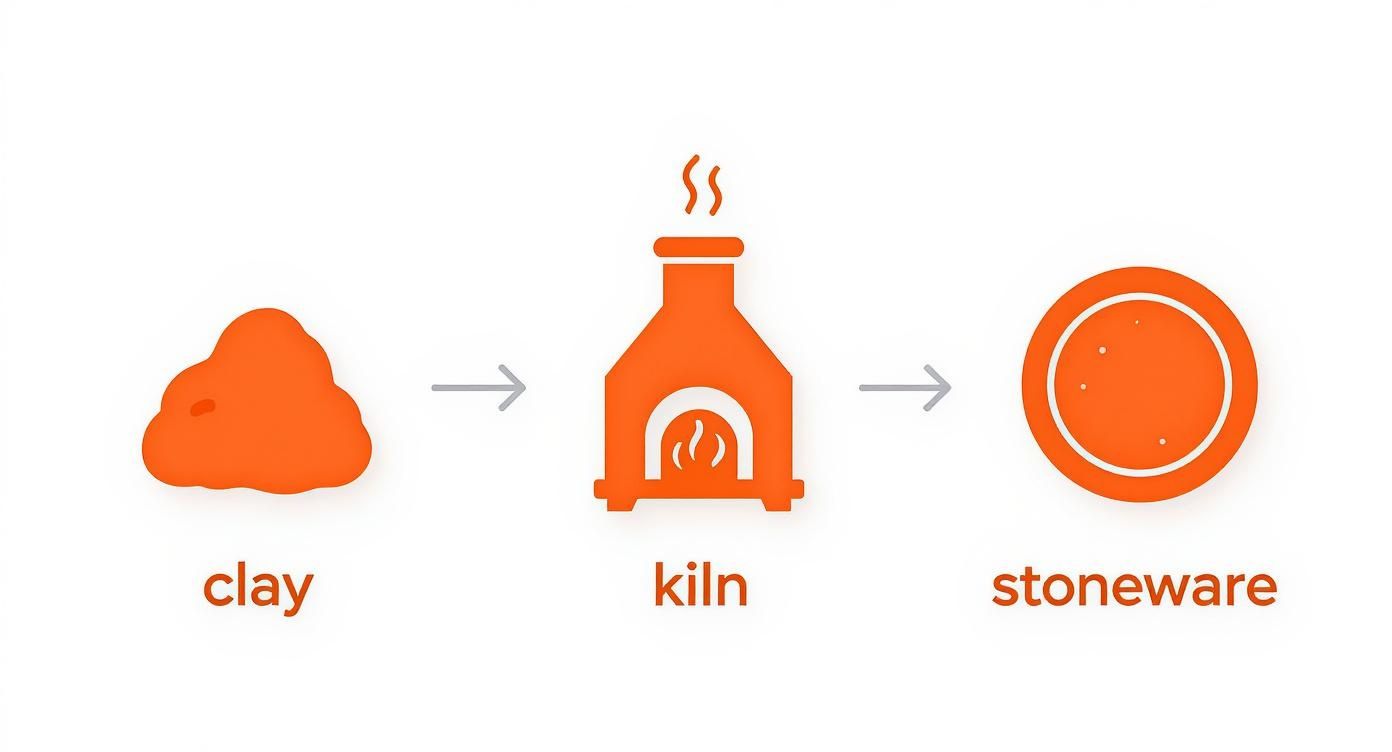
It’s that time in the kiln that gives stoneware its signature, stone-like resilience.
Understanding Porosity and Water Absorption
Porosity is all about the tiny, microscopic pores in the clay that can soak up liquid. This is a huge deal for both hygiene and the longevity of your dinnerware. Because stoneware is vitrified, it has an incredibly low water absorption rate—often under 2%. This means it won’t drink up oils, sauces, or odors from your food.
Earthenware, if the glaze gets chipped or cracked, can absorb more than 5% of its weight in water. Over time, that can lead to ugly stains from things like coffee or tomato sauce, lingering smells, and even create a place for bacteria to hide. You can see how this stacks up against other high-end materials in our deep dive into stoneware vs porcelain dinnerware.
Key Takeaway: Stoneware's dense, non-porous nature makes it a far more hygienic and stain-resistant choice for everyday meals. Your dishes stay looking pristine and are a breeze to clean, no matter how colorful the menu.
To get a clearer picture of how these materials stack up, let's break down their core properties.
Detailed Property Comparison Ceramic vs Stoneware
This table offers a side-by-side look at the key differences that will influence how you use and care for your dinnerware.
| Property | Earthenware (Ceramic) | Stoneware (Ceramic) | Practical Implication |
|---|---|---|---|
| Durability | Moderate. Prone to chipping and cracking with rough handling. | High. Vitrified body is very resistant to chipping, cracking, and daily wear. | Stoneware is the clear winner for busy households, while earthenware requires more careful handling. |
| Porosity/Water Absorption | High (>5%). Can absorb liquids and stain if glaze is compromised. | Very Low (<2%). Non-porous body prevents absorption of oils, odors, and bacteria. | Stoneware is more hygienic, easier to clean, and won't develop stains or lingering food smells. |
| Heat Resistance | Good. Can handle moderate heat, but is susceptible to thermal shock (cracking). | Excellent. Withstands high temperatures and resists thermal shock. | Stoneware is safe for the oven, microwave, and dishwasher. Earthenware is best kept out of the oven. |
| Chip Resistance | Lower. Softer material and lower firing temps make edges more vulnerable. | High. The dense, hard body makes it much less likely to chip. | For longevity and maintaining a pristine look, stoneware is the more reliable investment. |
Ultimately, these differences in production and material science translate directly to performance in your kitchen.
Superior Heat Resistance and Thermal Shock
The ability to go from hot to cold without cracking is called thermal shock resistance, and it's another area where stoneware really shines. Its dense structure not only makes it tough but also helps it distribute heat evenly and handle sudden temperature changes.
This makes stoneware incredibly versatile. You can confidently use it for:
-
Oven-to-Table Baking: Perfect for taking a casserole or baked dessert straight from the oven to the dinner table.
-
Microwave Reheating: It warms your food without the dish itself becoming dangerously hot.
-
Dishwasher Cleaning: It stands up to the high heat of any wash cycle without a problem.
An earthenware dish, on the other hand, might crack if you pull it from a hot oven and set it on a cool countertop. Stoneware’s resilience makes it a reliable, safe choice for a modern kitchen where convenience is key. Plus, its oven-to-table capability means fewer dishes to wash—a practical benefit anyone can get behind.
Choosing a Style That Suits Your Home
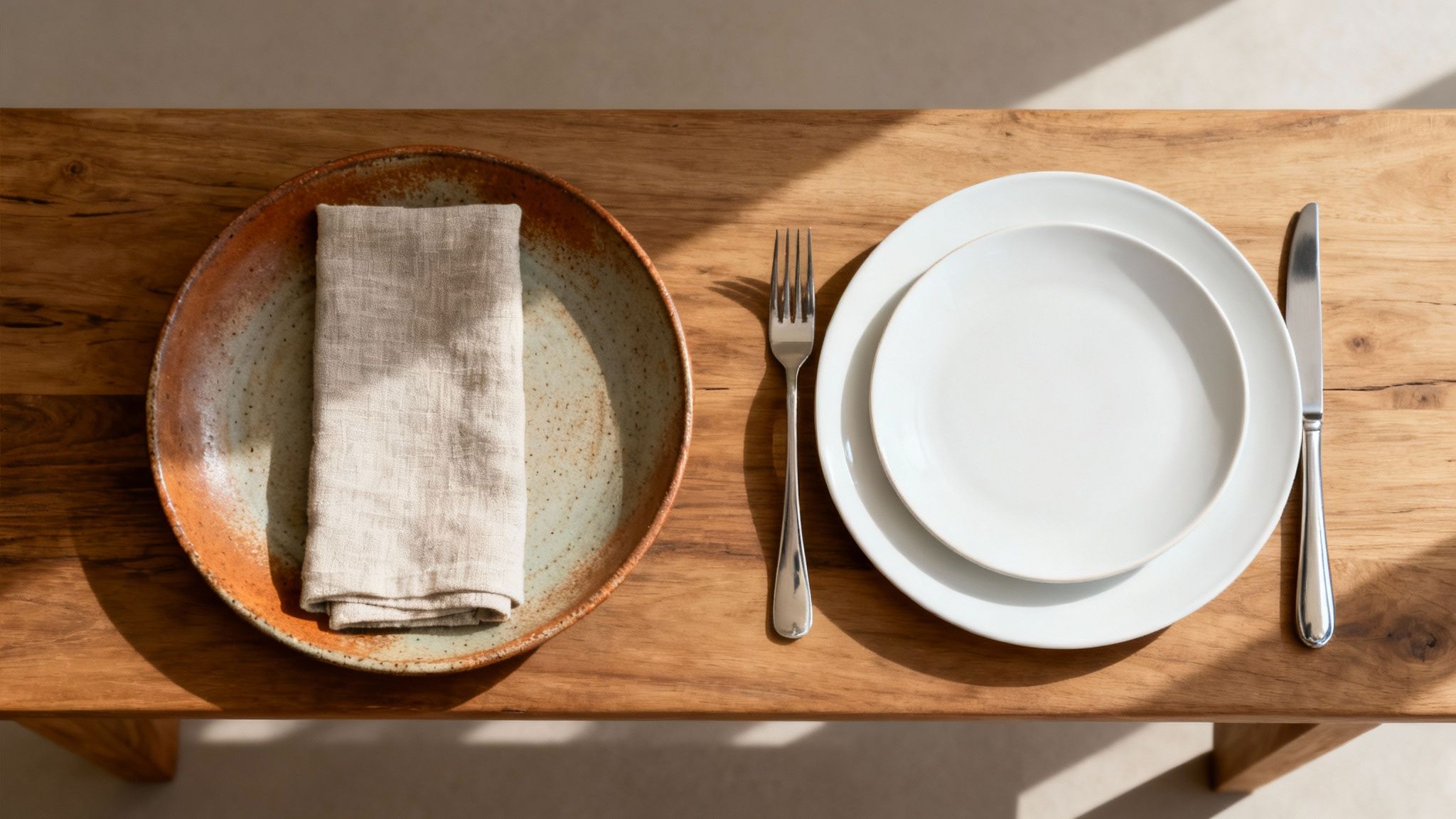
Beyond the practical questions of durability and heat resistance lies the fun part: style. Your dinnerware isn't just for eating; it's a key piece of your home's personality. Choosing between different types of ceramic is as much an aesthetic decision as a functional one, with each material bringing its own unique look and feel to the table.
The fundamental difference between ceramic and stoneware is something you can see and feel right away. Stoneware, with its earthy roots and sturdy build, has a natural warmth and substance to it. It’s the kind of dinnerware that makes a home feel cozy and lived-in.
The Rustic Elegance of Stoneware
Stoneware just screams rustic-chic. Its dense, heavy body gives it a grounded, authentic feel, and it’s often shaped into hearty, substantial forms. The glazes tend to be opaque or semi-opaque, usually in a palette of muted, earthy tones—think slate gray, sandy beige, and deep forest greens.
This specific look makes stoneware an incredible fit for some of today's most popular interior design styles:
-
Modern Farmhouse: The handcrafted vibe and natural colors of stoneware are a perfect match for the warm woods and cozy textiles that define farmhouse decor.
-
Minimalist: In a clean, minimalist space, the simple shapes and solid, muted colors of stoneware can add a touch of organic warmth and texture.
-
Bohemian: Its artisanal quality and natural feel blend beautifully with the eclectic, free-spirited layers of a bohemian home.
There's a real tactile pleasure in using stoneware. Its weight and texture make every meal feel a little more deliberate and special.
The Diverse World of Other Ceramics
While stoneware has a very distinct personality, the broader "ceramic" umbrella covers a huge range of styles. Since it includes everything from earthenware to porcelain, you can find a ceramic piece to suit almost any aesthetic.
Earthenware, for instance, is fired at lower temperatures, which makes it a fantastic canvas for bright, bold colors. It’s lighter and more casual, often sporting an artistic flair that’s perfect for a vibrant, eclectic table setting.
Your dinnerware choice is an extension of your personal style. Stoneware provides a grounded, earthy foundation, while the wider ceramic family offers a limitless palette for everything from formal elegance to vibrant, everyday fun.
Then you have porcelain at the complete other end of the spectrum. As the most refined member of the ceramic family, it's fired at blistering-hot temperatures to achieve an elegant, almost translucent quality. Its smooth, bright-white surface is the classic choice for fine dining, creating a crisp, sophisticated backdrop that lets the food shine.
Ultimately, the goal is to match the material's vibe with your own. Whether you're drawn to the cozy, casual table that stoneware sets or the polished, formal experience of porcelain, understanding these aesthetic nuances will help you find a set that’s not just beautiful, but perfectly you.
Selecting the Right Dinnerware for Your Lifestyle
Choosing new dinnerware isn't just about picking a pretty pattern. It's really about finding a set that fits into the rhythm of your life. The true difference between ceramic and stoneware snaps into focus when you start thinking about your own habits—are you dealing with chaotic family dinners, or are you hosting elegant, quiet meals? Thinking this way makes sure your new dishes are a joy to use, not just something beautiful to look at.
Your lifestyle is the most important factor here. A delicate set that works perfectly for a couple might not last a week in a house full of kids. Likewise, your trusty everyday plates might not feel quite special enough for a big celebration. When you match the material to your routine, you end up with dinnerware that truly works for you.
For Busy Households and Families
If your home is a whirlwind of activity—kids, pets, friends constantly dropping by—then durability is everything. This is where stoneware really shines, making it the clear winner for daily use. Because it's fired at such high temperatures, the clay becomes dense and vitrified, which means it’s incredibly resistant to chipping and cracking. It's built to handle the bumps and scrapes of a busy life.
Just think about these real-world moments:
-
Accidental Bumps: When you’re washing dishes and accidentally knock a plate against the faucet, stoneware is far less likely to chip.
-
Dishwasher Durability: It stands up to the high heat and harsh detergents of a daily dishwasher cycle without getting faded or brittle over time.
-
Kid-Friendly: While nothing is truly unbreakable, stoneware's heavier feel and overall strength make it a much safer bet for little hands.
In a hectic home, convenience is the ultimate luxury. Stoneware’s resilience means you can spend less time worrying about your dishes and more time actually enjoying your meals.
For the Avid Host and Entertainer
For those who love to entertain, versatility is the name of the game. You need dishes that can feel just as right at a casual Sunday brunch as they do at a formal holiday dinner. Stoneware is a fantastic starting point because it can easily be dressed up or down. Its earthy, solid presence creates a warm, welcoming vibe for more relaxed get-togethers.
But for those truly formal events, you might find yourself wanting the delicate, refined look of porcelain, which is another type of ceramic. Many experienced hosts land on a mix-and-match strategy.
Pro Tip for Hosts: Build your collection around a durable set of stoneware dinner plates. Then, bring in elegant porcelain accent plates, bowls, or serving platters for those special occasions. This gives you a practical, stylish, and incredibly adaptable set.
This approach lets you invest in a hardworking daily set while still having those standout pieces that make a celebration feel special. To dig deeper into finding a set that matches your style and needs, this guide to choosing a ceramic dinner set offers some excellent, practical advice.
Specialized Uses in the Kitchen
Beyond just the dinner table, stoneware proves its worth in the kitchen itself. Its ability to retain heat and distribute it evenly makes it a superior choice for cooking and baking. Think about it: a stoneware baking dish will keep a casserole or lasagna piping hot long after it comes out of the oven, which is perfect for serving family-style meals.
The global market numbers back this up. The ceramic tableware industry as a whole was valued at around $12.4 billion in 2024, and you can see clear patterns in what people buy. Finer materials like porcelain held a 44.7% market share, driven by their beauty, while stoneware claimed its own significant slice thanks to its toughness and easy care, making it a favorite for both homes and restaurants.
Ultimately, the best choice comes from looking honestly at your life. Whether it’s chaotic and family-centered, social and elegant, or a little bit of both, matching the material to your reality will help you pick dinnerware you’ll love for years.
Making a Smart Investment in Your Tableware
When you’re picking out new dinnerware, it’s easy to get fixated on the price tag. But treating it like a long-term investment in your home, rather than just another purchase, is the smarter way to go. This is where you really start to see the value difference between ceramic types, especially when you look at stoneware.
A cheaper earthenware set might look like a great deal initially. The problem is, it’s prone to chipping and cracking, which starts a frustrating cycle of replacements. Before you know it, you're constantly buying extra plates or bowls to fill out a dwindling set, and that "bargain" ends up costing you more in the long run.
Understanding the Total Cost of Ownership
Investing in a quality stoneware set completely changes the math. Yes, the upfront cost is usually higher, but its incredible durability means you're buying something that can easily last for years, maybe even decades. That longevity brings the cost-per-use way down, making it the more economical choice over time.
Think of it this way: a sturdy stoneware plate that you use every day for ten years offers far more value than a cheaper one that gets a chip in its first year. The higher initial price of stoneware is really an investment in durability and your own peace of mind.
Investing in durable stoneware means avoiding the recurring expense and frustration of replacing chipped or broken dinnerware. It's about buying once and buying well, ensuring your tableware remains a beautiful, functional part of your home for years to come.
This appreciation for long-lasting, functional ceramics is something we're seeing more and more. The stoneware market, a big piece of the ceramic tableware pie, was valued at around $2.49 billion in 2024 and is expected to keep growing. This trend shows a real shift in what people want—resilient materials that work just as well for a family dinner as they do in a busy restaurant. You can find more details in the ceramics tableware market report on Metastat Insight.
Factors That Influence Price and Value
The type of clay is a big part of the cost, but other factors contribute to the price and overall value of your dinnerware. Knowing what they are helps you make a better choice.
-
Artisan Craftsmanship: A lot of stoneware is still made by hand. Skilled artisans shape, fire, and glaze each piece, giving it a unique character and a level of quality you just don't get from mass-produced items.
-
Brand Recognition: Brands with a solid reputation usually have rigorous quality control and use premium materials. That reputation is built on years of making dinnerware that actually lasts.
-
Unique Glazes and Finishes: Developing beautiful, tough glazes is an art form. These special finishes don't just create a one-of-a-kind look; they add a crucial layer of protection against scratches and daily wear.
Ultimately, when you choose stoneware, you're paying for more than just a plate. You're investing in better materials, skilled craftsmanship, and a design that’s built to last, gracing your table for countless meals. That makes it a genuinely smart and valuable addition to your home.
Frequently Asked Questions About Ceramic and Stoneware
Choosing new dinnerware brings up a lot of practical questions. To make sure you're picking the right set for your home, we’ve put together answers to the most common queries we hear about ceramic and stoneware.
Is Stoneware Heavier Than Other Ceramic Dinnerware?
Yes, you'll definitely feel the difference. Stoneware is denser and carries more heft than other common ceramics like earthenware. That substantial feel comes from being fired at extremely high temperatures, which creates a tough, non-porous body.
Think of that weight as a good thing—it’s a clear sign of its quality and durability. While it's more solid than earthenware, it often feels similar in weight to porcelain of the same thickness.
Can All Stoneware Go in the Oven and Microwave?
Most of the time, yes. Modern stoneware is built to be a true kitchen workhorse, so the vast majority is oven, microwave, and dishwasher safe. Its structure is specifically designed to handle heat without cracking, making it one of the most versatile materials out there.
That said, it’s always smart to check the manufacturer's notes on the bottom of the piece first. Some special glazes or metallic accents might not be oven-safe. As a general rule for any ceramic, avoid extreme temperature shocks, like taking a dish straight from the freezer and putting it into a hot oven.
The ability to go from oven to table is one of stoneware's best features. It simplifies everything from cooking to serving, meaning fewer dishes to clean and food that stays warm longer.
How Can I Tell If a Dish Is Stoneware or Earthenware?
Glazes can make it tricky, but there are a few tell-tale signs. The first clue is weight—stoneware just feels more solid and substantial in your hand.
If you can find an unglazed spot, like the foot ring on the bottom of a plate, check the clay. Stoneware clay typically looks light gray or tan and has a smooth, almost stone-like feel. Earthenware, on the other hand, often has a reddish-brown or white, more porous texture that feels a bit earthy.
Does Stoneware Chip Easily?
Not at all. In fact, its excellent chip resistance is a huge part of its appeal, especially when compared to more delicate ceramics like earthenware. The vitrification process it undergoes during firing makes the material incredibly hard and dense.
This means it can handle the daily grind—stacking in the cupboard, clanking in the sink, and running through the dishwasher—far better than more fragile options. While nothing is truly indestructible, stoneware is one of the most reliable choices for a busy household.
Ready to find dinnerware that perfectly blends durability and style? Explore the curated collections at Fluent Trends and discover a set that will beautifully serve your home for years to come. Shop now at https://www.fluenttrends.com.