
The Eco-Conscious Duvet Cover That Actually Lasts
Yuatinia LeakLast Updated: November 13, 2026
Quick Summary
An eco-conscious duvet cover is a removable cover made from lower-impact fibers and dyes, produced under verified labor and material standards. Judge one on fiber, certification, and construction, not on a green badge. A cover that lasts a decade earns its footprint back.
- OEKO-TEX Standard 100 tests the finished fabric for harmful substances, including dye and finish.
- GOTS goes further than OEKO-TEX, covering organic fiber content plus processing and social criteria.
- Most standard queen covers land around 90 by 92 inches, so measure your insert first.
- Four corner ties stitched into the seam are the minimum to keep an insert in place.
- A $55 cover replaced every two years costs more than a $225 cover that lasts eight.
Table of Contents
- What an Eco-Conscious Duvet Cover Really Means
- The Best Organic Cotton Duvet Cover for Every Budget
- Five Eco-Conscious Duvet Covers Worth Your Money
- A 100% Organic Cotton Duvet Cover Still Wins on Breathability
- Picking an Eco-Conscious Duvet Cover Queen Size
- Picking an Eco-Conscious Duvet Cover King Size
- What These Covers Cost You Over Ten Years
- Care, Fit, and Construction Details That Decide Longevity
- Choosing the Cover That Fits Your Bed Tonight
- Frequently Asked Questions
What an Eco-Conscious Duvet Cover Really Means
An eco-conscious duvet cover is a removable fabric cover made from lower-impact fibers and dyes, produced under verified labor and material standards. It protects your duvet insert and shapes how your bed feels. At Fluent Trends, we treat this as a buying decision, not a badge.
They ask "is it green?" The better question is "will it still be good in five years?"
That second question matters more. A cover that pills after a year wastes money and materials. A cover that survives a decade earns its footprint back. So we judge every option here on three things: fiber, certification, and construction.
Certifications That Do the Work for You
OEKO-TEX Standard 100 is a testing and certification system for harmful substances in textiles. It checks finished fabrics, not just raw fiber. If a cover carries it, the dye and finish have been screened.
GOTS is the Global Organic Textile Standard. It covers organic fiber content plus processing and social criteria. GOTS goes further than OEKO-TEX on farming and labor.
Here is the difference in plain terms. OEKO-TEX tells you the finished fabric was tested for harmful substances. GOTS tells you how the cotton was grown and processed.
Fibers Worth Knowing Before You Buy
Fiber decides how a cover feels, breathes, and ages. Here is the short version.
- Organic cotton: Breathable, durable, gets softer with washing. The safest all-round pick.
- Linen: Crisp at first, then softens. Excellent airflow. Wrinkles are part of the deal.
- Hemp: Tough and naturally pest-resistant. Starts rough, breaks in slowly.
- Milk or casein fiber: A protein-based fiber that mirrors skin's natural pH. Gentle on sensitive skin.
- Lyocell: Made from wood pulp in a closed-loop process. Cool and smooth to the touch.
- Bamboo viscose: Silky and soft. Check for OEKO-TEX, since processing methods vary widely.
Most covers blend two or three of these. Blends are not a shortcut. A well-chosen blend often outperforms a single fiber.
The Best Organic Cotton Duvet Cover for Every Budget
The best organic cotton duvet cover balances certified fiber with a weave you actually enjoy touching. Price matters, but it is not the whole story. A cheap cover you replace twice costs more than one good cover.
We look at three price bands. Entry level covers the basics. Mid-range adds better finishing. Upper tier buys you construction that holds up for years.
One caveat before you shop. "Organic cotton" on a label means little without a certification behind it.
Five Eco-Conscious Duvet Covers Worth Your Money
Five covers, five different sleepers. We picked these for material honesty and real construction details. None of them are the cheapest option on the shelf.
Here is the quick comparison before the detail.
| Cover | Price | Material | Best For | Certification |
|---|---|---|---|---|
| Signature Milk Fibre | $225 | 5% milk fiber, 75% cotton, 20% micromodal | Sensitive skin | Hypoallergenic, pH-balanced |
| Premium Bamboo Viscose | $155 | 100% viscose from bamboo | Everyday use | OEKO-TEX certified |
| Silky Lyocell | $232 | TENCEL™ Lyocell | Hot sleepers | OEKO-TEX certified |
| Clean Design Home Sateen Set | $55 | 100% cotton, 400 thread count sateen | Allergy-aware homes | OEKO-TEX Standard 100 |
| Cooling Eucalyptus Silk Set | $199 | Eucalyptus silk | Vegan down alternative | Hypoallergenic, FSC packaging |
Price
Signature Milk Fibre Duvet Cover: Built for Sensitive Skin
This is our top pick for reactive skin. The Signature Milk Fibre Duvet Cover is woven in Portugal with casein, a milk protein. Casein is a milk protein, and this cover is designed for sensitive skin.
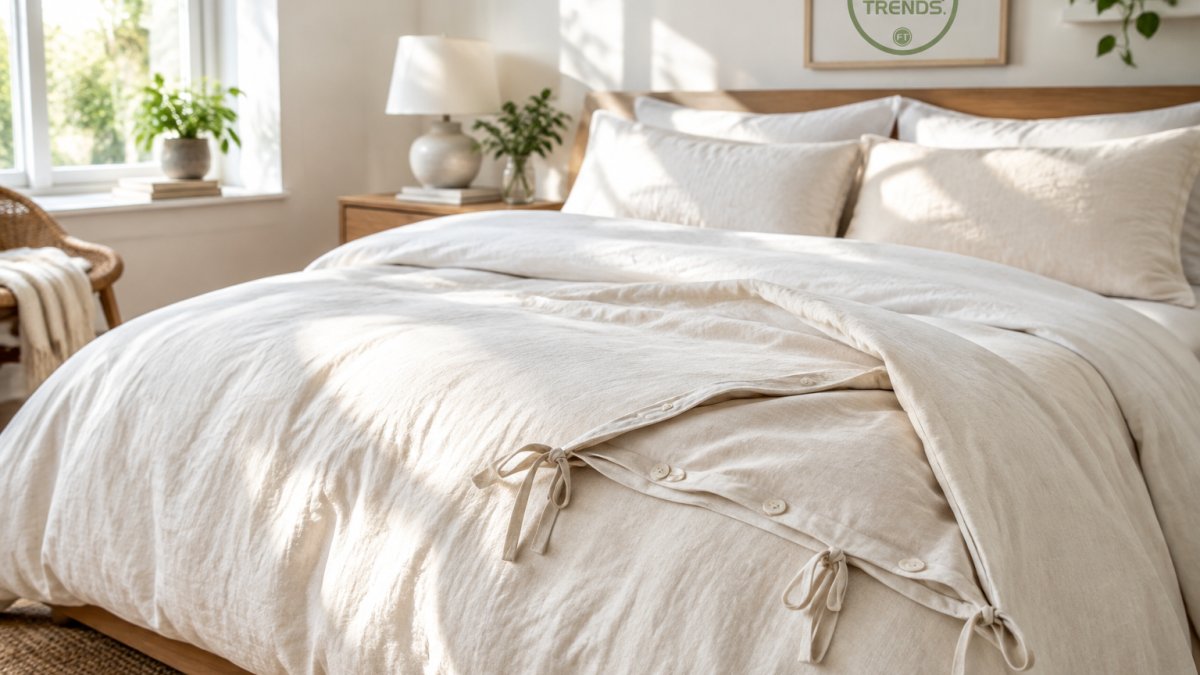
The hand feel sits between flax linen and premium cotton. It is finished with a clean knife-edge and a hidden button closure. Four inner ties hold your insert in place.
It is hypoallergenic. Machine wash cold, tumble dry low.
Best for: sleepers whose skin reacts to everything else. Skip if: you want a high-shine, slippery finish.
You can shop the Signature Milk Fibre Duvet Cover to see the colors and sizing.
Premium Bamboo Viscose Duvet Cover: The Everyday Workhorse
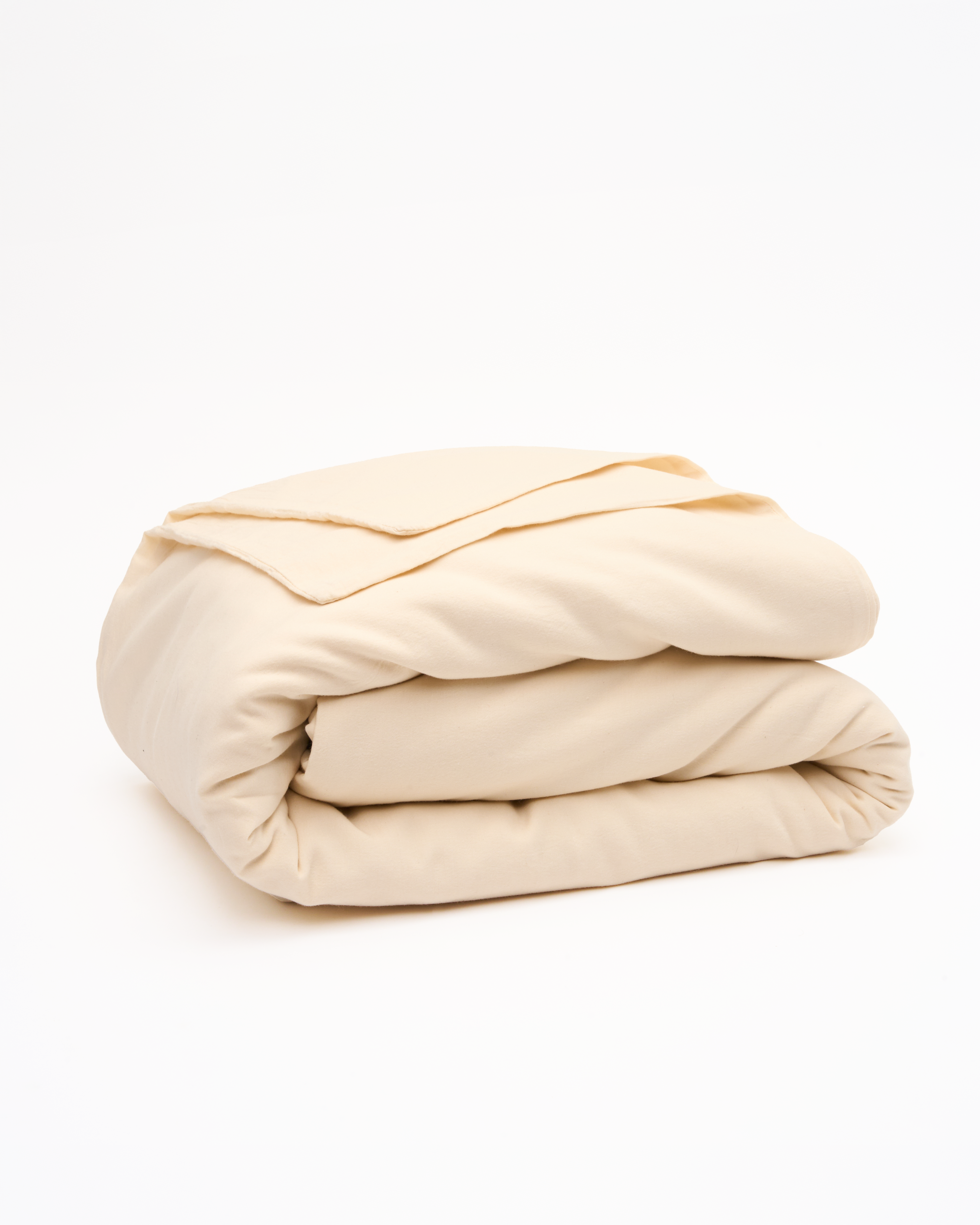
Not everyone wants a project. This cover is the easy answer. The Premium Bamboo Viscose Duvet Cover is made from 100% viscose from bamboo, with a smooth, soft hand feel that suits almost any bedroom.
Button closure, ties in all four corners, machine washable. It is OEKO-TEX certified.
At $155, it is the most accessible cover in this group. It also styles easily.
Best for: guest rooms and first-time buyers. Skip if: you sleep very hot and want active cooling.
See the full details and browse the Premium Bamboo Viscose Duvet Cover.
Silky Lyocell Duvet Cover: The Cool Sleeper's Pick
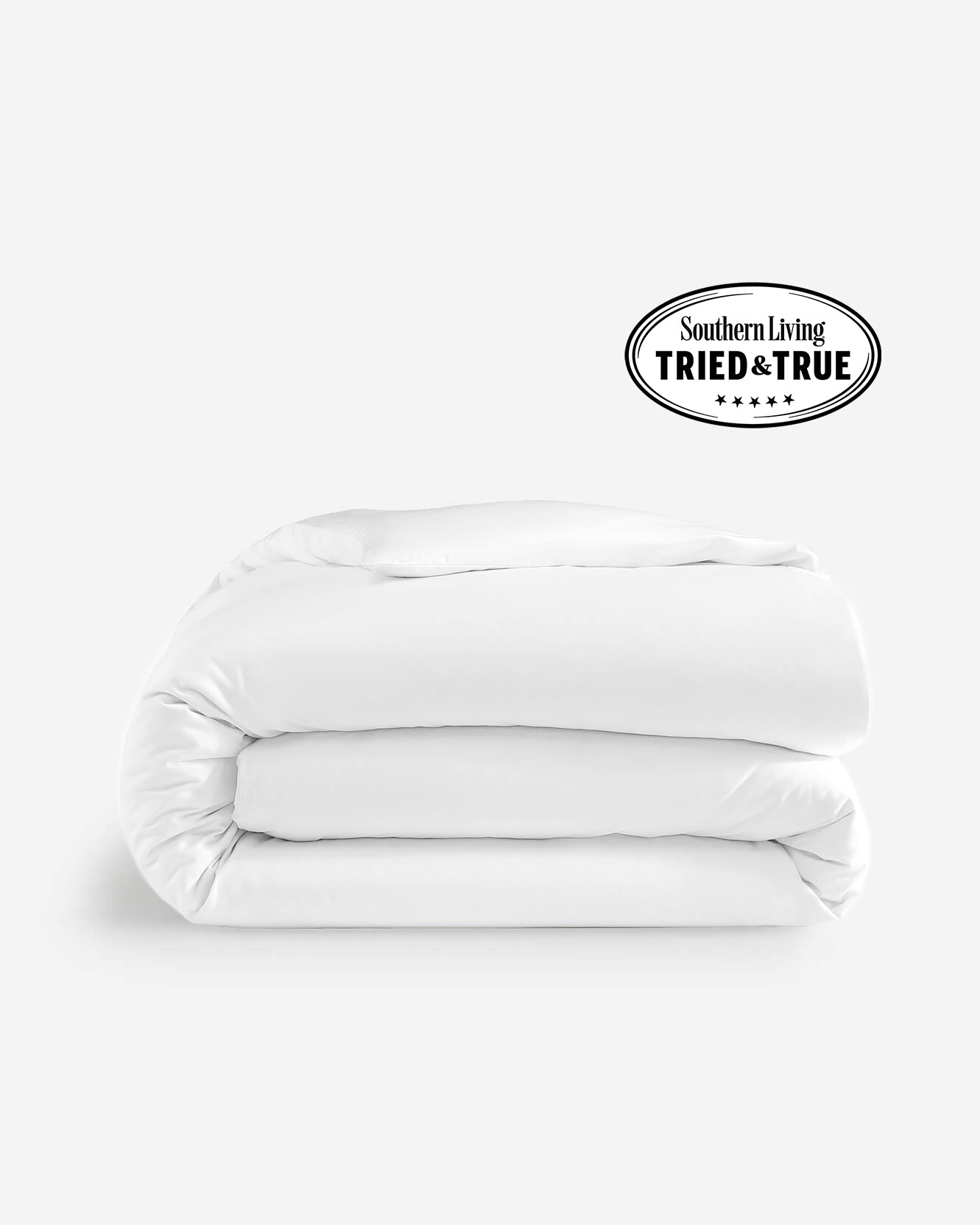
Hot sleepers, start here. The Silky Lyocell Duvet Cover uses TENCEL™ Lyocell, a wood-pulp fiber made in a closed-loop process. It has a cool, smooth feel.
The zip closure is the detail we like most. It keeps the insert locked in place with no button gaps. Corner ties handle the rest. It is machine washable and OEKO-TEX certified.
At $232, it is the priciest cover on this list.
Best for: warm sleepers and humid rooms. Skip if: you prefer a crisp, dry cotton feel.
Check sizing and view the Silky Lyocell Duvet Cover.
Clean Design Home Sateen Set: The Allergen-Aware Option
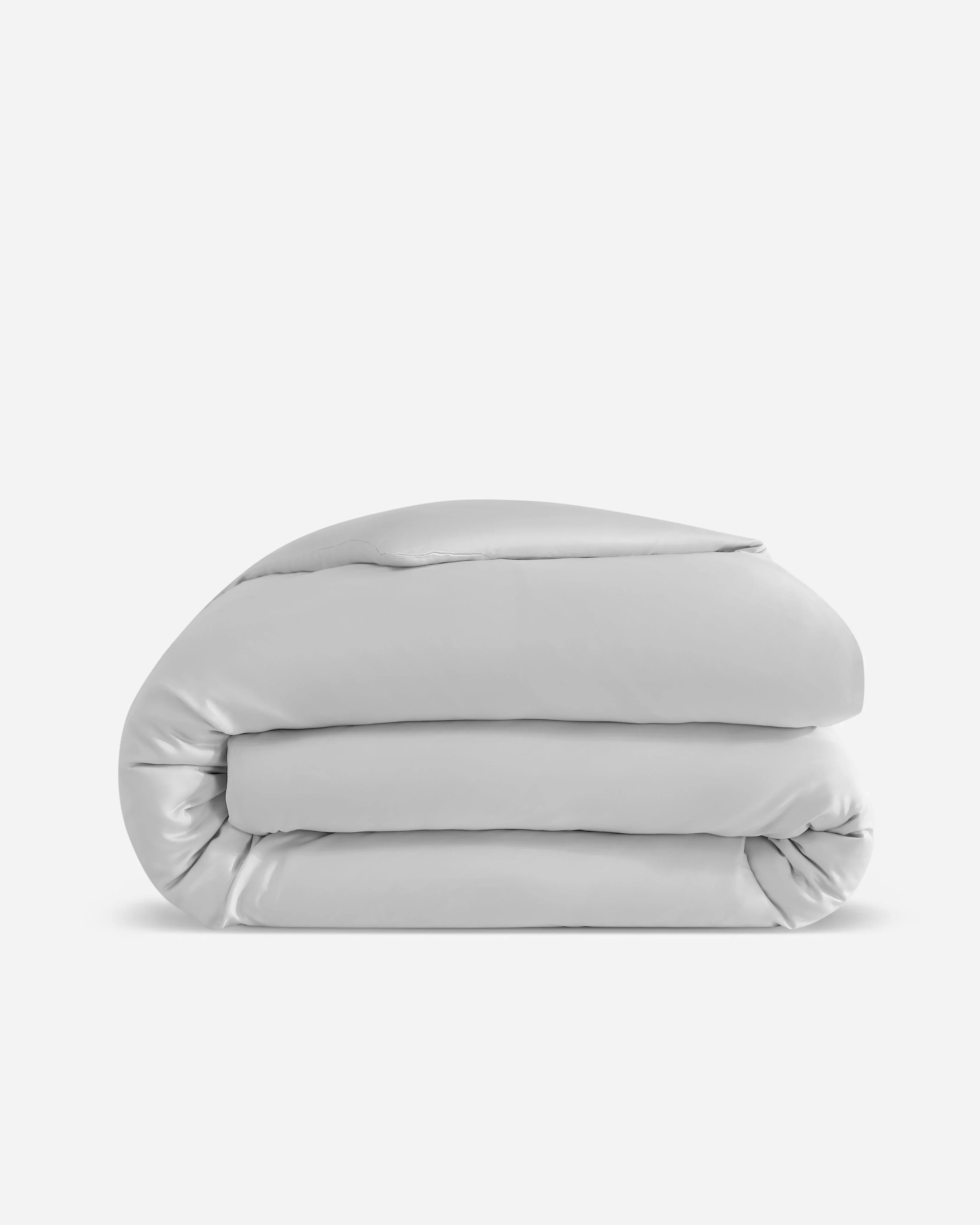
Allergy households should look at this one first. The Clean Design Home® Sateen Duvet Cover Set uses a patented weave designed to reduce allergen triggers. It is 100% cotton in a smooth sateen weave at 400 thread count.
You get a duvet cover plus matching shams. Twin includes one sham. Full/Queen and King include two. Color options are grey, blue, and linen. It is OEKO-TEX Standard 100 certified and machine washable.
At $55, it is the budget entry point.
Best for: allergy-conscious bedrooms and rental units. Skip if: you want a matte, textured linen look.
View the Clean Design Home Sateen Set to compare the three colorways.
Cooling Eucalyptus Silk Comforter Set: The Vegan Down Alternative
Some people want the whole bed sorted in one box. This set does that. The Cooling Eucalyptus Silk Comforter Set includes one temperature-regulating comforter and two quilted pillow shams.
The fiber is eucalyptus silk, grown and processed in a closed-loop, low-impact system. It is hypoallergenic. It is also animal-free.
At $199, it is a complete set rather than a single cover.
Best for: vegan shoppers and anyone replacing a down comforter. Skip if: you already have an insert you love.
Shop the Cooling Eucalyptus Silk Comforter Set for Full/Queen and King sizing.
A 100% Organic Cotton Duvet Cover Still Wins on Breathability
Cotton has been the default for a reason. A 100% organic cotton duvet cover breathes better than most synthetics and holds up to repeated washing. It also avoids the static that builds up in polyester blends.
Percale is a crisp, matte weave with a tight grid. It feels cool and dry. Sateen is a smoother weave with a subtle sheen and a softer drape. Neither is better. Percale suits hot sleepers, sateen suits people who want a silkier touch.
Thread count is the most misunderstood number in bedding. Past a certain point, a higher count just means finer, more tightly packed threads. It does not guarantee comfort. Weave and fiber quality tell you more.
One honest limitation. Cotton wrinkles. If you want a permanently crisp bed with zero ironing, cotton will frustrate you. Linen blends and lyocell hold a smoother surface with less effort.
Picking an Eco-Conscious Duvet Cover Queen Size
Queen is the most common size, so fit problems show up here first. An eco-conscious duvet cover queen should match your insert, not just your mattress. Most standard queen covers land around 90 by 92 inches. Check your insert dimensions before you order anything.
A cover that is too small compresses the insert and creates cold spots at the corners. A cover that is too big bunches at the foot and looks sloppy. Measure the insert, then add a little room for shrinkage. Natural fibers like organic cotton can shrink a bit after the first wash. Pre-washed covers shrink less, so ask before you buy.
Watch out: a queen insert is not the same as a queen mattress. Inserts run smaller than the bed, and a cover sized for a mattress will swallow the insert.
Corner ties matter more than most shoppers think. Four ties are the minimum. Cheap covers often have two, or none at all. Without ties, the insert slides to one end by morning. Look for ties stitched into the seam, not stapled or glued. Hidden buttons and zips both work, but check the stitch quality on the closure.
Depth changes how the cover drapes. A deep mattress with a thick topper needs more drop on each side. Measure the drop you want before you commit. A cover that fits properly needs less adjusting and lasts longer.
Here is a quick fit checklist for queen shoppers.
- Insert measured, not just the mattress
- Cover dimensions within two inches of the insert
- Four corner ties, stitched into the seam
- Closure type you can live with daily
- Shrinkage note or pre-washed label
- Drop measured on each side
One more thing. A queen cover in a heavy weave feels restrictive in summer. A lighter fiber like lyocell or bamboo viscose moves more freely across the bed. If you sleep hot, start there. If you want a crisp feel, organic cotton percale is the safer pick.
Picking an Eco-Conscious Duvet Cover King Size
King beds expose every shortcut in construction. An eco-conscious duvet cover king needs more fabric, so weak seams and thin weaves fail faster here. King covers typically run around 106 by 94 inches. Confirm the exact figures on the product page. Brands vary, and a two-inch difference changes the drape.
Weight is the other factor. A large cover in a heavy weave feels restrictive in summer. A lighter fiber like lyocell or bamboo viscose moves more freely across a wide bed. A Portugal-woven organic cotton cover in a percale weave stays crisp and breathable without feeling heavy.
Watch out: king inserts are heavy. Look for reinforced inner ties and a closure that will not gap under load. Hidden buttons and zips both work, but check the stitch quality. French seams and overlocked edges hold up better than simple stitched seams on a cover this size.
Here is where most guides stop. We want to go one step further. A king cover is a big piece of textile, so its end of life matters more. Choose a cover you can repair, reuse, or recycle. A versatile neutral color and a classic weave stay in style longer than a trend piece. That means fewer replacements and less waste over time.
Ask three questions before you buy a king cover.
- Can the closure be repaired if a button or zip fails?
- Is the color and weave versatile enough to last a decade?
- Does the brand offer any take-back, repair, or recycling guidance?
Wash cold, tumble dry low, and skip fabric softener. Zip or button the cover before washing to protect the seams. A cover that fits properly and gets gentle care needs less adjusting and lasts longer.
Fit is the other half. Measure your insert, not your mattress. Then check the drop you want on each side. A king cover that fits well looks tailored and feels better on the bed. It also puts less stress on the seams, which is where large covers fail first.
What These Covers Cost You Over Ten Years
Price tags hide the real number. Total cost of ownership is what you actually spend across the life of the product. That includes replacements, washing, and the time you lose dealing with a cover that fails.
A $55 cover replaced every two years costs more than a $225 cover that lasts eight. The math is not close. Cheap bedding is a subscription you did not sign up for.
Here is how we think about it.
| Price Tier | Example | Expected Lifespan | Ten-Year Cost |
|---|---|---|---|
| Budget | $55 set | 2-3 years | $220 or more in replacements |
| Mid | $155 cover | 5-7 years | $155 to $310 |
| Upper | $225 to $232 cover | 8-10 years | $225 to $232 once |
Washing frequency shifts this too. A cover washed weekly wears faster than one washed every two weeks. Cooler water and lower dryer heat extend life on every fiber in this guide.
Care, Fit, and Construction Details That Decide Longevity
Longevity is decided before the first wash. Construction details tell you how a cover will age. Here is the checklist we run through before recommending anything.
- Four corner ties, stitched not stapled
- Closure type: hidden buttons, zip, or envelope
- Seam finish: French seams or overlocked edges
- Fiber composition listed in full percentages
- At least one certification named
- Care instructions included on the label
- Sizing chart with exact inch measurements
- Colorfastness note for darker shades
Care rules stay simple. Wash cold. Tumble dry low. Skip fabric softener, which coats fibers and reduces breathability. Zip or button the cover before washing to protect the seams.
Fit is the other half. Measure your insert, not your mattress. Then check the drop you want on each side. A cover that fits properly needs less adjusting and lasts longer.
Choosing the Cover That Fits Your Bed Tonight
Here is the challenge. Most bedding advice tells you to buy more. We would rather you buy once, well, and stop thinking about it.
Start with your skin and your sleep temperature. Sensitive skin points to milk fiber. Hot sleepers point to lyocell. Allergy households point to the sateen set. Vegan shoppers point to eucalyptus. Everyone else can start with bamboo viscose.
We source from reputable purveyors and look for pieces built to last. Our durable furniture collection focuses on frames designed for everyday use.
If you want one recommendation, take the Signature Milk Fibre Duvet Cover. It is the one we would put on our own bed. Then build the rest of the room around pieces that will still look right in ten years.
The real test is not what your bed looks like on delivery day. It is what it looks like after five years of washing. Fluent Trends curates bedding and furniture with that timeline in mind. Our selection includes OEKO-TEX certified covers, Portugal-woven milk fiber bedding, and hypoallergenic options for sensitive skin. Start with one piece and see the difference in how it wears.
Frequently Asked Questions
What is the most eco-friendly duvet cover material?
There is no single winner, but a few fibers stand out. Organic cotton uses less water and no synthetic pesticides. TENCEL Lyocell comes from wood pulp in a closed-loop process that recycles its solvents. Casein fiber, used in milk fibre bedding, is a milk protein blended with cotton and micromodal. Check for OEKO-TEX certification on any of them before you buy.
Is organic cotton actually a good choice for a duvet cover?
Yes, organic cotton is a solid default for many sleepers. Percale weaves feel crisp and cool. Sateen weaves feel smoother and a little heavier. The main trade-off is wrinkling, which is normal for cotton and not a defect. Look for GOTS or OEKO-TEX certification to confirm the organic claim is real.
How do I know an eco-conscious duvet cover is sustainably made?
Ask for third-party certification, not brand language. OEKO-TEX Standard 100 means the finished fabric was tested for harmful substances. GOTS covers organic fiber content plus processing and labor standards. Beyond certificates, check the fiber composition, the country of weaving, and whether the maker publishes care instructions that extend product life.
What size duvet cover should I buy for a queen or king bed?
Match the cover to your insert, not just your mattress. Check the sizing chart on each product page for exact queen and king dimensions. Measure your insert flat before ordering, since fill power changes the finished dimensions. Also confirm corner ties are present. Four ties keep the insert from bunching, which is the most common fit complaint after the first wash.
Do eco-friendly duvet covers cost more over time?
Upfront, yes. Prices in this category run from around $55 for a cotton sateen set to $232 for TENCEL Lyocell. Over ten years, the math flips. A $60 cover replaced every two years costs about $300. Factor in fewer returns, less shedding, and no replacement cycles, and the durable option usually wins.
