

A Guide to European Style Furniture
Donna MaloneWhen you hear "European style furniture," what comes to mind? For many, it conjures images of ornate, gilded antiques from a French palace. While that's part of the story, it's far from the whole picture.
European style isn't a single look; it's a massive, diverse family of designs. It stretches from the opulent and dramatic to the clean and minimalist, but every piece shares a common DNA: superior craftsmanship, the best high-quality materials, and a profound connection to history.
What's at the Heart of European Design?
European furniture is more than just a look—it’s a philosophy. It’s a firm rejection of today's disposable "fast furniture" culture. Instead, it champions pieces built to tell a story, to be passed down through generations. This idea is steeped in centuries of tradition, where master artisans perfected skills like intricate wood carving, fine joinery, and expert upholstery.
The worldwide love for this furniture isn't a fluke. Europe is one of the biggest and most mature furniture markets on the planet, valued at around EUR 106 billion and accounting for more than a quarter of all global consumption. This powerhouse market fosters a culture that beautifully marries time-honored techniques with contemporary living. You can read more about Europe's massive role in the global furniture industry to see just how deep its influence runs.
The Defining Characteristics
So, what connects a rustic Italian farmhouse table with a sleek, modern German armchair? It boils down to a few core principles that you'll see time and time again.
Let's break down the essential elements. Here's a quick summary of the core ideas that define European furniture design, which will help you spot these pieces in the wild.
| Characteristic | Description |
|---|---|
| Natural Materials | Relies on solid woods like oak, walnut, and cherry. These are often paired with other honest materials like stone, leather, linen, and velvet, all chosen for their durability and the beautiful way they age. |
| Artisanal Craftsmanship | The details tell the story. Look for signs of quality construction, like dovetail joints, hand-carved details, and flawless finishes that showcase the maker's skill and give each piece its own unique soul. |
| Timeless Silhouettes | Styles can vary wildly—from the dramatic curves of the Baroque era to the clean, simple lines of Mid-Century Modern—but the shapes are always classic. They're designed to feel right at home for decades, never looking dated. |
These characteristics ensure that each piece isn't just an object, but a small work of art with a practical purpose.
The real magic of European furniture is its dual identity: it's both functional art and a smart, lasting investment. It's not just designed to fill a room, but to enrich it with a sense of history, texture, and a quality you can literally feel.
At the end of the day, choosing European style furniture means you're not just buying a table or a chair. You're bringing home a piece of a legacy, appreciating the story behind it, and investing in true design excellence.
The Story Behind European Design Eras
To really get a feel for European style furniture, you have to know its backstory. This isn't just about pretty chairs and tables; it's a journey through history. Each era’s culture, politics, and artistic passions were literally carved into wood and woven into fabrics.
Think of it as a long conversation between generations of master craftsmen, each one adding their own voice.
From Baroque Drama to Rococo Romance
Let's start with the Baroque period, which dominated from about 1600 to 1750. This was an age of absolute power and high drama, and the furniture screamed it from every corner. We're talking massive, imposing pieces with deep, complex carvings, shimmering gold leaf, and an almost theatrical sense of movement. A Baroque cabinet wasn’t just a place to put things; it was a pure statement of wealth and authority, designed to leave you speechless.
But after all that heavy grandeur, tastes started to change. The Rococo style (c. 1730–1760) floated in like a breath of fresh air. If Baroque was a thundering opera, Rococo was a light, graceful ballet. It traded dark, heavy woods for softer finishes and embraced asymmetry, delicate S-curves, and whimsical motifs pulled from nature—think shells, vines, and flowers. The quintessential Louis XV armchair, with its curvy cabriole legs and fluid lines, is the perfect poster child for this romantic spirit.
The Return to Classical Order
Of course, the pendulum always swings back. Neoclassicism (late 18th century) was a reaction against Rococo's playful excess. Inspired by the incredible archaeological discoveries at Pompeii and Herculaneum, designers turned their backs on frills. Instead, they favored the clean, straight lines, perfect symmetry, and classic motifs of ancient Greece and Rome, like columns and laurel wreaths. It was a conscious return to order and reason.
These historical styles are the very DNA of what we call European design. They created a rich visual language of form, function, and artistry that designers still borrow from, reinterpret, and celebrate in our homes today.
These distinct periods—from dramatic to delicate to disciplined—aren't just dusty chapters in a history book. They are the essential building blocks of the timeless elegance that defines European furniture. To dig deeper into this incredible legacy, you can explore our complete guide to classic old-world furniture styles and see what makes each one unique.
A Tour of Europe's Major Furniture Styles
To say "European furniture" is a bit like saying "European food"—it doesn't capture the incredible variety. It's not one single style, but a collection of distinct design languages shaped by centuries of unique culture, history, and even climate. Getting to know these regional personalities is the best way to find the look that truly feels like home.
The sheer love for these designs is clear when you look at the numbers. The European furniture market hit a staggering USD 192.75 billion in 2024, and it's still growing. A lot of that growth comes from people in cities who want furniture that’s not just stylish, but also well-made and versatile enough to move with them. It’s a fascinating blend of classic looks and modern living. For a deeper dive, check out the full European home furniture market report.
This infographic gives you a great visual journey, tracing the evolution from the lavish curves of Baroque to the clean, ordered lines of Neoclassicism.
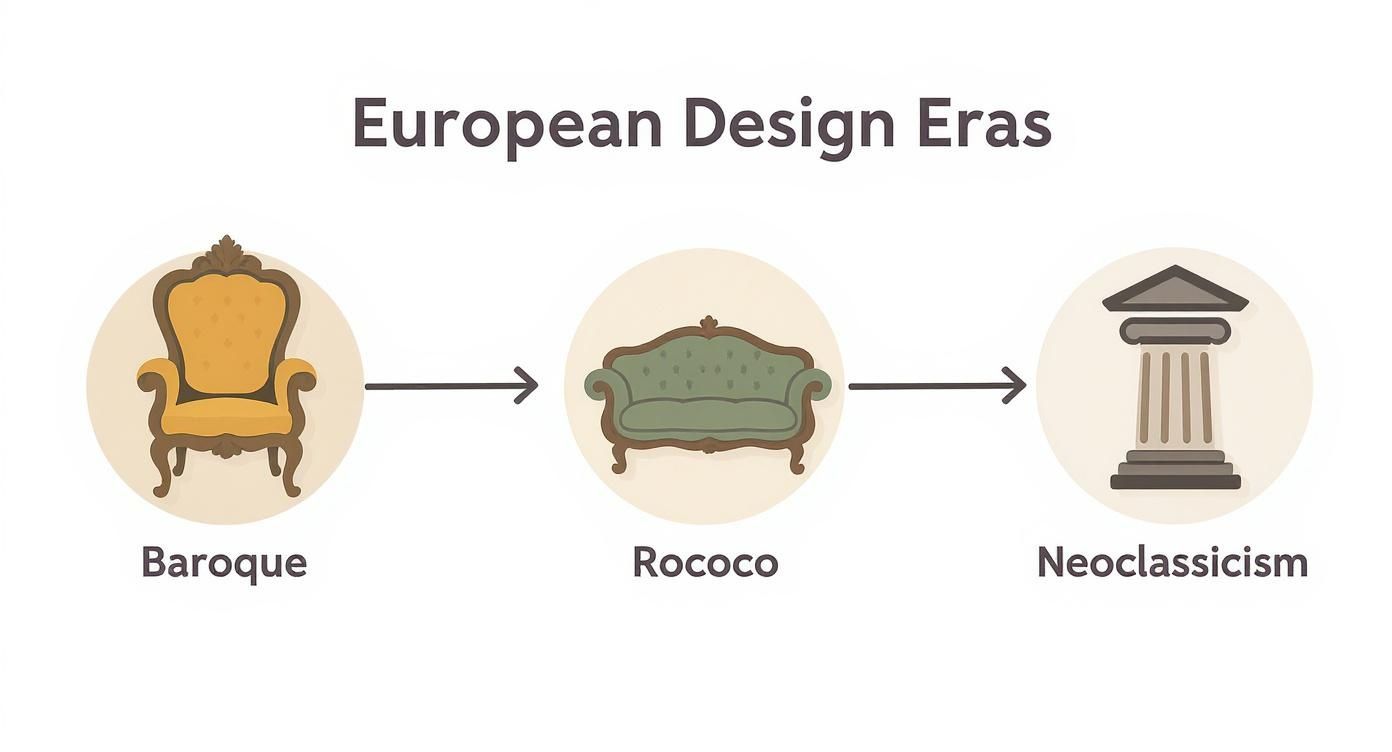
You can see how design history is like a conversation, with each new era reacting to the one that came before it, swinging back and forth between grand complexity and understated simplicity.
French Country and Parisian Chic
When we talk about French design, there are really two captivating stories. First, there’s the rustic charm of French Provincial. It's all about warmth, comfort, and an elegance that feels completely unforced. Picture graceful curves, painted wood with a bit of loving wear, and soft linens. It’s the feeling of a sun-drenched farmhouse in the countryside.
Then you have Parisian Chic, which is the city's answer to that rustic look. It’s more polished and curated, famous for mixing opulent antiques with sleek, modern pieces. The result is a look that feels personal and gathered over a lifetime, never like it was decorated in a single weekend.
Italian Elegance: Old and New
Italian design has always been about luxury, both past and present. Traditional Italian furniture is bold and dramatic, taking its cues from the Renaissance and Baroque periods. Think intricate carvings, high-gloss lacquers, and rich fabrics like velvet and silk that demand your attention.
Modern Italian design, however, set the global standard for cool, minimalist luxury. It’s all about flawless lines, top-tier materials like butter-soft leather and chrome, and a less-is-more philosophy. But whether old or new, the one thing that never changes is the absolute commitment to incredible craftsmanship.
"Whether it’s the rustic charm of the French countryside or the clean lines of Scandinavian minimalism, each European style offers a unique narrative. The goal is to find the story that resonates most with your personal aesthetic."
Scandinavian Simplicity
Born in the colder climates of Northern Europe, Scandinavian design is a breath of fresh air. It’s a philosophy centered on simplicity, utility, and a deep connection to the outdoors. After it burst onto the world stage in the mid-20th century, its core principles have remained the same:
-
Clean Lines: The focus is on straightforward forms and gentle curves that create a peaceful, uncluttered feeling.
-
Natural Materials: Light woods are the heart of this style—think birch, ash, and pine. These are often paired with natural textiles like wool and leather to add warmth and texture.
-
Functionality First: Every item has a clear purpose. It’s the ultimate expression of "form follows function," where beauty and practicality go hand in hand.
This stripped-back approach creates rooms that feel bright, open, and incredibly calming.
Blending European Furniture with Modern Design
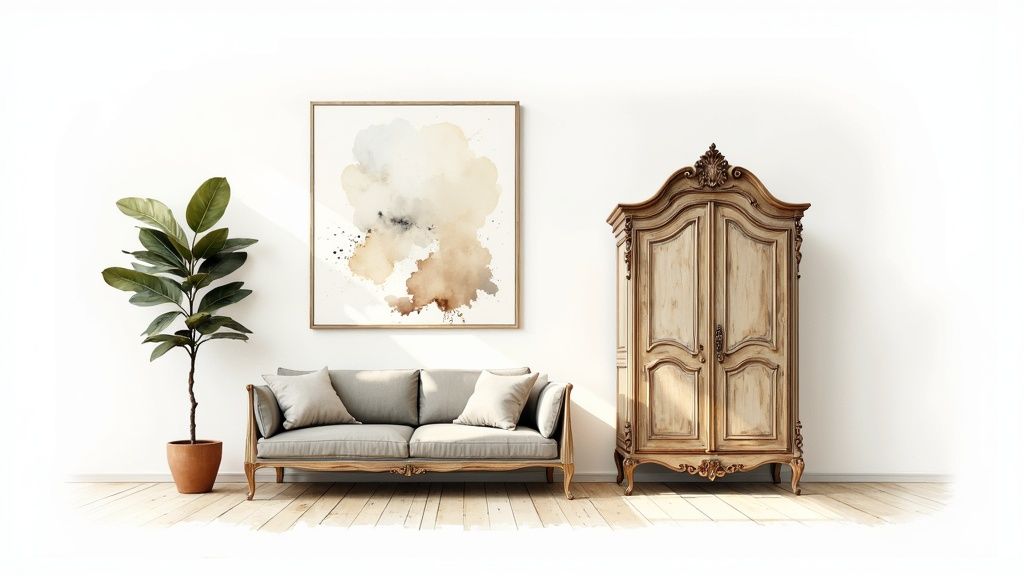
Weaving ornate, historic European furniture into a modern home can seem like a puzzle. But the goal isn’t to recreate a period drama set; it's to create a space that feels collected, personal, and timeless. The secret is finding the right conversation between old and new.
Rather than cramming a room with antiques, choose one or two statement pieces to be the star of the show. Imagine a magnificent French armoire or a dramatic Italian Baroque console table grounding a minimalist living room. It instantly adds a layer of character and history that brand-new furniture just can't touch.
This "less is more" approach keeps the room from feeling stuffy and lets the classic piece command the attention it deserves.
Create Harmony Through Contrast
Once your anchor piece is in place, it’s time to build a bridge across the centuries. Creating harmony sounds complicated, but it’s really about connecting the dots with a few smart choices.
-
Stick to a Cohesive Color Palette: Unify the space with a simple color scheme. A neutral backdrop of soft whites, grays, or warm beiges lets the rich wood tones and elaborate details of your European furniture pop without clashing with modern lines.
-
Introduce Modern Art: Nothing creates a more striking dialogue than pairing old with new art. Hanging a bold, abstract painting above a classic Louis XVI commode produces a visual tension that feels incredibly deliberate and stylish.
-
Play with Scale and Proportion: Balance the visual weight of a heavy, ornate piece with lighter, sleeker modern furniture. For example, a big, tufted Chesterfield sofa looks fantastic alongside a minimalist glass coffee table and a pair of slender, modern floor lamps.
Think of your European furniture as functional sculpture. This mindset allows it to live beautifully alongside modern design. It's the very contrast between eras that sparks visual interest and tells the story of your unique style.
In the end, it all comes down to creating a balanced composition. For a deeper dive into mixing and matching different looks, our furniture style guide offers more ideas on blending various designs. It’s all about creatively mixing textures, eras, and shapes to design a home that feels both current and rich with soul.
Spotting Quality Materials and Craftsmanship
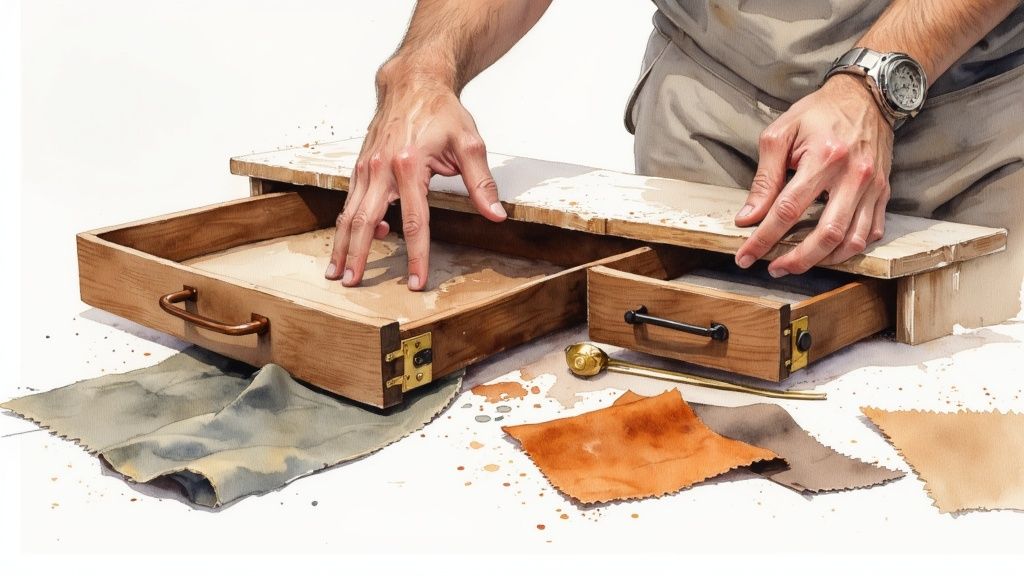
When you invest in a piece of European-style furniture, you're not just buying an object; you're bringing home something built to last for generations. Its real value comes from the incredible materials and the time-tested skills used to put it all together. Learning what to look for is how you'll be able to tell a future heirloom from something that just looks good for now.
It all starts with the wood. Genuine European design is rooted in solid hardwoods, chosen for their strength and stunning natural grain. We're talking about woods like rich walnut, dependable oak, and classic cherry. These aren't just pretty faces; they're workhorses, selected because they can handle daily life for decades and only get better with age as they develop a warm, lived-in patina.
The fabrics are just as thoughtfully chosen. Upholstery leans toward natural, high-end textiles that feel as good as they look. Imagine sinking into sumptuous velvets, running your hand over genuine top-grain leathers, or appreciating the cool, breathable comfort of fine linens.
The Tell-Tale Signs of Masterful Construction
Great materials are one thing, but how they're put together is where the magic really happens. The craftsmanship is what tells you a piece was made with skill and care, ensuring it will stay strong and stable for a lifetime, not just a few years.
Keep an eye out for traditional woodworking joints. These are techniques that create powerful, interlocking bonds, often without needing a single screw.
-
Dovetail Joints: This is the classic signature of high-quality drawer construction. Look for the distinctive interlocking "pins" and "tails" that fit together like a puzzle.
-
Mortise-and-Tenon Joints: An ancient and incredibly strong method where one piece of wood (the tenon) fits perfectly into a hole (the mortise) in another. It's the reason old chairs and tables are often still rock-solid.
When you find these construction details, you're looking at more than just furniture. You're seeing a true commitment to artistry and longevity. It's the physical proof that a piece was built with purpose and expertise, designed to be passed down.
The Evolution of European Furniture Design
European style furniture isn't something frozen in a museum exhibit. Think of it more as a living design language, one that's constantly finding new ways to express itself. Instead of just copying the past, today’s designers are cleverly reinterpreting those classic forms for how we live now. It’s this constant evolution that keeps the aesthetic so fresh and relevant.
A huge part of this shift comes down to a growing focus on sustainability. Modern European design is increasingly about ethical production and using eco-friendly materials. Designers are getting creative with reclaimed woods, recycled metals, and organic textiles, showing everyone that luxury and responsibility can absolutely go hand-in-hand. This honors the deep-rooted tradition of quality craftsmanship while also speaking to a more conscious generation.
Adapting to Modern Lifestyles
The way we work and live has also completely reshaped the furniture we need. With hybrid work becoming the norm, our homes now double as our offices, creating a demand for pieces that are both functional and beautiful.
This has sparked a wave of innovation. We're seeing elegant desks with built-in tech, comfortable office chairs that don't scream "cubicle," and modular sofas you can rearrange for a client call or a movie night.
This focus on adaptability isn't just a trend; it's a massive economic force. The European office furniture market is expected to jump from USD 11.92 billion in 2024 to a staggering USD 25.63 billion by 2033. That kind of growth tells you there's a real hunger for furniture that gets modern life without ditching timeless European style. For a deeper dive into the numbers, check out the full market analysis.
This new generation of European furniture proves that timeless design doesn’t have to be static. It can evolve to be smarter, more sustainable, and perfectly suited to the way we live and work today, all while retaining its classic soul.
Your Questions, Answered
Diving into the world of European furniture often sparks a few questions, especially around things like price, subtle style differences, and keeping your pieces looking their best. Let's clear up some of the most common ones.
Is European Style Furniture Expensive?
That’s a bit like asking if a car is expensive—it all depends on the make and model. A genuine Louis XV antique or a brand-new sofa from a top Italian designer will certainly be an investment. But that's just one end of the spectrum.
Plenty of fantastic brands today offer European-inspired designs at much more wallet-friendly prices. The key is to think about value, not just the price tag. A well-crafted table made from solid wood might cost more upfront, but it's built to last for decades. Compare that to a "fast furniture" piece you'll likely have to replace in just a few years, and the smarter investment becomes clear.
The true cost of furniture isn’t what you pay today, but how long it lasts. Quality materials and craftsmanship mean you're buying something to enrich your home for a lifetime, not just a season.
French Provincial Versus Parisian Chic
Even though they both come from France, these two styles couldn't be more different. Think of French Provincial as the soul of the countryside. It’s warm, rustic, and inviting, with its gently curved lines, distressed wood finishes, and comfortable, lived-in vibe. It’s the feeling of a cozy farmhouse kitchen.
Parisian Chic, however, is the sophisticated flair of the city. This style is all about the artful mix—confidently placing a dramatic, gold-leaf antique mirror over a clean-lined, modern sofa. The result is a look that feels curated, deeply personal, and impossibly elegant.
How to Care for European Furniture
Keeping your furniture beautiful really comes down to proper care, and that depends entirely on what it's made of.
-
Wood Pieces: Dust regularly with a soft, dry cloth. Try to keep wood furniture out of direct sunlight, which can cause the finish to fade over time, and always avoid harsh chemical sprays.
-
Upholstered Items: For delicate fabrics like silk or velvet, it's usually best to call in a professional cleaner to avoid any mishaps. For everything else, always hunt down the manufacturer's care tag before you tackle a spill.
At Fluent Trends, we’re passionate about bringing timeless design and enduring quality into your home. Discover our curated collections of European-inspired furniture and decor to find the perfect piece to tell your own story.