

Feature Wall Ideas: Designs That Actually Work at Home
Yuatinia LeakLast Updated: November 6, 2026
Quick Summary
A feature wall is one wall in a room that gets treated differently from the rest, using a bold paint color, wood slats, or a patterned wallpaper. It gives the eye a clear focal point and adds depth without needing much more furniture. Most people place it behind the TV in the living room or behind the headboard in the bedroom.
- Paint is the easiest and lowest-cost way to build a feature wall in an afternoon.
- Choose a color already present in the room, like a rug or pillow, so the wall feels connected.
- Eggshell or matte finishes are the safer pick for most feature walls.
- Peel-and-stick wallpaper will not bond to a dusty or glossy wall, so wipe and dry it first.
- Test your paint color on the wall at the time of day you use the room most.
Table of Contents
- What a Feature Wall Actually Does in a Room
- Feature Wall Ideas for Living Room With TV
- Building Around the TV Without Making It the Only Thing You See
- Feature Wall Ideas for Bedroom Spaces
- Feature Wall Designs With Paint: Colors and Techniques
- Feature Wall Paint: Choosing Finish, Sheen and Color
- Materials Beyond Paint: Wood, Wallpaper and Trim
- Costs, Installation Steps and Common Mistakes
- Choosing Your Feature Wall and Styling It With Decor
- Frequently Asked Questions
What a Feature Wall Actually Does in a Room
A feature wall is one wall in a room that gets treated differently from the rest. It might be painted a bold color, covered in wood slats, or papered in a pattern. The goal is simple: give the eye a place to land.
Most rooms have four walls that all look the same. That makes the space feel flat. One strong wall changes that fast. It adds depth and a clear focal point without needing much more furniture.
Think of it as the anchor for the room. Everything else can stay calm and neutral around it. You don't need to redo the whole space to get the effect.
Feature Wall Ideas for Living Room With TV
A feature wall works well in a living room, especially behind the TV. The screen itself is a big dark rectangle. A textured or patterned wall around it helps the setup look planned instead of random.
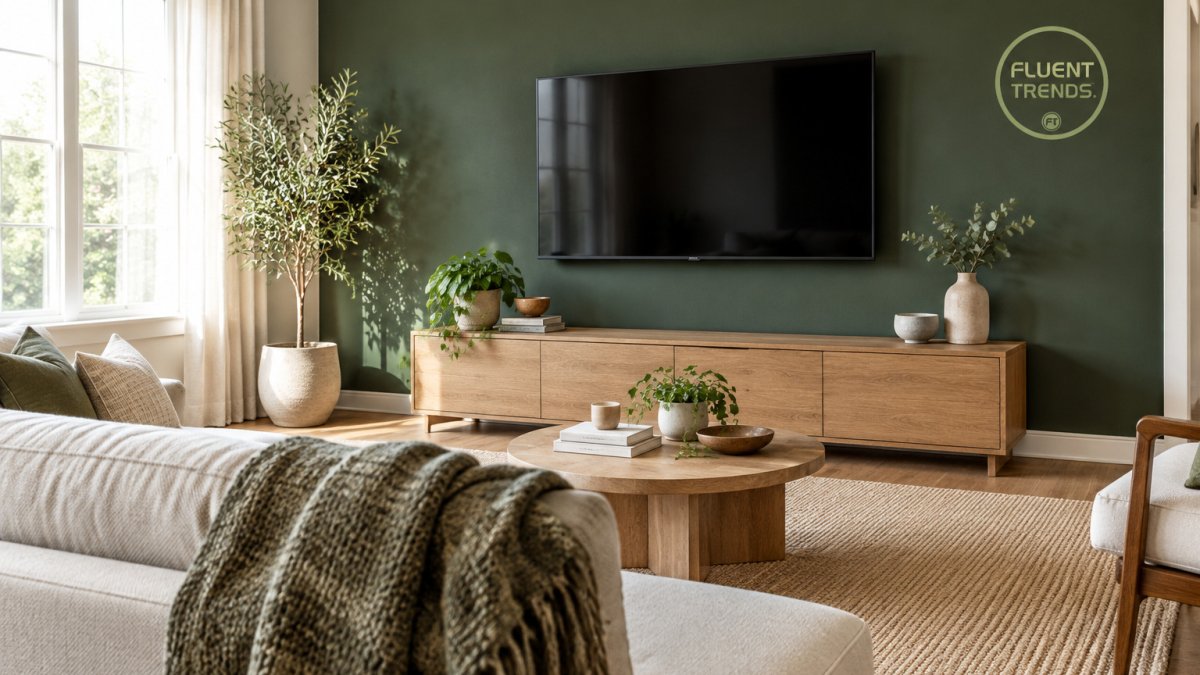
Deep green, navy, or warm terracotta are reliable choices for this spot. They make a flat-screen look like part of the design. Pair the wall with a low oak media console and a throw on the sofa to tie it together.
- Paint the wall behind the TV in a deep, muted tone
- Add wood slats or panels for warmth and texture
- Choose a wallpaper with a repeating print for a softer look
Building Around the TV Without Making It the Only Thing You See
The TV does not need to be the star of the room. Frame it instead. Mount the screen at eye level and keep the wall space around it balanced.
Hang a single large piece of art or a mirror off to one side. This pulls attention away from the screen when the TV is off. A glass wall print in bold colors works well here. It adds personality without fighting for space.
Keep shelving minimal. Two floating shelves with a few books and a plant look far better than a crowded wall of objects.
Feature Wall Ideas for Bedroom Spaces
A bedroom feature wall usually goes behind the headboard. This is the natural focal point because you see it first when you walk in.
Soft, layered looks suit this room best. A patterned wallpaper, a painted arch, or a panel of vertical wood slats all add warmth. Match the wall color to your bedding so the whole bed area feels finished.
- Center the headboard on the feature wall
- Use lamps on each side to balance the look
- Keep the rest of the room in lighter, quieter shades
Layered bedding in complementary patterns also helps. A bedspread with a floral or patchwork print can echo the colors on the wall.
Feature Wall Designs With Paint: Colors and Techniques
Paint is the easiest and least costly way to make a feature wall. You can do it in an afternoon with basic tools.
Start with a color that already appears in the room, such as a rug, a pillow, or a piece of art. This keeps the wall from feeling like it belongs to a different house. Bold jewel tones and dusty neutrals both work well.
For texture without wallpaper, try a limewash, a color-blocked pattern, or a simple geometric stripe. Painter's tape makes clean lines easy. Take your time with the taping, because sharp edges make the wall look intentional.
Feature Wall Paint: Choosing Finish, Sheen and Color
The finish you choose changes how the wall looks in real light. Matte and eggshell hide small bumps in the wall and feel soft. Satin and semi-gloss reflect more light and show every flaw.
For most feature walls, an eggshell or matte finish is the safer pick. It gives a rich look without making the room glare. Test two or three colors on large poster boards and move them around the room. Check them in morning light and at night.
Paint samples often look different on a wall than on a chip. Give your favorite color a full day before you commit.
Materials Beyond Paint: Wood, Wallpaper and Trim
Paint is not the only option. Each material behaves differently once it is on the wall. Knowing how a finish ages matters more than how it looks on day one.
Colorful Jazz Musicians Glass Wall Art – Bold Abstract UV Print →
Wood paneling brings warmth and a natural feel.
Wallpaper gives you pattern and color in one step. Peel-and-stick options make it easier to try a look before you commit. Traditional paste-the-wall papers last longer and tolerate humidity better in bathrooms and kitchens. Vinyl-coated papers wipe clean, while natural fiber papers show every scuff.
Decorative trim, like picture molding or board-and-batten strips, adds dimension to a plain wall. Trim is forgiving because you can paint it any color and replace a single damaged strip. It also hides uneven wall texture that paint would expose.
Pair a wood or trim wall with soft textiles. A throw in organic cotton helps the room feel warm and layered. A boucle chair or a bone inlay side table near the wall adds texture without competing for attention. Look for sustainably sourced materials when you can. Our textiles are OEKO-Tex certified.
Here is a quick look at how the main feature wall materials compare, based on what we covered above.
| Material | Best for | Key difference |
|---|---|---|
| Paint | Quick, low-cost change | Easiest to do in an afternoon |
| Wood paneling | Warmth and a natural feel | Adds texture and depth |
| Peel-and-stick wallpaper | Trying a look before committing | Easy to apply and remove |
| Paste-the-wall wallpaper | Bathrooms and kitchens | Lasts longer and tolerates humidity |
| Vinyl-coated wallpaper | Busy or messy rooms | Wipes clean |
| Decorative trim | Adding dimension to a plain wall | Replace a single damaged strip |
Costs, Installation Steps and Common Mistakes
Most guides stop at inspiration. This section walks through what each finish actually costs and how to install it without rework.
Paint is the lowest-cost option.
Here is a simple process for a painted wall:
- Clean the wall and fill any holes.
- Tape the edges with painter's tape.
- Apply a primer if you are changing a dark color.
- Paint two thin coats, letting each dry fully.
- Remove the tape while the paint is still slightly soft.
For wallpaper, measure the wall height plus six inches, cut each strip, and book the strips so the pattern lines up before you paste. For wood slats, find the studs first, mark a level line, and screw a backer board before attaching the slats. Trim work goes up last so it can cover cut edges.
Common mistakes include picking a color too quickly, skipping primer, and making the feature wall too busy. Another is ignoring wall orientation. A wall facing a bright window will wash out a dark paint color by mid-afternoon. Test your finish at the same time of day you use the room most.
Watch out: peel-and-stick wallpaper will not bond to a dusty or glossy wall. Wipe it down and let it dry fully before you start.
Choosing Your Feature Wall and Styling It With Decor
Choose the wall that you see first when you walk into the room. That is usually the best place to start.
Once the wall is set, style it with pieces that add depth. An irregular wall mirror with a natural wood frame reflects light and adds an organic shape. Floating shelves let you display objects without crowding the space. A pair of small terracotta planters or a green glass vase finishes the look.
Keep the styling simple. Three or four well-chosen items beat a wall full of clutter. Step back after each addition and ask whether the wall still feels calm. If it does, you are done.
Frequently Asked Questions
What is the meaning of a feature wall?
A feature wall is one wall in a room that gets treatment different from the others. You might paint it a bold color, cover it in wallpaper, add wood paneling or build shelving into it. The goal is a focal point, the first thing your eye lands on when you walk in. It works best when the wall you pick is the one people naturally face, like behind a sofa or a bed.
What is the difference between a feature wall and an accent wall?
In everyday use, the two terms mean almost the same thing. Accent wall is the more common phrase for a single painted wall, while feature wall often describes a wall with added structure, such as paneling, shelving or built-ins. Either way, you are creating one statement surface. If you want a simple paint job, say accent wall. If you are adding texture or trim, feature wall fits better.
Which wall should be the feature wall in a living room?
Pick the wall that anchors the room. In most living rooms that is the wall with the TV, the fireplace or the largest window. Avoid walls with lots of doors or windows because they break up the surface. If your TV is on a wall you want to keep calm, a feature wall on the opposite side still gives the room a focal point.
What colors work best for a bedroom feature wall?
Deep, muted tones tend to feel calm in a bedroom. Think navy, forest green, warm terracotta or a soft charcoal. Put the color behind the headboard so it frames the bed. Lighter shades work too if your room gets little natural light, but test a sample on the wall first because lighting changes how every color looks.
If you want the finishing touches for your own feature wall, browse our Modern Wall Mounted Floating Shelves, Set of 3 Rectangular Display Racks and our Irregular Wall Mirror with Natural Wood Frame. They give you storage, display space and a natural accent that works with most wall colors.


