

Finding Your Home Decor Style: A Simple Guide
Donna MaloneFeeling swamped by the endless scroll of decor ideas? It’s a common feeling. Finding your home decor style isn't about perfectly replicating a photo from a magazine or chasing the latest trend. It’s really about figuring out what makes you tick and translating that into a home that feels uniquely you.
This is a journey of self-discovery, one that transforms a simple structure into a place you genuinely love living in, year after year.
Why Finding Your Decor Style Actually Matters
With inspiration coming from every direction—Pinterest, Instagram, TV shows—it's incredibly easy to get lost. Without a clear sense of your own style, you might end up with a collection of beautiful things that just don't work together, creating a space that feels chaotic or impersonal.
Think of your defined style as your North Star. It’s the filter you can run every decision through, helping you shop with confidence, sidestep expensive missteps, and curate a collection of pieces you'll cherish for the long haul.
Cut Through the Noise
The home decor market is absolutely massive—we're talking a global value of around $802.26 billion, and it's only getting bigger. For homeowners, this explosion of choice is both a blessing and a curse. You can find out more about what's driving this growth on fortunebusinessinsights.com.
With so many options vying for your attention, it's more important than ever to have a clear vision.
Having a defined style is your roadmap. It guides your choices for everything from paint colors to furniture, ensuring each element works together to create a harmonious and authentic environment.
Build a Home That Tells Your Story
At the end of the day, this is about so much more than just making things look pretty. It's about creating a personal sanctuary that supports your life and tells your story. When you know your style, the benefits become crystal clear:
-
Confident Purchasing: You stop second-guessing every purchase and can easily spot the pieces that truly belong in your home, avoiding those impulse buys that end up in the garage.
-
A Cohesive Feel: Each room flows into the next, creating a sense of calm and unity throughout your space. It just feels right.
-
Personal Expression: Your home stops being just a collection of furniture and starts being a genuine reflection of your personality, your travels, and your passions.
Finding Your Style by Looking Around You
Before you even think about opening Pinterest or an interior design magazine, let's start with a far more potent source of inspiration: you. The best clues to your true home decor style are already scattered throughout your life, hiding in plain sight.
This isn’t about chasing trends that will feel dated in a year. It's about uncovering an authentic style that’s based on what you already love. The first step is to simply pay attention to the things you choose to surround yourself with every day.
Uncover Your Aesthetic in Unexpected Places
Your personal style isn’t confined to a mood board; it shows up everywhere. Seriously, go open your closet. What do you see? Is it full of structured blazers and classic denim, hinting at a more traditional or modern-classic vibe? Or do you gravitate toward soft, flowing dresses in linen and cotton, suggesting a love for more natural, bohemian, or coastal aesthetics? Your clothing is a goldmine of information about your go-to colors, textures, and patterns.
Look beyond your wardrobe, too. Think about the objects you've held onto over the years. That hand-painted ceramic bowl from a vacation, a framed vintage concert poster, or even the coffee mug you reach for every morning—they all tell a story. These aren't random items; they’re curated by you, and they hint at a consistent thread.
Your authentic style is an ecosystem. It’s the common thread that connects the art on your walls, the books on your shelves, and the clothes in your closet. The goal is to identify that thread and use it to weave a cohesive look for your home.
Ready to make this real? Try this simple exercise. Don't overthink it.
-
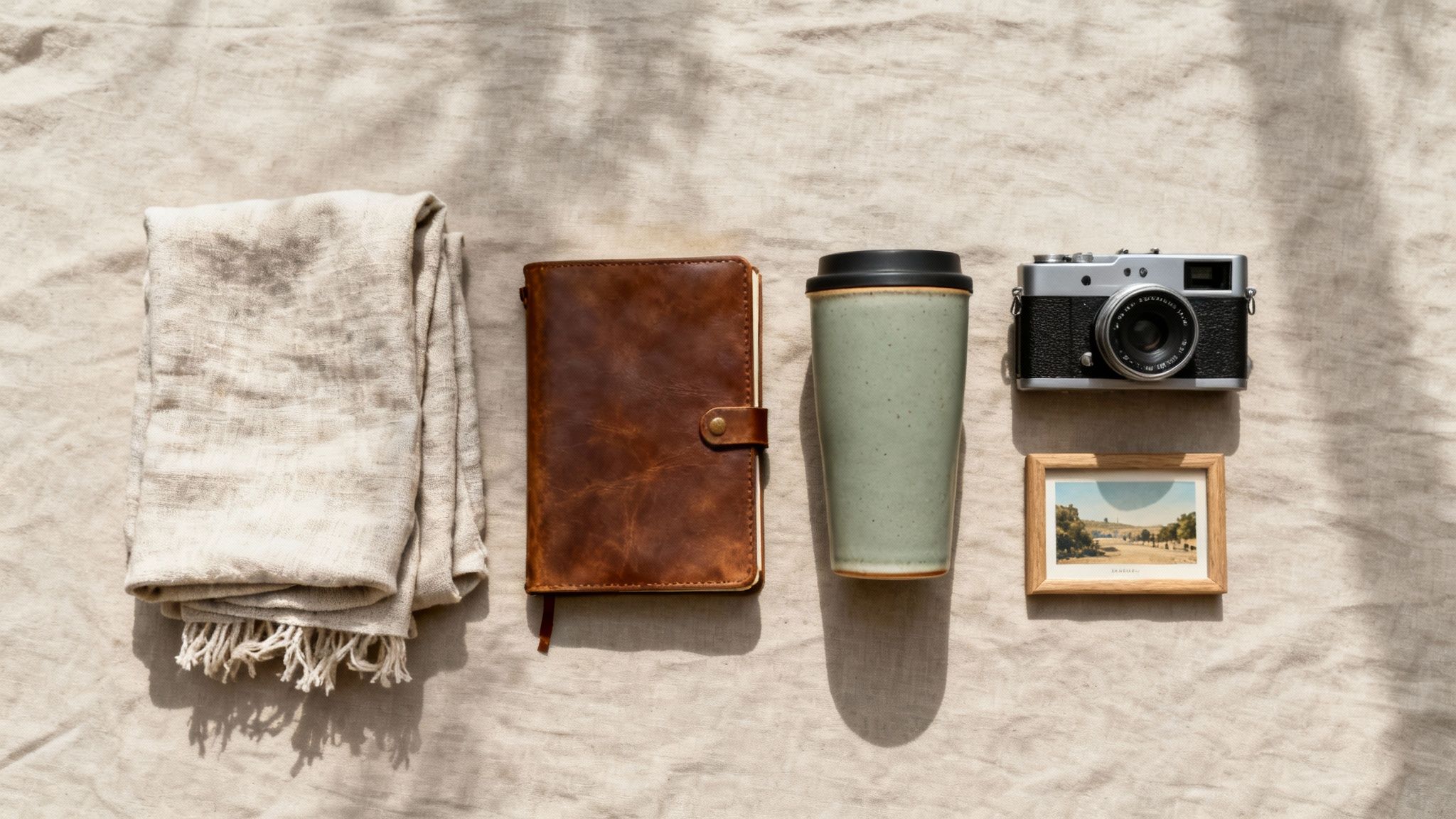
Gather five of your absolute favorite objects. This could be anything—a piece of jewelry, a worn-out book, a cool rock, a throw blanket.
-
Lay them out together. Now, just look. What do you notice? Are there common colors? Similar materials? A shared mood?
-
Jot down a few words to describe what you see. Is the vibe modern and sleek? Rustic and cozy? Eclectic and vibrant?
This small act shifts the process from abstract ideas to tangible evidence. It grounds your style in your reality, which is the secret to creating a space that feels less like a showroom and more like a genuine home.
How to Gather and Decode Your Inspiration
Now that you have a better sense of your personal tastes, it's time to start gathering inspiration—but with a plan. It's incredibly easy to fall down a rabbit hole on Pinterest or Instagram, so the goal here is to use these platforms as focused tools, not just for endless scrolling.
The way we find ideas for our homes has completely shifted. What used to be a trip to the bookstore for magazines is now a digital-first experience. This isn't just a small change; it's a major reason behind the home decor market's growth, as more of us see our homes as a true extension of who we are. You can actually see this trend reflected in market analysis. Your job is to channel that firehose of images into a personal roadmap.
Create an Instinctive Inspiration Board
First things first: create a single, dedicated digital board. As you browse, I want you to pin or save anything that gives you an immediate, gut-level positive reaction. The most important rule here is not to overthink it. Don't worry if it "fits" a certain style or if it's even practical for your home right now. Just save what you love.
Give yourself about a week for this. What you're really doing is creating a visual diary of your subconscious preferences, which is one of the most powerful ways to get to the heart of your true decor style.
Let your intuition be your guide. Your initial, unfiltered reactions are the most honest clues to what you truly want your home to feel like. This process is about discovery, not decision-making.
Play Detective with Your Pins
After a week of collecting, it's time to put on your detective hat. Open up your board and just look. Take it all in. You're searching for the common threads and patterns that have naturally bubbled to the surface. To help decode what you’ve collected, ask yourself a few simple questions:
-
What colors are you seeing over and over? Is it a sea of earthy neutrals, a collection of bold jewel tones, or a soft wash of pastels?
-
Which textures keep showing up? Do you notice a lot of smooth leather, chunky knits, raw wood, or sleek, polished metal?
-
What’s the overall mood or feeling? Do these spaces feel cozy and lived-in, airy and minimal, or dramatic and sophisticated?
If you’ve saved dozens of images featuring clean lines, neutral palettes, and uncluttered surfaces, you're probably leaning toward a Modern or Minimalist style. On the other hand, if your board is a vibrant collage of rich textures, vintage finds, and a happy mix of patterns, you're likely drawn to an Eclectic or Bohemian vibe.
This simple analysis is where a random collection of pretty pictures transforms into a clear, actionable direction for your home.
To make this even easier, I've put together a quick cheat sheet to help you connect the dots between your pins and established decor styles.
Decoding Your Inspiration Board
| If You Pinned Lots Of... | Your Style Might Be... |
|---|---|
| Natural materials, light woods, neutral colors, cozy textures | Scandinavian or Japandi |
| Clean lines, uncluttered spaces, simple color palettes | Minimalist or Modern |
| Vintage pieces, layered patterns, warm colors, plants | Bohemian or Eclectic |
| Ornate details, classic furniture, symmetrical layouts | Traditional or Grandmillennial |
| Reclaimed wood, exposed brick, metal accents, open layouts | Industrial or Modern Farmhouse |
Think of this table as a starting point, not a strict set of rules. Your personal style might be a blend of two or three of these—and that’s what makes it uniquely yours.
Define Your Style with a Core Design Palette
Okay, you’ve gathered a bunch of images you love. Now what? The real magic happens when you start translating those vibes into a concrete design language. This is all about connecting the dots between the pictures you saved and the actual elements—the colors, materials, and even the shapes of the furniture—that make those spaces work.
Think of it like learning the ingredients to your favorite recipe. Instead of flour and sugar, you’re working with textures, color palettes, and silhouettes. This process takes the mystery out of interior design and gives you the words to describe exactly what you want your home to feel like.
This visual breaks down how to decode your inspiration into its core components.

You can see how these three pillars—pattern, style, and palette—come together to turn a general idea into a plan you can actually use.
Breaking Down Popular Decor Styles
Let’s look at a few well-known styles and their "recipes." Remember, this isn't about forcing yourself into a pre-made box. It’s about understanding the building blocks so you can use them with confidence, even if you decide to mix and match later.
-
Scandinavian: This style is all about light and simplicity. The palette is almost always neutral (think whites, grays, and soft beiges) paired with light-toned woods like ash or pine. Furniture has clean, minimalist lines where function is king.
-
Industrial: Straight out of old warehouses and lofts, this look is defined by its raw, unfinished materials. An Industrial palette uses blacks, grays, and the warm browns you’d find in exposed brick, concrete, and metals like steel or iron.
-
Bohemian: Eclectic, free-spirited, and full of personality. Bohemian style thrives on a rich, earthy color palette, tons of patterns, layered textiles (rugs, throws, pillows), and natural materials like rattan, macrame, and live plants.
The goal isn't to copy a room you saw online, but to understand its essence. When you can identify the core components of the styles you love, you can recreate that feeling in your own space.
Identifying Signature Shapes and Materials
Look past the colors for a minute and focus on the shapes and materials that keep popping up in your inspiration folder. Do you find yourself pinning rooms with the sleek, tapered legs of Mid-Century Modern chairs? Or are you more drawn to the rustic, weathered finish of a Modern Farmhouse dining table?
These details are the secret sauce. If you need help putting a name to what you're seeing, a comprehensive furniture style guide can be a huge help in spotting those key characteristics.
Art and accessories play a massive role, too. They’re what make a room feel truly finished. A great resource on how to choose art for your home that matches your style can help you pull everything together.
By breaking down your inspiration into these tangible pieces—palette, materials, and shapes—you’re not just dreaming, you’re creating a practical design framework. This becomes your personal guide, making every decision from here on out feel less overwhelming and much more intentional.
Create Your Action Plan with a Mood Board
Alright, you've done the soul-searching and have a much better sense of your core style. Now comes the fun part: bringing those ideas to life. This is where a mood board becomes your best friend. Think of it as your personal design blueprint—a place to test-drive how different textures, colors, and furniture pieces play together before you spend a single dime.
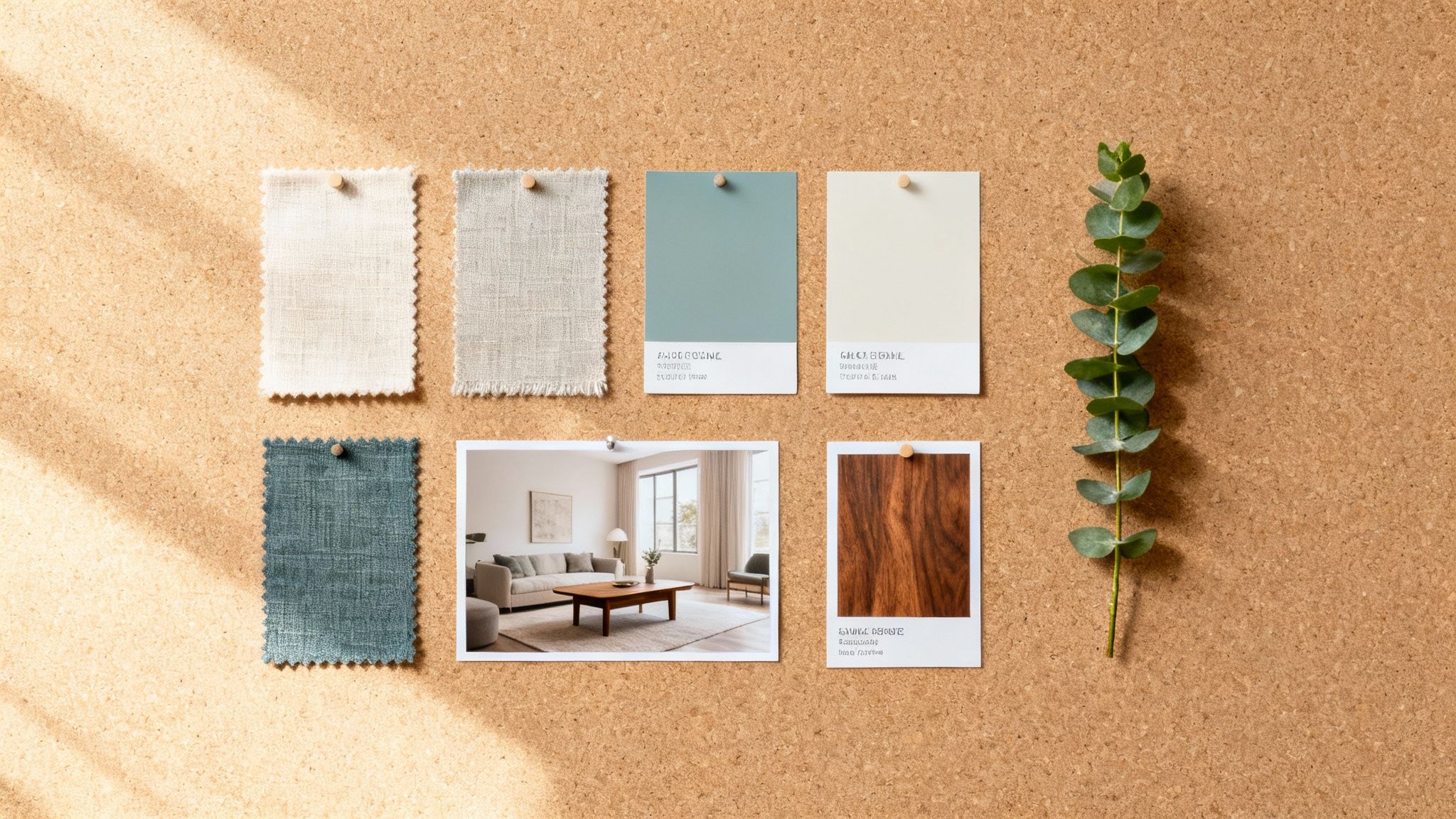
This is the critical step that connects your abstract vision to a concrete reality. You can go old-school with a physical corkboard, pinning up fabric swatches and paint chips, or stay digital with tools like Pinterest. The goal is the same: build a visual reference that keeps your design on track and ensures every new piece fits the puzzle. If you need a little inspiration on how to get started, checking out some interior design mood board examples can show you just how powerful this tool can be.
From Vision to Shopping List
Once you’ve arranged and rearranged your mood board until it feels just right, it’s time to turn it into a practical shopping list. This simple act transforms a vague goal like "buy a new sofa" into something incredibly specific: "Find a camel leather sofa with clean lines and tapered wooden legs." This level of clarity is what saves you from impulse buys and costly mistakes. It’s your secret weapon for staying focused.
It's also interesting to see how global tastes can inform our own. In the home decor market, we're seeing a huge shift toward personalization and sustainability. North American buyers, for instance, are increasingly looking for eco-friendly options, while European markets often lean into high-end, luxury pieces. Understanding these wider trends can help you make choices that feel both stylish and conscious.
Your mood board isn't just a pretty collage. It's a strategic tool. It cements your style, stops you from getting sidetracked, and turns your vision into a real, actionable plan for creating a home you truly love.
This process is a game-changer, especially if you’re drawn to more than one aesthetic. If you’re curious about mixing furniture styles, a mood board is the way to go. It helps you confidently blend elements from different styles, making sure the final space feels intentional and cohesive, not cluttered. With this plan, you can create your perfect space, piece by piece, over time.
A Few Common Questions About Finding Your Decor Style
Even with the best intentions, figuring out your personal decor style can feel a little murky. It’s completely normal to hit a few roadblocks along the way. Let's walk through some of the most common questions I hear from people, so you can keep moving forward with confidence.
What if I Like More Than One Style?
First off, this is a great "problem" to have! The most authentic and inviting homes almost never stick to just one rigid style. In fact, blending is where the magic happens.
The trick is to find a balance. I always recommend the 70/30 rule. Pick one style to be the star of the show—this will guide about 70% of your space, covering the big things like your sofa, main paint colors, and dining table.
Then, bring in your second favorite style for the remaining 30%. This is where accessories, textiles, and art come into play. For example, you could lay a Modern foundation with a sleek, clean-lined couch and a minimalist coffee table. Then, you can weave in that Bohemian vibe you also love with richly patterned pillows, a hand-woven rug, and plenty of leafy plants. This way, the space feels thoughtfully curated, not just cluttered.
Liking multiple styles isn't a problem; it's an opportunity. The 70/30 rule is your framework for blending different tastes into a cohesive look that is completely, uniquely yours.
How Do I Figure This Out on a Budget?
Your personal style is all about taste and creativity, not your bank account balance. Seriously. The best place to start is by simply working with what you already have. You’d be amazed at what a good decluttering session and a new furniture arrangement can do for a room—and it costs absolutely nothing.
Once you’ve done that, shift your focus to high-impact, low-cost updates.
-
Paint: It’s hands-down the most affordable way to completely transform the feel of a room.
-
Thrift Stores: This is my favorite tip. You can find incredible, one-of-a-kind pieces with so much more character than anything new.
-
DIY Projects: Even a small, simple project can give you a custom piece that looks and feels far more expensive than it was.
Concentrate your spending on the smaller details that deliver a big visual punch, like a single piece of statement art or a couple of high-quality throw pillows.
My Partner and I Have Completely Different Tastes… Help!
Ah, the classic design dilemma. Don't worry, it's totally solvable. The first step is to have each of you create your own separate inspiration board. No cheating!
Then, sit down together and really look at them side-by-side. Your mission is to find the common ground. You might be surprised to find you both pinned rooms with deep blue walls, or that you’re both drawn to comfortable, oversized furniture. That’s your starting point.
Another great strategy is to divide and conquer. Maybe one person’s clean, modern taste can guide the larger furniture purchases, while the other’s love for rustic-industrial style can influence the textures, lighting, and smaller decor pieces. It’s all about compromise and creating a home that tells both of your stories, together.
Ready to bring your unique vision to life? At Fluent Trends, we offer a curated collection of designer-approved furniture and decor to help you build a home that's a true reflection of you. Explore our collections and find pieces you'll love for years to come at https://www.fluenttrends.com.