

Global Inspired Decor: 12 Styling Tips for an Authentic Home
Yuatinia LeakTable of Contents
- Start With a Neutral Canvas Before Adding Global Inspired Decor
- How to Mix Global Decor Styles Without Creating Clutter
- Selecting Anchor Pieces That Ground the Room
- Styling Global Accessories: The Art of Curation
- Incorporate Natural Textures and Greenery for Depth
- Choose Ethically Sourced Home Decor With a Story
- Caring for Artisan Materials to Ensure Longevity
- Conclusion: Curate a Home That Tells Your Story
- Frequently Asked Questions
Last Updated: September 4, 2026
Global inspired decor is the art of blending handcrafted textiles, carved woods, and natural fibers from cultures around the world into one cohesive, personal space. It is not about replicating a single aesthetic, but about curating objects with history and soul. This guide from Fluent Trends walks you through the practical steps of styling these pieces without losing the modern comfort of your home. We will cover everything from anchor furniture to ethical sourcing, ensuring your space feels intentional, not cluttered. The goal is a home that looks collected over time, not decorated in an afternoon.
Start With a Neutral Canvas Before Adding Global Inspired Decor
A neutral foundation is the single most important step for making artisan pieces stand out. Think warm whites, soft greiges, natural linen, and unbleached cotton as your base. This quiet backdrop allows the rich, dark tones of carved wood and the vibrant patterns of hand-woven textiles to become the story of the room.
Most styling failures happen when bold decor is placed against an equally bold wall or rug. The eye needs a place to rest. Without that visual silence, the room feels chaotic rather than curated. Start with walls in matte earth tones and choose upholstery in solid, textured fabrics. This creates a gallery-like setting where your global inspired decor becomes the featured art.
How to Mix Global Decor Styles Without Creating Clutter
Mixing Moroccan, African, and Asian influences is possible when you follow a few structural rules. The secret is to treat every piece as part of a single palette rather than separate cultural exhibits. A mudcloth pillow from Ghana can sit happily next to an Indian block-print throw if they share a similar tone or texture.
The 80/20 Rule for Visual Breathing Room
Keep 80 percent of your room in neutral, functional pieces (architecturaldigest.com). Reserve only 20 percent for high-impact, patterned, or heavily textured global decor. This ratio prevents the space from feeling like a souvenir shop. If you have a bold kilim rug, balance it with a plain linen sofa. If your sideboard is heavily carved, keep the wall behind it completely bare.
Unifying Through Color and Pattern Layering
Choose one dominant color found in your artisan pieces and repeat it throughout the room. If your hand-woven baskets feature indigo threads, introduce indigo in your throw pillows or ceramic vases. This repetition creates a sense of order. When layering patterns, vary the scale. Pair a large geometric print with a small, dense motif to keep the eye moving without causing visual stress.

Selecting Anchor Pieces That Ground the Room
Anchor pieces are the substantial furniture items that give a room its structure. A hand-carved solid wood sideboard or a large rattan pendant light serves this role perfectly. These items act as the visual weight that prevents smaller accessories from feeling scattered. Choose one anchor per room and let everything else support it.
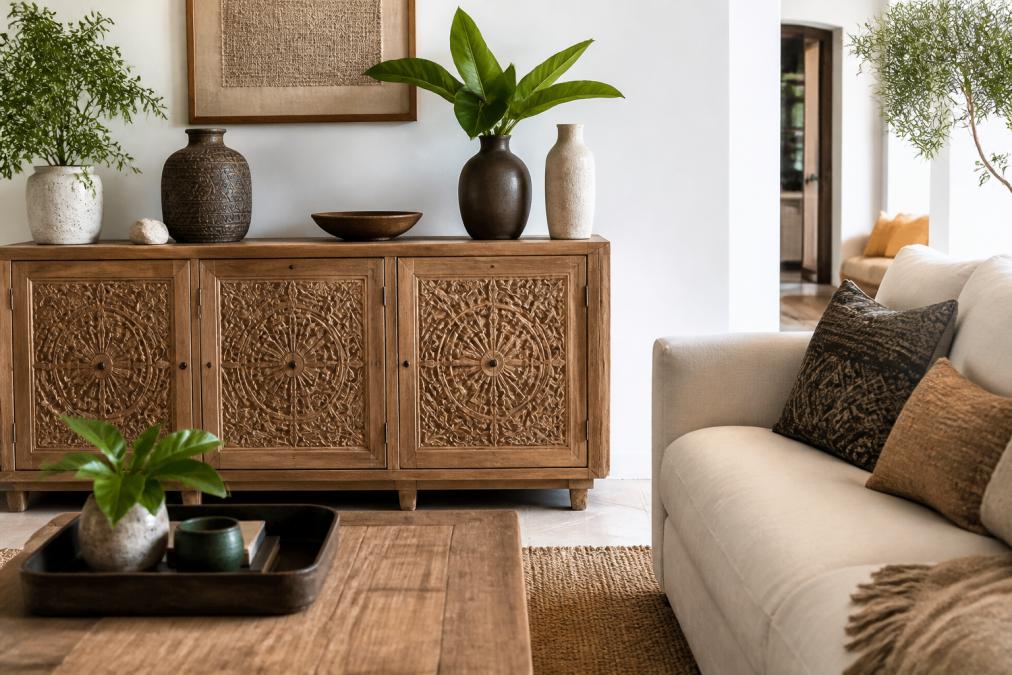
For example, the Amber Wavefront Artisan Solid Wood Sideboard offers a rich, dark presence that grounds a seating area. Its carved wavefront detail adds architectural interest without needing additional wall decor. When selecting your anchor, look for quality materials like mango wood or teak that will age gracefully. This is where you invest your budget for maximum impact.
Styling Global Accessories: The Art of Curation
Styling global accessories requires the discipline of an editor. You are not displaying a collection; you are composing a still life. Begin by removing everything from a surface. Then, add back only the pieces that speak to each other in shape, color, or story.
Grouping by Shape and Scale
Group accessories in odd numbers, usually three or five, to create a natural focal point. Vary the heights. Place a tall carved vase next to a low, round basket. The contrast in silhouette creates visual interest. A common mistake is spreading items evenly across a shelf, which looks sparse and unconsidered. Instead, cluster items tightly in one area and leave deliberate empty space elsewhere.
Incorporate Natural Textures and Greenery for Depth
Texture is the language of global decor. The rough weave of jute, the smooth coolness of clay, and the organic grain of wood create a sensory experience that flat, modern decor lacks. Layer these materials through rugs, throws, and wall hangings.
Yet most styling guides assume a sprawling living room. The reality for many is a compact apartment or a single rented room. In these spaces, the principles shift. You must edit harder and choose pieces that perform double duty.
The Vertical Strategy for Small Footprints
When floor space is precious, move your texture up. A large woven wall hanging adds warmth without consuming a single square foot. Consider a macrame plant hanger to bring greenery to eye level. This draws the gaze upward and makes ceilings feel higher.
A common pattern in small spaces is to use a single, large-format natural fiber rug. A 5x7 foot jute rug defines the seating area better than several smaller mats (bhg.com). It also provides a unified base that prevents the room from feeling chopped up.
Greenery as a Sculptural Anchor
Plants are not just an afterthought in a compact layout. They can serve as the primary sculptural element. A tall, architectural plant like a fiddle leaf fig or a monstera introduces a vertical line that mimics the presence of a large piece of furniture.
Place it in a corner that needs visual weight. The Adu Plant Stand, hand carved from Sese wood, elevates a simple potted plant into a sculptural moment. It adds height and organic texture without the bulk of a sideboard.

Tactile Contrast in Tight Quarters
In a small room, you feel textures more intensely because you are closer to them. Prioritize contrast. Pair the cool, smooth surface of a ceramic vessel with the rough, nubby feel of a wool throw. This juxtaposition creates depth that tricks the eye into seeing more dimension.
Limit yourself to three distinct textures in a small space. Too many competing fibers can feel chaotic. Choose a primary texture for the floor, one for the main upholstery, and a third for accents like pillows or baskets.
The Maintenance Reality of Natural Fibers
Natural materials require specific care to last for decades, especially in high-traffic small spaces. Jute rugs are beautiful but can be brittle. Use a rug pad to prevent slipping and to add cushioning. Vacuum them weekly without a beater bar to avoid fraying the fibers.
Wood needs occasional oiling to prevent cracking in dry climates. Use a food-safe mineral oil or a beeswax polish to maintain its luster (thisoldhouse.com). Textiles like wool should be kept out of prolonged direct sunlight to prevent fading.
Raffia baskets and woven pieces can be dusted with a soft brush. For stains on cotton or jute covers, spot clean with a mild soap and cold water. Avoid harsh chemicals that strip natural fibers. Proper care is not tedious. It is a ritual that honors the maker's work. A piece that lasts thirty years is the ultimate sustainable choice for any home, regardless of its square footage.
Choose Ethically Sourced Home Decor With a Story
Ethically sourced home decor ensures your beautiful objects did not come at the cost of human dignity or environmental harm. When you buy handmade, you support traditional craft techniques that might otherwise disappear. Look for retailers who partner directly with artisan cooperatives and pay fair wages.
Cultural Appreciation vs. Appropriation
The line between appreciation and appropriation lies in respect and context. Appreciation involves honoring the culture by purchasing directly from its makers and understanding the item's significance. Appropriation happens when designs are mass-produced by large corporations without benefiting the original community. Ask who made your item and how they were compensated. If a brand cannot answer those questions clearly, that is a red flag. Seek out transparent supply chains where maker stories are documented and celebrated.
Caring for Artisan Materials to Ensure Longevity
Natural materials require specific care to last for decades. This is not just about preserving an object. It is about respecting the labor and cultural heritage embedded in the piece. A well maintained item is the opposite of fast decor. It is an heirloom in the making.
Most guides stop at aesthetics. They tell you to buy the beautiful basket but not how to keep it beautiful. This section moves beyond the surface to give you the practical mechanisms for preserving your investment.
Wood Care: Beyond the Surface
Solid wood from mango, teak, or acacia is durable but porous. It reacts to changes in humidity. In dry climates, it can crack. In humid ones, it can warp.
A common pattern is to oil new wood furniture every three months for the first year. After that, an annual treatment is usually sufficient. Use a food-safe mineral oil or a beeswax polish. Apply a thin layer with a soft cloth, moving in the direction of the grain. Let it absorb for a few hours, then buff off the excess.
Do not use silicone based polishes. They create a sticky residue that attracts dust and can damage the finish over time. Always test any product on a hidden area first.
Textile Preservation for Handwoven Pieces
Handwoven textiles are more delicate than their machine made counterparts. The fibers are often irregular, which is part of their charm. This also means they need gentler handling.
Vacuum wool rugs and throws weekly using a suction only setting. A rotating brush can pull the fibers and cause pilling. For cotton pieces like mudcloth or block prints, shake them out regularly to remove dust.
Direct sunlight is the enemy of natural dyes. Indigo and madder root will fade with prolonged exposure. Rotate your textiles seasonally to ensure even wear. If a piece is near a window, consider a sheer curtain to filter the harshest UV rays.
Clay, Ceramic, and Stoneware Protocols
Artisan ceramics are often unglazed or partially glazed. This makes them more absorbent than commercial dinnerware. Do not soak them in water. Clean them with a dry or slightly damp cloth.
For decorative vessels that hold water, like vases, change the water frequently to prevent mineral buildup. If you see white residue, wipe it with a solution of equal parts white vinegar and water. Rinse immediately and dry completely.
The Ethical Imperative of Maintenance
Caring for your pieces is the final step in the ethical sourcing journey. When you buy from an artisan cooperative, you are investing in a tradition. Letting that piece deteriorate is a disservice to the maker.
A piece that lasts thirty years is the ultimate sustainable choice. It keeps items out of landfills and reduces the demand for cheap, mass produced imitations. This is the quiet activism of the conscious consumer.
Seasonal Care Rituals
Twice a year, do a full audit of your artisan goods. Check wood for cracks or loose joints. Inspect textiles for moth damage or fraying edges. Look at woven baskets for signs of splitting.
Address small issues before they become large ones. A loose thread can be re-stitched. A minor crack in wood can be filled with a wax stick. This proactive approach is far less expensive than replacing a significant anchor piece.
Proper care is not tedious. It is a ritual that honors the maker's work and the story your home tells.
Conclusion: Curate a Home That Tells Your Story
Styling global inspired decor is a journey of discovery, not a race to a finished look. Your home should evolve as you find new pieces that resonate with your travels and values. Focus on quality over quantity and let each acquisition be meaningful.
At Fluent Trends, our Artisan Collection is built on this philosophy. We offer ethically sourced, handcrafted furniture and decor that supports women-owned businesses and global makers. From the hand-carved Amber Wavefront Sideboard to the natural textures of the Tanah Pillow Cover, each piece is chosen to elevate your space while preserving cultural heritage. Shop now and begin curating a home with a narrative that is authentically yours.

Frequently Asked Questions
What is the 80/20 rule for global inspired decor?
The 80/20 rule suggests keeping 80 percent of your room neutral and understated, then reserving 20 percent for bold, global inspired decor. This could mean a neutral linen sofa with a vibrant, hand-woven textile throw. Or simple walls that let a carved wood sideboard shine. The balance prevents a space from feeling like a cluttered marketplace. It gives your artisan pieces room to breathe and become true focal points.
How do you mix global decor styles without creating visual clutter?
Successful mixing starts with a common thread. Choose one unifying element, like a shared color palette or similar wood tones. Then, vary textures and scales. Pair a large rattan pendant with small clay vases. Keep surfaces minimal to let each piece stand out. Group items in odd numbers for visual interest. Step back and edit ruthlessly. If a piece doesn't serve the story, remove it. Curation is about subtraction as much as addition.
What does ethically sourced home decor mean?
Ethically sourced home decor means the item was made with respect for both people and planet. Look for brands that partner directly with artisan communities and pay fair wages. Seek out transparency about materials and production methods. Many ethical pieces use traditional, low-waste techniques. When you buy this way, you preserve cultural heritage and support women-owned businesses. You also get a higher quality item built to last for decades, not seasons.
How do I care for handcrafted artisan pieces?
Care depends on the material. Dust wooden items like Sese wood or mango wood with a soft, dry cloth. Keep them away from direct sunlight and extreme humidity to prevent cracking. For raffia or jute baskets, vacuum gently to remove dust. Spot clean woven textiles with a damp cloth and mild soap. Always check the maker's specific instructions. With simple attention, these durable materials will age beautifully and last for generations.
This article was written using GrandRanker