

High End Fashion Boutiques: 7 Signs of Real Quality
Yuatinia LeakTable of Contents
- What Separates High End Fashion Boutiques From the Rest
- How to Find Legitimate Online Boutiques Without Getting Burned
- Luxury Clothing Boutiques: What the Price Tag Is Really Paying For
- Designer Clothing Boutiques and the Labels Worth Knowing
- Seven Quality Checks to Run Before You Buy
- Accessories, Leather Goods, and Jewelry That Hold Their Value
- Matching a Boutique to Your Style and Occasion
- Sustainability and Resale: What Conscious Shoppers Should Ask
- Conclusion
- Frequently Asked Questions
Last Updated: October 20, 2026
What Separates High End Fashion Boutiques From the Rest
A high end fashion boutique is a small, curated retailer that sells designer or artisan-made clothing, accessories, and leather goods selected by a buyer with a clear point of view. The difference shows up in the edit, not the square footage. At Fluent Trends, we source from reputable purveyors rather than chasing every trend that lands on a shelf.
Walk into two stores on the same block and you can feel it within a minute. One has racks of everything. The other has forty pieces, each chosen on purpose. That second store is what we mean by high end fashion boutiques.
Here is what most guides get wrong. They equate price with quality. A high price tag tells you nothing on its own. Real quality lives in the fabric, the seams, the sourcing, and the honesty of the seller.
Below, we break down seven signs that separate genuine quality from marketing. We also explain how to vet an online boutique before you spend a dime.
How to Find Legitimate Online Boutiques Without Getting Burned
Legitimate online boutiques show you the maker, the material, and the return policy before you check out. Vague product pages and missing contact details are your first warning signs. Trust gets built in the details, not the homepage banner.
Start with the basics. A real boutique answers these questions without you asking twice:
- Who made the piece, and where?
- What is it made of, exactly?
- What happens if it arrives damaged?
- Can you reach a human by email or phone?
If a site dodges any of these, close the tab. The FTC's online shopping guidance lays out your rights as a buyer, and knowing them helps you shop with confidence.
We also check whether a boutique names its purveyors openly. A seller proud of its sourcing will tell you where things come from. A seller hiding behind stock photos usually has a reason.
One more test: read the returns page before the product page. It tells you more about how a business operates than any lookbook ever will.
Luxury Clothing Boutiques: What the Price Tag Is Really Paying For
Luxury clothing boutiques charge more because the cost of a garment includes materials, labor, small-batch production, and a buyer's time. You are paying for restraint as much as fabric. A store that orders five hundred units of one dress is not the same as one that orders thirty.
Think about what goes into a single well-made piece. Better cloth costs more per yard. Small runs cost more per unit. A buyer who travels and vets purveyors adds cost too, but also adds judgment.
That judgment is the part you cannot replicate online for free. Anyone can list a dress. Not everyone can tell you why this silk drapes better than that one.
Take our Liquid Elegant Silk Slipdress. It is cut from 100% charmeuse and finished with a bias cut that moves with the body. That construction is why it works for a dinner and a weekday meeting alike. The price reflects the cloth and the tailoring, not a logo.

Designer Clothing Boutiques and the Labels Worth Knowing
Designer clothing boutiques earn their reputation through consistent editing, not through carrying every famous name. The labels worth knowing are the ones a buyer can explain. If a store cannot tell you why it stocks a designer, that designer is probably there for the logo.
Here is how we sort labels when we evaluate a boutique:
- Established houses: reliable construction, higher prices, easy resale.
- Contemporary labels: strong design at mid-tier prices, good for workwear.
- Artisan makers: small batches, unique details, less predictable sizing.
The last group is where most of the interesting work happens. A hand-printed piece like our Ashbury Dress is printed by artisans in Jaipur in small batches. Each one varies slightly. That variation is the point, not a defect.

What most guides miss is that a boutique's label mix tells you who it serves. A store heavy on contemporary labels is built for daily wear. One heavy on artisan makers is built for people who want something nobody else owns. Neither is better. They just answer different needs.
Seven Quality Checks to Run Before You Buy
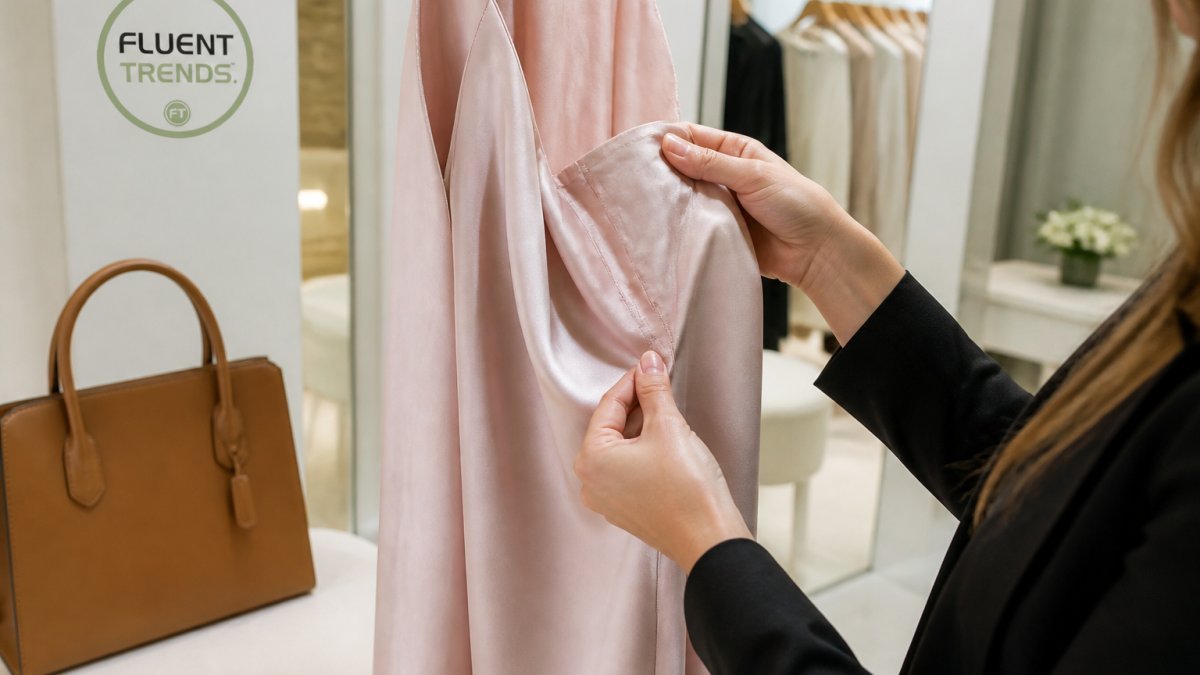
Run these seven checks before you buy anything from a boutique, online or in person. Each one takes under a minute and saves you from expensive regret. Quality is verifiable when you know where to look.
- Feel the fabric. Cheap cloth feels flat or scratchy. Good cloth has weight and recovery.
- Check the seams. Look inside. Clean, tight stitching signals care. Loose threads signal hurry.
- Read the fiber content. "100% cotton" beats "cotton blend" every time. Vague labels hide cost-cutting.
- Test the hardware. Zippers, clasps, and rivets should feel solid, not flimsy.
- Ask about origin. A named workshop beats a blank label. Sourcing transparency is a quality signal.
- Check the return policy. A confident seller offers a fair window. A nervous one hides it.
- Look for certifications. OEKO-Tex and similar standards verify that a fabric is tested for harmful substances.
That last check matters more than people think. The OEKO-TEX Standard 100 explanation shows what the label actually certifies. It is a real benchmark, not a marketing sticker.
Accessories, Leather Goods, and Jewelry That Hold Their Value
Accessories hold value when the materials are honest and the construction can be repaired. A bag that can be conditioned and re-stitched outlives one that peels at the strap. The material decides the lifespan, not the logo.
Here is how we compare accessories when we research reputable purveyors. We look at three things first: material, hardware, and repairability. Then we check the care instructions and the return window. That order keeps us from falling for a pretty photo.
Leather. Full-grain leather sits at the top of the range. It keeps the natural surface, ages well, and takes conditioning. Top-grain is sanded and corrected, so it looks uniform but wears faster. Bonded leather is shredded scraps glued together, and it peels. If a listing will not name the leather type, assume the weakest one.
Hardware. Solid brass and stainless steel feel dense and cool. Cheap plated zinc feels light and flakes at the edges. Test a zipper a few times. A good one glides without catching. A weak one snags on the first pull.
Repairability. Ask whether the strap can be replaced and whether the lining can be re-sewn. A bag built to be repaired is a bag built to last. Our Elia Convertible Leather Bag is cut from full-grain cowhide and converts from shoulder bag to crossbody to clutch. One piece covers several occasions, which is the practical version of value.
Liquid Elegant Silk Slipdress for Every Occasion | Seasonal Collection →

For shoppers who want lower-impact materials, read the fiber and coating details closely. The MODHER Maya Crossbody uses Mirum®, a bio-based material free of plastic, and ships in FSC-certified packaging. That is the kind of disclosure a serious boutique offers without being asked.
Jewelry. Hypoallergenic metals protect sensitive skin. Look for gold plated over brass rather than mystery base metals. Our Coquette Earrings use a hypoallergenic gold plated fishhook with a freshwater pearl drop. Small detail, big difference for anyone with metal sensitivities.
Authentication and resale. If you buy secondhand, ask for the original box, receipt, or serial tag. A reputable reseller will show the interior label and the date code. If the seller dodges those questions, walk away. Resale value follows durability, so a well-made piece keeps more of its worth than a trend piece ever will.
One more check: read the care card before you buy. A boutique that tells you how to condition leather or clean plated metal is a boutique that expects the piece to last. That expectation is the whole point of shopping high end fashion boutiques.
Matching a Boutique to Your Style and Occasion
Match a boutique to your style by starting with the occasion, then the silhouette, then the budget. Shopping in that order stops you from buying pieces that hang unworn. A store that fits your daily life beats one that fits your fantasy life.
Ask yourself three questions before you browse:
- What am I actually dressing for this season?
- Which silhouettes already work on my body?
- What is my real budget, not my aspirational one?
A boutique built for occasionwear will not serve a workwear wardrobe well. A store focused on everyday pieces will underwhelm you before a wedding. Know which you need before you walk in.
For a flexible piece that crosses occasions, consider our Silk Slipdress. Style it with heels for evening and a jacket for daytime. One piece, two jobs. That versatility is what you pay a good boutique to find for you.
Sustainability and Resale: What Conscious Shoppers Should Ask
Conscious shoppers should ask four questions about sustainability: what the material is, who made it, how long it will last, and whether it can be repaired or resold. Vague words hide weak answers. Specific answers expose them fast.
Ask directly. "What is this made of?" "Where was it made?" "How should I care for it?" "Can it be repaired?" A boutique with real standards answers all four without flinching. A boutique that deflects is telling you something too.
Material benchmarks to know. Organic cotton uses fewer synthetic inputs than conventional cotton and is traceable when certified. OEKO-Tex Standard 100 verifies that a finished fabric has been tested for harmful substances, so it is a real benchmark and not a sticker. Milk or casein fiber blends offer a soft hand feel and are worth asking about by name. Portugal-woven bedding and Portugal-woven textiles carry a reputation for tight weaving and long wear, so the origin is a useful signal. Sustainably sourced wood matters too, especially in home pieces.
Wood durability, briefly. Acacia wood resists moisture and takes daily use well. Sheesham wood scores around 1,410 lbf on the Janka hardness scale, which measures resistance to denting. That makes it harder and more scratch-resistant than teak at roughly 1,000 lbf. Once properly seasoned, sheesham resists warping and splitting, and its heartwood naturally repels dry-wood termites and fungi. That is durability without harsh chemical treatments.
Resale mechanics. Resale value follows durability. A well-made piece survives long enough to be sold again, while a trend piece rarely does. If you plan to resell, keep the receipt, the dust bag, and the care card. Authentication gets easier when the paperwork is intact. Consignment shops and online resale platforms both reward provenance, so treat those extras as part of the purchase.
Our own approach leans on organic cotton, wool, jute, and linen where we can. We also favor artisan techniques that waste less by design. That is not a slogan. It is a sourcing filter we apply when we research reputable purveyors. Pieces like our Cloud Silque Throw and Avenida in Bosque pillow are chosen for durability and honest craft, and our Recycled Travel Backpack Dainik shows how recycled materials can still be built to last.
The FTC's Green Guides explain how environmental claims should be made. If a boutique's language sounds fuzzy, that guide tells you what to push back on. Pair it with the OEKO-TEX Standard 100 explanation and you have a simple test for any sustainability claim.
Conclusion
Choosing high end fashion boutiques comes down to one skill: asking better questions. Check the fabric, the seams, the sourcing, and the return policy. Then buy from sellers who answer clearly and without hesitation.
That is exactly how we built Fluent Trends. We research reputable purveyors and source pieces we can stand behind. Our collection includes ethically made fashion, artisan leather goods, and home pieces like our Cloud Silque Throw and Avenida in Bosque pillow, all chosen for durability and honest craft.
Start with one piece you will wear or use for years. Browse the Fluent Trends collection and shop now.
Frequently Asked Questions
What is considered a high-end store?
A high-end store sells a tightly edited selection rather than everything for everyone. The clothing uses durable fabrics like silk charmeuse or organic cotton, and the seams are finished cleanly. Staff know the designers and can explain where materials come from. Accessories such as leather goods and jewelry are made to last, not to be replaced each season. Price matters less than consistency: a true high-end store stands behind its pieces with clear return policies and honest product details.
Which online boutiques are legitimate?
Legitimate online boutiques publish a real business address, a working phone number, and a return policy you can read in full. Look for detailed fabric and care information on every product page. Customer reviews with photos help confirm that what arrives matches the listing. Avoid sites with no contact details or prices that seem far below market. A quick search of the store name plus the word review will usually surface complaints if they exist.
What should you look for in a high-end fashion boutique?
Start with the fabric content, because natural fibers like silk, wool, and organic cotton outlast synthetic blends. Check the stitching inside the garment, where loose threads and uneven seams show cutting corners. Ask about the return window and whether alterations are offered. For accessories, look at hardware quality and lining materials. Finally, notice how the staff treat you. Good boutiques offer styling advice without pressure and remember your preferences on later visits.
How can you tell whether boutique clothing is well made?
Turn the garment inside out. Clean, finished seams and matched patterns at the joins signal care. Feel the fabric: it should drape naturally and recover its shape when stretched. Check that buttons are securely attached and zippers glide smoothly. Look for a label listing fiber content and care instructions. Well-made clothing usually has extra seam allowance, which allows for alterations. These small details separate pieces that last years from ones that pill after a few washes.
Are independent fashion boutiques better than department stores?
Independent boutiques often carry smaller selections from emerging designers you will not see everywhere. Owners typically choose pieces personally and can tell you about the maker. Department stores offer convenience and broader sizing in one stop. Neither is automatically better. Boutiques tend to suit shoppers who want something distinctive and enjoy a conversation about the clothes. Department stores work well when you need a specific item quickly. The best choice depends on how you like to shop.