

How Much Does a Home Sauna Cost A Complete Breakdown
Donna MaloneTrying to pin down exactly "how much does a home sauna cost" can feel a little tricky, but it boils down to a pretty simple range: you can expect to spend anywhere from $2,000 for a basic prefab kit to over $30,000 for a fully custom outdoor oasis.
Most people land somewhere in the middle. The national average for a comfortable two- to four-person sauna is right around $6,000, which gets you a great infrared or traditional model.
Your Quick Guide to Home Sauna Costs
Think of buying a home sauna like you would a car. You could go for a practical, get-the-job-done model, or you could spring for a high-end luxury vehicle with all the bells and whistles. The sticker price is just the beginning; the final cost really comes down to the type, size, materials, and features you choose.
We've seen a huge jump in home sauna installations lately, with most projects falling between $3,000 and $10,000. Simple prefabricated indoor models start as low as $2,300, while a beautiful outdoor version can easily climb to $14,500. If you're dreaming of a one-of-a-kind retreat with premium cedar and custom glass doors, those can top $34,000.
A home sauna isn't just another appliance—it's an investment in your well-being and even your home's value. Getting a handle on the full cost spectrum, from entry-level kits to bespoke builds, is the first real step in creating the perfect relaxation spot for you.
To give you a clearer starting point, let's break down the typical costs before you factor in installation.
Home Sauna Cost at a Glance
This quick table gives you a ballpark idea of what to expect for the sauna kit or materials alone. It's the perfect way to see where your budget might fit.
| Sauna Type | Typical Price Range (Materials/Kit) | Best For |
|---|---|---|
| Prefab Infrared | $2,000 – $7,000 | Targeted therapeutic heat and energy efficiency |
| Prefab Traditional | $3,000 – $8,000 | Authentic high-heat, steam experience (löyly) |
| Outdoor Barrel | $4,000 – $12,000 | Creating a durable, aesthetic backyard feature |
| Custom-Built | $10,000 – $30,000+ | Unique spaces and complete design personalization |
Consider this table your initial roadmap. As you start digging in, it helps to understand what you're getting for your money. For a much deeper dive into picking the right model, check out this great guide on Finding the Best At Home Sauna. It’s a huge help for matching your budget to the wellness goals you're aiming for.
Breaking Down the Cost by Sauna Type
When it comes to the price tag on a home sauna, the single biggest driver is the type of sauna you choose. Think of it this way: a prefab kit is a lot like buying high-quality, flat-pack furniture—it’s well-designed, everything you need is in the box, and it’s a straightforward project. A custom build, on the other hand, is like commissioning a bespoke piece from a master craftsman, where every last detail is shaped just for you.
Let's unpack the most popular options to get a feel for where your investment really goes.
This chart gives you a bird's-eye view of the cost spectrum, from accessible entry points all the way to premium, one-of-a-kind installations.
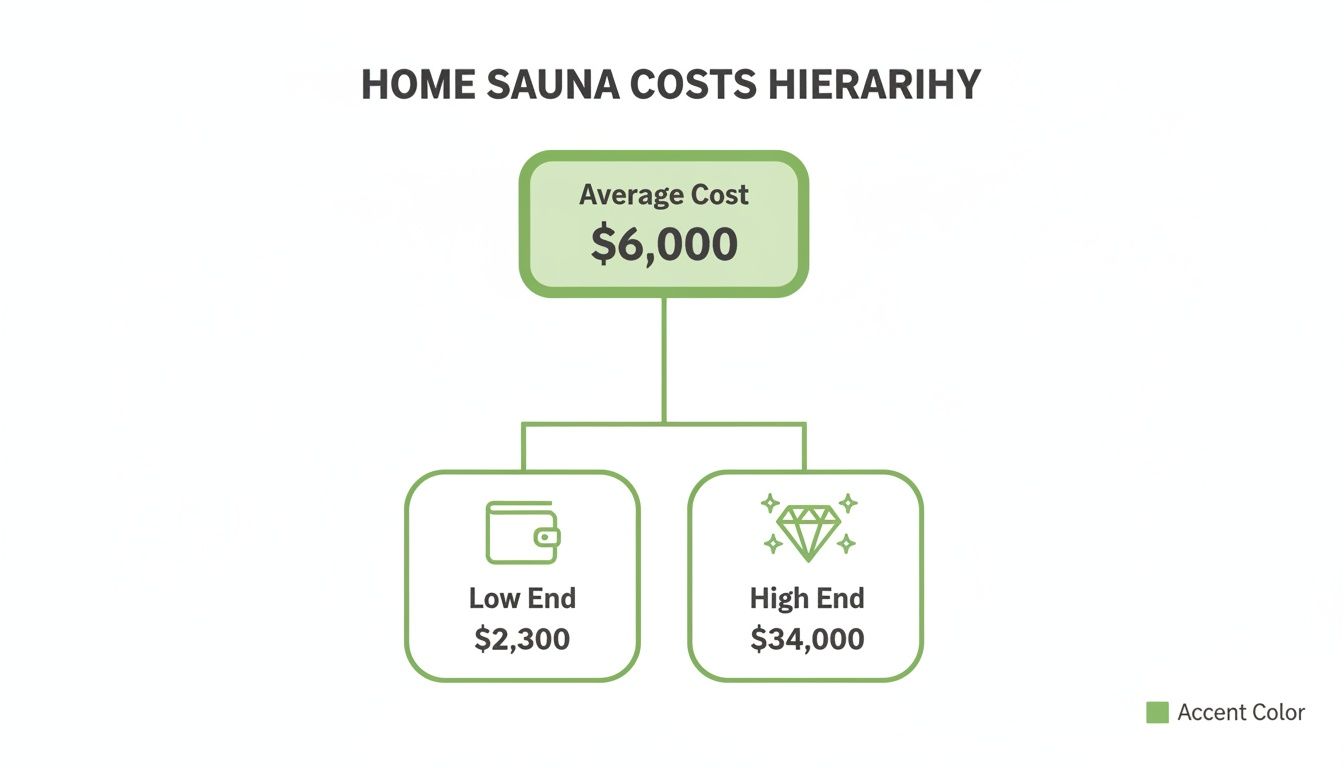
As you can see, the average cost hovers around $6,000, but the final price can swing dramatically depending on the path you take.
Portable and Prefab Infrared Saunas
If you're just looking to get your feet wet, a portable sauna is the easiest way in. These usually run between $200 and $1,000 and are typically compact, tent-like enclosures perfect for one person. They're all about flexibility, letting you test the waters of sauna life without a major commitment of money or space.
Taking a big step up from there, you'll find prefab infrared sauna kits. These are wildly popular for home use, generally landing in the $2,000 to $7,000 range. They arrive in pre-built panels that click together, making assembly a totally doable DIY project for many homeowners. Their appeal comes from a mix of therapeutic benefits and solid energy efficiency, as they use infrared light to heat your body directly instead of just the air around you.
Traditional Finnish and Barrel Saunas
For those who crave that classic, blast-of-heat experience—complete with steam billowing off the rocks (a ritual known as löyly)—a traditional Finnish sauna is the only way to go. Prefab kits for these authentic models typically cost between $3,000 and $8,000. They use a powerful electric or wood-burning stove to heat a pile of rocks, creating that iconic, enveloping heat.
Looking for a statement piece for your backyard? A barrel sauna is a fantastic choice. The unique cylindrical shape isn't just for looks; it promotes incredibly efficient heat circulation and stands up beautifully to the elements. You can find high-quality barrel saunas starting around $4,000, while larger and more luxurious models can climb to $12,000 or more.
If you're stuck between the two heating styles, our guide comparing infrared vs. traditional saunas breaks it all down for you.
The real difference boils down to how the heat is delivered. Infrared saunas tend to be more energy-efficient and operate at lower temperatures, making them great for longer sessions. Traditional saunas, however, deliver that intense, steamy heat that so many purists absolutely swear by.
Custom-Built Saunas
When you want something truly unique, a custom-built sauna is the ultimate expression of personal wellness. This is your chance to design a sauna that perfectly fits an unusual space, whether it's tucked into an awkward basement corner or built as a standalone luxury retreat in the garden.
Here, the investment starts at around $10,000 but can easily soar past $30,000. The price climbs based on:
- Unique Dimensions: Fitting non-standard spaces means custom labor and made-to-order materials.
- Premium Materials: Think flawless Western Red Cedar, floor-to-ceiling glass walls, and high-end German heaters—these all add to the bottom line.
- Complex Labor: A custom project isn't a one-person job. It often requires a team of carpenters, electricians, and sometimes even plumbers, all of which increases installation costs.
Indoor vs. Outdoor Saunas: Understanding the Price Difference
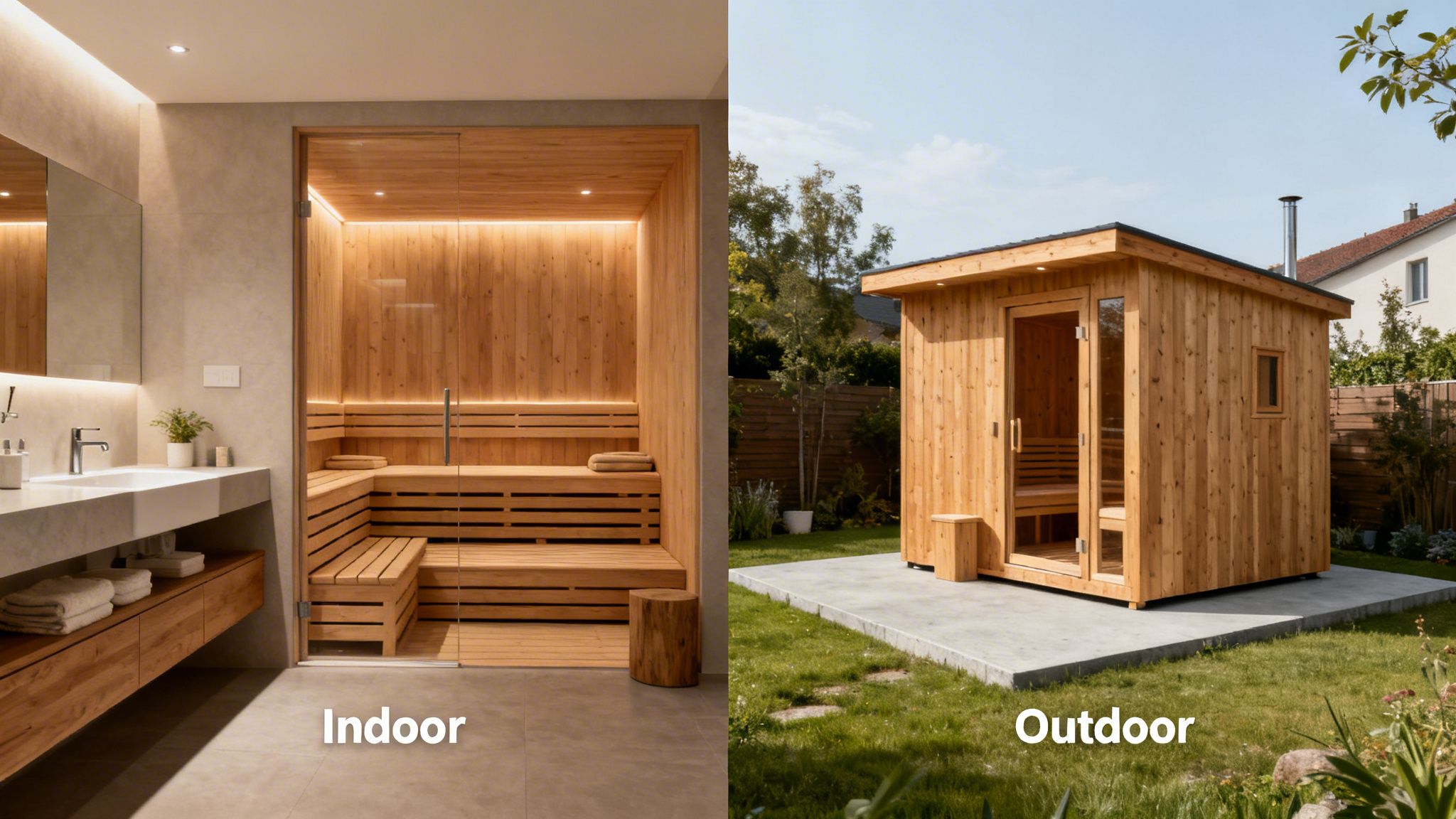
One of the first big decisions you’ll make is where to put your sauna, and it’s a choice that dramatically shapes your budget. The real cost difference between an indoor and an outdoor sauna isn't just about the location—it’s about materials, site prep, and what it takes to build something that lasts.
Think of it this way: an indoor sauna is like adding a custom closet to a bedroom. It cleverly uses your home's existing structure—the floor, walls, and climate control are already in place. This integration makes it a much more straightforward and cost-effective project from the get-go.
An outdoor sauna, on the other hand, is more like building a small guesthouse. It's a completely standalone structure that has to stand up to everything nature throws at it, from pouring rain to freezing snow. That requires a totally different level of engineering and a much more robust build.
The Higher Cost of a Backyard Retreat
So, why does an outdoor sauna carry a higher price tag? It all comes down to the heavy-duty weatherproofing and site preparation involved. These units are exposed to the elements 24/7, so they need specialized construction to keep the heat in and the weather out.
Here’s where the extra costs add up for an outdoor setup:
- A Solid Foundation: You can't just place a sauna on the grass. Most models need a perfectly level base, which usually means pouring a concrete slab or building a sturdy deck. This step alone can add several hundred to a few thousand dollars to your project.
- Durable, Weather-Ready Materials: Outdoor saunas are built with thicker, weather-resistant wood, insulated walls, and a proper roof—often shingled or metal—to fend off moisture and prevent heat from escaping.
- Dedicated Electrical Work: You’ll need to run power from your house out to the sauna. This typically involves digging a trench for a buried electrical line, which is a more complex and expensive job for an electrician.
While these upgrades increase the initial investment, they create a true backyard sanctuary. The result is a private escape that feels entirely separate from your home and can seriously boost your property's appeal.
The Budget-Friendly Convenience of Indoor Saunas
If you're looking for a more direct and affordable path to daily wellness, an indoor sauna is tough to beat. Since it’s sheltered inside your home, it doesn’t require the same level of rugged construction. You can often tuck one into a basement, a spacious bathroom, or a spare room without needing major renovations.
The numbers back this up. Indoor models generally have a clear edge in affordability, with total costs often landing between $2,300 and $11,500. A great mid-range unit for two to four people will typically run you $3,500 to $8,000, whereas comparable outdoor prefabs often start at $5,500 and go up from there.
An outdoor sauna is an investment in creating a destination experience in your own backyard. An indoor sauna is an investment in convenience and seamlessly integrating wellness into your daily routine.
Ultimately, the best choice boils down to your budget and lifestyle. If you dream of stepping out into the fresh air before a relaxing session, the extra cost for an outdoor model is likely worth every penny. But for those who want easy, everyday access, an indoor sauna delivers the exact same incredible health benefits for a lower upfront investment. If you're looking for some inspiration on how to make a sauna fit perfectly inside your home, check out these sauna room design ideas.
Budgeting for Hidden Costs and Ongoing Expenses
The sticker price on your dream sauna is a big number, but it’s really just the starting point. To get a true picture of what a home sauna costs, you have to look past that initial purchase price and figure in all the other things needed to get it running safely and properly.
It’s a lot like buying a car. You don't just pay the price on the window sticker; you also have to account for gas, insurance, and regular maintenance. A sauna is no different. There are installation requirements and monthly running costs that you absolutely have to bake into your budget from the get-go, or you’ll be in for some unpleasant surprises down the road.
Site Preparation and Foundation Costs
Before your sauna even shows up, the spot where it will live needs to be prepped. For an indoor model, this might be as simple as clearing out a corner in your basement. But for an outdoor sauna? That’s a whole different ballgame and a major potential cost.
You can't just plop a heavy outdoor sauna onto the grass and call it a day. It needs a rock-solid, perfectly level foundation to keep its structure sound and ensure the door hangs and closes correctly.
- Concrete Slab: This is the go-to choice for a reason—it’s the most durable. Pouring a concrete pad usually runs $6 to $12 per square foot. So, for a pretty standard 6x8 foot sauna, you’re looking at an extra $300 to $600, maybe more.
- Crushed Stone Base: A more wallet-friendly option is to build a level base with gravel or crushed stone. This can often be done for $100 to $300.
- Deck Reinforcement: Thinking of putting it on your deck? You'll likely need to beef up the support beams to handle the immense weight. That’s a job that could set you back anywhere from $200 to $1,000, depending on how complex your deck structure is.
Electrical and Plumbing Work
Almost every home sauna, with the exception of some portable units and old-school wood-burning ones, is going to need a professional electrician. This is one area where you absolutely cannot cut corners—faulty wiring is a massive fire risk.
An electrician will need to run a dedicated 240V circuit from your main electrical panel all the way to your sauna.
The bill for an electrician to run a new dedicated circuit for your sauna will typically land somewhere between $750 and $2,200. The final price tag depends on how far the sauna is from the panel and how tricky the job is (like trenching and running conduit underground for an outdoor model).
While most electric saunas are self-contained, if you're dreaming of a traditional Finnish sauna where you can create that wonderful blast of steam (löyly), having a water source and a floor drain nearby is a game-changer. Tackling that plumbing work could add another $500 to $1,500 to your project total.
Calculating Your Monthly Operating Costs
Once you're set up, your main recurring expense will be your power bill. The good news is that modern saunas are surprisingly efficient.
While you're looking at an upfront investment that averages $2,500 to $7,000, the smart move is to also factor in the $14 to $50 you'll likely spend each month on electricity. This all depends on your sauna's size, how often you use it, and your local energy rates.
Here's a quick look at what you can expect.
Estimated Monthly Electricity Costs by Sauna Type
| Sauna Heater Type | Average Power (kW) | Estimated Monthly Cost (4 sessions/week) |
|---|---|---|
| Infrared | 1.8 kW | ~$8.64 |
| Traditional Electric | 4.5 kW | ~$21.60 |
| Large Traditional Electric | 8.0 kW | ~$38.40 |
To put it in perspective, a standard 4.5kW heater for a 3-4 person traditional sauna, used four times a week for an hour, adds up to about $21.60 a month (assuming an average rate of $0.15/kWh). The ultra-efficient infrared models can sip electricity, often running for less than $10 a month.
It's fascinating to see how technology is making wellness more accessible. You can read more about how the sauna industry is evolving on Topture.com.
Comparing Installation Costs: DIY vs. Professional

So, your sauna kit has arrived. Now comes the big decision that really shapes your final budget and timeline: are you going to roll up your sleeves and build it yourself, or call in a pro?
This isn't just a simple money-saving question. It’s about your time, your skills, and frankly, your peace of mind.
Think of it this way. Putting together a modern prefab sauna kit is a lot like assembling a really nice gas grill. If you’re a handy person with a good set of tools and a free weekend, it's totally manageable. On the other hand, a full custom build is more like commissioning an entire outdoor kitchen from the ground up—that’s a job you leave to the experts.
Going the DIY Route
For many people, the DIY path is a fantastic way to slash the final cost. Most of the prefab infrared and barrel sauna kits you see today are designed from the get-go for self-assembly. They show up in neat, panelized sections that you can lock together with basic hand tools.
If you’re comfortable following a set of instructions and can rope in a friend to help, you could easily save anywhere from $500 to over $2,500 in labor fees. The only real "cost" is your own time and sweat equity.
But there's one major exception. This DIY advice is only for the wooden structure itself.
A Crucial Word on Safety: Unless you are a licensed electrician, do not attempt the electrical work yourself. Improperly wiring a 240V heater is a massive fire hazard. It’s the one corner you absolutely should never cut.
Hiring a Professional Installer
Bringing in a professional installer is your ticket to a guaranteed, high-quality result. They’ll get it done right, get it done faster, and will usually offer a warranty on their work. This is the only way to go for custom-built saunas, complex outdoor projects, or for anyone who just isn't confident in their DIY abilities.
So, how much will professional help add to the bottom line? Here’s what you can generally expect to pay for labor:
- General Contractor or Handyman: To assemble the kit itself, you're looking at $50 to $150 per hour. A typical prefab sauna might take 4 to 8 hours to put together, so that's a total of $200 to $1,200 for the build.
- Licensed Electrician: As I mentioned, this part is non-negotiable for most saunas. The cost to run a new, dedicated 240V circuit from your panel can range from $750 to $2,200. The final price tag depends on how far the sauna is from your electrical panel and how complex the wiring job is.
If you want to dig deeper into what drives these numbers, this is a great guide on the cost to install a sauna that breaks down the specifics.
Ultimately, the choice comes down to being honest with yourself about your skills, your budget, and the sauna you've picked. A DIY assembly is a brilliant way to save some cash, but always, always budget for a professional electrician. It’s the key to a safe and relaxing wellness retreat for years to come.
Wrapping Up: Your Top Questions Answered
Alright, let's cut to the chase and tackle the big questions that pop up when you're figuring out the budget for a home sauna. Think of this as your final, no-nonsense checklist to help you move forward with confidence.
What’s the Cheapest Way to Get a Home Sauna?
If you're looking for the absolute most affordable entry point, a portable infrared sauna is your answer. These are essentially personal, tent-like units that you can pick up for anywhere between $200 and $1,000. They give you the sauna experience without the major price tag or permanent installation.
Want something a bit more permanent but still easy on the wallet? Your next best option is a 1-2 person prefab infrared sauna kit. These usually start in the $1,500 to $2,500 range and are designed for easy DIY assembly, which saves you a bundle on installation costs.
Will a Sauna Actually Increase My Home's Value?
Yes, it absolutely can. A well-built, properly installed sauna is a huge plus in many housing markets, especially where buyers are looking for wellness and luxury features. It’s one of those things that can make your property really stand out.
Think of it like a freshly remodeled bathroom or a high-end kitchen. While you might not get a 100% dollar-for-dollar return on your investment, a quality sauna is a powerful selling point that signals a higher standard of living and boosts your home’s overall appeal.
Are There Financing Options for Saunas?
Definitely. Most sauna companies know this is a big purchase, so they offer ways to make it more manageable. You’ll often find partnerships with services like Affirm, Afterpay, or Klarna that let you split the cost into smaller monthly payments.
For bigger custom jobs that are more like a home renovation project, you could also look into a home improvement loan or a home equity line of credit (HELOC). These are great options for funding that dream wellness space you've been picturing.
How Much Do Different Wood Types Affect the Price?
The wood you choose is a huge factor in the final cost—and the overall vibe—of your sauna. It’s one of the most important decisions you'll make, so it’s worth thinking about.
Here’s a quick look at the common choices:
- Hemlock and Nordic Spruce: These are fantastic, budget-friendly woods often found in quality prefab kits. They’re durable and give you that classic sauna look without the premium price tag.
- Western Red Cedar: This is the luxury option. People love it for its amazing, rich aroma and natural ability to resist moisture and rot. Choosing cedar can bump up the total price by 20-30% or more, but for many, the incredible atmosphere it creates is totally worth it.
Ultimately, your choice comes down to balancing your budget with the kind of personal sanctuary you want to create.
Ready to create your own personal wellness retreat? At Fluent Trends, we offer a curated collection of designer-approved saunas and home furnishings to elevate your space. Explore our collections and find the perfect addition to your home today!