

How To Choose Dining Room Chairs: A Quick Guide
Donna MalonePicking the right dining chairs really comes down to getting a few key things right: the size, the style, and the material. But before you get lost in fabric swatches and design trends, let's talk about the most important, non-negotiable part: measurements.
Getting the scale right is the foundation for a dining space that's not just beautiful, but genuinely comfortable and functional.
Getting the Perfect Fit for Your Table and Space
I've seen it happen countless times: someone falls in love with a stunning chair design, only to get it home and realize it’s a terrible fit. The chairs are too low, they can't tuck under the table, or the whole setup feels incredibly cramped.
That's why you always start with a tape measure. A little bit of planning upfront saves a ton of headaches later. This is the core of what is space planning and how it can transform your rooms—it’s about making your furniture work for you, not against you.
This visual guide is a great starting point for understanding the key numbers you need to know.
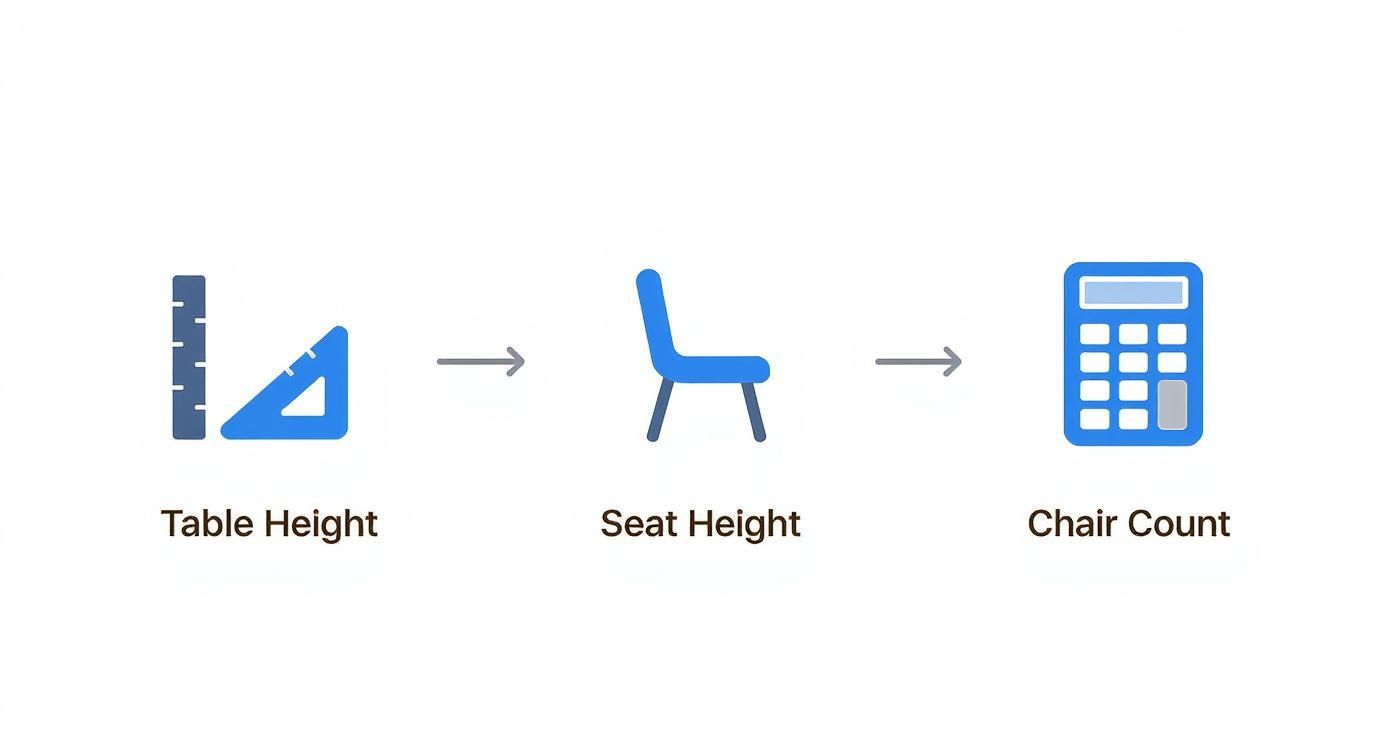
As you can see, it all starts with your table’s height. From there, you can figure out the perfect seat height and calculate just how many chairs you can comfortably fit around it.
Essential Chair and Table Measurements
First things first, let's look at the distance between the chair seat and the tabletop. Your goal is a gap of 10 to 12 inches. This is the sweet spot for providing enough legroom so no one feels squeezed, but not so much that you feel like a kid at the grown-ups' table.
So, if you have a standard 30-inch tall dining table, you’ll want a chair with a seat height somewhere between 18 and 20 inches.
Next up is chair width. You'll find most dining chairs are between 16 and 22 inches wide. To give everyone enough elbow room and make it easy to get in and out, you should leave at least 6 inches of breathing room between each chair. If you're working with a smaller dining nook, looking into the best furniture for small spaces can give you some great ideas for chairs with a smaller footprint.
Pro Tip: Don't forget about armrests! If you're looking at chairs with arms, measure the arm height to make sure they can actually slide under the table. There's nothing worse than chairs that stick out and constantly get in the way.
To make this even easier, here's a quick cheat sheet with all the key measurements you need.
Dining Chair and Table Measurement Cheat Sheet
This table breaks down the essential numbers to ensure your chairs and table are a perfect match.
| Measurement | Ideal Range | Why It Matters |
|---|---|---|
| Seat-to-Tabletop Gap | 10-12 inches | Provides comfortable legroom without feeling too low. |
| Chair Width | 16-22 inches | Standard size that works for most tables. |
| Space Between Chairs | 6 inches (minimum) | Prevents a cramped feel and gives everyone elbow room. |
| Space Behind Chairs | 36-48 inches | Allows people to easily pull out their chairs and walk behind. |
Keep these numbers handy when you’re shopping, and you’ll be well on your way to creating a perfectly proportioned dining area.
Defining Your Dining Room's Style
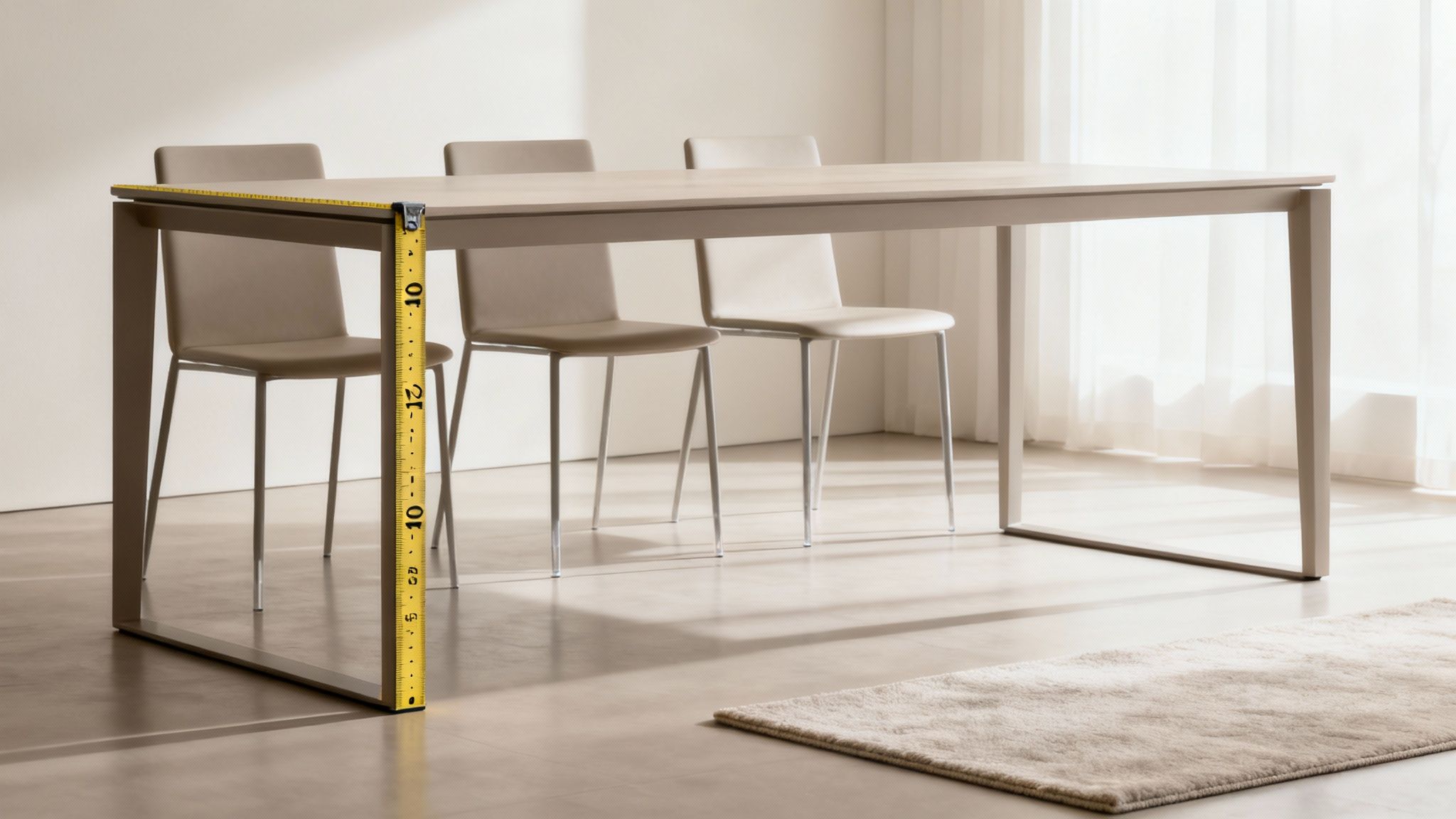
Alright, with the measurements out of the way, we can get to the fun part: style. Your dining chairs aren't just for sitting; they're a huge part of your home's personality. They set the stage for everything from quiet family breakfasts to lively dinner parties. The first big decision is whether you want a perfectly matched set or a more curated, mix-and-match vibe.
The best way to decide is to look at what you already have. What's the feel of the room right now? Is it full of the warm, rustic textures of a modern farmhouse, or do you lean more toward the clean lines and sleek surfaces of contemporary design? Knowing your room's dominant theme is your North Star. If you're struggling to put a name to it, our complete furniture style guide can help you pinpoint your home's aesthetic.
This focus on design isn't just a niche interest; it's a global trend. People are more invested than ever in creating homes that are both functional and beautiful. In fact, the global dining chairs market was valued at around USD 6.2 billion in 2023 and is only expected to grow. It’s clear that great design matters. For a deeper dive into market trends, you can check out the full market analysis.
Matching Versus Mixing Chairs
Going for a matched set—where your chairs and table are from the same collection—is the classic route. It creates a polished, formal look that’s undeniably cohesive. There's a reason this is a timeless approach; it's a surefire way to guarantee everything works together beautifully.
But there's also something to be said for mixing it up. Pairing different styles can add a layer of personality and visual intrigue that a matched set can't. Think about the impact of surrounding a heavy, traditional oak table with modern, minimalist metal chairs. That contrast creates a dynamic, industrial-chic look that feels intentional and full of character.
The secret to pulling off a mixed-chair look is to find a common element that ties everything together. This could be a unified color, a consistent material, or even a similar time period. For instance, you could gather different chair designs but paint them all the same bold color. Or, you could stick to wooden chairs from various styles that all share a similar warm stain. This creates a look that’s eclectic, not chaotic.
How Chair Silhouettes Change the Vibe
The actual shape of your chairs plays a massive role in the room's overall feel. Tall, high-backed upholstered chairs, for example, immediately signal formality and luxury. They invite you to settle in for long, comfortable dinners.
On the flip side, armless chairs with a lower profile create a more casual, open atmosphere, which is a great trick for making smaller spaces feel bigger. And armchairs? They're often placed at the head and foot of the table to add a touch of importance and extra comfort for the hosts. It's all about choosing a shape that helps you craft the exact dining experience you're after.
Choosing Materials That Actually Fit Your Life
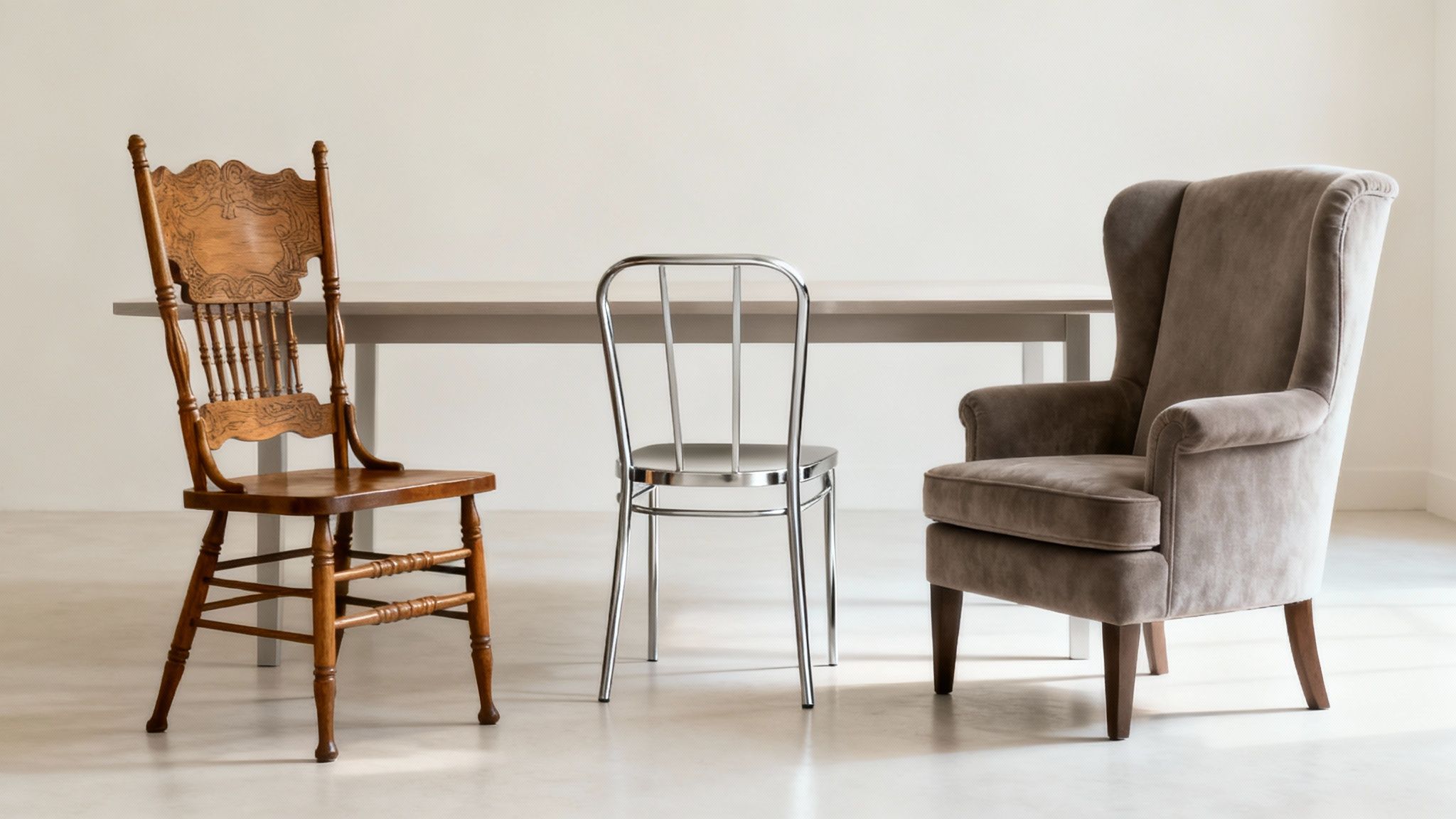
The material of your dining chairs is more than just a style choice; it’s a decision that will directly affect their durability, comfort, and how much time you spend cleaning them. It's really about finding that sweet spot where your home's look meets the practical demands of your day-to-day.
Let's be real: a stunning chair that can't handle your lifestyle is just going to become a source of stress.
Imagine a busy house with kids and maybe a dog or two. Here, practicality is king. Materials like molded plastic or powder-coated metal are absolute lifesavers. They're tough, wipe clean in a flash after a spaghetti sauce incident, and can take a few knocks without showing much damage.
But if your dining room is a more formal, adults-only space for dinner parties, you can lean into more luxurious options. This is your chance to go for those elegant materials that might need a little extra TLC.
Finding Your Perfect Material
Take a moment to think honestly about who uses your dining table and how often. This reality check is the single best way to narrow down your options and find chairs you'll love for years, not just for a season.
-
For the Daily Grind (High-Traffic & Family Use):
-
Wood: You can't go wrong with the classics. Solid wood chairs are incredibly sturdy and have a timeless appeal. If you're pairing them with a table, this guide to choosing an acacia dining table has some great insights on wood durability that apply to chairs, too.
-
Metal: Strong, surprisingly lightweight, and a breeze to clean. Metal chairs are perfect for adding an industrial or modern edge.
-
Performance Fabrics: Love the soft, upholstered look but fear the stains? Performance fabrics are your answer. They're specifically designed to resist spills and are much easier to clean than their traditional counterparts.
-
-
For More Formal or Lighter-Use Spaces:
-
Velvet: If you want to dial up the drama and luxury, nothing beats velvet. It brings a rich texture and deep color that instantly makes a room feel more special.
-
Linen: This material creates a beautiful, airy, and sophisticated vibe. Just know it's more prone to stains, making it a better fit for spaces where spills are less likely.
-
The right material isn't just about appearance—it's an investment in your furniture's future. When you choose a material that matches how you live, you prevent premature wear and tear, saving yourself the cost and headache of replacing chairs too soon. A practical choice is always a stylish one.
Why Comfort Is Non-Negotiable
Let's be honest: an uncomfortable dining chair can ruin a great meal. You can have the best food and company, but if everyone is squirming in their seats, they’re just counting down the minutes until they can stand up.
If you envision long, lingering dinners or plan to use your dining table as a makeshift office, comfort isn't just a bonus—it's everything. It’s so easy to get swept up in how a chair looks, but a beautiful chair that feels awful is a purchase you'll regret every single time you sit in it. This is about finding chairs that encourage people to settle in, not escape.
True comfort is more than just a plush cushion. It’s about thoughtful design that actually supports your body.
What Really Makes a Chair Comfortable?
The best way to know if a chair will be comfortable is to look at its core design. A few specific features can make all the difference, especially when you're an hour into a dinner party.
-
Seat Depth and Width: You need some wiggle room. A deeper, wider seat is far more forgiving. For a chair that feels more like a lounge spot, aim for a seat depth between 20-24 inches.
-
Back Support: A ramrod-straight back is a recipe for an aching lower back. Look for chairs with a gentle angle or a contoured backrest that provides some natural lumbar support. It’s a small detail that makes a huge difference.
-
Armrests: Chairs with arms are a game-changer for comfort. They let you relax your shoulders and arms, making it much easier to settle in. Just don't forget to measure! You'll need at least 7 inches of clearance between the armrest and the bottom of your tabletop so they can slide underneath.
A beautiful but uninviting chair is a failed design. Prioritizing ergonomics ensures your dining area is a place of genuine connection and relaxation, not a countdown to discomfort.
We're seeing a clear shift in what people want from their furniture. As highlighted in recent dining furniture market reports, there's a growing demand for ergonomic features and better materials. It's no surprise that many modern dining chairs now come with built-in cushions and superior back support, designed for how we actually live today.
How to Budget for Quality and Value
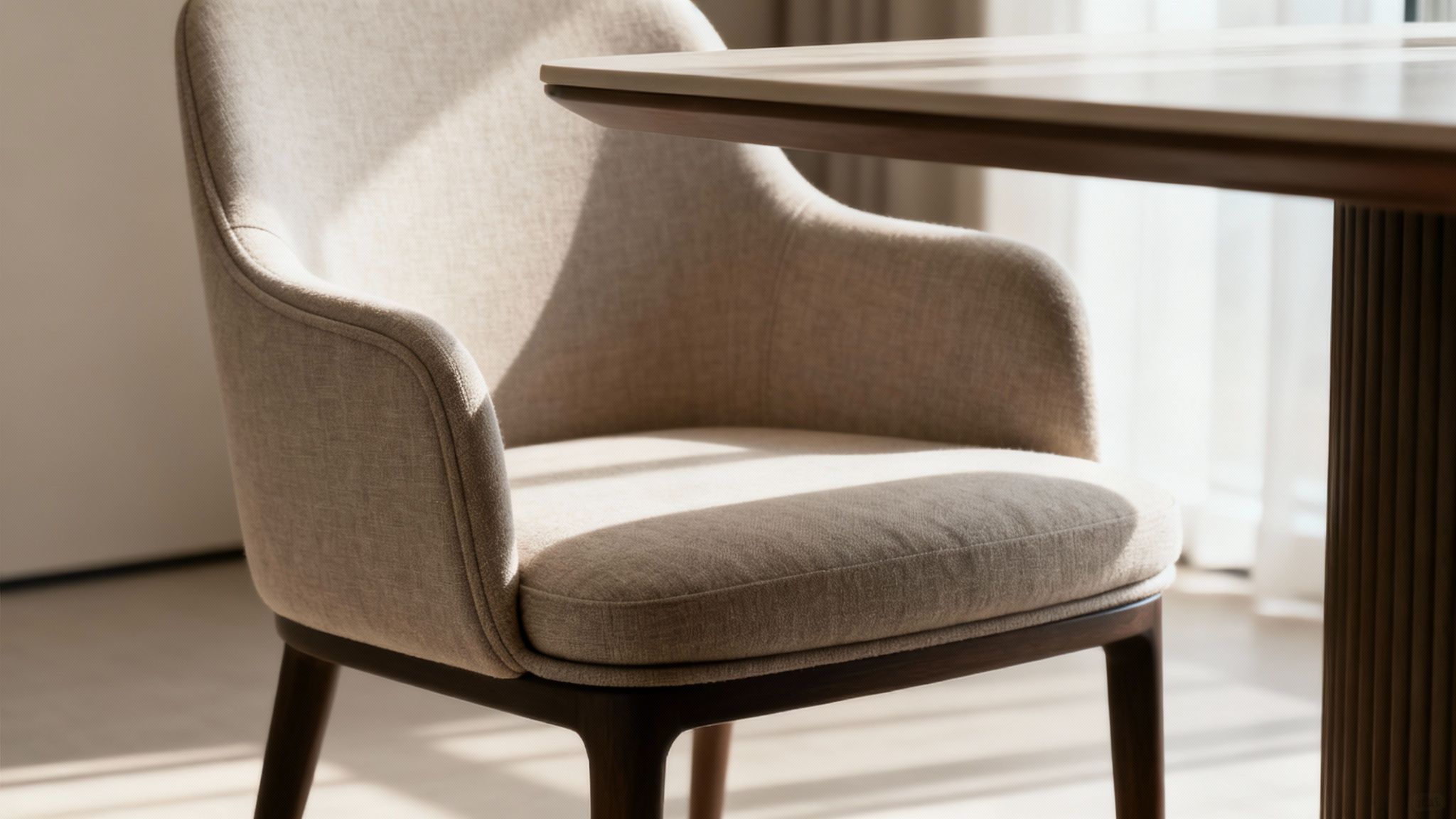
It’s easy to be surprised by how much dining chairs can cost—the price range is all over the map. To avoid getting lost in the options (and potentially overspending), it's smart to set a budget before you even start looking. Think of it as an investment in your home, not just another purchase.
Let’s be honest: price usually tells a story about the materials and how a chair is built. You might see a set of four chairs for under $200 and think you've hit the jackpot. But more often than not, those are made from manufactured wood or plastic held together by simple screws. They’ll work in a pinch, but they aren't likely to survive the daily grind for years to come.
Spotting True Quality
Once you start looking in the $150 to $400 per-chair range, you enter a different league. This is where you can find fantastic long-term value, but you need to know what to look for.
Here are the details that separate a great chair from a mediocre one:
-
Solid Wood Construction: Skip the particleboard. Chairs built from solid woods like oak, walnut, or acacia are in it for the long haul.
-
Proper Joinery: Flip the chair over and inspect the joints. Are the legs just screwed on? Or do you see mortise-and-tenon or dovetail joints? These traditional techniques are a hallmark of craftsmanship and mean the chair won't get wobbly after a few months.
-
Weight and Stability: A quality chair has some heft to it. It feels substantial. When you're in the store, give it a little shake. It should feel solid and grounded, not rickety.
The cost of raw materials plays a huge role in what you end up paying. As the global dining room furniture market expands, shifts in wood and metal prices directly affect the final price tag on a well-made chair. If you're curious about the economics behind it all, you can explore the market research on dining room furniture for a deeper dive.
A Key Takeaway: The best value isn't the cheapest option. Spending a bit more upfront on chairs with solid materials and real craftsmanship will save you the cost and hassle of replacing them down the road.
Answering Your Top Dining Chair Questions
Even with the best plan, a few tricky questions always come up when you’re on the hunt for the perfect dining chairs. I've been there. Let's tackle some of the most common ones I hear so you can make those final calls with total confidence.
How Many Dining Chairs Can I Realistically Fit?
The number of chairs you can have really comes down to your table's size and, just as importantly, how you actually use your space. A solid rule of thumb is to give each person about 24 inches of elbow room along the table's edge. For most rectangular tables, that translates to two or three chairs on each long side.
But don't just measure the tabletop and call it a day! You have to think about the chairs themselves. If you're eyeing big, comfy upholstered chairs that are 20-25 inches wide, you'll naturally fit fewer of them. Always measure the usable space between your table legs to make sure everything can be tucked in neatly without looking crammed.
Should I Get Dining Chairs With Arms?
Armchairs can bring a fantastic sense of presence and formality to a dining setup, especially as "captain's chairs" at the head and foot of a long table. They’re incredibly comfortable and just beg for long, leisurely dinners with great conversation.
Here's the one thing you absolutely must check: make sure the arms are low enough to slide completely under the table. Measure from the floor to the top of the armrest, then compare that to the height of your table's apron (the frame right under the tabletop). If it's a tight squeeze, a great compromise is using armchairs at the ends and armless ones along the sides.
Is It Okay to Mix and Match My Dining Chairs?
Absolutely! In fact, it's one of my favorite ways to inject some serious personality into a room. A thoughtfully mixed set looks collected and curated, not chaotic. The key is to have one unifying element that pulls the whole look together.
Here are a few ways to nail this look:
-
Same Color, Different Style: Find various chair designs and paint them all in one unifying, bold color.
-
Same Material, Different Shape: Gather chairs of different eras and designs, but all in the same wood finish, like natural oak or dark walnut.
-
Same Vibe, Different Form: Mix and match upholstered and solid wood chairs that all share a common aesthetic, like mid-century modern.
This approach makes it look like you've thoughtfully collected your set over time, creating a space that's uniquely yours.
At Fluent Trends, we believe your dining area should be a perfect blend of style, comfort, and personality. Explore our curated collection of designer-approved dining chairs to find the ideal set for your home. Discover your perfect dining chairs at Fluent Trends today