

How to Curate a Narrative Home: A 2026 Guide
Yuatinia LeakTable of Contents
- How to Curate a Narrative Home: Start With Your Story
- How to Style a Collected Home Without the Clutter
- How to Mix Global Decor Styles With Confidence
- How to Display Travel Souvenirs at Home Like a Curator
- Choosing Artisan Home Decor That Tells a Real Story
- Authenticating Artisan Pieces: Provenance and Material Checks
- Ethical Sourcing: What Your Purchase Actually Supports
- Caring for Natural Materials So They Last Decades
- Conclusion: Building a Narrative Home That Feels Like You
- Frequently Asked Questions
Last Updated: October 9, 2026
How to Curate a Narrative Home: Start With Your Story
A narrative home is a living space where every object carries meaning, memory, or a maker's story. Learning how to curate a narrative home starts with one simple question: what do you want your rooms to say about you?
At Fluent Trends, we see this shift every day. People are tired of filling rooms with things that match but mean nothing. They want pieces with a past, a purpose, and a person behind them.
That is the difference between decorating and storytelling. Decorating fills space. Storytelling gives it a voice.
Below, we will show you exactly how to build that voice, room by room.
How to Style a Collected Home Without the Clutter
Start with restraint. A collected home only works when every piece has room to breathe.
Most people think collecting means accumulating. It does not. The best collected rooms look edited, not crowded.
Here is how we approach it:
- Pick a focal point for each surface, then stop
- Group items in odd numbers for visual balance
- Leave at least one empty surface per room
- Mix heights so the eye moves naturally
- Rotate pieces seasonally instead of buying more
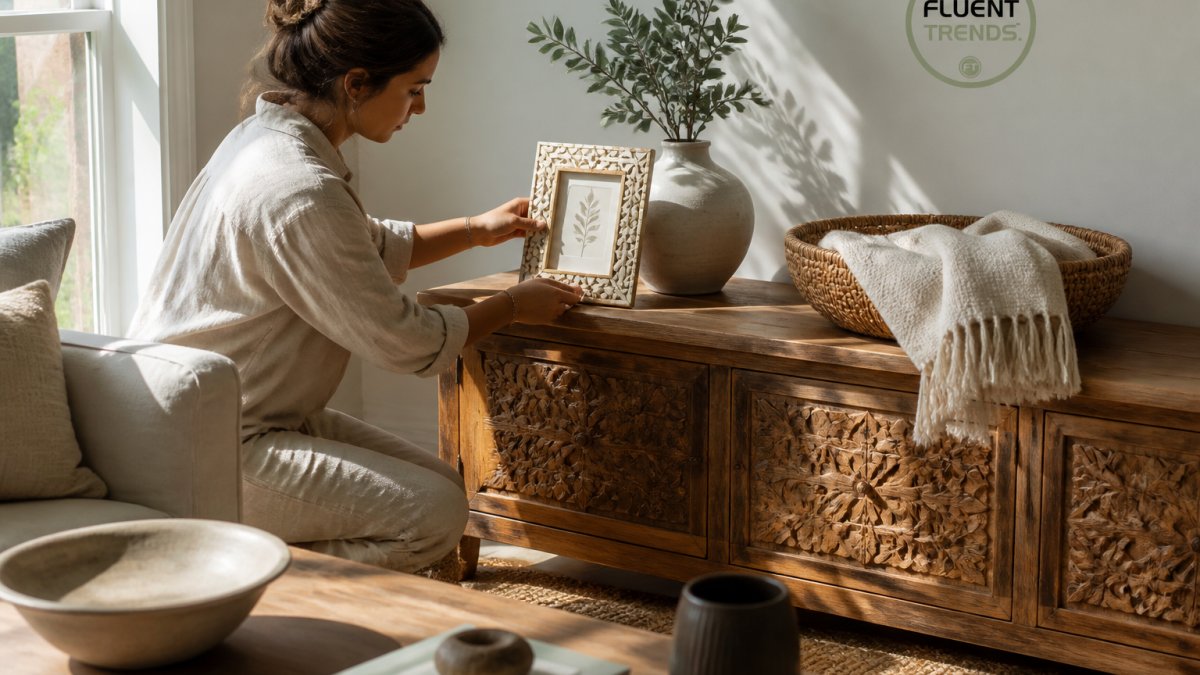
A common mistake is treating every shelf as a display case. In practice, the strongest rooms have breathing space. One raw wood iron frame sideboard can anchor an entire wall better than five small tables.
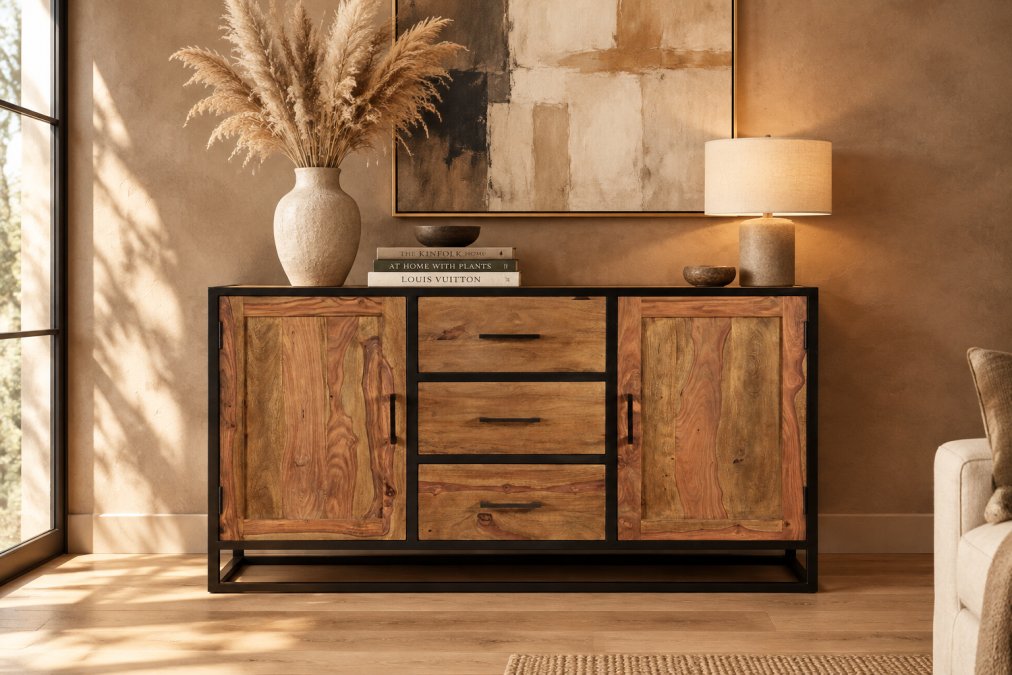
That is where a piece like our Sheesham Iron Frame Sideboard Cabinet earns its keep. Reclaimed sheesham wood, light teak finish, and three drawers for the clutter you do not want to see.
How to Mix Global Decor Styles With Confidence
Mixing global decor styles works best when you pick one thread and follow it. That thread can be color, material, or a shared region.
Too many people treat global decor like a costume. The trick is blending, not stacking.
Try this method:
- Choose a base palette of two or three neutral tones
- Add one culture's craft as your anchor, like bone inlay or brass
- Pull in one contrasting texture, such as boucle or raw linen
- Keep metals consistent across the room
- Repeat one motif at least twice so it feels intentional
According to the Smithsonian's research on cultural heritage and craft preservation, handmade traditions carry knowledge that mass production simply cannot replicate. That is the whole point of mixing with intention.
How to Display Travel Souvenirs at Home Like a Curator
Display travel souvenirs the way a museum would: with context, spacing, and a clear story.
A shelf of random trinkets reads as clutter. A curated grouping reads as a collection. The difference is intention.
Curators follow a few quiet rules:
- Give each piece its own space, not a shared pile
- Add a written note or date card beside special items
- Group by trip, region, or material rather than by size
- Use proper frames for photos and prints
- Light the display so texture shows
Our Mukhendu 5x7 Cream Picture Frame does exactly this job. Handcrafted inlaid bone tile with brass bar accents, made in the traditional Indian art forms of Old Delhi. It holds a 5x7 print and works as a table easel or a wall piece.

For smaller keepsakes, the Artemis 4x6 Picture Frame brings a mosaic chevron pattern in ethically sourced bone. Fair trade made, cruelty-free materials, and built for a 4x6 memory.

Choosing Artisan Home Decor That Tells a Real Story
Artisan home decor is furniture and objects made by hand, in small batches, by named makers rather than factory lines. The story is the product.
Here is what separates real artisan work from a factory copy:
What to Check |
Artisan Piece |
Mass-Produced Piece |
|---|---|---|
Maker identity |
Named artisan or workshop |
Unknown factory |
Material source |
Traceable, often reclaimed |
Unlisted blends |
Variation |
Slight differences per piece |
Identical every time |
Joinery |
Hand-cut, hand-finished |
Machine-stamped |
Longevity |
Repairable for decades |
Replaced, not repaired |
That last row matters most. A hand-carved sideboard in reclaimed acacia wood is built to hold up in busy, high-traffic rooms. Solid wood construction, iron hardware, and a finish you can refresh with a soft cloth.
We also look for woods with real backbone. Sheesham wood scores around 1,410 lbf on the Janka hardness scale, which measures a wood's resistance to denting. Teak sits near 1,000 lbf by comparison. Sheesham resists warping, twisting, and splitting once properly seasoned. Its heartwood even fights off termites and fungi on its own.
Authenticating Artisan Pieces: Provenance and Material Checks
Provenance is the documented history of an object, including who made it and where it came from. Ask for it before you buy.
This is the step most shoppers skip. It is also the step that protects your money.
Here is the thing. Most articles tell you to ask questions. Almost none tell you what a real answer looks like. So let us fix that.
Start with the maker. A legitimate artisan piece usually comes with a name, a workshop, or a region. If the seller says "handmade in India" and nothing else, that is not provenance. That is a label.
Next, check the material story. Real bone inlay furniture uses bone tile set by hand into a wood frame. You can feel the slight height differences between tiles. You can see the grain of the wood underneath. A factory copy uses resin or printed veneer. It feels flat and looks too perfect.
Look at the joinery. Hand-cut joints show small variations. Machine-stamped joints are identical every time. Run your finger along a drawer edge. If it feels uniform to the millimeter, it was not made by hand.
Ask about the finish. Artisan pieces often use natural oils or wax. Factory pieces use polyurethane. Natural finishes smell like wood. Polyurethane smells like chemicals.
For sheesham wood, ask if it was properly seasoned. Seasoning means the wood was dried slowly so it will not warp later. A maker who knows their craft will answer this without hesitation. A reseller will not.
Mukhendu 5x7 Cream Picture Frame - Carved Bone, Brass Bar →
For acacia wood, look for reclaimed sourcing. Reclaimed acacia often has small nail holes or color variations. Those marks are proof of age, not defects.
For bone inlay, check the back of the piece. Real inlay work is finished on both sides. Cheap copies leave the back raw or painted.
The Federal Trade Commission's guidance on "Made in USA" and origin claims sets clear rules on how origin and sourcing claims must be substantiated. If a seller will not answer basic provenance questions, that silence is your answer.
One more check. Ask for a repair path. Can the maker fix a loose joint or replace a drawer pull? If the answer is no, you are buying disposable decor, not an heirloom.
Three questions often separate real artisan work from a factory copy. Who made it? What is it made of? Can it be repaired? If you get vague answers, consider walking away.
Ethical Sourcing: What Your Purchase Actually Supports
Ethical sourcing means the people who make your goods are paid fairly and work in safe conditions. Your purchase is a vote.
Every dollar you spend on decor supports a supply chain. The question is which one.
When you buy ethically sourced pieces, you typically support:
- Fair wages for makers and their families
- Preservation of craft skills passed down for generations
- Low-waste production methods that use fewer resources
- Women-owned businesses and small workshops
- Traceable materials instead of anonymous supply chains
The U.S. Department of Labor's resources on fair labor and supply chains outlines how labor standards apply across global supply chains. Buyers who ask questions push those standards forward.
This is the part of the process we care about most at Fluent Trends. Our Artisan Collection is built around ethically made goods that support women-owned businesses and global makers.
Caring for Natural Materials So They Last Decades
Natural materials last decades when you clean them gently and protect them from moisture and direct sun.
Care is not complicated. It is just consistent. But different materials need different hands.
Let us go material by material.
Sheesham wood. This wood scores around 1,410 lbf on the Janka hardness scale, which measures a wood's resistance to denting. Teak sits near 1,000 lbf by comparison. Sheesham resists warping, twisting, and splitting once properly seasoned. Its heartwood even fights off termites and fungi on its own. To keep it that way, dust weekly with a soft dry cloth. Re-oil once or twice a year with a food-safe oil. Keep it out of direct sun so the color stays rich.
Acacia wood. Acacia is dense and naturally water-resistant. Wipe spills right away. Never let liquid sit on the surface. A soft cloth and mild soap are all you need. Skip the harsh chemicals.
Bone inlay furniture. Bone inlay is delicate. Dust it with a dry cloth. Keep it away from moisture. Never use abrasive cleaners or scrubbing pads. If a tile loosens, a furniture restorer can re-set it. That is the beauty of real inlay work. It can be repaired.
Brass. Brass will patina over time. Most people learn to love that warm shift. If you want to slow it down, wipe with a dry cloth and keep it away from humidity. If you want to restore shine, use a brass polish made for antique metals. Test it on a hidden spot first.
Boucle furniture. Boucle is a textured fabric with loops that can snag. Vacuum gently with a brush attachment. Blot spills, never rub. For deeper cleaning, use a fabric-safe cleaner and let it air dry.
Textiles and bedding. For bedding and textiles, look for milk and casein fiber blends, organic cotton, and Portugal-woven bedding. These feel soft, breathe well, and hold up through repeated washing. Hypoallergenic options help anyone with sensitive skin.
Check for OEKO-TEX certification on textiles. That label means the fabric has been tested for harmful substances and is safe for your home.
One last habit. Rotate textiles so wear stays even. Flip cushions. Move rugs. Small moves add years.
If you want furniture built for this kind of life, look for pieces made from sustainably sourced wood and finished with natural oils. Those are the ones that age well.
Conclusion: Building a Narrative Home That Feels Like You
Building a narrative home takes patience, but it pays off in rooms that feel genuinely yours.
Start with your story. Add pieces slowly. Ask who made them and what they are made of. Then care for them so they stay with you for decades.
At Fluent Trends, we built our Artisan Collection for exactly this kind of home. Every piece is handcrafted, ethically sourced, and made to last. Our durable furniture for daily use is designed for real life, not just photos.
Shop Now and start building a home that tells your story.
Frequently Asked Questions
What does it mean to curate a narrative home?
Curating a narrative home means choosing every piece because it connects to your story. You mix artisan home decor, travel finds, and family heirlooms with intention. Each object earns its place by adding meaning, not just filling space. The result feels collected over time, not bought in one weekend. Start with three pieces you love and build outward from there.
How do you mix global decor styles without it looking chaotic?
Pick one anchor piece, like a hand-carved sideboard or a large giclée print, then pull colors and textures from it. Limit yourself to three cultures or regions per room. Repeat one material, such as acacia wood or brass, across the space. This creates a thread that ties everything together. Negative space matters too. Leave breathing room between objects so each one stands out.
How can I display travel souvenirs without creating clutter?
Group souvenirs by theme or region instead of scattering them. Use a dedicated shelf, shadow box, or sideboard top as a rotating gallery. Keep five to seven items visible at once and store the rest. Frame small pieces like textiles or maps. For photos, a bone inlay frame adds a handcrafted touch. Rotate your display each season so the collection stays fresh and meaningful.
How do I know if artisan decor is authentic or mass-produced?
Look for small variations in color, grain, and carving. Handmade pieces are never identical. Check for maker marks, fair trade labels, or provenance cards. Ask about materials: reclaimed acacia wood, sheesham, or ethically sourced bone inlay. Sheesham scores around 1,410 lbf on the Janka hardness scale, harder than teak. Mass-produced items lack these details and often use synthetic finishes.