

How to Host a Dinner Party Like a Pro An Effortless Guide
Donna MaloneWhen it comes to hosting a dinner party, it really boils down to three things: thoughtful planning, a menu you can actually manage, and a warm, welcoming atmosphere. If you can get those fundamentals right, you’ll trade potential stress for the simple joy of connecting with people in your own home.
Laying the Groundwork for a Memorable Evening
The secret to being a relaxed, confident host isn't some kind of magic. It’s all in the prep work—the planning that starts weeks before anyone even rings your doorbell. This is where you take a vague idea for a party and turn it into a solid, step-by-step plan. A good plan means the evening will flow smoothly, and you'll actually get to enjoy it, too.
This goes way beyond just picking a date. You need to figure out the why behind your gathering. Is this a casual Tuesday night get-together with your closest friends? A big birthday bash? Or a more formal holiday dinner? The answer to that question will shape every other decision you make, from the invitations you send to the food you serve.
Curating the Perfect Guest List
Once you’ve nailed down the vibe, it’s time to think about your guests. It’s tempting to invite every single person you know, but especially if you’re new to hosting, smaller is almost always better.
A group of four to eight people is really the sweet spot. It’s big enough to keep the conversation lively but small enough that it still feels intimate and completely manageable.
Think of yourself as a bit of a matchmaker. Who do you know that would get along great? Try mixing friends from different parts of your life who you think share some common ground. A well-thought-out guest list is your first real step toward an evening filled with great conversation and laughter.
Establishing Your Planning Timeline
A timeline is your best friend when it comes to avoiding that last-minute "I forgot everything" panic. When you break down all your to-dos into smaller chunks spread over a few weeks, the whole process feels so much easier.
This visual guide offers a simple, effective timeline to get you started.
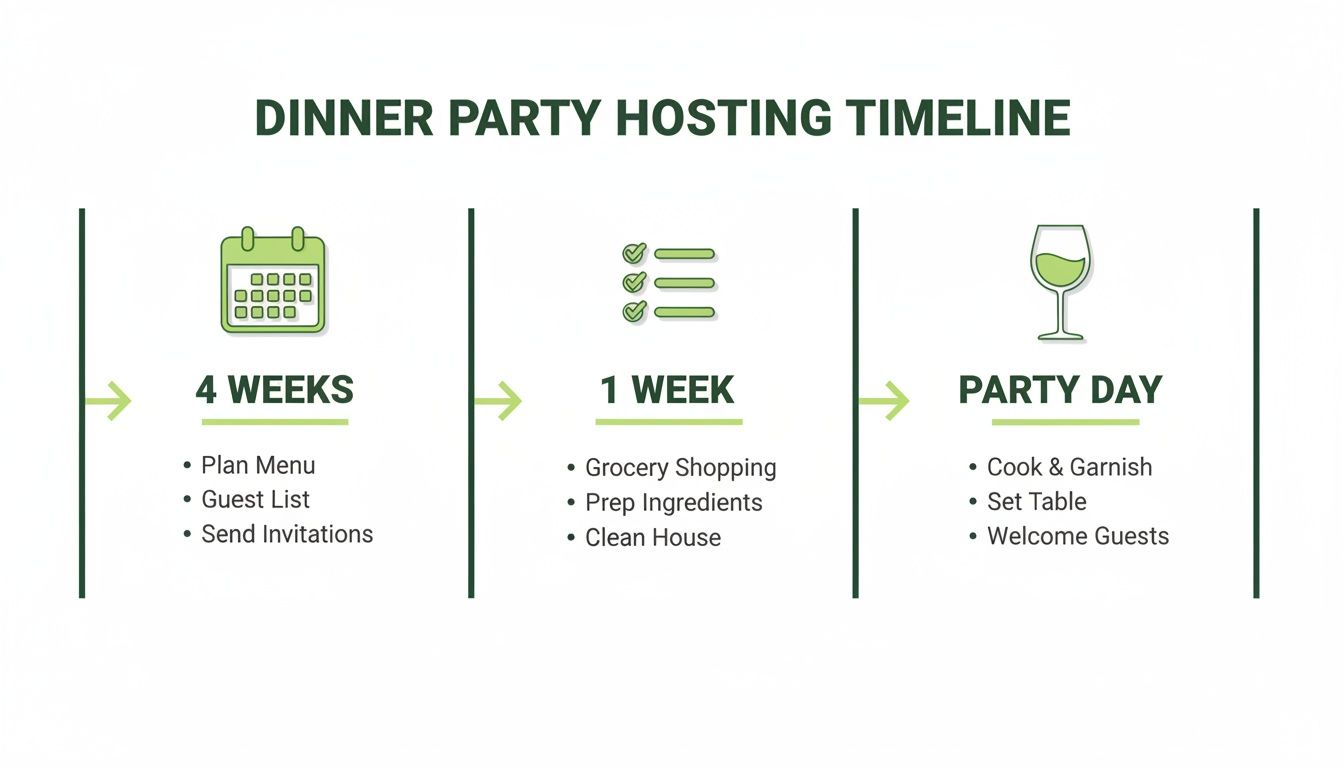
Mapping things out like this ensures the big tasks—like sending invites and planning the shopping—are done well ahead of time. That way, the day of the party is just about the final, fun details. For a deeper dive into making your event stand out, it's worth learning how to host a party everyone remembers.
Let’s be honest, we’re all spending more time entertaining at home these days, and it’s not just a fleeting trend. Recent data shows that 42% of us now see our homes as the perfect spot for social events. With about one-third of people saying that sharing a meal is one of their primary ways to connect, a simple home-cooked dinner has become a really powerful way to build and strengthen relationships.
Crucial Hosting Tip: When you send out your invitations, always, always ask about dietary restrictions or allergies right from the start. It’s such a simple question, but it shows you care and saves you from any awkward menu issues later. It's a small touch that makes a huge difference.
By putting in this early effort, you're setting the stage for a fantastic evening. You’re not just planning a meal; you're creating an experience designed to bring people together. This proactive approach lets you relax and focus on what truly matters: connecting with your guests and making memories around your table.
Designing a Menu That Wows Without the Work
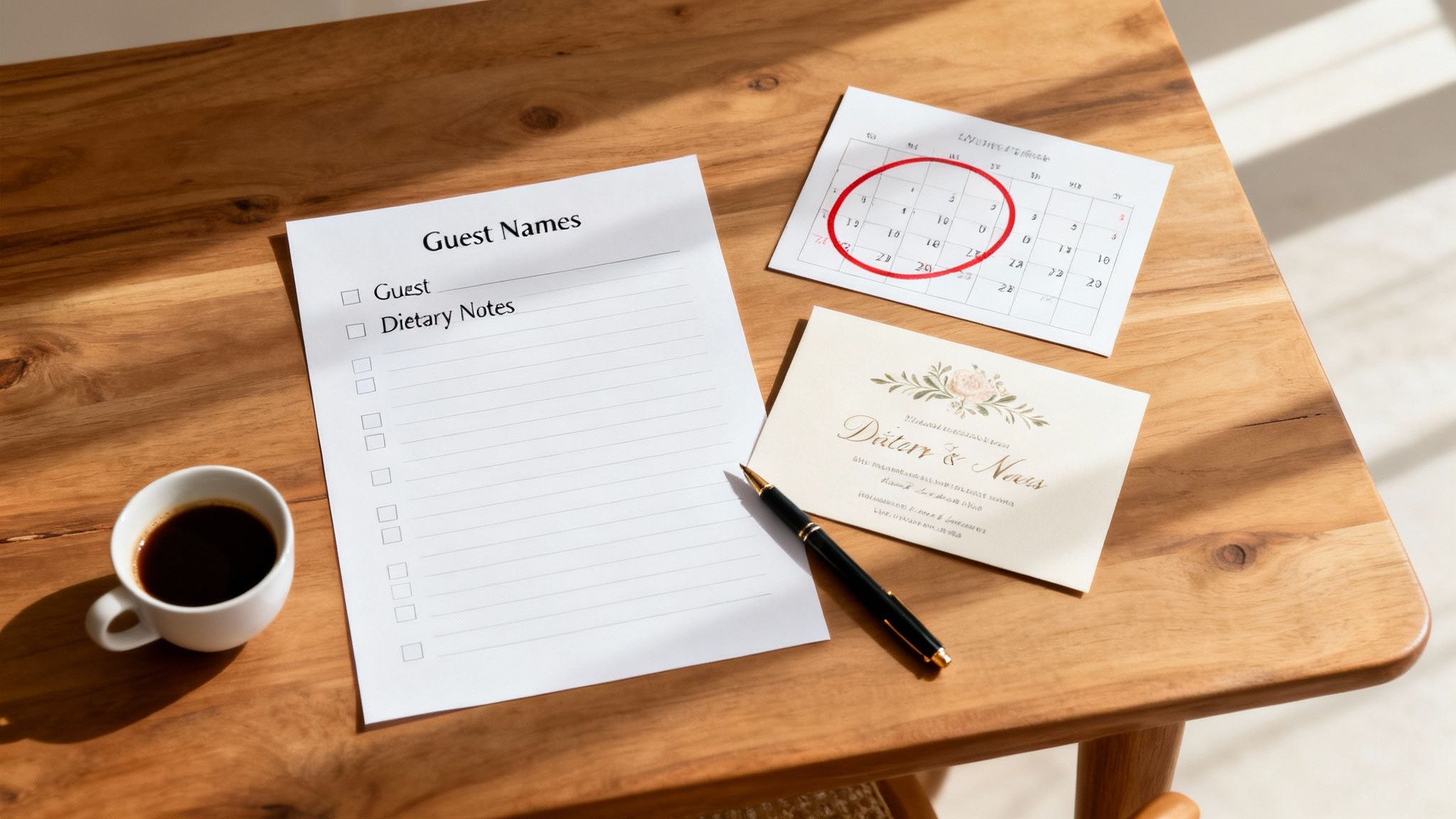
The food is the star of the show, but that doesn't mean it should be the source of your stress. I’ve learned that a truly successful menu isn't about overly complex recipes; it’s about smart, make-ahead dishes that let you actually enjoy the party alongside your guests.
Forget the myth that you need to cook a three-course meal entirely from scratch on the day of the party. The best hosts I know build their menus around dishes that can be prepped—or even fully cooked—a day or two ahead. This simple shift turns party day from a frantic race against the clock into a calm, organized process of reheating and final touches.
It's clear people are craving these kinds of curated home experiences. Searches for 'dinner party dining' have jumped by a staggering 160% on social media. It goes beyond just the food—data shows 61% of younger diners now prefer intimate home gatherings to restaurants, seeking that personal, immersive feel. You can see more on 2025 dining trends on All4Chefs.com.
The Art of the Make-Ahead Menu
A great menu just flows, with balanced flavors and textures from one course to the next. The trick is to pick one "star"—usually the main course—and then build simpler, complementary dishes around it. This keeps the workload from getting out of hand and ensures everything on the plate makes sense together.
Here are three of my go-to, field-tested menus for different seasons. Each one is designed for maximum flavor with minimal last-minute fuss.
1. Cozy Autumn Comfort
This menu is all about those warm, rich flavors that feel like a hug on a chilly evening.
-
Appetizer: Apple Brie Tart. You can make the pastry a day ahead, assemble the tart in the morning, and just bake it off as guests are arriving.
-
Main: Slow-Braised Short Ribs. The ultimate make-ahead dish. It honestly tastes even better the next day, so all you have to do is gently reheat it while everyone enjoys their drinks.
-
Side: Kale Salad with Candied Nuts and Goat Cheese. The vinaigrette and nuts can be prepped days in advance. Just toss the kale an hour before serving to let it soften up a bit.
-
Dessert: Flourless Chocolate Cake. A naturally gluten-free crowd-pleaser that can be baked the day before. Your only job left is to slice and serve.
2. Vibrant Summer Soirée
Light, fresh, and perfect for a warm evening, this menu keeps your oven usage to a minimum.
-
Appetizer: Goat Cheese Stuffed Figs with Honey and Prosciutto. These require zero cooking and can be assembled in the morning and kept in the fridge.
-
Main: Lemon-Herb Grilled Chicken Skewers. Get the chicken marinating the night before. When it's time to eat, they only need a few minutes on the grill.
-
Side: Quinoa Salad with Roasted Vegetables and Feta. Cook the quinoa and roast the veggies a day ahead. Right before serving, just toss with fresh herbs and feta.
-
Dessert: Berry Trifle. Layer some store-bought pound cake, vanilla pudding, and fresh berries in a big glass bowl. It looks incredible and can be put together that morning.
3. Elegant Holiday Feast
This menu brings all the festive sophistication you want for the holidays, without chaining you to the stove.
-
Main: Roasted Pork Loin with Apple Chutney. The chutney can be made up to a week in advance. The pork loin itself roasts quickly, giving you plenty of time to mingle.
-
Side: Creamy Scalloped Potatoes. You can assemble the entire dish the day before, cover it, and pop it in the fridge. Just bake it an hour before dinner.
-
Side: Green Beans with Toasted Almonds. Blanch the green beans in the morning, then give them a quick sauté with the almonds right before they hit the table.
-
Dessert: Mascarpone Whipped Cream with Berries. This stabilized whipped cream holds up perfectly when made a day in advance. Served in elegant glasses, it’s a simple showstopper. And remember, the presentation is part of the experience—our guide on finding the best quality dinnerware sets can help make your table shine.
Handling Dietary Needs with Grace
Navigating dietary restrictions doesn't have to be a nightmare. The secret is to choose dishes that are either naturally accommodating or easy to tweak. When a guest lets you know about an allergy or preference, don't see it as a problem. Think of it as a chance to be an even more thoughtful host.
Pro Hosting Tip: Instead of making a completely separate meal, look for easy swaps. Can you set aside a portion of the salad before adding the cheese? Could the main dish be served with a gluten-free grain for just one guest? Small adjustments like these make everyone feel welcome without doubling your work.
Creating an Atmosphere and Setting the Scene
An incredible menu is only half the battle. What really turns a nice meal into a night people talk about for weeks is the atmosphere. A great dinner party is a full sensory experience, making your friends feel special and totally relaxed from the second they walk in the door. It's the thoughtful details—the lighting, the music, the table—that create that little bit of magic.
These elements aren't just background noise; they tell a story and set the emotional pitch for the whole evening. The good news? You don't need a massive budget or an event planner's contact list to curate a scene that feels intentional and inviting.
Set the Mood with Lighting and Scent
Lighting is probably the single most effective tool you have for transforming a room. Nothing kills a vibe faster than harsh overhead lights, which can feel more like an interrogation room than an intimate gathering. The goal is a warm, soft glow that makes everyone look and feel fantastic.
Start by dimming your main lights way down. If you don't have dimmers, just switch them off and get creative with other sources. Table lamps and floor lamps are your best friends here, casting a much more flattering, cozy light. Candles, of course, are non-negotiable. A few tall tapers on the table and some votives scattered around the room create a dynamic, flickering light that adds instant elegance and warmth.
Scent is the other invisible layer that makes a huge impact. Just be careful not to use anything so overpowering it clashes with the food. I find a diffuser with a subtle essential oil like sandalwood works beautifully, or you can use a simple reed diffuser. Put it out about an hour before guests arrive. For a completely natural route, just simmer a small pot of water on the stove with some citrus peels and a cinnamon stick—it smells like home.
Curate the Perfect Dinner Party Playlist
Think of music as the party's invisible co-host. It smooths over any lulls in conversation and quietly dictates the energy in the room. The real key here is to have it ready to go before the doorbell rings. You don't want to be frantically searching for a playlist while you should be taking someone's coat.
I like to break the evening down into a few phases:
-
Arrivals: As people are showing up and grabbing a drink, you want something upbeat but not distracting. Think French café jazz, some classic soul, or one of those Nancy Meyers-inspired playlists. It should be just lively enough to get conversations going without forcing anyone to shout.
-
Dinner: Once you sit down to eat, shift to something more mellow. Instrumental tracks are perfect here—think soft acoustic guitar, lo-fi beats, or classic jazz. The music should fade into the background, becoming a gentle hum that just complements the meal.
-
Dessert & After: As you're finishing up, you can bring the energy back up a bit. This is a great time for those familiar, feel-good classics that might get people reminiscing and keep the good times rolling.
A well-planned playlist is a host's secret weapon. It guides the emotional arc of the night, ensuring the energy feels seamless and intentional from start to finish.
Design an Unforgettable Tablescape
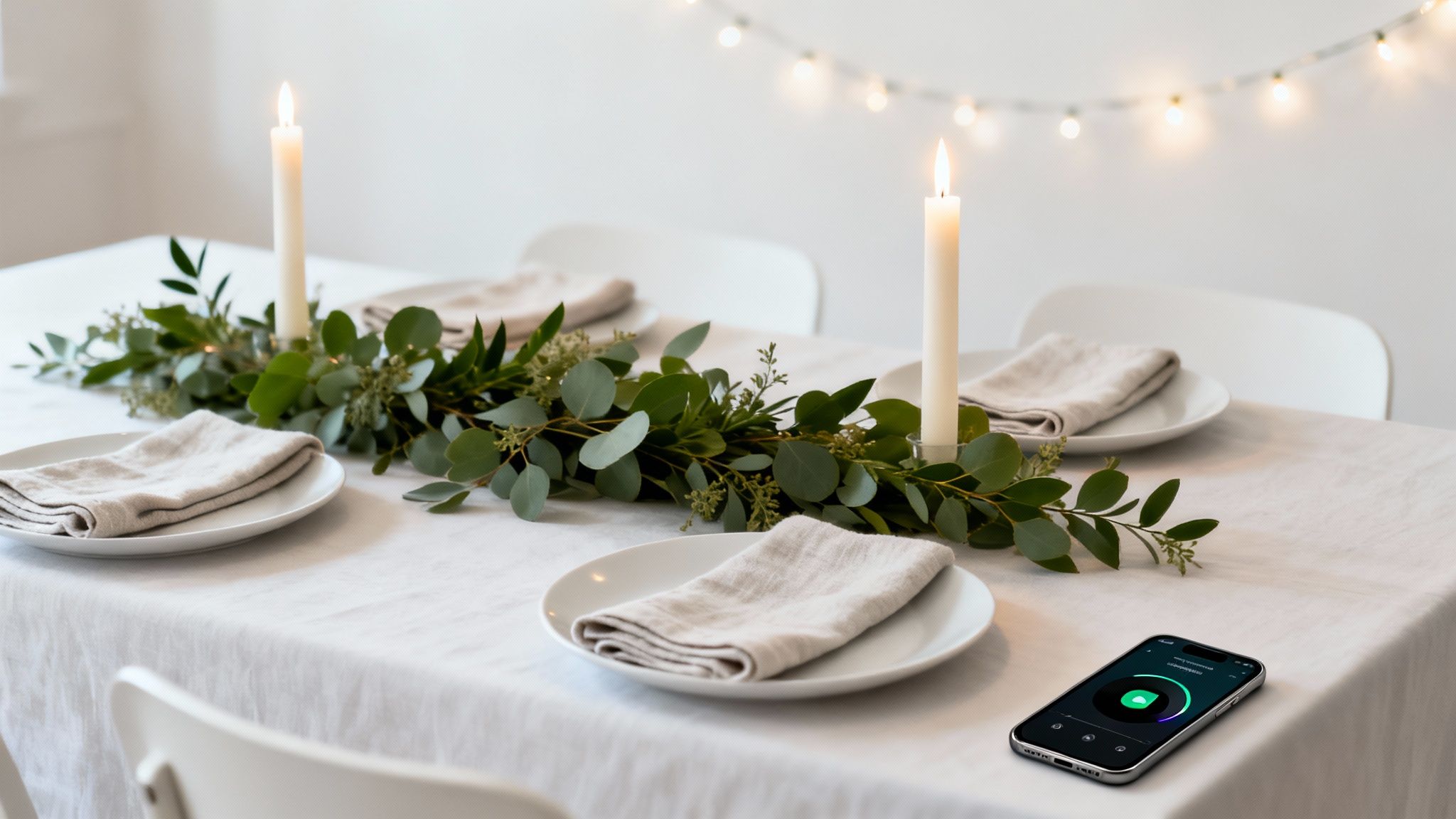
The table is the stage for your evening, and setting it beautifully is a clear signal to your guests that you're excited to have them. This is where your personal style can really shine. You don’t need formal china or a perfect set of everything; it's all about creating a setup that's visually appealing and works for your meal.
Start with a foundation. A simple linen tablecloth or even a textured runner can ground the whole look. Layering is your friend—placemats add a pop of color and help define each person's space. For a deeper dive, we have a complete guide to decorating ideas for dinner parties that's packed with inspiration.
For the centerpiece, always go with something low. There's nothing worse than trying to talk to someone through a giant floral arrangement. A few small bud vases with single stems scattered down the table are often far more chic than one big bouquet. You can also get creative with seasonal touches, like mini pumpkins in the fall or a few sprigs of eucalyptus for a fresh, modern vibe. The visual appeal of your dining area is a huge part of the experience, and you can find lots of innovative design ideas for creating inviting spaces in professional settings that can easily be adapted for your own home.
Executing the Final Hours with Ease
This is it—the final stretch where all your thoughtful planning pays off. The last 48 hours before guests arrive can feel like a blur, but a smart, structured approach turns potential chaos into a calm, controlled countdown. Let's ditch the last-minute panic. This is your game-day playbook, designed to get you across the finish line feeling organized and genuinely excited to open your door.
The key is to shift your mindset from "doing everything" to "finishing everything." The heavy lifting, like deep cleaning and the main grocery haul, should already be in the rearview mirror. Now, it's all about strategic execution and focusing on the details that make the biggest impact—leaving you with plenty of energy to actually enjoy your own party.
Your 48-Hour Countdown Schedule
Breaking down the last two days into manageable chunks is the secret to a stress-free event. Instead of a single, daunting to-do list, think of this as a series of small, achievable missions that ensure everything gets done in the right order.
The Day Before:
This is your big prep day. The goal here is to get as much done as humanly possible so that tomorrow is all about final touches and timing.
-
Final Grocery Run: Pop out for any fresh items you held off on, like delicate herbs, fresh-baked bread, or that specific cheese you wanted.
-
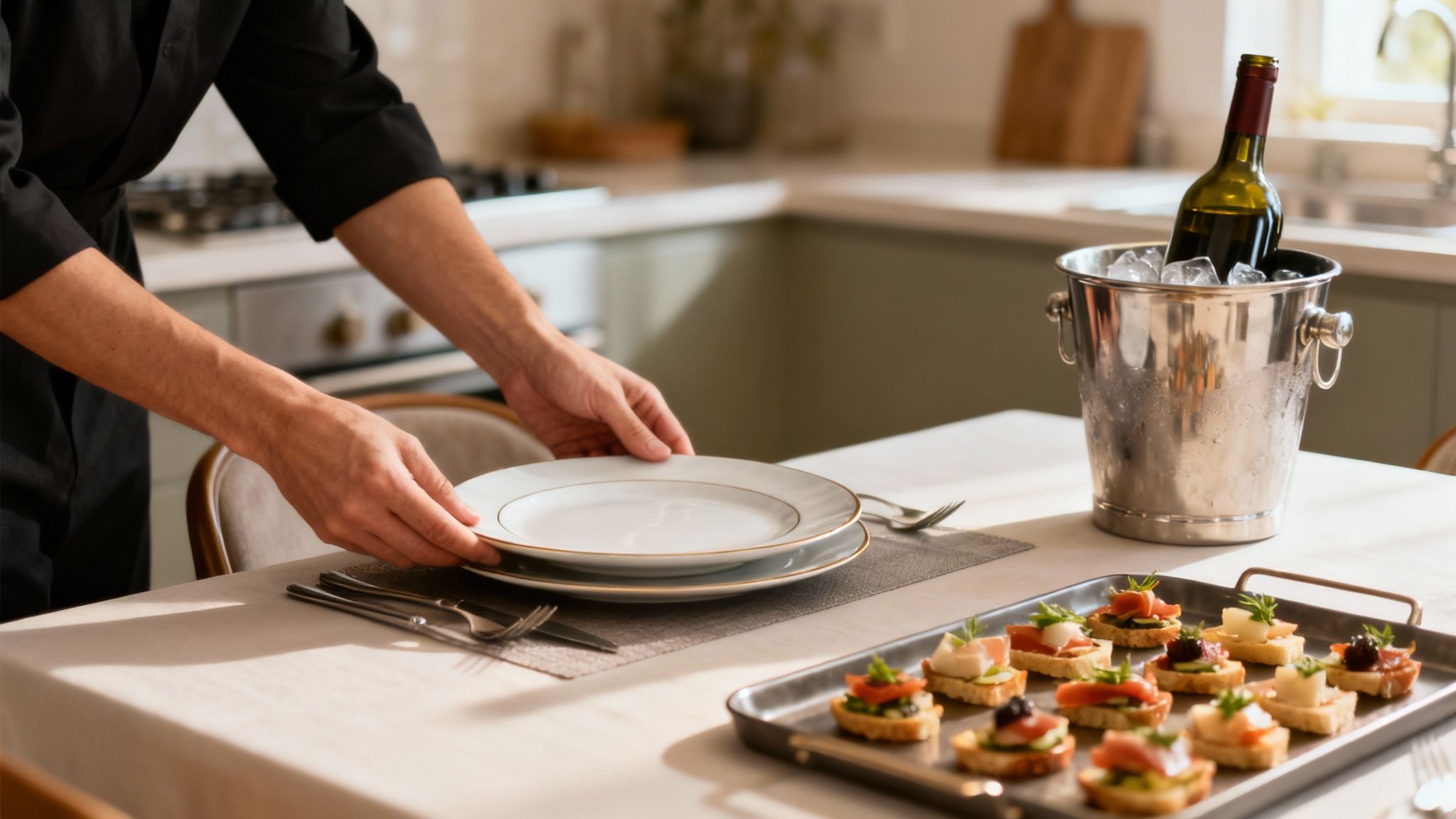
Chill Beverages: Clear space in the fridge for all your wine, beer, and non-alcoholic drinks. There are few party fouls worse than serving warm white wine.
-
Serious Food Prep: Get your mise en place ready. Chop all the vegetables, mix your sauces and vinaigrettes, and assemble any dishes that can sit overnight, like a trifle or a layered dip.
-
Set the Table: This is a game-changer. Lay out the tablecloth, placemats, plates, glassware, and flatware. Place your centerpiece. Doing this now saves a shocking amount of time and mental energy on the day.
The Day of the Party:
Today is about timing and atmosphere. Follow a schedule to keep the cooking on track, but most importantly, give yourself a real break to get ready.
Host's Golden Rule: Build in a 30-minute buffer for yourself right before guests are due. This is non-negotiable time to change, pour yourself a drink, and just breathe. A relaxed host sets the tone for the entire evening.
Timing the Meal Perfectly
Getting multiple dishes to the table, all hot and ready at the same time, feels like magic, but it's really just a matter of working backward.
Look at your menu and note the cooking times for every component. Your main course—say, a roast chicken—will likely be the anchor for your whole schedule. If that chicken needs to rest for 20 minutes before carving, that’s your golden window to reheat the mashed potatoes, toss the salad, and warm the bread.
Jot down a simple "oven schedule" on a notepad and stick it on the fridge. It could look something like this:
-
4:30 PM: Roast goes in the oven.
-
5:15 PM: Scalloped potatoes go in to bake.
-
5:50 PM: Roast comes out to rest. Crank the oven to brown the potatoes.
-
6:00 PM: Sauté the green beans on the stovetop.
-
6:10 PM: Carve the chicken, plate everything, and bring it to the table.
Being a Present and Engaging Host
Once that doorbell rings, your primary job officially shifts from "chef" to "connector." Your guests came to see you, not just to eat your (admittedly delicious) food. How you greet them and guide the evening's flow makes all the difference.
As people arrive, take their coats and immediately offer them something to drink. This simple gesture makes them feel instantly welcome and gives them something to do with their hands. Don't just point to the bar; walk them over and pour their first glass.
Making thoughtful introductions is crucial, especially if you're mixing different groups of friends. Go beyond just swapping names. Instead of a flat, "Sarah, this is Tom," try something with more connection: "Sarah, I'm so glad you could meet Tom! He's the one I was telling you about who just got back from that amazing trip to Japan. Tom, Sarah is an incredible graphic designer."
This little bit of context gives them an immediate, built-in conversation starter, taking the pressure off everyone. It’s a small detail that shows you know how to host a dinner party that truly brings people together.
Gracefully Handling Unexpected Party Moments
Here's the truth about hosting: no matter how meticulously you plan, something will go sideways. It's just the nature of bringing real people together. A guest might show up an hour late, a friendly chat could veer into a heated political debate, or a glass of red wine could make a dramatic exit onto your new rug.
The real art of hosting isn’t about preventing every possible hiccup—it's about how you handle them. Your calm, unflustered reaction sets the tone for everyone. If you can brush off a small disaster with a smile, your guests will relax and follow your lead. This is what keeps the atmosphere light and ensures a minor curveball doesn't end the evening.
Managing Awkward Conversations and Dynamics
One of the trickiest parts of hosting is playing conversational traffic cop. When a topic like politics or a sensitive current event starts to raise the temperature in the room, it's up to you to gently steer things back to safer ground.
A simple, non-confrontational pivot is your best friend here. Try something like, "That's a really interesting point. You know what that reminds me of..." and then smoothly shift to a lighter subject.
If one guest is monopolizing the conversation, create an opening for someone else. A direct but low-pressure question works wonders: "Anna, I've been meaning to ask you about your trip to the coast. How was it?"
Your secret weapon against awkward silences or conversational clashes? A thoughtful seating chart. Placing guests with shared interests next to each other, or separating people you know might not mesh well, is proactive social engineering at its finest.
Responding to Common Party Mishaps
Spills and breaks are just part of the territory. A dropped plate or a sloshed drink can feel like a huge deal in the moment, but your low-key response makes all the difference. When that red wine hits the carpet, immediately reassure your guest: "Please don't worry for a second! It happens to everyone."
Here’s a quick guide for navigating a few classic scenarios:
-
The Late Arrival: Welcome them warmly without mentioning their timing. A simple, "So glad you could make it!" as you hand them a drink is all that's needed to help them blend in.
-
The Eager Helper: If someone offers to help with something small, graciously accept. "That would be wonderful, thank you! Could you grab the salad tongs?" For bigger tasks that might mess up your rhythm, a polite decline is best: "That's so kind, but please, just relax and enjoy yourself. I've got it covered."
-
The Uninvited Plus-One: While not ideal, the most gracious move is to simply welcome them. Squeeze in another chair and place setting, even if it's a bit snug. It's far better to deal with the surprise gracefully than to create an uncomfortable scene.
Even with the best of intentions, things can go awry. Here’s a quick-reference guide to gracefully handling some of those unexpected dinner party situations.
Common Hosting Challenges and Solutions
| Challenge | Graceful Solution |
|---|---|
| A dish is a total flop. | Laugh it off. Say something like, "Well, that recipe is definitely not a keeper!" and focus on the other delicious food. |
| Two guests clearly dislike each other. | Create a buffer. Gently pull one of them into a separate conversation or ask for their help with a small task in another room. |
| You run out of a specific drink. | Offer alternatives enthusiastically. "The chardonnay is gone, but have you tried this amazing rosé?" Don't apologize profusely. |
| An awkward silence falls over the table. | Have a few go-to, open-ended questions ready. "Has anyone seen any great movies lately?" or "What's the best thing you've eaten this month?" |
Remember, your guests are there to see you. A small hiccup won't ruin their night unless you let it.
Signaling the End of the Evening
Knowing how to tactfully wrap things up is a crucial hosting skill. You don’t want to kick people out, but you also don’t want to be held hostage by guests who have overstayed their welcome.
Start with non-verbal cues. You can begin clearing dessert plates and empty glasses from the dining table. Turning down the music or switching to a more mellow, end-of-night playlist also sends a subtle message.
If those hints don't seem to land, a gentle verbal cue is perfectly fine. Standing up and saying something warm, like, "This has been such a wonderful evening. Thank you all so much for coming," is a clear yet polite signal that the party is drawing to a close. It concludes the night on a high note, capping off your event with the same grace you’ve shown all along.
Your Dinner Party Questions Answered
Even with the best plan, there are always a few little questions that pop up, especially when you’re still getting the hang of hosting. Think of this as your go-to spot for those last-minute "what if" moments, from chasing down RSVPs to the great store-bought vs. homemade debate.
How Should I Handle a Guest Who Hasn't RSVP'd?
Ah, the classic hosting dilemma. The RSVP date has come and gone, and you’re still waiting on a few people. My advice? Don’t guess. A polite, direct follow-up is not only acceptable but absolutely necessary for your sanity and your shopping list.
A quick text message is usually the easiest way to go. Keep it casual and friendly—you're just trying to get a headcount, not make anyone feel bad.
Here’s a simple script I use: "Hey [Guest's Name]! Hope you're having a good week. I'm finalizing my shopping list for the dinner party on Saturday and just wanted to see if you think you'll be able to make it. No worries if not, just let me know when you can. Hope to see you!"
It’s a gentle nudge that gets you the answer you need so you can finalize your seating chart and figure out how many potatoes to peel.
Is It Okay to Use Store-Bought Items?
Let me answer this with an enthusiastic and resounding YES. Can we please put to rest the myth that a good host has to make every single thing from scratch? The whole point is to have a wonderful, relaxed evening with people you enjoy, not to run yourself ragged.
Smart shortcuts are a host's secret weapon.
-
Appetizers: A beautiful platter with great store-bought cheeses, some interesting crackers, olives, and fig jam is effortlessly chic. No oven required.
-
Dessert: Picking up a gorgeous tart from your favorite local bakery is a fantastic way to end the meal. It supports a local business and saves you a mountain of stress.
-
Bread: Seriously, who has time to bake bread on a party day? A crusty, warm loaf from a good bakery is one of life's simple pleasures and takes zero effort on your part.
Your guests are coming to spend time with you, not to audit your kitchen skills. Using a few high-quality purchased items means you’ll be a more present and relaxed host, and that’s worth so much more than a homemade dessert served by someone too tired to chat.
What If My Home or Apartment Is Really Small?
You absolutely do not need a sprawling home with a formal dining room to throw a memorable dinner party. Some of the best gatherings I’ve ever been to were in cozy, small spaces. It’s all about working with what you have.
No dining table? No problem. Turn your coffee table into the main event and host a "floor picnic" with lots of comfy cushions and pillows. Another great option is a buffet-style service where guests can load up their plates and find a cozy spot on the couch or an armchair. This creates a really lovely, casual vibe that encourages mingling. Great hosting is about connection, not square footage.
What Should I Do If a Guest Brings an Unplanned Dish?
It’s a sweet gesture when a guest arrives with a bottle of wine. It’s a bit trickier when they show up with a surprise casserole that has absolutely nothing to do with your carefully planned menu. The key here is to handle it with grace.
Thank them warmly for being so thoughtful, but don't feel pressured to serve it if it messes with the flow of your meal.
A simple, "This looks delicious, thank you so much! I've already got our dessert sorted, but I can't wait to dig into this tomorrow," works perfectly. It validates their kindness without derailing your entire culinary plan.
At Fluent Trends, we believe creating a beautiful and welcoming home is the foundation of memorable entertaining. From stunning dinnerware sets to elegant serveware, our curated collections have everything you need to set a table that truly shines. Explore our tabletop essentials and find the perfect pieces for your next gathering.