

How to Organize a Kids Room: how to organize kids room Without Losing Your Mind
Donna MaloneWant to know the real secret to an organized kids' room? It’s not about buying more bins. It’s about starting with less stuff. A truly organized space begins with a good, old-fashioned declutter, making sure you’re only creating a home for the things your child actually loves and uses.
Conquer the Clutter Before You Organize
Before you even think about buying a new shelf or a cute container, you have to tackle the clutter. Trying to organize a room overflowing with forgotten toys, outgrown clothes, and half-finished art projects is a recipe for frustration. You'll just end up shuffling the mess from one corner to another.
This isn’t about a ruthless purge, though. Think of it as a team project with your little one. Getting them involved teaches incredible lessons about letting go, being grateful for what we have, and understanding the difference between needing something and just wanting it. The goal is to create a space that feels genuinely calm and works for them, not one that’s just tidy for a day.
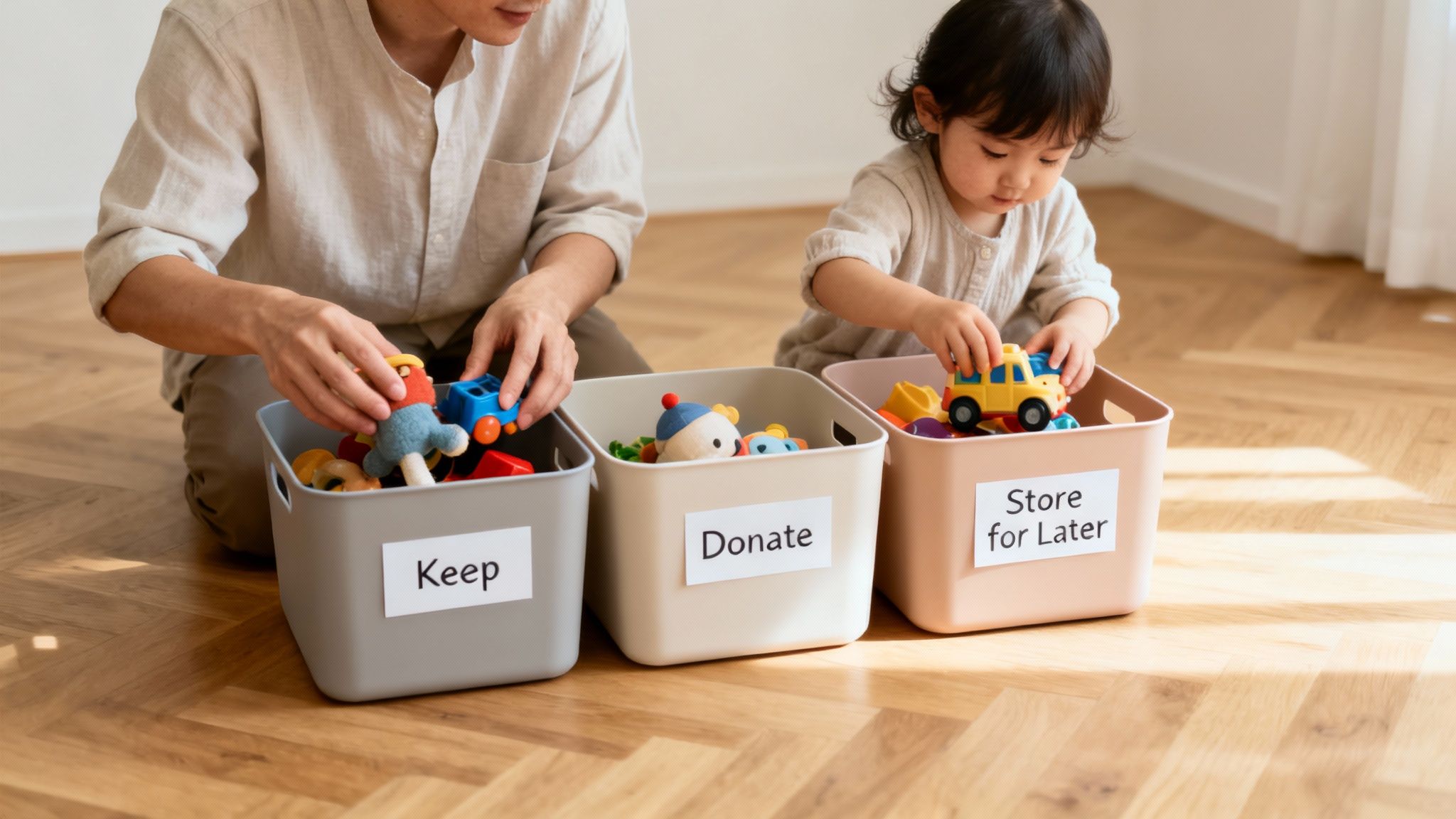
Set Up Your Sorting System
First things first, create three simple categories. You can use cardboard boxes, laundry baskets, or just designate different spots on the floor. Just make sure you label them clearly so everyone stays on track.
- Keep: This pile is for the non-negotiables—the items your child adores, plays with all the time, and are still in good shape. These are the things that will earn a spot in the newly organized room.
- Donate/Give Away: Perfect for gently used items that another kid would love to have. I find it helps to explain that their old toys are going on a "new adventure" with someone else.
- Store for Later: This is your home for sentimental things, baby clothes you can’t bear to part with, or toys they’ve outgrown but aren’t ready to leave the family. These items get packed up and moved to a separate storage area, like the attic or a closet.
Making the Process Kid-Friendly
Getting your child on board is all about the pitch. Frame it as a fun "room makeover" instead of a chore. For a three-year-old, you could say, "Let's make more room for your big trucks to drive!" For a ten-year-old, you might appeal to their desire for a cooler, more grown-up space to hang out in.
The key is to empower them. Let your child have the final say on what stays and what goes. While you can guide their decisions, forcing them to discard a beloved (though tattered) toy will only create resistance and resentment.
Before you start sorting, it helps to get in the right headspace. You can discover some great secrets to a clutter-free kids' room by exploring different organizational mindsets first.
When you’re dealing with a mountain of playthings, a focused strategy is your best friend. For a deeper dive, check out our guide on how to organize kids toys—it’s packed with practical systems for every category, from LEGOs to stuffed animals. https://fluenttrends.com/blogs/news/how-to-organize-kids-toys
Ultimately, clearing the clutter first lays the foundation for a room that actually supports creativity, rest, and play—without the constant stress of mess.
Create Smart Zones for Play, Sleep, and Study
Now that you’ve decluttered, we can get to the fun part: designing a room that actually works for your kid. The secret to a room that stays organized is making it intuitive. When everything has a logical home, cleanup becomes second nature, not a dreaded chore.
We do this by creating "zones"—dedicated areas for specific activities. It’s a simple concept with a huge impact. By separating play, sleep, and study spaces, you're sending clear signals to your child's brain about what happens where. This keeps the toy chaos contained and protects the calm, quiet atmosphere needed for bedtime or homework.
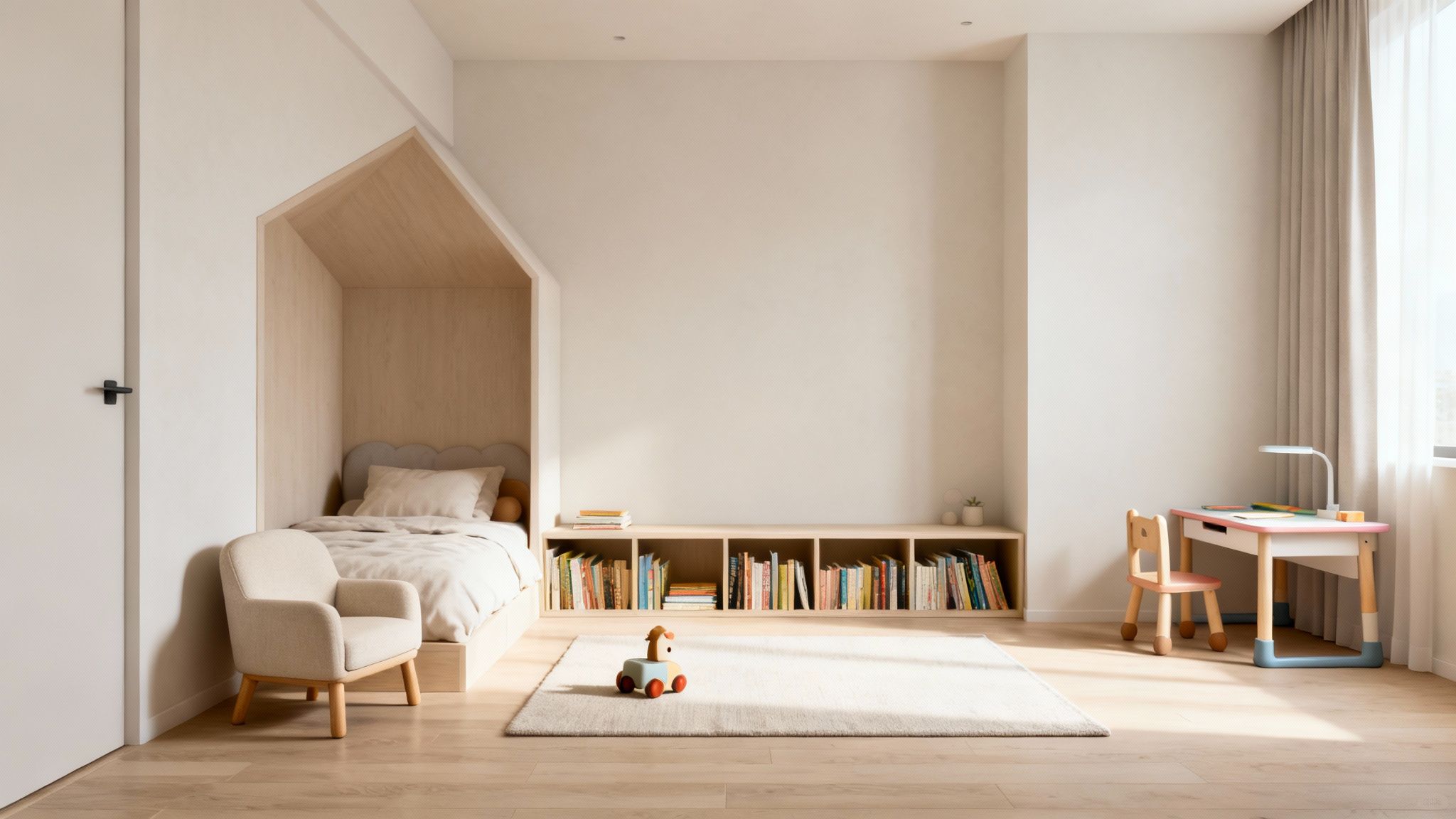
Defining Your Room Zones
You don’t need a massive room or physical walls to make this work. Visual cues are incredibly effective. A bright, shaggy rug can become the official "Play Zone." A comfy beanbag chair tucked in a corner next to a low bookshelf instantly signals "Reading Nook."
Think through the main things your child does in their room and start mapping out a spot for each. A good starting point usually includes:
- Sleep Zone: This is the sanctuary. Centered around the bed, it should feel restful and calm. Keep toys out of this area as much as possible.
- Play Zone: Let the action happen here! Use open-top bins and low-to-the-ground shelving so kids can easily grab what they want and—crucially—put it back.
- Creative or Study Zone: A small desk or a kid-sized table with all their art or homework supplies keeps everything contained and ready for their next big idea.
A well-zoned room is empowering. Your child learns that LEGOs live in the play zone and crayons stay at the art table. This builds their confidence and teaches them to manage their own space.
Furniture choice is a game-changer here. I always recommend multi-functional pieces, especially for smaller rooms. They can offer up to 40% space savings and cut costs by 35% compared to buying separate, single-purpose items. For a balanced feel, a good rule of thumb is to allocate roughly 40% of the space for sleeping, 30% for playing, and 30% for studying. You can dig into more kids' furniture market trends from Grand View Research.
To help you visualize this, here’s a simple framework for planning your zones.
Sample Room Zoning Plan
| Zone Name | Key Furniture & Decor | Organizational Goal |
|---|---|---|
| Sleep Zone | Bed, nightstand, soft rug, blackout curtains | Create a serene, clutter-free environment that promotes restful sleep. |
| Play & Fun Zone | Low shelves, storage bins, play mat or rug | Keep toys accessible and make cleanup simple with designated spots for everything. |
| Study & Creative Hub | Desk or table, comfy chair, task lighting, wall organizer | Provide a focused area for homework or art with all supplies within easy reach. |
| Reading Nook | Beanbag or comfy chair, small bookshelf, soft lamp | Encourage quiet time with a cozy, dedicated spot for books. |
This table is just a starting point—adjust it based on your child's age, interests, and the layout of their room.
Putting Zones Into Practice
Let's make this real. Think about that one corner of the room that’s a constant explosion of art supplies. Let’s turn it into a dedicated "Art Station."
Start by placing a small, child-sized table and chair there. Above it, mount a floating shelf or a pegboard. Use clear jars for crayons and markers and hang little cups for paintbrushes.
Just like that, the mess has a home. Your child knows exactly where to find their supplies and, more importantly, where they go when they're done. Apply this same thinking to everything else, and you’ll create a room that practically organizes itself.
Choose Furniture That Grows with Your Child
The real secret to a sustainably organized kids' room isn't about how many storage bins you own—it’s about the furniture you choose from the start. Investing in smart, multifunctional pieces that adapt as your child grows is a total game-changer, both for your space and your wallet. It's a "quality over quantity" mindset that stops future clutter before it even begins.
For example, instead of buying a new bed every few years, look for a convertible crib. The ones that transform into a toddler bed and later a daybed might cost a bit more upfront, but they save you from the cycle of buying and getting rid of furniture. Over time, it's a far more economical and eco-friendly way to go.
The Power of Multifunctional Pieces
This is where the real magic happens. Furniture that can pull double-duty is your best friend in a kid's room. A loft bed with a desk built-in underneath is a classic for a reason—it carves out a dedicated study spot without eating up precious floor space. This trick is key to making a small room feel open and uncluttered.
Think about an ottoman or a bench with hidden storage inside; it's a seat and a toy chest all in one. These are perfect for stashing bulky items like stuffed animals or big LEGO sets, keeping them tucked away but still within easy reach. Under-bed drawers are another organizational powerhouse, ideal for seasonal clothes, extra blankets, or those giant play sets.
Choosing adaptable furniture isn't just a trend; it's a practical necessity for modern families. It reflects a shift toward mindful consumption, where longevity and function are valued over temporary, single-use items.
This approach has become so popular it's reshaping the entire industry. The global kids' furniture market has exploded to USD 33.93 billion, and beds and cribs make up a massive 52.4% of that, largely because they're now being designed as organizational hubs. Research even shows that multifunctional furniture can slash lifecycle costs by 35% compared to single-use pieces. A smart purchase today really does save money and reduce waste tomorrow. You can dig into more of these trends from Data Bridge Market Research.
Selecting Furniture Built to Last
When you're trying to figure out how to choose bedroom furniture that will stand the test of time, just focus on two things: quality materials and timeless design. A solid wood dresser, for instance, can last for decades. It'll hold a toddler's tiny outfits just as well as it will a teenager's jeans years down the road.
Steer clear of overly themed furniture that your child will outgrow in a year or two. Sure, a racecar bed is fun when they're four, but that novelty wears off fast. Instead, go for pieces with clean lines and a neutral finish. You can inject all the personality you want with bedding, artwork, and accessories—things that are much easier and cheaper to swap out as their tastes evolve.
This strategy ensures the core pieces of the room stay consistent, providing a stable foundation for your organization. It simplifies the whole process, creating a dependable system that grows gracefully with your child, from their first steps all the way through their teenage years.
Use Storage Solutions for Every Age and Stage
The most brilliant organizational system is doomed to fail if it doesn’t actually work for your kid. What’s perfect for a three-year-old will only drive a ten-year-old crazy, and the reverse is just as true. The real secret to a tidy room that stays tidy is choosing storage that grows right along with them.
You have to think long-term. Furniture needs change dramatically as kids move from toddlerhood into their teen years, so focusing on adaptable pieces from the start will save you a lot of headaches.
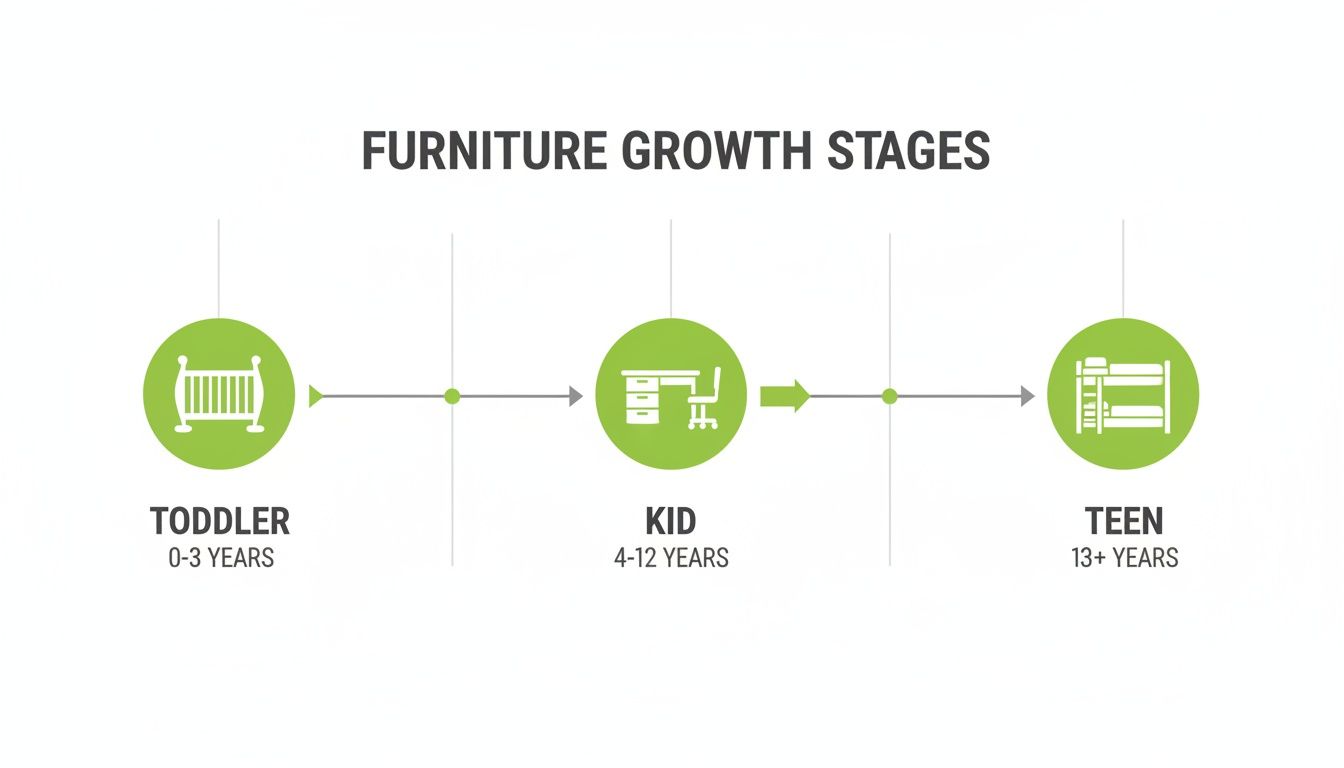
As you can see, the focus shifts. We go from basic safety and easy access to multifunctional furniture that gives them independence and lets them show off their personal style.
Storage for Toddlers and Preschoolers
For the little ones, everything boils down to one word: accessibility. They need to be able to grab their own toys and—this is the important part—help put them away without needing you to do it for them. This is how you start building those crucial habits early.
Here’s what works best:
- Low, Open Bins: Think cubby shelves with soft fabric or wicker baskets they can easily slide out. These are perfect for bulky stuff like blocks, stuffed animals, and toy trucks.
- Forward-Facing Bookshelves: When toddlers see the covers, they’re way more likely to grab a book and "read."
- Clear Picture Labels: They can't read yet, so visuals are everything. A simple picture of LEGOs on one bin and dinosaurs on another turns cleanup into a fun matching game instead of a chore.
Evolving Systems for Elementary-Aged Kids
Once school starts, their world gets a lot bigger. Hobbies pop up, and collections begin—from mountains of tiny LEGOs to every art supply imaginable. Your storage has to get more specific to keep it all from becoming one giant, jumbled mess.
This is the age of clear containers with lids. They’re a total lifesaver, letting kids see what’s inside without dumping the entire bin on the floor. Modular drawer units are also fantastic for sorting smaller collections. Now is when you really start teaching them how to group similar items. For a deep dive into taming the toy chaos, check out this guide on how to organize kids' toys effectively.
A messy, disorganized room can actually raise a child’s stress levels by as much as 20%. When you give them a logical system, you’re not just cleaning up; you’re creating a calmer space where they can thrive.
Age-Based Storage Strategy Comparison
Choosing the right storage solution at the right time is crucial for building lasting organizational habits. This table breaks down what works best for each stage of childhood.
| Age Group | Primary Goal | Recommended Storage Type | Example |
|---|---|---|---|
| Toddler (1-3) | Accessibility & Safety | Low, open bins; forward-facing bookshelves | Cubby units with fabric bins for blocks and stuffed animals. |
| Preschool (3-5) | Independence & Visual Cues | Clear bins with picture labels; toy chests | A bin with a picture of cars for their vehicle collection. |
| Elementary (6-9) | Categorization & Containment | Modular drawers; lidded containers | Stackable clear boxes for LEGOs, art supplies, and action figures. |
| Tween (10-12) | Personalization & Hobby Support | Vertical shelving; desk organizers | Open shelves to display collectibles and trophies; a desk caddy for pens. |
| Teen (13+) | Independence & Style | Closet systems; multifunctional furniture | An adjustable closet organizer and a bed with built-in drawers. |
By tailoring the storage to their current needs, you make organization feel intuitive rather than like a set of rules they have to follow.
Encouraging Independence in Tweens and Teens
When your kid hits the tween years, their room becomes their personal sanctuary. They want independence and a space that screams them. The best storage solutions for this age are ones they can customize and control themselves.
This is when you’ll notice a huge demand for grown-up furniture like cabinets and dressers. It's no surprise the market for these items is projected to grow at a 7.0% CAGR. You can dedicate around 60% of the room to smart storage solutions to really empower them.
Think about adding things like:
- Vertical Shelving: Open shelves are perfect for showing off trophies, favorite books, and personal treasures.
- Customizable Closet Systems: An adjustable closet organizer lets them arrange shelves and hanging rods to fit their actual clothes.
- Desk Organizers: A good desk setup with drawers and holders for supplies is non-negotiable for homework and creative projects.
When you match the storage to their age, you’re creating a system that makes sense to them. It becomes a skill they’ll carry with them for the rest of their lives.
Build Lasting Habits with Simple Systems
Let’s be real. All those perfectly sorted bins and clever zones won't mean a thing if the room explodes back into chaos in a week. The secret sauce to keeping a kids' room organized is building simple, repeatable systems that make cleanup a habit, not a constant battle.
This is where all your hard work pays off for the long haul. The goal is to shift from parent-enforced tidying to a shared family responsibility. When kids feel a sense of ownership and understand where things live, they’re so much more likely to help maintain the order you’ve created.
The Power of Clear Labels
Think of labels as the silent instructions for your new system. They take the guesswork out of cleanup and zap the classic "I didn't know where it goes!" excuse right out of the air. The trick is to match the label to where your child is at developmentally.
-
Pre-Readers (Ages 2-5): Pictures are your best friend. A simple photo or drawing of the blocks taped to the front of the block bin is all they need. It turns tidying up into a fun, visual matching game.
-
Early Readers (Ages 6-8): Go for a combo of pictures and simple words. This is a great way to reinforce their reading skills while keeping things intuitive—a picture of LEGOs with the word "LEGOs" right underneath works wonders.
-
Older Kids (Ages 9+): Simple word labels are perfect. You can get a uniform look with a label maker, or better yet, let them write the labels themselves. This gives them even more ownership over their space.
A well-labeled system is the foundation of independence. It transforms a huge, overwhelming task (clean your room!) into a series of small, manageable steps (put the cars in the car bin).
Weave Cleanup into Daily Life
Habits are built on consistency. Instead of waiting for a full-blown disaster zone to form, it’s much easier to weave small tidying moments into your daily schedule. This makes cleanup feel as normal and routine as brushing teeth before bed.
One of the most effective tricks in the book is the ‘Five-Minute Reset.’ Every evening before bedtime stories, just set a timer for five minutes. It’s a race! Everyone pitches in to put things back where they belong. You’ll be shocked at how much you can get done in such a short burst, and it stops tiny messes from snowballing.
Another game-changer is the ‘Toy Rotation.’ Keep a stash of toys stored away and swap them out every few weeks. Not only does this keep the room from being overrun with stuff, but it also makes old toys feel brand new again, magically renewing your child’s interest.
Common Questions About Organizing a Kids Room
Even the most well-thought-out plan can hit a few snags when you’re dealing with the beautiful chaos of a child's room. It's totally normal to have questions pop up along the way. Let's tackle some of the most common challenges parents run into when they decide it's time to conquer the clutter.
The real goal here isn’t just a one-time clean-up. It's about finding a rhythm that actually works for your family and turning this project into a habit that sticks.
How Can I Get My Child Involved Without a Fight?
The secret to sidestepping a power struggle is to make this a team effort from the get-go. This isn't something you're doing to their space; it’s a cool project you're doing with them to make their room even better. Handing them a bit of control gives them a real sense of ownership.
Start small to avoid the overwhelm. Instead of dropping the bomb, "We're cleaning your entire room today!" try a more focused approach. Something like, "Let's figure out a better spot for your books so we can see all the cool covers."
- Make it a game for the little ones: Set a timer and challenge them to a race. "Can we get all the stuffed animals into the basket before the buzzer goes off?"
- Tap into what older kids want: For a tween, frame it around their interests. "If we clear out this corner, you'd have the perfect spot for that gaming chair you want." Let them have the final say on the storage bins or the new layout.
When they have a voice, they become invested. Don't forget to praise their smart ideas and celebrate every little win you make together.
What Is the Best Way to Manage Artwork and School Papers?
That constant parade of crayon masterpieces and school worksheets can quickly morph into mountains of paper. The trick is to have a simple, two-part system that celebrates their creativity without letting it take over your home.
First, set up a dedicated display area. This can be anything from a classic corkboard or a magnetic whiteboard to a simple piece of string with clothespins. This is the "gallery" where the newest and most treasured pieces get their moment in the spotlight.
Next, you need a pending box. As new papers come through the door, they go straight into this box. Then, once a month or so, sit down together and go through it.
This simple routine is a fantastic way to teach them about curation. You're not just tossing things out; you're deciding together what's special enough to keep, what can be snapped for a digital album, and what's ready for the recycling bin.
How Often Should We Declutter My Child's Room?
I like to think about decluttering in two layers: the big seasonal purges and the small daily habits. A major declutter is best done twice a year. Scheduling it right before a birthday and again just before the December holidays is a genius move—it’s the perfect excuse to make room for all the new gifts heading their way.
But it’s the smaller, consistent efforts that really keep the chaos at bay. The "one in, one out" rule for toys can be a game-changer. When a new toy arrives, an old one finds a new home through donation.
A quick, 10-minute sweep each month for broken toys, outgrown clothes, or dried-up art supplies is another amazing habit to get into. This little bit of ongoing maintenance makes those big semi-annual declutters so much faster and way less stressful for everyone involved.
At Fluent Trends, we believe an organized home is a happy home. Discover our curated collection of stylish and functional storage solutions, from sturdy bookshelves to chic baskets, designed to bring calm and order to every room. Shop our designer-approved home furnishings today and create a space your family will love.