

How to Support Women Owned Artisans: A Practical Guide
Yuatinia LeakTable of Contents
- Why Supporting Women Artisans Creates Real Change
- How to Verify a Brand Truly Supports Women Artisans
- How to Identify Sustainable Artisan Products
- Ethical Home Decor Brands: What Sets Them Apart
- Digital Literacy and E-Commerce: The Missing Support
- Post-Purchase Engagement: What Happens After You Buy
- Policy and Systemic Advocacy: Beyond Individual Shopping
- Building Long-Term Relationships With Artisan Communities
- Frequently Asked Questions
Last Updated: September 27, 2026
Why Supporting Women Artisans Creates Real Change
When you learn how to support women owned artisans, you're doing more than buying a nice object. You're funding a household, a school year, a future. This guide from Fluent Trends walks through the practical steps most shoppers skip.
Women makers often lack bank accounts, loans, and market access. A steady order changes that fast. It turns scattered craft income into something you can plan around.
Below, we'll show you exactly how to vet a brand, spot real craft, and keep the money flowing long after checkout.
The Economic Multiplier Effect in Local Communities
Money spent with a woman artisan rarely stops with her. She buys food locally, pays school fees, and hires neighbors. Economists call this the multiplier effect.
A single steady order can support several people.
- She pays local suppliers and tailors
- She funds her children's schooling
- She hires and trains other women
- She reinvests in tools and materials
That chain is why community development follows real financial inclusion.
How Craft Preservation Fights Cultural Erasure
Traditional techniques disappear when no one can earn from them. Hand embroidery, weaving, and bone inlay work survive only if makers get paid.
Buying authentic craftsmanship keeps those skills alive. It also keeps the stories attached to them.
When artisan work pays well, young people stay interested. Cultural preservation becomes an economic choice, not a charity case.
How to Verify a Brand Truly Supports Women Artisans
Start with proof, not promises. A brand that truly supports women owned artisans can name its makers, its regions, and its partners. Vague language about helping communities tells you nothing.
Most shoppers stop at the homepage. The real answers live deeper. Check the product page, the about page, and the brand's social feed. Look for names, faces, and places.
Here is a practical vetting checklist you can run in about ten minutes.
- Does the brand name at least one maker or workshop?
- Does it list the country or region of production?
- Does it explain how makers are paid?
- Does it link to a certification or audit?
- Does it publish a sourcing or impact report?
- Does the same maker appear across multiple products?
Score each yes as one point. Five or more points means the brand is likely genuine. Two or fewer means the claims are probably decoration.
Certifications and Third-Party Verification to Look For
Look for recognized labels and audit trails. Fair trade certification, for example, requires documented wages and safe conditions. You can read the standards at Fair Trade Certified standards.
For textiles, OEKO-TEX testing confirms a product is free from harmful substances. That matters for bedding, scarves, and anything touching your skin. If a brand sells hypoallergenic bedding, the OEKO-TEX label is the proof behind that word.
A real ethical brand will also name its sourcing partners. Transparency is the whole point.
Red Flags That Signal Performative Allyship
Watch for these warning signs:
- No maker names, ever
- No country or region listed
- Empowerment language with zero specifics
- No audit, certification, or partner disclosure
- Prices too low to cover a living wage
- Stock photos instead of real workshop images
- A sudden pivot to artisan language after years of mass production
One vague claim is forgettable. A pattern of them is a decision. Skip it.
How to Tell Handmade From Mass Produced
This is the part most guides skip. Here is how to spot the difference up close.
Handmade pieces show small variations. Stitch spacing shifts. Glaze pools differently. Bone inlay patterns never repeat exactly. Mass-produced items are identical, and that sameness is the tell.
Check the edges and the underside. Hand-finished furniture shows tool marks and uneven sanding. Factory pieces are uniformly smooth.
Ask about lead times. Real artisans need weeks, not hours. A brand that ships the same day from a warehouse is not making to order.
Flip the tag before you trust the website. Fiber content and care instructions on the physical label are harder to fake than marketing copy. A Portugal-woven bedding label, for instance, tells you where the weaving happened.
How to Identify Sustainable Artisan Products
Real sustainable artisan products show their materials. They tell you what the piece is made of, how it was dyed, and how to care for it. Vagueness is the giveaway.
Check the fiber content first. Natural materials like organic cotton, wool, linen, and jute age well and biodegrade. Synthetic blends often hide cheap production.
Then check the process. Small-batch production and natural dyes point to lower waste.
Materials That Signal Genuine Craftsmanship
Some materials are hard to fake well. Look for:
- Organic cotton and milk or casein fiber blends
- Portugal-woven bedding with OEKO-TEX certification
- Handwoven wool and silk, like a hand-embroidered merino silk scarf
- Sustainably sourced clay, wood, and bone
- Boucle and bone inlay furniture with hand-finished detail
These signal a maker who invested time, not a factory chasing volume.

Reading Between the Lines of Sustainability Claims
Sustainability claims are easy to print. Proof is harder. Here's how to test them.
| Claim | What It Should Mean | How to Verify |
|---|---|---|
| "Ethically made" | Fair wages, safe conditions | Named audit or certification |
| "Sustainably sourced" | Traceable raw materials | Country and supplier listed |
| "Handmade" | Made by a person, not a line | Maker or region named |
| "Natural fibers" | Cotton, wool, linen, silk | Fiber percentage on label |
| "Small batch" | Limited, low-waste runs | Production notes or drops |
If a brand can't fill this table, the claim is decoration.
Ethical Home Decor Brands: What Sets Them Apart
Ethical home decor brands do three things well. They pay makers fairly, source materials responsibly, and build pieces that last. Durability is part of ethics, because a chair that survives twenty years wastes far less than one replaced every three.
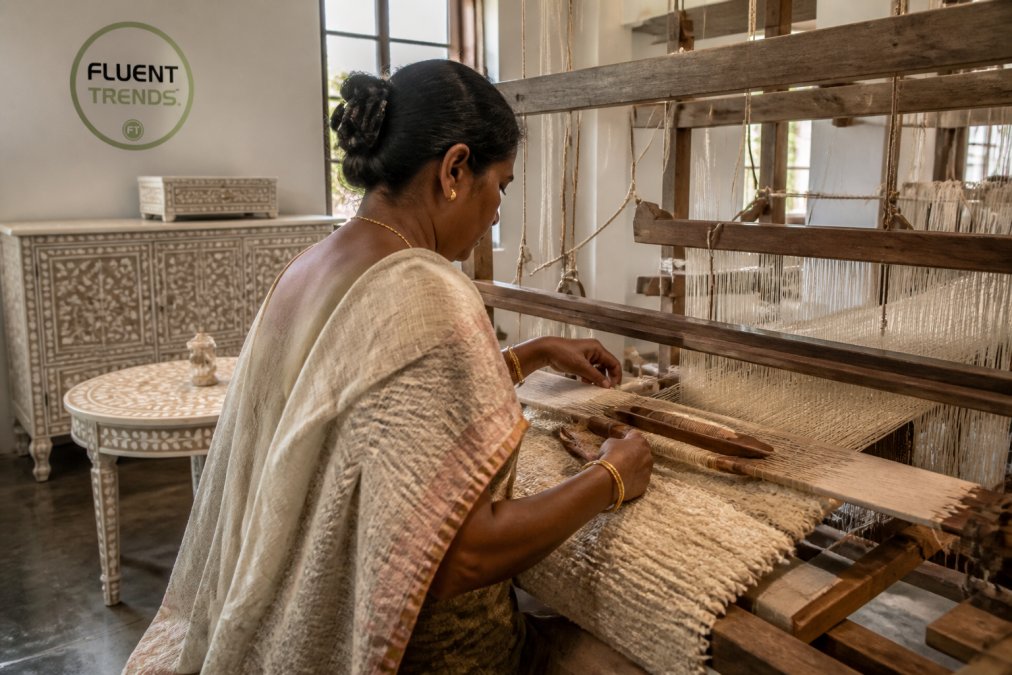
Fluent Trends offers a curated selection of luxury furniture, high-end home decor, and fashion designed to elevate your living space and personal style. Our Artisan Collection features ethically made, handcrafted goods that support women-owned businesses and global makers through sustainable practices. By choosing our pieces, you invest in authentic craftsmanship and intentional living while enjoying unique, high-quality items built for everyday beauty. Discover a collection where every piece tells a story and helps preserve cultural heritage. Consider our Crazy Parrot Earrings, a beautiful example of handcrafted jewelry made by talented women artisans from underserved communities in Kenya. Or, for a touch of luxury, the Canyon Hand Embroidered Hand Woven Merino Silk Soft Scarf, ethically and responsibly handwoven by artisans in India.

The test is simple. Does the brand tell you who made it, and will the piece outlive the trend?
Direct-to-Consumer Models That Cut Out Exploitation
Every middleman takes a cut. Direct-to-consumer models shrink that chain and send more money to the maker.
Fewer hands means fewer places for wages to leak. It also means clearer supply chain transparency.
When you buy direct, ask where the savings go. The best brands route them to the artisan, not the margin.
Digital Literacy and E-Commerce: The Missing Support
Most shoppers never think about this. Many women artisans have world-class skills and no way to sell online. Digital literacy is the real bottleneck.
A weaver who can't photograph her work or manage a listing stays dependent on middlemen. That's where economic independence stalls.
Here's what actually helps:
- Training in product photography and listing basics
- Access to e-commerce platforms and payment tools
- Help with shipping, customs, and returns
- Mentorship on pricing and small business finance
When you buy from a brand that invests in this, you fund capacity building, not just a product. That's how supporting women owned artisans turns into a lasting income.
Post-Purchase Engagement: What Happens After You Buy
The transaction isn't the finish line. Post-purchase engagement keeps money and attention flowing to makers over time. Almost no guide covers this part, and it is where the real leverage sits.
Think about what happens after checkout. The maker has your money once. What she needs is a reason to count on you again.
Here is a simple 30-day follow-through plan.
- Day one: save the maker's name and workshop location
- Week one: leave a detailed review with photos
- Week two: share the piece on social media and tag the brand
- Week three: send direct feedback on fit, finish, or packaging
- Week four: decide if you will buy again next season
That loop matters. Repeat buyers give a workshop predictable income, and predictable income is what lets a maker plan.
Amplify the Maker, Not Just the Product
A good review helps the next shopper. A story helps the maker. Share the person behind the piece, not just the object.
Post the workshop name. Mention the technique. If you bought bone inlay furniture, explain what bone inlay actually is. Most people have never heard of it.
Tag the brand and the maker if she has her own account. Many women artisans run small social pages that live or die on shares.
Referrals matter too. Tell one friend who is furnishing a home. Tell your interior designer. One warm introduction beats a hundred cold impressions.
Why Repeat Buying Beats Trend Chasing
Fast furniture and fast decor follow trends. Artisan work follows seasons and skill. Those are different rhythms.
Buying again next season instead of chasing a new trend does three things. It gives the maker a forecast. It reduces waste from constant replacement. It deepens your own relationship with the piece.
This is where durability and ethics meet. A chair built to last twenty years wastes far less than one replaced every three. The same logic applies to bedding, decor, and anything you use daily.
Brands that value this keep you close. They send care guides, restock alerts, and updates on the artisan behind your piece.
Policy and Systemic Advocacy: Beyond Individual Shopping
Individual choices matter, but systems set the rules. Policy shapes wages, tariffs, and protections for small producers.
You don't need to lobby to help. You can:
- Support organizations that push for fair trade rules
- Ask brands to publish sourcing and audit data
- Back small business grants and craft-training programs
- Vote for leaders who fund artisan and women's enterprise
Conscious consumerism is a start. Policy is what makes it stick.
You can also check guidance from the U.S. Federal Trade Commission on green claims. It explains how "green" and "sustainable" marketing must be backed up.
Building Long-Term Relationships With Artisan Communities
One purchase is a transaction. A relationship is a livelihood. The goal is repeat, reliable support.
Here's how to build it:
- Buy from the same makers season after season
- Pay full price instead of waiting for deep discounts
- Share feedback that helps them improve
- Introduce their work to friends and your interior designer
This is what a global network of conscious buyers looks like in practice. Small, steady, and personal.
A United Nations report on women's economic empowerment notes that financial inclusion is central to lifting women out of poverty. Your repeat order is part of that push.
Frequently Asked Questions
What do female entrepreneurs in artisan communities struggle with most?
Access to market is the biggest hurdle. Many talented women artisans lack the digital literacy to sell online or connect with international buyers. They often depend on middlemen who take large cuts. Others struggle with financing because traditional banks do not recognize craft businesses as creditworthy. Building e-commerce skills and direct-to-consumer channels helps these women reach buyers who value handcrafted goods and are willing to pay fair prices.
How can I verify if a brand truly supports women artisans?
Look for specific details about maker partnerships. Ethical home decor brands name their artisan groups and explain payment structures. Check for third-party certifications like Fair Trade or B Corp status. Read the brand's sourcing page carefully. Vague language about empowering women without specifics is a red flag. You can also search for the artisan cooperative online to confirm the relationship exists.
What are the benefits of buying handmade artisan goods?
Your purchase supports a real person, not a factory. Handmade goods often use sustainably sourced materials and traditional techniques that produce less waste. You get a unique piece with cultural significance, not a mass-produced item. When you buy from women-owned businesses, the money tends to stay in the community and fund education and healthcare. The quality also tends to be higher because artisans take pride in their work.
How does supporting women artisans impact local communities?
Women reinvest up to 90 percent of their income into their families and communities, according to research from the World Bank. That means school fees get paid, nutrition improves, and local businesses gain customers. The multiplier effect is real. When one woman earns a living wage from her craft, she hires helpers, trains apprentices, and preserves skills that would otherwise disappear. Your purchase creates a ripple that extends far beyond one household.
Supporting women owned artisans takes more than good intentions. It takes vetting, patience, and repeat buying. At Fluent Trends, we make that easier with an Artisan Collection built on fair wages, sustainably sourced materials, and pieces made to last. You'll find handwoven scarves, handcrafted bags, and durable furniture designed for daily life, all supporting women-owned businesses and global makers. Get started with Fluent Trends and build a home where every piece tells a story.