

How to Tell If Furniture Is Durable: 2026 Guide
Yuatinia LeakTable of Contents
- Start With the Frame: Durable Furniture Materials for Daily Use
- How to Identify High Quality Wood Furniture in 60 Seconds
- Joinery Tells the Truth: Dovetail, Mortise and Tenon, and What to Avoid
- Hardware and Mechanical Durability: The Parts Nobody Inspects
- Finish Durability and Protective Coatings: What Protects the Grain
- Upholstery and Fabric Durability Testing: Rub Counts and Weave Quality
- Spot the Warning Signs: Wear and Tear, Dents, Scratches, and Warping
- Maintenance for Longevity: Keep Load-Bearing Pieces Strong for Decades
- Conclusion: Buy Once, Live With It for Decades
- Frequently Asked Questions
Last Updated: September 25, 2026
Start With the Frame: Durable Furniture Materials for Daily Use
You can learn how to tell if furniture is durable by checking one thing first: the frame. A solid frame carries weight for decades. A weak one fails in a few years.
Most shoppers look at color and shape. That's backwards.
The frame decides everything. Wood type, grain, and joinery tell you more than any product photo ever will. Below, we'll show you how to spot a piece built to last.
Solid Wood vs. Engineered Materials: What Lasts
Solid wood is cut from a single log and keeps its natural grain throughout. Engineered materials mix wood fibers with adhesives, then press them into sheets.
Solid wood wins on lifespan. It can be sanded, refinished, and repaired for decades. Engineered boards chip at the edges and can't be sanded down.

But engineered wood isn't automatically bad. Quality plywood uses layered sheets for real strength. Cheap particle board crumbles when moisture hits it.
Here's the practical rule:
- Solid wood: best for load-bearing pieces like dressers and tables
- Quality plywood: fine for cabinet backs and drawer bottoms
- Particle board: avoid for anything holding real weight
Look at the edges. Solid wood shows continuous grain. Engineered boards show a thin veneer over a rough core.
Grain Density and Why It Predicts Longevity
Grain density is the measure of how tightly packed the wood fibers are. Dense grain resists dents, scratches, and warping far better than loose grain.
Hardwoods like mahogany and sheesham pack tight fibers. Softwoods stay lighter and dent more easily. That's why a sheesham wood chest feels heavier than a pine one of the same size.
Weight is your shortcut here. Pick up a drawer. If it feels substantial, the grain is likely dense.
Dense grain also holds up to humidity changes. Loose-grain wood swells and shrinks with the seasons. Over time, that movement cracks joints and warps panels.
How to Identify High Quality Wood Furniture in 60 Seconds
You can identify high quality wood furniture in under a minute with three quick tests. No tools needed. Just your hands, your eyes, and a little pressure.
U.S. Forest Service wood handbook notes that wood density and grain structure directly affect strength and wear resistance. That science backs up what your hands already feel.
The Knock Test, the Grain Test, and the Weight Test
The knock test. Rap your knuckles on the surface. Solid wood gives a low, dull thud. Engineered board sounds hollow and thin.
The grain test. Follow the grain across a seam. On solid wood, it flows continuously. On veneer, the pattern breaks or repeats oddly.
The weight test. Lift one corner. Heavy pieces usually mean dense wood and thick construction. Light pieces often hide hollow cores.
Run all three tests together. One alone can mislead you. Together, they rarely do.
Joinery Tells the Truth: Dovetail, Mortise and Tenon, and What to Avoid
Joinery is how the parts connect, and it's the clearest durability signal on any piece. Good joints lock wood together mechanically. Weak joints rely on glue and staples alone.
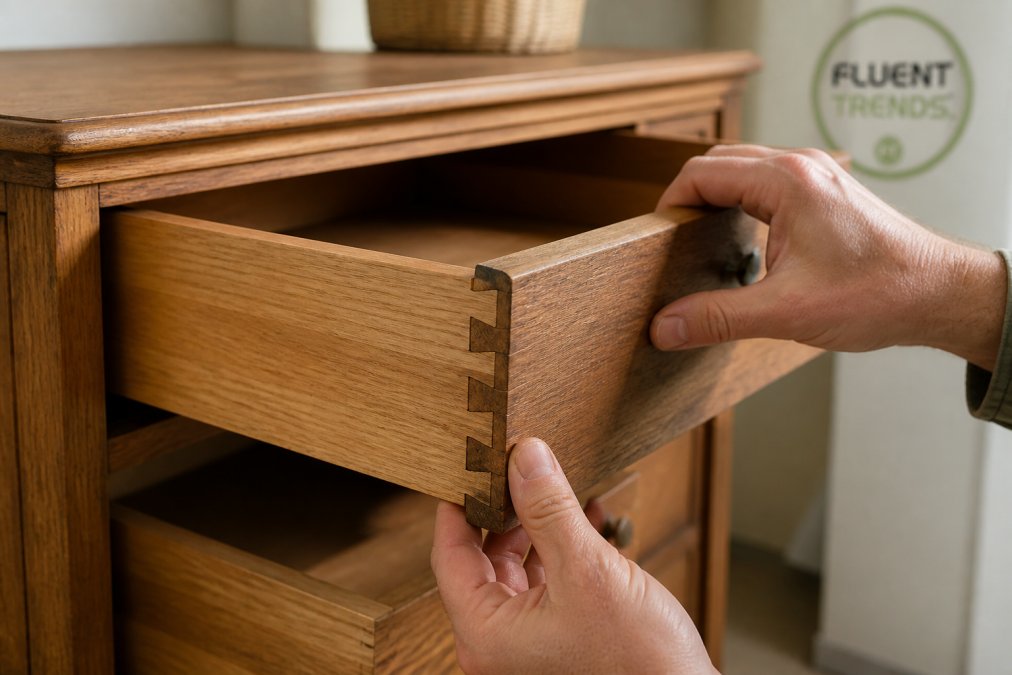
Dovetail joints interlock like puzzle pieces. They resist pulling apart even when the glue fails. You'll see them on the corners of well-made drawers.
Mortise and tenon joins a fitted tab into a matching slot. It's the classic frame joint and handles heavy loads well.
Now the warning signs:
- Staples or nails holding a drawer front
- Visible glue squeeze-out at joints
- Screws driven straight into end grain
- Wobbly joints that shift when you push
Pull a drawer out and look at its back corners. Dovetails mean the maker expected daily use for years.
Hardware and Mechanical Durability: The Parts Nobody Inspects
Here is a hard truth about furniture. The wood usually outlives the hardware. Drawer slides, hinges, and fasteners take the most stress every single day. Cheap versions wear out in two or three years. Good ones keep working for decades.
So when you are learning how to tell if furniture is durable, spend real time on the moving parts. That is where the truth lives.
What to Look For in Drawer Glides
Drawer glides come in three main types. Each one tells you something different about lifespan.
- Roller glides: nylon wheels rolling on a metal track. They work fine for light drawers. They sag under heavy loads over time.
- Ball bearing glides: steel balls in a metal race. They carry weight smoothly and resist sagging. Look for full extension so you can reach the back.
- Undermount glides: hidden under the drawer. They look cleaner and often include soft-close. They cost more but last longer.
Ball bearing glides rated for 75 pounds or more handle daily use without complaint. Lighter ratings belong in bedrooms, not kitchens.
Hinges, Fasteners, and the Weight They Carry
Hinges fail quietly. A cabinet door that droops after a year usually has a weak hinge, not a weak frame. Look for steel hinges with adjustable screws. That adjustment lets you tighten the door as seasons change.
Fasteners matter too. Screws driven into end grain pull out fast. Bolts with washers and lock nuts hold tight through years of movement. If you see staples holding a leg or a drawer front, walk away.
The 60-Second Hardware Test
You can test every moving part before you buy. Here is how.
- Open and close each drawer fully. Listen for grinding or scraping.
- Push down hard on an open drawer. It should not sag or flex.
- Wiggle every knob and pull. Loose hardware means loose construction.
- Check that doors close flush without lifting or forcing.
Smooth, quiet movement signals quality metal. Noise means cheap parts.
Why This Matters for Built to Last Furniture
Our Stanford Ribbed Six-Drawer Leather Dresser uses a Hettich German-engineered soft-close mechanism on all six drawers. That is the kind of hardware built for years of daily use. The same standard applies across our durable furniture for daily use collection.

When you compare pieces, ask one question. What is the cycle rating on these glides? If nobody can answer, keep looking. A drawer slide rated for 50,000 cycles or more is a strong signal. That number means the maker tested it for real life.
Hardware is the first thing to fail and the easiest thing to overlook. Check it first, and you will avoid the most common furniture regret.
Finish Durability and Protective Coatings: What Protects the Grain
A finish is the protective layer between your furniture and daily life. It blocks moisture, stains, and scratches from reaching the grain underneath.
Penetrating oil soaks into the wood and hardens from within. It leaves a natural lustre and makes touch-ups easy. Film finishes like lacquer sit on top and offer stronger stain resistance.
Both work. The question is maintenance. Oil needs reapplication every year or two. Film finishes last longer but chip visibly when damaged.
Run a fingernail lightly across a hidden spot. A finish that dents or peels easily won't survive a busy household.
Non-toxic finishes matter too, especially in bedrooms. Look for low-VOC or water-based options when you can.
Upholstery and Fabric Durability Testing: Rub Counts and Weave Quality
Fabric durability is where most guides get vague. They say look for quality fabric and move on. That helps nobody. Here is the real test.
Rub Counts: The Number That Predicts Wear
The Wyzenbeek test measures how many abrasion cycles a fabric survives before wearing through. The number is called the rub count. Higher counts mean longer life.
Here is what the numbers generally mean:
| Rub Count | Durability Level | Best For |
|---|---|---|
| Under 15,000 | Light use | Decorative pillows |
| 15,000-30,000 | Standard use | Living room chairs |
| 30,000+ | Heavy use | Family sofas |
Ask one question before buying. What is the rub count? If nobody can tell you, walk away.
Fabric Composition and Weave Quality
Rub count is only half the story. What the fabric is made of matters just as much.
- Cotton and linen: breathable and comfortable. They wear faster in high-traffic spots.
- Wool: naturally resilient and resists pilling. It costs more but lasts.
- Synthetic blends: polyester and nylon add strength. They resist stains and stretching.
- Boucle furniture: the looped texture hides wear well in low-traffic spots. It is not the best choice for a family sofa.
Tight weaves beat loose ones every time. A tight weave keeps the yarn from pulling and snagging. Run your hand across the fabric. If it feels loose or thin, it will not hold up.
The Gap Most Guides Miss: Hypoallergenic and Sustainable Fabrics
Most durability guides ignore what is inside the fabric. That is a mistake. If you have allergies or care about indoor air, the fill and finish matter as much as the weave.
Look for hypoallergenic fills that resist dust mites and mold. Milk and casein fiber is a lesser-known option. It comes from milk protein and feels soft like silk. It breathes well and resists bacteria naturally.
Organic cotton is another strong choice. It skips the harsh chemicals used in conventional cotton. That means fewer irritants in your home.
Check for OEKO-Tex certification. That label means the fabric passed testing for harmful substances. It is one of the few labels you can trust without reading a chemistry report.
Portugal-woven bedding and upholstery fabrics have a strong reputation for tight weaves and long life. The mills there have been making textiles for generations. If you see that origin on a label, it is a good sign.
How to Test Fabric in the Store
You can judge fabric in under a minute. Here is how.
- Rub the fabric with your thumb. If fibers pill or shed, it will not last.
- Pull gently at a seam. A tight weave holds. A loose one gaps.
- Check the cushion core. High-resilience foam holds its shape. Cheap foam flattens in months.
- Ask about the fill. Down and down blends feel luxurious but need fluffing. Foam and fiber blends hold shape better.
Why This Matters for Built to Last Furniture
Durability is not just about the frame. It is about every layer. A strong frame with weak fabric is still a piece you replace in a few years.
Our collection includes boucle furniture and bone inlay furniture made with sustainably sourced materials. Every piece is built to last, from the frame to the fabric.
When you shop, ask about rub count, fiber content, and certifications. Those three answers tell you more than any product photo ever will.
Spot the Warning Signs: Wear and Tear, Dents, Scratches, and Warping
Wear and tear shows up in predictable places. Knowing where to look helps you judge a floor model or a piece you already own.
Check these spots first:
- Drawer fronts: look for uneven gaps and rubbing marks
- Leg bases: dents and splitting signal weak wood
- Table edges: scratches reveal thin finish
- Panels: warping means moisture got in
Warping is the one to take seriously. A warped panel means the wood absorbed moisture and moved. It rarely reverses.
Small scratches and dents are normal over time. Structural issues like loose joints and warping are not.
Maintenance for Longevity: Keep Load-Bearing Pieces Strong for Decades
Maintenance keeps structural integrity intact, and it takes less effort than most people think. A few habits add years to any piece.
- Dust weekly with a soft cloth
- Keep furniture out of direct sunlight
- Use coasters and felt pads under heavy items
- Re-oil wood surfaces once a year
- Tighten hardware every six months
- Control indoor humidity where you can
For upholstery, vacuum fabric monthly and rotate cushions so they wear evenly. For leather, wipe with a dry cloth and keep it away from radiators.
Small habits, big payoff. A well-kept dresser can last for decades.
Conclusion: Buy Once, Live With It for Decades
Durable furniture rewards you for decades, and the checks take minutes. Frame, grain, joinery, hardware, finish, and fabric tell you everything you need to know.
At Fluent Trends, we built our durable furniture for daily use collection around exactly these standards. Our Solid Wood Mahogany Chest and Double Dresser uses dovetail joinery and ball bearing glides. The Harvard Quilted Three-Drawer Leather Chest pairs a handcrafted hardwood frame with Hettich soft-close drawers.

Every piece is sustainably sourced and made to be lived with, not replaced. Shop Now and invest in furniture that earns its place for decades.
Frequently Asked Questions
How long should durable furniture last?
Well-made durable furniture lasts 15 to 30 years or more with proper care. Solid wood pieces with dovetail joinery and quality hardware often outlast engineered alternatives by decades. Daily-use items like dressers and dining tables take the hardest hits, so prioritize construction quality there. Look for solid wood frames, tight joinery, and metal glides. With basic maintenance, these pieces hold up through moves, kids, and everyday wear.
Which furniture materials resist daily wear best?
Solid hardwoods like teak, mahogany, and sheesham resist dents and scratches better than softwoods or particleboard. Dense grain structure handles knocks and moisture swings without warping. For upholstery, tight weaves and high rub counts outperform loose fabrics. Boucle and leather wear well when backed by quality frames. Sustainably sourced materials often match or beat conventional options because slower growing conditions produce tighter grain and greater tensile strength.
Does price always correlate with durability?
No. Price reflects brand, marketing, and design as much as construction. A $400 dresser with dovetail joints can outlast a $2,000 piece held together with staples and glue. Check joinery, hardware, and material density before trusting a price tag. Budget-friendly durability indicators include solid wood drawer sides, metal glides, and weight. Heavier pieces usually signal denser materials and better structural integrity, regardless of what the label claims.
How can I tell if wood furniture is solid or fake?
Look at the grain on edges and drawer fronts. Solid wood shows continuous grain that wraps around corners. Veneer and plywood show repeating patterns or a thin layer over a different core. Check undersides and back panels for particleboard texture. Weight matters too: solid wood feels noticeably heavier. A quick knock test reveals a dull thud for solid wood versus a hollow sound for engineered materials. These checks take under a minute.