

How to Verify Ethical Furniture Brands: A 2026 Guide
Yuatinia LeakTable of Contents
- Why Verifying Ethical Furniture Brands Matters in 2026
- What Makes Furniture Ethical? A Consumer's Framework
- Sustainable Furniture Certifications That Actually Matter
- How to Spot Greenwashing in Furniture Marketing
- Step-by-Step: How to Verify Ethical Furniture Brands
- Lifecycle Analysis for Consumers: From Cradle to Couch
- Second-Hand and Circular Economy Verification
- Build a Verification File for the Exact Piece
- Questions to Send Before You Place an Order
- Worked Example: Comparing Two Furniture Options
- Keep Verification Useful After Delivery
- Conclusion
- Frequently Asked Questions
Last Updated: September 14, 2026
Why Verifying Ethical Furniture Brands Matters in 2026
Most shoppers assume a "sustainable" label means something. Often, it means almost nothing. This guide shows you how to verify ethical furniture brands using a repeatable method. You will learn to read certifications, trace materials, and catch vague claims before you spend.
The stakes keep rising. Furniture production consumes enormous volumes of timber, water, and energy, and discarded pieces clog landfills for decades (the EPA). Many pieces are built with synthetic materials and finishes that release chemical emissions into your home for years.
Conscious consumerism has grown, and marketing language has grown faster. Greenwashing is now the default, not the exception. Below, we break down exactly how to separate genuine ethical sourcing from a well-designed logo.
What Makes Furniture Ethical? A Consumer's Framework
Ethical furniture is furniture produced with verified responsibility across materials, labor, and lifecycle. Those three pillars form the framework this guide uses throughout. Miss one, and the piece is not truly ethical, no matter how it is marketed.
Materials, Labor, and Lifecycle: The Three Pillars
Materials covers what the piece is made from and where it came from. Look for reclaimed wood, organic fibers, and non-toxic, low-VOC finishes. Material provenance matters as much as the material itself.
Labor covers who made the piece and under what conditions. Fair wages, safe facilities, and third-party audit records separate real ethical sourcing from a supplier pledge.
Lifecycle covers what happens after purchase. Durability, repairability, and end-of-life options determine the true environmental impact of any piece.
| Pillar | What to Check | Red Flag |
|---|---|---|
| Materials | Provenance, low-VOC finishes, renewable resources | "Eco-friendly" with no material named |
| Labor | Fair wages, third-party audit, labor standards | No factory or artisan information |
| Lifecycle | Durability, repairability, take-back options | No repair or end-of-life policy |
Sustainable Furniture Certifications That Actually Matter
A sustainable furniture certification is a third-party audit of a company's environmental or labor claims against a published standard. Three things must exist for a certification to be real. There must be an independent auditor. There must be a public standard. There must be a searchable registry. A logo on a product page has none of those.
Most shoppers stop at the logo. That is the mistake. A certification is a starting point for verification, not a substitute for it. Below is how to read the four programs you will encounter most often, and where each one stops short.
FSC: Forest Stewardship Council
FSC certification confirms that wood or wood fiber came from a forest managed to specific environmental and social standards. The program operates through independent certifying bodies, and every certificate carries a unique code. You can look up that code in the FSC certificate database before you buy.
There are three FSC labels, and they mean different things. FSC 100 percent means all wood in the product is certified. FSC Mix means a blend of certified, recycled, and controlled wood. FSC Recycled means the material is reclaimed. A brand that says "FSC-certified" without naming the label is telling you less.
B-Corp: Company-Level, Not Product-Level
B-Corp certification is issued by B Lab and measures a company's overall social and environmental performance, accountability, and transparency. It is a company-level certification. It does not certify a specific sofa or table.
This distinction matters. A B-Corp can still sell a product made with questionable materials. The certification tells you the company meets a baseline for governance and impact. It does not tell you the piece in front of you is clean. Treat it as one signal.
Fair Trade: Labor Verification
Fair Trade certification focuses on wages, working conditions, and producer empowerment, usually verified through independent inspection. For furniture, this is the certification that speaks most directly to the labor pillar.
Coverage is uneven. Fair Trade certification is more common in textiles, rugs, and small artisan goods than in large upholstered pieces. If a brand claims fair labor but carries no Fair Trade mark, ask what third-party audit backs the claim.
GREENGUARD: Indoor Air Quality
GREENGUARD certification measures chemical emissions from finished products, including volatile organic compounds (UL GREENGUARD Certification). GREENGUARD Gold applies stricter limits and is often specified for schools and healthcare settings.
This certification addresses what the piece off-gasses in your home. It does not address forestry, labor, or end-of-life. A GREENGUARD Gold label on a piece made with unsustainable wood is still a piece made with unsustainable wood.
How to Audit Any Certification Claim
Run every certification claim through the same four steps.
- Identify the certifying body. Is it a recognized third party or an in-house program?
- Find the standard. Is it published and publicly readable?
- Search the registry. Does the company or product actually appear?
- Check the scope. Does the certification cover the whole piece or one component?
Certifications are evidence. They are not proof. The brands worth your money will hand you the certificate number.
How to Spot Greenwashing in Furniture Marketing
Greenwashing in furniture marketing is the practice of making environmental claims that sound meaningful but carry no verifiable standard behind them. The tell is almost always vagueness. Specific claims can be checked; vague ones cannot.
Words like "natural," "eco-conscious," and "planet-friendly" have no legal definition in furniture marketing. They cost nothing to print. A brand that has done the work will name the standard, the certifier, and the certificate number.
The Greenwashing Detection Checklist
Run every claim through these questions before you trust it:
- Does the claim name a specific certification, or just a feeling?
- Can you look up the certificate number in a public registry?
- Does the brand disclose its factories or artisan partners by name or region?
- Is there a published material list, or only adjectives?
- Does the company publish any third-party audit results?
- Are labor standards mentioned at all, or only environmental ones?
- Does the sustainability page link to evidence, or only to more marketing?
Two or more unchecked boxes means the claim needs proof.
Step-by-Step: How to Verify Ethical Furniture Brands
Verification is a sequence, not a vibe check. Work through the three steps below in order. Each one either confirms the previous claim or exposes it.
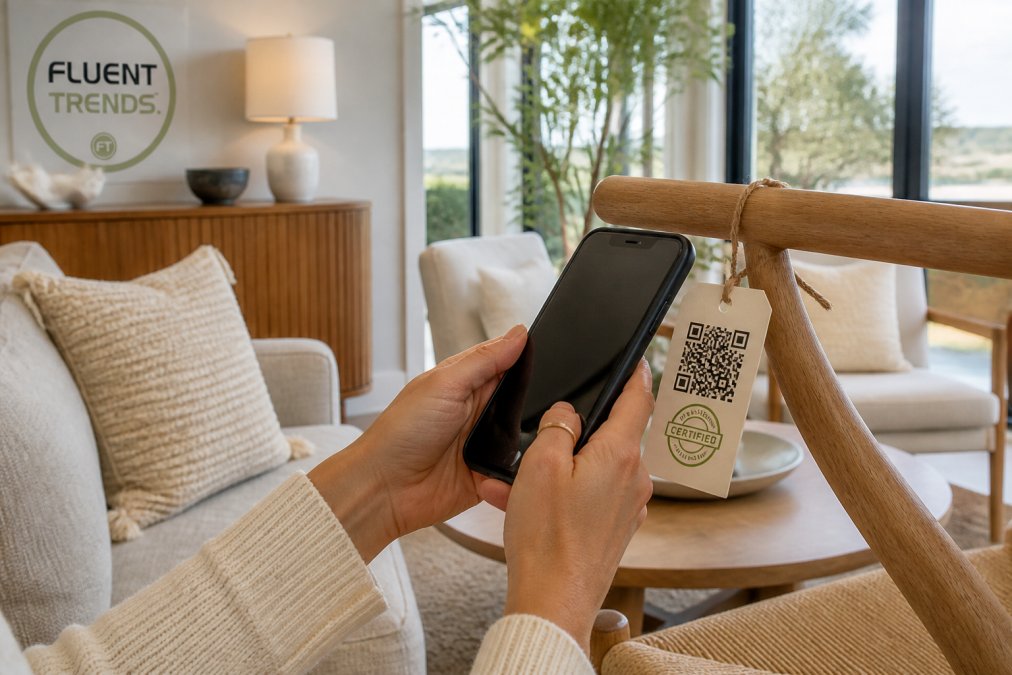
Step 1: Audit the Supply Chain and Material Provenance
Start with the materials page. A transparent brand names its suppliers, regions, and specific materials. Look for terms like reclaimed wood, organic cotton, wool, jute, and linen, and cross-check any forestry claim against the FSC database.
If the brand cannot tell you where the wood came from, assume it does not know.
Step 2: Research Labor Standards and Third-Party Audits
Next, look for labor transparency. Ethical brands name their artisan partners or factories and describe fair wage practices. Third-party audits carry more weight than self-reported pledges. A common mistake is accepting "handmade" as proof of fair labor. Handmade describes the method, not the working conditions.
Step 3: Verify Regional and Local Sourcing Claims
Finally, test any local or regional sourcing claim. "Locally sourced" is easy to print and hard to prove. Ask for the specific region, the supplier, and how the material traveled. Regional sourcing genuinely reduces carbon footprint, but only when it is real and documented.
Lifecycle Analysis for Consumers: From Cradle to Couch
Lifecycle analysis for consumers means judging a piece from raw material extraction through production, delivery, use, and disposal. Full LCA studies use specialized software and years of data. You do not need either. You need a rough scoring method.
Most guides stop at the phrase "cradle to grave" and move on. That leaves you with a concept and no tool. Here is a consumer-grade version.
The Five-Stage Consumer LCA
Score each stage from one to five. One means poor transparency or poor performance. Five means documented and strong. Add the five scores for a total.
Stage one: Material extraction. What is the piece made from, and where did the material originate? Reclaimed wood, recycled metal, and organic fibers score high. Virgin tropical hardwoods with no provenance score low.
Stage two: Production. Who made it, and under what conditions? Named factories, published audit results, and fair wage disclosures score high. Silence scores low.
Stage three: Transport. How far did the piece travel, and by what method? Regional sourcing by ground freight scores high. Overseas shipping of a heavy piece scores lower.
Stage four: Use phase. What does the piece emit or consume while you own it? Low-VOC finishes and durable construction score high. Off-gassing synthetics and finishes that fail within a few years score low.
Stage five: End of life. What happens when you are done with it? Take-back programs, repairability, and resale value score high. Glued-and-stapled construction destined for landfill scores low.
Reading Your Score
A piece scoring twenty or above is a strong candidate. Fifteen to nineteen is average and worth a second look. Below fifteen, the piece is likely marketed better than it is made.
The score is not a verdict. It is a comparison tool. Run two sofas through the same five stages and the gap becomes obvious.
Why Durability Outweighs Every Other Stage
Durability is the most underrated sustainability metric in furniture. A piece that lasts thirty years outperforms a green piece replaced every five. The math is not close.
Consider two chairs. One is built from reclaimed wood with a low-VOC finish and lasts thirty years. The other uses certified wood but is glued and stapled, and it fails in five. Over three decades you buy six of the second chair. The first chair wins on materials, transport, and waste, even if its wood was not certified.
This is why the use phase carries the most weight in practice. A long life amortizes every earlier impact. Slow furniture is not a trend. It is the math.
Second-Hand and Circular Economy Verification
The circular economy extends a piece's life through resale, repair, and refurbishment, which keeps materials out of landfills. Buying second-hand is one of the most effective sustainability choices available to you.
Verification still applies. Check for structural integrity, ask about the original materials and finishes, and confirm whether the piece can be repaired locally. For new purchases, look for brands with take-back or refurbishment programs. A brand that plans for its furniture's second life has thought past the sale.
Build a Verification File for the Exact Piece
A useful verification file connects every important claim to the furniture you intend to order. Start with the product name, model number, size, upholstery option, and finish shown on your quotation. Save the product page alongside those details so you can distinguish a general collection statement from a specific promise.
Next, create a simple record containing the claim, its supporting document, and the question it answers. A timber sourcing document belongs beside the wood claim rather than the upholstery description. A care guide belongs beside your repair and maintenance questions rather than a claim about working conditions.
Give each item one of three labels: confirmed, awaiting clarification, or unsupported by the information received. These labels describe your current evidence, not a final judgment about the company's overall ethics. Keep unresolved questions visible until you have enough information to make a comfortable decision.
Match Certificates to the Purchase
When a seller supplies an FSC code, use the official FSC public certificate search to investigate the record. FSC provides searches using license codes, certificate codes, and organization names, with further certificate details available. Compare the named organization with the supplier identified in the documents you received.
If those names differ, ask the seller to explain the relationship and the claim attached to your purchase. A supplier's certificate should not be treated as a complete explanation of an individual product's materials. Request a clear written account of which parts and options the seller's statement covers.
For an emissions claim, compare the exact model with the certification information supplied by the retailer. UL GREENGUARD certification concerns low chemical emissions, and UL provides access to its SPOT product database. Keep that evidence associated with emissions rather than using it to answer unrelated questions about wages or wood sourcing.
Record Uncertainty Without Turning It Into a Verdict
Sometimes a retailer cannot immediately provide every document, particularly when another supplier holds the relevant information. Record what remains unknown and request an answer that addresses the specific missing detail. A delayed response and a contradictory response deserve different treatment in your notes.
For example, an unanswered question about a fabric blend leaves that composition unconfirmed for your purchase. It does not establish that the material is harmful or that workers were treated unfairly. Separate each issue carefully so your final decision reflects the evidence available for that particular piece.
Questions to Send Before You Place an Order
A focused inquiry is more useful than asking whether a brand considers itself sustainable. Begin by identifying the exact piece and the claims that matter most to your decision. You can adapt the following questions into a short message, selecting those relevant to its materials and construction.
- Please confirm the frame, surface, upholstery, filling, and finish materials for the specific option I am considering.
- Which production location or supplier is responsible for this piece, and what information can you share about its manufacture?
- Which certifications apply to this model, and can you provide their codes or links to the relevant records?
- What evidence supports the labor claims made on the product page, and when was that evidence last reviewed?
- Can individual components be repaired or replaced, and how would I request those parts after purchase?
- Where can I read the care instructions, warranty conditions, and return arrangements before placing my order?
Keep the request proportionate rather than sending every possible question to every seller immediately. For a wooden side table, begin with wood sourcing, construction, finish, and practical repair options. For an upholstered sofa, add questions about the frame, filling, covering, and the scope of any emissions claim.
Review the reply beside your original questions and mark where each answer can be found. A link to a general sustainability page may provide background without resolving the model-specific point you raised. Follow up with one precise question and retain both messages in your verification file.
You do not need access to workers' personal details to ask meaningful questions about labor practices. Request the applicable standard, the scope of any assessment, and an explanation of how concerns are addressed. Evaluate what the company can substantiate without treating a polished response as evidence by itself.
Worked Example: Comparing Two Furniture Options
Consider two hypothetical wooden coffee tables that fit the same room and offer similar dimensions. These examples illustrate a review process and do not describe Fluent Trends products or another named brand. Begin with the same questions for both options so presentation quality does not determine your conclusion.
The first seller describes its table as natural and responsibly made, but provides no material breakdown. Its product photography is detailed, while the sourcing and repair information remains difficult to locate. Record the appealing design separately from the claims that still require supporting information.
The second seller names the wood species, identifies the finish, and supplies a component replacement guide. It also explains which sourcing document relates to the table, but offers little information about labor assessments. Record the stronger material documentation while keeping the labor question open.
The second option currently provides more usable evidence for several questions, but neither is fully verified through this exercise. Ask the first seller for its missing material information and the second for its labor evidence. Then compare the answers alongside comfort, dimensions, maintenance, and the other practical requirements of your household.
A meaningful decision may still involve uncertainty, especially when two pieces satisfy different priorities. Write down which requirement is essential, which is desirable, and which unanswered question would change your choice. This keeps the decision explicit instead of allowing a single attractive label to settle every issue.
Use the Scorecard as a Prompt for Further Questions
The earlier five-stage scorecard is an informal shopping aid, not a measured lifecycle assessment or certification. Its numbers help organize questions, but they do not calculate emissions or establish working conditions. Treat a high score as a reason to examine the supporting records rather than as an independent endorsement.
Avoid giving a material an automatic advantage simply because it sounds familiar, local, or natural. Ask how the specific piece was produced, transported, used, and maintained before drawing a broad conclusion. Where comparable data is unavailable, label that limitation instead of supplying an assumed environmental ranking.
Keep Verification Useful After Delivery
When the piece arrives, compare its labels, model information, finish, and included documents with your order record. Photograph any discrepancy and contact the retailer through its stated process while retaining the original correspondence. Follow the published delivery and return instructions before discarding packaging that may be needed for a return.
Store the care guide and component information with your receipt so they remain available during ownership. If you later repair or sell the piece, add those records to the same folder. A clear account of what you bought and how you maintained it gives the next decision a stronger foundation.
Verification should ultimately support a considered home, not become a collection of logos detached from everyday use. Choose pieces whose dimensions, function, and care requirements suit your life alongside the evidence behind their claims. That combination turns careful research into a purchase you can understand and maintain.
Conclusion
Verifying ethical furniture brands takes an hour of research, and it changes what your home is actually made of. Most shoppers never do it. The ones who do end up with pieces that last, makers who are paid fairly, and rooms that mean something.
At Fluent Trends, every piece in our Artisan Collection is built for exactly that standard. Our ethically made and sustainably sourced products support women-owned businesses and global makers. We prioritize eco-friendly materials like organic cotton, wool, jute, and linen, and we promote fair wages and the preservation of craft heritage. The Artemis 4x6 Picture Frame, hand-carved from ethically sourced bone in a fair trade workshop, shows what verified craftsmanship looks like in practice.

Shop Now and furnish your home with pieces whose story you can trace.
Frequently Asked Questions
What certifications should I look for in ethical furniture?
Look for FSC certification for wood, B-Corp for overall social and environmental performance, Fair Trade for labor practices, and GREENGUARD Gold for low chemical emissions. These third-party audits confirm a brand meets specific standards. A brand with multiple certifications is more likely to be genuinely ethical.
How do I know if a furniture brand is truly sustainable?
Check for transparency in their supply chain. Ethical furniture brands publish detailed information about their materials, factories, and labor practices. Look for specific claims like 'FSC-certified reclaimed wood' rather than vague terms like 'eco-friendly.' Verify claims through third-party certifications and independent reviews.
What is the difference between eco-friendly and ethical furniture?
Eco-friendly furniture focuses on environmental impact, such as using sustainable materials and low-VOC finishes. Ethical furniture encompasses both environmental and social responsibility, including fair wages, safe working conditions, and community support. A truly ethical brand addresses both the planet and the people behind the product.
How can I research a furniture company's labor practices?
Start by checking their website for a code of conduct or supplier list. Look for third-party audits like Fair Trade or SA8000. Search for news articles or reports about labor disputes. Contact the brand directly and ask specific questions about their factories and worker wages. Transparency is a key indicator of ethical practices.