

How to Verify Ethical Home Decor: 2026 Guide
Yuatinia LeakTable of Contents
- Step 1: Know What Ethical Home Decor Actually Means
- Step 2: Check for Sustainable Home Decor Certifications That Matter
- Step 3: Learn How to Spot Greenwashing in Furniture and Decor
- Step 4: Evaluate Materials and Natural Fibers
- Step 5: Trace the Supply Chain and Labor Standards
- Step 6: Assess Durability and Lifecycle
- Step 7: Ask Brands the Right Verification Questions
- Your Verification Checklist for Ethical Home Decor
- Frequently Asked Questions
Last Updated: September 17, 2026
Step 1: Know What Ethical Home Decor Actually Means
Ethical home decor is furniture and decorative pieces made with verified sustainable materials, fair labor standards, and transparent supply chains. It is not a marketing label. It is a set of practices you can trace.
At Fluent Trends, we source artisan goods from women-owned businesses worldwide. That work taught us one thing fast: most "ethical" claims fall apart under basic questions.
Conscious consumerism keeps growing. Yet greenwashing grows right alongside it. Many shoppers now ask how to verify ethical home decor before spending real money.
Below, we show you exactly how to separate genuine craftsmanship from clever copy.
The seven steps ahead cover certifications, materials, supply chains, and durability. Each one gives you a concrete way to test a brand's claims.
Step 2: Check for Sustainable Home Decor Certifications That Matter
Sustainable home decor certifications give you outside proof. A third party audits the maker. The brand does not grade its own homework.
Certifications Worth Trusting
Look for labels with real auditing behind them:
- OEKO-TEX: Tests textiles for harmful substances. Applies to bedding, upholstery, and fabrics.
- Fair Trade Certified: Confirms fair wages and safe conditions for workers.
- Global Organic Textile Standard: Verifies organic cotton from farm to finished product.
- Forest Stewardship Council: Confirms wood comes from responsibly managed forests.
- B Corp: Audits a company's full social and environmental impact.
These programs publish standards you can read. That matters more than a badge on a homepage.

Labels That Mean Very Little
Some phrases sound official but carry no outside review:
- "Eco-friendly" with no certification listed
- "Natural" on synthetic or blended materials
- "Green" or "conscious" as a standalone claim
- Self-made seals that no independent body audits
A real certification names the auditor. Vague language names no one.
Step 3: Learn How to Spot Greenwashing in Furniture and Decor
Greenwashing in furniture means vague or misleading environmental claims with no proof behind them. Most shoppers never learn to detect it. They just hope the label is honest.
Here is a repeatable method. Use it on any product page, showroom tag, or brand homepage.
The Three-Question Greenwashing Test
Ask these three questions in order. If a brand fails any one, treat the claim as unverified.
- Is the claim specific? "Sustainably sourced" fails. "FSC-certified oak from a managed forest" passes.
- Is the claim verified? A named third party with an auditable certificate passes. A self-made badge fails.
- Is the claim complete? A brand that highlights one green feature while hiding labor or material problems fails.
This test takes thirty seconds. It filters out most marketing noise before you spend a dollar.
Vague Language That Signals a Problem
Certain phrases appear in greenwashed listings far more than honest ones. Watch for these:
- "Eco-friendly" with no certification named
- "Natural" on synthetic or blended materials
- "Conscious" or "green" as a standalone claim
- "Made with sustainable practices" and no details
- "Planet-positive" with no measurable standard
- Self-designed seals that no independent body audits
A real certification names the auditor. Vague language names no one.
The Hidden Trade-Off Pattern
A common greenwashing tactic is spotlighting one good attribute to distract from a larger problem. A sofa might boast organic cotton upholstery. The frame is particleboard. The foam is low-density polyurethane. The factory is undisclosed.
One green feature does not make a product ethical. Look at the whole piece.
The False-Certification Pattern
Some brands display certification logos that do not apply to the product. A company might hold a B Corp rating at the corporate level. That does not mean every item is certified. Check that the specific product carries the specific certification.
Look for a certificate number or a product-level listing in the certifier's public database. If you cannot find one, the badge is decoration.
The Missing-Maker Pattern
If a listing names no factory, no region, and no maker, you have no way to verify labor standards. This is the most common greenwashing pattern in decor. Traceability is the whole point. A brand that hides its supply chain is hiding something else too.
How to Verify a Certification Independently
Do not trust the badge on the page. Go to the certifier's website. Search the brand or product name in their public database. Confirm three things: the certification is active, it covers the specific product, and the scope matches the claim.
OEKO-TEX publishes a label check tool. Fair Trade Certified lists participating brands. The Forest Stewardship Council maintains a searchable certificate database. A few minutes of checking separates real claims from clever copy.
What Honest Brands Do Differently
Honest brands volunteer information before you ask. They name their factories. They publish audit summaries. They list fiber percentages on the product page. They welcome questions and answer them in writing.
When a brand does this, you do not need to run the three-question test. The answers are already there.
Step 4: Evaluate Materials and Natural Fibers
Natural fibers tell you a lot about a piece. Organic cotton, linen, wool, and jute come from renewable sources. They also biodegrade far better than synthetic blends.
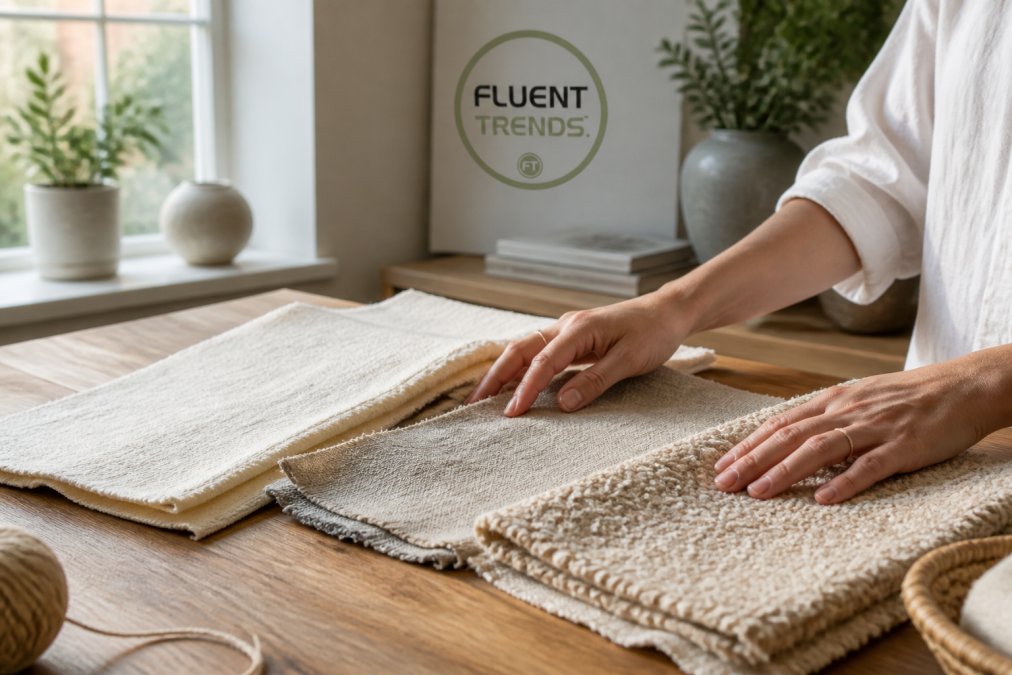
Check the label before you fall for the styling. A linen-blend sofa that is mostly polyester is not the same as pure linen. Ask for fiber percentages in writing.
Hypoallergenic materials matter too. Natural latex and certified organic cotton reduce chemical exposure in your home. OEKO-TEX bedding and Portugal-woven linens are strong signals here.

Durability starts with the material itself. Commercial-grade furniture holds up under daily use. Boucle furniture and bone inlay furniture reward careful sourcing, not shortcuts.
Step 5: Trace the Supply Chain and Labor Standards
Supply chain transparency means the brand can name its makers, factories, and regions. If it cannot, you cannot confirm ethical labor practices.
Ask these questions before buying:
Chayana Moon Phase Mother of Pearl Wind →
- Who made this piece, and in which country?
- Does the brand publish its factory list?
- Are fair wages verified by an outside party?
- Does a supply chain audit exist, and can you see it?
Artisanal craftsmanship depends on skilled hands. Those hands deserve fair pay and safe conditions. Brands that support women-owned businesses and global makers usually share these details openly.
Traceability is the whole point. A brand that hides its supply chain is hiding something else too.
Step 6: Assess Durability and Lifecycle
Longevity is an environmental issue, not just a quality one. A piece that lasts twenty years replaces three cheap ones. That cuts waste, shipping, and raw material demand.
But durability is only half the story. What happens at the end of a product's life matters just as much. Most decor articles skip this entirely. Here is how to think through the full lifecycle before you buy.
Durability Signals to Check Before Purchase
Run this assessment on any piece you are considering:
| Question | What to Check | Why It Matters |
|---|---|---|
| Frame construction | Kiln-dried hardwood, joinery type | Cheap particleboard fails in a few years |
| Foam density | High-density or natural latex | Low-density foam sags quickly |
| Fabric rub count | Higher count for daily-use pieces | Wear shows fast on low counts |
| Repairability | Replaceable covers, spare parts | Extends the piece's working life |
| End of life | Recyclable or biodegradable parts | Reduces landfill waste |
Durability is where commercial-grade furniture earns its keep. Built well, it outlasts three disposable alternatives. Boucle furniture and bone inlay furniture reward careful sourcing, not shortcuts. Hypoallergenic materials like natural latex and certified organic cotton also hold up better over time.
The Lifecycle Framework: Four Stages to Evaluate
Every decor piece moves through four stages. Ethical sourcing means thinking about all four, not just the first.
Stage 1: Material extraction. Where did the raw materials come from? Sustainably sourced wood, organic cotton, and milk or casein fibre come from renewable or lower-impact sources. Virgin plastics and unsourced timber do not.
Stage 2: Production. How was the piece made? Look for eco-friendly production methods, fair labor standards, and third-party audits. OEKO-TEX bedding and Portugal-woven linens signal production oversight.
Stage 3: Use phase. How long will it last, and how will it wear? Commercial-grade furniture and high-density foam extend this stage significantly. A piece that lasts twenty years has a far lower annual environmental cost than one that lasts three.
Stage 4: End of life. What happens when you are done with it? This is the stage most buyers ignore.
How to Dispose of Decor Responsibly
Different materials require different end-of-life handling. Here is a practical guide.
- Natural fibers (organic cotton, linen, wool, jute): Often biodegradable or compostable. Check for dye content before composting.
- Solid wood furniture: Can be refinished, donated, or broken down for wood recycling. Avoid landfill where possible.
- Boucle and upholstered pieces: Check whether covers are removable. Some textile recyclers accept clean fabric. Foam is harder to recycle.
- Bone inlay furniture: Often repairable and resellable. Restoration preserves the craft and keeps the piece in use.
- Synthetic blends and particleboard: Rarely recyclable. These are the hardest items to dispose of responsibly.
Circular Economy Thinking in Practice
Circular economy principles extend a product's life through repair, resale, and upcycling. Slow decor rewards patience over fast trend cycles.
Before you discard a piece, ask three questions. Can it be repaired? Can it be reupholstered? Can it be donated or resold? Most well-made furniture can survive at least one of these paths.
Upcycled and recycled materials also extend a product's life. Some brands now offer take-back programs or repair services. Ask about these before you buy.
Why This Matters for Your Wallet and the Planet
A cheap piece that lasts three years costs more over time than a well-made piece that lasts twenty. The environmental math is even starker. Every replacement purchase carries new material extraction, production, and shipping costs.
Durability and lifecycle thinking are not just ethical choices. They are practical ones.
Step 7: Ask Brands the Right Verification Questions
Direct questions separate real makers from good marketers. Send these before you buy. The answers tell you everything.
- Can you name the specific materials and their percentages?
- Which third-party certification covers this product?
- Who made it, and how are they paid?
- Can you share your supply chain audit?
- What is your repair and return policy?
- How do you handle shipping delays or damage?
Ethical production shows up in how a brand answers. Clear, fast, specific answers signal integrity. Vague, slow, evasive ones signal a problem.
Corporate social responsibility is not a slogan. It is a paper trail. Ask for it.
Your Verification Checklist for Ethical Home Decor
Use this checklist before you buy any piece:
- Certification named, with an auditable third party
- Materials listed with fiber percentages
- Maker or factory named, with region
- Fair wage or labor standard confirmed
- Supply chain audit available on request
- Durability details: frame, foam, rub count
- Repair, return, and shipping policy in writing
- Greenwashing red flags absent from the listing
This checklist fits on one page. Keep it handy for every purchase.
The Federal Trade Commission's Green Guides set the standard for honest environmental marketing claims. Brands that follow them welcome your questions.
For broader context on responsible sourcing, the United Nations Environment Programme tracks global sustainability practices. The Ellen MacArthur Foundation explains circular economy principles in depth.
Verifying ethical home decor takes effort, but the payoff lasts decades. Most shoppers skip the questions and hope for the best. You now have a checklist that removes the guesswork.
Fluent Trends curates handcrafted pieces from women-owned businesses and global artisans. Our Artisan Collection features sustainably sourced materials like organic cotton, wool, jute, and linen. Every piece supports fair wages and preserves craft heritage. Shop the Fluent Trends collection and furnish your home with pieces you can actually verify. Consider our Chayana Moon Phase Mother of Pearl Wind Chime, a beautiful example of fair trade decor, or our CLEAN DESIGN HOME® Mattress - Essex™ for a luxury sleep experience.
Frequently Asked Questions
What certifications should I look for in ethical home decor?
Start with OEKO-TEX for textiles, which tests for harmful substances in fabrics like organic cotton and linen. Fair Trade Certified confirms fair wages and safe conditions. For furniture, look for FSC-certified wood and CertiPUR-US foam. These third-party certifications require independent audits, so they carry more weight than a brand's own sustainability page. If a product claims to be ethical but lists no recognized certification, treat that claim as unverified until you find documentation.
How do I know if a home decor brand is truly sustainable?
Look for specific, measurable claims rather than vague language. A transparent brand will name its suppliers, specify materials, and publish audit results. Check whether the brand mentions fair wages, labor standards, and environmental impact with concrete details. If a listing says 'eco-friendly' without explaining how, that is a signal to dig deeper. Brands that share supply chain transparency and third-party certification tend to be more credible than those relying on marketing language alone.
What are the red flags of greenwashing in home decor?
Watch for vague terms like 'natural' or 'green' with no certification backing them. Be cautious when a brand highlights one eco-friendly feature, such as recycled packaging, while ignoring labor practices or material sourcing. Another red flag is a sudden sustainability rebrand with no supply chain audit or documentation. If a company cannot answer basic questions about where its materials come from or who makes its products, that lack of traceability is a warning sign.
Is it worth paying more for ethically made decor?
Ethically made pieces often cost more because fair wages, sustainable sourcing, and quality craftsmanship require real investment. The trade-off is durability. A well-made bone inlay table or boucle chair built with commercial-grade construction can last decades, while a cheaper alternative may need replacing in a few years. When you factor in longevity and the environmental impact of replacing furniture, the higher upfront cost often makes sense over time.