

Is Handcrafted Furniture Worth the Price
Yuatinia LeakTable of Contents
- Handmade vs. Mass-Produced Furniture: The Structural Difference
- How to Identify Quality Wood Furniture Before You Buy
- Longevity and Durability: Why Artisan Pieces Last Decades
- The True Cost Breakdown: What You're Actually Paying For
- Resale Value and Investment Potential
- Benefits of Artisan Furniture Beyond Aesthetics
- Maintenance and Repairability: The Hidden Advantage
- Conclusion
Last Updated: August 28, 2026
Handmade vs. Mass-Produced Furniture: The Structural Difference
The difference between handcrafted furniture and mass-produced pieces runs far deeper than aesthetics or price tags. When you examine the structural foundation, the gap becomes immediately obvious.
Mass-produced furniture relies on particle board, MDF, and veneers to keep costs low. These materials compress wood fibers or layer thin wood sheets over cheaper substrates. They're engineered for rapid assembly and quick disposal. A typical mass-produced sofa or dresser is designed to last five to seven years, sometimes less (the FTC).
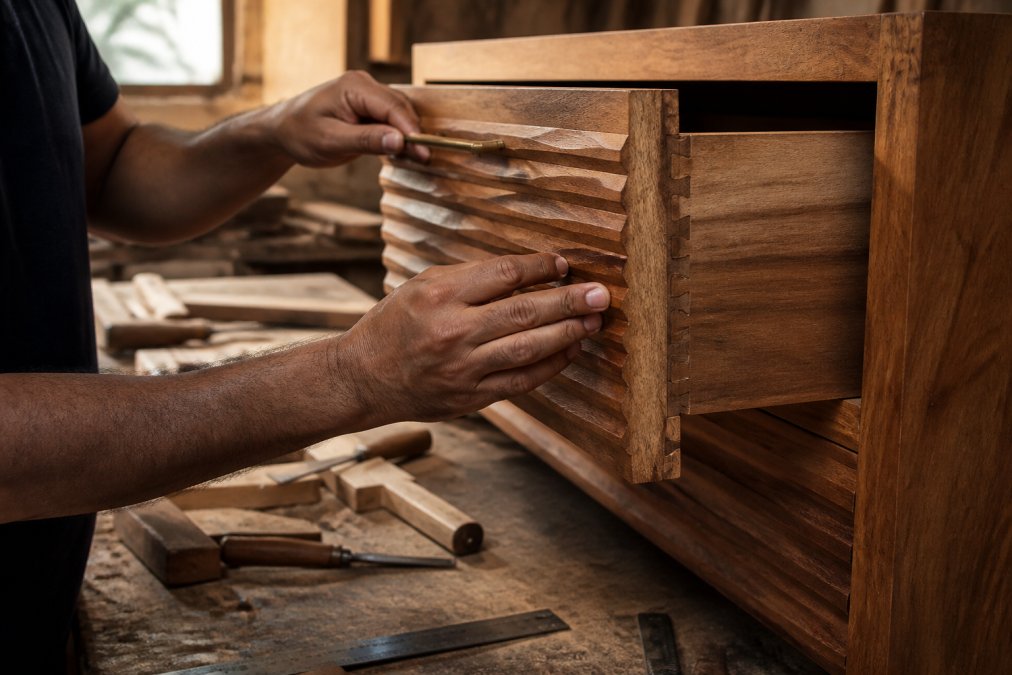
Handcrafted furniture uses solid wood throughout. Artisans select kiln-dried lumber and allow it to season properly. They employ traditional joinery techniques like dovetail and mortise and tenon joints that lock pieces together without fasteners. These methods have been refined over centuries. They create structural integrity that particle board simply cannot match.
Consider the Amber Wavefront Artisan Solid Wood Sideboard from Fluent Trends. Hand-carved from 100% solid mango wood with sustainable sourcing, it demonstrates how artisan construction differs fundamentally from factory assembly lines. Every joint is precision-cut. Every surface is hand-finished. The piece is built to absorb decades of use.

Mass-produced furniture uses staples, dowels, and pocket holes. These fasteners eventually loosen. Glue fails under stress. The structure deteriorates predictably. Handcrafted pieces, by contrast, actually improve with age as wood seasons and joints settle more firmly into place.
This structural difference determines everything that follows: durability, repairability, and long-term value.
How to Identify Quality Wood Furniture Before You Buy
Joinery and Construction Methods
The joinery reveals the maker's commitment to quality. Inspect how pieces connect at corners and joints.
Dovetail joints are the gold standard. You'll see interlocking trapezoidal cuts that mesh together like fingers. This joint distributes stress across multiple contact points. It resists racking and twisting. Dovetails are labor-intensive and expensive to produce, which is why mass manufacturers avoid them.
Mortise and tenon joints involve a protruding tenon that fits into a mortise cavity. When executed properly, these joints create incredible strength. A well-made mortise and tenon joint can last centuries without glue.
Look inside drawers and under tables. Run your hand along the underside. Feel for smooth transitions between pieces. Quality construction has no gaps, no rough edges, no visible fasteners where they shouldn't be.
Mass-produced pieces use pocket hole construction. Holes are drilled at angles, then screws drive through. This method is fast and cheap. It's also weak. Pocket holes create stress concentrations that eventually fail.
Examine the finish quality. Hand-finished surfaces show careful sanding progression and protective coatings applied in multiple layers. Factory finishes are often thin and uneven. They scratch easily and offer minimal protection.
Wood Type and Material Sourcing
Not all wood is equal. Understanding species and sourcing matters significantly.
Solid hardwoods like mango, walnut, oak, and cherry are dense and durable. They age beautifully, developing patina and character over decades. Softwoods like pine are less stable and more prone to denting.
Ask about sourcing. Sustainable forestry practices ensure the wood comes from responsibly managed forests. Artisans who care about their craft track their material origins. They know their suppliers. They understand the environmental impact.
Veneer isn't inherently bad. High-quality veneers over solid wood substrates work well for large panels. But veneer over particle board is problematic. The particle board swells when exposed to humidity. The veneer cracks and peels. Solid wood expands and contracts uniformly, maintaining integrity.
The Solid Wood Live Edge Chest from Fluent Trends uses sheesham wood with natural finish and live edge grain. This approach preserves the wood's character while showcasing the artisan's respect for the material.

Run your hand across surfaces. Feel for consistency and smoothness. Quality wood furniture has a tactile warmth that veneered pieces cannot replicate.
Longevity and Durability: Why Artisan Pieces Last Decades
Handcrafted furniture outlasts mass-produced alternatives by a significant margin. This isn't marketing hype. It's structural reality.
A well-made solid wood piece can function beautifully for fifty years or longer (peer-reviewed research). Some pieces survive centuries. The wood actually becomes more stable over time. Joints tighten. The finish develops character. The piece becomes more valuable, not less.

Mass-produced furniture typically fails within ten years. Drawers jam. Legs wobble. Upholstery tears. Fasteners loosen. The structure was never designed for longevity. Manufacturers expect replacement.
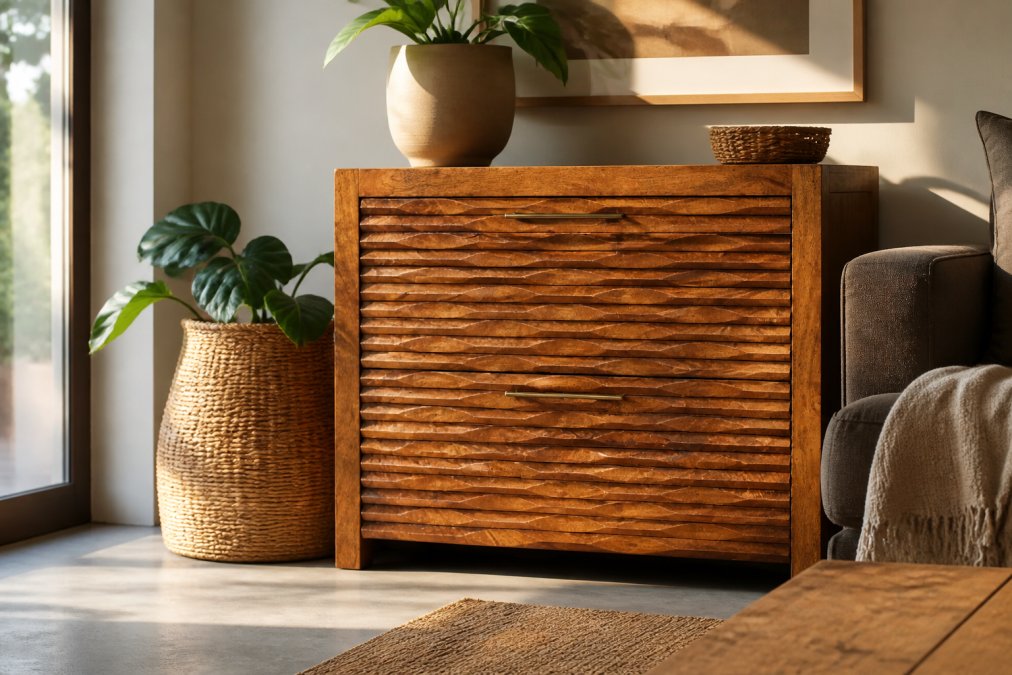
This durability difference stems from material quality and construction method. Solid wood withstands daily use. Joinery strengthens over time. Hand-finished surfaces protect the wood from moisture and damage.
Consider how an artisan approaches a piece. They select premium materials. They invest time in proper techniques. They stand behind their work. A craftsperson building furniture for their own family uses the same standards they'd use for you.
Mass manufacturers optimize for cost. They use the cheapest materials that meet minimum standards. They employ assembly line speed over craftsmanship. The result is predictable: early failure and replacement.
Heirloom quality furniture becomes a family legacy. It passes to children and grandchildren. It appreciates in value. It tells a story of intentional making and respect for materials.
The True Cost Breakdown: What You're Actually Paying For
When handcrafted furniture costs three to five times more than mass-produced alternatives, what explains the difference? The answer requires looking beyond the purchase price.
Material costs are higher. Solid hardwood costs more than particle board. Kiln-dried lumber requires proper storage and handling. Sustainable sourcing adds expense. But materials represent only part of the premium.
Labor is the primary cost driver. A skilled craftsperson might spend forty to eighty hours on a single piece. They must master traditional techniques. They must understand wood movement and grain direction. They must execute joinery with precision. They must hand-finish surfaces to perfection. This expertise cannot be rushed or automated.
Design and customization add value. Artisans often create unique pieces or modify designs for specific spaces. Mass manufacturers produce identical units by the thousands. Customization requires additional thought and labor.
Quality control differs dramatically. An artisan inspects every joint, every surface, every finish detail. They reject imperfect work. Mass manufacturers accept wider tolerances to maintain production speed.
Small-batch production costs more per unit than factory production. Artisans cannot achieve the economies of scale that factories enjoy. But they gain flexibility and quality control that justifies the premium.
The hidden cost lies in replacement cycles. Consider a practical scenario: a mass-produced dresser costs four hundred dollars and lasts eight years. You replace it. Another four hundred dollars. Eight more years. Over fifty years, you purchase six dressers at twenty-four hundred dollars total. You own nothing at the end.
A handcrafted dresser costs two thousand dollars and lasts fifty years. Single purchase. Single cost. At year fifty, you own an appreciating asset that can be refinished and passed to the next generation.
The annual cost of the mass-produced dresser is fifty dollars. The annual cost of the handcrafted piece is forty dollars. But the handcrafted piece also holds or gains value. The mass-produced piece depreciates to zero.
This math applies across all furniture categories. A mass-produced sofa at eight hundred dollars lasts seven years. A handcrafted sofa at three thousand dollars lasts thirty years or more. The mass-produced sofa costs one hundred fourteen dollars annually. The handcrafted sofa costs one hundred dollars annually, plus it retains value.
Additional hidden costs of cheap furniture include disposal fees, delivery costs for replacements, and the time spent shopping and reassembling. These accumulate significantly over decades.
Fluent Trends pieces like the Chestnut Solid Wood Oval Nightstand reflect this reality. Hand-crafted from kiln-dried mango wood with two-drawer storage, the piece represents genuine value. It will outlast ten mass-produced nightstands at a fraction of the total cost of ownership.
Resale Value and Investment Potential
Handcrafted furniture retains value. Mass-produced pieces depreciate rapidly.
A mass-produced sofa loses seventy percent of its value within five years (bls.gov). It becomes a used item with limited appeal. Buyers know it will fail soon. Nobody wants someone else's worn-out particle board furniture.
Handcrafted pieces appreciate or hold value. A well-maintained artisan chair from twenty years ago might sell for more than the original price. Vintage handmade furniture is actively sought by collectors and designers.
This investment potential matters. A two-thousand-dollar handcrafted sideboard that lasts fifty years and appreciates in value is fundamentally different from a four-hundred-dollar mass-produced alternative that fails in eight years.
Interior designers specifically seek handcrafted pieces for high-end projects. They understand the quality difference. They know clients will notice. Artisan furniture elevates a space in ways that mass-produced items cannot match.
When you purchase handcrafted furniture, you're acquiring an asset. When you purchase mass-produced furniture, you're renting a temporary solution.
Benefits of Artisan Furniture Beyond Aesthetics
Handcrafted furniture offers advantages that transcend visual appeal.
Supporting artisans and small makers builds community. When you purchase from Fluent Trends, your money supports women-owned businesses and global craftspeople. You're funding cultural heritage preservation. You're enabling artisans to continue practicing traditional techniques.
Customization creates pieces that fit your space and style perfectly. An artisan can modify dimensions, adjust finishes, or incorporate design elements that matter to you. Mass manufacturers offer limited options.
Unique character distinguishes handcrafted pieces from identical factory products. No two artisan pieces are exactly alike. Wood grain varies. Hand-finishing creates subtle differences. Your furniture tells your story, not a corporate marketing narrative.
Ethical production matters. Artisans typically use fair wages and sustainable practices. They avoid exploitative labor. They minimize waste. Mass manufacturers often cut corners on environmental and social responsibility.
Bespoke design means your furniture reflects your values and aesthetic. You're not compromising on a standard option. You're investing in something intentional.
Maintenance and Repairability: The Hidden Advantage
Handcrafted furniture can be repaired and restored. Mass-produced furniture cannot. This distinction compounds over decades.
A solid wood table with a damaged leg can be repaired by a skilled craftsperson. A particle board table is disposable. The repair costs more than replacement, so it goes to landfill. This cycle repeats every eight to ten years with factory-made pieces.
Hand-finished surfaces can be refinished. Scratches and wear disappear under careful sanding and recoating. Mass-produced finishes are often too thin to refinish. Once damaged, they remain damaged. The finish fails in patches, exposing the substrate beneath.
Joinery can be tightened or adjusted. A loose mortise and tenon joint can be shimmed or re-glued. Pocket holes cannot be adjusted. Once loose, they remain loose. The fastener strips the wood fiber and fails permanently.
Common mass-produced failures include drawer slides that jam from particle board swelling, veneer peeling from humidity exposure, and upholstery seams separating because the frame flexes excessively. These failures are structural, not cosmetic. They render the piece unusable.
Handcrafted pieces fail differently. A solid wood drawer might stick from seasonal wood movement. A craftsperson planes the runner slightly. Problem solved. The joint might loosen after twenty years. A shim tightens it. The finish might wear in high-traffic areas. Refinishing restores it completely.
This repairability extends furniture life indefinitely. An artisan piece can be maintained and restored for generations. It becomes more valuable with age, not less. A family heirloom gains character and story with each repair.
Maintenance is straightforward. Use appropriate wood oils or finishes. Avoid excessive moisture and direct sunlight. Dust regularly. That's sufficient. Handcrafted furniture doesn't require special treatment. It just requires respect.
The Solid Wood Compact Cabinet from Fluent Trends demonstrates this durability principle. Hand-crafted from mango wood with a chestnut finish, it features traditional construction that can be serviced and maintained for decades. The joinery can be tightened. The finish can be refreshed. The piece improves with age.
Frequently Asked Questions
Q: What's the actual price difference between handcrafted furniture and mass-produced pieces?
A: Handcrafted furniture often carries a premium reflecting solid wood construction, skilled labor, and sustainable sourcing. A solid wood sideboard like the Amber Wavefront costs $1,454.98 due to hand-carved mango wood and artisan craftsmanship. Mass-produced equivalents use particle board or veneer, sacrificing durability for lower upfront cost.
Q: How do I know handcrafted furniture will actually last as long as claimed?
A: Quality handcrafted pieces use solid wood, mortise and tenon joinery, and hand-finished details that withstand decades of use. Look for kiln-dried wood, visible grain variation, and traditional construction techniques. Reputable makers often provide detailed craftsmanship information and stand behind their work. Unlike mass-produced furniture that deteriorates within 5-7 years, artisan pieces can be repaired and refinished, extending their lifespan indefinitely.
Q: Does handcrafted furniture hold its resale value better than cheaper alternatives?
A: Yes. Handcrafted furniture typically retains value better than mass-produced pieces. Solid wood construction, timeless design, and the ability to repair damage preserve value. Pieces from established artisan makers often appreciate in desirability over time. Fast furniture becomes less valuable when damaged; handcrafted pieces gain character and can be sold to buyers seeking heirloom quality.
Q: What benefits does artisan furniture offer beyond just looking nice?
A: Artisan furniture supports sustainable forestry, preserves traditional woodworking techniques, and often supports women-owned businesses and global makers. You invest in pieces with cultural narrative and authentic craftsmanship. Handcrafted items reduce environmental impact through low-waste production methods. Beyond aesthetics, you gain structural integrity, customization options, and pieces designed for longevity rather than seasonal replacement.
This article was written using GrandRanker