

Smart Kids Bedroom Storage Ideas to Conquer Clutter
Donna MaloneStaring at a mountain of toys, clothes, and mystery objects? We've all been there. The best kids bedroom storage ideas aren't just about cramming things into boxes; they're about creating a system that actually works. Think smart, accessible solutions like vertical wall shelving, under-bed drawers, and labeled bins—things your child can actually use, making cleanup less of a battle for you.
Why Smart Storage Matters More Than Just More Bins
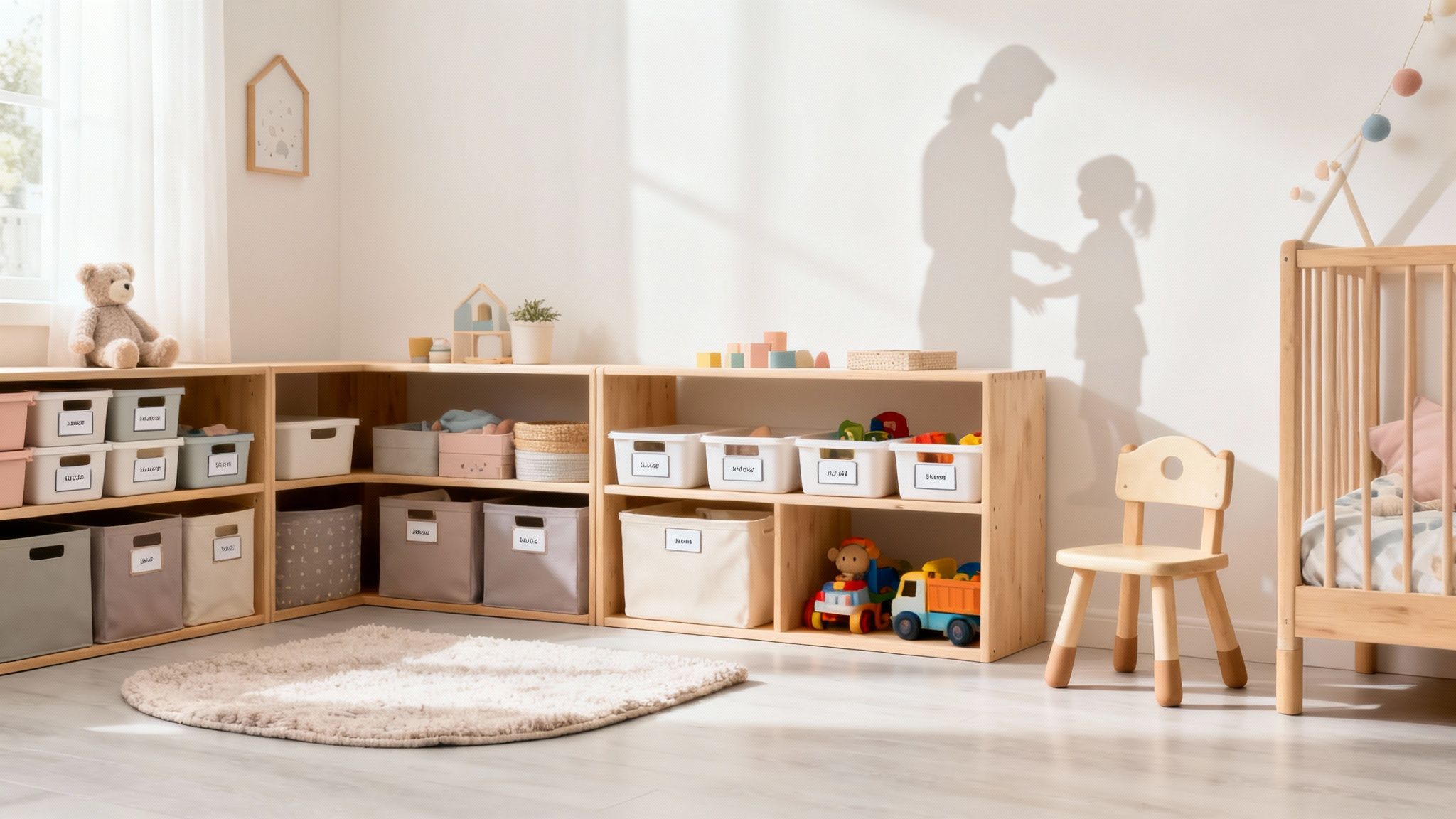
If you feel like you're fighting a losing battle against clutter, you're not alone. The endless cycle of tidying a child's room can be draining, especially when it feels like the mess reappears five minutes later. This guide is about moving beyond just buying more containers. It’s about reframing organization as a design opportunity that makes life easier for everyone.
A well-organized space does more than just look good. For kids, an orderly environment can actually reduce overstimulation and anxiety, helping them focus better on play and rest. When they know where their belongings go, they gain a sense of control and independence. Accessible storage empowers them to find their own toys and—most importantly—put them away.
The Shift Toward Intentional Kids' Spaces
Today's parents are more conscious than ever of how a child’s environment impacts their development. This awareness is driving a huge demand for smarter kids' furniture. In 2023 alone, the global kids' storage furniture market was valued between USD 8.5 billion and USD 12.58 billion, fueled by a desire for modular, space-saving designs. You can discover more insights about this growing market trend and what it means for family homes. This isn't just about buying stuff; it's an investment in creating a functional, calming space that supports your child's growth.
The goal is to create a system where every item has a logical home. This transforms cleanup from a dreaded chore into a simple, routine part of playtime. It’s about teaching life skills, not just tidying up.
What This Guide Will Cover
This guide is designed to give you actionable strategies, not just pretty pictures. We'll walk through a practical process for reclaiming your child's room from the chaos, step-by-step.
You'll learn how to:
-
Assess the Mess: Before you buy a single bin, you need a plan. We'll show you how to map out the space and pinpoint the real clutter hotspots.
-
Choose Future-Proof Furniture: Discover storage solutions that adapt as your child moves from toddlerhood to their pre-teen years.
-
Prioritize Safety: Learn the non-negotiables of securing furniture and choosing child-safe materials.
-
Make It Fun: Find stylish and creative ways to make organization a natural, and even beautiful, part of your room's decor.
From genius vertical solutions that reclaim precious floor space to multi-functional furniture that does double duty, get ready to transform your child's room into a space that truly works.
Map Your Space Before You Buy Anything
It’s so tempting to see a messy room and make a beeline for the store, convinced a few cute bins will fix everything. I’ve been there. But trust me, the best, most lasting storage solutions start with a little bit of detective work right in the room itself.
Taking a moment to really assess the space and how your child uses it will save you so much time, money, and frustration down the line. You'll end up with a system that actually works, not just another piece of furniture to trip over.
Create Your Clutter Map
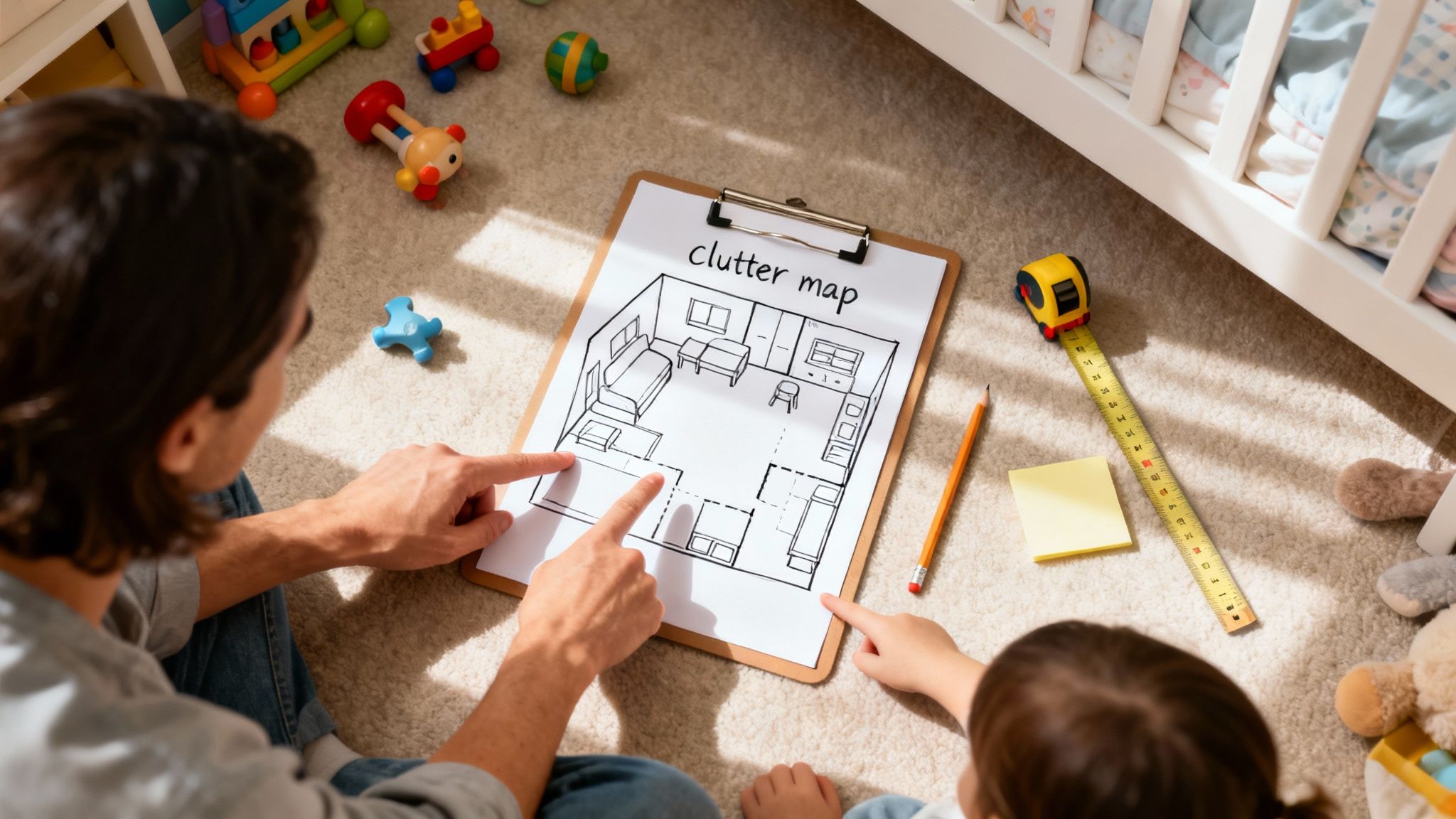
First up, let’s figure out where the chaos actually lives. This is what I call a "clutter map." It's a simple, visual way to pinpoint the problem areas.
Grab a piece of paper and sketch a really basic layout of the room—a square for the bed, a rectangle for the dresser. No artistic talent required! Now, at the end of a typical day (when the mess is at its peak), mark the spots where things tend to pile up.
-
Are books constantly sliding off the nightstand?
-
Is there a permanent explosion of LEGOs in the middle of the floor?
-
Do stuffed animals have a designated "overflow" corner?
-
Are crayons and half-finished drawings taking over the desk?
These hotspots are gold. They tell you exactly where your current system—or lack thereof—is failing. That pile of books doesn't just scream "bookshelf." It might mean a small, easy-to-reach wall ledge or a nightstand with a drawer is the smarter play. If you're starting from scratch, checking out some inspiring newborn nursery ideas can offer fantastic layout inspiration, even for older kids.
Take a Realistic Inventory
Okay, you know where the clutter is. Now you need to know what it is. This isn’t about counting every single Hot Wheels car. It’s about getting a real sense of the categories and volume you're dealing with. It's a step people often skip, but it’s crucial.
Start sorting everything into big, general piles. You’ll probably end up with groups like:
-
Building Toys: LEGOs, Magna-Tiles, wooden blocks.
-
Art Supplies: Crayons, paper, paint, all those craft kits.
-
Books and Magazines: Picture books, early readers, comics.
-
Dolls and Action Figures: Don't forget their tiny shoes and accessories.
-
Stuffed Animals: The entire plush crew.
-
Clothing: Daily clothes, plus that ever-growing dress-up collection.
This process is so revealing. You might have a "eureka!" moment when you realize that 70% of the floor clutter is actually tiny toy parts. Suddenly, it's clear you don't need a giant toy chest; you need smaller bins with dividers. Or you’ll see the book collection is much larger than you thought, making sturdy, accessible shelving a non-negotiable priority.
A common mistake is buying storage for the items you wish your child played with, not the ones they actually use. Be honest about what needs to be easily accessible versus what can be stored away.
Involve Your Little Expert
Finally, and this is the most important part, bring your kid into the process. If a storage system doesn't make sense to them, they simply won't use it. You can't fight that.
For a toddler, this is all about observation. Watch them play. Do they dump out the entire toy box just to find that one specific truck at the bottom? That’s a sign that clear, low-to-the-ground bins they can see into would be a game-changer.
For an older kid, just ask! Simple questions like, "What's the hardest thing for you to put away?" or "What toys do you wish were easier to get to?" can give you incredible insights. They might tell you their favorite drawing pads are too big for the desk drawer, pointing you toward a simple vertical file holder you'd never have considered.
When they have a say, they also get a sense of ownership. That makes them far more likely to actually help keep their new-and-improved space tidy. As you plan, thinking about how to find the best furniture for small spaces will also ensure every piece you choose is working as hard as possible.
Choosing Storage That Grows With Your Child
Alright, you've mapped out the room and have a solid inventory of what needs to be tamed. Now for the fun part: picking out the actual storage. The real secret here is to look past today’s mess and choose pieces that will make sense as your toddler blossoms into a pre-teen. A little foresight now saves you from a complete room overhaul every few years.
Think of it like building a system with different layers. You'll want a mix of solutions—some for hiding clutter, some for showing off treasures, and some for easy-to-grab daily items. The right blend of kids bedroom storage ideas creates a room that actually works for the long haul.
Unlock Hidden Storage Opportunities
Some of the most valuable real estate in a kid's room is hiding in plain sight. These "hidden" spots are your secret weapon against bulky toys, out-of-season clothes, and all the stuff that isn't in the daily rotation.
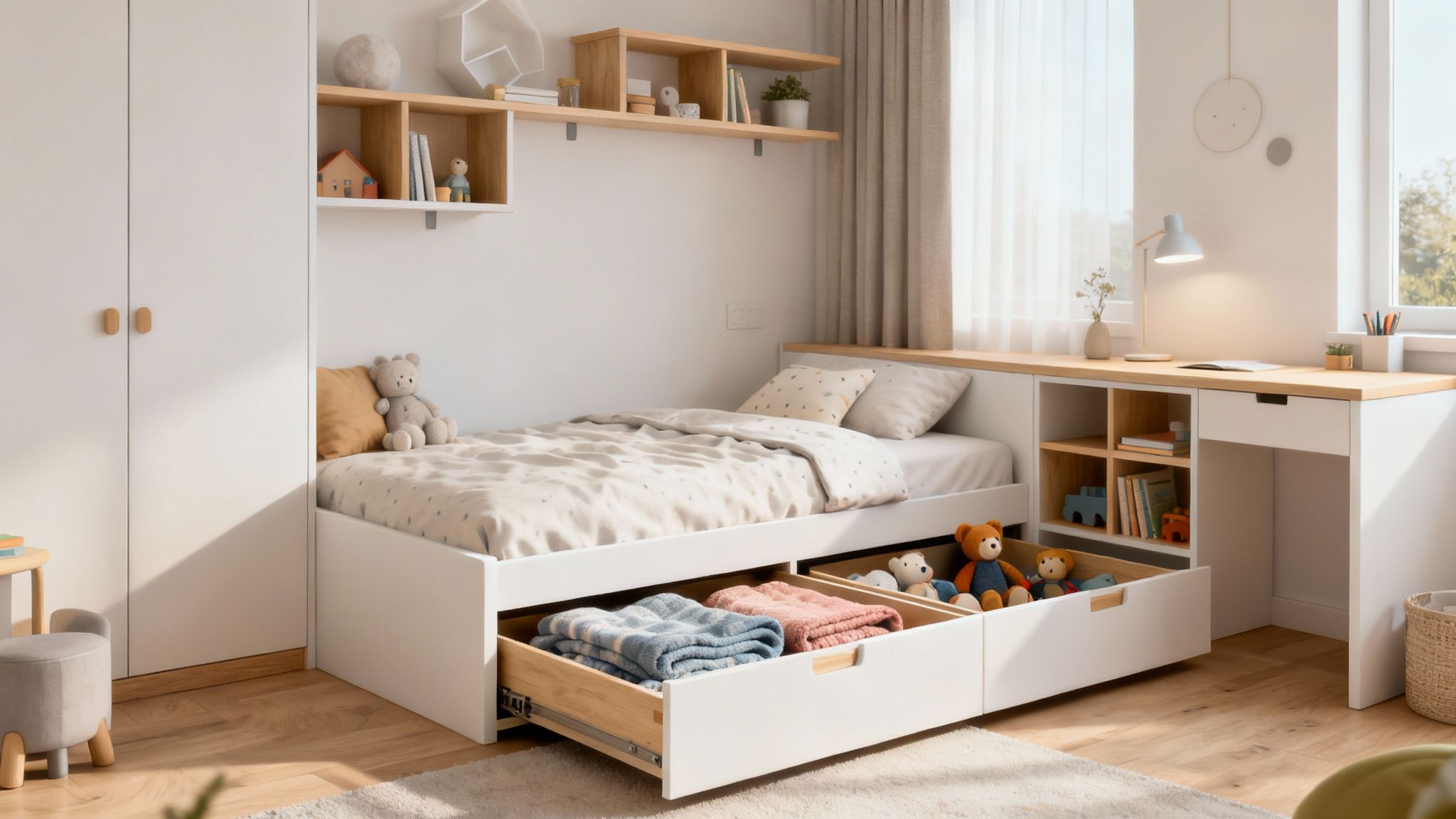
The biggest win? Under-bed storage. A bed frame that’s flush with the floor is a massive missed opportunity. Instead, look for one that leaves enough clearance for low-profile rolling bins or drawers to slide right underneath. It's the perfect home for:
-
Big Toys: LEGO collections, oversized building blocks, or that overflowing dress-up box.
-
Seasonal Gear: Pack away winter duvets or summer shorts, keeping them clean but out of the way.
-
Extra Linens: Spare sheets and guest pillows are easy to grab but stay completely out of sight.
Another goldmine is the back of the bedroom door. A simple over-the-door organizer with clear pockets is a game-changer. It’s brilliant for corralling small things like hair accessories, craft supplies, or tiny action figures that always seem to get lost.
Go Vertical and Reclaim Your Floor
In a small room, every square foot of floor space is precious. The quickest way to make a room feel bigger and create more space for play is to look up. Wall-mounted storage is a fantastic strategy for getting things off the ground, which instantly reduces that cluttered feeling.
A few vertical ideas to try:
-
Floating Shelves: These look great above a desk or dresser. Use them to display favorite books, trophies, or delicate models, keeping them safe from younger siblings.
-
Book Ledges: Unlike deep shelves, these shallow ledges display books with their covers facing out. It’s a beautiful way to create a wall display and makes it so much easier for early readers to spot their favorites.
-
Tall, Slim Bookcases: A narrow tower bookshelf can hold a ton of stuff without eating up a huge footprint. Just remember: all tall furniture must be securely anchored to the wall to prevent a dangerous tip-over accident.
By shifting your thinking from horizontal (clutter on the floor) to vertical (organization on the walls), you can completely change the feel and function of a small bedroom.
Embrace Furniture That Does Double Duty
Why settle for furniture that only does one thing? Multi-functional pieces are one of the smartest investments you can make, especially for a room that needs to adapt over time. These clever designs work twice as hard by blending essential functions with built-in storage.
A bed with drawers underneath is a classic for a reason—it’s a bed and a dresser in one. A storage ottoman or a bench at the foot of the bed can be a cozy reading spot, a surface for play, and a hidden toy chest all at once.
Desks with a built-in hutch or shelving are also fantastic. They create a dedicated zone for homework while keeping school supplies, books, and chargers organized and right where they’re needed. This approach doesn't just save space; it helps kids learn to keep different activities (like sleep, play, and schoolwork) organized in their own zones.
Matching Storage to Your Child's Age
The best storage solutions are never one-size-fits-all. What works for a two-year-old will just be frustrating for a ten-year-old. Choosing options that fit their developmental stage is key to building a system they can actually use on their own.
To make it easier, we've broken down some of the best storage types for different age groups.
Comparing Storage Solutions By Age Group
| Storage Solution | Toddler (1-3) | Young Child (4-7) | Pre-Teen (8-12) |
|---|---|---|---|
| Open Bins/Baskets | Excellent. Low to the ground, no lids to pinch fingers. They can see and grab toys. | Good. Great for larger categories like "cars" or "blocks." | Okay. Better for closets to hold sports gear or accessories, less for open display. |
| Cubby Shelving | Excellent. Perfect height for them to reach. Pair with fabric bins for easy cleanup. | Excellent. Helps them learn to categorize. Label bins with pictures and words. | Good. Works well for books, games, and displaying collections. |
| Under-Bed Drawers | Good. Best if lightweight and easy for them to pull out. Parent help may be needed. | Excellent. They can manage these independently for storing clothes or toys. | Excellent. A must-have for storing extra bedding, clothes, or electronics. |
| Wall Shelves | Use with caution. Mount high and out of reach for displaying decor, not for toys. | Good. Perfect for displaying LEGO creations or trophies. Ensure they are mounted securely. | Excellent. Essential for books, collectibles, and personal items. |
| Desk with Storage | Not needed. | Good. A small art table with a few drawers is a great start for creative supplies. | Excellent. A proper desk with drawers and shelving is crucial for homework and hobbies. |
| Lidded Chests | Avoid. Heavy lids can be a serious safety hazard for little fingers. | Use with caution. Only choose chests with certified safety hinges that prevent slamming. | Good. A stylish way to hide away clutter or store extra blankets. |
As you can see, the goal is to transition from fully accessible, simple storage for toddlers to more structured and personalized systems for pre-teens.
This push for adaptable, safe, and stylish designs is a huge trend. The kids' furniture market, valued at USD 36.5 billion in 2024, is expected to more than double by 2034, largely driven by smart storage. Parents are actively looking for these kinds of evolving solutions. You can discover more about kids' furniture market trends to see how innovation is shaping the next generation of children's rooms.
Putting Safety And Durability First
While it's easy to get swept up in creating a perfectly organized, Pinterest-worthy room, nothing is more important than safety. The smartest kids bedroom storage ideas are always the safest ones. Before you fall in love with a piece of furniture, you have to look at it through a safety-first lens.
This means asking the tough questions. Could it tip over? Does it have sharp corners? What is it actually made of? A few minutes of careful inspection now can prevent a serious accident later, giving you real peace of mind.
The Anchoring Rule Is Not Optional
I can't stress this enough: the single most important safety measure you can take is anchoring tall or heavy furniture to the wall. This goes for bookcases, dressers, tall shelving units—anything a curious child might try to climb. It’s shocking how easily a kid can use open drawers as a makeshift ladder, leading to a dangerous tip-over.
Anchoring furniture is a straightforward job you can absolutely do yourself. Most new furniture even comes with anti-tip kits, but they're easy to find at any hardware store. You just need a few basic tools:
-
A stud finder to locate the solid wood beams behind your drywall.
-
A drill for the pilot holes.
-
The anti-tip kit, which is usually just a set of brackets and heavy-duty straps.
You simply secure one bracket to the back of the furniture and the other to a stud in the wall, then connect them. It’s a small task that makes a massive difference.
Never assume a piece of furniture is "heavy enough" not to fall. A determined toddler can generate a surprising amount of leverage. Anchoring isn't a suggestion; it’s a critical safety step for any home with young children.
Materials Matter More Than You Think
Beyond stability, the actual materials used in your child's storage are a big deal. Little ones explore the world with their hands and their mouths, so you need to be sure everything they touch is non-toxic.
Look for furniture made from solid wood whenever possible, finished with non-toxic, low-VOC (volatile organic compound) paints and stains. If you’re grabbing plastic bins, check that they are BPA-free. This isn’t just a niche concern; it’s a major driver for modern parents. In fact, the North American kids' furniture market hit USD 8.92 billion in 2023, largely because of a powerful consumer focus on safe and durable products. You can read the full research about these market trends to see how safety standards are shaping what's available.
Durability Is a Form of Safety
Finally, let's connect the dots between durability and safety. A flimsy piece of furniture isn't just a bad investment; it can be a genuine hazard. A shelf that bows under the weight of books or a drawer bottom that falls out can break without warning.
When you’re shopping, keep an eye out for these signs of quality construction:
-
Dovetail joints in drawers instead of flimsy glue and staples.
-
Soft-close hinges on doors and drawers to prevent pinched little fingers.
-
Rounded or sanded corners to soften the blow from inevitable bumps and tumbles.
-
A sturdy back panel on bookcases and dressers, which adds crucial structural integrity.
Investing in well-built furniture means it can withstand years of energetic play. It won’t just survive the toddler years—it will be a reliable and safe fixture in their room as they grow.
Making Organization Fun And Stylish
Let's be honest: if an organization system is boring or too complicated, kids simply won't use it. The real secret to a tidy room isn't just about having enough storage bins—it's about creating a space where putting things away feels natural, easy, and maybe even a little fun.
This is where style and function really need to meet. By weaving storage solutions into the room's decor, you end up with a space that feels both creatively inspiring and refreshingly clean. It’s less about hiding clutter and more about making organization a part of the room's personality.
Turn Storage Into Decor
One of the most effective kids bedroom storage ideas is to stop seeing storage as something that needs to be concealed. Instead, start treating it as just another decorative element. This small shift in perspective opens up a ton of creative possibilities.
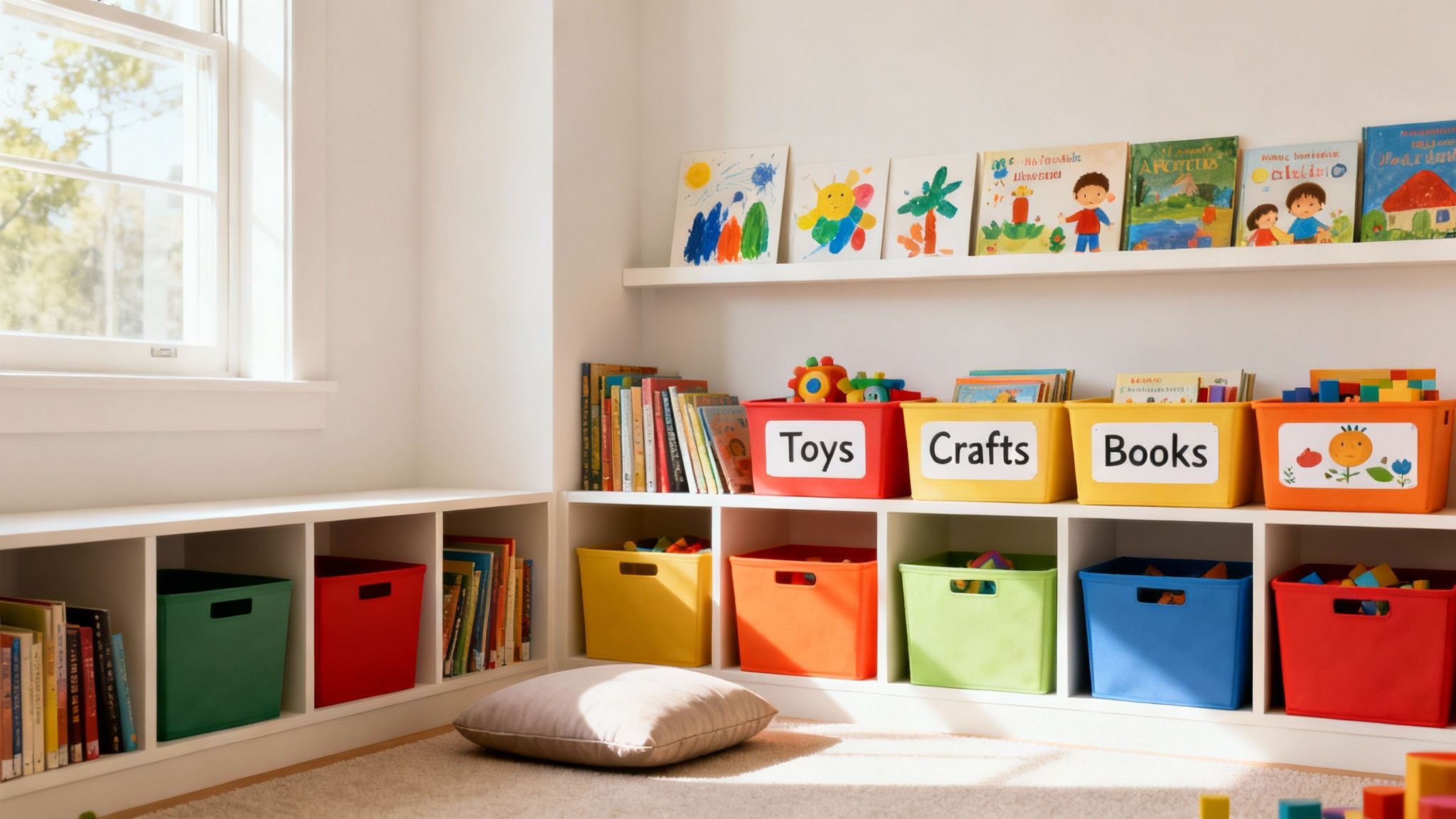
Forget the plain plastic tubs. Opt for colorful fabric bins or woven baskets that complement the room's color palette. When placed on open shelves, they add a pop of color or a touch of natural texture, looking totally intentional. To bring in a bit of charm for smaller treasures, consider fun options like the Squishmallows Cottage Collection Storage Pots.
Even simple book ledges can do double duty. Think of them not just for holding books, but as a rotating gallery for their favorite covers or small art pieces. This approach makes books feel special and encourages your child to actually pick them up.
Create Intuitive Play Zones
Another game-changing strategy is to set up designated "zones" for different activities. This naturally contains the mess and makes cleanup incredibly straightforward because everything has a clear home base.
Think about how your child actually plays and design the room around it:
-
A Cozy Reading Nook: A comfy beanbag or a small armchair next to a low bookshelf is all it takes. When books are within arm's reach, it's just as easy to put one back as it is to grab a new one.
-
A Dedicated Art Corner: Set up a small table with a caddy for crayons, markers, and paper. Use wall-mounted containers or a small rolling cart to keep all the creative chaos in one spot.
-
A Building Station: A soft rug can define the space for LEGOs or blocks, with labeled, pull-out bins right next to it. No more rogue bricks underfoot!
When everything needed for an activity is kept together, you drastically reduce the chances of supplies migrating all over the house. It also subtly teaches kids the valuable skill of focusing on one thing at a time.
By designing zones, you’re not just organizing toys; you're organizing play itself. This structure helps children transition between activities and makes the 'pack away' step a logical conclusion to their fun.
Make Cleanup Easy And Visual
For any storage system to actually work, it has to be ridiculously simple to use. Kids, especially pre-readers, operate on visual cues. If they can’t see where something goes, it’s probably going to end up on the floor.
This is why pictorial labels are a parent's best friend. A simple drawing of a car on a bin is far more effective for a four-year-old than a word. You can find printables online, or better yet, have your child help draw the pictures for a fun, personalized touch.
Along the same lines, choose storage that's easy for little hands to manage.
-
Open-front bins they can just toss toys into.
-
Low shelves they can reach without needing to climb.
-
Lightweight baskets they can carry themselves.
The easier you make the process, the more likely they are to participate without a fuss. And when it comes to the sheer volume of toys, it helps to have a bigger strategy for how to keep all your kids' toys organized. That way, everything from tiny collectibles to bulky playsets has a proper home.
Answering Your Top Kids' Storage Questions
Even the most thoughtfully designed kids' room can hit a few real-world snags. Let's walk through some of the most common questions that pop up when you're trying to create a beautifully organized space for your little ones.
How Do I Get My Child To Actually Tidy Up?
This is the million-dollar question, isn't it? The secret isn’t magic, it’s a mix of ownership and accessibility. If you create a system for them without creating it with them, it’ll always feel like a chore.
Let them in on the process from the very beginning. Even a toddler can help you decide which bin gets the LEGOs and which one is for dress-up clothes. This simple act gives them a sense of control over their belongings and their space.
Then, make it ridiculously easy for them. Keep their most-loved items right at their level.
-
Low, open bins for toys they play with every day.
-
Easy-to-reach hooks for their backpack and favorite jacket.
-
Bottom drawers for their go-to outfits.
When they can grab—and put away—their own things without needing your help, they're far more likely to do it. You can even gamify it! A five-minute "beat the clock" tidy-up challenge before bed can turn cleanup from a battle into a fun habit.
What Are The Best Storage Hacks For A Tiny Kids' Room?
In a small bedroom, you have to get creative. Your strategy should center on two things: going vertical and getting furniture that does double duty.
Look up! The walls are your best friend for reclaiming floor space. Tall, narrow bookshelves are a classic for a reason (just always anchor them to the wall for safety). Floating shelves mounted above a desk or dresser are perfect for showing off favorite books or special toys without taking up a single square inch of the floor.
Under-the-bed storage is non-negotiable here. Use bins with wheels for easy-to-pull-out toy access, or sealed containers for stashing out-of-season clothes. And think about furniture that works harder—a bed with built-in drawers or a storage ottoman that’s also a cozy reading spot are absolute game-changers.
Open Shelving Or Closed Cabinets: Which Is Better?
Honestly? The most livable and stylish solution is almost always a healthy mix of both. They each have a very different job, and using them together creates a space that feels both functional and calm.
Open shelving is fantastic for the things you want your child to grab easily, and for items that add a bit of personality to the room. It’s perfect for:
-
Displaying a colorful collection of books.
-
Showcasing a cool model they just built.
-
Keeping daily-use toys like blocks or puzzles within arm's reach.
But let’s be real—open shelves get messy, fast. That's where closed storage saves the day. Cabinets, drawers, and lidded bins are essential for hiding the visual chaos of all those tiny toy parts, mismatched art supplies, and general clutter.
The best approach? Use open shelves for the beautiful and the busy, and closed storage for everything else. You get the best of both worlds: easy access and a serene, tidy-looking room.
How Often Should I Actually Declutter My Kid's Room?
An organized room is a marathon, not a sprint. A major declutter twice a year is a practical and effective goal. Try scheduling it right before a birthday or a big holiday—that way, you’re making space for the new things about to come in.
These are your big purges for sorting through outgrown clothes, broken toys, and things they've simply lost interest in. But the real key to keeping things under control is consistent, low-effort maintenance.
A weekly 10-minute "room reset" can make a world of difference. This isn't a deep clean; it’s just about quickly putting things back where they belong. This simple habit stops the clutter from ever feeling overwhelming and keeps the system you worked so hard on actually working.
At Fluent Trends, we believe a well-designed home is both beautiful and deeply practical. Our curated collection of storage solutions and home decor can help you create a stylish, organized space for everyone in the family. Explore our Children's Collection and find pieces that bring calm and order to your everyday life.