

Latest Furniture Trends: Fresh Ideas to Transform Your Space
Donna MaloneIt feels like the world of interior design is moving faster than ever, doesn't it? But what we're seeing isn't just about fleeting styles. The latest furniture trends are a direct reflection of huge shifts in how we actually live.
We're talking about a move towards eco-conscious materials, clever multifunctional pieces that make small spaces work harder, and a big, warm hug of nature-inspired colors and soft, curvy shapes. Comfort and self-expression are officially king.
The Forces Shaping How We Furnish Our Homes
Have you ever stopped to wonder why certain styles suddenly pop up everywhere? It’s not random. The trends you see in showrooms and online are a direct response to our changing lives—a conversation between our daily needs and the designers crafting the pieces we live with.
Three major forces are steering the ship right now:
-
The Squeeze of City Living: More of us are calling smaller city apartments home. This makes space-saving, dual-purpose furniture less of a "nice-to-have" and more of a total necessity.
-
The Home as Everything: Remote work is here to stay for many, turning our homes into offices, gyms, and chill-out zones all at once. Our furniture has to keep up and wear multiple hats.
-
A Growing Eco-Conscience: We're all thinking a bit more about our footprint. This collective push for sustainability is leading us toward furniture made from reclaimed, recycled, or responsibly sourced materials.
Seeing the Bigger Picture
These drivers create a ripple effect, influencing everything from the shape of a new sofa to the feel of its fabric. It's a massive shift, and the numbers back it up. The global furniture market is set to hit an incredible US$978.6 billion by 2032, a surge powered mostly by rapid urbanization. As more people move to cities, the hunger for smart, adaptable furnishings is only going to grow.
Of course, this isn't happening in a bubble. It ties directly into broader design movements. Think about how the popular 2024 flooring trends often lay the groundwork for the furniture that gets layered on top.
At its heart, the idea is simple: our furniture is evolving to solve modern problems. It’s no longer just about looking good; it's about creating spaces that are more functional, genuinely comfortable, and in tune with our values.
Why This Matters for Your Home
When you understand what's driving these trends, you can make smarter, more intentional choices. Instead of just chasing a look you saw on social media, you can pick pieces that actually make your day-to-day life better.
Maybe it's a coffee table that pops up to become a perfect work-from-home desk, or a beautiful armchair upholstered in recycled textiles. Today's trends are full of meaningful solutions that let you build a home that isn't just stylish, but is a true, practical reflection of how we live right now.
Ready to dive in? This guide will walk you through the most important movements, explaining the 'why' behind each one so you can find what truly works for you.
Why Multifunctional Furniture Is Here to Stay
Imagine your furniture pulling its own weight, working just as hard as you do. That’s the simple idea behind one of today's most practical and long-lasting trends: multifunctional furniture. We've moved way beyond the classic pull-out sofa bed; this is about smart, adaptable design that’s built for modern life.
Our homes are now our offices, our gyms, our happy places—often all at the same time. This new reality demands furniture that can wear multiple hats, turning a single room into a space that can do it all. Think of it as the interior design version of a Swiss Army knife. Every piece is cleverly engineered to solve more than one problem with style and grace.
More Than Just a Space Saver
Sure, getting the most out of every square foot is a huge win, but the real magic of multifunctional furniture goes deeper. It’s about creating a home that feels organized, calm, and ready for whatever life throws at you. A living room can flip into a productive workspace in seconds, or a cozy studio can host a dinner party without anyone feeling squeezed.
These smart designs aren't just a reaction to shrinking apartment sizes. They’re a proactive step toward living with more intention. They let us do more with less, cutting down on the need for single-use items and fostering a cleaner, more streamlined look. This focus on adaptability isn't just a fad; it's a clear signal of where home design is going.
The post-pandemic world has put this trend into overdrive, with a 30% increase in smart furniture adoption since 2020. With our homes becoming the center of our universe, recent surveys show that a whopping 75% of buyers are actively looking for dual-purpose furniture to make their spaces more efficient. You can dig into more data on how the market is evolving at Future Market Insights.
Real-World Examples in Action
So, what does this look like in an actual home? The innovation here is seriously impressive and goes far beyond what you might expect.
-
The Lift-Top Coffee Table: This is a modern classic for a reason. It sits pretty as a stylish centerpiece, then effortlessly rises to become an ergonomic desk for your laptop or a dining surface for a casual meal on the couch.
-
The Convertible Dining Table: Absolutely perfect for anyone who loves to entertain but doesn't have a dedicated dining room. These tables often start as a slim console against a wall and expand to comfortably seat six or more guests when company calls.
-
The Storage Ottoman: A true unsung hero. It’s a place to kick up your feet, extra seating in a pinch, and a hidden compartment to stash blankets, magazines, or toys. It’s an instant decluttering machine.
-
The Modern Murphy Bed: Forget the clunky, awkward contraptions of the past. Today’s Murphy beds are sleek, stylish, and often built into beautiful cabinetry that includes shelving or a built-in desk when the bed is tucked away.
Multifunctional furniture is about making every inch of your home count. It empowers you to customize your environment on the fly, ensuring your space serves you, no matter what the day brings.
Finding the Right Fit for Your Home
You don't need to do a complete design overhaul to bring these pieces into your home. A great way to start is by identifying the biggest headache in a particular room. Is working from the sofa killing your back? A lift-top coffee table could be the game-changer you need. Is your living room constantly buried in clutter? A chic storage ottoman might be the perfect fix.
The key is to think about your daily routines and how a smarter piece of furniture could make everything feel a little bit easier. For anyone working with a smaller footprint, choosing the right items is even more critical. If you're looking for more ideas, check out our guide on the best furniture for small spaces to find inspiration designed to make the most of limited square footage.
Smart Multifunctional Furniture for Every Room
To make it even clearer, here’s a quick breakdown of how these innovative pieces can work in different areas of your home.
| Furniture Piece | Primary Function | Secondary Function(s) | Best For |
|---|---|---|---|
| Lift-Top Coffee Table | Coffee Table | Dining table, work desk | Living Rooms |
| Storage Ottoman | Footrest, seating | Hidden storage for blankets, toys | Living Rooms, Bedrooms |
| Convertible Console Table | Console table | Expandable dining table | Small Dining Areas, Entryways |
| Modern Murphy Bed | Wall cabinetry/desk | Fold-down guest bed | Studios, Home Offices |
| Nesting Side Tables | Side table | Stackable extra surfaces for guests | Living Rooms, Small Spaces |
These are just a few examples of how you can get more function out of your furniture without sacrificing an ounce of style.
Ultimately, the rise of multifunctional furniture is a beautiful testament to clever design that puts both form and function first. It’s a trend built on practicality and a real understanding of how we live today. By choosing pieces that are as adaptable as we are, we create homes that aren’t just beautiful but that actively support our modern, ever-changing lives. This is why this trend isn't just passing through—it's become a core part of contemporary home design.
Making Sustainable Choices Feel Effortless
Choosing furniture with a conscience has become one of the most powerful and lasting trends in home design. It's a real shift away from temporary, fast-fashion pieces and toward the timeless. We're collectively looking to create homes that aren't just beautiful, but are also kinder to our planet. This isn't about buzzwords; it's about knowing the story behind every piece you bring into your space.
Think of it like shopping for groceries. You look for quality ingredients, you want to know where they came from, and you want them to be good for you. The same logic applies to furniture. It's about choosing materials and manufacturing processes that respect our natural resources, turning your home into a sanctuary in every sense.
What to Look for in Sustainable Materials
The world of eco-friendly materials is incredibly rich and varied, offering textures and stories that mass-produced items just can't touch. These aren't just responsible options—they're design-forward choices that bring character and depth into a room.
Here are a few standouts leading the charge:
-
Reclaimed Wood: This is wood with a past life. Pulled from old barns, warehouses, or even retired ships, it carries a unique history and a patina that simply can't be faked. Choosing reclaimed wood doesn't just save trees; it keeps beautiful, sturdy materials out of the landfill.
-
Bamboo: Technically a grass, bamboo is a sustainability powerhouse. It grows like a weed (in a good way!), needs no pesticides, and regenerates from its own roots. This makes it a highly renewable resource for everything from flooring to sleek side tables.
-
Recycled Textiles: Clever brands are now creating gorgeous, tough fabrics from things like recycled plastic bottles. These textiles rescue waste from our oceans and landfills, transforming it into plush upholstery for sofas and chairs. You’d never guess their humble origins.
This simple flow chart shows how thoughtful design—a key part of sustainable living—can help you get the most out of your space.
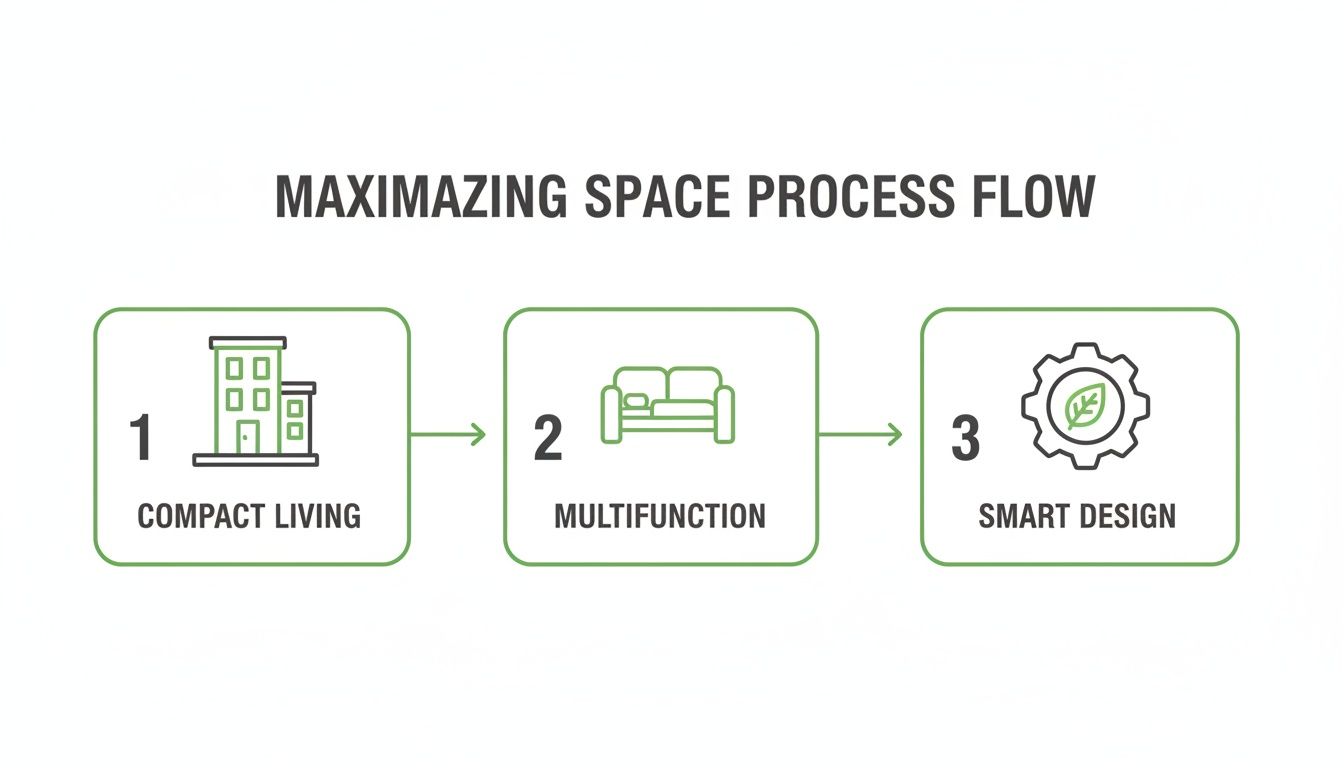
It breaks down how living compactly, using multifunctional pieces, and applying smart design principles all work together to create homes that are both efficient and sustainable.
Becoming a More Conscious Consumer
Making smart, informed choices is easier than you think. It really just starts with a little curiosity and knowing what to look for. One of the best signals of responsibly sourced wood is the Forest Stewardship Council (FSC) certification. When you see that label, it’s a guarantee the wood came from a forest managed to protect biodiversity and support local communities.
Thinking about a product's entire lifecycle—from creation to its eventual end—is the heart of circular design. It encourages us to invest in pieces that are built to last, can be repaired, or can be recycled into something new, breaking the "buy, use, dispose" cycle.
If you want to breathe new life into pieces you already own, you can upcycle furniture with easy DIY tips. It’s a creative way to get a fresh, on-trend look while being incredibly sustainable.
The Power of Investing in Quality
At the end of the day, one of the most sustainable things you can do is simply buy less. That means investing in high-quality furniture built to last for generations, not just for a season. It’s about shifting from a "fast furniture" mindset to one that values "forever pieces." When you choose a well-crafted item, you're more likely to care for it, repair it, and cherish it for years to come.
This approach not only cuts down on waste but also helps you create a home filled with meaningful objects that tell your story. To dive deeper and find brands doing it right, check out our guide to https://fluenttrends.com/blogs/news/sustainable-furniture-brands making a real difference. Embracing sustainability is a journey, and every thoughtful choice helps build a healthier home and a healthier planet.
The Colors and Textures Defining Modern Comfort
Forget stark whites and cold minimalism. The real story in furniture today is about how a room feels. It's all about the sensory experience—the colors and textures that turn a simple space into your personal sanctuary. This year, the trends are pulling us back to palettes and materials that feel grounding, comforting, and seriously inviting.
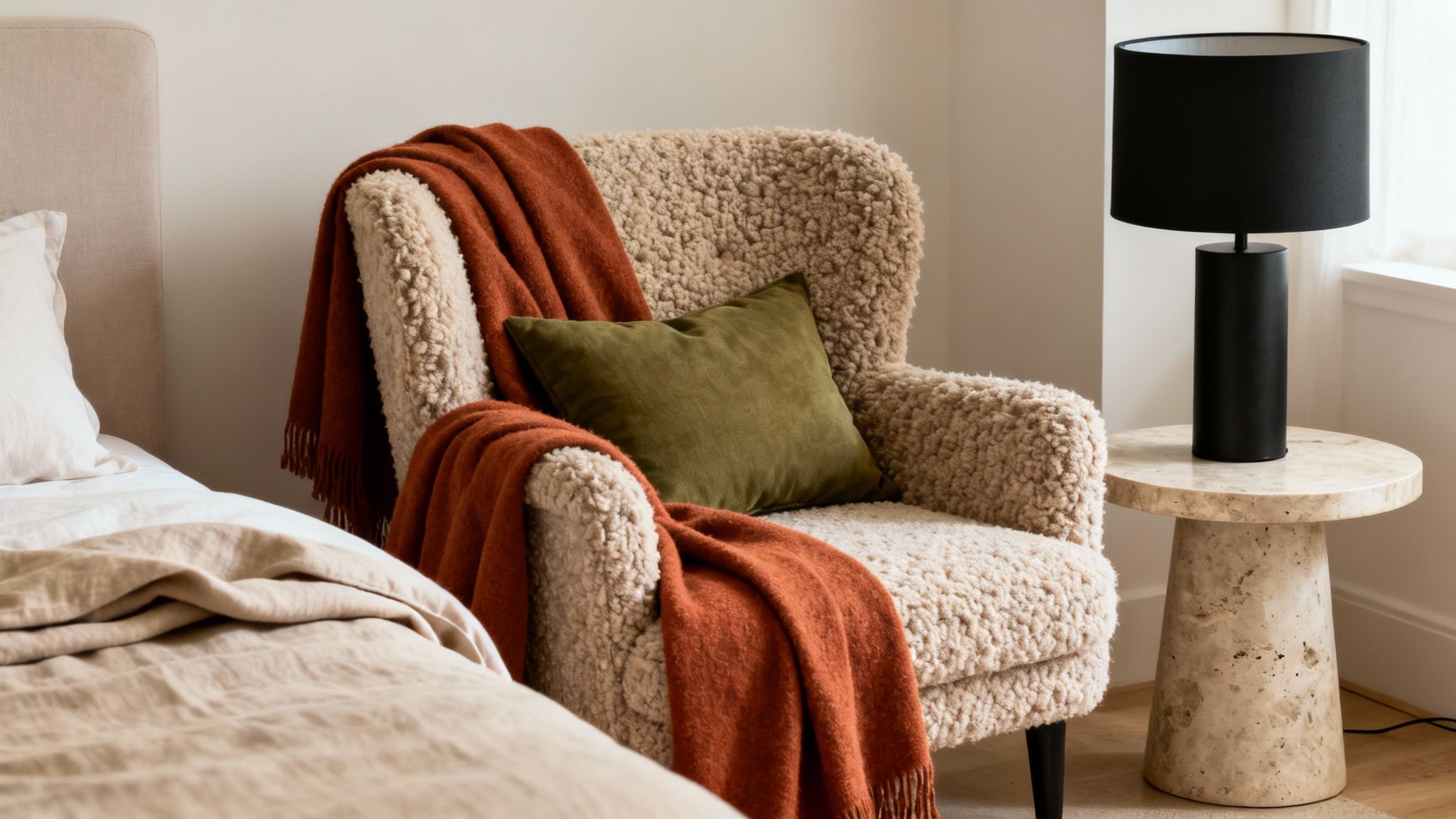
We're seeing a huge shift toward colors pulled straight from the natural world. Picture a desert landscape at sunset or a misty morning in the forest. These are the shades creating serene, calming atmospheres—a welcome escape from our screen-saturated lives.
An Earthy and Grounded Color Palette
The dominant color story is all about warmth and tranquility. What’s great is that these shades work beautifully together, letting you create a layered, sophisticated look that feels both completely current and timelessly elegant. They’re versatile enough to be a calming backdrop or the star of the show in a statement piece.
Here are the hues we’re seeing everywhere:
-
Rich Terracotta and Clay: These warm, baked-earth tones bring an instant sense of history and groundedness to a space. They're perfect for an accent wall, cozy upholstery, or a collection of decorative pottery.
-
Calming Olive and Sage Greens: Soft, muted greens are the ultimate connection to nature. They act as a sophisticated new neutral, promoting a real sense of relaxation in bedrooms and living areas.
-
Warm, Earthy Browns: From deep chocolate to soft beige and caramel, these comforting tones create that cozy, enveloping feeling everyone craves. They are the foundation for building a warm, inviting room.
But it’s not all muted tones. To keep things from feeling too quiet, we’re seeing pops of bold, optimistic jewel tones. Think deep blues, emerald greens, and rich burgundies used as powerful accents to inject life and personality.
Materials That Beg to Be Touched
Texture is playing just as big a role as color. The materials trending right now are all about tactile appeal, creating a space that feels just as good as it looks. The focus is on softness, organic finishes, and a touch of quiet luxury.
The real magic happens when you create a multi-sensory environment. Layering different textures—the soft loop of boucle against the cool smoothness of stone—is the secret to adding depth and preventing your design from feeling flat.
This approach is what gives a room that professionally designed feel.
The Key Textures to Embrace
These materials are showing up on everything from massive sofas to the smallest decorative objects, each adding its own unique vibe.
-
Boucle: This looped, almost fleecy fabric is the undisputed star of upholstery. It adds instant softness and incredible visual texture, especially on those gorgeous curved sofas and armchairs.
-
Plush Velvets: Velvet has officially broken out of the formal living room. We’re seeing it in rich, earthy tones that add a touch of luxury and unbelievable softness. The way it catches the light adds so much dimension.
-
Organic Linens: For a more relaxed, airy feel, natural linen remains a top choice for curtains, pillows, and slipcovers. Its slightly imperfect, slubby texture brings a layer of casual elegance.
-
Travertine and Natural Stone: Moving beyond countertops, materials like travertine are making a statement in coffee tables, side tables, and console tables. Their subtle, porous texture offers a sophisticated, organic counterpoint to all the soft fabrics.
-
Matte Black Metals: To add a sleek, modern edge, matte black finishes are key. You'll find them on lighting, table legs, and hardware, creating a sharp contrast that helps ground the softer, more natural elements in the room.
When deciding which trends to invest in, it can be tough to distinguish between a fleeting fad and a style with staying power. This table breaks down some of the current color and material trends to help you choose wisely for long-term satisfaction.
Current Trend vs. Timeless Appeal Comparison
| Trend Element | Characteristics | How to Incorporate for Longevity | Potential Fad to Use Sparingly |
|---|---|---|---|
| Colors | Earthy palettes (terracotta, sage, brown) and jewel tones (emerald, sapphire). | Use earthy tones on larger, foundational pieces like sofas or walls. They act as versatile neutrals. | Reserve bold, trendy jewel tones for easily swappable accents like pillows, throws, or artwork. |
| Fabrics | Tactile and textured (boucle, plush velvets, natural linens). | Invest in quality velvet or linen for anchor pieces. These have classic appeal. | Boucle is hugely popular but may date. Try it on a single armchair or ottoman instead of a large sectional. |
| Hard Materials | Natural and organic (travertine, raw wood, rattan). | A beautiful travertine coffee table or a solid wood sideboard will remain stylish for decades. | Overuse of rattan can feel overly "boho." Use it selectively for a single chair or light fixture. |
| Metals | Matte black and unlacquered brass. | Matte black is a modern classic for hardware and lighting, offering a grounding contrast. | Unlacquered brass is beautiful but requires upkeep. Use it on smaller items if you're not committed to the patina. |
Ultimately, the goal is to choose elements that you genuinely love. By thoughtfully combining these trending colors and textures, you can craft a space that truly embodies modern comfort—one that feels personal, deeply connected to the natural world, and a joy to come home to.
Embracing Curves and Softer Silhouettes
It’s time to move on from a world of sharp angles and rigid, straight lines. One of the most visually satisfying trends we’re seeing right now is a full-on embrace of curves and softer silhouettes. This is all about swapping out those harsh corners for gentle, rounded edges that practically invite you to come in and relax for a while.
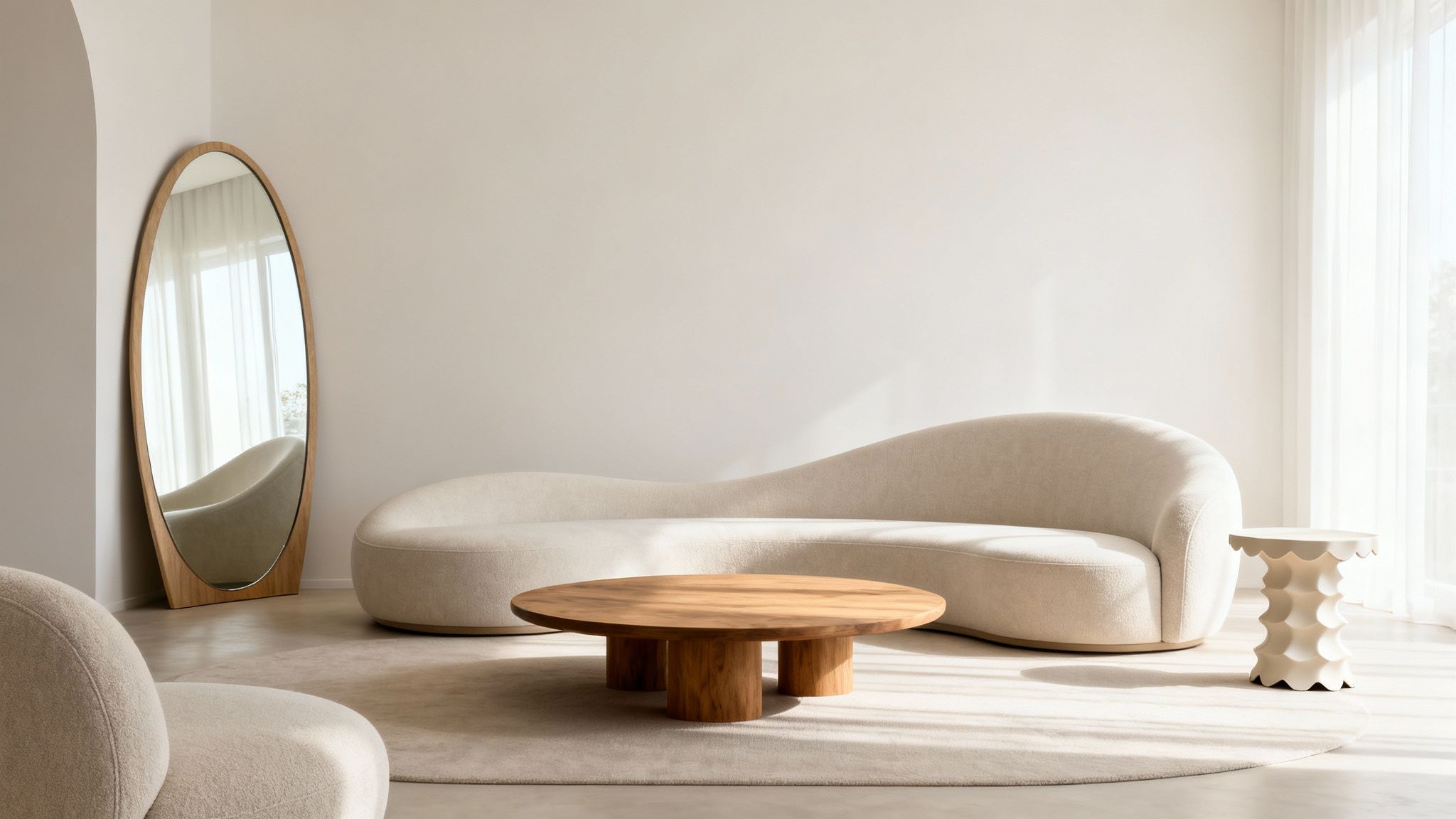
This shift isn't just about looks; it taps into something much deeper. Just think about the shapes you see in nature—the slow curve of a riverbank, the smooth arc of a hillside, or the imperfect roundness of a pebble. We’re hardwired to find these organic forms calming. Bringing them into our homes helps create spaces that feel more nurturing, welcoming, and just plain human.
The Psychology of Soft Shapes
In design, straight lines and sharp angles create a sense of order and structure, which can sometimes feel a bit formal or even cold. Curves, on the other hand, let your eye glide smoothly through a room, creating a feeling of flow and movement. It's a subtle visual trick that can make a space feel more open and relaxed.
A rounded sofa, for example, doesn't just look comfy; it psychologically nudges people toward conversation and connection. There’s no "head of the table" with a circular dining set, which naturally makes meals feel more communal and inclusive. It’s a direct answer to our collective need for homes that are true sanctuaries—places of comfort and emotional rest.
The rise of curved furniture is a clear move away from rigid symmetry and toward fluid, organic forms that promote a sense of energy and motion. It’s about creating an environment that feels both cozy and dynamic at the same time.
How to Introduce Curves into Your Home
You don't need to do a complete teardown to bring this trend home. You can start small or go big, depending on your budget and how bold you’re feeling. The real magic happens when you balance these softer shapes with some of your existing straight-lined pieces to create a really interesting contrast.
Here are a few ways to get started:
-
Make a Statement with Seating: The fastest way to dive into this trend is with a serpentine or crescent-shaped sofa. A piece like that instantly becomes the star of the living room, setting a soft, inviting tone. If a new sofa isn't in the cards, an arched armchair or a set of dining chairs with rounded backs works beautifully, too.
-
Soften Your Surfaces: Try swapping a rectangular coffee table for a circular or kidney-shaped one. This one simple change can completely transform the flow of a room, making it easier to walk around and visually softer on the eyes. Round side tables or nesting tables are also fantastic, easy additions.
-
Look to Lighting and Mirrors: Arched floor lamps and mirrors are brilliant, low-commitment ways to play with this trend. A large, round mirror hung over a console table or fireplace can soften an entire wall and add a touch of instant elegance.
-
Think About the Details: Don't underestimate the small stuff. Look for decorative pieces like scalloped-edge trays, rounded vases, or circular ottomans. These little touches add layers of softness and reinforce the organic theme, helping you pull together one of the most welcoming latest furniture trends.
Incorporating High-End Trends on a Real-World Budget
It’s one thing to flip through a design magazine and fall head-over-heels for a stunning look. It’s another thing entirely to bring that style home without breaking the bank. But here's the secret: you don't need a limitless budget to create a home that feels current and chic.
All it takes is a little strategy.
The best way to think about it is a simple but powerful framework: Splurge, Save, and DIY. This approach helps you pinpoint where your money makes the biggest impact and where a little creativity can deliver a high-end look for a fraction of the cost. It’s all about being intentional.
Know When to Splurge
Some pieces are the anchors of a room—the furniture you live on, day in and day out. Your sofa, your dining table, your bed. These are the workhorses of your home, and they’re absolutely worth the investment.
Think of these items as the foundation. They need to withstand real life, so quality, comfort, and durability are everything. When you invest in a great foundational piece, like a well-made sofa in a timeless shape, you’re buying longevity. It becomes the perfect canvas you can dress up with new decor for years to come.
A great rule of thumb is to splurge on items that get the most daily use and physical contact. Prioritizing craftsmanship here isn't just about luxury; it's about smart spending that saves you from replacing cheap furniture down the line.
Find Smart Ways to Save
Now for the fun part. This is where you get to play with the more of-the-moment latest furniture trends without the long-term commitment. Accent pieces are your best friends when decorating on a budget because they’re smaller, less expensive, and easy to swap out when you’re ready for a change.
Look for budget-friendly finds in these categories:
-
Accent Tables: A small side table or coffee table is a low-risk way to try out a new material, like a travertine-inspired top or a pop of matte black metal.
-
Decorative Lighting: You can introduce a trendy curved silhouette with a stylish table lamp or an arched floor lamp without a huge financial outlay.
-
Textiles and Decor: Pillows, throws, and vases are the ultimate trend testers. They’re the easiest way to bring in this season's colors and textures, like rich boucle fabric or earthy terracotta tones.
Embrace the Power of DIY
Never underestimate what you can do with your own two hands. A little DIY elbow grease can turn a cheap or dated find into something that looks completely custom and feels deeply personal.
Even simple projects can have a massive impact. Imagine finding a tired wooden dresser at a thrift shop and giving it a whole new identity with a coat of on-trend olive green paint and some sleek new hardware. Or reupholstering the seat of an old armchair in a bold fabric to create a one-of-a-kind statement piece.
These projects do more than just save you money—they infuse your home with a story and a character that you simply can't buy off a shelf.
Got Questions About Furniture Trends? We've Got Answers.
Jumping into the world of interior design can feel a little overwhelming, especially with styles always on the move. As you start bringing new pieces into your home, you might wonder how to make them last, how to mix and match, or where to even start shopping. Let's clear things up so you can decorate with confidence.
How Do I Keep My Trendy Furniture from Looking Dated in a Year?
This is the million-dollar question, isn't it? The trick is learning to spot the difference between a real movement and a micro-fad. Big-picture trends like sustainability or multifunctional design are here to stay because they reflect how we actually live. They have real staying power.
For your big, foundational pieces—like your sofa, bed frame, or dining table—stick with classic, clean lines. You can still nod to current trends by choosing a sustainable wood or a beautiful, neutral-textured fabric. Think of these as your investment pieces.
Then, have fun with the smaller, less expensive stuff.
This is where you can really play. Use accent pieces—throw pillows, a bold piece of art, a funky vase—to bring in those exciting, of-the-moment colors and patterns. It’s the easiest, most affordable way to keep your home feeling fresh without having to swap out your major furniture every season.
What's the Best Way to Mix Different Trends Without It Looking Chaotic?
When you’re blending different styles, the secret is to find a common thread that ties everything together. It could be a consistent color palette, the same type of wood, or a shared design mood. This unifying element is what makes a room feel intentionally designed, not just thrown together.
For example, you could absolutely pair a curvy, bouclé sofa (hello, organic silhouettes!) with a reclaimed wood coffee table (a nod to sustainability). Just make sure they share a similar warm, neutral undertone, and they'll look like they were made for each other.
A simple rule that pros use is the 80/20 rule:
-
80% of your room should be your timeless, neutral base.
-
20% of your room is your playground for one or two new trends.
Should I Buy Trendy Furniture Online or In a Store?
Honestly, the best approach is a little bit of both. They each have their strengths. Online shopping is amazing for discovery—you get an incredible selection and can easily compare prices to find exactly what you're looking for. The only downside is you can't feel it.
That's where in-store shopping comes in. Being able to actually sit on a sofa, feel the fabric, and see the true color in person is so important, especially for those big-ticket items. You really want to know if it's as comfortable and well-made as it looks. A smart strategy is to do your initial research and get inspired online, then head to a showroom to make the final call on foundational pieces.
Ready to bring these ideas to life? Take a look through the curated collections at Fluent Trends, where you’ll find designer-approved furniture and decor that beautifully balances timeless style with a modern feel. Start shopping our collections now.