

Latest Home Furnishing Trends: A Modern Home Guide
Donna MaloneThe latest currents in home furnishing are all about three big ideas: creating a sanctuary for wellbeing, making room for multifunctional practicality, and expressing your unique personality. We’re moving past short-lived fads and focusing on comfort, sustainability, and spaces that truly work for the way we live now.
Understanding the New Direction in Home Design
Today’s approach to furnishing a home is less about following a strict set of rules and more about creating an environment that genuinely supports our day-to-day lives. We’re not just decorating anymore; we're designing personal retreats that double as offices, home gyms, and gathering spots.
This evolution has shaped a global home furnishing market now valued at over $1 trillion, all driven by our collective desire for comfort, versatility, and eco-friendly choices. If you're curious about the numbers, you can dive into the full home furnishing market research to see how these preferences are steering the industry.
This new way of thinking rests on a few core pillars that are guiding all the latest home furnishing trends.
The Core Themes Shaping Our Homes
Instead of one single "it" look, current trends revolve around powerful concepts that meet both our emotional and practical needs. These foundational ideas are what make a house feel like a modern, responsive home.
- The Home as a Sanctuary: There's a huge shift toward creating calm, restorative spaces. This means leaning into natural materials, soft textures, and biophilic design (bringing the outdoors in) to dial down stress and invite a sense of peace.
- Functionality First: Our homes now wear many hats, and our furniture needs to keep up. Think adaptable pieces, smart storage, and flexible layouts that make every square foot count without cramping your style.
- Personality and Self-Expression: The cookie-cutter, show-home look is officially out. Homeowners are now telling their own stories with bold colors, unique patterns, and handcrafted pieces that make a space feel authentic and truly lived-in.
To help you get a clearer picture, this table breaks down the three central themes driving today’s design choices.
Key Home Furnishing Trend Themes at a Glance
| Trend Theme | Core Concept | Key Elements |
|---|---|---|
| Sanctuary | Creating a peaceful, restorative environment that promotes wellbeing. | Natural materials, calming color palettes, soft textures, biophilic design. |
| Functionality | Designing spaces that are adaptable, efficient, and serve multiple purposes. | Multifunctional furniture, smart storage solutions, flexible room layouts. |
| Personality | Expressing individual identity and personal stories through decor. | Bold colors, unique patterns, handcrafted items, curated art and objects. |
These themes—Sanctuary, Functionality, and Personality—aren't just separate ideas; they work together to build the foundation of a modern home, as this map shows.
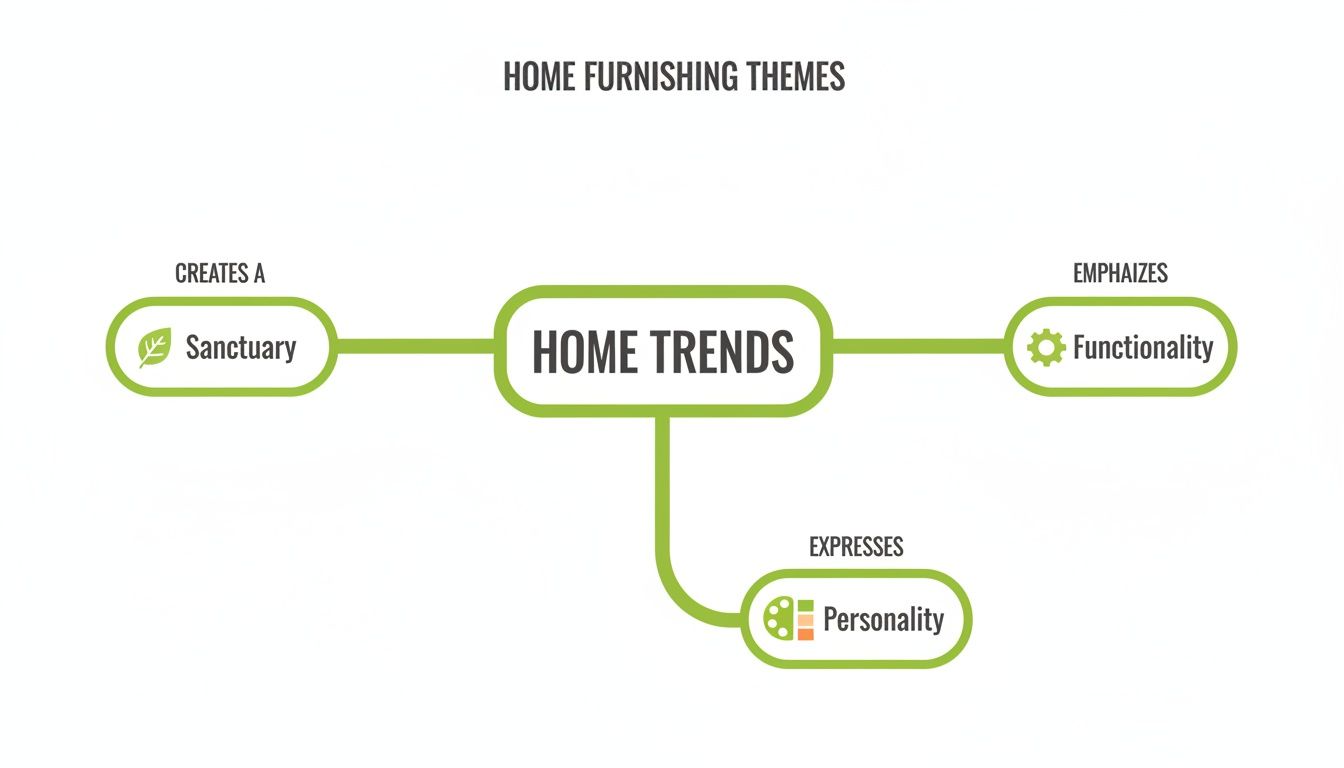
As you can see, these pillars are interconnected, working in harmony to create a living space that’s both balanced and thoughtful. In this guide, we'll unpack each of these concepts and give you actionable advice for bringing them to life in your own home.
Bringing Nature Indoors with Sustainable Design
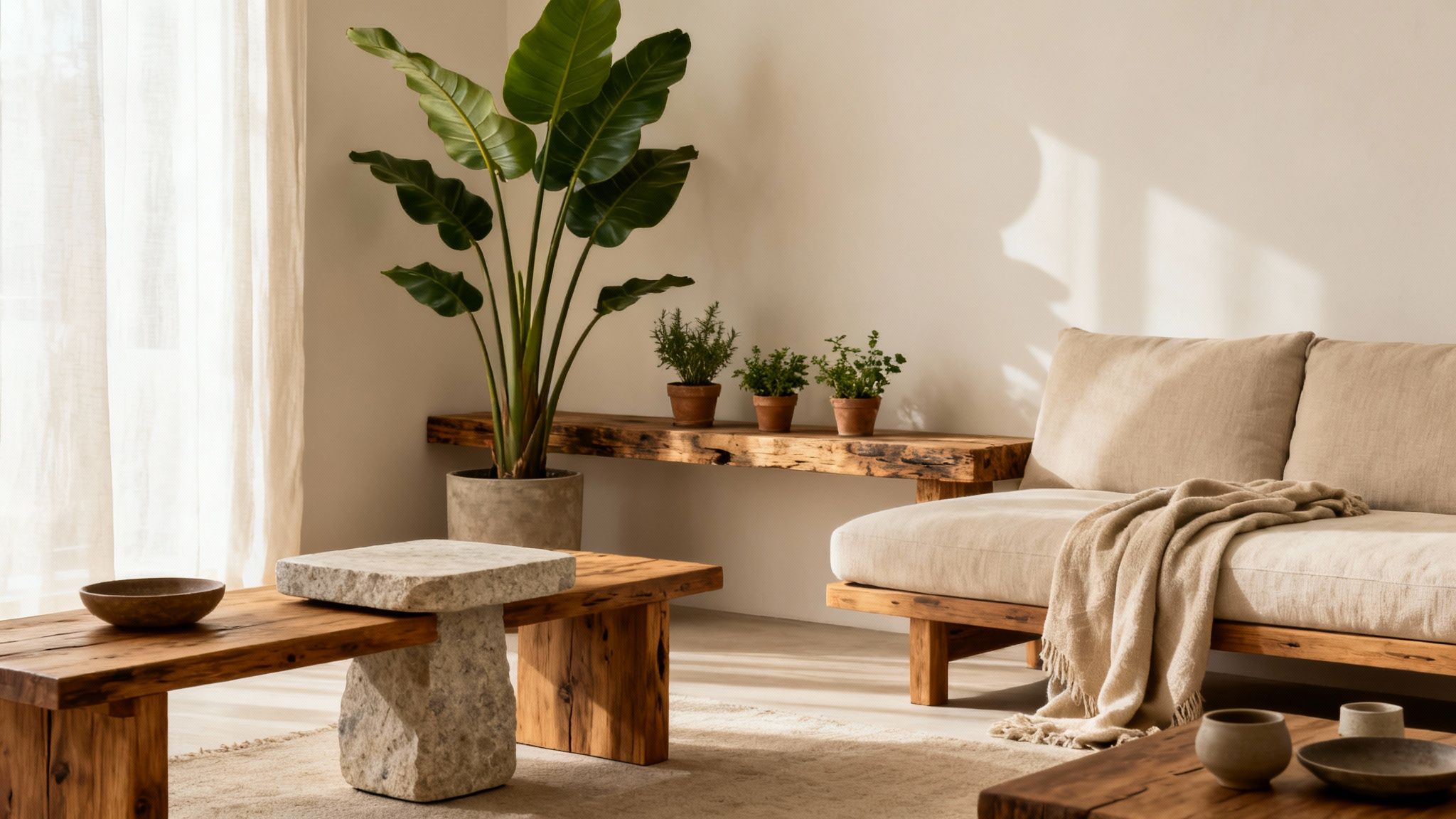
One of the biggest movements we’re seeing in home design isn’t really a trend at all—it's a return to something fundamental. We’re erasing the hard lines between our homes and the great outdoors, and it's about so much more than scattering a few houseplants around.
This philosophy is called biophilic design, and it’s rooted in our innate, almost primal need to connect with nature. When we bring natural elements inside, our homes become calming sanctuaries that genuinely reduce stress. Think of a sterile, minimalist room versus one filled with warm wood and soft light. Which one makes you want to take a deep breath and unwind? Exactly.
This idea is the driving force behind so many of today's most beautiful interiors, and it all starts with choosing the right materials and embracing a more sustainable mindset.
Embracing Natural Materials and Textures
The heart of biophilic design lies in using authentic materials that you can see and feel. We're moving away from the perfectly manufactured and embracing the perfectly imperfect—the organic textures and earthy tones that feel real to the touch.
These materials give a room a sense of history and depth that mass-produced items just can’t replicate. The unique grain in a piece of oak or the subtle veining in a marble slab tells a story, adding character that makes a space feel truly yours.
Ready to get started? Focus on these core elements:
- Warm Woods: Oak, walnut, and bamboo instantly make a room feel cozier and more grounded. They work beautifully for everything from flooring and coffee tables to accent shelving.
- Natural Stone: Materials like marble, granite, and slate bring in a cool, earthy element that balances out softer textures. They’re perfect for countertops, fireplace surrounds, or a striking accent table.
- Organic Textiles: To add softness and comfort, you need natural fabrics. Think linen curtains, wool rugs, cotton throws, and jute baskets to layer in that essential touchable quality.
A fantastic trick for creating a dynamic, layered look without using bold colors is to mix different earthy neutrals with a variety of textures. Combining linen, wool, and jute, for instance, adds a rich, multi-dimensional feel that keeps a neutral palette from ever feeling flat.
The Rise of Sustainable Furnishing
Right alongside our love for natural materials is a massive shift toward sustainability. We’re all becoming more aware of how our choices impact the planet, and that consciousness is reshaping the furniture industry for the better.
Choosing sustainable furniture isn't just about being eco-friendly; it's about investing in well-made pieces that are healthier for you and your home. It means supporting companies that prioritize responsible sourcing and ethical production. Luckily, more and more incredible designers and brands are stepping up to make this a central part of their mission.
How to Identify and Choose Sustainable Pieces
It can feel a little daunting to figure out what's genuinely sustainable, but you don't have to be an expert. The key is to look for brands that are transparent about how and where their products are made. To get you started, we’ve put together a list of top-tier sustainable furniture brands that beautifully blend style and substance.
Here are a few things to keep an eye out for when you're shopping:
- Reclaimed and Recycled Materials: Look for furniture crafted from reclaimed wood, recycled metals, or even plastics. These pieces give old materials a new purpose and dramatically reduce waste.
- Certifications: Certifications like FSC (Forest Stewardship Council) are a great sign. It means the wood was harvested from forests that are managed responsibly.
- Non-Toxic Finishes: Prioritize pieces that use low-VOC (volatile organic compounds) or zero-VOC paints and stains. They don't release harmful chemicals into your home, which is a huge win for indoor air quality.
- Ethical Production: Support companies that are open about their supply chains and committed to fair labor practices. This often goes hand-in-hand with choosing artisanal or handcrafted items from smaller workshops.
By focusing on biophilic design principles and making thoughtful, sustainable choices, you’re doing more than just keeping up with trends. You’re creating a home that’s healthier, calmer, and more connected to the world around you—a timeless space you'll love for years to come.
How Curves and Textures Are Redefining Comfort
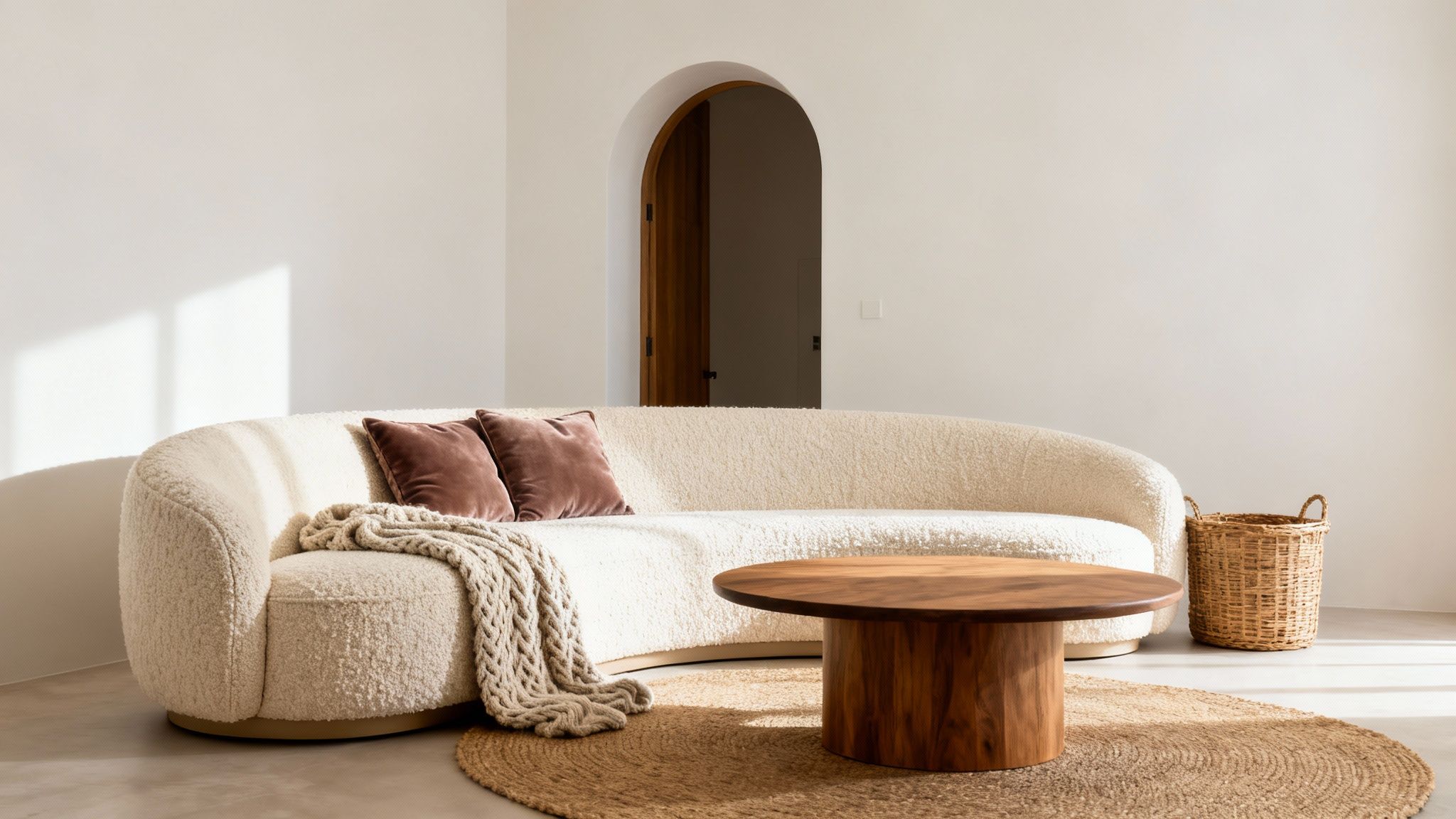
Tired of sharp angles and rigid furniture? You're not alone. One of the biggest shifts we're seeing right now is a move toward "soft modernism," a design philosophy that champions gentle forms and touchable surfaces to create spaces that feel as good as they look.
Think of it this way: a straight line gets you there, but a curve makes the journey more interesting. This idea is completely reshaping our homes, making our living rooms, bedrooms, and even our architecture feel more fluid and fundamentally human.
This isn't just a random fad. It’s a direct response to our collective need for sanctuary and comfort. After years of crisp, sometimes cold minimalism, we're craving visual softness and a sense of being cocooned in our own homes.
The Gentle Power of Curved Furniture
The most obvious sign of this trend is the return of curved furniture. Sofas with rounded backs, circular coffee tables, and chairs with softened edges are taking center stage, and for good reason.
These pieces do more than just look chic; they completely change the energy of a room. A curved sofa, for instance, naturally encourages conversation by turning people toward each other. It’s a subtle shift from a linear couch, which can feel more formal and presentational.
Keep an eye out for these popular forms:
- Kidney-shaped Sofas: A cool nod to mid-century design, these sofas create an organic, flowing centerpiece.
- Round Coffee Tables: Getting rid of sharp corners makes a space feel safer and more open—a huge plus for smaller rooms or homes with kids.
- Arched Silhouettes: From bookcases to headboards and even doorways, arches bring a sense of architectural grace that draws the eye upward and softens the whole room.
Layering Textures for a Multi-Sensory Experience
While curves provide the visual framework, texture is what truly brings a room to life. A space filled with varied textures invites you to slow down, relax, and engage with your surroundings on a much deeper level.
Imagine running your hand over a plush velvet pillow or sinking your feet into a thick wool rug first thing in the morning. These little moments are what creating a cozy and comfortable home environment is all about. It’s less about just looking good and more about feeling nurtured.
The real secret to layering textures like a pro? Contrast. Pairing something smooth and cool, like a leather chair, with a chunky, warm knit throw creates a dynamic balance that’s both visually stunning and incredibly inviting.
Key Textures to Incorporate Now
Mixing and matching different materials is the fastest way to build a rich, layered interior. Focus on bringing in a variety of touchable surfaces to create depth and warmth.
Here are the textures taking over today’s most stylish interiors:
| Texture Type | Signature Materials | How to Use Them |
|---|---|---|
| Soft & Cozy | Bouclé, velvet, chunky knits, shearling | Perfect for sofas and accent chairs. Also great for throw pillows and blankets to add instant comfort. |
| Natural & Earthy | Rattan, jute, wicker, raw wood | Use these for area rugs, pendant lights, and storage baskets to ground the space with an organic feel. |
| Sleek & Smooth | Marble, travertine, polished metals, glass | Incorporate them through coffee table tops, decorative objects, and lighting to provide a cool, refined contrast. |
By thoughtfully combining gentle curves with a rich palette of textures, you can transform any room from just a place you live into a sanctuary. This approach goes beyond passing trends to address a core human need for comfort and security. It proves that great style is as much about how a space feels as how it looks.
Using Color and Pattern to Personalize Your Space
For what felt like an eternity, the design world was stuck in a safe, neutral orbit of grays, beiges, and whites. While there’s a time and place for those calming shades, the most exciting shift in home furnishings today is the confident, unapologetic return of color and pattern.
It feels like a collective deep breath—a decisive move away from minimalist caution and toward spaces that are bursting with personality.
This isn’t about just throwing loud colors at the wall and hoping for the best. It’s a smarter, more intentional approach. Think of color as the soundtrack for your home: it sets the mood, directs the eye, and tells your story without you having to say a single word.
The New Color Palettes Defining Modern Homes
The color palettes catching on right now are pulled straight from nature and nostalgia, offering a sophisticated alternative to basic primary colors. They feel grounded, emotionally resonant, and honestly, just a lot easier to live with day-to-day.
The goal is to create an immersive feeling. When a room is wrapped in a single color family, it feels deliberate and complete, transforming an ordinary space into something memorable.
Here are the key color families making waves:
- Warm Earth Tones: Think terracotta, ochre, rust, and sage green. These colors bring a comforting, organic warmth into a home. They’re incredibly grounding and look fantastic paired with natural materials like wood and rattan.
- Deep Jewel Tones: Emerald green, sapphire blue, and rich amethyst are being used to inject a dose of drama and luxury. They’re perfect for a statement sofa, a feature wall, or plush velvet curtains.
- Sophisticated Pastels: Forget the baby’s room. Today's pastels are more complex and muted—like dusty rose, soft butter yellow, and pale mint. They add an airy, gentle touch without feeling overly sweet.
A key concept driving modern color is "color drenching." This is where you commit to a single hue across walls, trim, and even furniture. The result is a high-impact, cohesive look that feels both incredibly bold and surprisingly peaceful.
Making a Statement with Expressive Patterns
Right alongside this color revival, patterns are making a huge comeback. After so long with clean lines and solid everything, we’re finally appreciating the life and character that a great pattern can bring to a room. This is where you really get to have some fun.
Just like with color, the patterns we’re seeing are all about telling a story. Whether it’s organic, flowing designs or sharp, modern graphics, there’s something for every style. The trick is to use them strategically to create a focal point or add another layer of detail.
How to Weave Color and Pattern into Your Decor
The best part? You don’t need to gut your entire house to embrace this trend. Its beauty lies in its flexibility—you can dive in headfirst or just dip a toe in the water.
Here are a few actionable ideas to get you started:
- Start with Textiles: This is the easiest, lowest-commitment way to experiment. Try adding new throw pillows, a vibrant area rug from our indoor-outdoor collection, or a new set of curtains.
- Create an Accent Wall: Painting a single wall in a deep jewel tone or covering it in a bold wallpaper can completely shift a room’s energy without overwhelming the space.
- Choose Statement Furniture: Ready for something bigger? A velvet sofa in a rich emerald green or an armchair upholstered in a gorgeous floral print can become the stunning centerpiece of your living room.
- Incorporate Patterned Dinnerware: Don't let your dining room miss out on the fun! A beautiful set of patterned dinnerware makes every meal feel a little more special and doubles as functional art for your table.
By embracing color and pattern, you’re making a choice to create a home that’s a true reflection of you—a personal sanctuary that feels vibrant, joyful, and anything but generic.
Adapting Your Home with Multifunctional Furniture
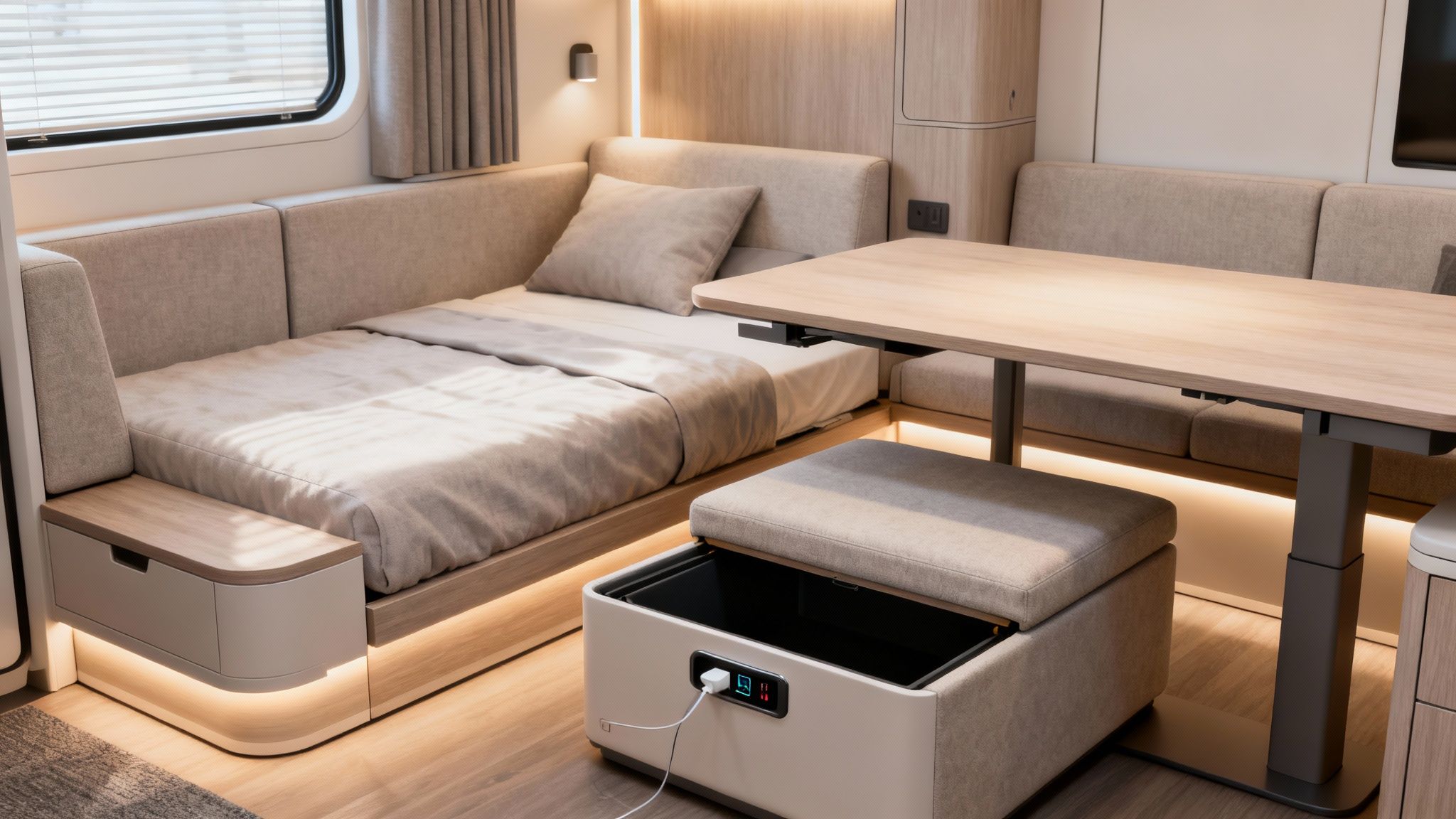
The old idea of a home with rooms for just one thing—a dining room for dining, a living room for living—is fading fast. Our spaces now have to work as hard as we do. Living rooms are now home offices, bedrooms double as gyms, and kitchen islands become conference tables. This new reality is calling for smarter, more adaptable furniture, making multifunctional design one of the most practical and lasting trends out there.
At its heart, multifunctional furniture is about getting more from less. It’s about clever pieces that let you maximize every last square foot without cramping your style, so your home can switch from work to relaxation in a heartbeat.
Maximizing Space with Smart Designs
The whole point of this trend is efficiency. It’s about finding a single piece that can do the job of two or three. Think of a coffee table that smoothly lifts up to create a perfect work-from-home desk, or a chic ottoman that hides a surprising amount of storage for blankets, pillows, and board games.
Forget the clunky, awkward convertible furniture you might remember from the past. Today’s designs are engineered to be seamless and stylish. The mechanisms are fluid, the aesthetics are sophisticated, and the dual purposes are so well integrated you’d never know one piece could be so versatile.
A few great examples we’re seeing everywhere:
- Modular Sofas: These sectionals can be rearranged in minutes, easily shifting from a sprawling setup for movie night to an intimate arrangement for conversation.
- Expandable Dining Tables: An entertainer’s dream. They stay compact for everyday meals but effortlessly extend to welcome extra guests for dinner parties.
- Storage Beds: A lift-up mattress platform can reveal a massive hidden storage area, often eliminating the need for a bulky dresser and freeing up precious floor space.
Making the most of a smaller footprint can feel like a puzzle, but there are some fantastic guides out there for finding the best furniture for small apartments that offer really creative and practical ideas.
The Integration of Discreet Technology
Beyond just physical transformation, the next evolution in smart furniture is the quiet integration of technology. Our lives are plugged in, and our furniture is finally catching up. This isn’t about gimmicky gadgets; it’s about discreet, helpful features that just make life flow a little better.
Imagine a nightstand with a built-in wireless charging pad, so you can finally ditch the tangle of bedside cables. Or picture a media console with powerful, hidden speakers that deliver incredible sound without cluttering your room with extra equipment.
The ultimate goal of tech-integrated furniture is convenience that feels invisible. The technology should blend so effortlessly into the design that it enhances your life without ever demanding your attention. It’s there when you need it and disappears when you don’t.
Choosing Versatile Pieces for a Modern Lifestyle
When you’re shopping for multifunctional furniture, start by thinking about your daily life. What are your biggest pain points? Where could you use a little more flexibility?
Here are a few tips to help you choose wisely:
- Prioritize Quality Mechanics: For anything that moves or transforms—like a sleeper sofa or an expandable table—make sure the mechanism is smooth and sturdy. You want it to feel effortless, not like a workout.
- Assess Your True Needs: It’s easy to get wowed by a cool feature, but will you actually use it? If you often work from your couch, that lift-top coffee table is a no-brainer. If you rarely have overnight guests, a storage bed might be a better investment than a sleeper sofa.
- Consider Visual Weight: Smart furniture in a smaller space should feel light and airy. Look for pieces with clean lines, slim legs, and neutral tones that won't overwhelm the room. For more inspiration, our guide on the best furniture for small spaces is packed with great ideas.
By choosing adaptable, tech-savvy pieces, you’re doing more than just furnishing your home for right now. You’re future-proofing it, creating a flexible foundation that can evolve right along with you.
Choosing Timeless Pieces Over Passing Fads
Keeping up with the latest home furnishing trends can feel like a high-wire act. You want a home that feels fresh and alive, but the fear of your expensive new purchase looking dated in a year is very real.
The secret isn't to ignore trends altogether. It's about building a smart, layered foundation that lets you play with new ideas without gutting your space every few years.
Think of it like building a killer wardrobe. You start with the classics—that perfectly tailored coat, those amazing leather boots—that form the backbone of your look. Then you sprinkle in trend-forward accessories to keep things interesting. Your home works the exact same way, giving you a beautiful balance of longevity and personality.
This mindset is a game-changer for your wallet and your sanity. By knowing where to invest and where to experiment, you create a timeless canvas that can evolve right along with you.
Where to Invest for Longevity
When you're planning your budget, some pieces just demand a bigger slice of the pie. These are the workhorses of your home, the items you'll use day in and day out. They need to stand up to life and look good doing it.
For these core pieces, think classic shapes, durable materials, and neutral-but-not-boring tones.
Here’s where your investment dollars make the most impact:
- The Sofa: This is the undisputed heart of your living room. Look for a solid frame and high-performance upholstery in a go-anywhere color like a deep charcoal, classic navy, or a sophisticated warm neutral.
- The Bed Frame: Your bedroom is your sanctuary, and a solid, well-made bed frame is its foundation. You can’t go wrong with natural wood or a clean, simple upholstered design—they never go out of style.
- The Dining Table: This is where life happens. A dining table built from solid wood or stone is made to last through countless dinners and conversations. Its first job is to be strong and functional for years to come.
By putting your money into these "forever" pieces, you're building a reliable, high-quality backdrop. That's what gives you the freedom to have fun with smaller, less expensive items that tap into the latest home furnishing trends—without the risk of a major design regret.
Where to Play with Trends
Now for the fun part. This is where you can let your personality loose and really engage with the styles you're loving right now. Accent pieces are your low-commitment, high-impact ticket to bringing new colors, materials, and textures into your home.
Best of all? They’re easy to swap out when you’re ready for a change.
Consider these areas your personal trend playground:
- Pillows and Throws: Nothing transforms a sofa faster than a new set of pillows in a trending texture like bouclé.
- Decorative Objects: Vases, sculptures, and catch-all trays are perfect for trying out materials like fluted glass or travertine.
- Art and Wall Decor: A single piece of bold, abstract art can instantly give a room a modern edge.
- Rugs: An area rug is a brilliant way to define a space while introducing a fresh pattern or color palette.
- Lighting: Think of a sculptural table lamp or a statement pendant light as functional art.
Your Top Questions About Home Furnishing Trends, Answered
Jumping into the world of home decor trends can feel a little overwhelming. How do you bring in the new without ditching everything you already love? Let's tackle some of the most common questions to help you decorate with confidence.
We'll cover everything from mixing styles like a pro to making sure your personality still shines through.
How Can I Mix New Trends with My Existing Furniture?
The trick is to treat trends like spices in a recipe—they're there to enhance the main dish, not replace it. You don't have to overhaul your entire living room just to feel current.
Think smaller. If you're drawn to the warm, earthy textures we're seeing everywhere, try layering a jute rug under your classic coffee table. Or maybe toss a few bouclé pillows on the sofa you've had for years. It’s all about creating a rich, layered look that feels both fresh and familiar.
Pro Tip: Look for a bridge between your old and new items. It could be a color, a material (like wood or metal), or even a general shape. Finding that common ground is what makes a mix of styles feel deliberate and thoughtfully curated, not just thrown together.
What Is the Most Affordable Way to Update My Home?
Paint and textiles. No question about it. They deliver the most bang for your buck, hands down. A fresh coat of paint in a trending moody green or warm neutral can completely change the vibe of a room over a single weekend.
And when it comes to soft furnishings, a few simple swaps can work wonders:
- Pillow Covers: The easiest way to play with new colors, patterns, and textures without a big commitment.
- A Throw Blanket: Draped over an armchair or the foot of your bed, it’s an instant shot of cozy, modern style.
- An Area Rug: Nothing redefines a space faster. A new rug can anchor your furniture and pull the whole room together with a fresh foundation.
How Do I Follow Trends but Keep My Own Style?
Let your personal style be the filter for everything. Trends are just a buffet of ideas—you get to pick and choose what actually works for you and your life. Before you click "add to cart," ask yourself if you genuinely love the item and if it fits how you live.
For instance, if you're a minimalist at heart, you don't have to go all-in on a cluttered, maximalist look. You could nod to the curved furniture trend by adding a single sculptural accent chair with soft, organic lines. That way, you’re referencing what's current while staying 100% true to your own aesthetic. Your home should always feel like you.
Ready to find pieces that blend timeless style with a modern edge? Explore the curated collections at Fluent Trends and discover furniture and decor that will truly elevate your home. Find your next favorite piece today.