

Luxury Artisan Decor for Modern Homes
Yuatinia LeakTable of Contents
- What Defines Luxury Artisan Decor in Modern Interiors
- The Role of Texture and Tactile Materials
- Curating Artisan Decor for Cohesive Living Spaces
- Integrating Ceramics, Glass, and Forged Metal
- Handcrafted Home Accessories That Anchor Your Design
- Investment Value and Ethical Sourcing
- Layering Materials for Depth and Personality
- Conclusion
- Frequently Asked Questions
Last Updated: August 30, 2026
What Defines Luxury Artisan Decor in Modern Interiors
Luxury artisan decor represents handcrafted pieces created with intentional design and authentic craftsmanship. At Fluent Trends, we curate collections bridging fine art and functional home design. These pieces differ fundamentally from mass-produced alternatives through unique character, sustainable sourcing, and cultural narratives.
Artisan decor serves as the foundation for homes reflecting personal values and aesthetic sophistication. The distinction lies in the deliberate creation process. Handcrafted items carry visible evidence of makers' skill, from subtle glaze variations to organic irregularities defining authentic craftsmanship.
Modern luxury homes increasingly reject sterile perfection in favor of curated authenticity. True elegance emerges from intentional choices rather than trend-following. When you invest in luxury artisan decor, you acquire pieces designed to age gracefully while maintaining integrity.
Supporting women-owned businesses and global makers through purchasing decisions creates meaningful impact. Each piece tells a story of cultural heritage, traditional techniques, and dedicated artisans.
The Role of Texture and Tactile Materials
Texture transforms a space from visually interesting into genuinely engaging and memorable. Tactile surfaces invite interaction and create depth that flat finishes cannot achieve. In modern luxury interiors, texture serves as the primary vehicle for visual interest.
Hand-thrown ceramics showcase subtle surface variations that catch light differently throughout the day. The undulating surfaces of a ceramic pendant light create movement and shadow play impossible with industrial fixtures. Natural materials like bone inlay, mango wood, and travertine marble introduce organic irregularities.
Layering textures creates spatial depth and prevents interiors from feeling cold or sterile. A smooth marble surface paired with rough concrete, soft textiles, and carved wood creates visual richness. This textural contrast separates curated spaces from those simply containing furniture.
According to interior design principles from the American Society of Interior Designers, tactile elements significantly influence how occupants perceive and experience a room. Hand-finished surfaces demand attention in ways polished, uniform materials cannot match.
Consider the Ripple Ceramic Pendant Light from Fluent Trends. Its undulating stoneware surface creates continuous visual movement. The handcrafted ridges guide light across exterior contours, transforming illumination into sculptural presence.

Curating Artisan Decor for Cohesive Living Spaces
Cohesion in modern luxury interiors emerges from intentional material selection and thematic consistency. Successful curation requires understanding how individual items relate to one another. The goal is creating a narrative where each element supports the whole.
Start by identifying your core material palette. Will your space emphasize natural wood, stone, or metal? This foundational decision determines which artisan pieces harmonize within your environment. A room anchored by mango wood naturally welcomes additional wooden accents.
Color harmony matters equally in artisan curation. Handcrafted pieces often feature earthy tones and natural variations complementing neutral walls and minimalist furnishings. The warm amber tones of the Amber Wavefront Artisan Solid Wood Sideboard pair seamlessly with warm lighting.

Scale and proportion prevent artisan pieces from overwhelming spaces or disappearing into them. A large sculptural mirror demands careful placement where it can anchor an entire wall. Smaller decorative vessels work best in grouped arrangements creating visual weight.
The principle of intentional spacing separates curated interiors from cluttered ones. Artisan pieces deserve breathing room. Negative space allows each handcrafted object to command attention without competing for visual focus.
Integrating Ceramics, Glass, and Forged Metal
Ceramics, glass, and forged metal represent three distinct material languages creating sophisticated visual conversations. Each material responds to light differently and carries its own cultural significance. The interplay between these materials defines contemporary luxury design.
Hand-thrown ceramics offer organic imperfection and warmth that industrial materials cannot replicate. The Agadir Decorative Vessel brings timeless elegance through its honey base and deep glossy green top. Ceramic pieces work beautifully as standalone focal points or grouped arrangements.
Artisan glass brings transparency and light-play into interiors. Hand-blown pieces scatter light unpredictably, creating dynamic visual interest. Glass accessories work particularly well on shelves where natural light illuminates their surfaces throughout the day.
Forged metal introduces structural integrity and visual weight. Gold-finished metal legs on the Black Bone Inlay Console Desk with Gold Legs elevate the piece into sculptural statement. Handcrafted hardware adds refined detail that mass-produced alternatives cannot match.

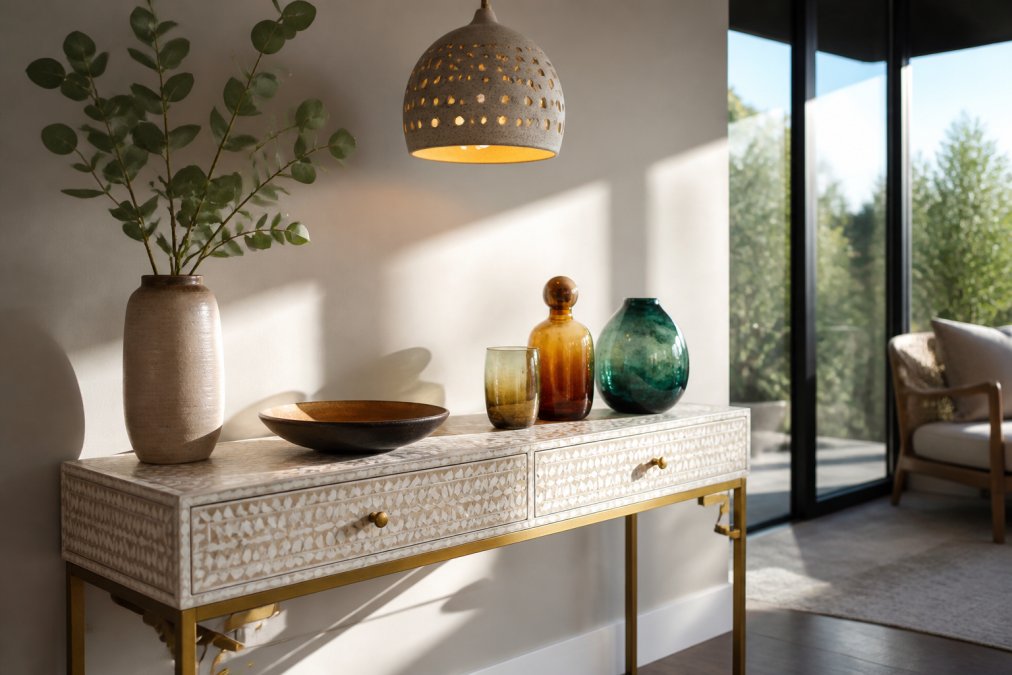
The combination of these materials creates depth and visual sophistication. A ceramic pendant light paired with a metal-legged console and glass accessories creates a cohesive narrative of intentional material selection.
Handcrafted Home Accessories That Anchor Your Design
Accessories define the difference between a furnished room and a curated living space. Handcrafted pieces serve as visual anchors establishing aesthetic direction and personal narrative. The right accessories transform functional spaces into expressions of intentional living.
Statement lighting fixtures function as both sculptural objects and practical necessities. The Ripple Ceramic Pendant Light operates simultaneously as an art installation and functional illumination. Handcrafted lighting demands to be noticed, creating focal points that organize visual hierarchy. Dust gently with soft, dry cloths and avoid harsh cleaning chemicals that damage glazes.
Decorative vessels and sculptural objects establish visual interest on shelves, console tables, and mantles. The Faceted Gold Aluminum Vase brings warmth and geometric interest to any surface. Grouping vessels of varying heights creates dynamic arrangements feeling intentional rather than accidental. Ceramic vessels benefit from occasional gentle cleaning with lukewarm water and soft brushes. Avoid submerging hand-thrown pieces unless the maker confirms waterproofing.
Mirrors function as both practical accessories and spatial expanders. The Blackwash Mango Wood Wall Mirror and Wavy Mango Wood Wall Mirror introduce sculptural presence while reflecting light throughout a room. Handcrafted frames transform mirrors into statement pieces anchoring entire walls. Wood-framed mirrors require humidity control and occasional conditioning. Maintain consistent indoor humidity between 40 and 50 percent to prevent warping.
Plant containers deserve equal consideration as decorative accessories. The Wrap Planter features sculptural vertical ridges echoing natural forms. Ceramic planters work beautifully in grouped arrangements where varying sizes create visual rhythm. Ensure proper drainage holes exist or use interior liners protecting the vessel from water damage.
Textiles, ceramics, and wooden objects create layered visual interest when thoughtfully combined. A ceramic vessel paired with a woven textile and wooden accessory tells a cohesive story. Hand-forged metal accessories develop natural patina over time; this aging process is intentional and desirable. Avoid polishing these pieces aggressively unless you prefer high-shine appearance.
Bone inlay and marquetry accessories require protection from direct sunlight and excessive moisture. Position bone inlay pieces away from windows receiving intense afternoon sun. Dust gently and avoid water exposure entirely unless the maker provides specific care instructions.
Investment Value and Ethical Sourcing
Luxury artisan decor represents more than aesthetic investment; these pieces appreciate in value through time and use. Unlike mass-produced furniture that degrades, handcrafted items often become more beautiful as they age. The patina and wear reveal the depth of their construction.
Authentic artisan pieces from ethical makers command premium pricing because of production methods and sourcing integrity. Fluent Trends prioritizes women-owned businesses and global makers committed to fair wages and sustainable practices. This commitment ensures your investment supports meaningful economic impact.
Verifying ethical sourcing requires transparency from retailers and makers. Look for specific documentation: maker names and biographies, production location details, fair-trade certifications, and photographic evidence of creation. Avoid vague language like "artisan-inspired" or "handcrafted-style," which often masks industrial production. Genuine artisan makers typically limit annual production and maintain direct retailer relationships.
Sustainable production methods preserve traditional techniques that might otherwise disappear. Hand-carving, hand-throwing, and natural finishing processes create less environmental impact than industrial manufacturing. Investing in these pieces preserves cultural heritage while reducing your home's environmental footprint.
According to research on sustainable luxury goods from the International Trade Centre, artisan-made pieces retain value significantly better than mass-produced alternatives. A handcrafted ceramic vessel or wooden furniture piece maintains desirability across decades. The cost-per-year of ownership becomes remarkably economical over time.
Red flags indicating inauthentic "artisan" goods include: identical pieces across multiple retailers, suspiciously low pricing, absence of maker information, lack of visible variation, and retailers unable to answer specific questions. Legitimate artisan makers expect and welcome detailed questions about their process.
Layering Materials for Depth and Personality
Material layering creates the visual complexity separating sophisticated interiors from simple ones. Depth emerges when multiple textures, finishes, and materials coexist in intentional conversation. This approach transforms spaces from monotonous into genuinely engaging environments.
Start with a primary material anchor, such as the Nook Concrete Coffee Table. Its sculptural form and industrial finish establish a design direction. Build secondary layers around this anchor using complementary materials echoing or contrasting with its qualities.
Introduce textural variety through accessories and soft furnishings. A concrete coffee table pairs beautifully with soft wool rugs, linen textiles, and organic wooden accents. This combination creates sensory richness inviting both visual and tactile engagement.
Consider how materials interact with light throughout the day. Matte finishes absorb light differently than glossy surfaces. The Luxury Travertine Marble Side Table with LED Illumination demonstrates how integrated lighting transforms material presence. Its honed travertine surface catches warm illumination, creating visual softness.
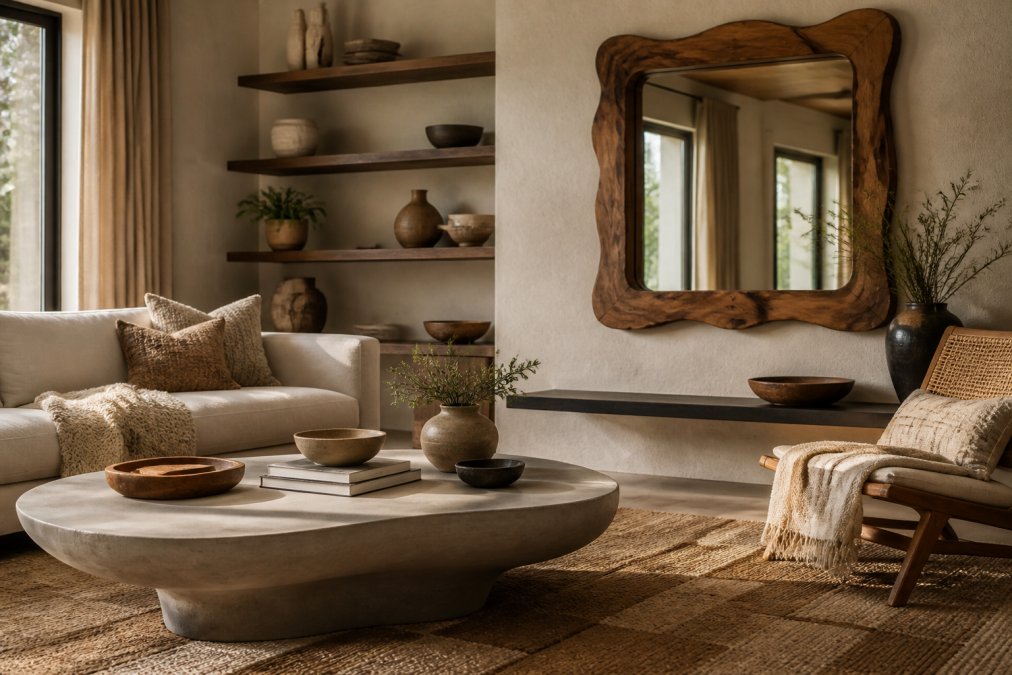
Vertical layering adds dimension that horizontal arrangements cannot achieve. Wall-mounted mirrors, hanging planters, and pendant lighting create visual movement at different heights. This approach prevents spaces from feeling flat.
The principle of material repetition with variation creates coherence without monotony. Repeat a material type in different forms and finishes. Wood appears as flooring, in furniture, and in decorative accessories. Each iteration contributes to overall harmony while maintaining visual interest.
Grouping objects of similar material in varying sizes creates visual rhythm. Three ceramic vessels in graduated heights command more attention than a single piece. These arrangements feel intentional and curated.
Conclusion
Building a modern home with luxury artisan decor requires intentional choices reflecting both aesthetic vision and personal values. The pieces you select become part of your daily life, aging gracefully while maintaining functional and emotional significance. This approach to interior design transcends trends, creating spaces that feel genuinely personal.
Fluent Trends offers a curated selection of handcrafted pieces designed for discerning homeowners who understand that true luxury emerges from intentional living. Our Artisan Collection features ethically sourced ceramics, sculptural lighting, and functional art objects supporting women-owned businesses and global makers. Each piece carries documented provenance and fair-trade certification, ensuring your investment aligns with your values.
Shop Now at Fluent Trends to explore luxury artisan decor that transforms your space into a reflection of intentional living and authentic craftsmanship.
Frequently Asked Questions
What exactly makes luxury artisan decor different from mass-produced home accessories?
Luxury artisan decor is handcrafted by skilled makers using premium materials and traditional techniques. Each piece carries unique variations, authentic finishes, and a design narrative that reflects the artisan's expertise. Mass-produced items lack this intentionality and heirloom quality. Artisan pieces age beautifully and gain character over time, making them true investments in your home's aesthetic and lasting value.
How do I know if handcrafted home accessories will actually last decades?
Quality artisan pieces are built from durable raw materials like solid mango wood, travertine marble, hand-thrown ceramics, and forged metal. Look for pieces made by established studios with documented craftsmanship heritage. Ask about care instructions and material sourcing. Fluent Trends curates only ethically made, heirloom-quality items designed for everyday use and long-term durability. Each product includes specific care guidance to preserve its finish and integrity.
Can I mix handcrafted artisan pieces with modern minimalist furniture?
Absolutely. Artisan decor complements minimalist aesthetics when you focus on sculptural forms, neutral palettes, and intentional spacing. A bone inlay console table or ceramic pendant light adds visual interest without clashing. The key is selecting pieces with clean lines and sophisticated finishes. Curate thoughtfully by choosing three to five statement pieces rather than filling every surface. This creates a gallery-inspired home that feels both modern and artisanal.
Why is artisan-made decor considered a luxury investment?
Artisan pieces hold and often appreciate in value because they combine superior craftsmanship, limited production, and timeless design. Unlike disposable decor, handcrafted items develop patina and character. They support ethical makers and preserve cultural heritage, adding meaning beyond aesthetics. Investing in luxury artisan decor means choosing quality over quantity, sustainability over fast design, and intentional living that reflects your values and elevates your space permanently.
This article was written using GrandRanker