

A Designer's Guide to Mixing Metals in Home Décor
Yuatinia LeakLet’s be honest — the days of obsessing over perfectly matched metal finishes are long behind us. Thankfully. Today’s interiors celebrate personality, depth, and a curated sense of ease, and that’s exactly where mixing metals comes into play. It’s no longer a design “risk”; it’s one of the most effective ways to create a space that feels layered, intentional, and effortlessly sophisticated.
Blending different metal tones introduces visual texture and dimension, turning a room from flat and predictable into something memorable. When done well, mixed metals add richness, contrast, and a sense of collected elegance that makes your home feel truly designed — not just decorated.
The End of the Matchy-Matchy Era
Letting go of the single‑finish mindset is one of the fastest ways to achieve that professionally styled look. When metals are mixed with intention, a room gains depth, movement, and personality — something a perfectly matched set simply can’t deliver. The goal isn’t chaos; it’s harmony through contrast. You’re creating a space that feels collected over time, layered with character, and reflective of your story rather than something lifted straight from a catalog.
And this shift isn’t just a designer’s preference — the market is moving in the same direction. Demand for stylish, durable materials is soaring, with the global metal furniture market projected to reach an astonishing USD 233.5 billion by 2034. That growth signals a clear trend: people are embracing versatile, long‑lasting pieces that support a more eclectic, personal approach to decorating.
Embracing a Curated Aesthetic
Mixing metals unlocks a level of creative freedom that instantly elevates your space. It’s one of those rare design moves that feels bold yet completely approachable — a small shift with a massive payoff.
You introduce visual depth. Pair the warmth of brass with the cool clarity of chrome, or anchor a room with matte black iron. Suddenly, your space has layers of tone and texture that feel intentional and artfully composed.
You express your personality. Each metal carries its own energy — industrial iron, glamorous gold, sleek chrome — and when they coexist, they create a room that feels collected, not coordinated.
You achieve a timeless aesthetic. A home with varied finishes isn’t tied to a single trend cycle. It evolves gracefully, staying relevant and refined for years to come.
To really nail this curated look, it helps to stay on top of what’s happening in the design world. Checking out the top luxury home renovation trends can offer amazing inspiration for shaping a contemporary interior.
This philosophy is at the heart of Fluent Trends: elevated design that feels attainable, livable, and deeply personal. Mixing metals is one of the most effective ways to craft a home that feels luxurious without losing its warmth. For a deeper dive into blending aesthetics, our guide on mixing furniture styles offers even more insight into creating a cohesive, curated look.
Now that you understand the power of mixed metals, the next step is learning how to structure them with intention. A beautifully layered space doesn’t happen by accident — it starts with a clear metallic foundation.
Establishing Your Metallic Foundation
Jumping into mixed‑metal design without a plan can feel a bit like cooking without a recipe — you might get lucky, but you’re just as likely to end up with a space that feels disjointed. The secret to a beautifully layered room isn’t simply choosing metals you like; it’s creating a deliberate metallic hierarchy.
Think of it as casting roles in a well‑directed production: you need a leading metal that sets the tone, a supporting finish that reinforces the palette, and a subtle accent that makes a memorable appearance. When each metal has a clear purpose, your space tells a cohesive, curated story from the moment you walk in.
Choose Your Dominant Metal
Choose Your Dominant Metal
Every beautifully balanced mixed‑metal space starts with one primary finish that acts as the anchor. This is your dominant metal — the finish that should make up roughly 60% of the metallic elements in the room. It sets the tone, establishes the palette, and gives the eye a clear point of reference.
And this approach isn’t just a passing trend. It reflects a broader shift in home design toward versatility and customization. The demand for household metal furnishings continues to surge, with projections estimating the market will reach $150,000 million by 2025. Homeowners are gravitating toward high‑end materials that feel intentional and tailored, and mixed‑metal styling delivers exactly that. (For deeper insights, Data Insights Market offers a fascinating look at how these trends are shaping modern interiors.)
So how does this play out in real life? In a kitchen, your dominant metal might be the stainless steel of your appliances. In a bathroom, it could be polished nickel on your faucets and shower fixtures. Typically, the dominant metal is the largest or most functional finish in the room — the one that naturally commands attention.
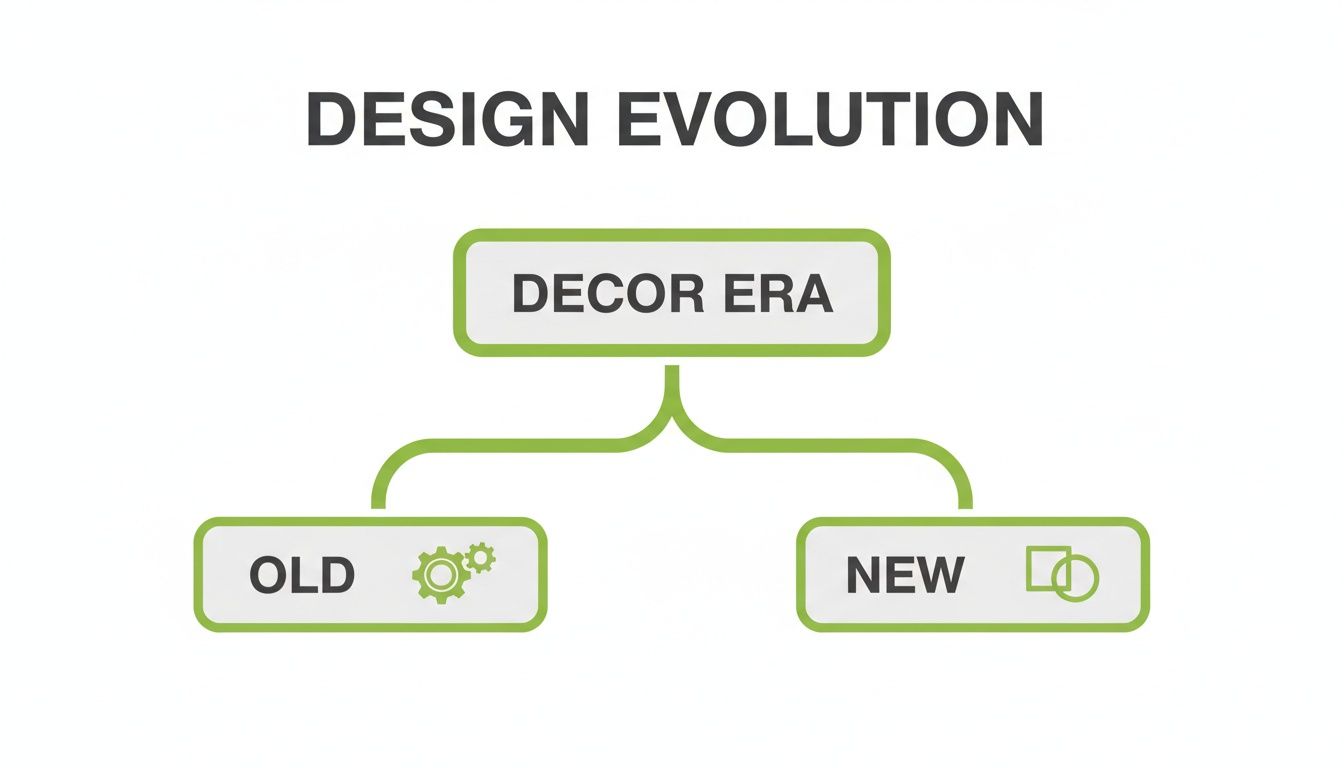
The visual above highlights how design has evolved from rigid, match‑everything sets to a more flexible, curated approach. It’s clear that layering different finishes has become the new standard for creating dynamic, personalized interiors that feel both elevated and lived‑in.
Select a Contrasting Secondary Finish
Once your lead metal is chosen, it’s time to bring in the supporting actor. Your secondary finish should make up roughly 30% of the metals in the room, and its entire purpose is to introduce contrast — the kind that adds depth, dimension, and visual movement. This is where warm and cool undertones become your secret design weapon.
A quick reference guide makes this step effortless, so here’s a curated chart to help you identify undertones and pair metals with confidence.
Metal Finishes Warm vs Cool Tones
| Metal Finish | Undertone | Pairs Well With | Best For |
|---|---|---|---|
| Brass | Warm | Chrome, Nickel, Matte Black | Cabinet hardware, lighting, decorative accents |
| Gold | Warm | Stainless Steel, Black, Bronze | Faucets, mirror frames, statement lighting |
| Copper | Warm | Iron, Oil-Rubbed Bronze, Nickel | Kitchen sinks, cookware, accent décor |
| Chrome | Cool | Brass, Gold, Black | Faucets, modern fixtures, bathroom hardware |
| Nickel | Cool | Gold, Copper, Bronze | Faucets, cabinet pulls, versatile hardware |
| Stainless Steel | Cool | Brass, Black, Gold | Appliances, sinks, utilitarian pieces |
| Matte Black | Neutral | Brass, Gold, Chrome, Nickel | Hardware, lighting, window frames |
| Iron | Neutral | Copper, Gold, Silver | Industrial furniture, shelving, lighting |
This chart highlights a classic designer truth: pair a warm metal with a cool one.
If your dominant finish is cool stainless steel, warm brass for your lighting or cabinet hardware becomes the perfect counterbalance. That interplay is what makes a room feel alive and thoughtfully composed.
Designer Tip: Avoid pairing finishes that are almost identical — like satin nickel next to brushed nickel. Instead of looking intentional, it can read as a mismatch. Clear, confident contrast always wins.
Add a Final Accent Metal
Your accent metal is the finishing touch — the final 10% that brings personality, sparkle, and a sense of discovery. Because it’s used sparingly, this is where you can be bold, playful, or unexpected.
Think of it as the jewelry of the room.
A few effortless ways to introduce an accent metal:
-
A hammered copper bowl on a coffee table.
-
A single ornate gold-framed piece of art.
-
A dark bronze handle on an otherwise all-white cabinet.
The 60/30/10 guideline isn’t a rigid formula — it’s a flexible framework that ensures your mixed‑metal palette feels balanced, harmonious, and beautifully layered every time.
Now that your metallic palette is established — the lead, the support, and the accent — it’s time to elevate the look even further. The real magic of mixed‑metal design happens when you start playing with texture and sheen. This is where a room gains its tactile richness, its depth, and that unmistakable high‑end finish that feels professionally styled.
The Art of Texture and Sheen
Once your metal palette is in place, the next layer of true design mastery comes from understanding how texture and sheen interact. This is where mixed‑metal styling moves beyond simple warm‑and‑cool pairings and steps into a more nuanced, high‑end aesthetic. The interplay between polished, brushed, matte, and hammered finishes is what gives a room its depth — that subtle, tactile richness you notice instantly in professionally designed spaces.
Just like you wouldn’t wear a single fabric from head to toe, a room filled with only one type of finish can feel flat or overly sterile. Blending textures creates contrast, balance, and visual rhythm, ensuring your metals complement one another rather than compete. This is the secret to achieving that elevated, layered look that feels both intentional and effortlessly chic.
Balancing Polished and Matte Finishes
One of the easiest ways to introduce texture into your metal mix is by pairing polished surfaces with matte or brushed ones. Polished finishes — like gleaming chrome or classic brass — reflect light beautifully, adding a touch of glamour and brightness. Matte and brushed finishes do the opposite: they absorb light, creating a softer, more understated, and modern feel.
Imagine a bathroom with sleek polished chrome faucets. Now pair them with matte black cabinet pulls and a coordinating mirror frame. Instantly, the space feels more dynamic and intentional. The chrome brings sparkle and energy, while the matte black grounds the room and keeps it from feeling overly cold or clinical.
This approach isn’t a passing trend — it’s a defining principle in today’s $133.60 billion home décor market. Designers and homeowners alike are leaning into bold textural blends, especially combinations like chrome and brass, to create interiors that feel both stylish and welcoming. For a deeper look at how varied metal finishes are shaping modern home furnishings, Fortune Business Insights offers excellent market insights.
Exploring Richer Textures
Polished and matte finishes are just the beginning. There’s an entire spectrum of textures that can infuse your home with character, depth, and a handcrafted sensibility. These are the finishes that feel storied — the ones that bring warmth, artistry, and a touch of the unexpected into a space.
Here are a few standout textures that instantly elevate a design:
Hammered Finishes:
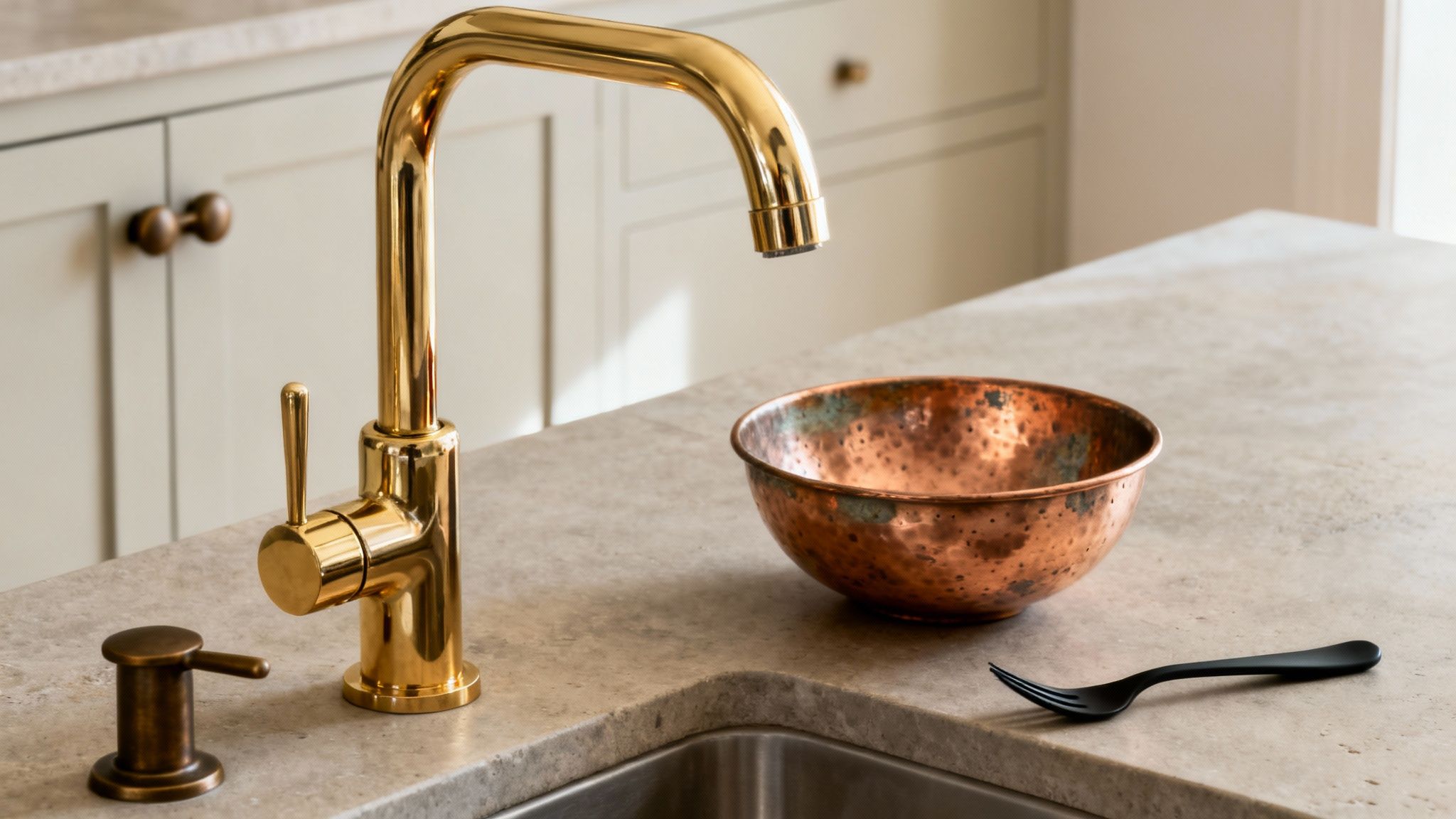
A hammered copper bowl — like the ones in our Fluent Trends collection — makes a stunning focal point. Its dimpled surface catches and scatters light in the most captivating way, creating a warm glow that pairs beautifully with sleek, modern flatware.
Aged or Patinated Finishes:
Aged brass or oil‑rubbed bronze carries a built‑in sense of history. These finishes are ideal for lighting, hardware, or accent pieces, adding a timeless depth that polished metals simply can’t replicate.
Brushed Finishes:
Brushed gold or bronze offers the perfect middle ground. With its soft, understated luster, it brings elegance without the intensity of a high‑shine surface — making it one of the most versatile finishes in any mixed‑metal palette.
Key takeaway: Let different sheens and textures coexist. A polished gold faucet paired with brushed bronze cabinet pulls creates a layered, luxurious look that feels intentional and refined. Varying the finish is what makes a mixed‑metal palette truly sing.
Alright — the groundwork is set. Now comes the fun part: seeing these ideas in action.
Understanding how mixed metals behave in real spaces is the best way to build confidence. This room‑by‑room guide will show you exactly how to apply these principles throughout your home, making the entire process feel intuitive and achievable.
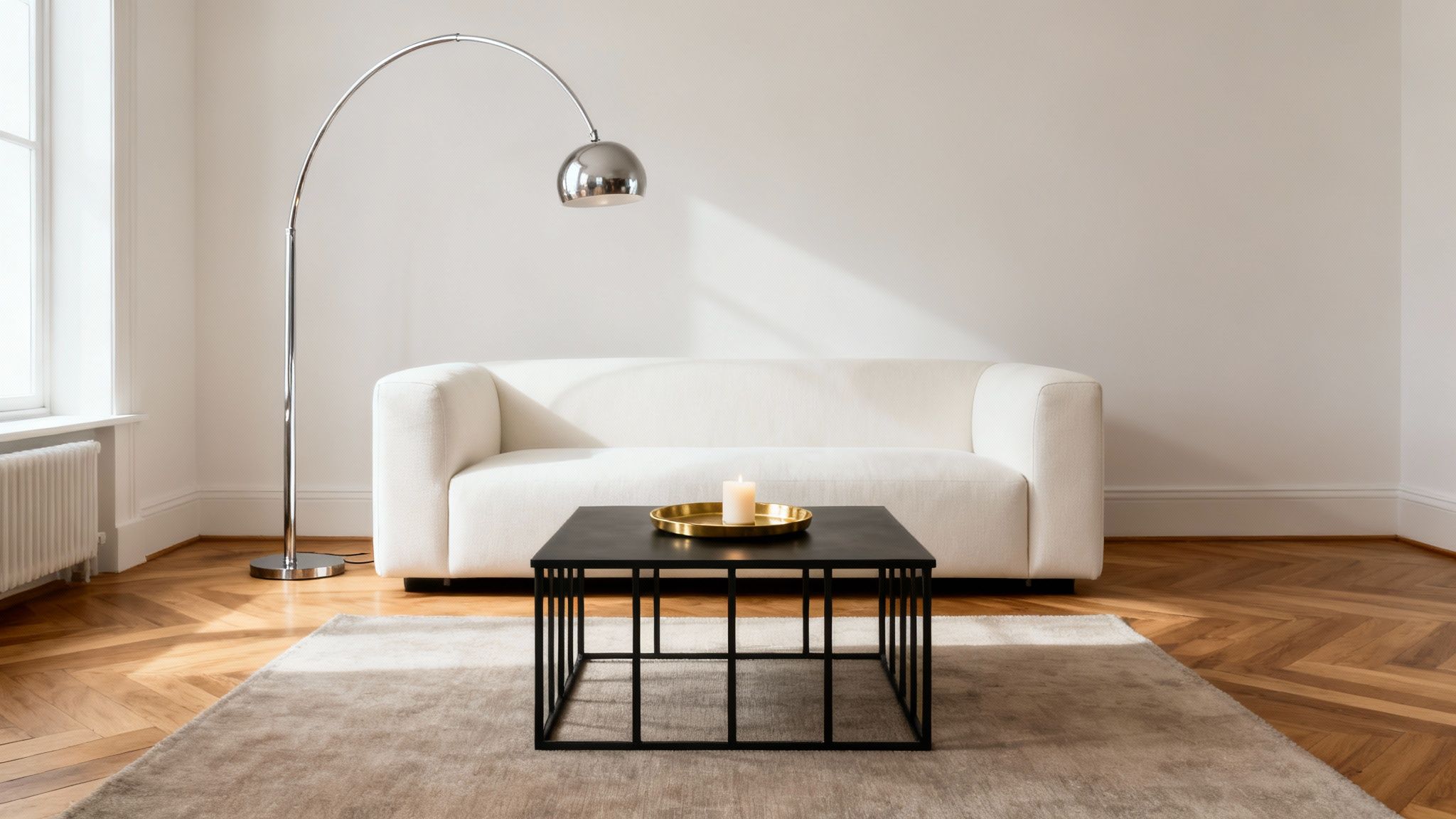
Let’s explore some inspired combinations that demonstrate just how transformative a thoughtful mix of finishes can be. Think of these as starting points for crafting your own beautifully layered spaces.
The Modern‑Classic Kitchen
The kitchen is often called the heart of the home — and it’s also one of the easiest places to begin mixing metals. With appliances, hardware, fixtures, and lighting already built into the space, you have natural opportunities to layer finishes without overwhelming the design. The key is to group your metals by function so everything feels cohesive rather than chaotic.
A timeless and foolproof approach is to start with a dominant cool‑toned metal.
Dominant Metal (60%)
Let your stainless steel appliances set the foundation. Their cool, neutral presence creates a clean backdrop that plays beautifully with warmer or darker finishes.
Secondary Metal (30%)
Introduce warmth through your cabinet hardware. Brass or soft champagne bronze pulls and knobs create a striking contrast against stainless steel, adding a touch of classic elegance that never goes out of style.
Accent Metal (10%)
Make a statement with a matte black faucet. Treating the faucet as its own design moment gives the kitchen a modern, high‑end edge. Echo this accent with matte black pendant lights over the island to tie the palette together.
This trio — stainless steel, warm brass, and matte black — delivers the perfect balance of modern and classic. The result is a kitchen that feels polished and intentional without leaning too sterile or too trendy.
The Layered Living Room
The living room is where you can truly loosen up and let your personality take center stage. Unlike the kitchen — where fixtures and appliances dictate many of your choices — this space gives you freedom to experiment with metals through furniture, lighting, and decorative accents. It’s a low‑risk, high‑reward environment for building a beautifully layered look.
The goal is to create a space that feels collected and curated over time.
Pro Tip: Repeat each metal finish at least twice. This simple rule is what makes the mix feel intentional rather than accidental. If you introduce a brass floor lamp, echo it with a brass picture frame or a decorative tray on the coffee table. Repetition creates rhythm.
A great starting point is to use a larger furniture piece to establish a neutral metallic base. A coffee table with a clean black iron frame, for example, can serve as your anchor. From there, you can layer in additional finishes to build depth and visual interest.
Lighting:
Mix it with confidence. A polished chrome or nickel arc lamp in one corner paired with brass‑accented table lamps on a console creates a dynamic, balanced interplay of tones.
Furniture Legs:
Small details make a big impact. A side table with slender gold legs or an accent chair with brass‑capped feet introduces warmth without overwhelming the room.
Decorative Accents:
This is where the fun really begins. Group metallic objects for greater impact — think a cluster of silver and gold candleholders or a trio of copper vases on a bookshelf. Our serveware collection at Fluent Trends includes stunning copper pieces that double beautifully as décor. For even more inspiration, our guide to the best flatware sets for everyday use shows how metals can be layered right on your dining table.
The Serene and Spa-Like Bathroom
Bathrooms are one of the most rewarding spaces for mixing metals because even small changes can make the entire room feel high‑end and custom. The key is knowing where to stay consistent and where to introduce contrast. While you can absolutely mix metals across categories — such as lighting, mirrors, and hardware — it’s best to keep all plumbing fixtures (faucet, showerhead, tub filler) in the same finish. This maintains visual harmony and prevents the space from feeling disjointed.
For a calm, spa‑like atmosphere, polished nickel is an exceptional choice for your dominant metal. Its warm undertone gives it a softer, more classic feel than chrome, making it incredibly versatile and timeless.
Here’s a beautifully balanced bathroom palette to guide your mix:
| Element | Recommended Finish | Rationale |
|---|---|---|
| Plumbing Fixtures | Polished Nickel | Your dominant metal — sets a classic, elevated tone for the entire room. |
| Lighting Sconces | Aged Bronze or Brass | Warm tones add a flattering glow and soften the coolness of the nickel. |
| Mirror Frame | Matte Black | Provides grounding contrast and a modern, architectural edge. |
| Hardware & Hooks | Matte Black | Ties back to the mirror for cohesion and crisp visual structure. |
This trio — polished nickel, aged bronze, and matte black — creates a serene, balanced, and sophisticated atmosphere. The warm light from the sconces plays beautifully against the cool nickel, while the black accents add a modern edge that keeps the design feeling fresh and intentional. It’s a foolproof recipe for a bathroom that feels both timeless and thoughtfully curated.
Now that your metal palette is established, it’s time to look beyond the finishes themselves. The true magic happens when your metals interact with the surrounding colors and materials. A finish can shift dramatically depending on the paint, stone, tile, or wood around it. Think of it as a partnership — your metals need the right supporting cast to truly shine.
This brings us to the next essential layer of mixed‑metal design: how to connect your finishes with the colors and materials in your space.
Connecting Metals with Colors and Materials
Mastering a mixed‑metal palette goes far beyond choosing a few finishes you love. The real artistry lies in how those metals interact with the surrounding colors and materials in your space. A finish can look warm, cool, bold, or muted depending entirely on what it’s paired with — paint, stone, tile, wood, textiles, even natural light.
Think of it as a design collaboration. Your metals aren’t meant to stand alone; they need the right partners to truly shine. When the undertones of your metals and materials work in harmony, the entire room feels cohesive, elevated, and intentionally curated. When they clash, even the most beautiful finishes can feel slightly “off.”
This section will guide you through the subtle but powerful relationships between metals, colors, and materials so you can create spaces that feel balanced, expressive, and effortlessly refined.
The Power of Paint Pairings
One of the most transformative — and often overlooked — elements in mixed‑metal design is paint. A simple rule of thumb I always return to is pairing like with like. Cool metals feel most at home against cool paint colors, while warm metals come alive when surrounded by warm, earthy tones. When you align undertones, the entire space feels harmonious, intentional, and beautifully composed.
Cool Metals and Cool Tones
Finishes like chrome, polished nickel, and stainless steel shine brightest against blues, grays, and cool greens. Picture a bathroom with soft gray walls, a polished nickel faucet, and a chrome‑framed mirror. The effect is instantly calming — crisp, serene, and quietly sophisticated.
Warm Metals and Warm Tones
Warm finishes such as brass, copper, and gold absolutely glow when paired with warm whites, creams, terracottas, and deeper hues like burgundy. Imagine a living room with creamy beige walls and aged brass light fixtures. The space feels inviting, layered, and luxuriously warm.
Paint and metal pairings are one of the most powerful ways to create cohesion. When the undertones support each other, the entire room feels elevated — even before you add furniture or décor.
Weaving in Natural Materials
Beyond paint, the materials you bring into a space play a defining role in shaping its overall style. Layering different textures is what creates that dynamic, professionally curated interior — the kind that feels rich, intentional, and full of depth. The right material can either echo a metal’s sleekness or contrast it for a more dramatic, expressive effect.
One of the most powerful strategies is pairing hard, industrial metals with soft, organic materials. This contrast is transformative. It brings balance, warmth, and a sense of natural harmony that just feels right.
Think about the sleek, clean lines of matte black metal next to the rustic grain of natural wood. Picture a dining room with a heavy oak table paired with modern black metal chairs. The wood introduces warmth and texture, while the black metal adds a crisp, contemporary edge. Together, they create a space that feels grounded yet elevated.
Key takeaway: Create a dialogue between your materials. A polished brass faucet set against a dramatic marble backsplash tells a story of luxury, while a brushed bronze pull on a raw wood cabinet leans into an earthy, artisanal aesthetic. The interplay is what makes the design feel intentional.
When you’re exploring how metals interact with other elements, don’t shy away from unique integrations. Looking into options such as brass‑inlaid cement tiles can spark incredible ideas, showing how metal can be embedded directly into other materials for a seamless, custom look.
Using a Bridge Element
Sometimes, you need one final touch to pull your entire metallic palette together. This is where a bridge element becomes invaluable — a single piece that incorporates two or more of the finishes already present in your space. It’s a subtle but powerful design move that instantly makes your mixed‑metal scheme feel intentional and expertly curated.
A bridge element acts as a visual anchor, gently signaling to the eye that every finish belongs. It’s the quiet connector that brings harmony to the room.
Here are a few effortless ways to introduce a bridge element:
• A piece of art with a frame that blends black and gold
• A patterned rug woven with flecks of silver and bronze
• A light fixture that intentionally mixes metals, such as a black iron frame with brass candle cups
• Throw pillows with metallic threading that incorporates multiple tones
By placing just one of these pieces in your space, you create a sense of cohesion that ties your entire palette together. It’s a small detail with a big impact — the kind of finishing touch that makes a room feel thoughtfully designed.
Now that you’ve mastered the art of balancing metals within a room, it’s time to look at the next layer of sophistication: understanding how those metals interact with the colors and materials around them. This is where your palette truly comes alive — or falls flat. The right pairings can elevate your design instantly, while mismatched undertones can quietly undermine even the most beautiful finishes.
Common Mistakes to Avoid When Mixing Metals
Even with the best intentions, mixing metals can feel intimidating. It’s easy to second‑guess whether your choices look intentional or accidental. The good news is that most missteps are completely avoidable once you know what to look out for.
Think of these mistakes not as rigid rules, but as friendly guardrails. Understanding what not to do is often the key to creating a space that feels professionally curated, cohesive, and effortlessly chic — rather than chaotic or cluttered.
Going Overboard With the Palette
One of the most common missteps in mixed‑metal design is simply using too many finishes in a single room. It’s an easy trap to fall into — you love brass, you love black, and that new copper piece is irresistible. But when all of them compete for attention at once, the result is visual noise rather than a cohesive, curated look. The space starts to feel busy, disjointed, and unintentionally chaotic.
A reliable rule of thumb is to limit yourself to no more than three distinct metal finishes per room. This gentle boundary encourages intentionality. Each metal gets a defined role — the lead, the support, or the accent — which keeps the palette balanced and purposeful.
Designer Tip: If a room feels flat with two metals but chaotic with three, the issue may not be the number of finishes at all. It might be texture. Before introducing a new metal, try swapping a polished piece for a brushed or hammered version of a finish you’re already using. A shift in sheen can add depth without adding clutter.
Scattering Finishes Without a Plan
Another common pitfall is scattering metal finishes randomly throughout a room. A lone brass knob on one side, a chrome lamp across the space, and a black mirror on a distant wall — suddenly the room feels like a collection of unrelated choices rather than a cohesive design. Even beautiful pieces can look like afterthoughts when they aren’t working together.
The secret to a polished mixed‑metal look is purposeful grouping. Instead of sprinkling metals everywhere, cluster them by their role in the room. This creates subtle zones of consistency that make the entire space feel more intentional and visually balanced.
Group by Function:
Keep all plumbing fixtures — the faucet, showerhead, and drain — in the same finish. It instantly looks cleaner and more refined.
Assign by Category:
Choose a second metal for all your lighting, from sconces to pendants, to create a unified layer of warmth or contrast.
Coordinate Hardware:
Use a third finish for the smaller details like cabinet pulls, hooks, and door handles. These touches tie the palette together without overwhelming the space.
This approach gives every metal a clear purpose, which reads as confident, curated, and expertly executed.
Forgetting About Undertones and Textures
A truly elevated mixed‑metal look comes from understanding the subtleties of undertones and textures. Placing two metals that are almost the same next to each other can unintentionally read as a mismatch. For example, brushed nickel beside satin nickel often looks like an attempt to match that didn’t quite land.
Clear, confident contrast is the goal. Give warm metals like brass or copper enough breathing room, or pair them with a distinctly cool partner such as chrome or matte black. And don’t overlook sheen. A room filled entirely with high‑shine finishes can feel cold and sterile, while an all‑matte palette may fall flat. Blending polished, brushed, and aged finishes is what brings depth, dimension, and that final layer of sophistication to your space.
Now that you understand the most common pitfalls, it’s time to shift into the practical side of styling. Even with the rules in place, it’s normal to have lingering questions — especially when you’re aiming for a space that feels intentional, cohesive, and professionally curated. Let’s break down the most frequently asked questions so you can move forward with confidence.
FAQ
Even with a solid grasp of the principles, you may still have a few questions about mixing metals — and that’s completely natural. This section tackles the most common concerns so you can start styling your home with clarity and ease, armed with the knowledge to make confident, design‑forward decisions.
Can I Mix Metals in a Small Room?
Absolutely — and in many cases, it’s one of the best ways to give a small room depth, personality, and visual interest. Mixed metals prevent compact spaces from feeling flat or overly uniform.
The key is restraint. Be intentional and stick to two metal finishes so the room feels curated rather than chaotic. Picture a small bathroom: polished chrome for the faucet and showerhead, paired with matte black for the mirror frame and light fixture. The contrast is crisp and modern, adding character without overwhelming the space.
Should My Kitchen Hardware Match My Faucet?
Not at all — and in fact, it often looks more sophisticated when they don’t match. This is one of the oldest designer tricks for creating a layered, high‑end kitchen.
Let your faucet stand on its own as a statement piece. Imagine a kitchen with stainless steel appliances, warm brass cabinet pulls, and a striking matte black faucet. That combination has far more personality and visual richness than a space where everything is stainless steel.
The real secret to making any mixed‑metal palette feel intentional comes down to repetition and hierarchy. Choose a dominant metal to cover roughly 60% of your finishes. Then ensure your secondary metal appears in at least two other places. If you introduce a brass chandelier, echo it with a brass picture frame or a decorative bowl. These subtle repetitions create a thread of continuity that ties the entire room together.
Ready to bring your mixed‑metal vision to life? Explore the curated collections at Fluent Trends, where every piece is selected to help you build a home that feels layered, intentional, and beautifully refined. From sculptural accents to statement lighting, your next standout metallic moment is waiting to be discovered.