

10 Modern Dining Room Decor Ideas for 2025
Donna MaloneThe dining room is more than just a place to eat; it is the heart of the home where conversations flow and memories are forged. The modern dining space is evolving, shifting from a formal, single-use area to a multifunctional hub that blends impeccable style with everyday practicality. Whether you're hosting elaborate dinner parties, managing homework sessions, or enjoying quiet family meals, the right decor can transform your room into a stylish and inviting sanctuary. This comprehensive guide moves beyond fleeting trends to explore ten distinct and actionable modern dining room decor ideas, offering fresh perspectives to help you craft a space that is both beautiful and uniquely yours.
Forget generic advice and vague suggestions. We are diving deep into specific color palettes, strategic furniture pairings, and expert lighting tips that will empower you to create a dining room you’ll love for years to come. From the serene simplicity of Japandi to the bold drama of Art Deco Revival, each concept is broken down into manageable steps. To help you visualize the possibilities for your modern gathering space, it's beneficial to explore various interior concepts, including these seven dining room styles.
This listicle is designed to be your practical playbook. You will find detailed insights on everything from selecting the perfect statement chandelier to arranging sustainable, biophilic elements. We will cover ten powerful design directions:
- Minimalist Design with Open Shelving
- Industrial Chic with Exposed Elements
- Contemporary Mid-Century Modern
- Scandinavian Simplicity with Hygge Elements
- Maximalist and Eclectic Styling
- Sustainable and Eco-Conscious Design
- Modern Luxury with Statement Lighting
- Japandi Style: Japanese-Scandinavian Fusion
- Glamorous Art Deco Revival
- Biophilic Design with Integrated Nature
Let's explore how to turn your vision into a stunning reality.
1. Minimalist Design with Open Shelving
Embracing minimalism with open shelving is one of the most impactful modern dining room decor ideas for creating a space that feels both serene and functional. This approach strips away unnecessary clutter, focusing on clean lines, negative space, and a curated display of essential or beautiful objects. Instead of hiding items behind bulky cabinet doors, open shelving integrates storage directly into the room's aesthetic, making the space feel larger and more intentional.
This style is perfect for those who appreciate organization and want to showcase their personality through carefully selected dinnerware, glassware, or decorative pieces. The key is purposeful placement; every item on display should have a reason for being there, contributing to a harmonious and uncluttered environment. It turns everyday objects into art, blending utility with visual appeal.
Style Summary
A minimalist dining room with open shelving is defined by its simplicity and "less is more" philosophy. It favors a neutral color palette, natural materials like wood and metal, and an emphasis on architectural lines. Think of Scandinavian-inspired spaces where pale wood shelves are mounted on crisp white walls, or an industrial loft where a sleek, black metal shelving unit acts as a functional room divider and display case. The goal is a calm, breathable atmosphere where furniture and decor have room to shine.
Implementation and Tips
To successfully incorporate this look, strategic organization is essential. Follow these actionable tips:
- Curate with Purpose: Avoid overcrowding the shelves. Select only your most frequently used or visually appealing items. Group similar items together by color, material, or size to create a cohesive look.
- Balance and Symmetry: Arrange objects with an eye for balance. Alternate between stacks of plates, rows of glasses, and single decorative objects. Leaving empty space is just as important as what you choose to display.
- Mix Materials: Combine different textures to add depth and prevent the space from feeling sterile. For instance, pair smooth ceramic dinnerware with rustic wooden bowls and clear glassware. A matte black shelving unit can provide a stunning contrast against a light-colored wall.
- Maintain Regularly: Open shelves require consistent dusting and tidying to maintain their clean, minimalist appeal. A quick wipe-down once a week will keep them looking pristine.
Key Insight: The success of open shelving in a minimalist dining room lies in disciplined curation. Treat your shelves like a gallery wall, where each piece is intentionally chosen and placed to contribute to the overall aesthetic.
2. Industrial Chic with Exposed Elements
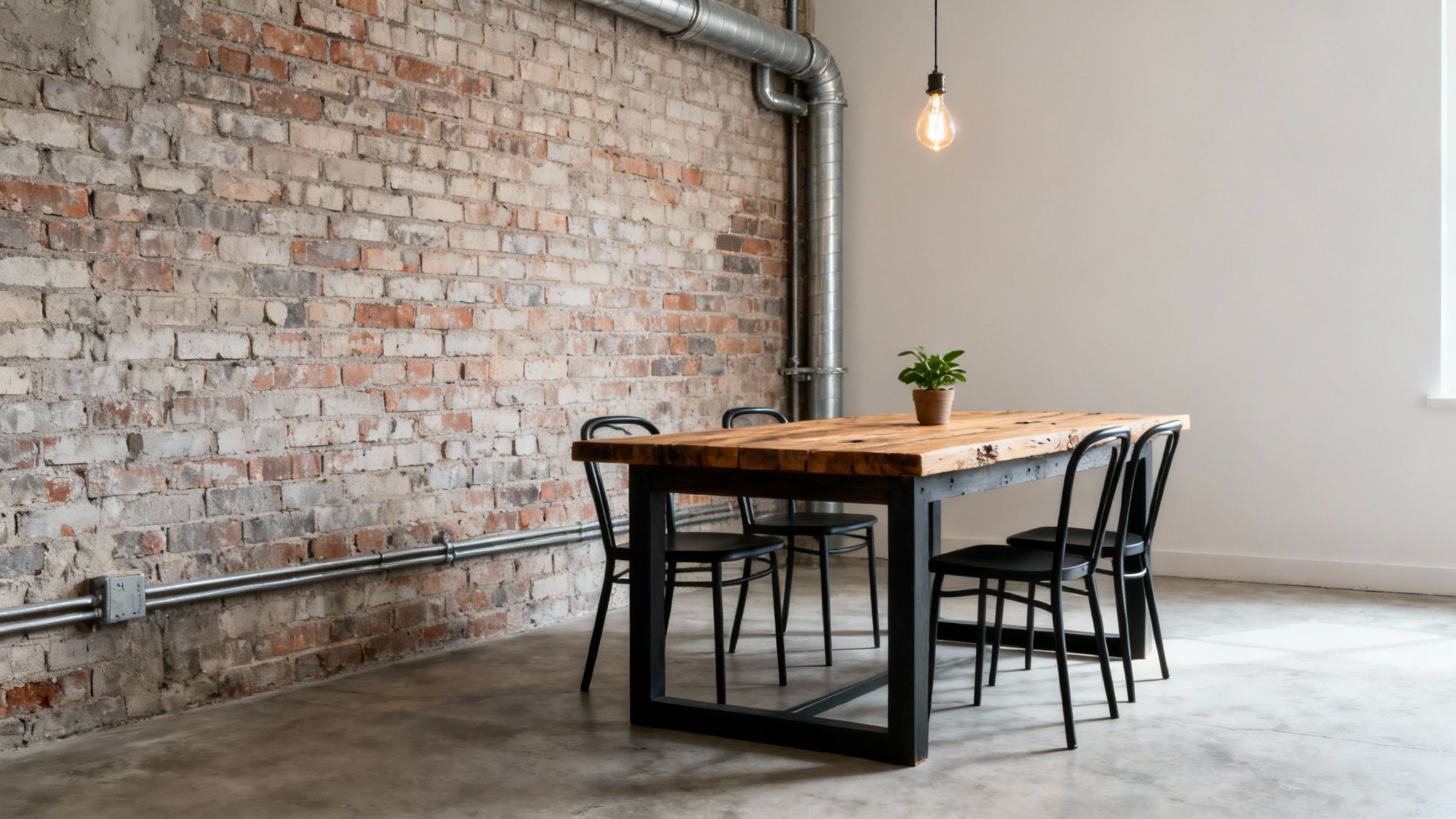
Industrial chic is a powerful modern dining room decor idea that finds beauty in raw, unfinished materials and structural honesty. This aesthetic celebrates elements typically concealed in construction, such as exposed brick walls, concrete floors, visible ductwork, and steel beams. It draws inspiration from urban lofts and converted warehouses, transforming utilitarian features into striking design statements. The result is an atmosphere that is both edgy and sophisticated, perfect for creating a memorable dining experience.
This style appeals to those who appreciate a blend of history and modernity. It’s about stripping a space back to its bones and then layering it with functional, well-designed furniture and decor. By highlighting the inherent texture and character of industrial materials, you create a space that feels authentic, robust, and unapologetically stylish.
Style Summary
An industrial chic dining room is characterized by its raw and rugged backdrop combined with refined, contemporary furnishings. It often features a neutral, moody color palette of grays, blacks, and browns, punctuated by the natural tones of brick and wood. Think of a Brooklyn loft dining area where a solid reclaimed wood table sits on a polished concrete floor, or a modern home that uses black steel-framed windows and exposed ceiling beams as its architectural centerpiece. The aesthetic is grounded in a sense of history yet feels entirely current.
Implementation and Tips
To master the industrial look without making the space feel cold or unwelcoming, focus on creating a thoughtful balance. Use these tips to guide your design:
- Soften with Textiles: Contrast hard surfaces like metal, brick, and concrete with soft textures. Incorporate a plush area rug under the dining table, use upholstered dining chairs, or add linen curtains to soften the room's edges.
- Introduce Greenery: Strategically placed plants and greenery can breathe life into an industrial space. A tall fiddle-leaf fig in a corner or a collection of smaller plants on a metal shelf can add a vital, organic touch.
- Mix in Warm Materials: Balance cool industrial elements with the warmth of wood. A live-edge wooden dining table or chairs with wooden legs can prevent the aesthetic from feeling too stark and add natural character.
- Layer Your Lighting: Use warm, ambient lighting to counteract the coldness of industrial materials. A statement chandelier with Edison bulbs over the table, combined with track lighting and floor lamps, creates a cozy and inviting glow.
Key Insight: The essence of successful industrial design is the juxtaposition of raw and refined. Balance the rugged, unfinished elements with comfortable, modern furniture and warm lighting to create a dining space that is both stylish and livable.
3. Contemporary Mid-Century Modern
Infusing your dining space with a contemporary mid-century modern aesthetic is a timeless choice among modern dining room decor ideas. This style honors the iconic design principles of the 1950s and 60s, such as organic shapes, clean lines, and a deep appreciation for natural materials, while adapting them for today's lifestyle. It masterfully blends nostalgic silhouettes with a fresh, current sensibility, creating a room that feels both sophisticated and welcoming.
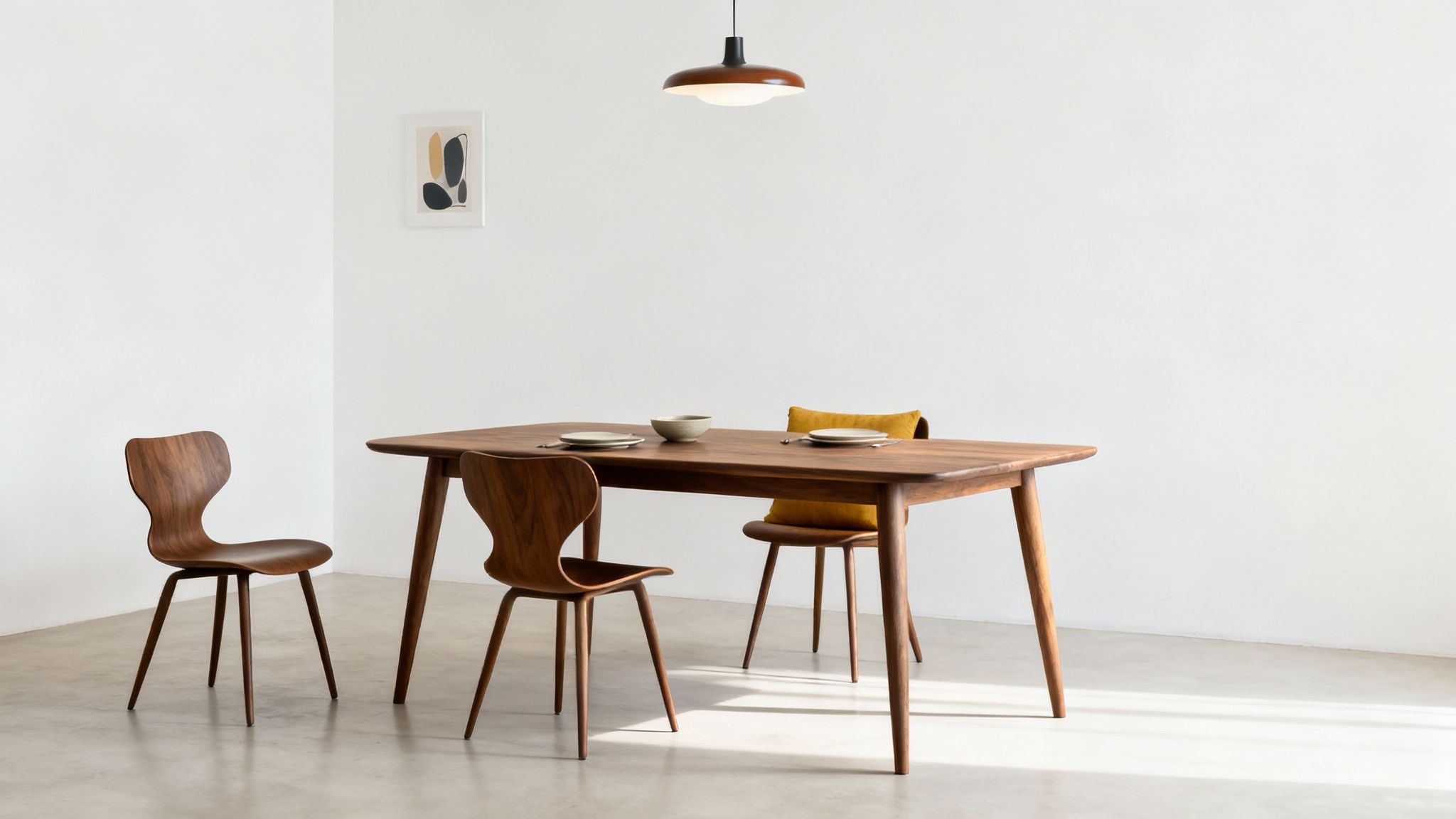
This approach is ideal for those who admire the masterful craftsmanship and functional beauty of classic designs from pioneers like Charles and Ray Eames but want a space that feels relevant and uncluttered. It celebrates iconic furniture pieces, from dining chairs with sculptural forms to tables with elegant tapered legs, making them the stars of the room. The result is a dining area that is functional for daily life but also serves as a showcase of design history.
Style Summary
A contemporary mid-century modern dining room is characterized by its warm wood tones, particularly walnut and teak, paired with a dynamic yet controlled color palette. The furniture is the centerpiece, featuring slender profiles and ergonomic, sculptural forms. Picture a classic walnut dining table surrounded by Eames-style molded plastic chairs, set against a wall painted in a deep teal or muted ochre. The overall atmosphere is effortlessly cool, intelligent, and designed for both comfort and conversation.
Implementation and Tips
To achieve this updated classic look, focus on balancing vintage-inspired pieces with modern accents. Follow these practical tips:
- Mix Vintage and New: Combine an authentic vintage credenza or sideboard with a set of high-quality reproduction dining chairs. This creates a layered, curated feel that is more personal than a showroom replica.
- Embrace Iconic Silhouettes: Invest in furniture with hallmark mid-century features like tapered legs, gentle curves, and unadorned surfaces. A sculptural dining table or a set of wishbone chairs can instantly define the space.
- Modernize with Lighting: Pair classic furniture with a distinctly modern light fixture. A sleek, metallic sputnik chandelier or a minimalist geometric pendant light can prevent the room from looking like a time capsule and adds a contemporary edge.
- Strategic Color Palette: Stick to a foundation of warm woods and neutrals, then introduce pops of color through artwork, textiles, or an accent wall. Classic mid-century colors like olive green, burnt orange, and mustard yellow work beautifully.
Key Insight: The essence of contemporary mid-century modern design is the thoughtful dialogue between past and present. The goal isn't to perfectly replicate a 1960s interior but to use its best elements as a foundation for a space that is fresh, functional, and distinctly modern.
4. Scandinavian Simplicity with Hygge Elements
Infusing a dining room with Scandinavian simplicity and hygge elements is a powerful way to craft a space that is both visually clean and deeply comforting. This approach marries the functional, minimalist principles of Nordic design with the Danish concept of "hygge," which embodies coziness, contentment, and well-being. The result is a dining area that feels uncluttered and bright yet is also warm, inviting, and perfect for fostering connection during shared meals.
This style is ideal for those who want their dining room to be a sanctuary from the outside world. It prioritizes natural light, organic materials, and soft textures, creating an atmosphere of calm intimacy. By focusing on comfort and simplicity, it turns the dining room into more than just a place to eat; it becomes a hub for genuine togetherness and quiet moments of joy.
Style Summary
A Scandinavian dining room with hygge elements is characterized by its bright, airy feel and its thoughtful layering of textures. It leans on a light, neutral color palette, often grounded in shades of white, gray, and beige, to maximize natural light. Furniture, like a simple light-wood table and iconic wishbone chairs, emphasizes clean lines and expert craftsmanship. The "hygge" comes from the addition of soft textiles, warm ambient lighting from candles or dimmable pendants, and personal touches that feel meaningful rather than ornamental.
Implementation and Tips
To achieve this balanced and inviting aesthetic, focus on creating a multisensory experience. Follow these actionable tips:
- Layer Your Lighting: Combine a stylish overhead pendant with multiple smaller sources of warm, ambient light. Use candles on the table, a floor lamp in the corner, or small table lamps on a sideboard to create a soft, welcoming glow.
- Introduce Soft Textures: Add warmth and comfort underfoot with a plush, neutral-toned area rug. Drape a soft sheepskin throw over a bench or dining chair, and use natural linen or cotton for tablecloths and napkins.
- Choose Natural Materials: Ground the space with furniture made from light-colored woods like oak, ash, or pine. Incorporate other natural elements like ceramic vases, stone coasters, and fresh greenery to connect the room to the outdoors.
- Keep Accessories Meaningful: Adhere to the minimalist principle of "less is more." Select only a few decorative items that hold personal value, such as a treasured piece of pottery or simple, elegant glassware.
Key Insight: The essence of a Scandinavian-hygge dining room is the deliberate blend of form and feeling. Every element should be functional and beautiful while also contributing to an overall atmosphere of cozy contentment.
5. Maximalist and Eclectic Styling
For those who believe "more is more," maximalist and eclectic styling offers a vibrant and deeply personal approach to modern dining room decor ideas. This design philosophy rejects minimalism in favor of abundance, celebrating bold colors, rich textures, and a fearless mix of patterns. It is an artful composition of diverse styles, eras, and cultural influences, creating a layered space that tells a unique and compelling story.
This approach is perfect for homeowners who are collectors at heart and want their dining room to reflect their personality, travels, and passions. Instead of a single, unified theme, an eclectic room harmonizes seemingly disparate elements, from vintage furniture finds to contemporary art and global textiles. The result is a dynamic, curated environment that feels both sophisticated and lived-in.
Style Summary
A maximalist and eclectic dining room is a controlled explosion of creativity. It thrives on contrast and personality, effortlessly blending a mid-century modern dining table with ornate, traditional chairs or surrounding a sleek, industrial light fixture with a gallery wall of antique portraits. Think of the curated chaos seen in the homes of designers like Kelly Wearstler or the bold layering popularized by brands like Anthropologie. The goal is to create a space that is visually rich, engaging, and uniquely yours.
Implementation and Tips
To master this look without it becoming overwhelming, a thoughtful strategy is key. Follow these actionable tips:
- Establish a Unifying Element: Choose a core color, material, or motif to act as a thread that ties the room together. For example, a consistent shade of blue appearing in the rug, artwork, and upholstery can create harmony among diverse pieces.
- Balance Patterns and Solids: When mixing bold patterns, such as a floral wallpaper with a geometric rug, incorporate solid-colored furniture or curtains to give the eye a place to rest. This prevents visual clutter and allows each element to stand out.
- Create a Focal Point: Anchor the room with a clear focal point, like a dramatic chandelier, an oversized piece of art, or a brightly painted accent wall. This helps organize the visual interest and prevents the space from feeling chaotic.
- Layer with Intention: Build layers of texture and decor. Start with a foundational rug, add furniture, then layer in textiles like curtains and cushions, and finish with lighting, art, and decorative objects on a sideboard or shelves.
Key Insight: True maximalism is about curated collection, not random accumulation. Every object should have a purpose or a story, contributing to a cohesive narrative that transforms your dining room from a mere eating space into a gallery of your life.
6. Sustainable and Eco-Conscious Design
Adopting a sustainable and eco-conscious approach is one of the most forward-thinking modern dining room decor ideas, blending style with environmental responsibility. This philosophy prioritizes materials and products that are ethically sourced, reclaimed, or produced with minimal impact on the planet. Instead of focusing on fleeting trends, it champions durability, timelessness, and conscious consumerism to create a space that is both beautiful and mindful.
This style is ideal for those who want their home to reflect their values, creating a dining area that feels authentic, warm, and connected to nature. It moves beyond aesthetics to tell a story through reclaimed barn wood tables, upcycled vintage chairs, or textiles made from organic fibers. The result is a dining room that not only looks good but also feels good, built on a foundation of intentional and responsible choices.
Style Summary
A sustainable dining room is characterized by its connection to natural materials, handcrafted quality, and a story of thoughtful sourcing. Think of a space centered around a solid, reclaimed wood table, surrounded by a mix of vintage and new chairs from ethical brands. The color palette often leans toward earthy tones, greens, and warm neutrals that reflect the natural world. The overall vibe is one of authentic, lived-in comfort that celebrates imperfections and the unique history of each piece.
Implementation and Tips
To create an eco-conscious dining space, focus on quality over quantity and thoughtful sourcing. Follow these actionable tips:
- Prioritize Reclaimed and Secondhand: Shop secondhand markets, antique stores, and estate sales for unique furniture with a past. A vintage sideboard or a set of mismatched chairs can add immense character while reducing waste.
- Invest in Longevity: When buying new, choose pieces made from durable, natural materials like FSC-certified wood, bamboo, or recycled metal. Investing in high-quality furniture that will last for decades is a core tenet of sustainability. For more guidance, you can explore a curated list of sustainable furniture brands to find ethically made options.
- Choose Natural Textiles: Opt for tablecloths, napkins, and rugs made from organic cotton, linen, or hemp. These materials are biodegradable and often produced with fewer chemicals and less water than conventional fabrics.
- Check Finishes and Paints: Use low-VOC or zero-VOC paints for your walls and non-toxic finishes for furniture. This improves indoor air quality and reduces harmful chemical exposure for your family and the environment.
Key Insight: A truly sustainable dining room is not about achieving a specific "look" but about adopting a mindset. It’s a curated collection of pieces chosen with intention, each contributing to a space that is healthy, beautiful, and kind to the earth.
7. Modern Luxury with Statement Lighting
Elevating a dining room with a modern luxury aesthetic often hinges on a single, powerful element: statement lighting. This approach uses a dramatic, sculptural, or oversized light fixture as the undisputed focal point, setting a tone of sophistication and high-end design. It's one of the most transformative modern dining room decor ideas, capable of turning a simple space into an aspirational, gallery-like setting.
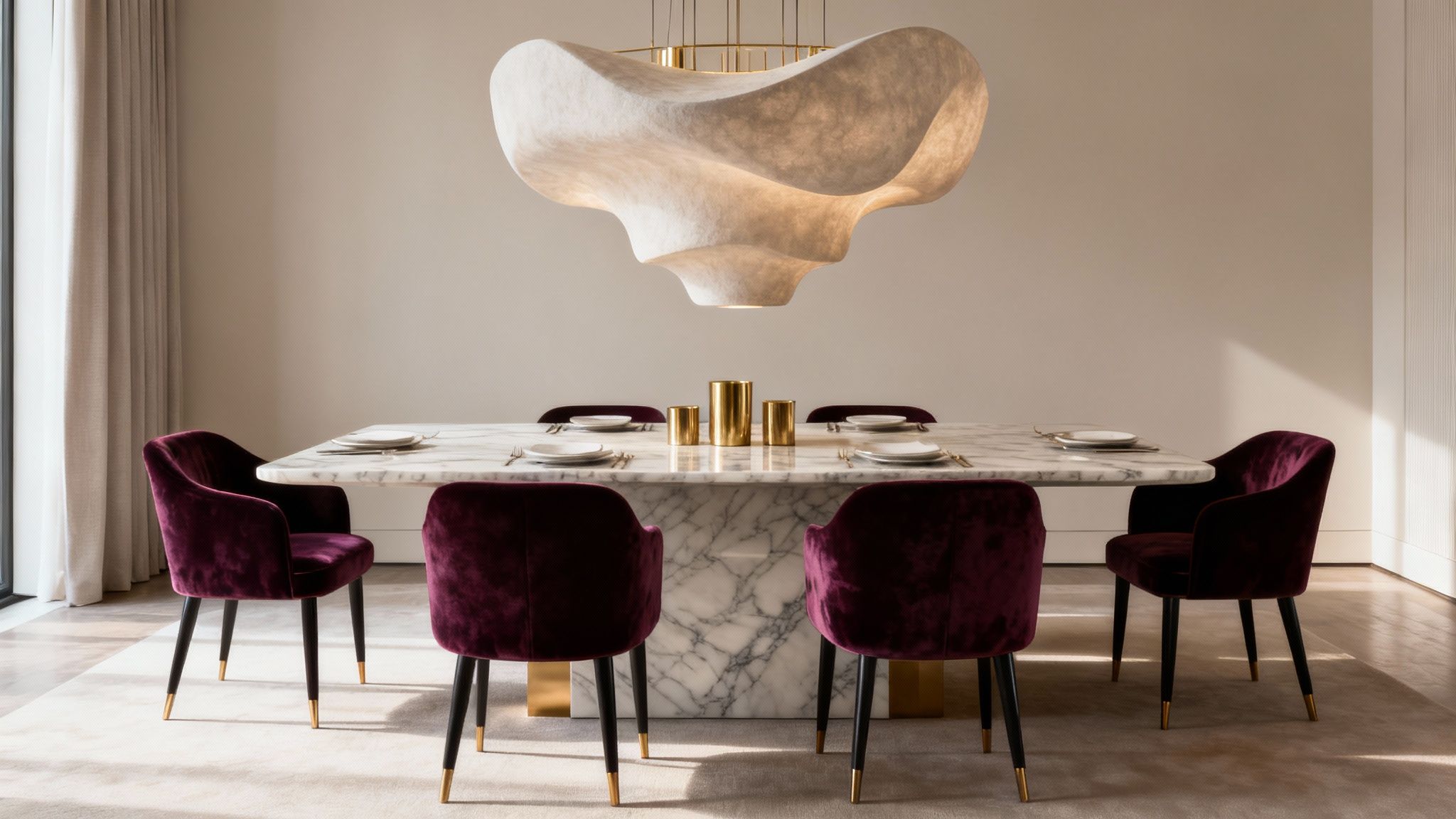
This style is perfect for those who want to create a memorable and glamorous dining experience. The right fixture acts as functional art, combining illumination with breathtaking design. It works by drawing the eye upward and anchoring the dining area, complementing luxe materials like marble, rich woods, velvet, and brass to create a cohesive and opulent atmosphere.
Style Summary
A modern luxury dining room is defined by its refined elegance, quality materials, and meticulous attention to detail. The statement light fixture is the star, often featuring complex geometric forms, high-shine metallic finishes, or cascading crystalline elements. Think of a brass Sputnik chandelier exploding over a sleek marble table, or a cascading sculptural pendant from a designer like Tom Dixon casting a warm, inviting glow. The color palette is typically sophisticated, using deep jewel tones, rich neutrals, and metallic accents to create a sense of drama and comfort.
Implementation and Tips
To execute this look effectively, the lighting choice must be deliberate and well-integrated. Follow these actionable tips:
- Prioritize Scale: The fixture must be proportional to the room and the dining table. A light that is too small will get lost, while one that is too large can overwhelm the space. A general rule is that the fixture’s diameter should be about one-half to two-thirds the width of the table.
- Layer Your Lighting: A statement piece provides ambient light, but it shouldn't be the only source. Incorporate task lighting (like subtle recessed lights) and accent lighting (such as wall sconces or a lit art piece) to build depth and functionality.
- Install a Dimmer: Ambiance is crucial in a luxury setting. Installing a dimmer switch is a non-negotiable step that allows you to control the mood, transitioning seamlessly from a bright, functional space to an intimate, low-lit dinner party setting.
- Choose Timeless Materials: Invest in fixtures made from high-quality materials like brass, bronze, crystal, or hand-blown glass. These materials not only look luxurious but also have a timeless appeal that transcends fleeting trends. Explore our collection of premium ceiling light fixtures to find the perfect centerpiece.
Key Insight: In modern luxury design, the statement light fixture is more than just a source of illumination; it is the central piece of jewelry for the room, defining the space and dictating its sophisticated character.
8. Japandi Style: Japanese-Scandinavian Fusion
Japandi style is one of the most soulful and sophisticated modern dining room decor ideas, merging the rustic minimalism of Japanese design with the cozy functionality of Scandinavian aesthetics. This fusion creates a serene and purposeful dining space that celebrates clean lines, natural materials, and an uncluttered environment. It’s the perfect blend of Japanese "wabi-sabi" (finding beauty in imperfection) and Scandinavian "hygge" (a quality of coziness and comfort).
This approach is ideal for those seeking a tranquil retreat from the chaos of daily life. The focus is on creating a space that feels both warm and airy, grounded in craftsmanship and mindful living. Instead of loud statements, Japandi design communicates through texture, form, and the quiet beauty of well-made, functional objects, making every meal feel like a calming ritual.
Style Summary
A Japandi dining room is defined by its harmonious blend of light and dark, sleek and rustic. It favors a muted, earthy color palette, high-quality natural materials like light woods (oak, maple) paired with darker tones (walnut, stained bamboo), and a focus on handcrafted pieces. Imagine a solid oak dining table with clean lines, surrounded by a mix of minimalist chairs and a single, beautifully crafted bench. Lighting is often soft and ambient; for instance, when delving into the serene aesthetics of Japandi, featuring elements like a Nordic Handmade Japan Style LED Chandelier can beautifully blend the minimalist sensibilities of both cultures.
Implementation and Tips
To achieve the Japandi look, focus on quality over quantity and create a balanced, organic atmosphere.
- Embrace Natural Materials: Center your design around wood, bamboo, rattan, and linen. Use a light wood for the dining table and contrast it with darker chairs or a statement cabinet.
- Declutter with Intention: Japandi is fundamentally minimalist. Keep surfaces clear and display only a few meaningful objects, such as a single ceramic vase or a unique piece of pottery.
- Incorporate Greenery: Add a touch of nature with a simple, elegant plant like a bonsai tree or a tall fiddle-leaf fig in a ceramic pot. This adds life and reinforces the connection to the natural world.
- Focus on Functional Beauty: Every piece should have a purpose. Choose furniture and decor that are not only beautiful but also highly functional, embodying the core principles of both Japanese and Scandinavian design.
Key Insight: The essence of Japandi lies in the contrast and balance between two distinct cultures. Successfully creating this style means mastering the art of pairing sleek, functional Scandinavian forms with the organic, imperfect beauty of Japanese aesthetics.
9. Glamorous Art Deco Revival
The Glamorous Art Deco Revival is a modern dining room decor idea that reinterprets the opulence of the 1920s with a contemporary edge. This style is all about making a sophisticated statement, blending rich materials, striking geometric patterns, and metallic finishes to create a space that feels both luxurious and architecturally interesting. It moves beyond simple decoration, transforming the dining room into a dramatic, high-impact setting perfect for entertaining.
This approach is ideal for those who love bold, glamorous aesthetics and want to infuse their home with a sense of history and grandeur. By combining vintage-inspired elements with modern sensibilities, you can craft a dining space that is both timeless and undeniably chic. The look masterfully balances classic opulence with clean, modern lines for a truly captivating atmosphere.
Style Summary
An Art Deco revival dining room is defined by its confidence and commitment to luxe details. It features strong geometric forms like sunbursts, chevrons, and zig-zags, often paired with a rich color palette of jewel tones, black, and cream. Think of a sleek, lacquered dining table surrounded by velvet-upholstered chairs, with a brass and crystal chandelier casting a warm glow. The style embraces materials like polished marble, dark woods, brass, gold, and mirrored surfaces to create a layered and visually dynamic environment.
Implementation and Tips
To bring this dramatic style into your home without it feeling overwhelming, focus on balance and curation. Follow these actionable tips:
- Incorporate Geometric Patterns: Use a bold, geometric wallpaper on an accent wall or select a rug with a classic Art Deco motif. This adds visual interest without overpowering the entire room.
- Balance Your Metallics: Stick to one or two metallic finishes, such as brass or polished chrome, to maintain a cohesive look. Use them for lighting fixtures, table legs, or decorative objects.
- Ground with Black: Integrate black elements through furniture, trim, or accessories. A black lacquered sideboard or dining chairs can anchor the glamorous finishes and prevent the space from feeling too ornate.
- Mix Vintage and Modern: Combine authentic vintage Art Deco pieces, like a mirror or a bar cart, with modern reproductions. This creates a more curated and personal space that feels collected over time.
Key Insight: The essence of a modern Art Deco revival lies in its sophisticated restraint. Focus on a few high-impact elements, like a statement lighting fixture or a patterned accent wall, and let them be the star of the show against a backdrop of refined, modern furnishings.
10. Biophilic Design with Integrated Nature
Integrating nature through biophilic design is one of the most refreshing modern dining room decor ideas, transforming the space into a tranquil, life-giving sanctuary. This approach is founded on the human need to connect with nature, bringing organic elements indoors to reduce stress, improve well-being, and create a calming atmosphere. Far beyond just placing a pot plant on a windowsill, it involves a thoughtful fusion of living plants, natural light, and organic materials.
This style is perfect for those who want their dining area to feel like a retreat from the hustle of modern life. It uses nature as the primary decorative element, turning the room into an immersive experience. Imagine dining next to a lush living wall or under a canopy of hanging ferns; these elements not only purify the air but also provide a dynamic, ever-changing backdrop that soothes the senses.
Style Summary
A biophilic dining room is defined by its direct connection to the natural world. It prioritizes abundant natural light, a color palette inspired by earth, stone, and foliage, and materials like unfinished wood, rattan, and linen. Think of a dining space where large windows blur the line between inside and out, a live-edge wooden table serves as the centerpiece, and a vertical garden or collection of diverse houseplants acts as living art. The goal is to create a sensory-rich environment that feels both sophisticated and deeply restorative.
Implementation and Tips
To successfully implement a biophilic design, focus on layering natural elements. Follow these actionable tips:
- Create a Living Feature: Install a small living wall or a cluster of hanging planters above the dining table to create a dramatic focal point. Start with low-maintenance plants like pothos, snake plants, or ZZ plants.
- Layer Plants by Height: Use a mix of floor plants (like a fiddle leaf fig), tabletop plants (such as succulents), and hanging varieties (like string of pearls) to create visual depth and interest.
- Maximize Natural Light: Keep window treatments minimal with sheer linen curtains or leave them bare to allow maximum sunlight, which is crucial for both plants and people.
- Embrace Organic Materials: Choose a dining table made from reclaimed wood, chairs with rattan or woven details, and accessories like stone coasters or terracotta planters to reinforce the natural theme.
Key Insight: True biophilic design is more than just adding plants; it's about creating an ecosystem. Combine living elements with natural light, textures, and patterns to craft a cohesive environment that genuinely enhances well-being.
10-Style Comparison: Modern Dining Room Decor
| Style | 🔄 Implementation Complexity | ⚡ Resource Requirements & Time | ⭐ Expected Outcome / Quality | 📊 Ideal Use Cases | 💡 Key Advantages / Tips |
|---|---|---|---|---|---|
| Minimalist Design with Open Shelving | Medium — requires disciplined curation and layout | Low–Medium — affordable furniture; regular maintenance | High — calm, spacious feel when maintained ⭐⭐⭐ | Small apartments; modern urban dining | Use symmetrical displays; limit items on shelves; dust regularly 💡 |
| Industrial Chic with Exposed Elements | Medium–High — structural/finishing work often needed 🔄 | Medium — raw materials may reduce finish costs; acoustic fixes add time | High — bold, characterful aesthetic ⭐⭐⭐ | Lofts, converted warehouses, restaurants | Soften with textiles and warm lighting; add plants for balance 💡 |
| Contemporary Mid-Century Modern | Medium — sourcing or reproducing iconic pieces; coordination needed | Medium–High — quality pieces or authentic vintage can be costly ⚡ | Very High — timeless, warm, comfortable ⭐⭐⭐⭐ | Homes seeking classic-modern balance; collectors | Mix reproductions with vintage; limit palette to 2–3 colors 💡 |
| Scandinavian Simplicity with Hygge Elements | Low–Medium — straightforward but needs layering of textures | Low–Medium — light woods and textiles; lighting investments | High — welcoming, functional, cozy ⭐⭐⭐ | Family dining; cold climates; casual entertaining | Layer lighting; add rugs and cushions; keep accessories meaningful 💡 |
| Maximalist and Eclectic Styling | High — complex composition and strong design sense required 🔄 | Variable — can be cost-effective using mixes or costly for curated pieces | High — highly personalized, expressive ⭐⭐⭐ | Creative homes; collectors; statement interiors | Choose a unifying color/material; create focal points to avoid chaos 💡 |
| Sustainable and Eco-Conscious Design | Medium — requires research and sourcing time 🔄 | Medium — reclaimed/vetted items may take longer; variable cost | High — unique, durable, ethical ⭐⭐⭐ | Eco-minded households; long-term investments | Shop secondhand; verify certifications; invest in longevity 💡 |
| Modern Luxury with Statement Lighting | High — involves design, scale, and possible electrical work 🔄 | High — luxury materials and fixtures; professional installation ⚡ | Very High — dramatic, refined, designer-quality ⭐⭐⭐⭐ | High-end residences; formal dining and showpiece rooms | Invest in one focal fixture; layer lighting and ensure proper scale 💡 |
| Japandi Style: Japanese-Scandinavian Fusion | Medium — careful balance of two aesthetics; sourcing artisan pieces | Medium — quality natural materials; some specialty items | Very High — serene, timeless, functional ⭐⭐⭐⭐ | Minimalist lovers; those seeking calm, balanced spaces | Favor quality over quantity; use one soft accent color; integrate plants 💡 |
| Glamorous Art Deco Revival | High — requires coordinated finishes and bold statement pieces 🔄 | High — luxury materials and custom elements; upkeep needed | High — dramatic, elegant, memorable ⭐⭐⭐ | Formal entertaining areas; luxury projects | Use one jewel tone; balance metallics; avoid overdoing patterns 💡 |
| Biophilic Design with Integrated Nature | Medium–High — needs planning for light, irrigation, and maintenance 🔄 | Medium — plant costs, potential lighting/grow systems; ongoing care ⚡ | High — health and wellbeing benefits; dynamic aesthetic ⭐⭐⭐⭐ | Wellness-focused homes; restaurants; urban retreats | Start with low-maintenance species; layer plant heights; ensure light & care plan 💡 |
Crafting Your Perfect Dining Experience
The journey through these ten distinct modern dining room decor ideas reveals a powerful truth: the contemporary dining space is no longer just a room for eating. It's a dynamic, multi-functional hub for connection, celebration, and everyday life. We've explored everything from the clean, uncluttered lines of Scandinavian Simplicity and the serene fusion of Japandi to the bold, personality-driven statements of Maximalist Eclectic and Glamorous Art Deco Revival. Each approach offers a unique blueprint for creating a space that is not only visually stunning but also deeply personal and functional.
The central theme connecting these diverse styles is the emphasis on intentionality. Modern design, in all its forms, asks you to think critically about how you live. Do you crave a calming retreat? The nature-infused principles of Biophilic Design or the sustainable ethos of Eco-Conscious decor might be your answer. Do you host vibrant, energetic gatherings? The raw, textural honesty of Industrial Chic or the sophisticated drama of Modern Luxury with its statement lighting provides the perfect backdrop. Your dining room should be a direct reflection of your lifestyle, values, and aesthetic preferences.
Synthesizing Your Vision
Moving from inspiration to implementation can feel daunting, but the key is to avoid trying to do everything at once. Instead of feeling overwhelmed by the ten distinct styles we've covered, think of them as a palette of concepts to draw from. The most compelling and authentic spaces are often those that blend elements. Perhaps you love the warm woods of Mid-Century Modern but are drawn to the bold, oversized lighting of a luxury aesthetic. Combine them. Maybe the sustainable materials of an eco-conscious room resonate with you, but you want to incorporate the cozy, comforting textiles central to hygge. That fusion is where your unique style is born.
To start, identify the core function of your dining space. Is it a formal room for special occasions, a casual breakfast nook, or a hybrid space that doubles as a home office? Your answer will guide your most critical choices, particularly your dining table and seating.
Key Takeaways and Actionable Next Steps
As you begin to craft your perfect dining experience, keep these foundational principles in mind:
- Define Your Anchor Piece: Start with one significant element that you absolutely love. This could be a sculptural dining table, a dramatic pendant light, a vibrant area rug, or a piece of large-scale art. Build the rest of the room's design around this focal point.
- Prioritize Layout and Flow: Before buying a single piece of furniture, consider the room's scale and traffic patterns. Ensure there is ample space to pull out chairs and walk around the table comfortably. A well-planned layout is the invisible foundation of a successful design.
- Layer Lighting Thoughtfully: Great lighting is transformative. Combine ambient lighting (like a central chandelier or pendant), task lighting (perhaps wall sconces or a floor lamp in a corner), and accent lighting (to highlight artwork or architectural features) to create a versatile and inviting atmosphere.
- Embrace Texture and Materiality: Modern design is not cold or sterile. Introduce warmth and depth by layering textures. Think of the interplay between a smooth marble tabletop, boucle dining chairs, a woven jute rug, and linen curtains. These tactile details make a room feel complete.
Ultimately, the most successful modern dining room decor ideas are those that are executed with confidence and a clear point of view. This isn't about following rigid rules; it's about using established design principles as a launchpad for your own creativity. A well-designed dining room does more than just impress guests, it enhances your daily rituals, fosters connection, and becomes a source of personal joy and comfort. It is an investment in your home and in the quality of the moments you share within it.
Ready to bring your vision to life? The curated collections at Fluent Trends are designed to help you source the key pieces that define these modern aesthetics. From statement lighting to sustainably crafted dining tables, you'll find high-quality, design-forward furniture and decor to build your perfect space at Fluent Trends.