

Portugal Woven Pillowcases: Fabrics, Sizes and Care
Yuatinia LeakLast Updated: November 2, 2026
Quick Summary
Portugal woven pillowcases are made on a loom where threads cross in a set pattern, which decides how the fabric feels, breathes and wears. Woven fabric stays flat and resists pilling better than knit. Pick the weave, fibre and care label before you buy.
- Woven fabric locks threads at right angles, so it stays flat and resists pilling.
- Plain weave, percale, sateen and twill each feel different and suit different sleepers.
- Check fibre content, weave type and care instructions on every label before buying.
- Measure your pillow rather than your old case, then add about one inch to each dimension.
- Wash in cold water and skip high heat to avoid shrinkage on natural fibres.
Table of Contents
- What Makes a Pillowcase Portugal Woven
- Portuguese Cotton Pillowcases Compared
- Portugal-Made Linen Pillowcases: What to Expect
- Fabric Weight, Thread Count and Feel
- European Pillowcase Sizes and How to Pick the Right Fit
- Sensitive Skin, Sustainability and Certifications
- Portugal-Made Pillowcase Care Without Shrinkage
- Are Portugal Woven Pillowcases Worth the Price?
- Choosing Your Set and Taking the Next Step
- Frequently Asked Questions
What Makes a Pillowcase Portugal Woven
Portugal woven pillowcases start on a loom. The threads cross over and under each other in a set pattern. That pattern is the weave, and it decides how the fabric feels, breathes and holds up. Our Signature Milk Fibre Pillowcase Set is woven in Portugal with that same attention to finishing.
Woven is not the same as knit. Knit fabric loops and stretches. Woven fabric locks threads at right angles, so it stays flat and resists pilling. That is why most pillowcases you see on a bed are woven, not knit.
Three weave structures show up most often in Portugal-woven bedding. Plain weave is a simple one-over, one-under pattern. It is smooth, crisp and the most common choice for cotton pillowcases. Percale is a tight plain weave, usually with a matte finish and a cool hand. Sateen is a satin weave with longer floats on the surface. It feels silkier and drapes more, but it can snag more easily. Twill has a diagonal rib and tends to be denser and more durable.
Here is how those differences show up in daily use. A tight plain weave or percale feels cool and stays smooth against your face. Sateen feels softer out of the bag but may pill faster if the yarn is short-staple. Twill holds its shape well and hides wrinkles better than plain weave. None of these is automatically better. The right pick depends on whether you run warm, sleep on your side, or want a crisp hotel feel.
Watch out: a listing that says only "premium cotton" or "luxury weave" tells you nothing about structure. Ask for the weave name, the yarn type and the fabric weight. A reputable purveyor will answer.
Check the label for three things. Fibre content comes first. Then weave type. Then care instructions. A good listing names each one. If a product skips all three, keep looking.
Our Milk Fibre Pillowcase Set is made with a casein blend. It is described as hypoallergenic and pH-balanced, which matters if your skin reacts to rough or scratchy fabric.
One more point on construction. A woven pillowcase should have clean seams and an enclosure that keeps the insert in place. Envelope closures are common on Portugal-woven bedding because they hide the insert and avoid zipper wear. Check the seam allowance and the stitching at the corners. Those small details tell you more about durability than a thread count badge.
Portuguese Cotton Pillowcases Compared
Cotton is the most common choice for Portuguese pillowcases, and for good reason. It is breathable, easy to care for, and it softens with each wash. Portuguese cotton pillowcases are often woven tighter, which gives them a smoother hand feel.
The trade-off is that cotton alone can feel a little flat compared to blended fibres. That is why many makers blend it with other materials. Our Milk Fibre Pillowcase Set uses a casein blend that brings a smooth, lightweight finish.
Compare cotton options on three points: thread count (fewer threads woven more tightly often outperforms high-count marketing), fabric weight, and finish. A cotton pillowcase that feels cool and crisp suits warm sleepers. One with more body suits people who like a cosy feel.
Cotton is the usual pick here, and the weave matters as much as the fibre.
Factor |
What to check |
Why it matters |
|---|---|---|
Thread count |
Fewer threads, woven tighter |
Often feels smoother than high-count marketing |
Fabric weight |
Lighter for cool, heavier for cosy |
Decides how warm the case feels |
Finish |
Crisp for warm sleepers |
Suits your sleep temperature |
Blend |
Casein blend for a smooth finish |
Adds a lighter, silkier hand |
Portugal-Made Linen Pillowcases: What to Expect
Linen is strong, absorbent and gets softer over time. Portugal-made linen pillowcases tend to have a relaxed, slightly textured look that many people find appealing. They are a strong choice for hot climates and for sleepers who run warm, because linen moves moisture away from the skin quickly.
Expect linen to wrinkle. That is part of its character, not a flaw. It also softens noticeably after several washes, so a new linen pillowcase may feel stiffer than you expect at first.
If you want the look of linen with a softer, more forgiving feel, a blended fibre can be a middle path.
Fabric Weight, Thread Count and Feel
Thread count is the number most shoppers look at first, and it is also the most overrated. A very high count can come from multi-ply threads, which feel heavier and can trap heat. A moderate count in a well-made weave often feels better.
Fabric weight, usually measured in grams per square metre (GSM), tells you more about how a pillowcase will feel. A lighter fabric feels airy and cool. A heavier one feels plush and holds warmth. Neither is better in general. Choose based on how you sleep.
Feel is personal, so test it. Run the fabric between your fingers. Smooth, even threads with no rough spots usually signal careful weaving.
European Pillowcase Sizes and How to Pick the Right Fit
Sizing is where most pillowcase returns start. A case that is too small pulls at the seams and wears out fast. One that is too large bunches around the insert and looks sloppy. The fix is to measure your pillow, not your old case.
Here are the common insert sizes you will see on bedding listings. Standard pillows usually measure about 20 by 26 inches. Queen pillows are close to standard but sometimes a touch wider. King pillows run about 20 by 36 inches. European squares are roughly 26 by 26 inches. Body pillows are much longer and need their own case.
Signature Milk Fibre Pillowcase Set | Portugal Woven Bedding →
Now match the case to the insert. A standard case is usually cut a little larger than the pillow so it slides on without strain. If your pillow is a European square, a standard case will fit loosely and an envelope closure helps hold it in place.
Watch out: listings often mix up "fits queen" with "queen size." A case labeled queen may be cut for a standard insert. Always compare the flat measurements on the listing to your pillow, not the size name.
A simple measuring routine saves the guesswork. Lay your pillow flat and measure length and width. Add about one inch to each dimension for a comfortable fit. If you use a pillow protector, measure with the protector on. That extra layer changes the fit more than most people expect.
Shrinkage also affects fit. Natural fibers like cotton can shrink a little on the first wash, especially in warm water or a hot dryer. Buy a case with a little room, or follow the cold-wash and low-heat guidance on the care label. Our milk fibre blend is designed to hold its size with that routine.
If you are matching a full bed, check the insert sizes across the set. A king duvet often pairs with king pillowcases, but not always. The Signature Milk Fibre Deluxe Set bundles five coordinated pieces. That removes the most common mismatch.
One last check before you buy. Read the return policy before you buy.
Sensitive Skin, Sustainability and Certifications
Many people switch to a new pillowcase because of skin irritation, dryness or breakouts. Fabric choice can make a difference. Our Milk Fibre Pillowcase Set is described as hypoallergenic and pH-balanced. Individual results vary, so if you have a skin condition, speak with a dermatologist before changing your bedding routine.
Certifications help you verify claims. OEKO-TEX Standard 100 tests textiles for harmful substances and is one of the most recognised labels for home textiles. Look for it on the product page or ask the seller for the certificate number.
Sustainability is harder to judge from a label alone. Ask where the fabric is spun and woven, what fibres are used, and whether the producer follows fair labour practices. Our Milk Fibre range is made with a casein blend.
Portugal-Made Pillowcase Care Without Shrinkage
Good care keeps a pillowcase looking new for years.
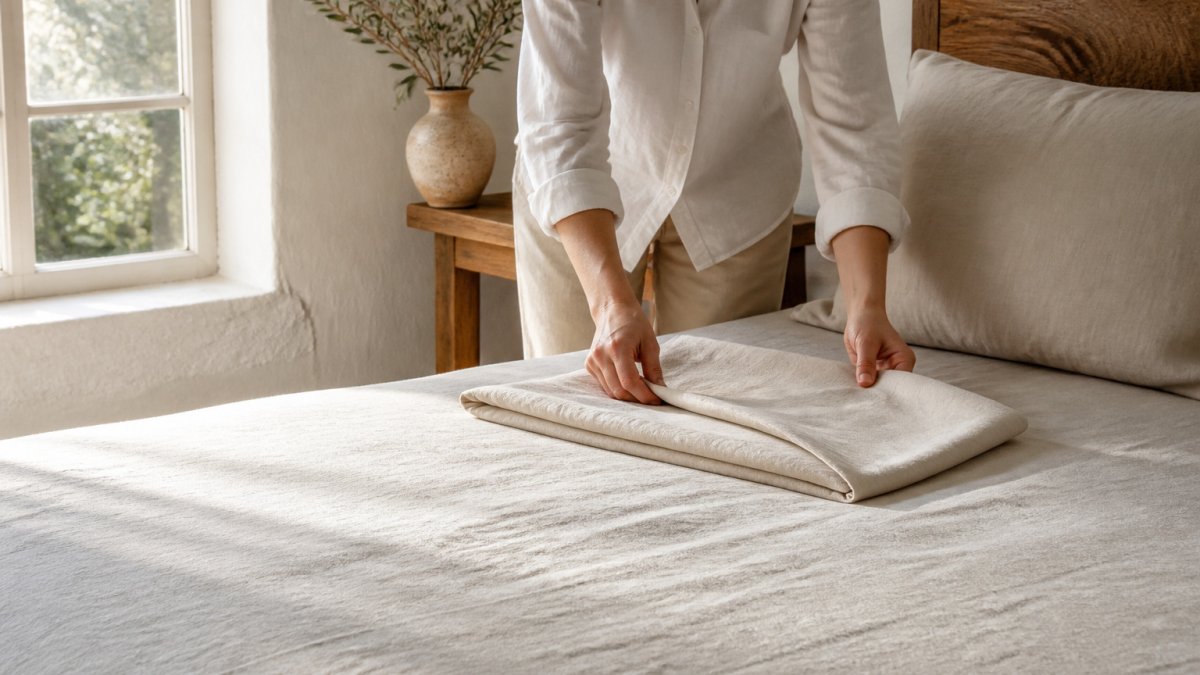
Hands folding a cream-colored cotton-blend pillowcase on a linen bed in a sunlit bedroom
Shrinkage is the most common complaint with natural fibres. Wash in cold water, avoid high heat in the dryer, and remove the pillowcase while it is still slightly damp to hang or lay flat.
Wash pillowcases weekly if you sleep with skin products, hair products or pets nearby. Use a mild detergent and skip fabric softener, which can reduce breathability over time.
Are Portugal Woven Pillowcases Worth the Price?
Portugal woven pillowcases cost more than basic cotton from a mass retailer. Our Signature Milk Fibre Pillowcase Set is priced at $78.00. Whether that is worth it depends on how you use them.
If you sleep on your pillowcase for eight hours a night, the fabric touches your skin for a large part of your life. A pillowcase that is well woven, gentle on sensitive skin and durable through regular washing gives you more value per use than a cheaper set you replace every year.
If you rarely change bedding or prefer a rougher texture, a basic cotton set may suit you better. Compare the fabric content, weave and care instructions, and choose the option that fits your sleep and your budget.
Choosing Your Set and Taking the Next Step
Start with your sleep needs. Warm sleepers often prefer linen or a lighter cotton weave. Sensitive skin usually does well with a smooth, pH-balanced blend. Those who want a complete bedroom refresh may prefer a full set.
If you want to begin with pillowcases alone, the Signature Milk Fibre Pillowcase Set at $78.00 is a simple way to test the fabric. If you want to match a full bed, the Signature Milk Fibre Deluxe Set at $493.00 includes two pillowcases, a duvet cover, a flat sheet and a fitted sheet in coordinated pieces.


Whatever you choose, check the fibre content, size, weave and care instructions before you buy. A good pillowcase should feel right on your skin, fit your pillow and hold up to the way you wash.
Frequently Asked Questions
What fabrics are used for Portugal-woven pillowcases?
Lunaweft's Signature Milk Fibre Pillowcase Set is made with casein fibre and woven in Portugal. Casein is a natural protein. The pillowcase is described as hypoallergenic and pH-balanced.
How do Portuguese linen pillowcases compare with cotton?
Linen is usually crisper and dries faster, while cotton feels smoother and softer from the first wash. Lunaweft's milk fibre set sits between the two. If you sleep hot, look at the breathability of the weave. If you want a softer hand, a cotton-rich blend will likely suit you better.
What size pillowcase fits a European pillow?
Measure your pillow before buying, since European square pillows are larger than standard rectangles and need a matching case. Check the listed dimensions against your pillow rather than relying on the size name alone.
Are Portugal-woven pillowcases worth buying?
They are worth it if you want a pillowcase built for daily use rather than a decorative piece you rarely touch. The Signature Milk Fibre Pillowcase Set costs $78.00, so the value depends on how often you wash and sleep on them. If you prefer a natural, hypoallergenic surface, the casein fibre is described as a gentle option.
