

Styling Global Decor in Modern Homes: A Practical Guide
Yuatinia LeakTable of Contents
- Start with a Modern Base Before Adding Global Decor
- How to Mix Decor Styles Without the Clutter
- Pick an Anchor Piece That Grounds the Room
- Global Decor Ideas for Living Rooms That Feel Modern
- Layer Textiles, Patterns, and Earthy Colors
- Choose Artisan Home Decor with a Real Story
- Source Respectfully and Set a Realistic Budget
- Small Spaces and Rentals: Make Global Decor Work
- Conclusion
- Frequently Asked Questions
Last Updated: October 21, 2026
Start with a Modern Base Before Adding Global Decor
Global decor is the practice of layering objects, textiles, and materials from different cultures into a room without letting them fight each other. The trick most people miss? You need a calm base first. This guide from Fluent Trends walks you through that exact process, room by room.
Here is the core idea. A modern room gives global pieces somewhere quiet to land. Clean lines, warm neutrals, and open floor space do the heavy lifting. Then a carved sideboard or a handwoven rug becomes the star instead of noise.

Think of it like getting dressed. You start with a plain shirt and trousers. Then you add the one bold necklace. Same logic applies to styling global decor in modern homes.
Start with these base moves:
- Choose a sofa or bed with simple, straight lines
- Keep walls in warm white, oatmeal, or soft clay
- Pick one wood tone and repeat it
- Clear surfaces before you add anything
A common mistake is buying the global piece first, then trying to build a room around it. That usually ends in clutter. Build the quiet foundation, then shop.
How to Mix Decor Styles Without the Clutter
Mixing styles fails when every object shouts at the same volume. The fix is a simple ratio. Let about eighty percent of the room stay modern and restrained. Give the remaining twenty percent to your global finds.
That ratio keeps things cohesive. It also means you can keep adding pieces over time without the room tipping into chaos.
Try this editing checklist before you buy anything new:
- Does this piece share a color with something already in the room?
- Is there a clear empty spot for it, or am I making room by cramming?
- Does it repeat a material I already have (wood, ceramic, wool)?
- Would the room look fine without it? If yes, it is a want, not a need
- Can I name where it came from and who made it?
One more rule that saves rooms: give each wall one job. If a wall holds a large piece of wall art, keep the shelf below it sparse. Two busy zones side by side always look cluttered.
Pick an Anchor Piece That Grounds the Room
An anchor piece is the one large object that sets the tone for everything else. It gives the eye a place to rest and tells the other pieces how to behave. Pick it before you buy accessories, not after.
Good anchors share three traits. They are substantial in size, they carry visible craft, and they work with a modern frame. A hand carved sideboard is a textbook example. The reclaimed acacia wood brings natural grain and color shifts, so no two pieces look alike.
That sideboard earns its place for practical reasons too. Two cabinet doors and three drawers hide everyday clutter. Solid wood construction holds up in busy, high-traffic rooms. The antique white finish pairs easily with neutral tones and modern decor.
Other anchor options that work well:
- A low, clean-lined sofa in a natural fiber
- A large handwoven rug that defines the seating zone
- A single oversized ceramic vessel on the floor
- A bone inlay cabinet with a simple silhouette
Once the anchor is set, every smaller purchase has a test. Does it support the anchor or compete with it? That question alone prevents most buying mistakes.

Global Decor Ideas for Living Rooms That Feel Modern
Living rooms carry global decor best when the seating stays simple and the layers do the talking. Keep the sofa modern, then build texture and story around it. The mistake most people make is buying pattern first. Pattern should be the last layer you add, not the first.
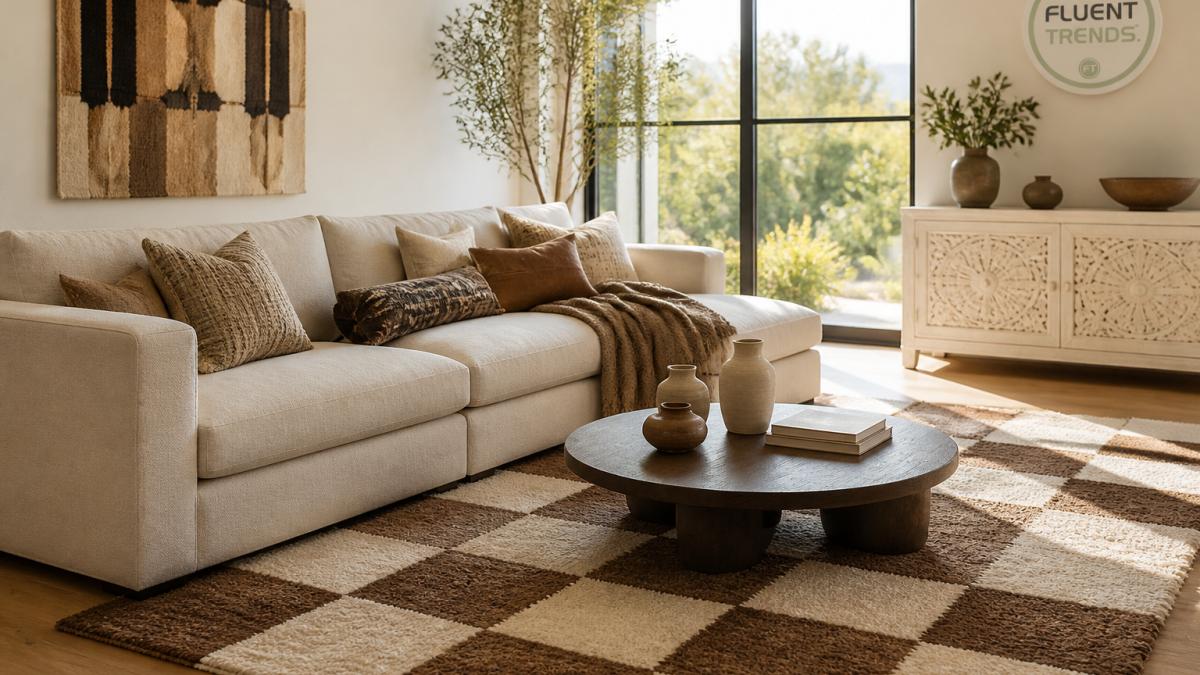
Here is the sequence that actually works. Follow it in order and the room stays calm.
- Floor first. Choose one flat weave wool rug sized so the sofa's front legs sit on it. A rug that floats in the middle of the room shrinks the space.
- Seating second. Pick a modern sofa in a solid neutral. Organic cotton or linen covers read warm and stay easy to clean.
- Anchor third. Add one substantial piece, like a carved acacia wood sideboard or a bone inlay cabinet. This is your story piece.
- Soft layers fourth. Two or three pillows, one throw, and nothing more. A boucle chair adds softness next to hard wood.
- Wall last. One large artwork or a tight gallery cluster. Never both.
Scale is where modern rooms go wrong. A global piece that is too small looks like a souvenir. A global piece that is too large swallows the room. Aim for the anchor to take up roughly one third of the wall it sits against. That ratio keeps it confident without crowding.
Negative space is your friend. Leave at least one wall mostly bare. Leave the coffee table clear except for one object. Modern rooms need air, and global pieces need quiet around them to read as intentional.
Keep the palette tight. Umber, ivory, clay, and warm wood tones sit well together. Add one accent color and stop there. If you want a second accent, use texture instead of color.
One more rule that saves rooms: give each wall one job. If a wall holds a large piece of wall art, keep the shelf below it sparse. Two busy zones side by side always look cluttered.
If you want a soft landing for the eye, add a Cloud Silque Throw over the sofa arm. It brings a quiet sheen that plays well with wool and wood. Pair it with an Avenida in Bosque 18" x 18" Pillow for a subtle botanical note that does not fight the rug.
Layer Textiles, Patterns, and Earthy Colors
Texture is what makes a layered room feel warm instead of flat. Pattern gets the attention, but texture does the quiet work. Build both, and keep the color story earthy.
Natural fibers are your best friend here. Wool, jute, linen, and organic cotton all bring surface interest without adding visual noise. A boucle chair adds softness next to a hard wood cabinet. A linen pillow softens a leather sofa.
For pattern, follow one simple rule: mix scale, not quantity. Pair a large geometric motif with a small tribal-inspired pattern. Never pair two patterns of the same size.
A workable pattern mix looks like this:
Hand Carved Sideboard Cabinet | Reclaimed Acacia Wood →
| Layer | Pattern Scale | Example |
|---|---|---|
| Rug | Large | Checkered or wide geometric |
| Pillows | Small | Fine stripe or tiny motif |
| Throw | None or texture only | Solid woven wool |
| Art | One focal pattern | Single framed textile |
Earth tones keep the mix calm. Think terracotta, olive, sand, rust, and deep brown. Warm neutrals on the walls let those colors read clearly.
Choose Artisan Home Decor with a Real Story
Artisan home decor is made by hand, in small batches, by people with a named craft. That matters for two reasons. The piece lasts longer, and you can tell someone where it came from.
We source from reputable purveyors who work directly with makers. That means the story travels with the piece. A hand-carved cabinet from a known workshop is not the same as a factory copy.
Look for these signals when you shop:
- A named maker, workshop, or region
- Materials listed clearly, like reclaimed acacia or hand-dyed wool
- Visible handwork, such as carving, inlay, or hand-finishing
- Small production runs rather than endless stock
- Natural variation noted as expected, not hidden
Natural variation is a good sign. Color shifts and slight size differences mean a human made the piece. A perfectly identical row of copies usually means a machine did.
Bone inlay furniture is a good example of craft you can see. Small bone tiles are cut and set by hand into a frame. The pattern takes patience, and the result shows it.
Source Respectfully and Set a Realistic Budget
Respectful sourcing starts with asking better questions. Who made this? Where did the material come from? Does the price reflect fair pay for the work? If a seller cannot answer, that tells you something.
Cultural context matters too. A motif has a history and often a meaning. Using it as a trend piece without credit is not respectful. Learn the origin, name it when you talk about the piece, and buy from sellers who do the same.
Set your budget in stages so you can buy well instead of fast:
- Anchor piece first. Set aside the largest share here. This is the piece you keep for years.
- Textiles second. Rugs, throws, and pillows carry most of the visual weight.
- Accents last. Ceramics, frames, and small objects finish the room.
Durability belongs in the budget conversation. A solid wood piece that resists denting and warping costs more up front and less over time. Sheesham wood, for example, scores around 1,410 lbf on the Janka hardness scale. That makes it harder and more scratch-resistant than teak, which sits near 1,000 lbf. Dense, well-seasoned wood resists warping and keeps joints tight for decades.
Small Spaces and Rentals: Make Global Decor Work
Small rooms and rentals can absolutely carry global decor. You just need pieces that work harder and attach less permanently. Scale down, layer up, and avoid anything that needs a drill.
Start with the floor and the walls, because those are the two surfaces renters can change without permission. A wool rug and a woven wall hanging do more than any furniture swap. Both travel with you when you move.
Here is what works in tight spaces, and why:
- Wall textiles instead of framed art. A woven hanging adds pattern with zero floor space and no holes.
- One tall anchor. A narrow cabinet or tall vase draws the eye upward and makes ceilings feel higher.
- Stacked ceramics. Group small pieces on a tray to build height without spreading clutter.
- Removable hooks and leaning shelves. No holes, no landlord problems, no patching later.
- Nesting pieces. A Large Porcelain Nesting Bowl stores flat and displays big when you need it.
Renters should lean on textiles and lighting first. A wool rug and a soft throw change a room more than any furniture swap. Both travel with you when you move. Add a Portugal-woven bedding set in the bedroom for the same reason. It is easy to fold and store between moves.
Material choice matters more in small spaces because you live close to every surface. Organic cotton covers resist pilling and wash clean. Boucle furniture adds texture without pattern, which keeps a small room from feeling busy.
Keep the palette consistent across a small space. Fewer colors make a room feel larger. Two earth tones plus one accent is plenty. If you want a third, use a metal like brass or a natural like rattan instead of another color.
Durability is a renter's secret weapon. Pieces that survive moves save you money over time. Sheesham wood scores around 1,410 lbf on the Janka hardness scale, which makes it harder and more scratch-resistant than teak at roughly 1,000 lbf. It resists warping and keeps joints tight through repeated disassembly. Acacia wood brings similar density at a lighter weight, which matters when you carry it up stairs.
Finally, think in zones. A small living room can hold a seating zone, a display zone, and a storage zone without feeling full. Define each with a rug, a tray, or a single anchor piece. Zones give the eye rest stops, and rest stops make small rooms feel calm.
Conclusion
Styling global decor in modern homes comes down to restraint and story. Build a calm base, pick one anchor, and let texture carry the warmth. Buy fewer pieces, and buy ones you can trace back to a real maker.
That is exactly how we build our collections at Fluent Trends. Our Artisan Collection features handcrafted pieces sourced from reputable purveyors, with materials like reclaimed acacia wood and hand-dyed wool. Every piece is chosen to last and to carry its story forward.
Ready to start with your anchor? Explore our durable furniture for daily use and find the piece your room has been waiting for.
Frequently Asked Questions
How do you style global decor in a modern home without it feeling cluttered?
Start with a calm modern base: neutral walls, clean-lined seating, and clear surfaces. Add global decor in layers, one zone at a time. Pick one anchor piece per room, such as a carved sideboard or a handwoven rug, then build around it with two or three smaller accents. Keep at least one-third of every surface empty. Group collected objects in odd numbers and vary heights. This gives each piece room to breathe and keeps the overall look curated rather than crowded.
How can I mix global decor with modern furniture?
Let the modern pieces do the quiet work. A sleek sofa, a simple coffee table, and plain walls give global decor a clean stage. Then introduce contrast through texture and material: a hand-carved acacia wood cabinet, a bone inlay frame, or a woven wool rug. Repeat one color or wood tone across the room to tie things together. Stick to two or three cultural influences per space so the mix reads intentional, not random.
What materials help create a warm, globally inspired interior?
Natural materials carry warmth that painted or synthetic surfaces cannot. Look for solid woods like acacia and sheesham, handwoven wool, organic cotton, jute, linen, and ceramic. Sheesham is a smart choice for daily-use furniture because its Janka hardness scores around 1,410 lbf, making it harder and more scratch-resistant than teak. It also resists warping and termites when properly seasoned. Mixing a few of these materials in one room adds depth without adding visual noise.
How do I display artisan home decor without making a room feel cluttered?
Edit before you add. Choose pieces you actually use or love, and store the rest. Give each object a clear home: a ceramic vase on a sideboard, a framed print on a narrow wall, a woven basket by the door. Keep collections tight, three to five items per surface. Rotate pieces seasonally instead of displaying everything at once. A sparse shelf with one strong handcrafted piece often looks more expensive than a full one.