

Sustainable Decor for Small Business Offices
Yuatinia LeakTable of Contents
- Why Sustainable Decor Matters for Your Small Business Office
- Small Office Decor Ideas That Work Within Your Space
- Eco-Friendly Office Furniture That Lasts
- Sustainable Office Materials You Can Actually Trust
- Small Business Office Storage Ideas That Reduce Clutter
- Natural Light, Plants, and Indoor Air Quality
- Energy Efficiency and Waste Reduction in Practice
- Your First Steps: Building a Sustainable Office Today
- Frequently Asked Questions
Last Updated: October 15, 2026
Why Sustainable Decor Matters for Your Small Business Office
Your office space shapes how you work every single day. The furniture you choose, the light you sit under, the plants around you, they all affect your focus and energy. Sustainable decor for small business offices isn't just about feeling good. It's about creating a workspace that actually functions better.
When you pick durable, responsibly sourced materials, you're investing in pieces that stay with you. No cheap furniture falling apart in two years. No constant replacements eating your budget. At Fluent Trends, we source from reputable purveyors who prioritize craftsmanship and sustainability. That means your office looks intentional and built to last.
Small business owners face real constraints. Your budget is tight. Your space is limited. You can't overhaul everything at once. The good news: you don't need to. Strategic choices about what you bring into your office compound over time. A single sustainable piece beats ten disposable ones.
Small Office Decor Ideas That Work Within Your Space
Compact spaces demand smart choices. You need pieces that earn their place by doing multiple jobs. Your office shouldn't feel cramped or cluttered. It should feel intentional.
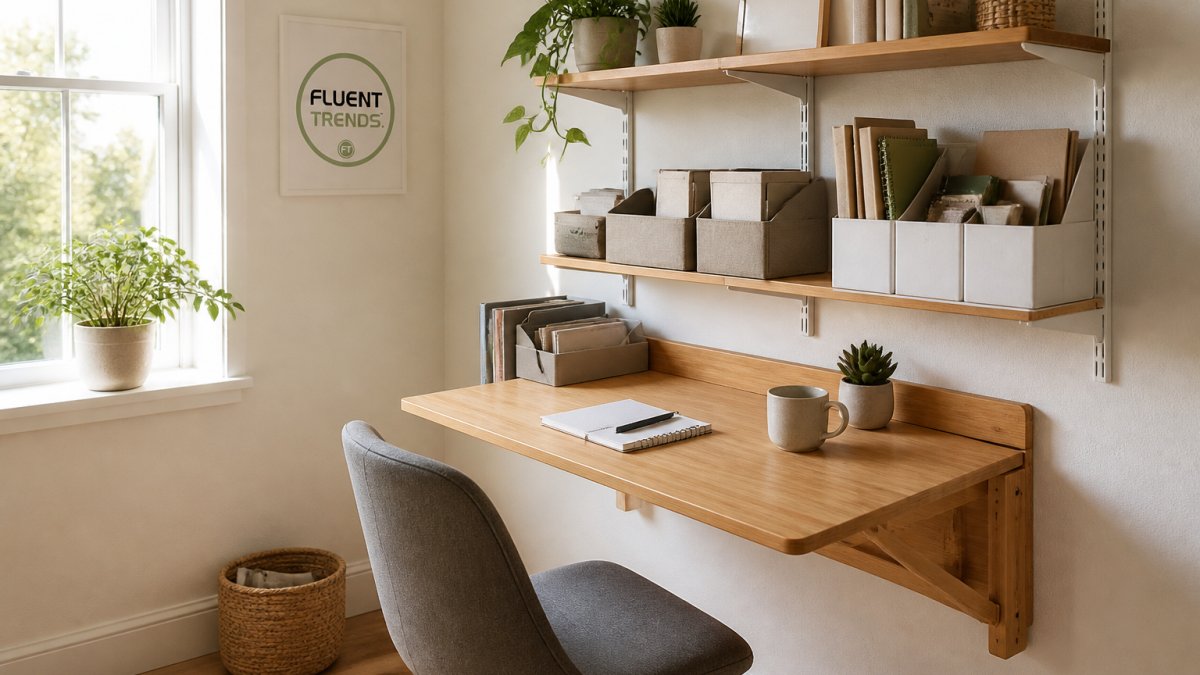
The Bamboo Folding Desk for Small Spaces works here because it transforms. When you're not using it, it folds down and stores away. When you need to work, it unfolds into a full workstation. That's the kind of multipurpose design that makes small spaces functional.

Maximize Vertical Storage Without Cluttering
Your walls are real estate. Use them. Floating shelves pull items off your floor and open up the room. Wall-mounted organizers keep papers, supplies, and small decor items contained without sprawling across surfaces.
The key is restraint. Don't pack every inch of wall space. Leave breathing room. Your eye needs places to rest. A few well-chosen items feel curated. Too many feel chaotic.
Consider open shelving for items you actually use and want to see. Reserve closed storage for things you need but don't want visible. This balance keeps your space functional and visually calm.
Choose Multipurpose Pieces That Earn Their Place
Every item in a small office should do at least two things. A side table that doubles as extra workspace. A storage ottoman that provides seating and hidden organization. A bookshelf that displays both books and decor.
This isn't about cramming function into everything. It's about being intentional. Before bringing something in, ask: what does this do? If the answer is just one thing, reconsider. Small spaces reward thoughtful curation.
Pieces built from durable materials work harder for you. Sheesham wood, for example, scores around 1,410 on the Janka hardness scale. That's physically harder and more scratch-resistant than teak. It absorbs the impacts of daily work life without chipping or splitting. Once properly seasoned, sheesham resists warping and twisting. The joints stay tight and secure for decades.
Eco-Friendly Office Furniture That Lasts
Sustainable office furniture doesn't mean sacrificing durability. It means the opposite. Pieces made from responsibly sourced materials and solid craftsmanship outlast cheap alternatives by years.
Bamboo and Sustainably Sourced Wood
Bamboo grows fast. It regenerates quickly without depleting resources the way traditional timber harvesting can. It's strong, flexible, and naturally pest-resistant. These qualities make it ideal for office furniture that needs to perform.
Sustainably sourced wood means the manufacturer tracked where the material came from. The forest was managed responsibly. The supply chain is transparent. You're not contributing to deforestation or unethical labor practices.
Acacia wood offers similar benefits. It's dense, stable, and beautiful. Sheesham wood brings that same durability story. The heartwood produces natural compounds highly toxic to dry-wood termites and fungi. Your furniture protects itself from the inside out without harsh chemical treatments.
Durable Materials Built for Daily Use
Office furniture takes a beating. You're moving chairs, opening drawers, stacking items on shelves. Your pieces need to handle that reality without falling apart.
Organic cotton upholstery holds up better than synthetic blends. It breathes, ages gracefully, and can be repaired or refreshed. Boucle furniture offers texture and visual interest while maintaining strength. Bone inlay adds handcrafted detail without compromising structural integrity.
These aren't fragile artisan pieces that require careful handling. They're built to function in real working environments. The craftsmanship is visible, but the durability is what matters most.
Sustainable Office Materials You Can Actually Trust
Greenwashing is real. A label that says eco-friendly means almost nothing on its own. You need proof you can check before you buy.
Start with certifications. OEKO-Tex certifies that textiles have been tested for harmful substances (OEKO-TEX® STANDARD 100). If a fabric carries it, you know someone independent tested it. That is a real signal, not a marketing word.
Hypoallergenic materials matter for the same reason. They reduce the chance that upholstery or bedding irritates your team. A material can be natural and still trigger reactions. Hypoallergenic means it was screened for that risk.
Look at fiber content next. Organic cotton is grown without the synthetic pesticides used in conventional cotton. Milk or casein fiber is a protein-based textile that feels soft and breathes well. Portugal-woven bedding has a long textile tradition behind it. Ask for that documentation.
Wood is where claims get fuzzy fast. Acacia wood is dense and stable, which makes it a solid pick for desks and shelving. Sheesham wood goes further. On the Janka hardness scale, which measures a wood's resistance to denting, sheesham scores around 1,410 lbf. Teak sits near 1,000 lbf. So sheesham is physically harder and more scratch-resistant than teak. It absorbs daily impacts without chipping or splitting.
Sheesham also holds its shape. Once it is properly seasoned, meaning the manufacturer dried it out correctly, it strongly resists warping, twisting, and splitting. The joints in a sheesham piece stay tight and secure for decades. And the heartwood produces natural compounds that are highly toxic to dry-wood termites and fungi. The wood protects itself from the inside out, no harsh chemical treatment required.
Now the part most guides skip. How do you actually verify a supplier? Ask four questions.
First, where did the material come from? A reputable purveyor can name the region or the mill.
Second, what certifications apply? OEKO-Tex for textiles. Look for chain-of-custody documentation for wood. Ask which specific standard, not just whether they are certified.
Third, how is it finished? Low-VOC or water-based finishes reduce indoor air quality problems.
Fourth, what happens at end of life? Can it be repaired? Are replacement parts available?
Fluent Trends sources from reputable purveyors who meet these standards. We research suppliers before we buy from them. That means when you choose a piece, you know the story behind the material. You know it was made with care. You know it is built to last.
Bamboo Folding Desk for Small Spaces - Walnut Finish, Space-Saving Study Table →
Small Business Office Storage Ideas That Reduce Clutter
Clutter kills productivity. It also makes small spaces feel even smaller. Smart storage solutions keep your office functional and visually open.
Vertical storage works harder than horizontal. Wall-mounted shelves, pegboards, and organizers pull items up off surfaces. Your desk stays clear. Your floor stays open. The room feels bigger.
Closed storage for items you don't use daily. Open storage for things you need to access frequently. This separation keeps essentials visible while hiding the rest. Your eye can focus on the work, not the stuff.
Storage that matches your aesthetic matters too. Mismatched bins and boxes create visual chaos even if items are organized. Cohesive storage solutions feel intentional. They make your office look curated rather than cluttered.
The STREAM Eco-Friendly Minimalist Pencil Holder works as both organizer and planter. It holds pens and pencils on your desk while also displaying a small plant. That's storage that doesn't feel like storage. It's functional decor.

Natural Light, Plants, and Indoor Air Quality
Natural light changes everything. It affects mood, energy, and focus. If your office has windows, position your desk to use that light. If it doesn't, invest in quality lighting that mimics natural daylight.
Indoor plants do more than look good. They add life and movement to your space. They remind you to take breaks as you water them.
Start with hardy plants that don't require constant attention. Pothos, snake plants, and peace lilies are forgiving. They survive in low light and irregular watering. Place them on shelves, desks, or corners where they add visual interest without taking up floor space.
The REVOLVE Eco-Friendly Watering Can makes plant care simple. It's made from 60% bioplastic derived from corn and 40% recycled wood fibers. The design is elegant enough to keep on display. Watering your plants becomes part of your routine, not a chore.

Energy Efficiency and Waste Reduction in Practice
Energy conservation starts with lighting. LED bulbs use a fraction of the energy traditional bulbs require. They last longer too. One LED bulb outlasts multiple incandescent bulbs by years. That's fewer replacements and lower energy costs.
Motion-activated light switches work well in small offices. The light comes on when you enter, turns off when you leave. You're not paying to light an empty room.
Unplug devices when you're not using them. Phone chargers, monitors, and printers draw power even in standby mode. A power strip makes this easy. One switch turns everything off at once.
Paperless practices reduce clutter and waste. Digital documents take up no physical space. They're searchable and backed up. When you do print, use recycled paper and refillable notebooks. Microfiber cloths replace disposable paper towels for cleaning.
Water conservation matters too. A bottleless water dispenser eliminates plastic waste while providing filtered water.
These aren't dramatic changes. They're small habits that compound. Over a year, they add up to real impact and real savings.
Your First Steps: Building a Sustainable Office Today
Start with an audit. Walk through your office and list every item. Note what works, what is worn out, and what you never touch. This takes an afternoon. It saves you from buying things you do not need.
Then sort your actions into three tiers. Low-cost moves cost little or nothing. Medium-cost moves need a small budget. Investment moves are bigger purchases you plan for.
Low-cost moves first. Swap incandescent bulbs for LED. Unplug chargers and printers when not in use, or put them on a power strip with one switch. Go paperless where you can. Add one hardy plant. These changes cost almost nothing and start working immediately.
Medium-cost moves next. Add wall-mounted shelving to free up floor space. Replace disposable paper towels with microfiber cloths. Bring in a bottleless water dispenser to cut plastic waste. Choose one anchor piece, like a durable desk or storage unit, and build around it.
Investment moves last. This is where you replace worn furniture with pieces built to last. Look for solid wood like acacia or sheesham, organic cotton upholstery, boucle furniture, or bone inlay pieces. These cost more upfront. They also outlast cheap alternatives by years, so the cost per year of use is often lower.
Here is a phased plan you can actually follow.
| Phase | Focus | What to Do |
|---|---|---|
| Phase 1 (Weeks 1-2) | Audit and quick wins | List every item, swap to LED bulbs, set up a power strip, add one plant |
| Phase 2 (Months 1-2) | Storage and layout | Add vertical storage, clear surfaces, choose one anchor piece |
| Phase 3 (Months 3-4) | Materials upgrade | Replace worn textiles with organic cotton or hypoallergenic options, add OEKO-Tex certified pieces |
| Phase 4 (Months 5-6) | Durability investment | Replace failing furniture with solid wood or built-to-last pieces |
| Ongoing | Habits | Paperless workflows, plant care, energy checks |
Think about lifecycle cost, not just sticker price. A cheap desk that lasts two years costs more over a decade than a solid wood desk that lasts twenty. The same logic applies to textiles. Organic cotton upholstery holds up better than synthetic blends. It breathes, ages gracefully, and can be repaired. That is durability you can measure in years of use, not months.
Payback shows up in a few places. Lower energy bills from LED and unplugged devices. Fewer replacements because pieces last. Less waste because you buy once instead of repeatedly.
Pick one change this week. Maybe it is adding a plant. Maybe it is switching to LED bulbs. Maybe it is ordering the Bamboo Folding Desk. One small move builds momentum.
Document how your space feels different. Better focus? Less stress? More energy? Notice these changes. They reinforce the value of sustainable choices.
Frequently Asked Questions
What are some sustainable ideas for offices?
Start with what you can control: swap single-use plastics for reusable items like refillable notebooks and microfiber cloths. Add indoor plants to improve air quality and bring natural elements into your space. Choose furniture from sustainably sourced materials like bamboo or reclaimed wood. Install LED lighting and motion-activated switches to cut energy use. These changes work together to build a sustainable office without requiring a complete renovation.
How can I verify that sustainable decor claims are actually real?
Look for certifications like OEKO-Tex on textiles, which confirms the product meets strict environmental and safety standards. Ask suppliers about their sourcing practices and whether they work with reputable purveyors who can document their methods. Check product descriptions for specific material details like organic cotton or reclaimed wood rather than vague green language.
What materials are best for sustainable office furniture and decor?
Bamboo grows quickly and renews itself, making it ideal for desks and shelving. Sheesham wood scores 1,410 on the Janka hardness scale, making it more durable than teak and naturally resistant to pests without chemical treatments. Organic cotton, Portugal-woven bedding, and OEKO-Tex certified textiles offer hypoallergenic options. Bone inlay and boucle furniture bring visual interest while supporting artisan makers. Acacia wood and reclaimed materials reduce waste by giving existing resources new purpose.
How do I make a small office feel welcoming without it looking cluttered?
Use vertical storage to keep surfaces clear and create breathing room. Pick multipurpose pieces like a folding desk that disappears when you're not working. Add one or two statement plants to bring life without overwhelming the space. Natural light from windows reduces the need for harsh overhead lighting and makes small rooms feel bigger. Keep decor intentional: choose fewer, higher-quality pieces that you actually love rather than filling every corner.