

Sustainable Home Decor for Minimalist Spaces: 2026 Guide
Yuatinia LeakTable of Contents
- The Principles of Organic Minimalist Interior Design
- Material Selection for Sustainable Home Decor
- How to Identify Genuinely Eco-Friendly Home Decor Brands
- Dual-Purpose Furniture and Space-Saving Solutions for Small Homes
- Minimalist Home Styling Tips for a Clutter-Free, Serene Space
- Incorporating House Plants and Greenery with Biophilic Design
- Lifecycle Analysis: The Longevity and Carbon Footprint of Decor Items
- Budget-Friendly Sustainable Sourcing and Chemical-Free Maintenance
- Conclusion
- Frequently Asked Questions
Last Updated: September 10, 2026
The Principles of Organic Minimalist Interior Design
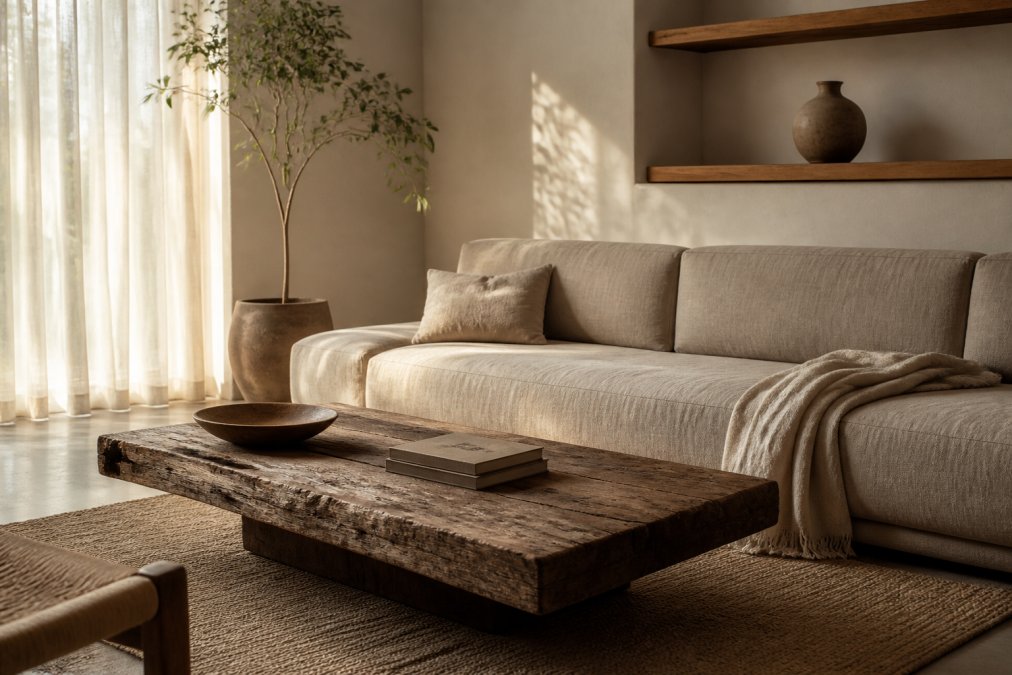
Sustainable home decor for minimalist spaces begins with restraint, not abundance. Organic minimalism is a design philosophy that pairs pared-back forms with natural materials and a lighter environmental footprint. This guide examines how that philosophy translates into real rooms, real budgets, and real longevity.
The core idea is simple: every object earns its place. Nothing decorative survives on trend alone.
Wabi-Sabi and the Beauty of Imperfection
Wabi-sabi is the Japanese aesthetic that finds beauty in imperfection, asymmetry, and the passage of time. A hand-thrown ceramic vase with an uneven rim fits this philosophy better than a factory-perfect replica.

That shift matters for sustainability. When you accept slight irregularities, you stop replacing pieces the moment they age. Visible grain, small glaze variations, and softened edges become features rather than flaws.
Earthy Tones and Tonal Palettes
Earthy tones anchor the organic minimalist look. Think clay, oatmeal, sage, warm stone, and undyed linen rather than stark white.
A tonal palette reduces visual noise and makes fewer objects feel intentional. Build a base of three neutrals, then add one deeper accent. The restraint is the point.
Material Selection for Sustainable Home Decor
Material choice determines how a piece ages, how it feels, and how long it stays out of a landfill. Natural fibers and reclaimed timber typically outlast synthetic alternatives by years. They develop character instead of degrading.

The real test is not what a material is called. It is how that material behaves across its full life. Most guides stop at the label.
Natural Textures: Linen, Mohair, Jute, and Reclaimed Wood
Linen softens with every wash. Mohair holds warmth without bulk. Jute handles daily foot traffic. Reclaimed wood carries history no new timber can replicate.
A common mistake is mixing too many textures at once. Pick two per room and let them repeat. Consistency reads as calm. Variety reads as clutter.
Each fiber also demands a different care routine. Linen tolerates frequent washing and grows softer each time. Mohair and wool should be vacuumed rather than washed, because agitation causes felting (woolmark.com). Jute sheds if soaked, so blot spills and air it dry. Reclaimed wood needs occasional oiling with a food-safe finish, not a synthetic polish.
Chemical-free maintenance is the missing chapter in most sustainable decor advice. Diluted castile soap handles wood and ceramic. A dry microfiber cloth handles dust on glass and stone. Avoid aerosol polishes and synthetic fabric sprays. They leave residue that attracts more dust and shortens the life of the finish.
Recycled Glass and Responsibly Sourced Materials
Recycled glass brings quiet luminosity to a shelf or tabletop without mining new silica. Responsibly sourced materials carry documented supply chains, so you know where the raw material originated.
Ask suppliers one question: where did this come from? A vague answer tells you more than a certification badge ever will.
Lifecycle analysis is the honest way to judge any material. It tracks an item from raw material through production, shipping, use, and disposal. A cheap imported vase may cost less upfront. If it chips within a year and gets replaced four times a decade, its cumulative carbon footprint exceeds a single well-made piece.
How to Identify Genuinely Eco-Friendly Home Decor Brands
The clearest signal of an eco-friendly home decor brand is third-party verification, not marketing language. Anyone can print "green" on a label. Independent auditors cannot be bought as easily.
Certifications and Third-Party Verification to Look For
Look for recognized certifications covering textiles, wood sourcing, and fair labor. The Federal Trade Commission's Green Guides set the standard for what environmental marketing claims are legally defensible. Vague terms like "natural" carry little weight under those rules.
Ask three questions before buying:
- Which certification body verified this claim?
- Can the brand name the specific maker or workshop?
- Does the product listing state the material origin?
Our Artisan Collection is built around named makers and documented materials, which makes those questions easier to answer.
Budget-Friendly Sustainable Sourcing
Most guides tell you to invest in quality. That advice ignores anyone furnishing a first apartment on a tight budget. Budget-friendly sustainable sourcing comes down to timing and patience.
Estate sales, artisan seconds, and end-of-season collections offer well-made pieces at reduced prices without compromising on materials. Thrift stores in affluent neighborhoods often carry solid wood and natural fiber pieces that outlast anything new at the same price point.
Upcycling is the other half of the equation. A worn wooden stool can be sanded and oiled in an afternoon. A linen curtain with a small tear can become a table runner. The minimalist aesthetic rewards restraint, which makes repair and reuse natural fits.
A simple sourcing hierarchy helps. First, repair what you own. Second, buy secondhand. Third, buy new from a verified maker. That order keeps money in your pocket and materials out of landfills.
Dual-Purpose Furniture and Space-Saving Solutions for Small Homes
Dual-purpose furniture solves two problems at once: limited floor area and the temptation to buy more. A bench that stores linens replaces both a bench and a cabinet.
Prioritize pieces that fold, nest, or stack. Ottomans with hidden storage, wall-mounted desks, and nesting side tables all pull double duty. Fewer objects, more function.
| Small-Space Challenge | Dual-Purpose Solution | What It Replaces |
|---|---|---|
| No entry storage | Storage bench | Shoe rack plus cabinet |
| Tight living area | Nesting side tables | Two separate tables |
| No home office | Wall-mounted fold-down desk | Full desk and chair |
| Limited seating | Ottoman with lid | Footstool plus blanket box |
| Narrow hallway | Vertical shelving | Floor-standing bookcase |
Minimalist Home Styling Tips for a Clutter-Free, Serene Space
Minimalist home styling tips work best when they follow a single rule: one focal point per surface. A vase, a lamp, or a stack of books. Not all three.
Start by clearing everything from a room. Add pieces back one at a time, and stop when the room feels complete rather than full. Most people stop two objects too late.
Vertical Shelving and Intentional Display
Vertical shelving draws the eye upward and frees floor space. Open shelves force a decision about every object on them, which is exactly why they work.
Group items in odd numbers and vary heights. Leave roughly a third of each shelf empty. That gap is what separates a curated space from a storage unit.
Incorporating House Plants and Greenery with Biophilic Design
Biophilic design connects interiors to living systems, and house plants are its most accessible expression. Greenery softens hard edges, improves air quality, and adds the one thing minimalism often lacks: life.
Choose plants that suit your light rather than your Pinterest board. Snake plants and pothos tolerate low light (extension.uga.edu). Olive and citrus trees need direct sun. Match the plant to the window, not the other way around.
Cluster plants in threes for visual weight. A single small plant on a large shelf disappears.
Lifecycle Analysis: The Longevity and Carbon Footprint of Decor Items
Lifecycle analysis tracks an item from raw material through production, shipping, use, and disposal. It is the honest way to judge whether a piece is genuinely sustainable, and it usually contradicts first impressions.
A cheap imported vase may cost less upfront. If it chips within a year and gets replaced four times a decade, its cumulative carbon footprint and cost both exceed a single well-made piece.
Budget-Friendly Sustainable Sourcing and Chemical-Free Maintenance
Budget-friendly sustainable sourcing comes down to timing and patience. Estate sales, artisan seconds, and end-of-season collections offer well-made pieces at reduced prices without compromising on materials.
Maintenance matters just as much. Chemical-free care keeps indoor air cleaner and extends the life of natural fibers. Use diluted castile soap on wood, vacuum wool and mohair rather than washing them, and dust ceramic with a dry cloth.
Avoid aerosol polishes and synthetic fabric sprays. They leave residue that attracts more dust and shortens the life of the finish.
Conclusion
Building a sustainable, minimalist home takes discipline, and the market rarely makes it easy. Fluent Trends curates ethically made, handcrafted pieces that support women-owned businesses and global makers. Every object in your space carries a real story. From organic cotton and jute textiles to artisan ceramics and responsibly sourced wood, our Artisan Collection is built for longevity rather than trend cycles. Shop Now and furnish a home that reflects your values, not just your aesthetic.
Frequently Asked Questions
What defines the organic minimalist interior design style?
Organic minimalist interior design blends clean, uncluttered lines with natural materials and earthy tones. It favors wabi-sabi imperfection, responsibly sourced wood, linen, and stone over synthetic finishes. The goal is a calm, intentional space that feels warm rather than sterile. Key elements include tonal palettes, natural textures, and a focus on longevity over trend-driven pieces.
How can I source sustainable home decor that fits a minimalist aesthetic?
Look for eco-friendly home decor brands that disclose their supply chains and use materials like reclaimed wood, organic cotton, or recycled glass. Prioritize pieces with timeless shapes and neutral colors that work in a clutter-free space. Ask about certifications such as Fair Trade or Global Organic Textile Standard (GOTS). Buying fewer, higher-quality items reduces waste and supports conscious consumption.
What materials should I look for in eco-friendly home goods?
Choose natural, renewable, or recycled materials such as linen, jute, wool, bamboo, reclaimed wood, and recycled glass. Avoid virgin plastics and finishes with volatile organic compounds (VOCs). Look for non-toxic dyes and low-impact production methods. These materials age gracefully and fit the natural textures and earthy tones central to organic minimalism.
Are there specific certifications to look for when buying sustainable decor?
Yes. Look for Fair Trade Certified, GOTS for organic textiles, FSC for responsibly sourced wood, and GREENGUARD Gold for low chemical emissions. These certifications provide third-party verification that a product meets environmental and social standards. They help you distinguish genuine sustainable home decor from greenwashing and ensure your minimalist space aligns with your values.