

Sustainable Luxury Living Room Ideas 2026
Yuatinia LeakTable of Contents
- The New Luxury: Why Sustainability Defines 2026 Interiors
- Invest in Heirloom-Quality Statement Seating
- Layer Illumination with Sculptural, Energy-Efficient Lighting
- Anchor the Room with Natural and Reclaimed Materials
- Choose Artisanal Textiles for Tactile, Chemical-Free Comfort
- How to Style a Sustainable Living Room with a Modern Aesthetic
- What to Look for in Eco-Friendly Luxury Furniture Brands
- Plan a Room You Can Live With for Years
- Make Longevity Part of the Purchase
- A Measured Refresh for an Existing Living Room
- Conclusion: Curating a Space That Reflects Your Values
- Frequently Asked Questions
Last Updated: September 6, 2026
The New Luxury: Why Sustainability Defines 2026 Interiors
Sustainable luxury living room ideas 2026 move beyond surface-level trends toward a deeper definition of value. True luxury now means investing in pieces that honor craftsmanship, reduce environmental impact, and age with grace. This guide from Fluent Trends explores how to curate a living space that reflects both refined aesthetics and conscious consumption.
The modern luxury living room prioritizes heirloom quality over disposable decor. Fast furniture alternatives fill landfills at an alarming rate (the EPA). Discerning homeowners now seek timeless aesthetics that serve as ethical investments.
Invest in Heirloom-Quality Statement Seating
The foundation of any sustainable luxury living room begins with seating built to last generations. A commercial grade certified sofa represents the pinnacle of this philosophy. The Modern Minimalist Ivory Boucle Sectional Sofa from Fluent Trends exemplifies this approach, handcrafted in Turkey with kiln-dried solid wood framing.
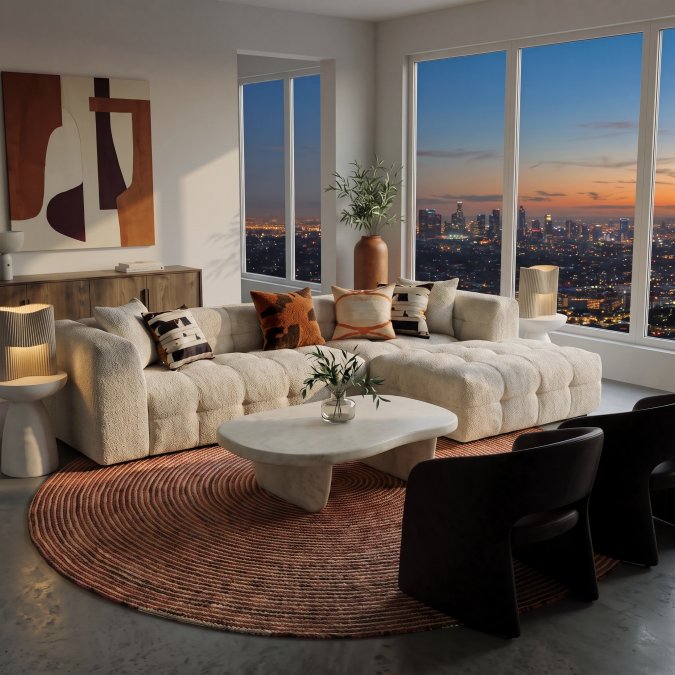
Consider the environmental cost of replacing cheap sofas every few years. One investment-grade piece eliminates that cycle entirely.
The Environmental Protection Agency's sustainable materials management guidelines highlight how extending product lifespan significantly reduces waste. A well-built sectional becomes the anchor around which your entire room revolves.
Layer Illumination with Sculptural, Energy-Efficient Lighting
Lighting transforms atmosphere while offering opportunities for sustainable choices. The Ripple Ceramic Pendant Light demonstrates how functional illumination becomes tactile fine art.
Energy-efficient smart home integration pairs beautifully with artisan fixtures. Modern LED bulbs consume a fraction of traditional incandescent power. The interplay of radiant illumination across undulating ceramic surfaces creates stunning visual movement.
Layered illumination strategies combine ambient lighting with task and accent sources. This approach reduces overall energy consumption while adding depth. Sculptural ceramics like the Ripple pendant serve as conversation pieces even when unlit.
Anchor the Room with Natural and Reclaimed Materials
Natural materials bring organic warmth that synthetic alternatives cannot replicate. But not all natural materials carry the same environmental weight. A comparative look at their footprints reveals surprising nuances.
Consider the carbon impact of your choices. Solid mango wood is a byproduct of the fruit industry. It offers a renewable source that reduces pressure on old-growth forests. The Nook Concrete Coffee Table offers a different profile. Concrete has high embodied energy during production. Yet its thermal mass and durability offset that cost over decades of use.

Fast-growing species like rattan and bamboo regenerate quickly. They sequester carbon at a faster rate than slow-growth hardwoods. The Amber Wavefront Artisan Solid Wood Sideboard showcases hand-carved craftsmanship from 100% solid mango wood. This choice supports a circular agricultural model.
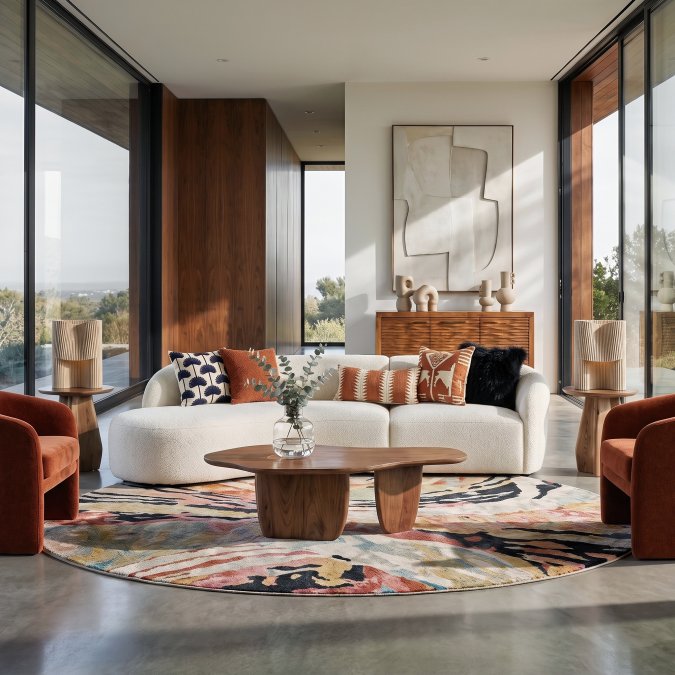
The Edessa Bone Inlay Coffee Table pairs solid mango wood with ethically sourced bone inlay. Artisans use material from naturally deceased animals. This ensures responsible sourcing without new resource extraction.
Durability is the ultimate sustainability metric. A table that lasts fifty years outperforms a cheaper alternative replaced every decade. The math is simple. Longevity divides the environmental cost across more years of service.
Choose Artisanal Textiles for Tactile, Chemical-Free Comfort
Textiles introduce comfort, color, and texture while offering significant sustainability opportunities. The Ink Black White Ombre Textured Throw exemplifies artisan excellence. Hand-spun Merino wool provides durable softness that ages beautifully.
Bio-based textiles like wool, organic cotton, jute, and linen dominate sustainable luxury interiors.
Handwoven throws support artisan communities through direct and ethical trade. Each piece supports women artisans without middlemen. The tactile appeal of natural fibers adds depth that synthetic materials cannot match.
How to Style a Sustainable Living Room with a Modern Aesthetic
Styling a sustainable living room with a modern aesthetic requires intentional composition. Begin with one statement piece, then build around it thoughtfully. The Orange Boucle Modular Curved Three Piece Sectional offers unconventional elegance for contemporary spaces.
- Start with a neutral foundation using organic silhouettes and natural textures
- Layer in sculptural accent pieces like the White Boucle Solid Wood Arm Chair
- Add warm lighting through handcrafted fixtures
- Introduce textiles with cultural narratives and sustainable origins
- Incorporate vintage restoration pieces for character and reduced footprint
- Maintain breathing room to honor spatial flow and minimalist sophistication
Modern minimalist spaces benefit from globally inspired artisan pieces. These items add narrative depth without overwhelming clean lines. The contrast creates intentional living spaces that feel curated rather than cluttered.
What to Look for in Eco-Friendly Luxury Furniture Brands
Identifying genuine eco-friendly luxury furniture brands requires moving beyond marketing language. The term green is overused. Look for verifiable actions and third party validation instead.
Start with material transparency. A reputable brand should disclose exactly what is in each piece. This includes the frame, the upholstery, the fill, and the finish. If a company hesitates to share this information, consider that a red flag.
Shipping distance is an overlooked factor. Domestic manufacturing reduces transport impact. It also supports local economies and craft traditions.
The Sustainable Furnishings Council guidelines provide useful criteria for evaluating furniture companies. Their member directory is a solid starting point for research.
Questions to ask before purchasing:
- What materials compose this piece and where were they sourced?
- How does the brand verify its ethical and sustainability claims?
- What is the expected lifespan and can it be repaired?
- Does the company support circular economy and furniture resale value?
- What is the shipping distance and transport method?
- Does the brand offer a take back or recycling program?
Plan a Room You Can Live With for Years
Before choosing another piece, walk through your living room and record what already works. Your favorite chair, inherited cabinet, or well-proportioned rug can become the starting point for a considered update. We recommend treating the room as a collection that develops gradually, with each addition answering a specific need.
Make three short lists: pieces to keep, pieces to repair, and gaps worth filling. A scratched side table may need attention to its finish rather than immediate replacement. An uncomfortable reading corner may need better lighting and a supportive cushion rather than an entirely new seating arrangement.
Test the Layout Before Ordering
Measure the room, then mark each proposed furniture footprint on the floor using removable tape. Include the space needed to open drawers, move dining chairs, and walk around a coffee table. Check the route from your entrance to the seating area while someone occupies the sofa.
Live with those outlines for a day before deciding whether the arrangement feels comfortable. A beautifully proportioned sectional still needs to suit the way your household moves through the room. If the chaise blocks your usual route, reconsider its orientation before choosing upholstery or decorative accents.
Measure doorways, stairs, and elevator openings alongside the furniture itself, including its packaged dimensions where available. Ask the retailer which components can be removed for delivery and whether assembly requires additional space. Record those answers with your room measurements so the final choice rests on more than a photograph.
Build a Material Palette From Samples
Choose a small group of finishes that share a visual relationship without looking identical. Warm wood, ivory upholstery, textured ceramics, and a muted accent color can create a cohesive starting point. Your palette should accommodate existing pieces rather than make every older object feel suddenly out of place.
Where samples are available, view them together in your room during daylight and evening lighting. Place an upholstery swatch beside your flooring, curtains, and the wood finish you intend to keep. Look for combinations you enjoy in ordinary conditions, including cloudy afternoons and the lamps you actually use.
Texture deserves the same attention as color, particularly on seating used every day by your household. Ask about cleaning instructions, removable covers, and how the fabric responds to your likely pattern of use. A compelling showroom texture may require more maintenance than you want to provide at home.
Make Longevity Part of the Purchase
Longevity becomes more useful when translated into specific questions about the piece you are considering. Ask whether cushion inserts, feet, hinges, or other vulnerable components can be replaced separately. Request the care guide before purchasing, then consider whether its requirements fit your routines and available time.
A warranty and a repair service answer different questions, so read the details of each. Check what the warranty covers, how a claim is assessed, and who handles transport for repairs. If replacement parts are available, ask how to identify the correct component when the time comes.
Keep the product name, order details, finish information, and care instructions in one accessible folder. Add photographs of identifying labels before placing the furniture against a wall or beneath other objects. These small records can make future conversations with a retailer or repair professional much more straightforward.
Choose Care You Can Maintain
Follow the manufacturer's instructions for each material instead of applying the same treatment throughout the room. A finish described as sealed may require different care from an unfinished or oiled surface. Confirm suitable cleaning products and test any approved treatment discreetly before using it across a visible area.
Design the room around that care routine by keeping useful protective items within easy reach. Coasters beside a favorite chair and a tray near the sofa make careful use feel natural. Choose accessories that belong visually in the setting so they remain available rather than hidden away.
Review the room occasionally for loose hardware, damaged feet, or small upholstery problems needing professional attention. Ask for an assessment before assuming that a visible imperfection means the whole piece must go. Repairs should suit the object's condition, construction, and value to your household.
A Measured Refresh for an Existing Living Room
Imagine a living room with a comfortable sofa, a crowded coffee table, and one harsh overhead light. Replacing every item would change its appearance, but the everyday problems are more specific. The first task is to improve how the existing room supports reading, conversation, and ordinary evenings at home.
Begin by removing accessories that interrupt the usable surface of the coffee table. Reposition the reading chair near a suitable lamp, keeping its cable clear of walking routes. Move a meaningful ceramic piece onto a shelf where its shape can be appreciated without competing with clutter.
Next, decide whether a new textile would introduce enough warmth to connect the existing colors. Try one throw or a small selection of cushions before committing to a larger purchase. Give the arrangement time to become familiar, then identify any remaining functional gap with greater confidence.
If the room still needs a table, assess its dimensions and maintenance requirements alongside its appearance. The Nook Concrete Coffee Table already discussed above offers one design direction to evaluate against your measurements. Choose it only if its scale, practical requirements, and visual character suit the room you have.
This gradual approach gives each purchase a clear purpose and keeps the room recognizably yours. Sustainable luxury living room ideas become more meaningful when they improve everyday use rather than simply fill a shopping list. The finished space should invite you to settle in, care for its contents, and enjoy what remains.
Conclusion: Curating a Space That Reflects Your Values
Creating a sustainable luxury living room demands patience and discernment. Choose pieces that will serve you for decades rather than seasons. Every selection becomes a statement about what you value.
At Fluent Trends, we curate collections that honor both exceptional design and ethical production. Our pieces support women-owned businesses and global makers through sustainable practices. Each item tells a story while preserving cultural heritage and reducing environmental impact.
Shop our Artisan Collection to discover furniture built for intentional living. Invest in spaces that reflect your values and elevate your everyday experience.
Frequently Asked Questions
What are the top living room trends for 2026?
The top trends for 2026 center on quiet luxury and intentional living. Look for layered illumination with sculptural lighting, furniture with organic silhouettes, and the integration of natural materials like wood and stone. The focus is on comfort-first designs that use sustainable, non-toxic finishes. Curated spaces with vintage pieces and heirloom-quality items are replacing mass-produced decor.
How can I make my living room luxurious while remaining sustainable?
Focus on fewer, higher-quality pieces crafted from sustainable materials. Choose a statement sofa made with natural textiles and solid wood frames, like the ivory boucle sectional. Pair it with accent pieces from eco-friendly luxury furniture brands. Prioritize timeless aesthetics over trends. This approach creates a refined space while supporting circular design and conscious consumption.
What materials define sustainable luxury furniture in 2026?
Sustainable luxury in 2026 relies on natural and bio-based textiles like organic wool, linen, and innovative options such as seaweed fabric. Solid woods like mango and oak, along with reclaimed materials, are prized for their durability. Look for non-toxic finishes and low-impact manufacturing. These materials offer tactile appeal and heirloom quality without compromising on style.
How does quiet luxury influence sustainable home decor choices?
Quiet luxury prioritizes minimalist sophistication and timeless aesthetics over flashy logos. This philosophy naturally aligns with sustainability. It encourages investing in fewer, better-made items with a lower carbon footprint. Instead of following trends, you choose bespoke furniture and artisanal craftsmanship. This leads to a home filled with natural textures and pieces designed for longevity, reducing waste and supporting circular economy principles.