

Sustainable Fashion for Minimalist Style: A 2026 Guide
Yuatinia LeakTable of Contents
- Why Sustainable Minimalist Fashion Is Worth Your Attention
- What Minimalist Capsule Wardrobe Really Means
- How to Build a Capsule Wardrobe: A Step-by-Step Audit
- Ethical Clothing Materials: What to Look For and What to Skip
- Durable Clothing: How to Spot Quality Before You Buy
- Choosing Sustainable Fashion: A Decision Framework for Claims
- Cost Per Wear: The Math That Changes Everything
- Secondhand, Repair, Rental, and Clothing Swaps
- Conclusion
- Frequently Asked Questions
Last Updated: October 13, 2026
Why Sustainable Minimalist Fashion Is Worth Your Attention
Most closets are full, yet people still say they have nothing to wear. That gap is exactly what choosing sustainable fashion for minimalist style fixes. At Fluent Trends, we see shoppers buy less and wear more when every piece earns its spot.
Sustainable minimalist fashion is the practice of building a small wardrobe from well-made, ethically sourced pieces you wear for years. It cuts waste and saves money over time.

The idea is simple. Fewer items, chosen with care, worn far more often. Below, we show you how to audit your closet, spot real quality, and shop with intention.
What Minimalist Capsule Wardrobe Really Means
A minimalist capsule wardrobe is a small, curated set of clothing that mixes and matches into many outfits. Most capsules run 30 to 40 pieces, including shoes and outerwear.
The goal is versatility, not deprivation. Every piece should work with at least three others.
That is why neutral colors matter. A monochrome palette of cream, grey, navy, and camel makes outfit combinations almost automatic.
Clean lines help too. Simple shapes layer well and rarely date.
Quality over quantity drives the whole approach. One well-made garment beats five cheap ones that pill and fade.
- Fewer pieces, more outfits
- Neutral colors that all work together
- Timeless design over fast trends
- Durable clothing you can repair, not replace
How to Build a Capsule Wardrobe: A Step-by-Step Audit
Building a capsule wardrobe starts with an honest audit of what you already own. Do this before you buy a single new item.
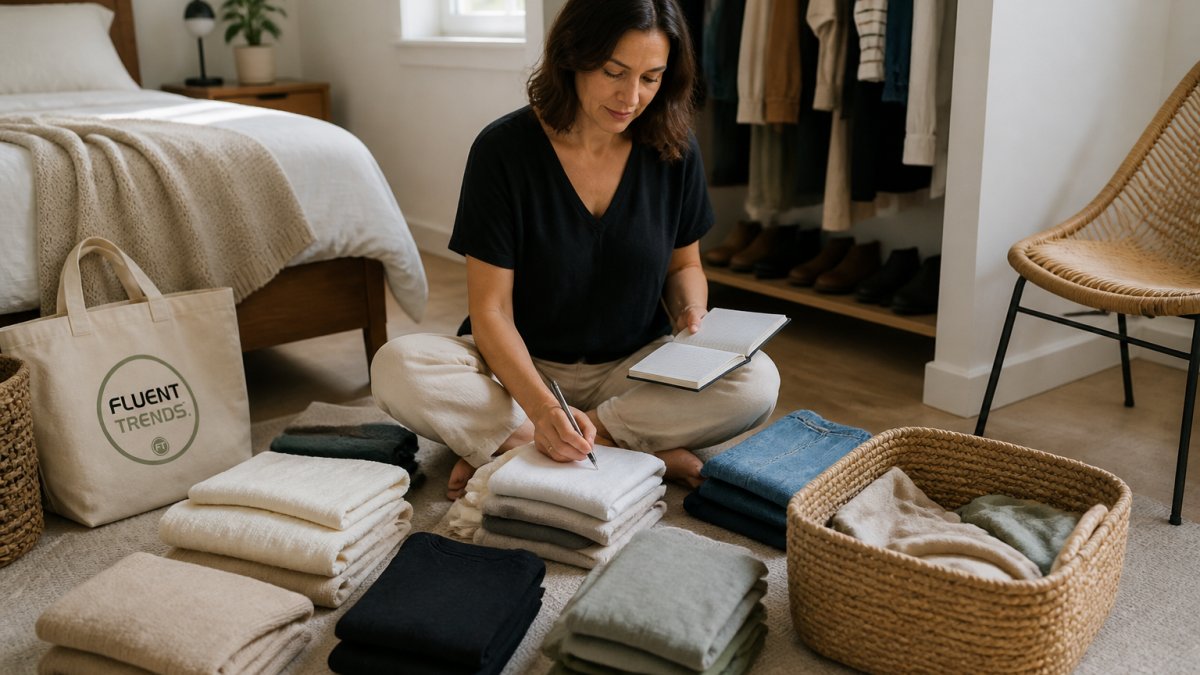
Step 1: Empty Your Closet and Sort Every Piece
Pull everything out. Yes, everything. Sort into three piles: keep, repair, and let go.
Ask three questions of each item. Does it fit now? Did you wear it in the past year? Does it work with your other pieces?
If the answer is no, it moves on. A common mistake is keeping "someday" clothes. They crowd out the pieces you actually reach for.
Step 2: Track What You Actually Wear
Before you decide what to keep, track your habits for two weeks. Turn every hanger backward. When you wear something, turn it forward.
At the end of two weeks, the backward hangers tell the truth. Those are the pieces you never reach for.
This is the step most people skip. It is also the one that saves the most money.
Step 3: Identify Gaps Before You Buy Anything
Now look at what survived. List the outfits you cannot build.
Maybe you have tops but no trousers that fit. Maybe you lack a layer for cool evenings. Those are your gaps.
Write them down. This list becomes your shopping plan, and it stops impulse buys cold.
Step 4: Run the Cost Per Wear Check
Cost per wear is the price of a garment divided by how many times you wear it. It is the single best way to judge whether a purchase is worth it.
A coat worn two hundred times costs far less per wear than a top worn twice. That math flips the usual logic. The cheaper item often costs more.
Estimate wears per year and multiply by expected years of use. Then divide the price by that number.
- Investment pieces win over time
- Cheap trend buys lose almost every time
- Repairs extend wear and cut cost per wear further
Step 5: Check the Construction Before You Commit
Durable clothing shows its quality in the details, not the price tag. Run your thumb along the seams. Tight, even stitching lasts. Loose or wavy stitching fails fast.
Feel the fabric weight. Thin, see-through material rarely survives a year of wear.
Then check the small parts:
- Buttons sewn with real thread, not glued
- Zippers that glide without catching
- Lining that lies flat, not bunched
- Extra seam allowance for future repairs
Step 6: Build Slowly, Not All at Once
A capsule does not come together in one shopping trip. Add one piece at a time. Wear it for a month before you decide it belongs.
This slow approach works for your home too. A boucle furniture piece or a bone inlay furniture accent earns its place the same way. You live with it, and you learn whether it fits.
The same logic applies to the small things. A Large Porcelain Nesting Bowl, a Nectar 18-piece Dinner Setting, or a Lhasa Mug in Limoges Porcelain all get used daily. That daily use is the real test of value.
Ethical Clothing Materials: What to Look For and What to Skip
Fabric choice decides how long a garment lasts and how it feels on your skin. Let us walk through the fibers that actually earn their spot.
Natural Fibers That Hold Up
Organic cotton is soft, breathable, and grown without harsh synthetic pesticides. It survives regular washing far better than thin blends.
Linen breathes in heat and softens with every wear. Wool regulates temperature and resists odors, so it needs less washing.
Milk or casein fiber is a newer option worth knowing. It comes from milk protein and feels silky against sensitive skin.
Certifications That Actually Mean Something
Labels are easy to print. Certification is not.
Look for OEKO-TEX on textiles. It means the fabric was tested for harmful substances. For bedding, that matters even more, since you sleep against it for hours.
Portugal-woven bedding often carries OEKO-TEX because mills there follow strict testing. Ask what standard was used. If the brand cannot answer, treat the claim as marketing.
OEKO-TEX certification standards explained
The Trade-Offs Nobody Mentions
Every fiber has a weakness. Here is the honest version.
- Recycled polyester saves plastic from landfills but still sheds microfibers in the wash. Use a filter bag.
- Blends feel soft but are hard to recycle. Once cotton and polyester are twisted together, they stay together.
- Wool is durable but needs cold washing and flat drying to avoid shrinkage.
- Linen wrinkles. That is the price of breathability.
Care Changes Everything
How you wash a garment decides how long it lives. Cold water, gentle cycles, and air drying add years to almost any fabric.
Wash less often. Spot clean when you can. Store knits folded, not hung, so they keep their shape.
Why This Matters for Your Home Too
Fabric quality shows up beyond your closet. A Cloud Silque Throw or an Avenida in Bosque 18" x 18" Pillow lives on your sofa for years. The same rules apply. Check the fiber, check the certification, and check how it is cared for.
Good materials do not just feel better. They stay with you longer, and that is the whole point.
Durable Clothing: How to Spot Quality Before You Buy
Durable clothing shows its quality in the details, not the price tag. Check construction before you check the label.
Run your thumb along the seams. Tight, even stitching lasts. Loose or wavy stitching fails fast.
Feel the fabric weight. Thin, see-through material rarely survives a year of wear.
Then check the small parts:
- Buttons sewn with real thread, not glued
- Zippers that glide without catching
- Lining that lies flat, not bunched
- Extra seam allowance for future repairs
Garment construction tells you everything. A maker who finishes the inside cares about the outside.
Choosing Sustainable Fashion: A Decision Framework for Claims
Greenwashing is everywhere, so you need a filter. Use this five-question test before you buy anything labeled sustainable.
- Is the fiber named? "Eco fabric" means nothing. Organic cotton, linen, and wool are specific.
- Is there a certification? OEKO-TEX, GOTS, or Fair Trade marks carry weight.
- Who made it? Named makers and fair wages beat vague "ethical factories."
- Can you repair it? Brands that offer repairs expect their pieces to last.
- Is the claim checkable? If you cannot verify it, skip it.
Score each answer one point. Four or five points means buy with confidence. Two or fewer means walk away.
This framework also covers responsible production. Local production and small-batch runs cut shipping emissions and waste.
| Claim Type | What It Means | Trust Level |
|---|---|---|
| "Eco-friendly" | No standard, no proof | Low |
| OEKO-TEX certified | Tested for harmful substances | High |
| "Ethically made" | Vague without a named maker | Medium |
| GOTS certified | Organic fiber plus labor standards | High |
FTC Green Guides on environmental marketing claims
Cost Per Wear: The Math That Changes Everything
Cost per wear is the price of a garment divided by how many times you wear it. It is the single best way to judge whether a purchase is worth it.
A $200 coat worn 200 times costs $1 per wear. A $40 top worn twice costs $20 per wear.
That math flips the usual logic. The cheaper item often costs far more.
So before you buy, estimate wears per year and multiply by expected years of use. Then divide the price by that number.
- Investment pieces win over time
- Cheap trend buys lose almost every time
- Repairs extend wear and cut cost per wear further
This is why we recommend fewer, better pieces. The numbers back it up.
Secondhand, Repair, Rental, and Clothing Swaps
Secondhand shopping keeps clothing in use and out of landfills.
Repair is even cheaper. A tailor can fix a hem, replace a zipper, or patch a seam for a fraction of a new purchase.
Rental suits occasion wear you would rarely repeat.
- Buy secondhand for statement pieces
- Repair before you replace
- Rent for one-time events
- Swap with friends each season
These habits extend garment lifespan and reduce clothing consumption. They also make a capsule wardrobe easier to maintain.
Conclusion
Building a wardrobe that lasts takes patience, and the payoff is a closet you actually enjoy. Every piece should earn its place through fit, quality, and wear.
At Fluent Trends, our Artisan Collection is built for exactly that. We offer ethically made, handcrafted pieces that support women-owned businesses and global makers. Our natural fabrics, including organic cotton, wool, and linen, are chosen for comfort and longevity.
Browse our durable furniture for daily use and artisan fashion to start building a home and wardrobe that last. Shop now and invest in pieces made to stay.
Frequently Asked Questions
What fabrics should you look for in sustainable fashion?
Start with natural fibers: organic cotton, linen, wool, and alpaca. These biodegrade and last longer than synthetic blends. Look for certifications like OEKO-TEX, which tests for harmful substances. For bedding and home textiles, Portugal-woven fabrics have a strong reputation for quality. If you see milk or casein fiber on a label, that is a bio-based material made from casein protein. It is soft and breathable. Avoid fabrics that pill after a few washes or feel thin against the light.
How many outfits should a minimalist have?
There is no magic number, but most people find that 30 to 40 pieces work well for a full year. That includes tops, bottoms, outerwear, shoes, and accessories. The goal is not deprivation. It is making sure every piece earns its spot. If you wear 80% of your wardrobe regularly, you are on track. If half your closet sits untouched, it is time for an audit. Quality matters more than hitting a specific count.
How do you tell whether a clothing brand is genuinely sustainable?
Look for specifics, not slogans. A brand that says 'eco-friendly' without naming materials or certifications is giving you marketing, not proof. Check for third-party certifications like OEKO-TEX or Fair Trade. See if the brand publishes where its materials come from and who makes the clothes. Brands that support women-owned businesses and global artisans often share maker stories. If a brand cannot tell you what a garment is made of and where it was produced, treat the sustainability claim with caution.
Can a minimalist wardrobe still reflect your personal style?
Absolutely. Minimalism is not about wearing the same gray shirt every day. It is about choosing pieces you love and wear often. A hand-printed cotton dress from Jaipur or a silk slipdress with a bias cut can be a signature piece. The key is intentionality. Pick colors and textures that feel like you. A neutral palette gives you a canvas. Then add one or two pieces with cultural detail or unique craftsmanship. Your wardrobe should feel like yours, just smaller and better.