

Top Sustainable Fashion Brands for 2026: 9 Ethical Picks
Yuatinia LeakTable of Contents
- How We Evaluated These Sustainable Fashion Brands
- Quick Comparison: Top Sustainable Fashion Brands at a Glance
- 1. Liquid Elegant Silk Slipdress: Timeless Luxury with a Conscience
- 2. MODHER Maya Crossbody: Plastic-Free Innovation in Bio-Based Leather
- 3. Lolo Woven Crossbody Bag: Recycled Plastic Meets Mexican Artisan Craft
- 4. Avery Handwoven Rattan Tote: Bali Crafted for Everyday Durability
- 5. Elia Convertible Leather Bag: Three-in-One Versatility from Mexico
- 6. Artisan Woven Laptop Clutch: Vegetable-Tanned Leather for Conscious Professionals
- 7. Maya Crossbody in Vegetable Calfskin: Tuscan Craftsmanship, Locally Sourced
- 8. Yaya Leather Bucket Bag: Women-Owned Workshop, 200+ Artisan Jobs
- 9. Serena Gold Woven Straw Clutch: Filipino Artisans, Evening-Ready
- Frequently Asked Questions
Last Updated: September 18, 2026
How We Evaluated These Sustainable Fashion Brands
Sustainable fashion is clothing and accessories produced in ways that reduce environmental harm and protect the people who make them. This guide from Fluent Trends ranks nine pieces against four tests: certification, material traceability, labor transparency, and cost per wear.
Every brand below earned its place. None of them paid for inclusion.
The rankings lean on verified third-party standards rather than marketing language. A brand can call itself green tomorrow morning. It cannot award itself a GOTS certificate.
Certifications That Matter: GOTS, Fair Trade, B Corp, and OEKO-TEX
GOTS certifies organic fiber from harvest through finished garment, including wastewater treatment. Fair Trade certification verifies wages and working conditions at the farm or factory level. B Corp measures a company's entire social and environmental footprint. OEKO-TEX tests finished textiles for harmful substances, which matters most for anything worn against skin.
Look for the certificate number, not the logo.
Greenwashing Detection Guide: Seven Red Flags to Spot
Vague claims are the tell. "Eco-friendly" and "planet-positive" mean nothing without a standard behind them.
- No certification body named anywhere on the site
- Sustainability claims with no numbers attached
- A "green" collection sitting beside a fast-turnover core line
- No factory, farm, or workshop disclosed
- Recycled content claimed without a percentage
- No care or repair guidance offered
- Prices so low that fair wages are mathematically impossible
Two or more flags means walk away.
Quick Comparison: Top Sustainable Fashion Brands at a Glance
Here are the nine pieces we ranked, with price, material, and best use. The table is a starting point. The real work happens in the columns most listicles skip: verification and end-of-life.
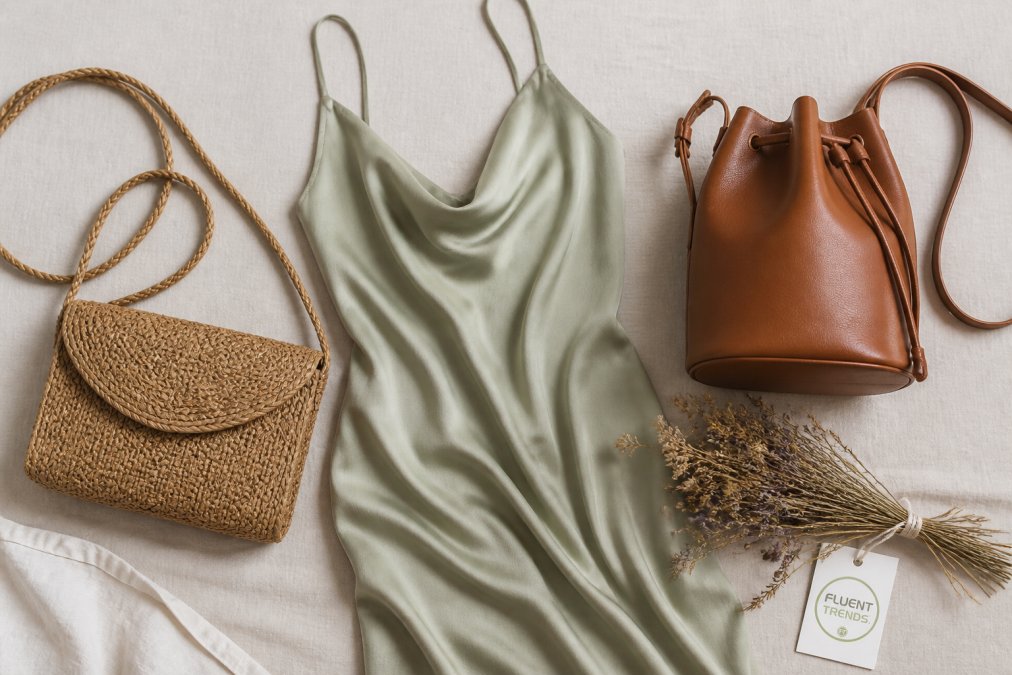
| Piece | Price | Material | Best For |
|---|---|---|---|
| Liquid Elegant Silk Slipdress | $595 | 100% charmeuse silk | Evening and day versatility |
| MODHER Maya Crossbody, Mirum Edition | $480 | Plastic-free biomaterial | Plastic-free everyday carry |
| Lolo Woven Crossbody Bag | $180 | Recycled plastic, leather trim | Work-to-weekend wear |
| Avery Handwoven Rattan Tote | $85 | Borneo rattan | Market days and beach |
| Elia Convertible Leather Bag | $139 | Full-grain cowhide | Three-in-one travel |
| Artisan Woven Laptop Clutch | $52.50 | Vegetable-tanned leather | Commutes with a laptop |
| Maya Crossbody in Vegetable Calfskin | $490 | Vegetable-tanned calfskin | Tuscan craftsmanship |
| Yaya Leather Bucket Bag | $170 | Full-grain pebbled cowhide | Day-to-night carry |
| Serena Gold Woven Straw Clutch | $265 | Buntal straw | Evening events |
Cost Per Wear: The Math That Changes the Decision
Cost per wear is the only price metric that matters. Divide the price by the number of times you will realistically wear the piece. A $595 slipdress worn forty times costs under $15 a wearing. A $40 fast-fashion dress worn twice costs $20.

The cheaper dress costs more per wear. That is the whole argument in two lines.
Run the math before you buy. A $490 calfskin crossbody worn three times a week for two years lands under a dollar per wear. A $180 woven bag worn twice a month for a year lands around $7.50 per wear. Both are reasonable. The point is to know the number before you commit.
End-of-Life: What Happens After You Are Done
Most sustainable fashion content stops at the purchase. That is where the real work begins.
Silk biodegrades at end of life (pubmed.ncbi.nlm.nih.gov). So does buntal straw, vegetable-tanned leather, and untreated organic cotton. These pieces can return to the soil under the right conditions.
Recycled plastic does not biodegrade, but it can be recycled again. Check whether the brand offers a take-back program before you assume the loop closes.
Full-grain leather can be repaired, resoled, and conditioned for decades. A good cobbler extends the life of a bag far beyond its original owner.
Milk and casein fiber, Portugal-woven bedding, and organic cotton textiles follow the same logic. Hypoallergenic fibers with an OEKO-TEX tested finish are easier to recycle and safer to compost.
The same principle applies to the home. Commercial-grade furniture built for durability keeps materials out of landfills. Boucle furniture and bone inlay furniture made from sustainably sourced materials extend that lifecycle further. Durability is the quietest form of sustainability.
How to Verify a Brand in Five Minutes
Start with the certificate number. Check it against the certifying body's public database.
Then look for the factory. A brand that names its cut-and-sew facility is easier to trust than one that does not.
Next, check the fiber content. A recycled claim without a percentage is a marketing line, not a fact.
Finally, look for care and repair guidance. A brand that tells you how to keep a piece alive is a brand that expects it to last.
Two or more missing pieces means walk away. The table above is a starting point. The verification is the work.
1. Liquid Elegant Silk Slipdress: Timeless Luxury with a Conscience
Silk is the rare fiber that biodegrades at end of life, which makes this slipdress a genuine circular-economy pick. Vogue named it a must-have, and the bias cut explains why. The 100% charmeuse drapes without clinging.
Thin straps and a clean neckline keep the design quiet.
Wear it with heels for evening. Add a jacket and it works at lunch.
2. MODHER Maya Crossbody: Plastic-Free Innovation in Bio-Based Leather
Plastic-free construction is rare in accessories, and this bag delivers it. MODHER builds the Maya from Mirum, a bio-based biomaterial with no fossil plastic anywhere in the shell. The lining is natural cotton canvas, and the hardware is nickel-free, which suits sensitive skin.
Italian artisans handcraft each piece, protecting local skills and fair labor practices. It ships in an FSC-certified box with a dust bag.
The strap adjusts for crossbody or shoulder wear. This is the pick for anyone who has sworn off synthetic leather.
3. Lolo Woven Crossbody Bag: Recycled Plastic Meets Mexican Artisan Craft
Recycled materials rarely look this refined. Mexican artisans handweave each Lolo bag from 100% recycled plastic, spending 20 to 40 hours per piece. The result diverts waste from landfills and oceans while supporting artisan communities.
Genuine leather trim and a drawstring closure add polish. The canvas-lined interior holds three pockets, and the bag measures 11.5 inches long by 9 inches high by 4 inches deep. It weighs about 1.5 pounds empty.
4. Avery Handwoven Rattan Tote: Bali Crafted for Everyday Durability
Rattan is a regenerative crop that grows back quickly, and Borneo rattan is prized for strength. Balinese artisans handweave each Avery tote using techniques passed down for generations. The body measures 19 by 12 by 8 inches, with 9.5-inch straps for shoulder or hand carry.
It holds groceries, a beach towel, or a laptop and lunch.
At this price, the tote is the easiest entry point into artisan-made accessories. It also doubles as storage in a hallway or entryway.
5. Elia Convertible Leather Bag: Three-in-One Versatility from Mexico
One bag replacing three is the most direct route to waste reduction. The Elia converts from shoulder bag to crossbody to clutch with a detachable strap. Mexican artisans handmake each piece from full-grain cowhide that softens with use.
Six built-in card slots replace a separate wallet. A zipper closure and nickel hardware finish it.
6. Artisan Woven Laptop Clutch: Vegetable-Tanned Leather for Conscious Professionals
Vegetable tanning uses natural plant tannins instead of chromium, and the leather biodegrades at end of life. This clutch is hand-braided and unlined, which cuts material use. Two sizes fit a MacBook Air or a 15-inch laptop.
The Medium measures 12 by 13.5 inches. The Large measures 13 by 16.5 inches. Magnetic and snap closures keep devices secure, and an interior pocket holds a phone or charger.
This is the piece for the commuter who wants a laptop sleeve that does not look like one.
7. Maya Crossbody in Vegetable Calfskin: Tuscan Craftsmanship, Locally Sourced
Regional sourcing shortens the distance between raw material and finished goods. This Maya is handcrafted in Tuscany from certified vegetable-tanned leather and ivory canvas, with every material produced and sourced locally in Italy.
A leather lining and a flat interior pocket keep essentials organized. It arrives with a branded dust bag and gift box.
The compact size suits evenings and weekends. The contrasting leather outline gives it a graphic edge that plain crossbodies lack.
8. Yaya Leather Bucket Bag: Women-Owned Workshop, 200+ Artisan Jobs
Labor rights are the hardest part of sustainability to verify, and this bag makes it concrete. A women-owned workshop in Mexico handcrafts each Yaya, supporting over 200 sustainable artisan jobs.
Full-grain pebbled cowhide gives it texture that improves with age. A magnetic snap closure, two interior wall pockets, and a canvas lining handle daily use. The detachable strap and top handle offer two carry styles.
Every piece is produced in limited quantities.
9. Serena Gold Woven Straw Clutch: Filipino Artisans, Evening-Ready
Buntal straw comes from Philippine palm trees and is fully biodegradable. Filipino artisans handweave each Serena clutch in a luminous gold tone, then finish it with a handle of gold wooden beads.
It measures 8 inches wide by 4 inches high by 2.2 inches deep, with a 7.5-inch total height including the handle. A gold-toned clasp secures the contents, and a dust bag is included.
This is the evening piece for anyone tired of plastic clutches.
Frequently Asked Questions
What certifications should I look for when buying sustainable clothing?
Look for GOTS (Global Organic Textile Standard) for organic cotton, Fair Trade for labor rights, B Corp for overall social and environmental performance, and OEKO-TEX for hypoallergenic safety. These third-party certifications verify claims independently. Fluent Trends prioritizes OEKO-TEX and organic cotton across its collections. Always check the brand's website for specific certification details.
How do I identify truly sustainable fashion brands versus greenwashing?
Check for specific, verifiable claims rather than vague terms like 'eco-friendly.' Look for named certifications (GOTS, Fair Trade, B Corp), transparent supply chain information, and published impact reports. Avoid brands that use green imagery without data. Our greenwashing detection guide in this article lists seven red flags, including buzzwords without proof and lack of traceability.
What are the sustainable clothing trends for 2026?
Key trends include bio-based materials like Mirum® (plastic-free leather alternative), deadstock fabric, regenerative agriculture, and circular economy models. Brands are also focusing on end-of-life garment management and cost-per-wear transparency. Expect more vegan leather, low-impact dyes, and locally sourced production. These shifts reflect growing consumer demand for traceability and ethical labor.
Are luxury fashion brands becoming more sustainable in 2026?
Yes, many luxury brands are investing in sustainable sourcing, ethical production, and circularity. However, progress varies. Look for those with third-party certifications and transparent supply chains. Fluent Trends exemplifies this by supporting women-owned workshops and using materials like organic cotton and vegetable-tanned leather. Luxury sustainability often means higher durability and timeless design, reducing waste.
How does ethical manufacturing impact fashion quality?
Ethical manufacturing often correlates with higher quality because artisans spend more time on each piece, and fair wages attract skilled workers. Handcrafted items, like those from Fluent Trends, undergo meticulous production, ensuring durability. Sustainable materials like full-grain leather and organic cotton also age better. Ethical production reduces environmental harm and supports community well-being.
Building a wardrobe that lasts means choosing fewer pieces and choosing them well. Fluent Trends curates exactly that kind of collection, from Portugal-woven bedding and organic cotton staples to hypoallergenic, OEKO-TEX certified textiles. Our artisan accessories feature vegetable-tanned leather, recycled materials, and hypoallergenic nickel-free hardware. Every purchase supports women-owned workshops and global makers. Shop Now and build a wardrobe you will still wear in a decade.