

Transitional Style Bedroom Furniture: Create a Balanced, Elegant Oasis
Donna MaloneIf you've ever felt stuck between the cozy, detailed look of traditional furniture and the sleek, minimal vibe of modern design, you're not alone. That sweet spot in the middle? That's transitional style, and it's the secret to creating a bedroom that feels both timeless and completely current.
It’s all about striking a beautiful balance. Think of it as taking the grace and comfort of classic design and pairing it with the clean, unfussy confidence of a contemporary look. The result is a space that's sophisticated but still incredibly welcoming—a perfect retreat.
What Exactly Is Transitional Style Bedroom Furniture?
Picture a classic, beautifully tailored suit paired with modern, stylish sneakers. That’s the spirit of transitional design. It borrows the best from both worlds: the warmth and familiar shapes of traditional furniture and the fresh, uncluttered feel of modern decor.
This isn't about creating a perfect 50/50 split. Instead, it’s a thoughtful edit. You might find a classic bed frame with elegant curves, but instead of being carved from dark, heavy wood, it’s upholstered in a simple, neutral-toned linen. Or maybe it's a dresser with a timeless silhouette, but the ornate, antique pulls have been swapped out for sleek, simple hardware. It's this intentional mix that keeps the room feeling grounded yet light.
The Art Of Blending Eras
To really nail the transitional look, it helps to know what you're blending. Getting a handle on the key differences between classic and modern styles is the first step. This handy guide on contemporary vs. traditional design styles is a great place to start, as it breaks down what makes each aesthetic tick.
The real magic of transitional design is its flexibility. It effortlessly blends masculine and feminine touches, marries gentle curves with strong, straight lines, and ultimately lets you build a room that feels like you—not like a page torn from a catalog.
This versatile approach is catching on. The global bedroom furniture market, valued at a staggering USD 266.15 billion in 2024, is projected to hit USD 383.12 billion by 2030. A huge driver of this growth is the rising desire for furniture that combines clean lines with just a touch of ornamentation—the very definition of transitional.
This diagram breaks it down visually, showing how transitional style borrows specific elements from both ends of the design spectrum to create something new and balanced.
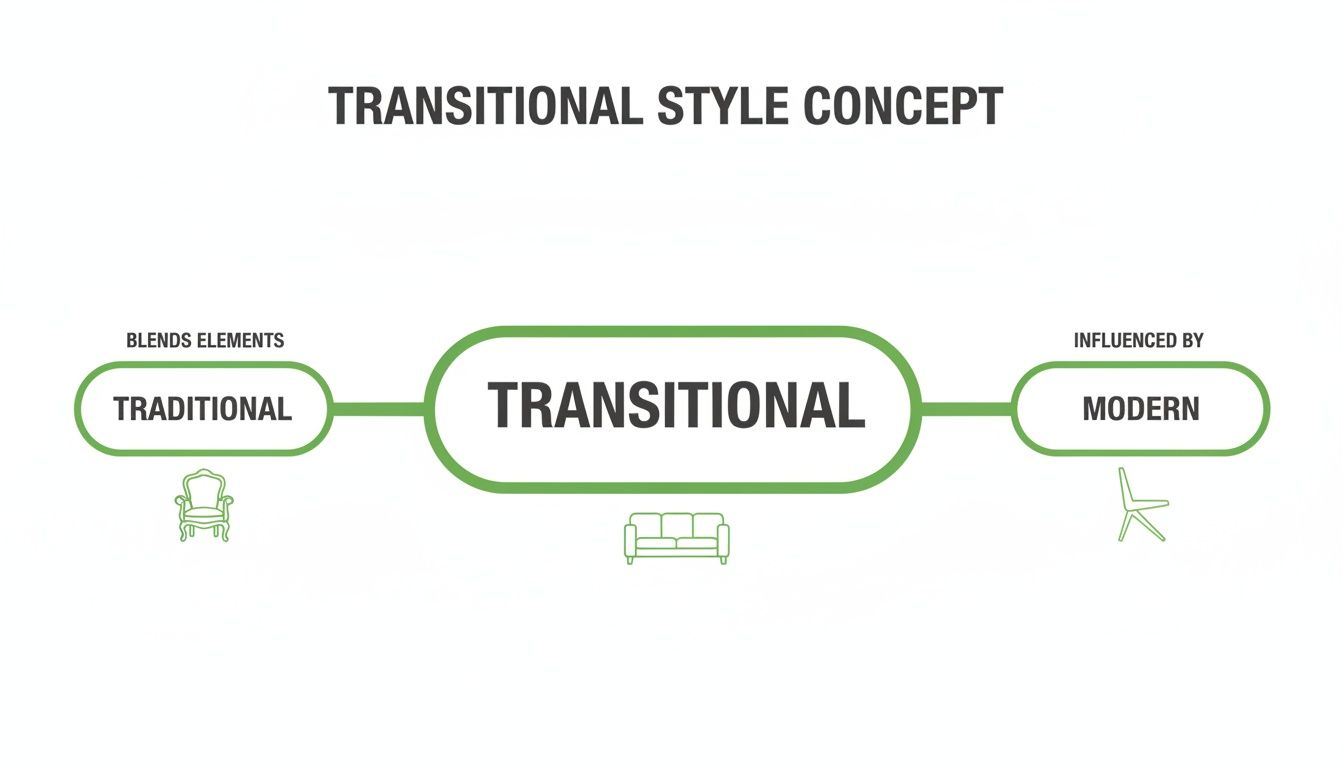
As you can see, it's not a random mix but a curated selection of the best features each style has to offer. The key is knowing how to mix furniture styles with confidence to achieve that perfect, harmonious look.
To make it even clearer, here’s a quick breakdown of how these styles differ and where transitional fits in.
Transitional Style At a Glance
This table offers a snapshot of the key differences, helping you spot the defining features of each style.
| Design Element | Traditional Style | Transitional Style | Contemporary Style |
|---|---|---|---|
| Color Palette | Rich, warm tones (reds, browns, greens) | Neutral, serene palette (grays, beiges, whites) with subtle color pops | Bold, high-contrast colors (black, white, primary colors) |
| Furniture | Ornate, carved details, curved legs, dark wood | Classic silhouettes with clean lines, minimal ornamentation | Geometric shapes, straight lines, smooth surfaces, metal accents |
| Fabrics | Heavy, patterned fabrics (damask, velvet, silk) | Textured, natural fabrics (linen, cotton, chenille) with subtle patterns | Solid-colored fabrics, natural fibers, and sleek materials like leather |
| Accessories | Elaborate, decorative items (chandeliers, detailed mirrors) | Minimalist, purposeful decor; focus on texture and shape | Sparse, artistic pieces; abstract art and sculptural objects |
| Overall Vibe | Formal, elegant, cozy | Relaxed, sophisticated, timeless | Clean, minimalist, sharp |
Seeing them side-by-side really highlights how transitional design carves out its own unique space by borrowing and softening elements from its more defined counterparts.
Choosing a Bed as Your Transitional Centerpiece
Let's be honest, in any bedroom, the bed is the star of the show. It's the first thing you see, it sets the mood, and it dictates how the rest of the room is laid out. When you're creating a transitional space, picking the right bed is less about just filling a spot and more about choosing an anchor that grounds the entire design story.
This is where that perfect blend of classic comfort and clean, modern lines really gets to shine.
Forget feeling stuck between fussy, ornate traditional frames and stark, minimalist platforms. Transitional beds live in that beautiful sweet spot right in the middle. They have the welcoming presence of a classic piece, but they've been stripped down to their most elegant, essential forms.
Balancing Materials and Silhouettes
The real art of choosing transitional style bedroom furniture starts with a masterful mix of materials. Look for beds that pair the solid, natural warmth of a wood frame with the inviting softness of an upholstered headboard. This combination is a signature of the style, creating a piece that feels both substantial and unbelievably cozy.
Think about these popular takes on the transitional bed:
- Upholstered Beds: Go for headboards with simple, clean tufting—like button or channel tufting—instead of the deep, dramatic diamond patterns you might see in more traditional designs. The fabric is everything here; think textured linens, soft boucles, or neutral velvets that bring in depth without screaming for attention.
- Modern Four-Poster Beds: These are a far cry from the heavy, carved canopy beds of the past. A transitional four-poster will have a slim, almost architectural frame, often in wood or metal. It gives you that sense of height and drama but keeps the overall vibe light and airy.
- Panel Beds with a Twist: Look for a classic panel bed that’s been updated with subtle curves or softened edges. A headboard with a slight arch or one with inset fabric panels can capture that transitional spirit perfectly.
The goal is to find a bed that feels like a welcoming embrace. Its shape should be graceful and solid, but the details need to be understated and refined. It’s all about creating a serene centerpiece.
Getting the Scale Just Right
The size of your bed, especially the headboard, can completely change the feel of a room. A tall, elegant headboard can make a room with high ceilings feel grand and luxurious. On the other hand, a lower-profile headboard often creates a more relaxed, intimate setting.
Before you fall in love with a bed, you absolutely have to measure your space and think about how it will work with everything else. For a deeper dive into this crucial step, checking out a comprehensive guide on how to choose bedroom furniture can give you the detailed framework you need to make a really confident decision. This ensures your chosen centerpiece plays nicely with your nightstands, dressers, and the room's overall footprint.
At the end of the day, the perfect transitional bed doesn't shout for attention—it commands it quietly. It does this through its balanced design, quality materials, and a sophisticated presence. It’s that foundational piece that makes your bedroom feel both timeless and perfectly suited for the way we live now. By thinking carefully about its style, materials, and scale, you’re not just buying a bed; you're defining your personal sanctuary for years to come.
Selecting Dressers and Nightstands That Harmonize
With your bed as the anchor, it's time to choose the supporting cast: your dressers and nightstands. Forget the perfectly matched bedroom sets of the past. The transitional style is all about a more collected, thoughtfully curated vibe. The goal is to find pieces that feel like they're in the same family, not identical twins.
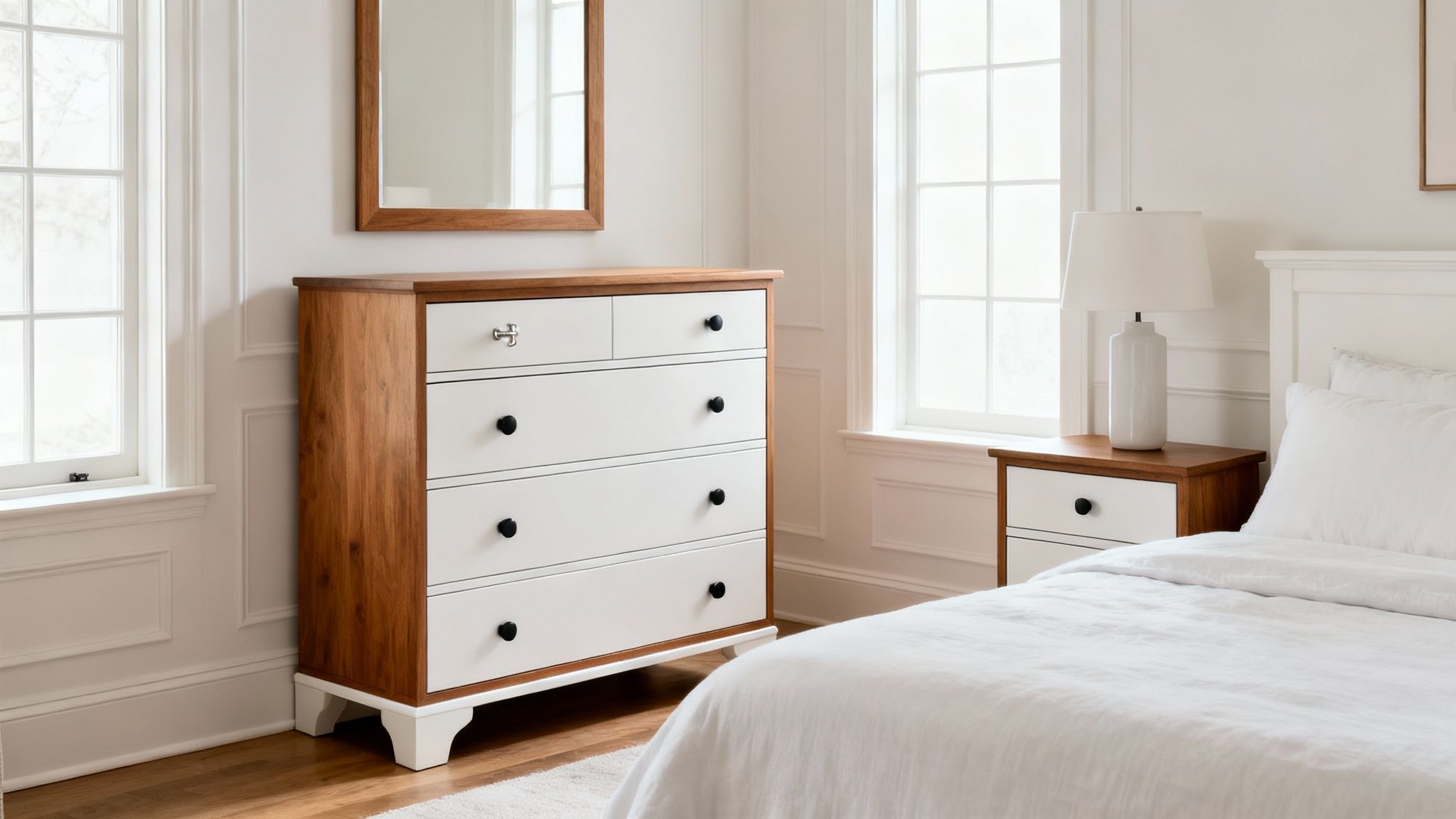
This means looking for furniture that shares the same design DNA. Think classic shapes simplified with clean, modern lines. You might find a dresser with traditional frame molding but completely unadorned drawer fronts. Or maybe you'll spot nightstands with gently tapered legs instead of fussy, carved ones. It's this subtle mix that makes your furniture feel both timeless and perfectly current.

The Power of Cohesive Details
Creating harmony among different pieces of transitional style bedroom furniture isn't about perfect matching; it's about making smart connections. You can pull the whole room together by focusing on a few key elements that create a common thread.
Here are a few ways to get a coordinated look:
- Shared Wood Tones: Your woods don't have to be the exact same finish, but keeping them in the same temperature family (like a warm walnut with a warm oak) makes them feel related.
- Consistent Finishes: A beautiful satin or matte finish across different pieces creates a subtle, modern link that feels incredibly sophisticated.
- Repetitive Shapes: A slight curve on the edge of your dresser could echo the soft arch of your headboard, creating a quiet visual rhythm that makes the room feel cohesive.
Often, the most powerful detail is the hardware. Think of it as the jewelry for your furniture—it can completely change the look.
Swapping ornate, antique pulls for sleek, understated hardware in a brushed nickel, soft brass, or matte black finish is one of the quickest ways to steer a traditional piece into the transitional lane. It’s a small change that makes a massive impact on the overall feel.
To really nail the look, take some time in selecting the right cabinet knobs and pulls that truly complement your vision.
Mix, Don't Match
The secret to a truly stunning transitional bedroom is to avoid that "straight from the showroom floor" look. While your nightstands should almost always match each other to create balance, they absolutely do not need to match the dresser.
For example, you could pair a substantial, solid wood dresser with lighter, more delicate nightstands that have slim metal legs and a single drawer. This kind of contrast adds so much visual interest and keeps the room from feeling heavy or one-note.
As long as the pieces share a common element—like the same hardware finish or a similar level of formality—the collection will feel intentional and expertly designed. This approach creates a layered, personal space that tells a much more interesting story.
Integrating Accent Seating for Comfort and Style
Your bedroom should be more than just a place to crash at the end of the day. It’s your personal retreat. Adding the right accent seating is what takes it from a simple sleeping space to a true, multi-functional sanctuary. A well-chosen chair or bench can add incredible layers of comfort and style, carving out new possibilities within the room.
This is a great chance to introduce some softer curves to play against the clean, straight lines of your main transitional style bedroom furniture. Think about a classic armchair silhouette, but updated with a modern, textured linen and tucked into an empty corner. Or maybe the simple, functional elegance of a streamlined bench at the foot of your bed—the perfect spot for laying out tomorrow's outfit or putting on your shoes.
Creating Purposeful Zones with Seating
The real magic of accent seating is how it creates distinct, functional zones. This simple strategy adds a touch of luxury and makes the room feel larger and more intentionally designed. Suddenly, your bedroom isn't just one open space; it's a collection of areas dedicated to different activities.
Here are a few ideas to get you started:
- A Cozy Reading Nook: An inviting armchair next to a window or a floor lamp is a classic for a reason. Just add a small side table for your coffee or tea, and you’ve created the perfect spot to unwind with a good book.
- A Practical Dressing Area: An upholstered bench or a pair of small ottomans near your dresser or closet offers a convenient place to sit while getting ready. No more balancing on one foot!
- A Quiet Conversation Spot: If you have the space, two smaller-scale accent chairs with a little table between them can create an intimate area for a quiet chat away from the hustle and bustle of the main house.
Accent seating should feel like an organic extension of your bedroom's design, not an afterthought. Select pieces that echo the room's color palette and material textures while introducing a complementary shape or form.
Selecting the Right Seating Styles
Choosing the right piece is all about balancing looks with function. For a transitional space, you're on the hunt for classic forms with simplified, modern details. Take a wingback chair, for instance. It's a traditional staple, but one with clean lines, minimal tufting, and a neutral fabric feels perfectly at home in a transitional room.
A slipcovered armchair can offer a relaxed yet sophisticated look that’s also a breeze to maintain. In the same vein, a backless bench with simple tapered legs and a warm wood finish provides versatile seating without adding a lot of visual weight to the room. The goal is to find furniture that boosts the room’s comfort and style without overwhelming the serene, balanced atmosphere you've worked so hard to create. These are the finishing touches that truly complete your personal oasis.
Crafting Your Palette with Colors and Textiles
If your transitional style bedroom furniture is the skeleton, then color and textiles are the soul. They’re what breathe life, personality, and emotion into the space. This is where you move beyond just arranging furniture and start creating a true sanctuary.
Transitional style isn’t about dramatic color choices. It sidesteps stark, clinical whites and avoids heavy, oppressive darks, finding its magic in the calm, sophisticated middle ground. The whole point is to create a layered, serene atmosphere that feels both airy and deeply comforting.
Building a Foundation with Neutrals
A beautiful transitional bedroom always starts with a strong foundation of neutrals. Think of these tones as the quiet heroes of the room—they create a tranquil backdrop that lets the elegant shapes of your furniture and the richness of your textures really shine.
Get started with these go-to shades:
- Soft Grays: From a light dove gray to a deeper, moodier charcoal, these colors offer a modern and incredibly versatile base.
- Warm Beiges and Taupes: These bring in an earthy warmth that keeps the room from feeling too cool or sterile.
- Creamy Whites: Ditch the bright, sterile white and opt for an off-white with warm undertones to add a layer of softness.
The real secret here is to layer these neutrals. A room that plays with different shades of gray—from the walls to the bedding to an area rug—achieves a rich, complex look that is anything but boring. It’s a simple strategy with a huge payoff.
Weaving in Texture and Subtle Pattern
Once your neutral palette is set, texture becomes your best friend. This is how you add visual weight and a sense of luxury without creating clutter. A great transitional bedroom should invite you to touch everything.
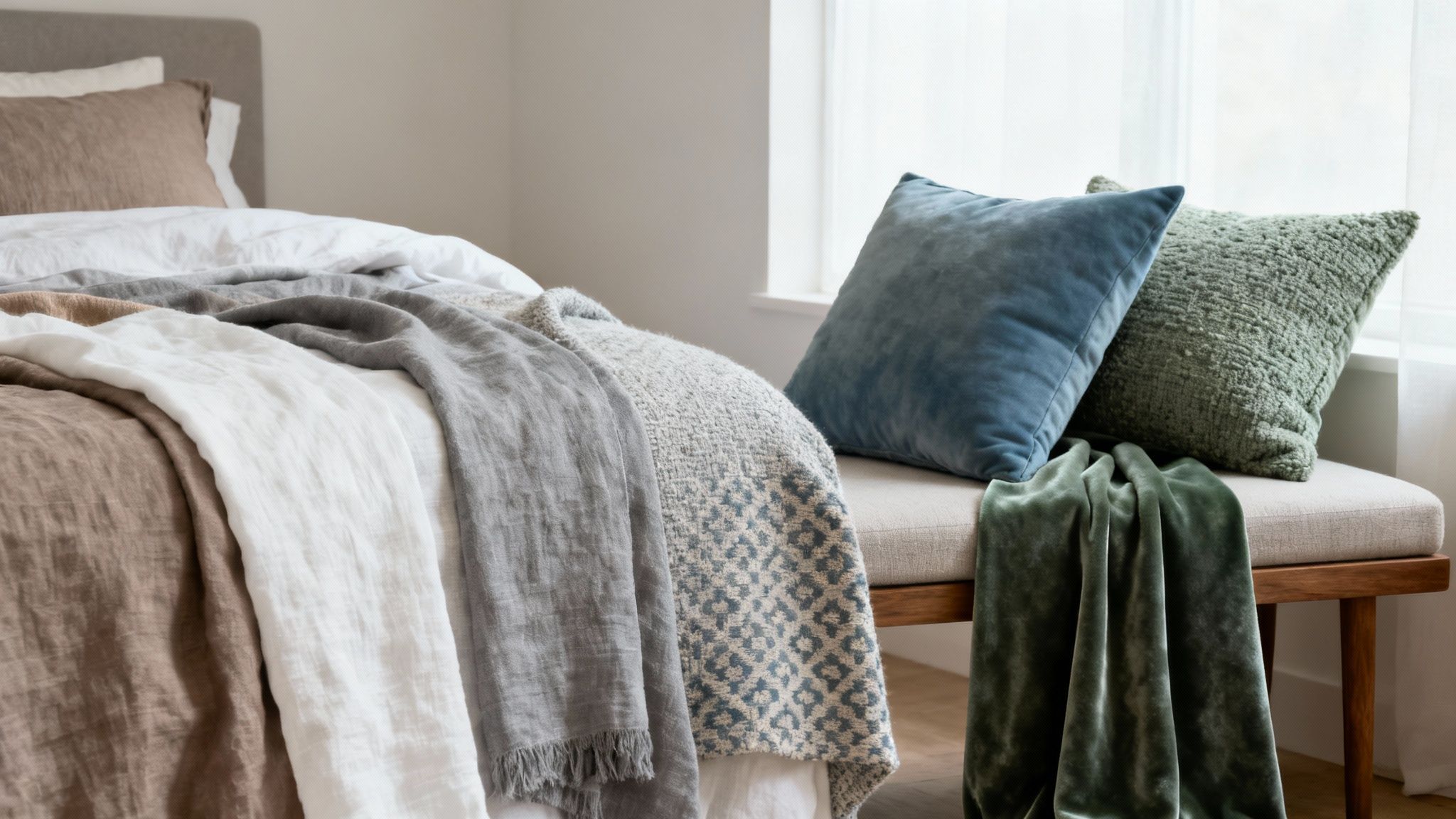
Don't be afraid to mix and match. Pair the cool, smooth feel of a linen headboard with the rich softness of a velvet throw pillow. Drape a chunky knit blanket across the foot of the bed or over a sleek wooden bench. It’s this constant play between smooth, rough, soft, and woven that gives the space its character.
When it comes to patterns, the key is restraint. Simple, understated designs like faint stripes, small-scale geometrics, or a soft herringbone add just enough detail without disturbing the room's peaceful vibe.
Looking forward, designers are leaning into richer, more intimate palettes. One exciting trend involves layering deeply textured fabrics over transitional frames in moody, saturated tones like reddish-plum. It’s a definite shift away from the crisp whites that once made up 70% of popular palettes. This move reflects our growing desire for cozy, cocoon-like spaces that blend a touch of vintage nostalgia with clean, modern comfort. You can read the full research on these upcoming bedroom design trends on Veranda.com.
Your Transitional Bedroom Questions Answered
Diving into transitional design is always exciting, but it’s totally normal to have a few questions along the way. Getting those questions answered is what turns a good idea into a beautiful room that genuinely feels like you. This little FAQ is here to clear up some of the most common hang-ups, giving you the confidence to get your design just right.
We'll walk through everything from how to blend your cherished old furniture with new finds to picking out the perfect lighting. The goal here is to help you sidestep those common design missteps and make choices you'll be happy with for years.
Can I Mix Existing Furniture with New Transitional Pieces?
Not only can you, but you absolutely should! That blend of old and new is precisely what gives a space its soul and keeps it from feeling like it came straight out of a catalog. Transitional style is incredibly forgiving, making it the perfect playground for this kind of creative mixing. The trick is simply finding a way for your old and new pieces to have a friendly conversation.
So, how do you make that happen? You just need to create a common thread.
- Look for a Common Color Undertone: Got a traditional cherry wood dresser with those warm, reddish undertones? Pair it with new pieces that also have a bit of warmth, like a bed upholstered in a soft, creamy fabric.
- Give the Hardware an Update: This is such a simple move, but it has a huge impact. Swapping out dated drawer pulls for something more current, like matte black or brushed nickel, can instantly connect an older piece to your new transitional style bedroom furniture.
- Keep the Formality in Check: Try to match the overall vibe. If you have a very formal, ornate antique, look for new furniture that has a quiet sophistication—not something super rustic or laid-back.
The goal isn't to make everything match perfectly. It's about creating a thoughtful conversation between different pieces, resulting in a room that feels collected and authentic to your story.
This is how you get that layered, evolved character that makes a bedroom feel truly special.
What Kind of Lighting Works Best?
When it comes to lighting a transitional bedroom, think sophisticated but simple. You want to avoid the extremes on either side of the spectrum—that means skipping the over-the-top crystal chandeliers and the harsh, industrial fixtures with exposed bulbs. The sweet spot is right in the middle: classic shapes with clean, modern finishes.
The right fixtures will cast a warm, ambient glow that adds to the room's calm and serene atmosphere. Simple drum pendants in a neutral fabric, elegant table lamps with smooth ceramic bases, or sleek wall sconces in a soft brass or brushed nickel are all fantastic choices. They light up the space beautifully without stealing the show, letting your furniture and textiles be the stars.
How Do I Keep a Neutral Bedroom from Feeling Boring?
I get this question all the time, and the answer is surprisingly simple: texture. A neutral color palette isn't the final product; it's the canvas. Texture is what brings it to life, adding all the depth, warmth, and interest that prevents a room from feeling flat or cold.
Think about creating a rich, sensory experience by layering different materials.
- Drape a chunky knit blanket over a reading chair.
- Toss some velvet or bouclé pillows on the bed.
- Choose a headboard upholstered in a tactile, slubby linen.
- Ground the whole space with a soft, low-pile wool rug.
You can also play with different shades of the same neutral color—mixing a few tones of gray, for instance—to build subtle complexity. A warm wood bench, a stone vase, or a few potted plants will also breathe life into the room. It's these layers that transform a simple, neutral space into a rich, inviting retreat that is anything but boring.
What Are the Best Wood Finishes for Transitional Furniture?
Transitional style really leans into wood finishes that feel warm, natural, and authentic. You'll want to look for medium tones that aren't too light or too dark. Finishes like a warm walnut, a soft oak, or even a muted cherry are just perfect. They have an elegant, grounded feel without the heavy, formal vibe of the super-dark, glossy finishes you see in strictly traditional designs.
Pay attention to the sheen, too. Transitional pieces usually have a more contemporary satin or matte finish, which just feels more sophisticated and up-to-date. And don't be afraid to mix different wood tones in one room! As long as they share a similar temperature (all warm tones, for example), they’ll work together to create a harmonious and cohesive look.
Ready to build your own serene and stylish retreat? At Fluent Trends, we've curated a collection of designer-approved transitional furniture that perfectly balances timeless elegance and modern comfort. Explore our selection and find the pieces that will bring your vision to life at https://www.fluenttrends.com.