

What Is a Carafe Used For? Discover Its Top Uses and Tips
Donna MaloneYou've probably seen them at brunch spots, nice restaurants, or maybe even in a friend's kitchen—a simple, elegant glass vessel holding water, wine, or juice. That's a carafe, and it's one of the most versatile and understated pieces you can own for serving drinks.
Think of it as the more sophisticated cousin to the everyday pitcher. While a pitcher gets the job done, a carafe does it with style, elevating the entire experience of sharing a beverage. It's a simple tool that makes serving feel more intentional and look a whole lot better.
The Simple Elegance of the Carafe Explained
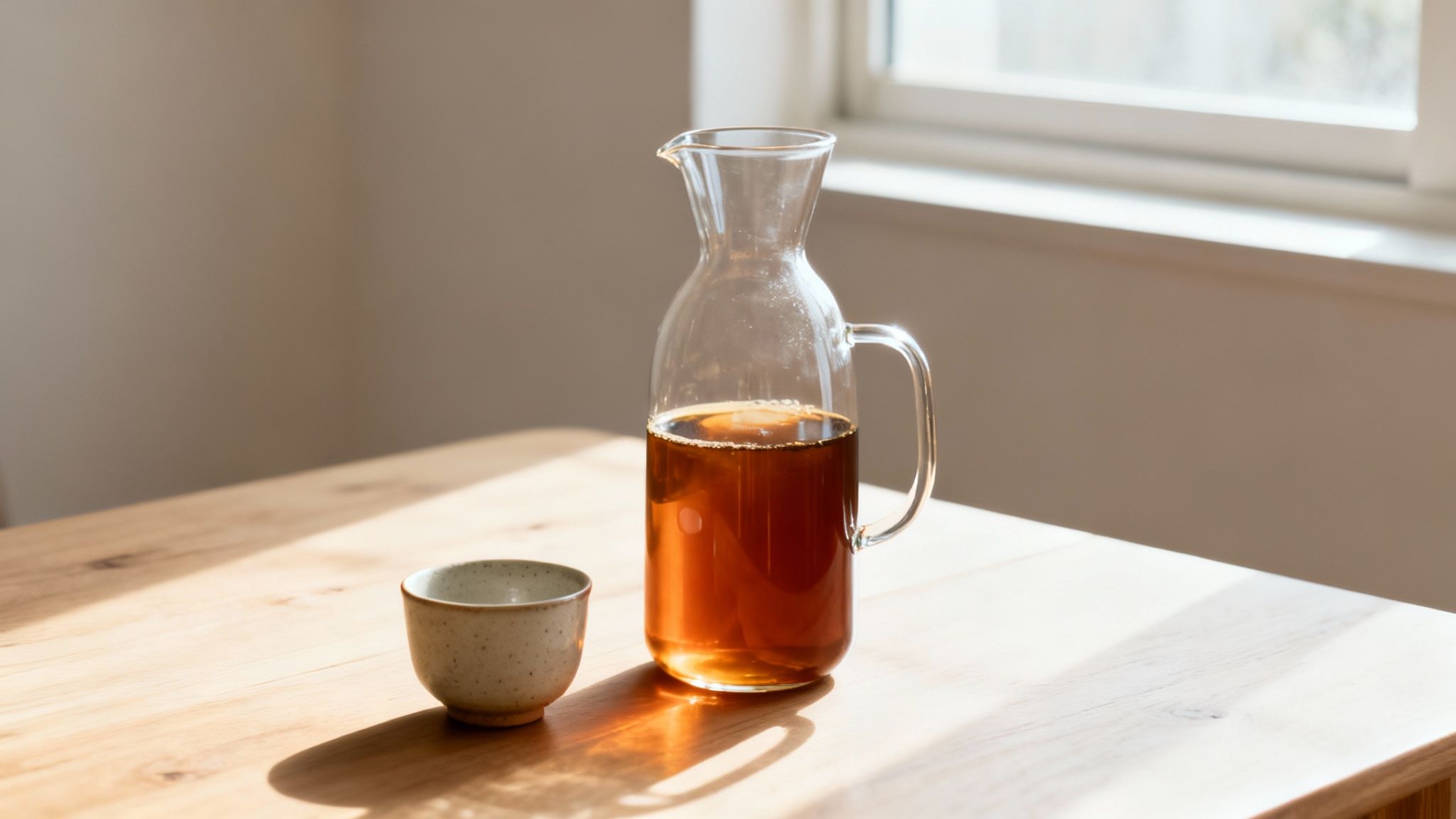
At its core, a carafe is more than just a container; it's a quiet statement of hospitality. The name itself comes from the Arabic word gharrafah, which means "to scoop," a nod to its fundamental purpose. Unlike a bulky pitcher with a handle, the carafe has a clean, streamlined shape that adds a touch of class to any table setting.
The design is brilliantly simple: a sturdy base, a smooth body, and a neck that flares out just enough for a clean, dripless pour. This minimalist form is precisely what makes it so adaptable. Glass carafes first popped up around the 13th century in Venice, completely changing how drinks were served by replacing the clunky metal pitchers of the time. The whole story behind how we serve hot drinks has continued to evolve, as seen in the modern thermal coffee carafe market.
What Is a Carafe Best Used For?
While you could use a carafe for just about anything, it really shines in a few key roles where presentation and practicality meet. It's the kind of piece that effortlessly moves from a casual weekday dinner to a weekend get-together with friends. The beauty is in its versatility.
Here are a few of the best ways to put a carafe to work:
- Elevating Table Water: Serving water from a carafe—especially with a few slices of lemon or cucumber floating inside—instantly makes any meal feel more special.
- Serving Batch Beverages: It’s perfect for holding big batches of iced tea, fresh juice, or pre-mixed cocktails for a brunch, letting guests help themselves.
- Keeping Coffee Hot: An insulated or thermal carafe is a game-changer. It keeps coffee hot for hours without that burnt taste you get from leaving the pot on a hot plate.
- Serving Casual Wine: While it's not a formal decanter, a carafe is a great, relaxed way to serve a young, easy-drinking wine that doesn't need to breathe.
What Can You Use a Carafe For, Anyway?
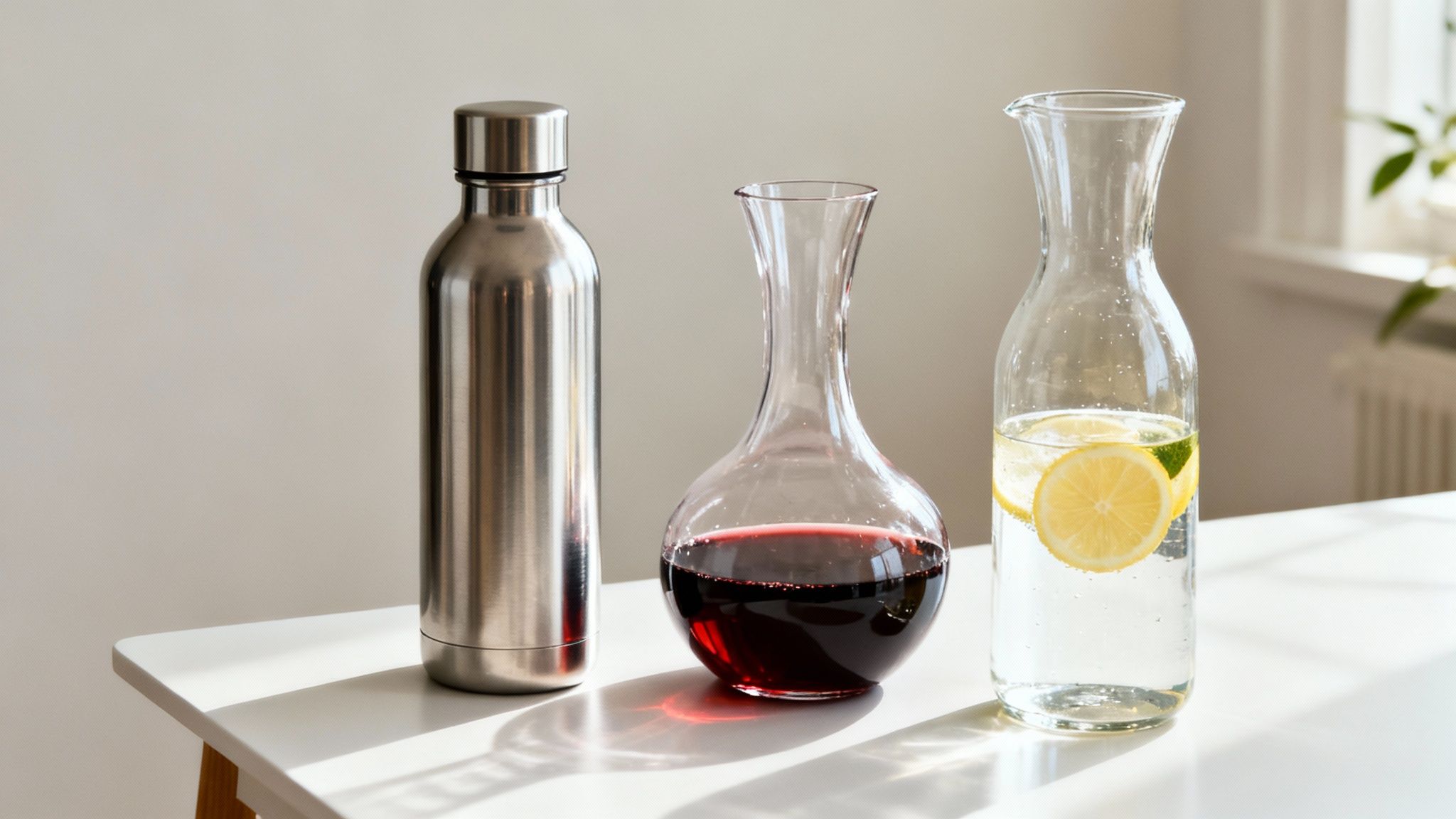
Sure, a carafe is fantastic for serving chilled water, but that's just scratching the surface. Its real magic is in its versatility. Think of it as a functional centerpiece, ready to adapt to whatever you're pouring, from your morning coffee to an evening get-together.
For coffee lovers, a thermal carafe is a game-changer. It keeps your brew perfectly hot for hours without that awful scorching you get from a traditional hot plate—the kind that leaves coffee tasting burnt and bitter. Many modern coffee makers, like the Cuisinart Pureprecision Pour Over Thermal 8 Cup Coffee Maker, now come with one built right in. It’s a simple feature that makes a world of difference, ensuring your last cup tastes just as good as the first.
From Casual Wine Service to Weekend Brunch
Beyond coffee, a simple glass carafe pulls double duty as a casual decanter for wine. When you pour a young red wine into a carafe, you’re letting it breathe. That exposure to oxygen helps soften the tannins and unlock its full aroma, a simple trick that can make an everyday bottle of wine taste noticeably smoother and more refined.
And for weekend brunch? The carafe is an absolute superstar. Instead of a cluttered table piled with cartons and bottles, you can serve up your drinks with an effortless touch of class.
- Chilled Juices: Pour orange, grapefruit, or cranberry juice into a sleek carafe for a clean, inviting look on your buffet.
- Batch Cocktails: Pre-mix a big batch of mimosas, bloody marys, or sangria so guests can help themselves without any fuss.
- Cold Brew Coffee: A glass carafe is the perfect vessel for steeping cold brew concentrate overnight in the fridge. The result is a smooth, low-acid coffee ready to go in the morning.
A carafe isn't just about serving a drink; it's about presenting an experience. It elevates simple beverages into a thoughtful offering, making guests feel welcomed and cared for with minimal effort.
Ultimately, these uses prove a carafe is so much more than just a pretty pitcher. It’s a practical tool that can enhance flavor, maintain the perfect temperature, and elevate the presentation of almost any drink you can think of.
Choosing the Perfect Carafe Material and Size
Finding the right carafe isn't about following a strict set of rules. It’s much more about feel and function—matching the vessel to what you'll be using it for. Think of it like picking out a coat: you wouldn’t wear a heavy parka on a cool autumn day, right? The same logic applies here. The material and size you choose should make sense for its main job.
Glass is the classic, go-to material, and for good reason. Nothing beats its crystal-clear transparency for showing off beautiful drinks like fruit-infused water or the rich, deep color of a good red wine. It’s an undisputed favorite. In fact, the global beverage packaging market was valued at USD 157.73 billion in 2023, and glass accounted for a solid 28% of that. Why? Because its non-porous surface prevents 99% of flavor contamination. You can get more insights on global beverage packaging trends from Valuates Reports.
But glass isn't the only option. For outdoor parties or serving drinks by the pool, a shatter-resistant acrylic carafe is your best friend. It gives you the look of glass without the stress of potential breakage.
Insulated and Specialty Materials
If keeping your drinks at the perfect temperature is the goal, then you’ll want to look at insulated options. Stainless steel carafes are the workhorses of the thermal world, keeping your coffee piping hot or your iced tea chilled for hours on end, all while preserving the original taste.
For a more artisanal, rustic vibe, you can’t go wrong with ceramic or stoneware. These carafes bring a certain warmth and charm to the table. Their thicker walls offer a bit of natural insulation for both hot and cold liquids, making them a beautiful choice for serving anything from hot cocoa to fresh milk. The specific type often just comes down to your personal style. If you want to get into the details, our guide comparing stoneware vs porcelain dinnerware is a great place to start.
Finding the Right Size
Carafes come in all shapes and sizes, each suited for a different moment.
- Small (500ml or ~17 oz): Perfect for one. Think water on your nightstand or serving a bit of cream for a large group’s coffee service.
- Medium (1 liter or ~34 oz): This is your all-rounder. It’s just right for serving water at a family dinner or decanting a standard bottle of wine.
- Large (1.5 liters+ or ~50 oz+): When you’re entertaining a crowd, go big. This size is ideal for batching cocktails, setting out juice for brunch, or keeping a drink station filled.
By simply thinking about what you'll serve and where you'll serve it, you can easily find a carafe that’s not just beautiful, but perfectly functional for your lifestyle.
How to Properly Care for and Clean Your Carafe
A beautiful carafe can be the centerpiece of your table, but it needs a little care to keep it sparkling. Keeping it clean is simple, but absolutely essential—especially for those elegant, narrow-necked designs that can be a real pain to get into. A quick rinse right after you use it is your first line of defense against stubborn coffee or wine stains.
For a more serious clean, you don't need harsh chemicals. My favorite trick for glass carafes is to use a mix of uncooked rice, a bit of white vinegar, and some warm water. Just pour it all in and give it a good, vigorous swirl. The rice acts like a tiny, gentle scrubber, getting into all the nooks and crannies to scrub the inside clean. It works like a charm.
Essential Care for Different Materials
Of course, not all carafes are made the same, and the material really dictates how you should clean it. You don't want to accidentally damage a beautiful finish.
Here’s a quick visual guide to how a carafe's material, its intended use, and its size all factor into your choice—and ultimately, how you'll care for it.
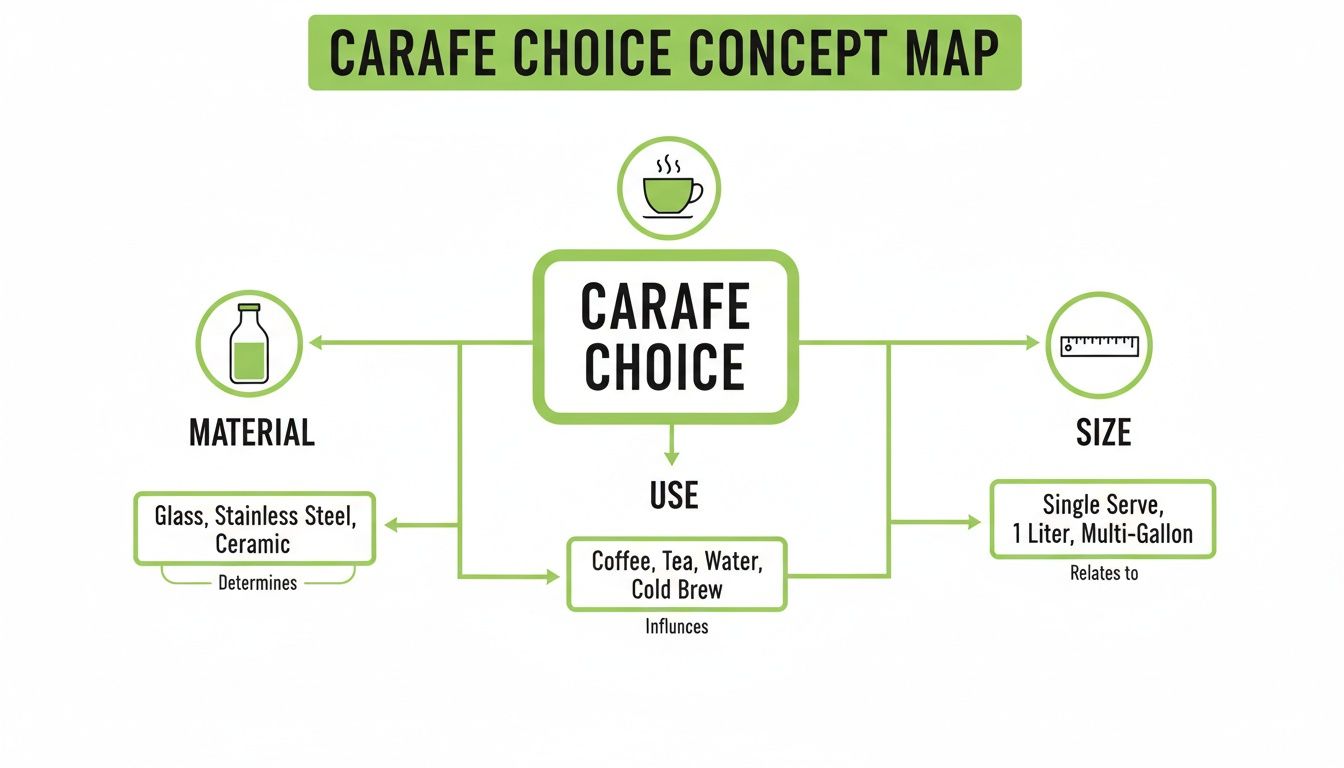
As you can see, the cleaning routine that's right for you really comes down to the material you pick for the job at hand.
A crucial tip for glass carafes: to prevent thermal shock (which can cause a nasty crack), never pour boiling hot liquid into a cold carafe or plunge a hot one into cold water. Always let it come to room temperature first.
Finally, while many sturdy glass carafes are dishwasher-safe, it's always smart to double-check the manufacturer's instructions. Anything with a delicate finish, gold or silver details, or a wooden handle should definitely be washed by hand to keep it looking its best.
Creative Styling and Serving Tips for Gatherings
A carafe isn’t just a practical tool for serving drinks—it’s a statement piece that can instantly elevate the whole mood of a gathering. When styled with a bit of thought, a simple vessel becomes a beautiful focal point on your dining table, brunch spread, or drink station. This is where you get to have some fun and let your hosting personality shine.
One of the simplest and most effective ways to do this is with infused water. Just add a few colorful, fresh ingredients directly into the carafe for an instant visual upgrade.
- Citrus & Herb: Slices of lemon and lime paired with a few sprigs of fresh mint.
- Berry Burst: A handful of vibrant raspberries, blueberries, or sliced strawberries.
- Cool Cucumber: Thin ribbons of cucumber with a sprig of rosemary for a savory, spa-like touch.
With almost no effort, you've turned plain water into a piece of edible decor.
Creating an Effortless Atmosphere
Beyond just looking good, a well-placed carafe helps create a relaxed, welcoming vibe by encouraging guests to help themselves. This small detail makes your job as a host so much easier and lets you enjoy the party, too. To pull the look together, pair your elegant glass carafe with matching glassware for a chic and intentional feel.
For those truly special occasions, going the extra mile by understanding the optimal storage and serving techniques for wine can take your presentation to the next level. The right carafe becomes a core part of the experience, sparking conversation and making guests feel cared for.
Think of your carafe as an invitation. It quietly tells your guests, "Please, help yourself. Make yourself at home." This simple gesture of self-service helps everyone relax and settle in.
When it comes to buying high-end decor online, market data reveals that 65% of purchases are made on platforms like Shopify. Carafe sets, which typically cost between $75-$150, have also been shown to boost average cart value by 18% when bundled with dinnerware.
Common Questions About Carafes Answered
When you start looking for a carafe, a few practical questions always seem to pop up. It’s one thing to admire how they look, but knowing the difference between similar-looking pieces and how to care for them is what really makes the difference. Let's clear up some of the most common questions.
What Is the Difference Between a Carafe and a Decanter?
It's easy to get these two mixed up, especially since they often sit side-by-side on a store shelf. The simplest way to think about it is that a decanter is a specialist, while a carafe is a generalist.
A decanter is built for one job: helping wine breathe. Its signature wide, flat base is engineered to expose as much of the wine as possible to oxygen. This process, known as aeration, is a game-changer for big, full-bodied reds, softening their tannins and unlocking complex flavors that would otherwise stay hidden.
A carafe, on the other hand, is your everyday workhorse. It’s perfect for serving water (with or without lemon slices), iced tea, fresh juice, or a batch of sangria. You can absolutely serve a young, easy-drinking wine in a carafe—especially at a casual dinner—but it’s not designed to fundamentally improve the wine like a decanter is.
Can You Use One Carafe for Hot and Cold Drinks?
This is a great question, and the answer really comes down to the material. Most standard glass carafes can handle both hot and cold liquids, but not at the same time. The real danger is thermal shock—pouring boiling water into a glass carafe you just pulled from a cold fridge, for example, is a recipe for a crack.
If you want a single vessel that truly excels at both, an insulated thermal carafe is the way to go. Usually made of stainless steel, they’re designed to keep your coffee piping hot for hours or your lemonade ice-cold all afternoon. Always double-check the manufacturer’s instructions, but a quality thermal model is your best bet for versatility.
The rule of thumb is simple: glass for presentation, thermal for temperature. Choose the material that best fits the primary beverage you plan to serve.
How Do You Remove Red Wine Stains from Glass?
Don't let a stubborn red wine ring ruin the look of your beautiful glass carafe. There’s an incredibly simple home remedy that works like a charm without harsh chemicals.
- Start by pouring a little warm water into the bottom of the carafe.
- Add a splash of white vinegar and a tablespoon of either uncooked rice or coarse salt.
- Now for the fun part: swirl the mixture vigorously for a minute or two. The rice or salt acts as a gentle, natural abrasive, scrubbing the inside of the glass and lifting the stain without causing any scratches.
If you’re dealing with a really tough, set-in stain, just let the mixture sit for about 30 minutes before giving it another good swirl and rinsing it out completely.
Are Carafes Safe for the Dishwasher?
This really depends on the specific carafe you have. Many simple glass or acrylic models are top-rack dishwasher safe, but you should always confirm before you run a cycle.
As a general rule, anything with delicate details—like gold trim, painted patterns, or wooden accents—should always be washed by hand. Honestly, even with dishwasher-safe models, a long-handled bottle brush often does a better job, especially for getting into those narrow necks and clearing out any residue at the bottom.
Ready to find the perfect carafe that combines style and function for your home? Explore the curated collection at Fluent Trends, where you'll discover beautifully crafted pieces designed to elevate every occasion. Shop our carafe collection today.