

What Is Mid Century Modern Furniture A Timeless Design Guide
Yuatinia LeakWhen you think of Mid‑Century Modern (MCM), what comes to mind? For many, it’s the blend of clean lines, gentle organic curves, and a sense of effortless simplicity. This iconic style broke away from the ornate, heavy designs of earlier decades, emerging after World War II with a fresh, optimistic vision for modern living. Rooted in functionality and shaped by new materials and manufacturing methods, Mid‑Century Modern furniture remains one of the most timeless and influential design movements today.
The Philosophy Behind The Form
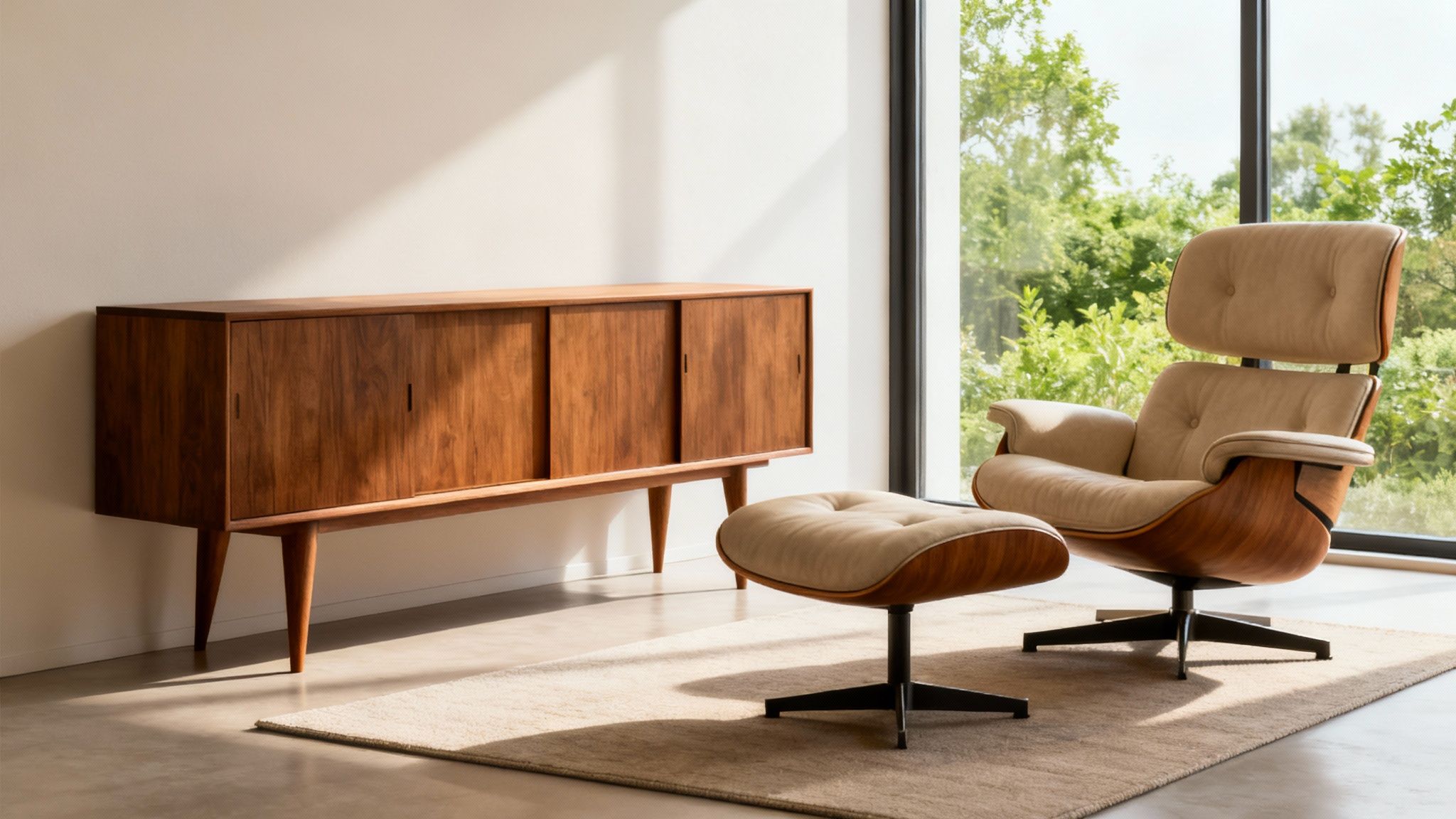
To truly understand what Mid‑Century Modern furniture represents, you have to look beyond the aesthetics. It wasn’t just a style — it was a complete design philosophy. Fueled by post‑war optimism and new manufacturing possibilities, designers intentionally moved away from the heavy, ornate furniture of earlier decades. Their mission was clear: make thoughtful, well‑designed pieces accessible to everyone.
At the core of this movement was the belief that form should follow function. Every curve, every tapered leg, and every material choice served a purpose. There was no space for unnecessary decoration. Instead, the beauty emerged from clean geometry, honest materials, and the effortless practicality that made these pieces perfectly suited for modern living.
A New Era of Design
Mid‑Century Modern exploded onto the scene from roughly 1945 to 1970, becoming the defining look across North America and Europe. By the mid‑1950s, this clean, forward‑looking aesthetic had already made its way into more than 80% of new American suburban homes. Economic prosperity and groundbreaking production methods—like molded plywood and early plastics—made designer furniture more accessible than ever, reshaping how families furnished their homes.
This wasn’t just about creating furniture; it was about shaping a new way of life—one that was uncluttered, forward‑thinking, and deeply connected to both nature and modern technology.
The result was a generation of furniture that felt light, airy, and almost sculptural. Tapered legs made credenzas appear to float above the floor, while organic silhouettes echoed forms found in nature. Designers celebrated this new era by blending traditional woods with innovative materials, creating pieces that were both warm and forward‑looking. This seamless fusion of artistry and engineering is exactly why Mid‑Century Modern design still feels as fresh today as it did seventy years ago.
Mid‑Century Modern at a Glance: Your Spotter’s Guide
To help you recognize this iconic style instantly, here’s a refined breakdown of the hallmark features that define Mid‑Century Modern design.
Clean Lines
Think simple, unfussy silhouettes. Mid‑Century Modern pieces avoid heavy ornamentation and instead rely on geometric and gently organic forms to create visual clarity.
Functionality First
Every element serves a purpose. This style prioritizes practical, everyday use — beauty expressed through efficiency rather than excess.
A Thoughtful Material Mix
Expect a blend of warm natural woods like teak and walnut paired with modern materials such as molded plastic, metal, and glass. The contrast is intentional and balanced.
Organic, Sculptural Shapes
Soft curves and nature‑inspired contours bring warmth and movement, preventing the look from feeling too rigid or mechanical.
Tapered, Elevated Legs
Slim, angled legs lift furniture off the floor, creating an airy, weightless feel that keeps rooms looking open and uncluttered.
With these hallmarks in mind, we can step deeper into the elements that truly define Mid‑Century Modern design.
The Defining Characteristics of MCM Design
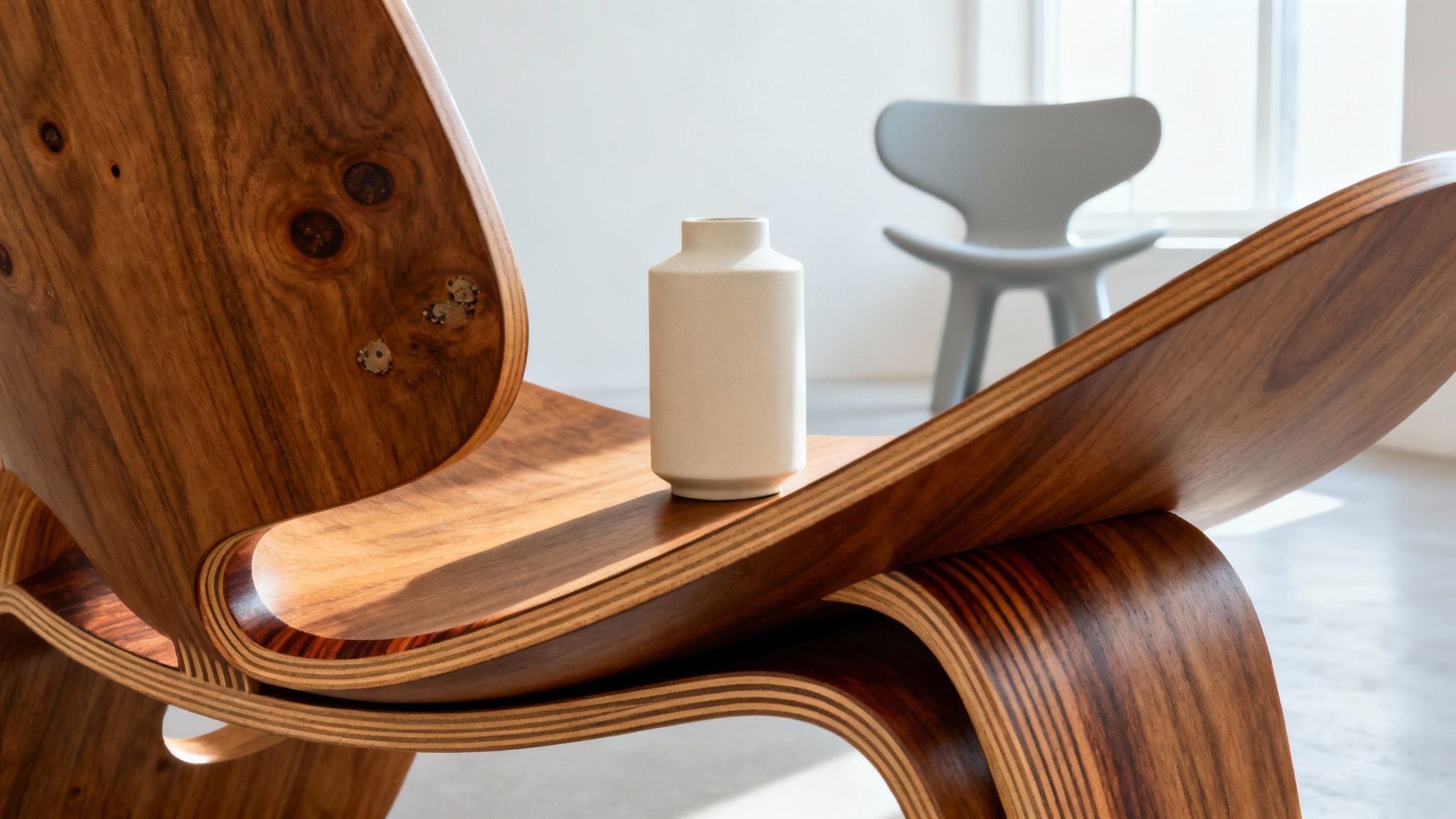
To truly understand what Mid‑Century Modern furniture represents, you have to look beyond the dates and into its visual and philosophical DNA. This isn’t just a collection of retro pieces — it’s a design mindset shaped by how people wanted to live. Every element has intention. The style’s enduring appeal comes from a handful of core principles that prioritize usability, honest materials, and a deep connection to the natural world.
Together, these principles create an aesthetic that feels both sophisticated and refreshingly grounded. Once you can identify these key traits, it becomes clear why a chair or table designed in 1955 can still look perfectly at home in a contemporary living room. Now, let’s break down the defining characteristics that give this style its remarkable staying power.
Form Follows Function
This is the cornerstone of Mid‑Century Modern design. At its core is a simple but transformative idea: an object’s purpose should shape its form. Every piece was created to be genuinely useful first, with its beauty emerging naturally from that clarity of intention. There’s no room for unnecessary ornamentation or decorative flourishes added just for effect.
Consider the iconic Eames Lounge Chair. Its molded plywood shells aren’t merely a stylistic flourish — they’re engineered to support and contour to the human body. The entire piece is a direct response to the need for a comfortable, modern armchair. Its celebrated silhouette exists because the function demanded it, not the other way around.
Simplicity and Clean Lines
Mid‑Century Modern design is rooted in the art of subtraction. It’s about stripping away the unnecessary and letting clarity take center stage. The look is defined by clean, unadorned lines — sometimes crisp and geometric, other times soft and organic — all working together to create a sense of calm, order, and visual ease. In this style, the form of the furniture speaks for itself.
You can see this philosophy in the straightforward, rectangular silhouette of a classic credenza or the graceful, uninterrupted arc of a Swan Chair. These pieces don’t rely on ornate carvings or decorative flourishes to make an impact. Their strength lies in their purity of shape and intention. This commitment to simplicity also makes MCM remarkably versatile, allowing it to blend seamlessly into a wide range of interiors — a topic we explore more deeply in our broader furniture style guide.
An Emphasis On Natural Materials
Designers from this era had a huge appreciation for natural materials, especially wood. The rich, warm tones of teak, walnut, and oak weren't just used; they were celebrated. Finishes were often kept clear or lightly oiled to let the natural wood grain become a key part of the design, adding texture and warmth to a space.
The philosophy was one of material honesty. Wood was allowed to look and feel like wood, showcasing its inherent beauty — flaws and all — as part of the design itself.
This devotion to nature’s palette gives MCM furniture its inviting, human quality. The warmth of real wood softens the clean lines and minimalist silhouettes, creating a balance that feels modern yet deeply comforting. It’s this harmony — modern simplicity paired with organic warmth — that keeps Mid‑Century Modern design timeless.
Pioneering New Materials
While wood remained the soul of Mid‑Century Modern design, the post‑war era ushered in a wave of material innovation. Designers embraced newly available industrial resources, often pairing them with traditional elements to create pieces that felt bold, modern, and entirely unprecedented.
This spirit of experimentation sparked some of the era’s most influential breakthroughs:
Molded Plywood
Charles and Ray Eames perfected techniques for bending thin layers of wood into strong, ergonomic curves that had never been achievable before.
Fiberglass and Plastic
These materials introduced vibrant colors and seamless, sculptural forms — most famously seen in Eero Saarinen’s Tulip Chair.
Metal and Glass
Sleek, cool, and industrial, these materials were used for slender legs, frames, and tabletops, offering a crisp contrast to the warmth of natural wood.
This fusion of old and new became a defining hallmark of the style, capturing the era’s optimism and its belief in a future shaped by technological progress.
A Strong Connection to Nature
Mid‑Century Modern design ealso sought to blur the boundaries between indoors and out. This connection wasn’t expressed only through natural materials — it lived in the shapes themselves. Organic curves, flowing silhouettes, and biomorphic forms echoed the gentle lines found in plants, stones, and the natural world.
Architecture played a major role, too. The expansive windows common in mid‑century homes were designed to pull the outdoors in, and the furniture was crafted to complement that openness. The result was a living environment that felt airy, harmonious, and deeply rooted in its surroundings — a balance of modern simplicity and nature‑driven serenity.
Understanding the principles is only half the story — to truly grasp the soul of Mid‑Century Modern design, you have to meet the visionaries who brought these ideas to life.
Meet The Visionaries Behind The Movement
Mid‑Century Modern didn’t simply emerge — it was shaped with intention by a generation of designers who saw the world through a radically different lens. These creators weren’t just crafting furniture; they were redefining how people lived, moved, and interacted with their homes. To truly understand the essence of Mid‑Century Modern design, you have to understand the minds behind the masterpieces.
What united these visionaries was a shared belief that good design could genuinely elevate everyday life. They blurred the boundaries between art and engineering, transforming ordinary objects into functional sculptures. As you explore their stories and signature works, the movement reveals itself not just as a style, but as a collection of deeply personal philosophies that continue to influence the spaces we live in today.
Charles and Ray Eames: The Power Couple of Design
If you had to choose just two names to represent Mid‑Century Modern design, Charles and Ray Eames would be at the top of the list. This husband‑and‑wife duo were true multidisciplinary innovators, exploring everything from architecture to film — but it was their furniture that reshaped the design landscape. Their California studio functioned less like a workshop and more like a creative laboratory, buzzing with experimentation in materials, ergonomics, and production techniques.
Their breakthrough came during World War II, when they were commissioned to develop molded plywood splints and stretchers for the U.S. Navy. In solving that challenge, they perfected a method for bending wood into strong, organic curves that had never been possible before. After the war, they applied this technology to furniture, giving the world icons like the Eames Molded Plywood Chair.
Their relentless pursuit of refinement culminated in their most celebrated creation: the Eames Lounge Chair, released in 1956. Nearly a decade in the making, it combined a sculpted plywood shell with supple leather upholstery to create what many consider the pinnacle of Mid‑Century Modern design. Their long‑standing partnership with Herman Miller produced more than 20 enduring classics. New bending techniques pioneered by designers like the Eameses increased plywood use in furniture by an astonishing 250% during the 1950s, making ergonomic curves widely accessible. For a deeper look into the history of Mid‑Century Modern design and its key players, history of mid-century modern design and its key players.
Arne Jacobsen: The Sculptor of Seating
Across the Atlantic, Danish architect Arne Jacobsen brought a sculptor’s sensibility to furniture design. A firm believer in “total design,” Jacobsen felt that an architect should shape not only the building but everything within it — from the furniture to the smallest hardware details. This holistic approach produced some of the most recognizable silhouettes of the entire era.
Jacobsen had a rare gift for creating fluid, organic forms that were both visually striking and exceptionally comfortable. His most iconic pieces — the Egg Chair and the Swan Chair — were designed in 1958 for the SAS Royal Hotel in Copenhagen.
The Egg Chair
A cocoon‑like, high‑backed form designed to offer a private retreat within a bustling hotel lobby.
The Swan Chair
Its graceful counterpart, defined by continuous curves and a complete absence of straight lines.
These designs were revolutionary for their time, using innovative foam‑molding techniques over fiberglass shells to achieve seamless, sculptural shapes. Jacobsen’s work stands as proof that functional furniture can also be breathtaking art.
"If a building becomes architecture, then it is art. I think that the same goes for furniture." - Arne Jacobsen
That single line captures his entire philosophy: the boundary between usefulness and beauty was never meant to be rigid.
George Nelson: The Master of Systems
If the Eameses were the experimenters and Jacobsen the sculptor, then George Nelson was the strategist — a brilliant thinker who understood design as a system. As Director of Design for Herman Miller from 1947 to 1972, he not only produced an impressive body of work but also shaped the company’s future by recognizing and recruiting talents like the Eameses.
Nelson’s approach was both playful and deeply methodical. He believed furniture should adapt to the evolving rhythms of modern life, which led him to pioneer some of the earliest modular storage systems. His Nelson Bench remains a study in elegant simplicity — a slatted form that functions beautifully as both seating and a low table.
But Nelson was equally celebrated for the wit and joy he brought into the home. His most iconic designs introduced a sense of fun into modern interiors:
The Marshmallow Sofa (1956)
A whimsical arrangement of 18 colorful, circular cushions that feels as delightful as it looks.
The Ball Clock (1949)
A vibrant, sculptural burst of color that broke away from traditional timepiece design.
The Bubble Lamp (1952)
Created by coating a wire frame in a translucent polymer, it casts a soft, atmospheric glow that became an instant classic.
Nelson’s work is a powerful reminder that modernism can be warm, witty, and deeply human. He proved that functional design never has to be dull — it can spark joy, curiosity, and a sense of play.
How to Identify Authentic MCM Furniture
So, you’re ready to hunt for your own piece of design history. Venturing into the world of vintage Mid‑Century Modern furniture is exhilarating, but separating a true original from a convincing reproduction takes a trained, discerning eye. Authentic pieces carry the quiet weight of craftsmanship, intention, and era‑defining innovation — and learning to recognize those cues is the key to making a confident, meaningful investment.
Spotting an original isn’t just about age. It’s about understanding the subtle signatures of the period: the joinery, the materials, the proportions, the finishes, and the unmistakable design language that defined the movement. Once you know what to look for, these details reveal themselves like clues, helping you appreciate the artistry behind each piece and ensuring you bring home something with genuine heritage.
This quick decision tree will help you start thinking like a seasoned collector, highlighting the hallmark traits associated with some of Mid‑Century Modern’s most influential designers.
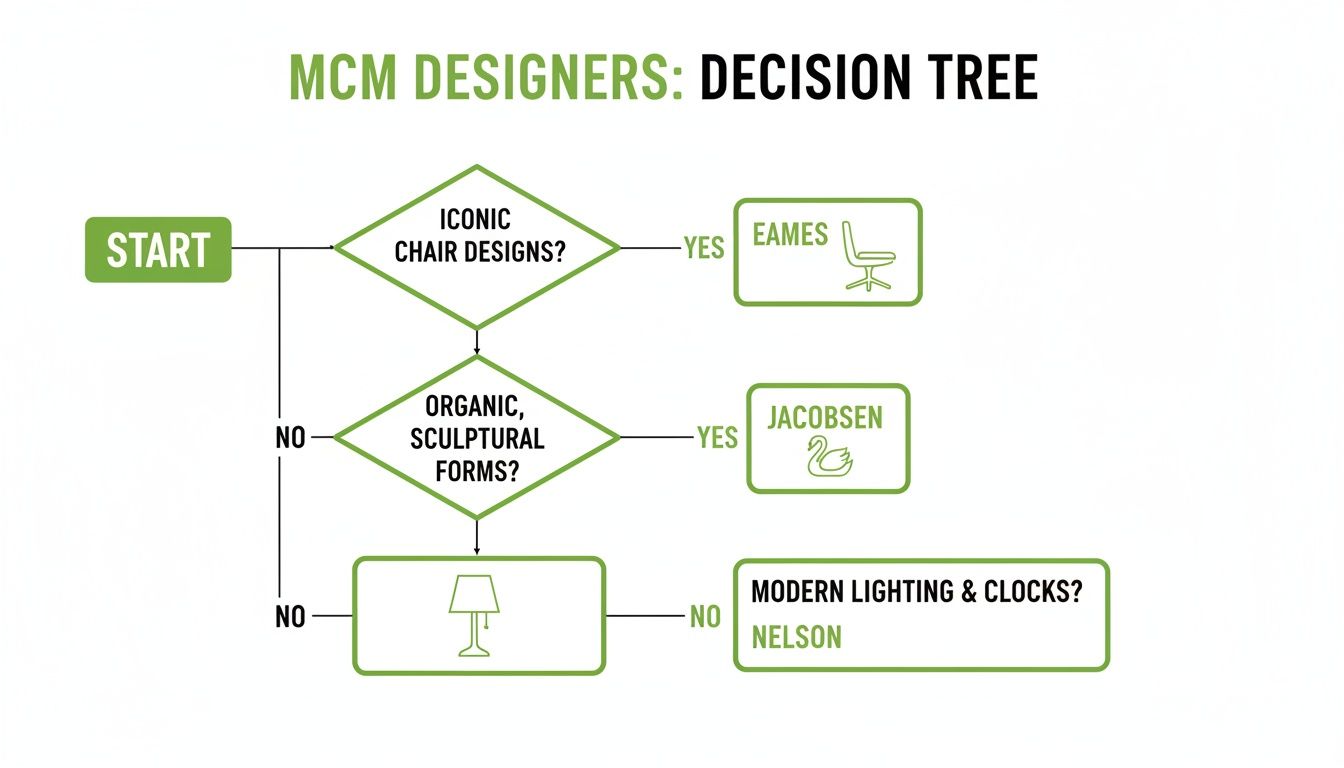
This visual guide links iconic silhouettes — from the sculptural Eames chair to Jacobsen’s graceful Swan — back to the designers who created them, sharpening your eye for the movement’s most recognizable signatures.
Look for the Maker’s Mark
One of the simplest — and most satisfying — clues to a piece’s origin is the maker’s mark. Think of it as the designer’s signature. These identifiers often appear as labels, stamps, or small metal medallions from the original manufacturer. Esteemed names like Knoll, Herman Miller, and Drexel almost always marked their furniture, though the placement can be surprisingly discreet.
Be sure to check in the hidden places collectors know well:
-
Underneath tabletops or chair seats
-
Inside drawers or along the back of a cabinet
-
On the metal hardware or frame itself
Finding a maker’s mark is a thrilling moment, but its absence doesn’t automatically signal a reproduction. Many authentic pieces have lost their labels over decades of use. Treat it as one clue among many in the larger authentication puzzle.
Examine The Construction Quality
Mid‑century craftsmen were masters of precision, and their construction techniques reveal a level of quality that’s hard to replicate today. Authentic vintage furniture was built with longevity in mind — not for a single season, but for generations.
One of the most telling signs of quality construction from this era is the dovetail joint. These interlocking, trapezoidal pins and tails create an incredibly strong and durable connection, commonly found in high‑end drawer construction.
Hardware offers another important clue. Original pulls, hinges, and screws develop a natural patina — a soft, graceful aging that modern reproductions rarely achieve. Newer hardware often looks overly shiny or feels lightweight because it’s made from cheaper materials. Look instead for solid brass or steel that has mellowed beautifully over time.
Assess the Materials and Finishes
Materials speak volumes in Mid‑Century Modern design. The era’s most celebrated pieces highlight the natural beauty of wood — especially teak, walnut, and rosewood. Authentic furniture from this period is typically crafted from solid wood or a high‑quality veneer over a sturdy core.
To distinguish between the two, examine the edges. If the grain flows seamlessly over the edge, you’re likely looking at solid wood. If the grain shifts or you see a thin dividing line, it’s probably veneer. Vintage veneers were thick and substantial, while many modern reproductions use ultra‑thin, paper‑like layers that feel noticeably less refined.
Finally, consider the patina. A true mid‑century piece will show the gentle signs of a life well‑lived — subtle sun fading, softened edges, and small, honest scratches. This kind of authentic wear can’t be faked and adds a depth of character no new reproduction can match.
Once you know how to spot the real thing — the craftsmanship, the materials, the quiet signs of age and intention — the next step is understanding how to let these pieces shine in your home. Authentic Mid‑Century Modern furniture isn’t meant to be treated like a museum artifact. It’s designed to live with you, to bring warmth, character, and sculptural beauty into the spaces you use every day. And when styled thoughtfully, these classics feel just as fresh and relevant now as they did decades ago.
Styling Mid‑Century Modern in a Contemporary Home
Bringing Mid‑Century Modern furniture into your home isn’t about recreating a period‑perfect room from a 1960s magazine. It’s about allowing these timeless designs to breathe within a modern environment. When styled thoughtfully, MCM pieces feel less like nostalgic artifacts and more like functional sculptures — adding depth, character, and a sense of design heritage to your everyday spaces.
The real beauty of Mid‑Century Modern lies in its versatility. These pieces were designed with clarity and intention, which makes them remarkably adaptable. Think of it as a dialogue between past and present: an iconic chair, a sculptural lamp, or a sleek credenza can introduce warmth and sophistication without overwhelming your contemporary aesthetic.
Create a Harmonious Mix
The goal isn’t to build a movie‑set replica of the 1960s — it’s to curate a space that feels personal, balanced, and distinctly yours. Fortunately, the clean lines and understated elegance of Mid‑Century Modern design make it an effortless partner for a wide range of styles. Its simplicity acts as a grounding force, allowing you to layer in texture, color, and personality without visual clutter.
Here are a few pairings that consistently strike the right balance:
MCM + Minimalism
A natural pairing rooted in clarity and restraint. Both styles embrace clean lines and intentional simplicity. An Eames Lounge Chair in a minimalist room becomes a sculptural focal point — striking, serene, and never overwhelming.
MCM + Bohemian
The warm woods and organic shapes of MCM pieces anchor the eclectic energy of bohemian décor. Picture a teak credenza grounding a room filled with lush greenery, woven textiles, and global accents. The contrast feels effortless and inviting.
MCM + Industrial
Mid‑century warmth softens industrial edges beautifully. A walnut sideboard or tapered‑leg sofa can instantly warm a loft with exposed brick, concrete floors, or metal fixtures, creating a space that feels both modern and lived‑in.
If you’re exploring how to blend aesthetics with confidence, our guide on mixing furniture styles offers deeper insights into creating a cohesive, personalized look.
Use Color To Bridge The Eras
Color is one of the most powerful tools for unifying your space. The Mid‑Century palette is full of hues that feel just as fresh today as they did seventy years ago.
Begin with a foundation of warm, earthy neutrals — soft whites, gentle grays, and sandy beiges. Then introduce intentional pops of classic MCM color: mustard yellow, avocado green, or a deep, moody teal. These shades shine on accent pieces like throw pillows, a bold area rug, or a statement chair.
The key is to use these bold colors with intention. A single, brightly upholstered chair or a graphic art print can energize an entire room, acting as a visual thread that connects your vintage and modern pieces.
For a deeper understanding of flow and balance, the principles behind professional home staging offer surprisingly useful insights. The same techniques that make a home irresistible to buyers can help you create a space that feels cohesive and visually compelling every day.
Let Statement Pieces Shine
Every room needs a star — and an iconic Mid‑Century Modern piece is made for the spotlight. Instead of filling your space with competing designs, allow one extraordinary piece to take center stage.
Imagine a sculptural Arco Floor Lamp sweeping gracefully over a contemporary sofa, adding both illumination and drama. Or picture a George Nelson Marshmallow Sofa functioning as a piece of living art in your home.
When you give these designs room to breathe, you’re not just decorating — you’re honoring their craftsmanship, their history, and their sculptural presence. It’s the secret to a home that feels sophisticated, intentional, and unmistakably yours.
Once you’ve mastered how to style Mid‑Century pieces with confidence, the next step is choosing the right ones — and caring for them so they remain beautiful for decades. Whether you’re hunting for a vintage treasure or investing in a new MCM‑inspired design, understanding what to look for will help you make choices that stand the test of time.
Your Guide to Buying and Caring for MCM Pieces
Bringing a Mid‑Century Modern piece into your home — whether it’s a coveted vintage find or a newly crafted design — is like acquiring a small piece of design history. To make a smart investment and ensure it stays beautiful for years to come, it helps to know what to look for and how to care for it.
When shopping for new MCM‑inspired furniture, pay attention to the same qualities that made the originals so enduring. Look for solid wood construction, especially in classics like walnut or oak, and avoid lightweight particleboard. Give the piece a gentle shake — well‑made furniture feels sturdy and grounded, never flimsy or hollow. And for upholstered items, the fabric or leather should be pulled taut with clean, precise stitching.
Keeping That Timeless Look
Once you bring your piece home, preserving its beauty is surprisingly simple. Mid‑Century Modern furniture was built with longevity in mind, and a gentle, consistent care routine is all it takes to help these classics age gracefully. Each material has its own needs, but none of them are complicated — it’s really about mindful, regular attention.
Here’s how to care for the most common MCM materials:
Oiled Woods (Teak, Walnut, Rosewood)
These woods owe their rich, warm glow to their natural oils. Dust regularly with a soft, dry cloth, and every six months apply a light coat of teak or Danish oil. Wipe away the excess to revive the depth and color that make these pieces so beloved.
Leather Upholstery
Leather thrives with gentle upkeep. Dust it often, clean spills immediately, and condition it a couple of times a year to keep it soft, supple, and resistant to cracking.
Fiberglass or Molded Plastic
For iconic shell chairs and molded forms, a soft cloth with mild soap and water is all you need. Avoid abrasive cleaners — they can scratch or dull the smooth, glossy finish that defines these pieces.
The secret to caring for MCM furniture is simply respecting the materials. Gentle cleaning lets a beautiful, natural patina develop over time, which only adds to the piece’s story and character.
Thinking long‑term, even a basic understanding of classic furniture design and restoration can help you protect your investment. With thoughtful care, you’re not just maintaining a chair or a table — you’re stewarding a piece of design history that will continue to elevate your home for decades.
And as you start living with these pieces, questions naturally come up — from sourcing to maintenance to mixing styles. The following section gathers the answers to the most common ones, giving you the confidence to enjoy your MCM collection every day.
Your Questions, Answered
Mid‑Century Modern design inspires a lot of curiosity, and for good reason — it’s one of the most influential movements in design history. Below are clear, design‑literate answers to the questions we hear most often, giving you a deeper understanding of what makes this style so enduring.
What Years Are Considered Mid-Century Modern?
Think of the post‑war boom. Mid‑Century Modern design emerged around 1945 and continued to shape homes and interiors through roughly 1970. It was a period defined by optimism, innovation, and a desire for simplicity after decades of ornate, traditional styles. People wanted their homes to feel fresh, forward‑looking, and aligned with a new way of living — and MCM design delivered exactly that.
Why Is Mid-Century Modern Furniture Still So Popular?
Simply put, it just works. The clean lines, honest materials, and uncluttered forms feel perfectly at home in today’s interiors. It’s a minimalist’s dream, but with a warmth and humanity that many contemporary styles struggle to achieve.
At its heart is the idea that form follows function. Every curve and every line has a purpose. These pieces weren’t just made to be beautiful — they were made to be lived with, and that’s a philosophy that never gets old.
Because so many MCM pieces were crafted from solid woods, real metals, and durable materials, they age gracefully. Over time, they develop a patina that tells a story — a quality that makes them even more desirable today. That blend of timeless aesthetics and lasting craftsmanship is exactly why the world still can’t get enough of Mid‑Century Modern design.
How Can I Start An MCM Collection On A Budget?
You don’t need a huge budget to bring this iconic style into your home. The key is to start intentionally and build your collection over time.
Think Accents First
A single statement piece can transform a room. Look for a sculptural lamp, a sleek side table, or a set of classic dining chairs to set the tone.
Go on a Treasure Hunt
Flea markets, estate sales, and online marketplaces are goldmines for authentic finds. With a bit of patience — and a sharp eye — you can uncover incredible pieces at accessible prices.
Mix in New Classics
Don’t hesitate to blend vintage with new. Our curated collections capture the spirit of Mid‑Century Modern design with the benefits of modern craftsmanship, giving you the best of both worlds.
The goal is to build a collection you genuinely love. When you choose pieces that speak to you, your home becomes a reflection of your taste, your story, and your evolving design journey.
Mid‑Century Modern design has a way of connecting past and present — and the pieces you choose become part of that story. At Fluent Trends, we curate furniture and décor that honor the movement’s timeless principles while fitting seamlessly into the way you live today. Explore our collection to find the silhouettes, textures, and materials that resonate with your style. Your next heirloom‑worthy piece is waiting to be discovered at fluenttrends.com.