

What Is Transitional Interior Design — A Timeless Style Guide
Yuatinia LeakSo, what exactly is transitional interior design? Think of it as the effortless middle ground in the design world — the artful sweet spot between the inviting, detail‑rich warmth of traditional style and the clean, understated simplicity of modern design.
The result is a look that feels both timeless and refreshingly current. It’s the ideal choice for anyone who finds traditional spaces a bit too ornate, yet feels modern interiors can lean a little too stark. Transitional design creates a home that’s sophisticated, welcoming, and incredibly comfortable to live in — a space where elegance never overshadows ease.
Defining the Perfect Balance of Old and New
Transitional design is best imagined as a beautifully crafted bridge — one that connects the comfort‑first charm of traditional décor with the clean lines, subtle textures, and quiet palettes of contemporary style. The result is a space that feels both familiar and refreshingly current, grounded in warmth yet elevated by modern simplicity.
Rather than committing to one design extreme, transitional interiors borrow thoughtfully from both worlds. Traditional elements bring depth, character, and a sense of history, while modern influences introduce clarity, restraint, and visual calm. Together, they create an aesthetic that’s polished without feeling pretentious and comfortable without tipping into clutter.
This is a design philosophy rooted in balance — intentional layering, thoughtful material choices, and a curated approach that prioritizes harmony over strict rules. It’s not about recreating a specific era; it’s about crafting a timeless environment that feels collected, calm, and effortlessly livable.
Why This Style Is Gaining Popularity
Our homes have evolved dramatically in recent years — becoming offices, sanctuaries, creative spaces, and gathering places all at once. Transitional design has surged in popularity because it adapts beautifully to this new reality. It blends the clarity of modern minimalism with the warmth of traditional comfort, creating interiors that feel serene, flexible, and deeply livable.
After 2020, Google Trends reported a remarkable 150% increase in searches for “transitional décor” across major markets. This shift reflects a broader cultural movement: 68% of millennials and Gen Z now say they prefer “lived‑in luxury” over stark, ultra‑minimal spaces. People want homes that are beautiful but practical, elevated yet approachable — and transitional design delivers exactly that.
It offers the freedom to pair cherished heirlooms with sleek contemporary pieces, resulting in spaces that feel personal, collected, and effortlessly timeless.
The core idea is to create a serene and enduring design that isn’t tied to a specific trend. It’s about cultivating a calm, orderly, and inviting atmosphere that feels timeless.
Transitional Design At A Glance
To truly understand how transitional design achieves its signature balance, it helps to see how each core style contributes. The table below breaks down how traditional and modern influences come together to create a look that feels fresh, harmonious, and beautifully grounded.
| Element | Traditional Influence | Modern Influence | Transitional Blend |
|---|---|---|---|
| Furniture | Ornate details, curved lines, classic silhouettes (such as wingback chairs) |
Clean lines, geometric shapes, minimal ornamentation |
Gracefully curved furniture with clean, simple profiles — think a classic sofa reimagined with tailored, modern upholstery. |
| Color Palette | Rich, warm tones (creams, tans, browns) |
Neutral, monochromatic schemes (grays, whites, blacks) |
A calm, neutral foundation of grays, tans, and off‑whites, often accented with deeper, moodier tones like navy or charcoal. |
| Materials | Wood, stone, and timeless metals like bronze |
Steel, glass, chrome, and concrete |
A layered mix of textures. Polished chrome and glass pair effortlessly with warm wood and natural stone. |
| Textiles & Patterns | Ornate motifs (florals, damask) |
Solid colors, geometric prints, minimal texture |
Subtle patterns — pinstripes, soft geometrics — combined with rich, tactile fabrics such as velvet, linen, and leather. |
Of course, mastering this look is all about striking the right balance. Understanding the fundamentals of mixing and matching modern and antique furniture gives you a strong foundation. For a deeper dive, our guide on how to mix furniture styles is packed with practical, designer‑approved tips to help you get started.
The Core Elements of Transitional Style
To truly understand what defines transitional interior design, we have to look beyond the dictionary definition and examine its essential building blocks. Think of it like a chef’s signature recipe — the magic lies in the precise combination of high‑quality ingredients. In transitional style, that recipe is built on four key elements: furniture, materials, color, and texture. Together, they create the serene, timeless atmosphere that makes this aesthetic so enduring.
This concept map beautifully illustrates how transitional design functions as a bridge, pulling together classic, traditional forms and sleek, modern elements to create something new, balanced, and visually compelling.
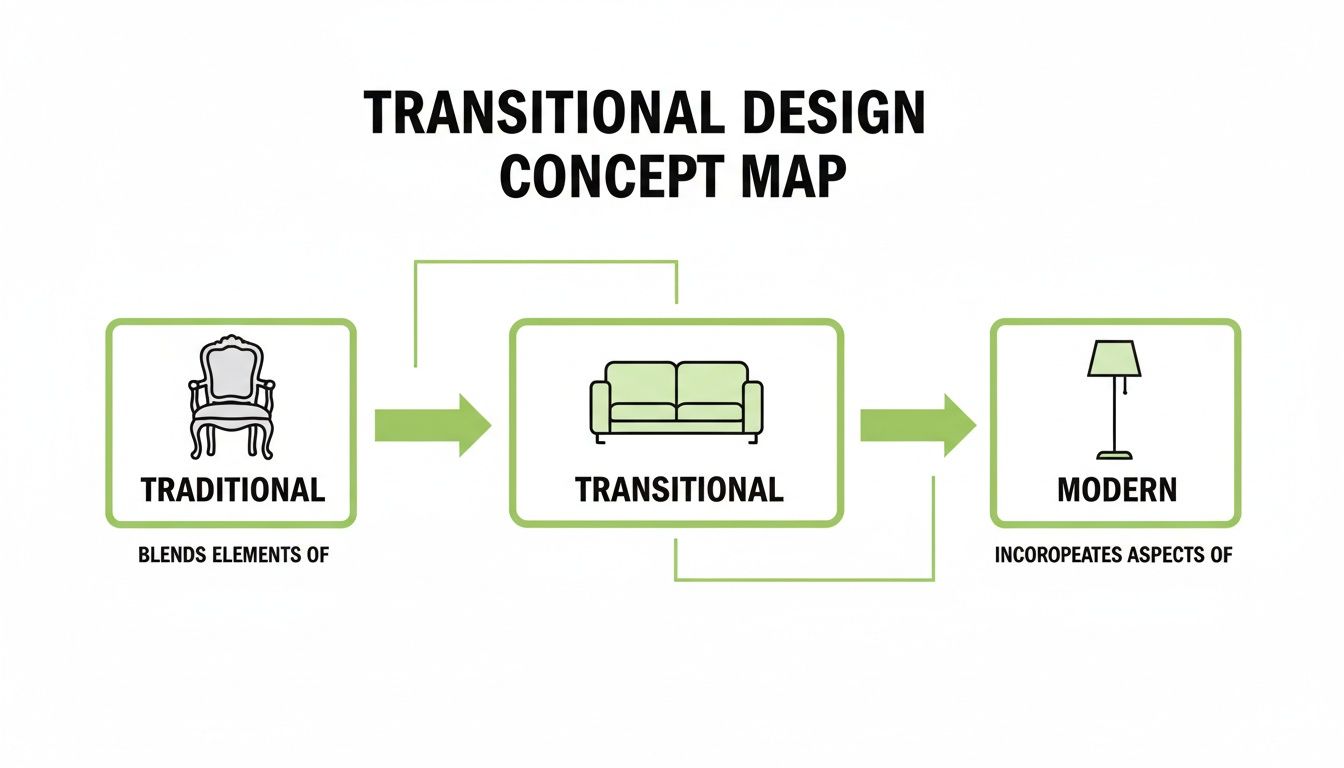
As you can see, the style is all about thoughtful selection. It borrows the best from both worlds to create spaces that feel deeply comfortable, effortlessly refined, and uniquely personal.
Graceful Furniture Silhouettes
Furniture is the anchor of any transitional room. The goal is to choose pieces that nod to classic forms while stripping away anything overly ornate or fussy. Imagine a traditional wingback chair reinterpreted with cleaner lines and simplified upholstery — that’s the essence of a transitional silhouette.
You’ll notice that furniture in this style often has a substantial, welcoming presence, yet still feels light and airy. The lines strike a harmonious balance between straight and curved, creating visual interest without overwhelming the space.
Sofas and Sectionals: Choose simple, elegant shapes with straight lines or gentle curves. Think track arms or a refined English roll arm — familiar silhouettes made more tailored and modern.
Accent Chairs: This is where you can introduce a bit of personality. An accent chair is the perfect opportunity to lean slightly more traditional or more modern to create a focal point. A classic armchair upholstered in a sleek, contemporary fabric is a perfect example.
Tables and Case Goods: Coffee tables, consoles, and side tables typically feature clean, geometric shapes and are often crafted from warm, natural materials that ground the room.
A Rich Mix of Materials
Transitional design truly comes alive through a sophisticated blend of materials. It’s not about committing to a single look — it’s about creating depth by layering different finishes and textures. This interplay is what keeps a neutral room from feeling flat and introduces a quiet sense of luxury.
You’ll often see a polished balance between organic and man‑made elements. Picture a rough‑hewn wooden coffee table paired with sleek metal accent chairs, or a cool marble‑topped console softened by warm wood tones.
The magic is in the mix. A transitional space feels curated and personal because it brings together diverse materials — like warm wood, cool metal, clear glass, and natural stone — in a way that feels intentional and balanced.
Sophisticated Neutral Color Palettes
Color acts as the canvas for a transitional room. The palette is almost always rooted in neutrals, creating a calm, cohesive backdrop for the furniture and textures to shine. But neutral doesn’t mean plain or predictable.
Transitional color schemes embrace a spectrum of soft, sophisticated hues:
-
Warm grays (greige)
-
Soft tans and beiges
-
Creamy off-whites
-
Deep charcoal and navy as accent tones
These colors cultivate a serene atmosphere that allows the room’s materials and silhouettes to take center stage. And while the base remains neutral, you can absolutely introduce moody accent colors — whether through a feature wall, artwork, or decor — to add depth without overwhelming the space.
The Crucial Role of Texture
If color is the canvas, then texture is the brushstroke that brings the entire composition to life. Because transitional design relies on a restrained palette and minimal patterning, texture becomes the driving force behind visual interest, warmth, and depth.
A true hallmark of this style is its embrace of atmospheric color and layered, tactile materials. With 75% of U.S. homeowners now viewing their homes as “recovery centers,” it’s no surprise there’s been a 40% rise in textured wall treatments like limewash since 2023. Designers are also leaning into luxurious textiles — think mohair, alpaca, and other plush fibers — to amplify comfort and create that inviting, touchable quality transitional spaces are known for. You can discover more insights in the 2026 interior design trends on Veranda.com.
How to Select Transitional Furniture
Getting the furniture right is arguably the most important part of achieving a true transitional look. These big‑ticket pieces are the anchors of the room — they set the tone, establish the mood, and create the foundation you’ll layer with textures, accessories, and all the thoughtful details that make a space feel like home.
You’re looking for hero pieces that feel both classic and current. It’s all about striking that perfect balance between the familiar comfort of traditional silhouettes and the clean, understated refinement of modern design.
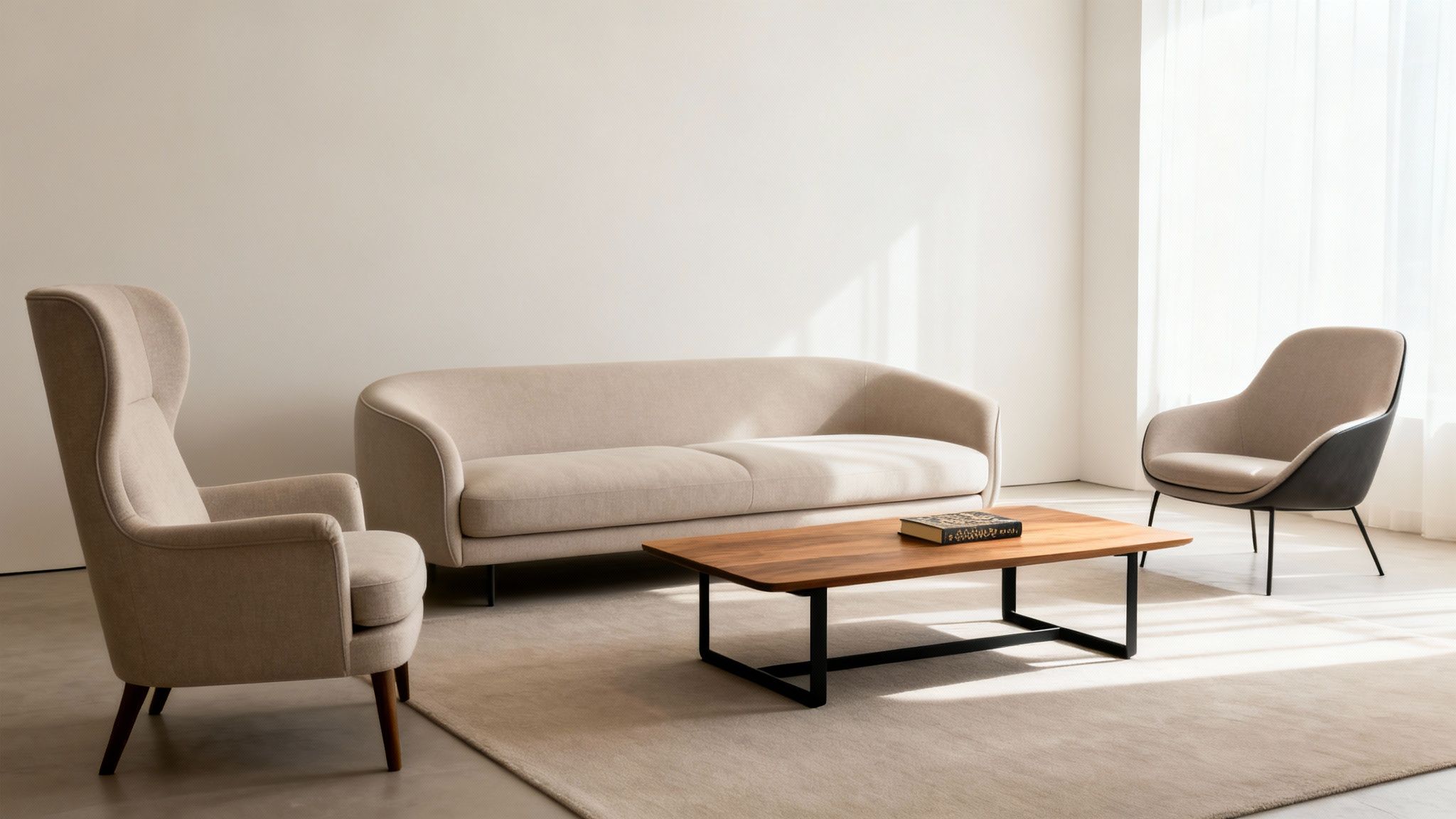
Think of your furniture as the main characters in your home’s story. Each piece should have its own identity, but they must work together to tell a cohesive narrative. A smart approach is to start with the largest, most dominant piece — almost always the sofa — and build the rest of the room outward from there.
The Sofa: The Heart of the Room
Let’s be honest — your sofa is the single biggest investment you’ll make in a transitional living room. It has to be just right. Look for a silhouette that blends gentle curves with clean, straight lines, striking that signature balance between traditional comfort and modern refinement.
Avoid anything overly ornate: heavily rolled arms, carved details, or dramatic skirting will pull the room too far into traditional territory. Instead, choose a beautifully tailored piece with simple track arms or a refined English roll arm. When it comes to upholstery, keep the palette neutral and let texture do the talking. Fabrics like linen, soft chenille, or a high‑quality performance weave in shades of beige, cream, or warm gray create a serene backdrop — giving you complete freedom to layer in color and pattern through pillows and throws.
Accent Chairs: Adding Personality
This is where the fun truly begins. Accent chairs are your opportunity to inject personality and lean into that curated transitional mix.
You can go slightly more traditional or slightly more modern here — the contrast is what makes the pairing with your sofa feel intentional and compelling. The key is balance.
Modern Sofa + Classic Chairs:
If your sofa is sleek and linear, pair it with armchairs that have a more classic silhouette. A streamlined wingback or a plush club chair adds warmth and dimension.
Classic Sofa + Modern Chairs:
If your sofa leans traditional with softer curves, introduce a chair with a sharp metal frame or a minimalist profile to bring in that modern counterpoint.
This deliberate mix‑and‑match approach is what makes transitional design feel so personal and collected. If you’re looking for more ideas on blending different styles, our comprehensive Your Essential Furniture Style Guide is a great place to start.
Pro Tip: Don’t shy away from mixing your materials. A sleek leather armchair can look stunning next to a soft, fabric‑covered sofa. That extra layer of textural contrast is exactly what transitional design thrives on.
Case Goods: The Finishing Touches
Last but not least, let’s talk case goods — the hardworking pieces like coffee tables, consoles, and side tables. These items ground the space and visually tie your seating arrangement together.
For a true transitional feel, look for pieces that combine materials. A warm wood coffee table paired with a sleek black metal base is a quintessential example. Keep the lines simple and uncluttered. You want pieces that prioritize function and form over ornate details. This blend — the natural warmth of wood against the cool, clean edge of metal — perfectly captures the balanced, sophisticated spirit of transitional design.
Bringing Transitional Design Into Your Home
Knowing the theory behind transitional design is one thing — bringing it to life in your own home is where the magic truly happens. To get a real feel for how this style works, let’s walk through how to apply its core principles in three of the most important rooms in your house.
By breaking it down room by room, you’ll start to see how this beautiful blend of old and new can transform your living room, dining room, and bedroom into the serene, sophisticated spaces you’ve been dreaming of.
Creating a Serene Living Room
The living room is the heart of the home, making it the perfect place to introduce your transitional style. The goal is to create a space that feels both deeply inviting and refreshingly uncluttered — a true harmony of comfort and clean aesthetics.
Start with the largest piece in the room: the sofa. Choose a simple, classic silhouette upholstered in a durable, neutral fabric like warm gray or soft beige. This becomes your anchor — the calm, grounding foundation for everything else.
From there, layer in contrasting elements that bring the room to life:
Coffee Table:
Balance the softness of the sofa with a minimalist coffee table. A warm wood top paired with a sleek black metal frame is a quintessential transitional combination.
Rug:
Ground the seating area with a rug featuring a subtle, updated traditional pattern. Think muted Oriental motifs or a classic trellis design in a quiet, neutral palette.
Textiles:
This is where you add depth and that irresistible “sink‑in” comfort. Incorporate textured pillows in linen, wool, or soft chenille. It’s also the perfect moment to introduce a moody accent color — deep navy or rich charcoal works beautifully.
Designing an Elegant Dining Room
A transitional dining room should feel elevated enough for a dinner party yet relaxed enough for Tuesday night takeout. The magic lies in blending functional simplicity with refined, thoughtful details.
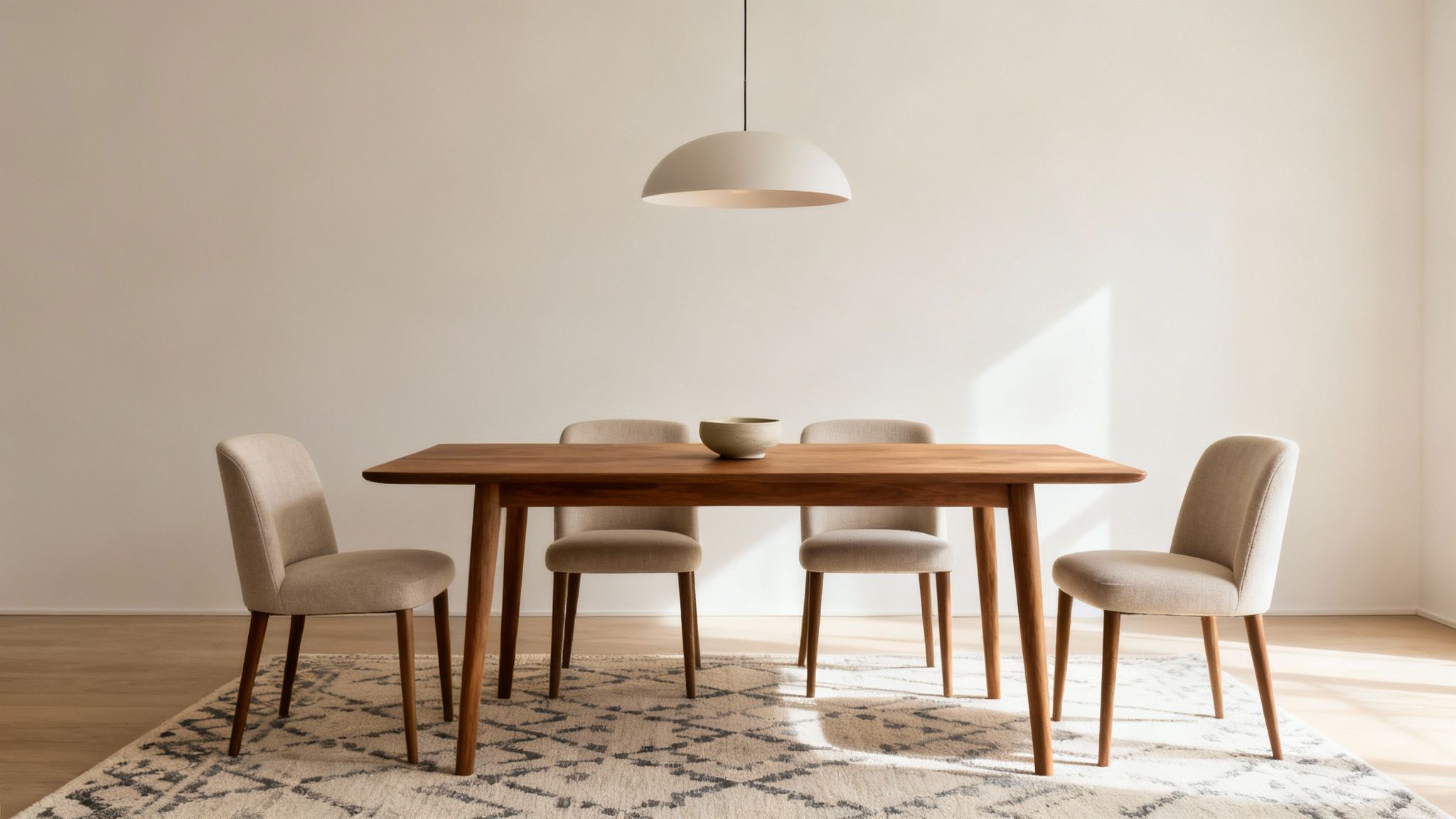
Start with the table — the true centerpiece. Choose a sturdy, clean‑lined wood design and let its natural warmth and quiet presence set the tone.
Next, soften the look by surrounding the table with fully upholstered dining chairs. A classic parsons silhouette covered in a modern, solid‑colored fabric strikes the perfect balance. This interplay between the table’s hard surface and the plush seating is what gives the room its signature transitional character.
Finish with modern lighting. A sleek metallic chandelier or a row of simple glass pendants adds a contemporary spark that contrasts beautifully with the room’s more traditional bones. It’s a simple formula, but it creates a dining space that feels both welcoming and distinctly polished.
The essence of a transitional dining room lies in the interplay between the organic warmth of a wood table and the refined comfort of upholstered seating, all illuminated by a distinctly modern light fixture.
Crafting a Tranquil Bedroom Retreat
Your bedroom is your sanctuary, and transitional style — with its emphasis on calm, comfort, and timelessness — is perfectly suited for creating a serene retreat.
Begin with a tufted headboard in a neutral fabric. It serves as a soft, traditional‑leaning focal point that instantly elevates the room.
Then introduce contrast. Pair that plush headboard with clean‑lined, modern nightstands and a simple dresser. Look for pieces with minimal hardware and straight legs to keep the space feeling open and airy.
Finally, layer the bed with high‑quality, luxurious bedding in shades of white, cream, or soft gray. This is where texture becomes essential — a linen duvet, a chunky knit throw, and a few velvet accent pillows create a tactile richness that feels indulgent without being overwhelming. Beyond personal comfort, understanding smart home staging tips can highlight how creating universally appealing spaces adds real value — a principle that aligns beautifully with the timeless nature of transitional design.
Choosing Accessories and Decor
Accessories are where you get to express your personality. Think of them as the jewelry of the room — the final layer that completes the look without overpowering it. The golden rule is simple: less is more. Instead of filling every surface with trinkets, choose a few meaningful, high‑impact pieces that tell a story.
This curated approach is essential. It keeps the space from feeling chaotic and preserves the calm, clean aesthetic you’ve worked so hard to build. Every accessory should feel intentional — whether it adds texture, a subtle metallic sheen, or an organic shape. A single sculptural vase with dramatic branches on a console table makes a far stronger, more confident statement than a dozen small objects.
Anchoring the Space with the Right Rug
A rug is more than an accessory — it’s the anchor that pulls the entire room together and defines your living or dining area. In a transitional space, the perfect rug is one that whispers rather than shouts. It’s your chance to introduce a subtle pattern and a nod to classic style without overwhelming the clean‑lined, modern furniture around it.
Look for rugs with updated traditional patterns, such as:
Faded Oriental or Persian Designs:
These carry the soul and character of an heirloom piece, but in muted, washed‑out tones that feel fresh and modern.
Simple Geometric Motifs:
Think classic trellis patterns or a soft pinstripe — always in a neutral palette that adds interest without creating visual noise.
Tone‑on‑Tone Textures:
A high‑low pile, where the pattern is carved directly into the rug, adds depth and a quietly luxurious feel underfoot.
The goal is to choose a rug that complements your neutral foundation while adding a gentle layer of pattern and texture. It’s the element that makes the space feel cohesive, grounded, and truly inviting.
A well‑chosen rug acts as the bridge between your furniture pieces. It defines the conversation area and provides a soft, textural foundation that makes the entire room feel more complete and thoughtfully designed.
Elevating Tabletops and Surfaces
Just like your larger décor, the accessories on your tabletops and shelves should strike a balance between beauty and function. This is especially true in the dining room. The right pieces can elevate even a simple weeknight meal into something special. For that signature transitional feel, pair handcrafted ceramic plates — the kind with a slightly organic, imperfect shape — with sleek, modern flatware in a clean, understated finish. That contrast between earthy and polished is exactly what transitional design celebrates.
For purely decorative items, focus on mixing materials to create quiet visual interest. A small stack of hardcover books on a coffee table, a simple marble tray to corral remotes on an ottoman, or a single metallic sculpture can add personality without feeling staged or cluttered.
And don’t forget to mix your metals. Pairing a brass lamp with a black metal picture frame or chrome accents isn’t a mistake — it’s a hallmark of transitional style. This layered approach to materials makes your home feel sophisticated, collected, and effortlessly lived‑in. These final, thoughtful touches are what complete the serene, balanced, deeply personal look you’re after.
Common Mistakes to Avoid
Trying to master transitional design can sometimes feel like walking a tightrope. Lean too far toward traditional, and the room feels dated. Lean too far toward modern, and it becomes cold and unwelcoming. Fortunately, the most common missteps are easy to avoid once you know what to look for.
The biggest mistake? Buying a perfectly matched set of furniture. Transitional design thrives on the art of the mix — blending pieces to create a space that feels curated over time, not purchased in one sweep from a showroom floor. Your first step toward getting it right is resisting the urge to buy the entire “set.”
Ignoring Scale and Proportion
One of the quickest ways to disrupt the harmony of a transitional room is by getting the scale wrong. This style is built on balance — and that absolutely includes the physical size and visual weight of your furniture. A massive, overstuffed sofa squeezed next to a delicate side table creates instant visual tension.
Before falling in love with a piece, pull out the tape measure. Note the dimensions of your room and your key anchor items. The goal is for everything to feel proportional to the space and to one another.
Do:
Pair a substantial piece, like a solid sofa, with something lighter and more open — such as a metal‑frame coffee table — to balance the visual weight.
Don’t:
Force a huge sectional into a small room or use tiny accent chairs that look like they’re being swallowed by a large media console.
Getting scale right is what creates that calm, uncluttered vibe transitional design is known for.
Playing It Too Safe with Lines
While transitional style favors clean lines, a room filled exclusively with straight, boxy shapes will fall flat. The real magic happens when you mix both straight and curved silhouettes.
It’s this subtle interplay of forms that gives a room its energy and sophistication. A rectangular dining table instantly feels more dynamic when paired with chairs that have soft, rounded backs. A clean‑lined sofa becomes more relaxed and inviting when balanced with a round coffee table or a circular mirror on the wall.
Key Takeaway: The idea isn’t to eliminate curves — it’s to simplify them. By thoughtfully blending the linear with the rounded, you create a room that feels both grounded and graceful. That’s the sweet spot.
Overlooking the Power of Texture
With its famously neutral color palette, transitional design relies heavily on texture to create depth and warmth. A common mistake is focusing so much on color and furniture shapes that you forget this essential layer — leaving the room beautiful, but a bit one‑dimensional.
Don’t hesitate to layer different materials. Picture a smooth leather armchair, a nubby wool throw, a polished marble tabletop, and a rustic linen pillow all coexisting in the same space. Each element adds a unique tactile quality that makes the room richer and more inviting. Without these layers, the design can feel cold, flat, and unfinished.
Ready to bring your transitional vision to life? At Fluent Trends, we curate a refined selection of designer‑approved sofas, accent chairs, rugs, and décor that embody the perfect balance of timeless elegance and modern simplicity. Each piece is chosen to help you build a home that feels serene, sophisticated, and beautifully personal.
Explore our collections today and start creating the transitional space you’ve been dreaming of.
The Bio: Yuatinia Leak, owner and creative director of Fluent Trends, is a luxury home and lifestyle brand dedicated to elevating everyday living through thoughtful design. With a refined eye for balance, texture, and timeless style, she blends classic influences with modern sensibilities to create interiors that feel both sophisticated and deeply livable. Her work is rooted in quality, clarity, and intentionality — values that guide every product, editorial, and design insight she shares.