

What Makes Furniture Heirloom Quality? 2026 Guide
Yuatinia LeakTable of Contents
- What Heirloom Quality Really Means in 2026
- How to Spot High Quality Furniture Construction Like a Pro
- Durable Furniture for Daily Use: Built to Last Furniture and Durability
- Sustainable Furniture Materials Guide: Organic Cotton, OEKO-Tex, and More
- Traditional Joinery Techniques That Define Heirloom Pieces
- Solid Wood vs. Engineered Materials: The Longevity Showdown
- Fast Furniture vs. Heirloom Furniture: Two Different Worlds
- The Role of Hand-Craftsmanship and Artisan Techniques
- Investment Value and Legacy: Why Heirloom Quality Pays Off
- Conclusion
- Frequently Asked Questions
Last Updated: September 28, 2026
What Heirloom Quality Really Means in 2026
Heirloom quality describes furniture built with solid materials, real joinery, and finishes that survive decades of daily use. It is a promise of longevity, not a label. This guide from Fluent Trends walks you through what makes furniture heirloom quality, so you can judge a piece before you buy it.
Most shoppers never learn this.
Here is the honest test. An heirloom piece can be repaired, refinished, and passed down. A fast-furniture piece gets replaced. That single difference decides everything else. We break down the exact signals to check. We also cover restoration, sustainability, and material testing.
How to Spot High Quality Furniture Construction Like a Pro
Spotting high quality furniture construction comes down to three checks. These are joinery type, material solidity, and finish quality. Run your hand along a drawer edge. Look underneath. Ask what holds the frame together.
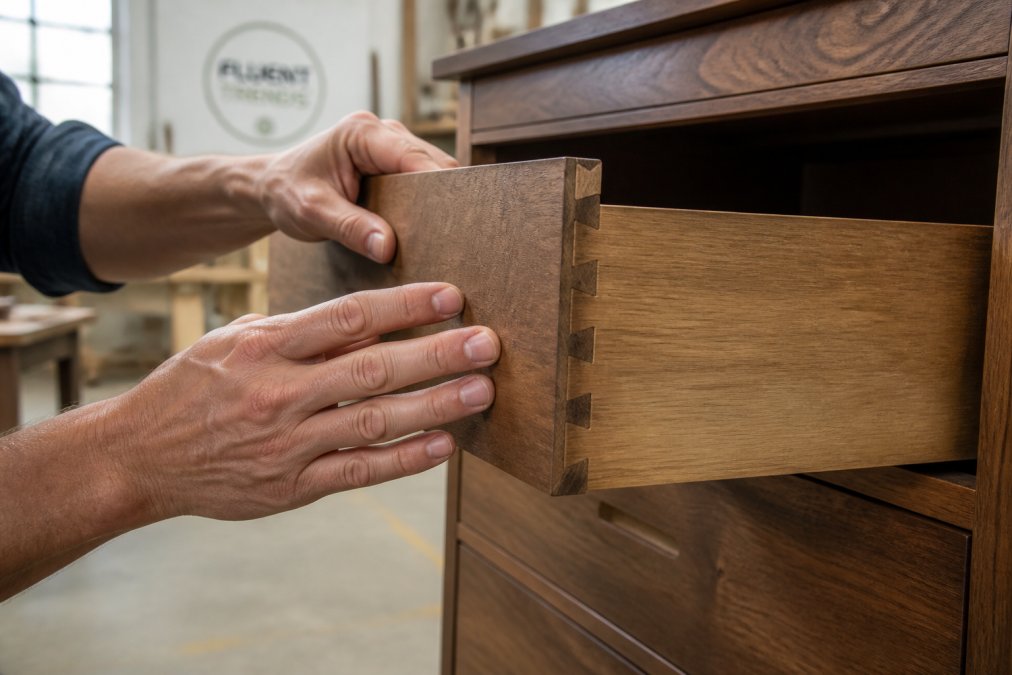
Start with weight. Solid hardwood feels dense when you lift a corner. Particleboard feels hollow and light. Then flip the piece over and inspect the underside. Makers hide their shortcuts there. A common mistake is judging only the visible surface. The truth lives in the joints.

Joinery: The Hidden Language of Fine Furniture
Dovetail joints and mortise and tenon joints signal real craftsmanship. Dovetails interlock like puzzle pieces. They resist pulling apart for generations. Mortise and tenon joints anchor legs and rails with a fitted peg or wedge. Screws and staples tell a different story. They mean quick assembly and a short life.
Pegged joints add another layer of honesty. You can see the peg. You can tap it back in. You can re-glue it decades later. That is furniture restoration made simple.
The Authentication Checklist Every Buyer Needs
Use this checklist before you commit to any piece:
- Drawers use dovetail joints, not staples or plastic runners
- Frame corners show mortise and tenon or dowel construction
- Wood is solid hardwood, not veneer over particleboard
- Finish feels smooth and even, with no cloudy patches
- Piece carries a maker's mark, tag, or documented origin
- Replacement parts or refinishing guidance are available
- Weight matches the material claim
Durable Furniture for Daily Use: Built to Last Furniture and Durability
Durable furniture for daily use balances material strength with smart design. Kiln-dried solid hardwood resists warping and cracking. A quality finish protects the surface from spills and sunlight. Structural integrity comes from how the piece is assembled. It is not about how thick the top looks.
Built to last furniture also accounts for real life. This includes kids, pets, moves, and years of sunlight through a window. That is why material quality matters more than trend. A sturdy frame with replaceable hardware outlives any seasonal style.
Material Science Testing: What to Look For
Material science testing examines how wood behaves under stress, moisture, and time. Kiln-dried lumber is heated to a controlled moisture level. This prevents warping and cracking that ruins cheap pieces. Dense hardwoods like mahogany and sheesham hold their shape far better than soft options.
Here is what most guides skip. Wood never stops moving. It expands and contracts with every humidity swing. A tabletop can shift a quarter inch across its width. This happens between summer and winter. That movement is normal. The question is whether the piece was built to allow it.
A well-made frame uses floating panels and oversized mortises. These give wood room to breathe without splitting. A cheap frame pins every board tight. The wood has nowhere to go. So it cracks.
Finish matters too. A penetrating oil soaks into the grain and moves with the wood. A thick polyurethane shell sits on top. It can crack as the wood shifts underneath. Both have trade-offs. Oil needs reapplication every year or two. Polyurethane wipes clean but can chip at the edges.
Ask these questions when you inspect a piece:
- Was the wood kiln-dried to a stable moisture content?
- Does the frame allow for seasonal wood movement?
- Is the finish a penetrating oil, lacquer, or a thin spray?
- Does the hardware use metal glides or plastic?
- Are load limits published for drawers and frames?
Repairability and Restoration: The Long Game
Repairability separates an investment piece from a disposable one. A solid wood frame can be re-glued, sanded, and refinished. A veneered panel often cannot. Wood slide glides and dovetail drawers can be adjusted by hand for decades. Plastic runners snap and cannot be sourced again.
Here is the part nobody talks about. The adhesive matters as much as the joint. Traditional hide glue is reversible with heat and moisture. A restorer can open a joint, clean it, and re-glue it fifty years later. Modern epoxy and polyurethane adhesives form a permanent bond. They are stronger. However, they make future repair nearly impossible.
That is why some high-end makers still use hide glue on joints that might need service. It is not nostalgia. It is planning for the next generation of owners.
Furniture restoration is not a niche hobby. It is the reason a well-made chest stays in a family for three generations. It does not get replaced after three moves.
Sustainable Furniture Materials Guide: Organic Cotton, OEKO-Tex, and More
A sustainable furniture materials guide starts with one question. Where did this come from? Sustainably sourced wood, organic cotton, and OEKO-Tex certified textiles all point to lower environmental impact. They also tend to last longer. Better fiber and better wood simply wear better.
Textiles deserve the same scrutiny as wood. Milk and casein fiber blends offer a soft, breathable hand feel. Portugal-woven bedding is known for tight, durable weaving that holds up to repeated washing. Hypoallergenic options matter for households with sensitive skin, and OEKO-Tex certification confirms a fabric has been tested for harmful substances (OEKO-TEX® STANDARD 100). Look for organic cotton where softness and breathability matter most.
Environmental Impact and Why It Matters
Traditional, low-waste production methods reduce environmental impact. Mass production cannot match these methods. Small-batch artisans cut to order, reuse offcuts, and finish by hand. They do not run energy-heavy production lines. That approach also preserves craft heritage. It supports fair wages for makers.
Buying one durable piece instead of five disposable ones is the simplest environmental decision.
Black Solid Wood King Bedroom Set →
Traditional Joinery Techniques That Define Heirloom Pieces
Traditional joinery techniques are the backbone of heirloom status. Dovetail joints, mortise and tenon, and pegged joints have survived centuries. They work without glue alone. Each technique distributes weight and stress across the wood itself. This is why these pieces hold up under daily use.
But here is what most articles miss. The real genius of traditional joinery is not strength. It is how these joints handle wood movement over time.
Why Wood Movement Matters More Than You Think
Wood expands across the grain when humidity rises. It shrinks when the air dries out. A board can move a quarter inch or more across its width. This happens between seasons. If a joint locks that board in place, the wood will crack. If the joint allows movement, the piece survives.
Dovetails solve this problem elegantly. The angled pins and tails interlock across the grain. They hold tight against pulling forces. They allow the wood to shift slightly side to side. That is why a well-made dovetail drawer still opens smoothly. This happens after fifty years of summer and winter.
Mortise and tenon joints work differently. The tenon fits into a rectangular hole called a mortise. A peg or wedge locks it in place. The joint is strong against twisting and racking forces. But the peg can be tapped out. The joint can be cleaned. The whole thing can be re-glued. That is restoration made possible by design.
The Restoration Advantage
This is the angle most buying guides skip entirely. Traditional joinery is not just about how a piece is built. It is about how it can be rebuilt.
Hide glue is the traditional adhesive for these joints. It is strong, but it is also reversible. A restorer applies heat and moisture. The joint opens cleanly. Modern epoxy and polyurethane glues form permanent bonds. They are harder to reverse without damaging the wood.
That is why some makers still use hide glue on joints that might need service. It is not nostalgia. It is planning for the next generation of owners.
A pegged mortise and tenon joint is the clearest example. You can see the peg. You can tap it out. You can clean the joint and re-glue it. Try that with a stapled corner. Or a screw driven into particleboard.
What to Look For in the Showroom
Flip the piece over. Look at the corners and the drawer sides. Here is what separates real joinery from assembly:
- Dovetail joints have angled interlocking pins and tails
- Mortise and tenon joints show a fitted peg or wedge
- Drawer bottoms float in a groove instead of being stapled
- Frame corners are joined with wood, not metal brackets
- No staples, no plastic corner blocks, no screws holding structural parts
Hand-crafted joinery also allows for movement. Wood expands and contracts with humidity. A well-fitted joint gives it room to breathe. Staples and screws do not.
Solid Wood vs. Engineered Materials: The Longevity Showdown
Solid wood wins on longevity, repairability, and value over time. Engineered materials win on price. They also win on stability in humid rooms. Neither is automatically bad. They serve different purposes. Knowing which one you are buying changes everything.
| Factor | Solid Hardwood | Engineered Materials |
|---|---|---|
| Lifespan | Decades, often generations | 5-10 years typical |
| Repairability | Can be sanded and refinished | Usually replaced, not repaired |
| Weight and feel | Dense, substantial | Light, hollow |
| Moisture behavior | Stable when kiln-dried | Can swell at edges |
| Best for | Heirloom pieces, daily use | Budget, temporary setups |
Solid hardwood is the better long-term buy. Engineered boards make sense for a rental. Or for a short-term fix. The mistake is paying solid wood prices for an engineered piece.
Fast Furniture vs. Heirloom Furniture: Two Different Worlds
Fast furniture is designed for a season. Heirloom furniture is designed for a lifetime. Flat-pack pieces use staples, plastic glides, and veneer. These methods are cheap and fast. Heirloom pieces use solid hardwood, real joinery, and finishes. These finishes age into a warm patina instead of peeling.
That patina is not damage. It is proof the piece has lived. A time-honored design also stays relevant. Clean lines and honest materials never really go out of style.
The Role of Hand-Craftsmanship and Artisan Techniques
Hand-craftsmanship shows up in the details you cannot fake. Slight variations in wood grain. A hand-rubbed finish. A joint fitted by eye. An artisan works with the material instead of forcing it. This is why bespoke pieces carry a presence that factory output cannot copy.
Boucle furniture and bone inlay furniture are good examples. Both rely on patient, hand-driven processes. The texture, the pattern, and the small imperfections all point back to a human maker. That is the difference between furniture construction and furniture assembly.
Investment Value and Legacy: Why Heirloom Quality Pays Off
Heirloom quality pays off because you buy it once. A well-made piece costs more upfront. It costs far less over thirty years. This is because it never needs replacing. It also holds resale value. It can be restored rather than discarded.
The real return is legacy. A family treasure carries memory along with material. Every scratch and repair becomes part of the story. That is something no flat-pack piece can offer.
Conclusion
Choosing heirloom quality means slowing down. It means asking harder questions about wood, joinery, and origin. That is exactly where Fluent Trends fits. Our collection focuses on sustainably sourced materials. We offer ethically made pieces and handcrafted details. These hold up to daily life. Explore our durable furniture for daily use. See what real craftsmanship looks like. Shop Now and invest in furniture built to be passed down.
Frequently Asked Questions
What specific construction techniques define heirloom quality?
Dovetail joints, mortise and tenon joinery, and pegged joints are the gold standard. These techniques create mechanical locks that hold for decades without glue or screws. Look for solid hardwood, kiln-dried lumber, and hand-finished surfaces. Pieces made this way develop a patina over time and can be repaired rather than replaced.
How does solid wood compare to engineered materials for longevity?
Solid hardwood lasts generations and can be sanded and refinished multiple times. Engineered materials like MDF or particle board break down when exposed to moisture and cannot be repaired. Solid wood may cost more upfront, but its lifespan makes it a better investment. You will not need to replace it in five years.
Can modern furniture pieces truly become heirlooms?
Yes, if they are made with traditional joinery, solid hardwoods, and quality finishes. Modern artisans blend time-honored techniques with contemporary designs. The key is construction quality, not age. A well-built piece from 2026 can become a family treasure if it is cared for and repairable.
How do you distinguish between mass-produced and artisan-made furniture?
Check for irregular wood grain patterns, visible joinery, and slight variations between pieces. Mass-produced items look identical and often use veneers over particle board. Artisan pieces show the maker's hand, use sustainably sourced materials, and often come with documentation about the craftsperson and origin.