

Why Handmade Goods Support Cultural Heritage
Yuatinia LeakTable of Contents
- Handmade Goods as Living Cultural Identity
- Generational Knowledge and the Art of Skill Transmission
- The Real Benefits of Buying Artisan Products
- How to Identify Authentic Handcrafted Goods
- Globalization, Cultural Appropriation, and the Stakes for Artisans
- Digital Preservation: Protecting Craft Techniques for the Future
- Policy, Institutional Support, and Conscious Consumerism
- Frequently Asked Questions
Last Updated: August 22, 2026
Handmade Goods as Living Cultural Identity
Handmade goods are not simply objects. They are living records of who a people are, where they come from, and what they value. At Fluent Trends, we believe that every woven textile, carved vessel, and hand-stitched garment carries a cultural fingerprint that no algorithm can replicate.

Cultural identity is encoded in craft. The patterns a Ghanaian carver etches into Sese wood are not decorative choices made arbitrarily. They reflect ancestral wisdom, community relationships, and a visual language passed down across generations. When that craft disappears, so does the story it tells.
The connection between handmade goods and cultural identity runs deeper than aesthetics. Traditional techniques are what anthropologists call material culture: the physical expression of values, beliefs, and social structures. A hand-woven textile is not just fabric. It is a record of the weaver's community, their environment, and the knowledge systems that shaped them.
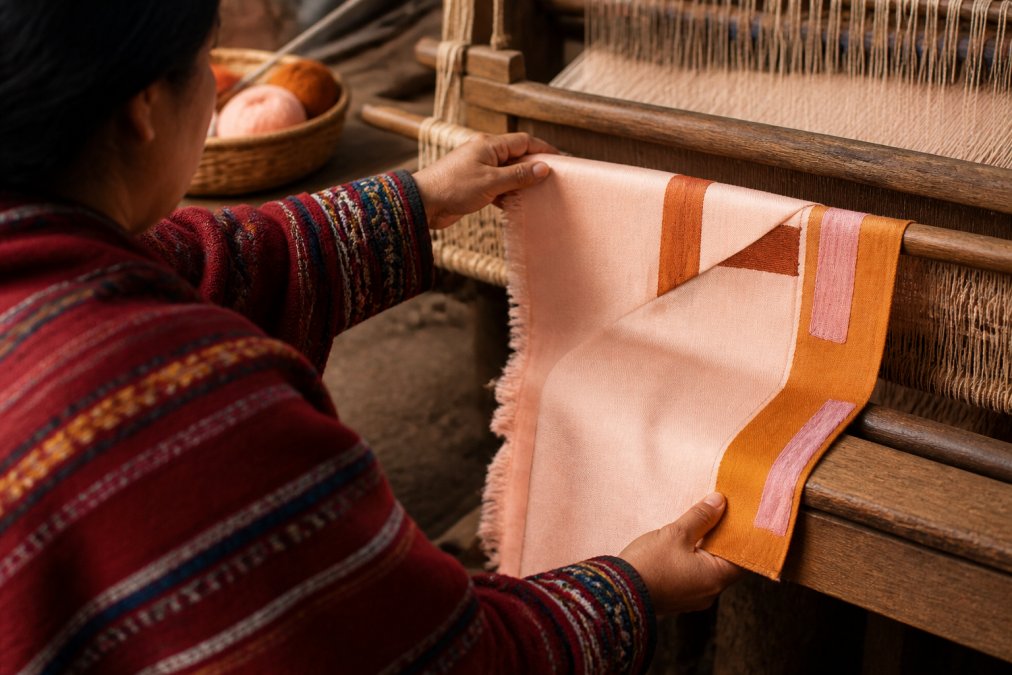
The stakes are real. When mass production floods a market with imitations, local artisans lose the economic footing that makes their practice viable. The craft does not retire gracefully. It simply stops being taught.
Generational Knowledge and the Art of Skill Transmission
Most traditional craft skills are not written down. They live in the hands of a master and are transferred through years of close observation, repetition, and mentorship. This is what the UNESCO Intangible Cultural Heritage program defines as intangible cultural heritage: knowledge and practices that exist in living human beings rather than in texts or artifacts.
Skill transmission is fragile. It requires proximity, patience, and sustained economic incentive. When a craft cannot support a livelihood, the next generation walks away. The knowledge does not transfer. It dissolves.
Generational knowledge in craft is irreplaceable in a specific way. You cannot reconstruct a traditional dyeing technique from a photograph. You cannot learn hand-embroidery from a diagram alone. The nuance lives in the doing, and it only survives if someone is paid to keep doing it.
Why Intangible Cultural Heritage Disappears Without Demand
Intangible cultural heritage disappears when the market stops valuing it. The mechanism is straightforward and brutal.
Without buyers, artisans cannot sustain their practice. Without practicing artisans, apprentices have no one to learn from. Within a single generation, a technique that took centuries to develop can become extinct. Communities lose not just an income source but a core expression of their cultural roots.
Consumer demand is, in this sense, a conservation tool. Choosing authentic handcrafted goods over mass-produced substitutes creates the economic conditions that keep traditional techniques alive. This is not sentiment. It is the practical reality of how cultural legacy survives in a market economy.
The Real Benefits of Buying Artisan Products
The benefits of buying artisan products extend well beyond the object itself. Authentic handcrafted goods offer qualities that factory production structurally cannot: individual variation, material integrity, and embedded cultural significance.
Each piece reflects the judgment of a skilled maker working with natural materials. That judgment produces objects that wear differently, age better, and carry a provenance that mass production erases entirely. Many conscious consumers report that artisan pieces become more meaningful over time, not less, precisely because they bear the marks of their making.
Economic Viability and Community Development
Economic viability is the foundation that everything else rests on. Without it, craft heritage collapses regardless of its cultural significance.
When artisans earn fair wages for their work, the socio-economic impact radiates outward. Families stabilize. Children attend school. Community infrastructure improves. A place-based economy develops around the craft cluster, drawing in related trades and tourism. The economic benefits of buying artisan products are not abstract. They are measurable at the household and community level.
Ethical sourcing practices that prioritize fair wages also tend to produce better goods. Artisans who are not under pressure to cut costs use better materials, take more time, and apply higher craftsmanship standards. The quality you receive is a direct function of the economic dignity extended to the maker.
| Buying Choice | Cultural Impact | Economic Impact | Environmental Impact |
|---|---|---|---|
| Authentic handcrafted goods | Preserves intangible heritage | Supports local artisan income | Low-waste, natural materials |
| Mass-produced imitation | Erodes craft traditions | Extracts value from communities | High industrial footprint |
| Ethically sourced artisan goods | Funds skill transmission | Builds place-based economy | Sustainable production methods |
Environmental Cost: Handmade vs. Mass Production
The environmental cost of mass production is significant and largely invisible to the end consumer. Factory goods typically involve synthetic dyes, petroleum-based materials, high-energy manufacturing, and long-distance supply chains with opaque environmental records.
Traditional handmade goods operate on a different logic entirely. Natural materials like organic cotton, wool, jute, and linen are renewable, biodegradable, and often locally sourced. Traditional dyeing techniques use plant-based pigments with minimal chemical runoff. The production process itself is low-energy and low-waste by design.
According to the Ellen MacArthur Foundation's circular economy research, traditional craft production models align closely with circular economy principles, creating minimal waste and prioritizing material longevity. Handmade goods are built to last decades. Mass-produced alternatives are often not.
How to Identify Authentic Handcrafted Goods
Authentic handcrafted goods are identifiable by specific physical and documentary markers. The most reliable approach combines visual inspection with supply chain verification.
Physically, look for these characteristics:
- Slight irregularities in pattern, texture, or dimension. Perfection signals machine production. Natural variation signals human hands.
- Material quality consistent with the claimed origin. Hand-woven wool has a distinct texture. Organic cotton has a specific weight and breathability.
- Maker attribution. Authentic goods can typically be traced to a named artisan, workshop, or cooperative.
- Craft-specific construction details. A hand-embroidered piece will show consistent stitch depth but not mechanical uniformity. A hand-carved object will carry tool marks visible under close inspection.
- Provenance documentation. Reputable sellers provide information about the maker's location, the materials used, and the technique employed.
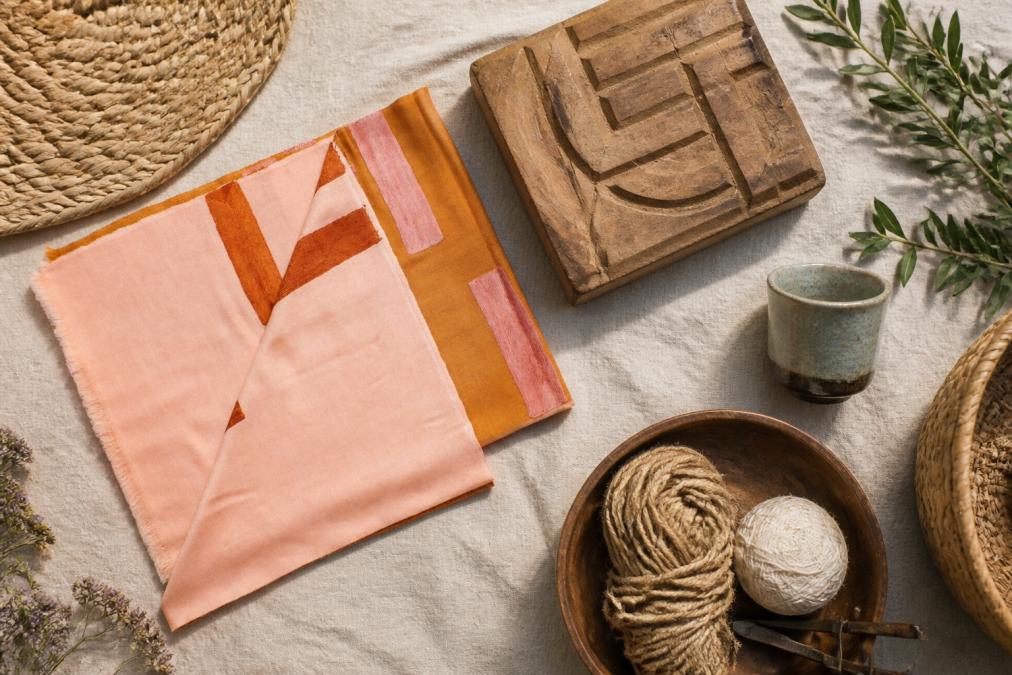
A common mistake is conflating "handmade" with "handmade in the style of." Many mass-produced goods use traditional motifs without any connection to the culture that originated them. That distinction matters enormously, both ethically and in terms of quality.

Supply Chain Transparency and Provenance Verification
Supply chain transparency is the single most important factor in verifying authentic heritage goods. A credible seller can tell you exactly where a piece was made, by whom, and under what conditions.
Provenance verification means more than a country of origin label. It means knowing which artisan community produced the piece, what cooperative or fair-trade organization they work with, and whether the pricing reflects fair wages at every stage of production.
Ask specific questions. A trustworthy brand will answer them. Vague language about "global artisans" or "traditional methods" without specifics is a warning sign. Authentic storytelling has names, places, and details attached to it.
The Fair Trade Federation's sourcing standards provide a useful benchmark for evaluating ethical sourcing claims. Look for third-party verification, not just self-reported commitments.
Globalization, Cultural Appropriation, and the Stakes for Artisans
Globalization has opened global market access for artisans in ways that were unimaginable a generation ago. It has also created conditions where cultural artifacts are extracted, replicated, and sold without any benefit flowing back to the communities that created them.
Cultural appropriation in craft is a specific harm. It occurs when a design, motif, or technique is taken from its indigenous context, mass-produced elsewhere, and sold at a price point that undercuts the original makers. The result is that the very communities whose cultural heritage gave the design its value are economically displaced by it.
This is not a theoretical concern. Many traditional weaving patterns, ceramic designs, and textile motifs are now produced at scale in factories with no connection to their cultural origins. The authentic makers cannot compete on price. They can only compete on authenticity, and that requires consumers who know the difference.
Supporting artisans directly, through platforms with verified supply chains, is the most effective counter to this dynamic. It creates economic conditions where authentic craftsmanship remains viable against the pressure of cheap imitation.
Digital Preservation: Protecting Craft Techniques for the Future
Digital preservation of craft techniques is an emerging and critical field. Video documentation, digital pattern archives, and online knowledge repositories are now being used to capture techniques that might otherwise be lost when a master artisan retires or passes away.
This is not a replacement for living skill transmission. A video cannot teach the tactile judgment that separates a master weaver from a novice. But digital archives serve as a crucial backup, a reference point for communities attempting to revive a craft after a period of disruption.
Organizations working in this space are creating searchable libraries of traditional techniques, complete with material specifications, tool descriptions, and step-by-step process documentation. The Smithsonian Center for Folklife and Cultural Heritage maintains extensive digital resources on traditional American craft practices, offering a model for how institutional support can sustain cultural knowledge across generations.
Digital tools also expand global market access for artisans. E-commerce platforms allow a cooperative in Kashmir or a carving cluster in Ghana to reach buyers directly, without intermediaries who capture most of the economic value. This direct connection is transformative for economic viability.
Policy, Institutional Support, and Conscious Consumerism
Policy and institutional support play a significant role in whether traditional craft communities survive economic disruption. In the United States, the National Endowment for the Arts funds heritage craft programs that support skill transmission and community development. At the international level, UNESCO's intangible cultural heritage conventions provide frameworks that member states use to identify and protect endangered craft traditions.
But policy alone cannot sustain a craft. Conscious consumerism is the market mechanism that makes institutional support meaningful. When buyers actively seek authentic handmade goods, they create the demand signal that justifies continued investment in artisan communities.
Conscious consumerism in this context means making purchasing decisions with full awareness of their downstream effects. It means choosing a hand-woven bedspread over a machine-made alternative, not just because it is beautiful, but because that choice funds a master weaver's livelihood and keeps a centuries-old technique in active practice.
The most effective form of cultural preservation is economic. When handmade goods command fair prices in the market, artisans thrive. When artisans thrive, they teach. When they teach, the knowledge survives.
Preserving cultural heritage through craft is not a passive act. It requires deliberate choices at the point of purchase. At Fluent Trends, every piece in the Artisan Collection is sourced from verified makers whose techniques represent living cultural traditions. The Canyon Hand Embroidered Hand Woven Merino Silk Scarf connects directly to heritage artisan clusters in the valleys of Kashmir. The Adu Planter and Adu Plant Stand are hand-carved in Ghana using traditional Sese wood and Ghanaian staining techniques. The Mool Handwoven Artisanal Bedspread is woven by master weavers in India using organic cotton and earth-based dyes. Each purchase funds fair wages, supports women-owned businesses, and keeps ancestral knowledge in active practice. Shop the Fluent Trends Artisan Collection and invest in objects that mean something.

Frequently Asked Questions
Why are handmade goods important to cultural identity?
Handmade goods carry the ancestral wisdom, material culture, and visual language of the communities that produce them. Each piece reflects place-based traditions that cannot be replicated by machines. When those objects circulate in the world, they tell stories about who made them and where they came from. Buying them keeps that cultural identity visible and economically viable, giving artisans a reason to continue practicing techniques that might otherwise disappear within a generation.
What are the main benefits of buying artisan products over mass-produced alternatives?
The benefits of buying artisan products extend well beyond aesthetics. Handcrafted goods support fair wages for local artisans, reduce the environmental cost associated with industrial manufacturing, and preserve intangible cultural heritage. They are typically made from natural, low-waste materials and built to last far longer than mass-produced equivalents. For the buyer, each piece offers genuine provenance and authentic storytelling, qualities that no factory line can replicate.
How can I verify that a handcrafted product is genuinely authentic?
Start by researching the maker's provenance: where the artisan is based, which traditional techniques they use, and whether the brand provides supply chain transparency. Look for certifications from recognized bodies such as the World Fair Trade Organization or Fair Trade USA. Authentic handcrafted goods often show slight natural variations in texture, color, or finish. Ask the retailer directly about maker relationships and ethical sourcing practices. Brands that share maker stories and workshop locations are generally more credible.
How does purchasing handmade goods help preserve traditional craftsmanship?
Every purchase creates direct economic demand for a skill. When local artisans earn sustainable incomes from their craft, they have both the means and the motivation to train the next generation. Heritage crafts survive through active practice, not museum display. Consumer demand funds workshops, sustains communities, and signals to younger artisans that traditional techniques hold real market value. Without that signal, generational knowledge transfer stalls and irreplaceable skills are lost permanently.
This article was written using GrandRanker