

Master women's fashion: Build a Capsule Wardrobe and Flaunt Your Body Shape
Donna MaloneAt its heart, women's fashion is a form of self-expression. It’s about so much more than just keeping up with what’s new; it’s about telling your own story through the clothes you wear and the way you put them together. The right outfit can genuinely make you feel like the most confident version of yourself, ready for anything the day throws at you.
Finding Your Personal Style in Women's Fashion

Pinpointing your personal style is the single most important step in building a wardrobe you love. Think of it as your North Star, guiding you through the endless options in women's fashion to find pieces that feel authentic to you. Instead of getting sidetracked by every fleeting fad, a defined personal style helps you zero in on the shapes, colors, and fabrics that make you feel truly comfortable and powerful.
Fashion isn’t a list of rigid rules—it’s a language. Every single day, your outfit communicates something about who you are and what you're about. In this guide, we'll look past the temporary trends and get down to the essentials of creating a lasting style, turning the often-dreaded task of getting dressed into something you actually look forward to.
Why Personal Style Matters More Than Trends
Trends will always come and go, but a genuine sense of personal style is forever. It’s what allows you to build a closet where every piece seems to work together seamlessly. Getting this right brings some pretty amazing benefits:
-
Confident Decision-Making: You’ll instantly know what works for you, making shopping trips less overwhelming and far more productive.
-
Sustainable Habits: When you invest in pieces you genuinely adore, you're much less likely to get caught up in the wasteful cycle of fast fashion.
-
Authentic Self-Expression: Your clothes start to feel like a real reflection of your personality, not just a copy of what you saw in a magazine.
This is all about curating a look that’s both deeply personal and genuinely practical. To see how you can weave current looks into your signature style, check out our guide on the latest clothing styles for women.
The goal is to create a wardrobe that works for your real life, not just for a specific season. It’s about building a collection of clothes that you can rely on to feel polished and put-together, no matter the occasion.
The Impact of Women's Fashion
The world of women's fashion is more than just clothes; it’s a massive cultural and economic powerhouse. The global women's apparel market is a huge part of the industry, valued at around $930 billion and expected to clear the $1 trillion mark by 2027. Those numbers just go to show how much of a driver it is for the entire apparel industry.
As you start to refine your own style, tools like virtual dressing room technology can be incredibly helpful. They let you see how different silhouettes might work for your body before you even think about buying. Ultimately, this guide is here to give you the confidence to make choices that are smart, stylish, and sustainable.
How to Build a Capsule Wardrobe That Works for You
When you hear "capsule wardrobe," you might picture a painfully minimalist closet filled with nothing but beige. But that’s not what this is about. Think of it less like a rulebook and more like a secret weapon for your style—a tightly edited collection of versatile, high-quality pieces you absolutely love to wear.
The whole point is to finally ditch that "closet full of clothes, nothing to wear" feeling. By focusing on quality over quantity, you create a foundation of items that mix and match effortlessly. It’s about building a personal “uniform” that feels uniquely you, just simplified.
The Core Philosophy: Less Is More
At its heart, creating a capsule wardrobe is just a more mindful way to think about your clothes. You stop buying things just to buy them and start investing in pieces that actually serve you and make you feel good. It’s a small shift that can have a huge impact, leading to smarter shopping and a real appreciation for well-made things.
The first step is always a candid look at your closet and your life. What do you really need for work, your weekends, and nights out? What are the pieces you grab over and over again? Be honest about what’s just collecting dust. This closet audit is the starting line for building a collection that truly works.
A great capsule wardrobe isn't about having the fewest clothes possible. It's about getting the maximum number of outfits from a minimal collection of pieces. Every single item needs to pull its weight.
When every piece is versatile, your styling options explode. That classic white shirt isn't just one thing; it's a dozen. Pair it with a blazer and trousers for a big meeting, then switch to jeans and sneakers for the weekend. This is where the magic happens.
Step 1: Identify Your Foundational Neutrals
Every functional wardrobe is built on a solid base of neutral colors. This doesn’t just mean black and white. Think about rich navy, warm camel, soft cream, or even deep olive. The trick is to pick 3-4 core neutrals that look amazing on you and play well together. These will be the colors of your most important pieces—your coats, trousers, and go-to sweaters.
Once that foundation is set, you can bring in some personality with accent colors.
-
Choose 2-3 accent colors that you love. These are the fun pops of color for your blouses, scarves, or that statement bag you’ve been eyeing.
-
Think about your daily life. A corporate job might call for classic neutrals like navy and charcoal. If you have a more relaxed, creative lifestyle, you might build your base around denim, khaki, and cream.
This curated color story is what makes getting dressed so easy. Suddenly, almost everything in your closet works together, multiplying your outfit combinations without adding any clutter. To dive deeper into creating your perfect collection, check out this fantastic guide on how to build a capsule wardrobe.
Step 2: Select Your Timeless Pieces
With your color palette locked in, it’s time for the fun part: choosing the actual clothes. These are the timeless, high-quality workhorses of your wardrobe that will look just as good in five years as they do today. They're the pieces worth investing a little extra in because they’ll form the backbone of countless outfits. What you choose is deeply personal, but there are a few foundational garments that are almost always a good place to start.
To help you get going, here’s a simple checklist for building a versatile and timeless collection.
Your Foundational 15-Piece Capsule Wardrobe
This starter checklist is designed to help you build a versatile and timeless capsule wardrobe, organized by category for easy planning.
| Category | Essential Items | Styling Notes |
|---|---|---|
| Tops | Classic White T-Shirt, Silk Blouse, Striped Long-Sleeve | Go for quality fabrics like Pima cotton or real silk. They hang better and last so much longer. |
| Bottoms | Dark-Wash Jeans, Tailored Trousers, A-Line or Pencil Skirt | Fit is everything. A good tailor can make an affordable pair of trousers look completely bespoke. |
| Outerwear | Classic Trench Coat, Leather or Denim Jacket, Neutral Blazer | These are your big-ticket items. Look for classic cuts and materials that are built to last. |
| Dresses | Little Black Dress (or Navy, or Cream), Versatile Day Dress | Pick a silhouette you know you feel comfortable and confident in. Don't chase trends here. |
| Footwear | Ankle Boots, Classic White Sneakers, Neutral Flats or Loafers | Comfort and quality are non-negotiable. These three styles will cover almost any occasion you can think of. |
Think of these pieces as your building blocks. Once you have them, you can slowly and thoughtfully add in more unique items that reflect your personal style.
Dressing for Your Unique Body Shape with Confidence
Let's be honest, one of the most powerful things you can learn in fashion is how to dress the body you have right now. This isn't about chasing some impossible ideal or squeezing into a specific trend. It's about celebrating your unique shape and using your clothes to play up your favorite features.
Think of understanding your proportions as your own personal style cheat sheet. It’s the key to figuring out why some outfits make you feel like a million bucks and others just... don't. Once you get the hang of a few basic principles, you can start creating visual balance, highlighting your best assets, and building a closet full of clothes that feel like they were made for you.
Understanding the Most Common Body Shapes
Every body is beautiful and unique, but most of us fall loosely into a few common shape categories. These aren't rigid rules, just helpful starting points to understand your frame. The ultimate goal is to use clothing to create the illusion of an hourglass silhouette, which is naturally balanced.
-
Pear Shape (or Triangle): Your hips are wider than your bust, and you’ve got a nicely defined waist. The trick here is to add a little volume up top to balance everything out.
-
Apple Shape (or Inverted Triangle): You might have broader shoulders and carry more fullness around your middle. Your best move is to create more definition at the waist and show off those fantastic legs.
-
Hourglass Shape: Your bust and hips are pretty much aligned, with a clearly defined, smaller waist. You can pull off almost anything, but clothes that follow your natural curves will always be showstoppers.
-
Rectangle Shape: Your shoulders, waist, and hips are all about the same width, giving you a wonderfully athletic frame. Your style goal is to create the illusion of curves and define your waistline.
This diagram is a great visual for how a smart, versatile wardrobe comes together. It’s all built on a solid foundation of neutrals and timeless pieces, with a few pops of color to make it your own—a strategy that works for every single body shape.
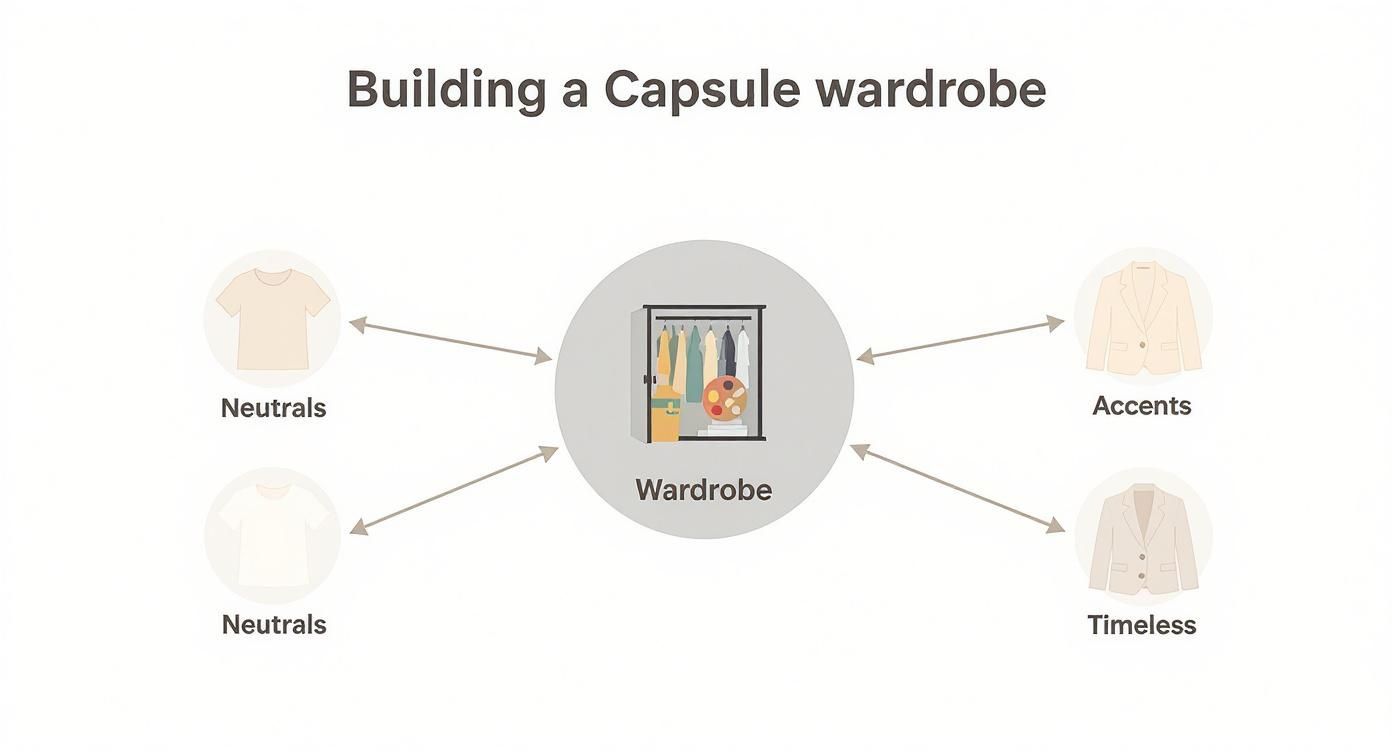
When you start with these core building blocks, you can easily weave in new trends and styles that flatter your specific shape, creating outfits that feel both cohesive and amazing.
Strategic Styling for Your Shape
Once you have a general idea of your body shape, you can really start having fun with it. Think of yourself as an artist using lines, colors, and fabrics to guide the eye where you want it to go.
For instance, if you’re a pear shape, A-line skirts will be your absolute best friend because they skim right over your hips. Try pairing one with a top that has some fun details around the neckline—like ruffles or a bold print—to draw attention upward and create that beautiful balance.
If you’re more of an apple shape, V-necks and wrap dresses are magic. They create a long, vertical line that instantly elongates your torso. Pair them with straight-leg or bootcut pants to balance your shoulders and highlight your legs.
The only "rule" that truly matters in fashion is to wear what makes you feel fantastic. These are just guidelines—tools to help you master proportion and silhouette, not a list of restrictions.
The Power of Perfect Tailoring
Never, ever underestimate what a good tailor can do. It's the secret weapon that makes a $50 dress look like it was custom-made just for you. Most clothes are designed to fit a standard model, but how many of us are actually built that way?
A few simple tweaks can completely change the game:
-
Hemming pants or jeans to the perfect length makes your legs look miles long.
-
Taking in the waist on a blazer or dress creates an instant, flattering silhouette.
-
Adjusting the straps on a top ensures it sits perfectly across your shoulders and bust.
These small fixes are usually quite affordable but deliver a huge return on your investment by making your entire wardrobe look more polished. When you learn to dress for your shape and invest in a great fit, you empower yourself to shop smarter and feel incredible in your clothes every single day.
Using Color and Pattern to Express Your Style
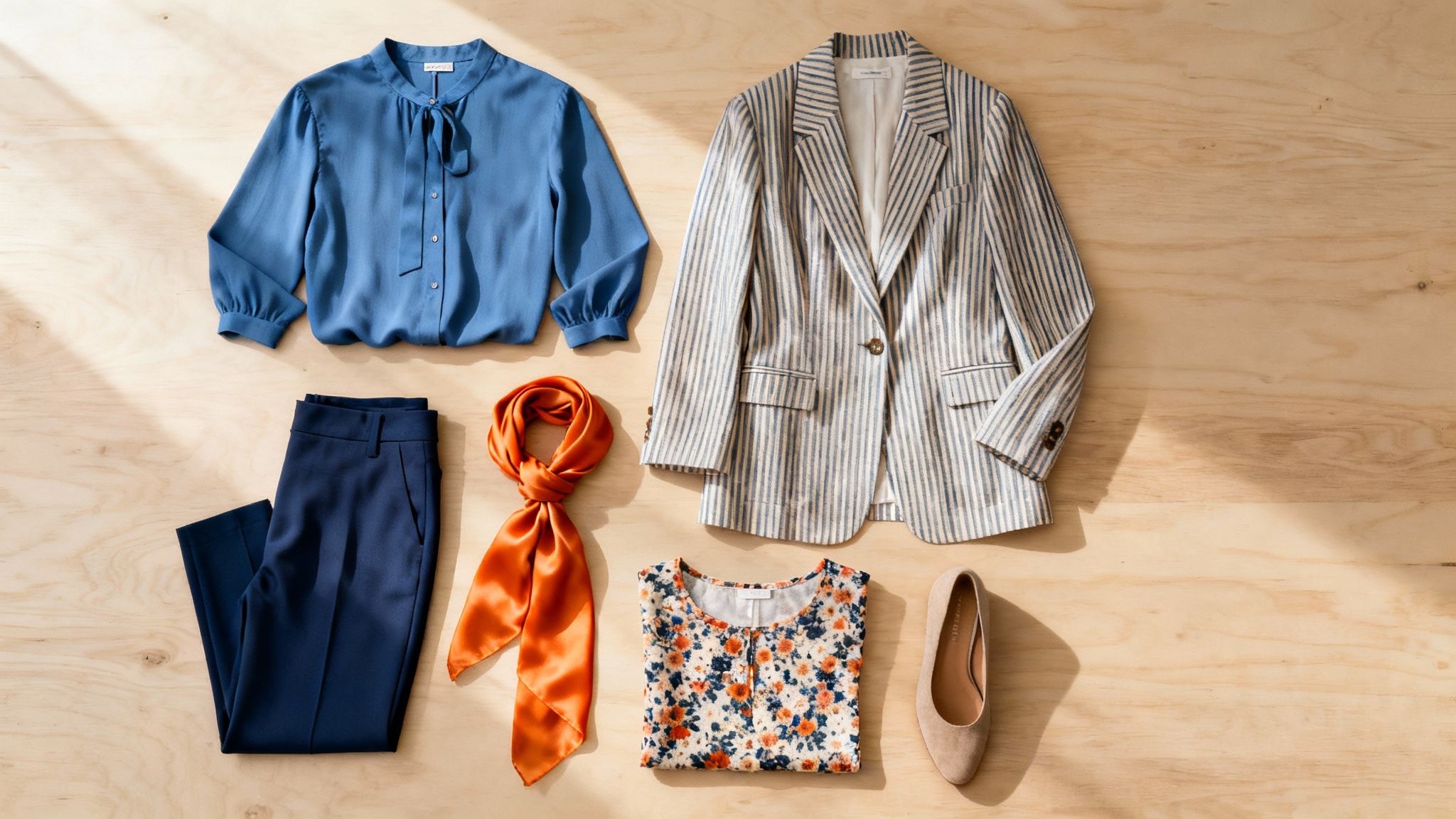
Stepping away from a wardrobe built purely on black, white, and beige can feel like a leap of faith. But here’s the secret: color and pattern are your best friends when it comes to expressing who you are. Don’t think of them as a set of complicated rules to be memorized. Instead, see them as a language for showing off your mood, your creativity, and your confidence.
This is your official permission slip to play.
Even the smallest, most strategic pop of color can completely reinvent an outfit. The trick is to understand a few simple ideas that will help you combine different shades with purpose, making your looks feel intentionally curated and effortlessly chic.
It's this dynamic, expressive potential that makes women's fashion so powerful. For years, spending in this category has led the market. Back in 2018, womenswear accounted for a massive 53% of the global fashion retail spend—more than men's and children's clothing combined. You can dive deeper into these fashion industry statistics and trends to see the full picture.
Understanding the Basics of Color Theory
Good news: you don't need an art degree to get this right. Just a few simple approaches will have you creating gorgeous and striking color combinations in no time.
-
Monochromatic: This is all about wearing different shades and tints of a single color. Think of an outfit in varying tones of blue—from a deep navy blazer to a pair of light-wash jeans. It’s an instant recipe for a polished, elongated silhouette.
-
Complementary: These are colors that sit opposite each other on the color wheel, like a classic blue and orange or a festive red and green. While they can be bold, they create a high-energy, high-impact look. To soften the effect, just use one color as the star and the other as a subtle accent—say, a green dress with a pair of small red earrings.
-
Analogous: This approach uses colors that are neighbors on the color wheel, like blue, teal, and green. The result is a calm, cohesive feel that’s always easy on the eyes and even easier to pull off.
And let’s not forget the psychology of color—it’s a fascinating tool. Red can project power and confidence, blue often brings a sense of calm and trustworthiness, and yellow is your go-to for optimism and creativity. Think about the energy you want to put out into the world.
Simple Rules for Mixing Patterns
Mixing patterns sounds like it should be on an advanced styling syllabus, but it’s surprisingly easy once you know the tricks. The goal here is to create visual harmony, not chaos.
Unify with Color
The absolute simplest way to mix patterns is to make sure they share at least one color. A classic navy-and-white striped top looks incredible with a floral skirt that has bits of navy woven into its design. That shared color acts like a bridge, connecting two totally different patterns into one cohesive outfit.
Vary the Scale
Another game-changing technique is pairing a large-scale pattern with a much smaller one. For instance, a blazer with a bold, wide plaid looks fantastic layered over a blouse with a tiny, delicate polka dot print. This difference in size stops the patterns from fighting for attention and instead creates a really dynamic, interesting look.
Stick to these simple tips, and you’ll be a pattern-mixing pro:
-
Start with the Classics: Stripes, polka dots, and florals are basically the neutrals of the pattern world. They’re super versatile and play well with more complex or abstract prints.
-
Treat Animal Prints as a Neutral: Leopard, snakeskin, and zebra can work just like black or beige in your wardrobe. A leopard print shoe or a simple belt can add a little something extra to almost any outfit without ever clashing.
-
Break It Up with a Solid: If two patterns together feel like a bit much, just add a solid-colored piece to give the eyes a place to rest. A plain belt, a simple jacket, or even your shoes can ground the entire look and make the mix feel much more intentional.
Dressing for Any Occasion and Investing Wisely
Building a killer wardrobe is one thing, but knowing how to use it is where the real magic happens. This is the moment your personal style gets to shine, translating who you are into a look that feels just right for any situation.
And behind every great look is a smart investment. It’s time to stop thinking about clothes as disposable trends and start seeing key pieces as assets. A truly high-quality garment isn't just another purchase; it's something that pays you back with confidence, style, and durability for years to come.
Decoding Common Dress Codes
Let's be honest, staring at an invitation with a vague dress code can be stressful. What does "smart casual" even mean? The good news is, these codes are easier to crack than you think.
-
Business Casual: Think of this as your professional uniform, but relaxed. Swap the full suit for a pair of tailored trousers or a sharp pencil skirt paired with a silk blouse or a cashmere sweater. The real hero here? A perfectly fitted blazer that ties everything together instantly.
-
Smart Casual: This is where style gets to have a little more fun. It’s perfect for brunch with friends, a creative office, or a nice dinner out. Start with a great pair of dark-wash jeans (no rips, please!) and add a stylish top. Finish it with a leather jacket, a chic cardigan, or a blazer. The right shoes—like loafers, sleek ankle boots, or crisp, clean sneakers—make all the difference.
-
Cocktail Attire: Time to dial it up a notch. A knee-length dress in a beautiful fabric like silk or lace is always a winning choice. But don't be afraid to think outside the box—a sophisticated jumpsuit or a dressy top-and-trousers combo can be just as stunning.
When in doubt, it’s always better to be a little overdressed than underdressed. You’ll feel more polished and prepared, and that confidence is the best accessory you can wear.
Investing in Pieces That Last a Lifetime
While it's fun to play with trends, the heart of a truly functional wardrobe is built on a foundation of investment pieces. These are the high-quality, timeless items that will be with you for the long haul, often looking even better as they age. When it comes to women's fashion, knowing where to splurge is just as important as knowing where to save.
So what elevates a piece to "investment-worthy" status? It really boils down to three key things: materials, construction, and timeless design.
Take a classic leather jacket, for example. Look for full-grain leather, which is the highest quality and develops a gorgeous, unique patina over time. Check the little things: Are the zippers heavy and smooth? Is the lining made from a breathable cotton, not cheap, shiny polyester?
Understanding the difference between fast fashion and thoughtfully made clothing is a game-changer. If you want to dive deeper, you can explore our guide to sustainable fashion for women to help make choices that are good for your closet and the planet.
How to Spot True Quality
Becoming a savvy shopper is a skill, and once you have it, you can spot true craftsmanship from a mile away. You'll learn to see past the price tag and recognize real value.
Telltale Signs of a Quality Garment
Here’s a quick mental checklist to run through before making a bigger purchase:
-
Check the Seams: A well-made garment will have tight, even stitching with no stray threads hanging off. Look for French seams (where the raw edges are neatly tucked away) on silk blouses or dresses—it’s a true sign of quality.
-
Examine the Fabric: Natural fibers like cotton, silk, wool, and linen will almost always feel better and last longer than their synthetic counterparts. Hold the fabric up to a light source. If it feels flimsy or you can see right through it (unless it’s meant to be sheer), it’s probably not built to last.
-
Look at the Details: Does the blazer have a lining? It will hang better and wear longer. Are the patterns on a plaid coat matched up at the seams? That shows real care was taken. Even small things, like functional buttons on a jacket sleeve, are a quiet nod to superior craftsmanship.
Translating Your Personal Style into Home Decor
Your sense of style doesn't just end with your wardrobe. It's the visual story you tell about yourself, and the same rules you use to put together a killer outfit—balancing color, playing with texture, creating a focal point—are exactly what you need to design a home you love.
Think of it this way: your closet and your home should feel like they're in the same conversation. It’s not about buying a couch that matches your favorite sweater, but about capturing the vibe of your personal style and bringing it to life in your space.
From Wardrobe Mood Board to Room Palette
The most straightforward place to start is with color. Take a good, hard look at your closet. What are the dominant colors you see? If you’re surrounded by calm, earthy neutrals like cream, camel, and olive green, you’ll probably feel most at home in a serene living room filled with natural wood and soft linen.
On the other hand, if your wardrobe is a riot of jewel tones—sapphire, emerald, ruby—that’s a huge clue. You’re someone who thrives on bold color. You could bring that energy into your home with a dramatic accent wall, plush velvet pillows, or a stunning piece of art that commands attention.
Your closet is basically your most honest mood board. The colors and textures you literally live in every day are the best guide for creating an atmosphere you'll want to come home to.
Echoing Textures and Silhouettes
Now let’s dig a little deeper than just color. This is where the connection between women's fashion and interior design gets really interesting. It’s all about the materials and shapes you're drawn to.
-
Sleek and Modern: Is your signature look a tailored blazer, perfectly fitting trousers, and minimalist leather accessories? Your home style is likely modern. You’ll gravitate towards clean lines, uncluttered spaces, and materials like glass, chrome, and polished marble.
-
Bohemian and Eclectic: If you live in flowy maxi dresses, love intricate embroidery, and pile on handmade jewelry, let that free-spirited vibe run wild in your home. Think Moroccan rugs, joyfully mismatched patterns, and a jungle of houseplants.
-
Classic and Timeless: Are you a trench coat, crisp white shirt, and pearls kind of person? Your home will feel most like you with a traditional aesthetic—antique furniture, balanced layouts, and rich fabrics like wool and silk.
In the end, it’s all about identifying what makes your style yours. Whether it's about comfort, drama, simplicity, or a touch of glamour, you can find a parallel in the world of decor. When you start applying the same discerning eye you use for your outfits to your living space, you’ll create a home that is a true, authentic extension of you.
Common Questions About Women's Fashion
Even after you've nailed the basics of silhouettes, colors, and building a capsule wardrobe, a few practical questions always seem to pop up. Think of this as your go-to guide for tackling the most common dilemmas in women's fashion with answers you can actually use.
These little bits of advice will help you solve those everyday style challenges, making you feel more confident and resourceful as you build a wardrobe you absolutely love.
How Can I Stay Current Without Chasing Every Trend?
The secret is to think like a trend editor, not a trend victim. Instead of overhauling your entire closet every season, just pick one or two current trends that genuinely click with your personal style. It’s a simple shift that keeps your look fresh without being wasteful.
Accessories are your best friend here. For example, if bold, vibrant colors are having a moment, you don't need a whole new outfit. Just introduce that trendy shade with a great handbag, a beautiful silk scarf, or a pair of statement earrings. That one small touch instantly modernizes your classic pieces.
The most stylish people blend timeless foundations with timely accents. They use trends like a spice to enhance their core style, not as the main ingredient. This ensures their look is always relevant but never feels forced or temporary.
What Are the Best Ways to Update My Style on a Budget?
Accessories are hands-down the most powerful tool for a budget-friendly style refresh. A new belt can totally change the silhouette of a dress you've had for years. A piece of statement jewelry can turn a simple t-shirt and jeans into a genuinely chic look.
Beyond accessories, give these smart strategies a try:
-
Go Thrifting: Secondhand and consignment shops are absolute treasure troves. You can find unique, high-quality pieces for a fraction of what they originally cost.
-
Master Styling Tricks: Sometimes all it takes is a simple technique to make old clothes feel new again. Learn how to do a "French tuck" with your shirts, cuff your sleeves in different ways, or artfully layer pieces you already have in your closet.
How Do I Find a Good Tailor I Can Trust?
Finding a skilled tailor is one of the smartest investments you can make in your wardrobe. Start by asking for recommendations at local high-end clothing boutiques or even your trusted dry cleaner—they often have a network of people they rely on.
Online reviews on sites like Google or Yelp can also point you in the right direction. Once you have a name, test them out with a simple, low-risk alteration, like hemming a pair of pants. This lets you see the quality of their work before you trust them with a more complicated or expensive piece. A truly great tailor won’t just do what you ask; they’ll offer their own expert advice on how to get the perfect fit.
At Fluent Trends, we believe a beautiful home is the perfect backdrop for a stylish life. Explore our curated collections of designer-approved furniture and décor to create a space that’s as unique and expressive as you are. Discover your style's potential today at https://www.fluenttrends.com.