

Accent Furniture for Living Room: Elevate Your Space
Donna MaloneThink of your living room's main furniture—the sofa, the coffee table—as the perfect, classic outfit. Accent furniture is the statement jewelry, the designer handbag, the silk scarf that makes the whole look yours. These are the carefully selected pieces that take a room from just functional to truly fabulous.
Why Accent Furniture Is Your Secret Design Weapon
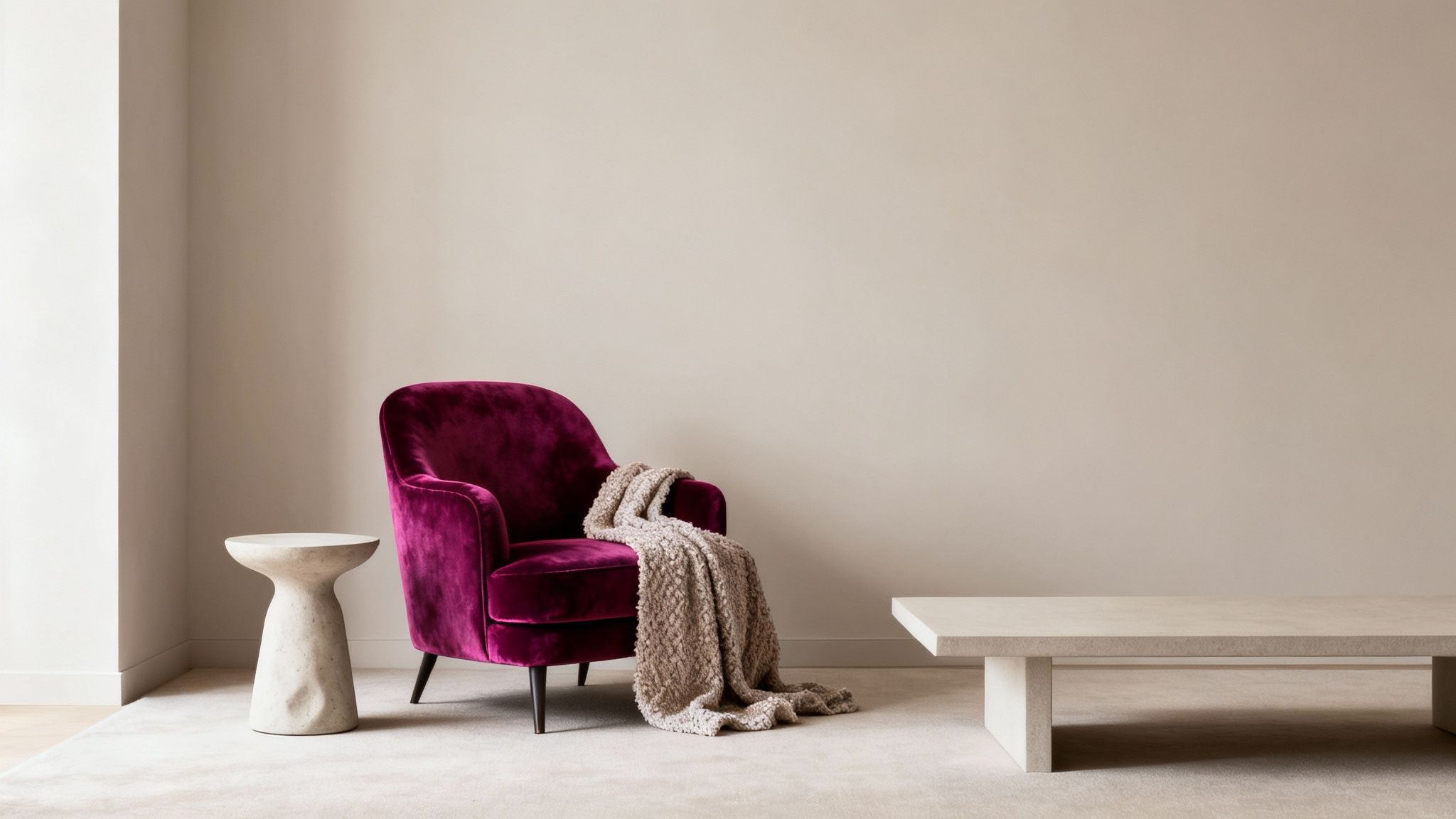
Accent furniture isn't just about filling a space; it’s a powerful way to express your personal style. While your sofa anchors the room and provides the main seating, an accent chair can drop in a splash of bold color or a completely different texture. These pieces aren't afterthoughts. When chosen well, they are strategic additions that look incredible and work hard, too.
Let's imagine your living room is a canvas. The walls, flooring, and primary seating are the big, foundational brushstrokes. The accent furniture for your living room is the finer detail work—the highlights and shadows that add depth, character, and a distinct point of view. It’s what separates a house that is simply furnished from a home that feels intentionally curated.
More Than Just a Pretty Face
While a killer aesthetic is a huge part of the appeal, accent furniture often solves problems you didn't even know you had. Think of these pieces as stylish problem-solvers, ready to tackle common living room challenges.
-
Adds Flexible Seating: A plush ottoman or a pair of chic poufs can offer extra seating for guests without the visual weight of another large armchair.
-
Creates Hidden Storage: A striking cabinet or a decorative chest can elegantly hide away everything from remote controls to extra blankets, all while serving as a beautiful focal point.
-
Introduces Rich Texture: A velvet armchair, a woven rattan side table, or a leather bench can bring in a tactile quality that makes a room feel layered, cozy, and much more interesting.
-
Injects Personality and Color: This is your chance to play! Go for that vibrant color or sculptural shape you love but wouldn't commit to for a huge sofa.
This move toward creating personalized, multifunctional homes has turned accent furniture into big business. The global living room furniture market was valued at a staggering USD 200 billion in 2023 and is expected to climb to around USD 320 billion by 2032. This isn't just a trend; it’s a clear sign that people want furniture that is both beautiful and incredibly versatile. You can dive deeper into these market trends over at DataIntelo.com.
Setting the Stage
Ultimately, accent furniture gives you the power to tell a story and guide the eye where you want it to go. A beautiful console table behind the sofa creates a sophisticated welcome, while a single accent chair and a great lamp can instantly carve out a cozy reading nook from a forgotten corner.
By placing these key pieces with intention, you create focal points that shape how people experience the room. They are the punctuation marks in your design story, adding emphasis and clarity.
These are the pieces that let you show off your taste without a complete overhaul. They bridge gaps, fill empty voids, and pull all the other elements in the room together, making the final look feel polished, complete, and thoughtfully designed. Now, let’s get into the specifics of what to look for.
Picking the Perfect Accent Pieces for Your Living Room
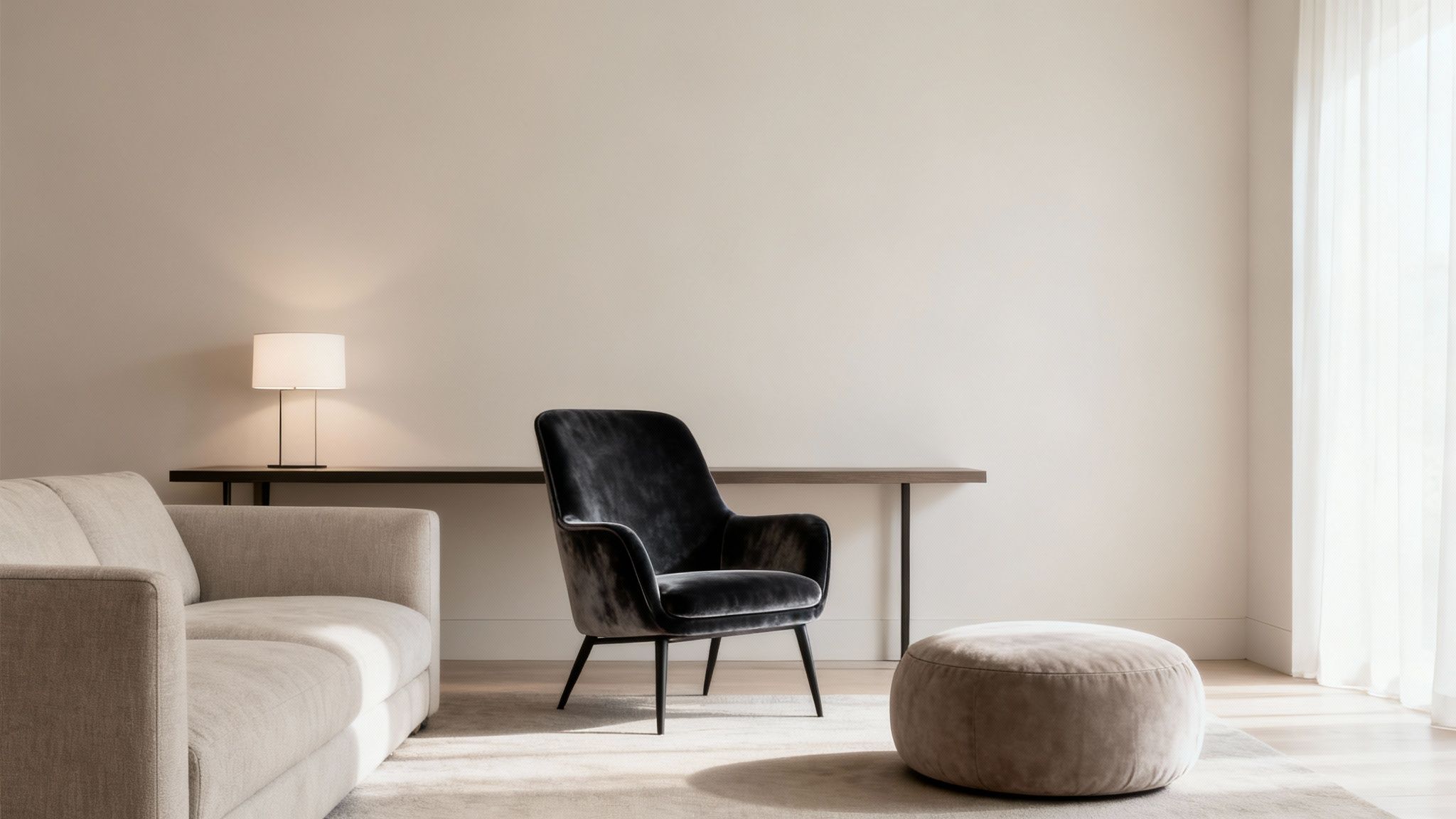
Alright, you get the strategy behind accent furniture. Now for the fun part: picking the players. Think of this as building your room's personality, piece by piece. Choosing the right accent furniture isn't about finding one magical item; it's about knowing what each type brings to the table and how it solves a specific need in your space.
The idea is to select pieces that do more than just take up room—they should actively enhance how your living room looks and functions. Whether you're carving out a cozy reading corner or adding a much-needed surface, each of these pieces has a job to do.
The Statement Accent Chair
If there’s one classic piece of accent furniture, it’s the accent chair. This is your chance to be a little daring. Introduce a splash of bold color, a rich texture like velvet or leather, or a striking sculptural shape that breaks up the monotony of your other furniture.
-
Armchairs: These are your go-to for comfort and substance. They’re perfect for flanking a fireplace or creating an intimate conversation spot. Look for plush fabrics to add a layer of luxury.
-
Wingback Chairs: With their classic high backs, wingbacks feel grand and dramatic. They instantly create a sense of enclosure, making them ideal for a private reading nook.
-
Slipper Chairs: These low-profile, armless chairs are a godsend for smaller living rooms. Their compact size lets them tuck neatly into tight corners where a bulkier chair just wouldn't work.
A great accent chair is a true double-threat: it provides a comfortable perch and acts as a powerful visual anchor. You can even explore five creative ways to use an accent chair to see just how versatile one well-chosen piece can be.
The Versatile Console Table
The console table is one of the most hardworking yet elegant pieces you can own. Its slim profile is its superpower, allowing it to slide into narrow spaces while offering a prime surface for lamps, art, and curated decor.
Got a sofa floating in the middle of the room? A console table placed behind it is the perfect fix. It grounds the sofa, creates a visual buffer, and gives you a spot for a pair of lamps that will cast a warm, ambient glow.
The Essential Side Table
Side tables are the unsung heroes of any well-designed living room. They're the trusty companions to your sofas and armchairs, always there to hold a drink, a book, or the remote. While they are deeply practical, they’re also a huge design opportunity.
Don’t just think of a side table as a surface; see it as a finishing touch. Use it to introduce a contrasting material like marble or brass, a different shape—like a round table next to a square-armed sofa—or just an unexpected pop of color.
Nesting tables are an especially smart choice if you value flexibility. Stack them to save space for daily life, then spread them out to serve drinks and snacks when guests arrive.
Ottomans and Poufs: The Ultimate Multitaskers
Ottomans, poufs, and benches are the masters of adaptability. These pieces can shift roles in an instant, making them incredibly valuable in any living room—especially smaller ones where every single item needs to earn its keep.
Just think of all the jobs they can do:
-
Extra Seating: A couple of small poufs are perfect for pulling out when you have a full house.
-
Coffee Table: A large, firm ottoman topped with a stylish tray makes a fantastic, soft-edged coffee table.
-
Footrest: Their most obvious role, and always a welcome one at the end of a long day.
-
Hidden Storage: Many ottomans have lift-off tops, revealing precious space to stash blankets, games, or magazines.
The growing popularity of these adaptable pieces is no accident. The global multifunctional furniture market was valued at USD 15.9 billion and is projected to keep climbing as more of us look for smart, space-saving solutions in our homes.
The Elegant Accent Cabinet
Finally, an accent cabinet or chest offers that perfect marriage of beauty and utility. It’s smaller than a full credenza but provides crucial enclosed storage while acting as a gorgeous focal point.
This is the ideal piece to anchor a bare wall. Use it to set up a chic little bar, display a few treasured objects on top, or simply to introduce a piece with incredible detailing, like intricate woodwork or unique hardware. It adds visual weight and practical storage, helping you create a polished, clutter-free space.
Matching Accent Furniture to Your Living Room Goal
Feeling a bit overwhelmed by the options? It helps to start with your end goal in mind. Use this table to match what your living room needs with the perfect type of accent furniture.
| Your Goal | Best Accent Furniture Type | Primary Function | Styling Tip |
|---|---|---|---|
| Add more seating for guests | Accent Chair or Pouf | Seating | Choose a bold color or pattern that contrasts with your sofa to make it a focal point. |
| Create a cozy reading nook | Wingback or Armchair | Seating & Comfort | Pair with a floor lamp and a small side table to create a self-contained zone. |
| Fill the awkward space behind a sofa | Console Table | Surface & Definition | Add a pair of matching table lamps for symmetry and warm, ambient lighting. |
| Need a flexible coffee table | Upholstered Ottoman | Surface & Seating | Place a large, sturdy tray on top to create a stable surface for drinks and decor. |
| Introduce a new texture or material | Side Table or Accent Cabinet | Decorative & Practical | Select a piece in marble, raw wood, or metal to add a layer of visual interest. |
| More storage to hide clutter | Accent Cabinet or Storage Ottoman | Storage | Choose a cabinet with interesting doors or an ottoman in a rich fabric to blend style with function. |
Ultimately, choosing accent furniture is about listening to your room. What is it missing? A pop of color? A practical surface? A comfortable seat? Once you identify the need, you can select a beautiful piece that not only fills the gap but elevates the entire space.
Matching Materials And Styles For A Cohesive Design
Choosing accent furniture is a bit like casting the supporting characters in your living room’s story. They can't just look good on their own; they have to have real chemistry with your main character—the sofa. The secret to a room that feels intentionally curated, not just cluttered, is finding that perfect harmony between different materials and styles.
Think of it this way: a living room where every single piece matches is like someone wearing a head-to-toe denim outfit. Sure, it works, but it can feel a little one-dimensional. A thoughtfully coordinated room, on the other hand, is more like pairing great jeans with a silk blouse and a leather jacket. Each piece stands out, yet together they create a look that's far more interesting. That’s the kind of compelling contrast we're aiming for.
The Language of Materials
Materials do more than just build a piece of furniture; they create a mood. The materials you choose for your accent furniture for a living room will have a huge impact on the room's overall vibe, adding layers of texture and visual interest.
-
Warm Woods: From the pale, organic feel of rattan to the rich depth of walnut, wood brings a natural warmth into any space. A reclaimed wood bench can add a touch of rustic character, while a sleek oak side table feels clean and modern.
-
Cool Metals: Brass, chrome, and blackened steel introduce an industrial edge or a glamorous shine. A side table with brass legs can instantly elevate a room, while a simple steel frame feels minimalist and airy.
-
Lush Textiles: Fabrics like velvet, bouclé, and leather are an invitation to touch. A deep velvet armchair adds a sense of luxury and comfort, and a cognac leather ottoman brings in a timeless, sophisticated texture.
-
Airy Glass and Acrylic: These materials are a small space’s best friend. A glass coffee table or an acrylic console table seems to take up almost no visual room, creating an illusion of openness and light.
It's no surprise that wood remains a dominant force in the global furniture market, accounting for 43% of market share in production. People value its durability and timeless appeal. As we continue to invest more in our homes, the demand for high-quality, beautifully crafted pieces only grows stronger. You can find more insights on furniture market trends on Fortune Business Insights.
Decoding Popular Design Styles
While mixing and matching is the goal, it helps to have a solid understanding of the major design styles. Think of this knowledge as your compass, helping you make intentional choices that feel cohesive. For a deeper dive, our complete furniture style guide has you covered.
The best-designed rooms often blend elements from two or three styles. The key is to let one style take the lead while borrowing complementary elements from others. This creates a look that feels layered and personal.
Let's break down a few key aesthetics and the accent pieces that really define them.
Modern and Mid-Century Modern
This style is all about clean lines, organic forms, and a "less is more" philosophy. It favors natural materials like wood and leather, often paired with sleek metal and glass accents.
-
Defining Pieces: Think of a low-profile accent chair with tapered wooden legs, a simple C-shaped side table that slides conveniently over a sofa arm, or a sleek console table with unadorned surfaces.
-
Look For: Geometric shapes, minimal ornamentation, and a clear focus on function.
Industrial
Inspired by old factories and urban lofts, the Industrial style celebrates raw, unfinished materials. It's got an edgy, utilitarian vibe that’s full of character.
-
Defining Pieces: A coffee table made from reclaimed wood and cast iron, a metal bookshelf with exposed rivets, or a leather armchair that has a perfectly distressed finish.
-
Look For: Exposed metal, weathered wood, and a neutral color palette built on grays, blacks, and browns.
Farmhouse and Rustic
This aesthetic is warm, inviting, and full of cozy charm. It’s all about comfort, practicality, and a connection to nature, using plenty of natural woods, soft textiles, and vintage-inspired shapes.
-
Defining Pieces: A chunky woven ottoman, a distressed wood storage chest that doubles as a coffee table, or a console table with classic turned legs.
-
Look For: Natural fibers like linen and cotton, weathered or painted wood finishes, and comfortable, unfussy silhouettes.
Glam and Art Deco
For anyone who loves a bit of drama and luxury, the Glam style delivers. It’s defined by rich textures, metallic accents, and bold, sculptural shapes that make a statement.
-
Defining Pieces: A channel-tufted velvet accent chair, a mirrored side table, or a bar cart gleaming with polished brass or chrome details.
-
Look For: Plush fabrics like velvet and faux fur, reflective surfaces, and shiny metallic finishes in gold, silver, and brass.
Once you understand the core elements of each style, you can confidently pick accent pieces that not only complement your existing decor but also push it in a fresh, exciting direction. The goal isn’t to perfectly replicate a single look, but to borrow the elements you love to create a space that feels uniquely yours.
Mastering Furniture Placement And Arrangement
You’ve found the perfect accent pieces—now for the real magic: putting them in the right spot. This is where a room transforms from just "furnished" to "thoughtfully designed." It's more than just filling space; it's a delicate dance between form and function, ensuring every piece not only looks stunning but also works for your lifestyle without getting in the way.
Think of it like choreographing a performance. Your sofa and main seating are the lead dancers, setting the stage. Your accent furniture is the supporting cast, adding the flair and character that makes the whole show unforgettable. Each piece needs its moment in the spotlight while still working in harmony with the ensemble. The goal is to create a living room that feels cohesive, comfortable, and a breeze to move through.
Creating Clear Pathways And Flow
Before you even think about aesthetics, let's get practical. You have to be able to walk through the room. The number one rule of furniture arrangement is to map out your main traffic patterns—from the door to the sofa, from the couch to the kitchen, and so on.
A good rule of thumb is to leave 30 to 36 inches for these main walkways. For the smaller gaps, like the space between your coffee table and sofa, aim for 16 to 18 inches. That’s the sweet spot that keeps you from shimmying past your furniture. If you want to dive deeper into the fundamentals, our guide on how to arrange living room furniture is a great starting point for nailing your core layout.
Establishing A Strong Focal Point
Every well-designed room has a focal point. It's the first thing your eye is drawn to, the feature that anchors the entire space. Sometimes it's a built-in element like a fireplace or a grand window. Other times, you create it yourself with a striking piece of art or a statement media console.
Whatever your focal point is, your accent furniture should complement it, not fight it for attention. Imagine flanking a beautiful fireplace with a pair of elegant accent chairs—this frames the fireplace and reinforces its importance. Or, if a large TV is your room's center, a long, low console table placed underneath will ground it beautifully while offering a surface for stylish decor.
Placement is about creating visual conversations. An accent chair shouldn't just sit in a corner; it should be angled toward the sofa to encourage interaction, creating a cohesive and inviting conversational group.
The Art Of Styling Vignettes
Beyond just placing furniture, styling it creates small, curated moments throughout the room. These vignettes are where you inject your personality and add layers of visual interest.
-
The Console Table Formula: A console table behind a sofa is prime real estate for a great vignette. A classic, can't-miss approach is to place a matching lamp on each end for symmetry. Then, fill the space between them with a curated stack of books, a decorative bowl, and a personal object or two.
-
The Ideal Reading Nook: This is what accent furniture was made for. Pair a comfortable armchair with a small side table and a great task lamp (either a floor lamp or a small table lamp). You’ve just created a self-contained zone that’s both wonderfully functional and incredibly inviting.
-
The Side Table Trio: A side table next to your sofa should be styled, not cluttered. I always stick to a trio of key elements at varying heights: a light source (like a lamp), something living (a small plant or a few fresh stems), and a personal item (a coaster, a candle, or a small sculpture).
This infographic breaks down the core tenets of achieving design harmony by balancing materials, styles, and colors.
It’s a great visual reminder that true cohesion comes from a thoughtful blend of complementary elements, not from everything matching perfectly.
Honoring Scale And Proportion
Finally, never, ever ignore scale. A tiny side table will look completely lost and silly next to a massive, overstuffed sofa. On the flip side, a huge, imposing armchair can swallow a small living room whole.
Here’s a pro tip I always share with clients: before you commit to a piece, use painter's tape to mark its dimensions out on your floor. This simple trick lets you see the actual footprint in your space and helps you visualize whether it truly fits. Getting the scale right is what ultimately creates that balanced, harmonious feel we’re all after.
Your Smart Pre-Purchase Checklist
It’s easy to get swept up in the excitement of finding a stunning accent piece. But that initial thrill can quickly fade when you realize it doesn't quite work once you get it home. To avoid that dreaded "it looked smaller in the showroom" moment, a little prep work goes a long way.
Think of it like getting a custom suit made. You wouldn't just eyeball the size and pick a fabric at random. You'd take precise measurements and consider every detail to ensure a perfect, lasting fit. Applying that same mindset to furniture is what separates a good purchase from a great investment.
Measure Everything Twice
This is the golden rule. An accent chair that can’t squeeze through your front door is just a very expensive, very frustrating porch decoration. Before you fall in love, grab a tape measure.
-
Map the Final Destination: Get the exact width, depth, and height of the space where the piece will live.
-
Trace the Journey: Measure every doorway, hallway, and staircase on the delivery path. Don't forget to account for any tight corners or low-hanging light fixtures.
-
Lay It Out: Use painter's tape to outline the furniture's footprint on the floor. This is a brilliant trick to help you feel its scale in the room and see how it affects the flow of traffic.
A pro tip that's often overlooked is measuring the diagonal depth of a piece. For bulky items like armchairs, this diagonal line has to be smaller than your doorway's width to make it through.
Be Honest About Function
Next, have a frank conversation with yourself about how this piece will actually be used. The most beautiful accent furniture for a living room is ultimately a failure if it doesn't fit your life.
Is that accent chair going to be your go-to reading spot, or is it mostly for show? If you plan on curling up with a book, you’ll need solid back support and comfortable armrests. Will that chic, low-profile cabinet actually hold the board games and blankets you need to store? Double-check the internal dimensions before committing.
Look for Quality and Craftsmanship
When you're investing in a piece you want to last, you have to look beyond the surface. A well-made item feels sturdy and substantial, not flimsy or wobbly.
On wooden furniture, check the joints—dovetail or mortise-and-tenon construction are hallmarks of quality. For anything upholstered, ask about the fabric's durability rating and the cushion density. High-density foam is a must if you want it to keep its shape for years to come. Exploring the best furniture consignment stores can also be a fantastic way to find unique, exceptionally well-made pieces with a history.
Don’t Forget About Upkeep
Finally, think about the long-term relationship you’re about to enter into. That gorgeous white bouclé chair is a showstopper, but is it a smart choice for a home with a golden retriever and two toddlers? Always, always check the cleaning codes and care instructions.
Be realistic about how much maintenance you’re willing to do. Materials like performance velvet and top-grain leather are incredibly forgiving, while delicate silks and linens demand more attention. A little foresight here ensures your new accent piece becomes a joy, not a chore.
To make this process even easier, we've put all these points into a simple checklist. Use it as your guide to ensure your next purchase is a confident and informed one.
Accent Furniture Pre-Purchase Checklist
| Consideration | Key Questions to Ask | Pro Tip |
|---|---|---|
| Space & Measurement | Have I measured the final spot, doorways, and hallways? Have I taped out the footprint on the floor? | Don't forget to measure the piece's diagonal depth to ensure it will clear your door frames. |
| Function & Lifestyle | What is the primary purpose of this piece? Does it solve a specific functional need (e.g., seating, storage)? | Sit in it, open its doors, and physically interact with the piece in the showroom to test its comfort and utility. |
| Scale & Proportion | Does the piece’s height and visual weight complement the other furniture in the room? | Take a photo of your living room with you to the store for a quick visual reference. |
| Material & Quality | What is it made of? Are the joints secure? Is the fabric durable and the foam high-density? | Look for solid wood construction over particleboard and check for quality joinery like dovetails. |
| Style & Cohesion | Does this piece align with my existing decor? Does it add contrast or harmony in a way I love? | It doesn't have to match perfectly! A great accent piece often provides a compelling, intentional contrast. |
| Maintenance & Care | What are the cleaning instructions? Is this material practical for my household (kids, pets)? | Always check the fabric cleaning code (e.g., "W," "S," "X") before buying to avoid surprises. |
Running through these questions before you buy transforms the process from a gamble into a strategic decision. It’s the best way to guarantee you’ll love your new accent furniture for many years to come.
Your Accent Furniture Questions, Answered
Choosing accent furniture is where the real fun of interior design begins. These are the pieces that give your living room its soul, so it's only natural to have a few questions. Let's walk through some of the common sticking points so you can select and style your pieces like a seasoned pro.
Think of this as a quick chat with a designer. We'll clear up the confusion and give you the confidence to make every choice count, creating a space that feels beautifully and uniquely you.
How Many Accent Pieces Should I Have in My Living Room?
There’s no hard-and-fast rule here, but a good principle to live by is aiming for one to three thoughtfully selected pieces, depending on the scale of your room. The goal is to add character, not create clutter.
For a cozier living room, a single striking accent chair paired with an interesting side table can be all you need to make a statement. If you have a larger, more expansive space, you have more room to play. You could easily bring in a stylish console table, a pair of ottomans, and a beautiful cabinet without the room feeling weighed down.
My best advice? Start with one accent piece you truly adore and see how it feels. Then, take a step back and look at the room as a whole. Does it feel balanced? Is it still easy to move around? Let the space itself guide you.
Does My Accent Furniture Have to Match My Sofa?
Absolutely not! In fact, it's better if it doesn't. The magic is in coordination, not matching. Think of it as creating a harmonious contrast. Your accent pieces should have a conversation with your main furniture, connected by a common element—maybe it’s a color, a material, or a similar design period.
For instance, a sleek, modern sofa can look incredible next to a rustic, live-edge wood end table. The tension between the two styles is what creates visual excitement. What makes it work is a cohesive color palette that ties them together, or ensuring they’re of a similar scale. The key is to avoid adding something that feels completely random in both style and color.
What’s the Most Versatile Accent Piece I Can Buy?
If I had to pick just two, it would be a great upholstered ottoman or a set of nesting tables. An ottoman is the ultimate chameleon of the living room. It can serve as a coffee table (just place a decorative tray on top), act as impromptu seating when guests arrive, or simply be a plush footrest.
Nesting tables are a small-space hero. They deliver maximum surface area without eating up your floor plan. You can keep them tucked together for daily use and then pull them apart to hold drinks and snacks when you're entertaining. Both are incredibly smart, functional investments for virtually any home.
How Do I Find an Accent Chair That’s Both Stylish and Comfortable?
This is all about striking that perfect balance between form and function. Start by thinking about how you'll actually use it. Is this for your favorite reading corner? If so, you'll want solid back support and arms at a comfortable height. If it’s more of a sculptural piece to fill a corner, you can focus more on its silhouette.
Pay close attention to seat height and depth—you want it to feel right for your body. A good tip is to keep the seat heights of all your chairs within a 4-inch range to create a more visually seamless look. And of course, if at all possible, try before you buy! Nothing beats sitting in a chair to know if it truly meets your personal standard for comfort.
At Fluent Trends, we believe the right accent pieces are what turn a house into a home. Our curated collection of designer-approved furniture is crafted to bring both style and function to your living space. Explore our collections and find the perfect pieces to tell your story.