

Best Accent Chairs for Small Spaces Done Right
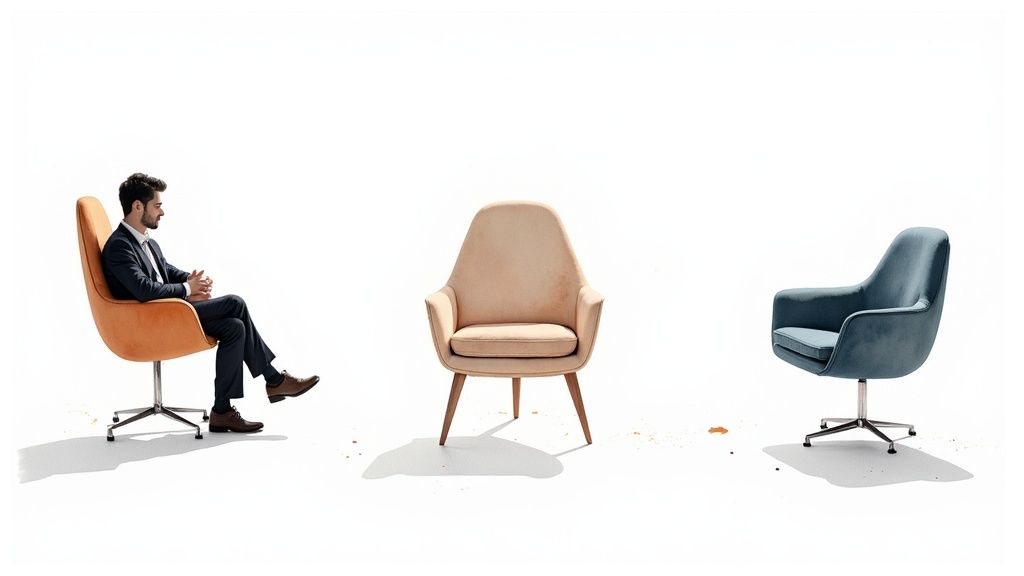
Donna MaloneWhen you're working with a small living area, the right accent chair does more than just offer a place to sit. It has to pull its weight. The best options are typically armless, feature exposed legs, or have a handy swivel base.
These specific designs are brilliant because they pack style and function into a smaller physical footprint. More importantly, they reduce visual clutter, which is the secret to making a compact room feel much larger and more open than it really is.
Decoding the Best Chairs for Your Space
Finding the perfect accent chair when you're short on square footage isn’t about sacrificing style; it's about being strategic. The real goal is to find a piece that injects personality and comfort without completely overwhelming the room. Your best friends in this search will be designs that feel light and airy.
For example, look for chairs with raised, slender legs. This simple feature allows light to flow underneath and lets you see more of the floor, instantly creating an illusion of spaciousness. In the same way, armless designs have a naturally narrower profile, so they can tuck neatly into an empty corner or sit beside a sofa without hogging precious real estate.
To help you visualize the options, this quick guide breaks down some of the most popular styles and how they measure up.
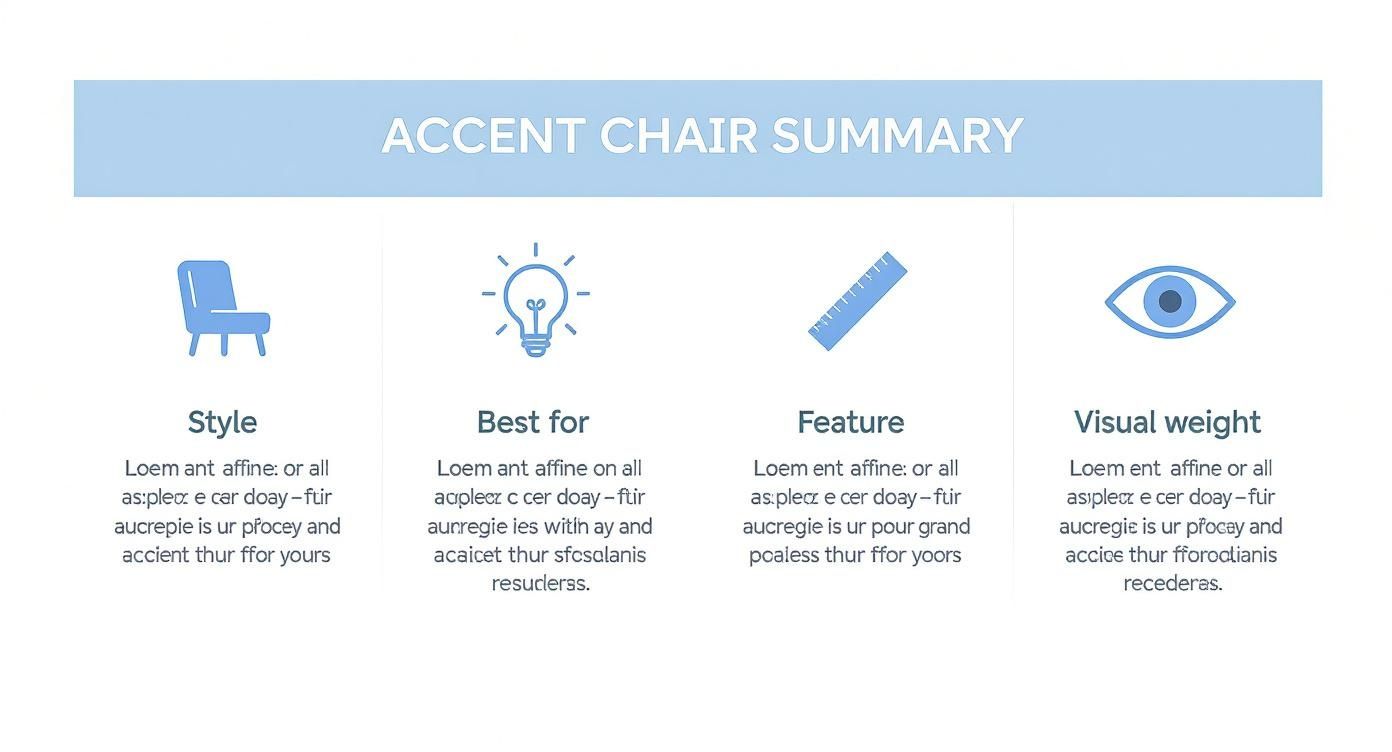
As you can see, a chair's "visual weight" is just as crucial as its actual dimensions when you’re decorating a small room. A bulky, heavy-looking chair can shrink a space, even if its footprint is technically small.
Top Accent Chair Styles for Small Spaces at a Glance
To make things even clearer, here’s a quick comparison of popular accent chair styles and what makes them work (or not work) in tight quarters.
| Chair Style | Best For | Key Space-Saving Feature | Visual Weight |
|---|---|---|---|
| Slipper Chair | Corners & tight spots | Armless design, small footprint | Low |
| Swivel Chair | Multi-purpose areas | 360-degree rotation | Medium |
| Club Chair | Reading nooks | Compact & cozy (choose wisely) | High |
| Barrel Chair | Conversational seating | Curved back, often swivels | Medium to High |
| Wingback Chair | Adding drama | Vertical height draws the eye up | High |
| Ghost Chair | Ultra-minimalist spaces | Transparent material | Very Low |
This table shows that while a classic Club Chair can be cozy, it often carries a lot of visual weight. In contrast, a Slipper or Ghost chair practically disappears, making them fantastic choices for seriously small rooms.
Why Small-Scale Furniture Matters
With more people living in cities, the demand for functional, space-saving furniture is absolutely booming. In fact, the global accent chair market was valued at a whopping $6.8 billion in 2024 and is projected to hit $11.2 billion by 2033. This isn't just a random statistic; it shows a massive shift in how we think about our homes. Every piece has to earn its place.
An accent chair in a small space should do more than just sit there. It should serve a purpose, whether that's providing flexible seating with a swivel base or adding a pop of color that becomes a focal point.
Getting these fundamentals right is the first step. To dive deeper, check out our complete guide on the best furniture for small spaces for more tips on maximizing your layout. When you focus on smart design, you can confidently pick a chair that doesn't just fit—it truly enhances your home.
How to Properly Measure for a Compact Accent Chair
It’s easy to fall in love with an accent chair online. It’s a lot harder to make sure it actually fits your space—and can get through the front door. The best accent chairs for small living rooms aren't just about a narrow width; they're about smart scale and not sacrificing the little functional space you have.
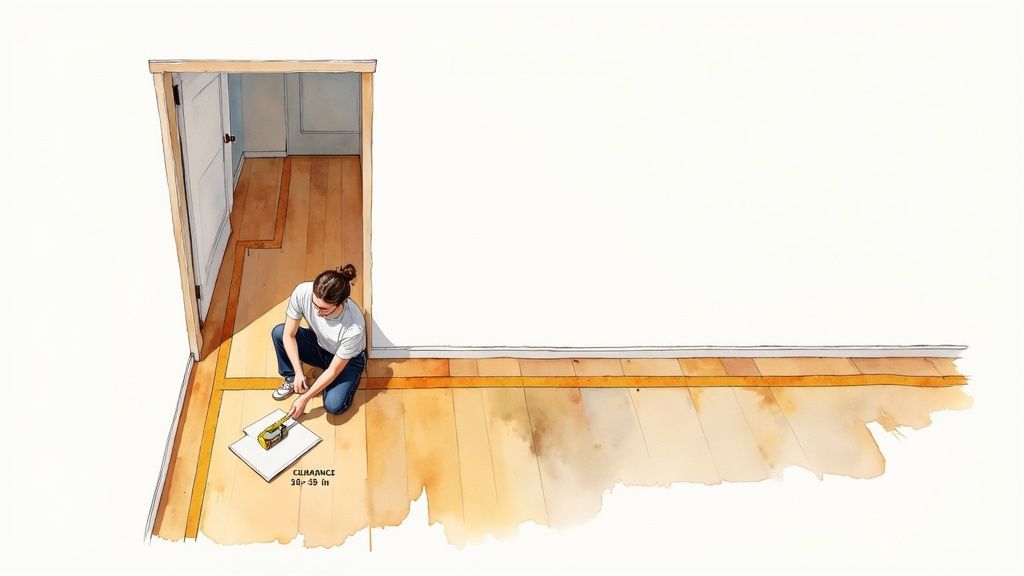
Before you even think about clicking "buy," grab your tape measure and some painter's tape. This simple trick is a complete game-changer. Use the chair's listed width and depth to tape an outline directly on your floor where you plan to put it. This gives you a physical mockup, letting you feel its true footprint in a way that numbers on a screen just can't.
Think Beyond the Chair's Footprint
With your tape outline on the floor, it's time to check the crucial details that most people forget. These are the things that decide whether a chair will truly work in your home or just become an expensive obstacle.
-
Walkway Clearance: Can you still move around the room? You need at least 30 to 36 inches of clear space for main pathways. Anything less and the room will feel tight and awkward to get through.
-
The Delivery Gauntlet: Seriously, measure every single doorway, hallway, and staircase the chair needs to navigate to reach its final spot. Compare those numbers to the chair's dimensions—especially its height and diagonal depth—to avoid a delivery day nightmare.
-
Scale and Proportion: Now, look at that taped-off square. How does it feel next to your sofa or coffee table? A chair that's too tall or visually heavy can easily dwarf your other furniture and throw the whole room's balance off. On the flip side, a chair that’s too tiny will just get lost.
The goal is to find a piece that complements, not consumes, your existing layout. A chair with a slim profile and exposed legs carries far less 'visual weight' and makes a room feel dramatically larger than a solid, blocky chair of the exact same dimensions. This is because seeing the floor beneath it creates an illusion of more space.
What to Look For in a Space-Saving Accent Chair
When you're working with a smaller home, every piece of furniture has to earn its keep. It's not just about looking good; it's about being smart. As I've helped countless clients furnish tight corners, I've learned that the magic is in the details. The right features can turn a simple chair into a hardworking hero that saves space and improves the entire flow of your room.
Functionality is absolutely your top priority. My advice? Look for chairs that can pull double duty. A swivel base, for instance, is a total game-changer in a snug layout. It lets you pivot from a conversation on the sofa to facing the TV without having to awkwardly drag the chair across the floor.
Built-in storage is another brilliant feature. Think ottomans with hidden compartments or even chairs with clever side pockets. These are perfect for stashing remotes, magazines, or a cozy throw blanket, which goes a long way in keeping surface clutter under control.
Creating the Illusion of Space
Beyond pure function, certain design elements can visually trick the eye, making a room feel larger and more open than it actually is. The materials you choose play a huge part in a chair's "visual weight."
Here’s what I recommend looking for:
-
Transparent Materials: I love using acrylic or lucite chairs—often called "ghost chairs"—in small apartments. They occupy physical space but seem to disappear, which keeps the room from feeling cramped.
-
Natural Textures: Lightweight materials like rattan, cane, or wicker are fantastic. They bring in a beautiful, organic texture without adding visual bulk. Their open-weave design lets light filter through, enhancing that airy feeling.
-
Light-Colored Upholstery: A chair in a soft, neutral fabric like cream, beige, or a light gray will blend in much more smoothly than a dark, heavy piece would.
The goal is to avoid anything that creates a solid visual block. A chair with a low back, a slim profile, and exposed legs will always make a small room feel bigger than a bulky, skirted one. It’s a simple trick that works every time.
Don't Sacrifice Comfort for Style
While style and space-saving features are crucial, comfort should never be an afterthought. Trust me, a chair that looks incredible but feels terrible will quickly become an expensive clothes hanger. Ergonomics are finally getting the attention they deserve, even in accent furniture.
You can see this shift in consumer search data. Interest in ‘ergonomic chairs’ hit a peak score of 85 in July 2025, a massive jump from the year before. This isn't a fluke; it shows people want furniture that genuinely supports their well-being, even in a small footprint. You can explore more insights on this trend and its impact on modern furniture design. At the end of the day, a well-designed chair should support your back and encourage good posture, making it the spot you want to curl up in.
Styling Your Accent Chair to Enhance the Room
Once you’ve finally found the perfect chair, the fun part begins: making it a true centerpiece of your room without creating clutter. In a smaller space, how you place and style your chair is just as important as the piece itself. The goal here is to create a beautiful, functional little moment that elevates the entire room, not just fills an empty corner.
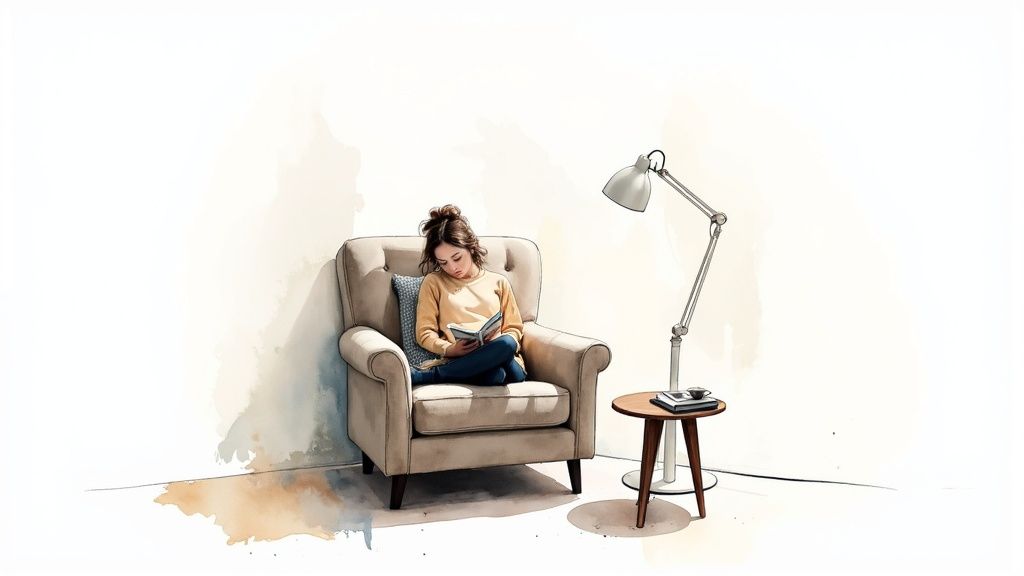
A fantastic way to do this is by creating a dedicated "zone." Got an unused corner by a window? That’s prime real estate for a cozy reading nook. Just add your accent chair, a slender floor lamp for a warm glow, and maybe a small C-table that can slide right over the arm when you need a spot for your coffee. This simple, intentional grouping gives the chair a clear purpose.
Create a Focal Point with Purpose
You can also let your accent chair be the star of the show. This works especially well if you've picked a chair in a bold color, a striking pattern, or an interesting texture like bouclé or velvet. Imagine a vibrant jewel-toned armchair—it immediately draws the eye, anchoring the room and making the whole design feel more dynamic and deliberate.
When you go this route, the key is to keep the accessories around it simple. A single, well-chosen throw pillow in a complementary pattern is often all you need. The chair is the statement piece, so you want to give it some room to breathe.
The secret to styling in a small space is intention. Every single item should have a reason for being there. Resist the urge to add accessories just for the sake of it—focus on pieces that are both beautiful and genuinely useful.
Smart Pairings and Placement
Sometimes, two smaller chairs can work much better than one bulky loveseat. Try placing a pair of compact, armless chairs across from your sofa. This creates a really balanced and inviting conversation area without eating up your entire floor plan. It's a much more flexible and space-savvy arrangement than trying to cram in another large piece of furniture.
For more inspiration on how to position your furniture for the best flow, check out our guide on how to arrange living room furniture. Getting the placement right is what allows even the best accent chairs for small spaces to truly shine, making your room feel both stylish and incredibly functional.
Common Mistakes to Avoid When Buying an Accent Chair
It’s so easy to fall in love with a stunning chair you see online, but that initial excitement can quickly turn into buyer's remorse. This is especially true when you're working with a small living room where every single inch matters. I've seen it happen time and time again.
The number one mistake? Choosing a chair based purely on its looks while completely forgetting about comfort. That sculptural, high-fashion piece might be a work of art, but if you never actually want to sit in it, it's just a very expensive dust collector.
Another classic blunder is underestimating the assembly. What looks like a simple five-minute job on a website can become a nightmare of tiny screws and confusing diagrams on your limited apartment floor. Always, always peek at the customer reviews to see what others say about the assembly process before you click "buy."
Forgetting Scale in the Real World
Perhaps the biggest pitfall of all is picking a chair that looks amazing in a massive, open-plan showroom but completely overwhelms your actual living room. Those big, puffy, sink-right-in chairs are tempting, but in a small space, they just eat up visual and physical real estate, making the whole room feel cramped.
It's a classic case of what we want versus what we need. Market data actually backs this up. There was a huge spike in searches for features like swivel bases—up 98.46% in early 2025—but it took a while for sales to follow. It seems people are drawn to trendy features first, but then practicality kicks in when it's time to actually buy. You can dig into more of these insights on 2025 accent chair trends to see how tastes are shifting.
Always ask yourself how a chair will actually work in your home, not just how it looks in a perfectly styled photo. The best accent chairs for small spaces always nail that sweet spot between style, comfort, and a scale that's just right for your room.
Answering Your Top Questions
Even with a solid game plan, you might still have a few questions lingering. I get these all the time from clients, so let's tackle the most common ones to make sure you feel completely confident in your choice.
What’s the Deal With Chair Legs in a Small Room?
This is a detail that makes a huge difference. You'll want to look for chairs with exposed, slender legs. Think tapered wood or thin metal.
We often call these "leggy" chairs, and for good reason. By lifting the body of the chair off the ground, they let you see more of the floor. This simple trick creates an illusion of spaciousness, making the whole room feel lighter and more open. Try to steer clear of chairs with fabric skirts or solid, blocky bases that sit right on the floor—they can feel heavy and visually shrink the space.
Can a Patterned Chair Really Work in a Small Living Room?
Absolutely! A pop of pattern can be a game-changer and inject so much personality. The secret is all about balance.
If you fall in love with a chair in a bold, eye-catching print, just make sure the other big players in the room—like your sofa, rug, or curtains—are solid colors. This lets your new accent chair be the star of the show without overwhelming the space.
It becomes a deliberate statement piece, a focal point that draws the eye and adds character without creating visual chaos.
Are Armless Accent Chairs a Smart Move for Saving Space?
Yes, they're one of the best tricks in the book for tight spots. By getting rid of the arms, you shave off precious inches, allowing you to tuck a chair into a corner or alongside a console table where a bulkier armchair just wouldn't fit.
They also look and feel lighter, which contributes to that airy, uncluttered vibe we're aiming for. An armless chair is a fantastic, flexible option that’s easy to move around when you have guests.
Ready to put this all into practice? Take a look at the curated collection of designer-approved furniture and decor at Fluent Trends. You might just find the perfect accent chair to bring your room to life. Shop the collection now at Fluent Trends.