

Finding the Best Copper Cookware Sets for Your Kitchen
Donna MaloneShopping for the best copper cookware sets isn't just about picking a shiny new pot. It's about investing in a tool that gives you unbelievable heat control, decades of durability, and a classic, warm beauty that never goes out of style. While famous names like Mauviel and All-Clad often dominate the conversation, the right set for you is the one that fits how you cook.
Why Chefs Have Always Cherished Copper
Ever driven a high-performance sports car? The way it responds the instant you touch the pedal is exactly what it feels like to cook with copper. This isn't just a fun comparison; it's why professional chefs have sworn by it for centuries. The number one reason? Unbeatable control.
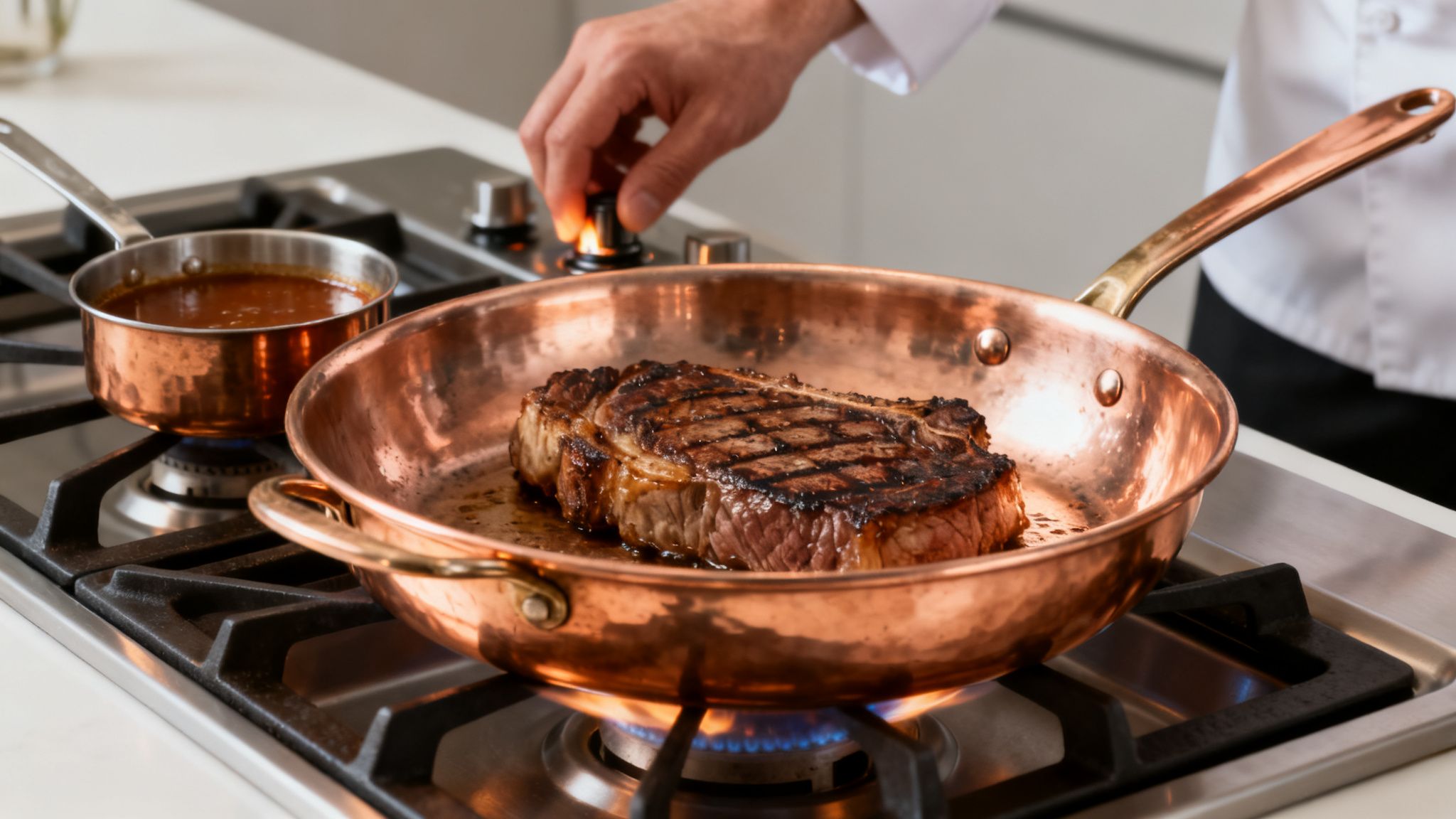
It all comes down to physics. Copper is one of the most conductive metals you can find in a kitchen. It heats up in a flash and, just as importantly, cools down the second you turn down the heat. This lightning-fast response lets you make tiny temperature tweaks on the fly, saving a delicate sauce from scorching or keeping a piece of fish from turning tough.
That professional-grade precision, once found only in the kitchens of Michelin-starred restaurants, is now something any passionate home cook can have. The same control that lets a top chef create a flawless beurre blanc will help you get that perfect, crusty sear on a weeknight steak.
A Legacy of Performance
The stellar reputation of copper cookware is built on a rich history of artistry. It started back in 19th-century France, where artisans perfected the craft of forging pans that were both incredibly responsive and tough as nails. This legacy is stronger than ever, fueling a global market valued at USD 2.14 billion.
As more home cooks look for quality and performance, that market is expected to hit USD 3.87 billion by 2033—a clear sign of copper’s lasting power. If you want to dive deeper into the numbers, you can find more details on market trends at growthmarketreports.com.
But the appeal goes way beyond just how well it cooks. A great set of copper pans becomes a stunning centerpiece for your kitchen. It's that rare blend of functional excellence and timeless style that makes it a true lifetime investment.
In a world full of disposable gadgets, high-quality copper is different. It’s built to be passed down through generations, becoming a part of your family’s kitchen story.
Copper Cookware at a Glance
So, what does all this mean for your everyday cooking? Here’s a quick look at the tangible benefits you'll notice right away.
| Feature | Benefit for Your Cooking |
|---|---|
| Exceptional Heat Conductivity | Heats up super fast and evenly. No more frustrating hot spots that burn your food in one area while leaving another undercooked. |
| Precision Temperature Control | Turn down the heat, and the pan cools down immediately. This gives you total command over delicate tasks, like melting chocolate. |
| Enhanced Flavor and Texture | The even heat creates a perfect, edge-to-edge sear on meats and veggies, locking in all that delicious flavor and creating incredible texture. |
| Timeless Aesthetic | Let's be honest—it’s beautiful. Copper adds a warm, elegant glow to your kitchen that you'll want to show off, not hide away. |
These core advantages work together to give you a level of control and consistency that’s hard to achieve with other materials, truly elevating your results in the kitchen.
Understanding How Copper Cookware Performs
To really get why the best copper cookware is so revered, you have to look past its stunning good looks and get into the science of how it works. It all comes down to the incredible way copper handles heat, a trait that translates directly into better, more consistent results on the stovetop.
Ever seen the trick where you place an ice cube on a copper plate next to a stainless steel one? The ice on the copper melts in a flash. That’s a perfect visual of thermal conductivity—copper moves heat energy with incredible speed and efficiency. In the kitchen, this means your pan heats up almost instantly and, even more critically, spreads that heat perfectly across the entire cooking surface.
This is the end of dreaded hot spots, the culprit behind pans that scorch onions on one side while leaving them raw on the other. With copper, you get a completely uniform cooking surface, every single time.
The Critical Role of a Protective Lining
While pure copper is a genius with heat, it has one quirky personality trait: it's reactive. When it comes into direct contact with acidic foods—think tomatoes, lemon juice, or wine—it can react and leach tiny amounts of metal into your meal. This can throw off the taste and isn't something you want happening on the regular.
That’s precisely why nearly all high-quality copper cookware is lined with a non-reactive metal.
-
Stainless Steel Lining: This is the modern go-to, and for good reason. It’s tough as nails, totally non-reactive, and a breeze to clean. A stainless steel lining gives you the best of both worlds: copper's phenomenal heat control on the outside with a durable, safe cooking surface on the inside.
-
Tin Lining: This is the classic choice, loved for its naturally non-stick qualities. Tin is much softer, though, and has a lower melting point (around 450°F / 232°C). You have to be gentler with it—no metal utensils or screaming-hot searing.
Unlined copper pieces exist, but they’re specialty tools, not everyday workhorses. They're typically used when that reactivity is actually a good thing, like when whipping egg whites in a copper bowl to create a more stable, voluminous foam. For all-around cooking, a lined pan is essential. To get the full picture, you can dig deeper into the pros and cons of copper cookware in our detailed guide.
For all-purpose cooking, a protective lining is non-negotiable. It’s the perfect barrier that lets you tap into all of copper’s thermal magic without any of the risks of food reactivity.
How Construction Details Define Quality
Not all copper pans are built the same. A couple of key details—gauge and hammering—are what separate the truly exceptional pieces from the merely average ones. And these features aren't just for show; they have a fundamental impact on how a pan performs and, ultimately, how long it will last.
Gauge (Thickness) The thickness of the copper, or its gauge, is what governs heat retention and distribution. You'll usually see it measured in millimeters (mm).
- Thin Copper (1mm - 1.5mm): These pans are incredibly responsive, heating up in a blink. The downside is they don't hold heat as well and can be more prone to warping over time.
- Medium Copper (2mm): This is a great sweet spot for many home cooks, offering a solid balance between quick responsiveness and long-term durability.
- Thick Copper (2.5mm - 3mm): This is the professional standard. Thicker copper delivers the absolute best in even heating, eliminates any chance of hot spots, and is built like a tank. A 2.5mm pan will give you that perfect, edge-to-edge sear on a steak because it holds its temperature so steadily when the cold meat hits the pan.
Hammering That beautiful, dimpled finish you see on high-end copper pans isn't just for aesthetics. The traditional art of hand-hammering is a process called work hardening, which actually strengthens the copper. This makes the metal more rigid and far more durable, ensuring it can handle decades of use without losing its shape.
Of course, as you get to know the superior heat control of copper, understanding your ingredients becomes just as important. For instance, knowing an oil's smoking point helps you get the most flavor and efficiency out of your cooking without burning anything. It's this combination of great cookware and smart technique that truly elevates your game in the kitchen.
Key Features of the Best Copper Cookware Sets
Once you're sold on the idea of copper, the real work begins—sifting through the details to find the perfect set. The best copper cookware sets aren't just about that beautiful rosy glow; they’re defined by the practical stuff. Think about the specific pots and pans included, the feel of the handles, how the lids fit, and whether they'll even work with your stove. This is your nitty-gritty checklist for finding a set that performs as beautifully as it looks.
There's a reason the global copper cookware market hit USD 2.1 billion. It’s not just hype. Copper’s incredible ability to slash hot spots by up to 90% compared to other materials has made it a kitchen powerhouse. And with U.S. households embracing these sets at a 25% higher rate since 2022, it's clear the secret is out. You can learn more about the rise of copper in modern kitchens on marketintelo.com.
This chart gives you a quick visual breakdown of what makes a great copper pan, from the inside out.
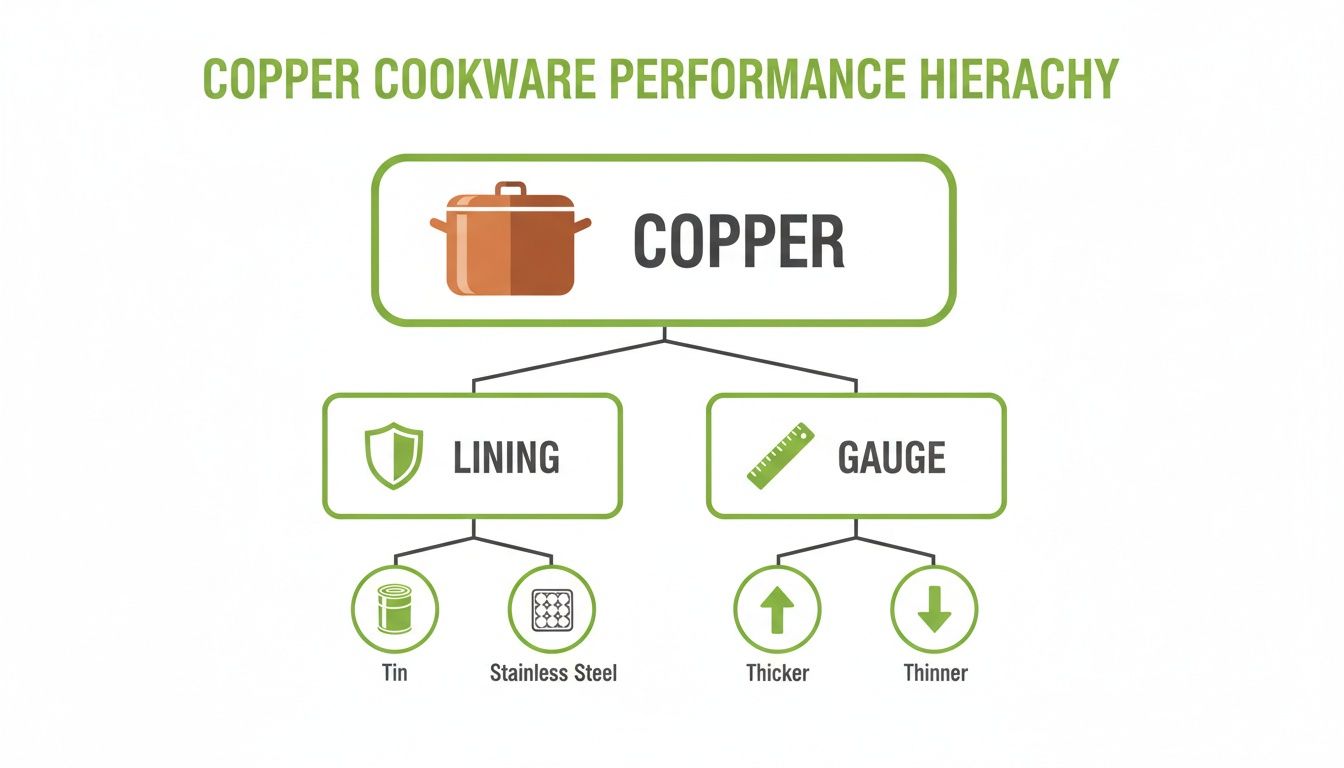
As you can see, it all starts with pure copper, but the lining and thickness are what truly separate the good from the great, directly impacting how your food cooks and how long the pan will last.
The Right Mix of Pots and Pans
A cookware set is only as good as the pieces you’ll actually pull out of the cabinet. Be honest with yourself about how you cook. Are you a weekend gourmand obsessed with delicate sauces, or are you cranking out weeknight family dinners?
-
For the Passionate Home Chef: A well-curated set is your best friend. Think a small saucepan for reductions, a larger sauté pan for a perfect sear, and a stockpot for soups and pasta. These pieces give you the versatility to tackle almost any recipe.
-
For the Everyday Family Cook: You need workhorses. A big skillet that can handle fried chicken, a medium saucepan for sides, and a generous stockpot will cover the bulk of your daily cooking needs.
Steer clear of those massive sets bloated with novelty pans you’ll never touch. A focused collection of a few high-quality, essential pieces will always serve you better than a dozen mediocre ones collecting dust.
Handles and Lids That Make a Difference
Handles and lids might seem like afterthoughts, but they are absolutely fundamental to your cooking experience. They dictate balance, safety, and can even change the final flavor of your dish.
Handles are your connection to the pan, so how they feel and what they're made of is crucial.
- Cast Iron: The classic choice. It’s incredibly heat-resistant and gives off a rustic, professional vibe. The downside? It gets hot along with the pan, so keep a pot holder handy.
- Stainless Steel: A modern, sleek option that stays cooler to the touch on the stovetop. Many are designed with ergonomics in mind for a comfortable, secure grip.
- Bronze or Brass: Often found on high-end sets, these handles add a touch of elegance and are just as durable and oven-safe as cast iron.
Lids are all about controlling heat and moisture. A heavy, tight-fitting lid is non-negotiable. It traps steam, which is the secret to tender braises, perfect simmers, and keeping food from drying out. Lids made from the same material as the pan (like copper with a stainless lining) will do the best job of locking that heat in.
A great handle gives you confidence and control, while a tight-fitting lid locks in precious flavor. These are the details that separate good cookware from truly exceptional cookware.
Oven Safety and Induction Compatibility
Today's kitchens demand flexibility, and your cookware needs to keep up. The ability to sear a steak on the stovetop and then slide the whole pan into the oven to finish is a technique you don’t want to miss out on.
Most quality copper pans with metal handles—whether cast iron, steel, or brass—are oven-safe. The main thing to watch out for is tin-lined copper; its lower melting point means you should keep it below 430°F / 220°C. Pans lined with stainless steel, on the other hand, can usually handle whatever temperature your home oven can throw at them.
And the big question: what about induction? Pure copper isn't magnetic, so on its own, it’s a no-go for induction cooktops. But don’t worry, manufacturers have adapted. Many modern copper pans now have a layer of magnetic steel bonded to the bottom. If you have an induction range, just make sure you see "induction compatible" in the product specs before you buy.
To help you put it all together, this table breaks down the most important features to consider when you're shopping.
Comparing Copper Cookware Features
This table compares key attributes to look for in a copper cookware set, helping you prioritize features based on your cooking needs and kitchen setup.
| Feature | What to Look For | Why It Matters |
|---|---|---|
| Piece Selection | A curated mix of essential pans (skillet, saucepan, stockpot) that match your cooking style. | Avoids paying for unused, novelty pieces and ensures you have the right tool for everyday tasks. |
| Handles | Ergonomic shape in a material like cast iron or stainless steel, securely riveted to the pan. | A comfortable, sturdy handle provides balance, safety, and control when moving a hot pan. |
| Lids | Heavy, tight-fitting lids made of a matching material (e.g., copper/steel). | A snug fit traps heat and moisture, which is essential for braising, simmering, and preventing food from drying out. |
| Oven Safety | Check the maximum safe temperature, especially for tin-lined pieces (under 430°F / 220°C). | Allows you to move pans from stovetop to oven for finishing dishes, adding versatility to your cooking. |
| Induction Compatibility | Look for a magnetic steel base, explicitly labeled "induction compatible." | Essential for the cookware to function on modern induction cooktops; standard copper will not work. |
Think of this as your personal checklist. By focusing on the features that truly impact performance and usability, you can confidently choose a copper set that will be a joy to cook with for years to come.
How to Care for Your Copper Cookware
Think of a beautiful set of copper cookware as a lifelong kitchen partner. It’s an investment, for sure, but protecting that investment is far easier than you might imagine. A little bit of know-how will keep your pans performing flawlessly—and looking incredible—for decades to come.
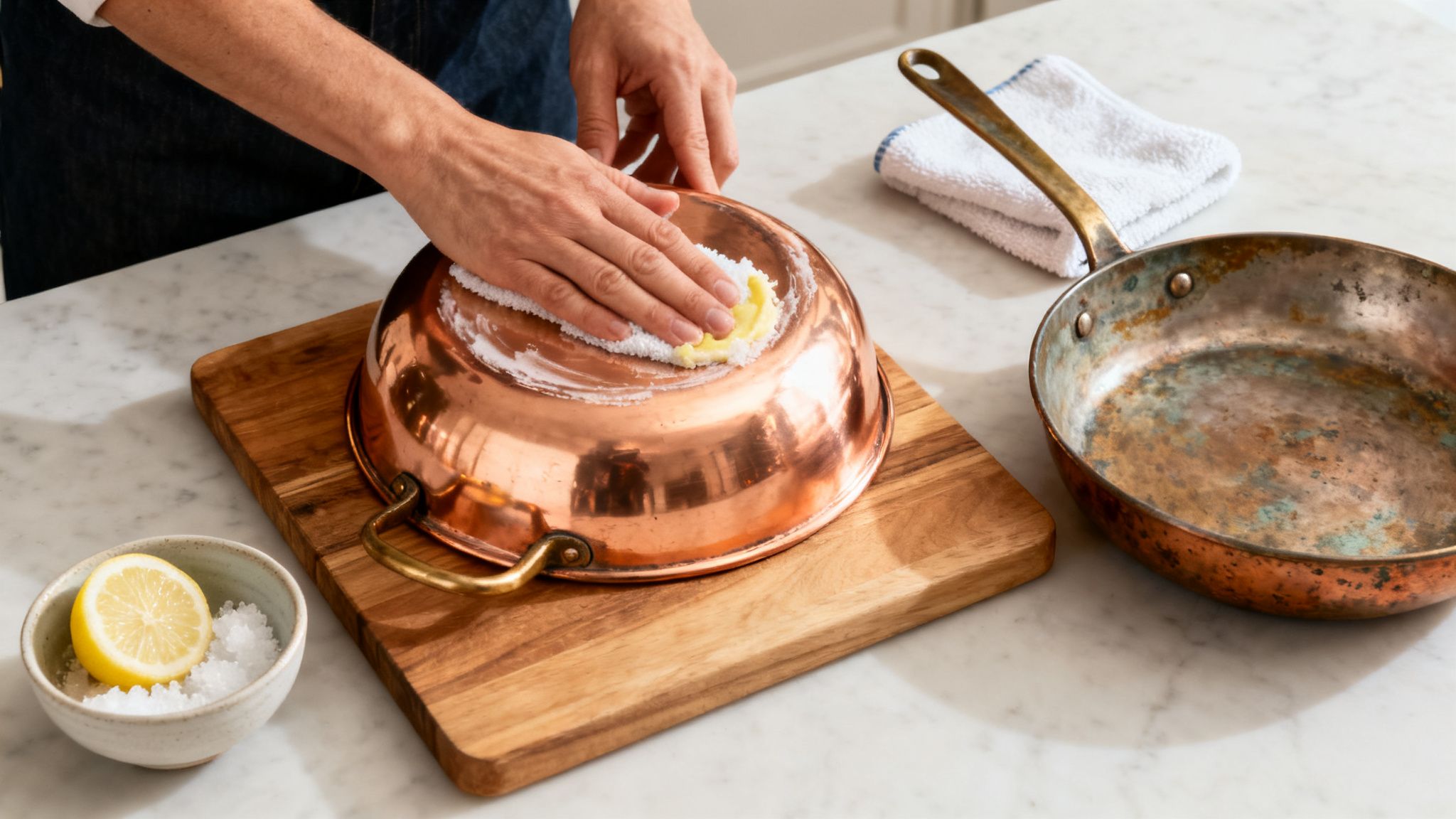
Let’s get the most important rule out of the way first: never put it in the dishwasher. Seriously. The intense heat and harsh chemicals are the mortal enemies of copper, stripping its finish and potentially damaging the lining. A gentle hand-wash is all your copper will ever need.
Daily Cleaning and Maintenance
For day-to-day care, a soft touch is key. Once your pan has cooled down, use warm, soapy water and a soft sponge or cloth. Stay away from anything abrasive like steel wool, which will leave scratches on that gorgeous surface.
Here's the real secret to a lasting shine: dry the pan immediately and thoroughly with a soft towel. Letting copper air-dry is a fast track to water spots and splotchy discoloration. This one simple habit makes all the difference.
What about stuck-on food? Don't panic and don't start scrubbing. Just fill the pan with warm, soapy water and let it soak for 15-30 minutes. The residue will loosen right up, letting you wipe it away without a fight.
Restoring Shine and Removing Tarnish
Over time, copper naturally develops a darker hue as it reacts with the elements—a process called tarnishing. If you love that brilliant, like-new rosy glow, bringing it back is surprisingly simple.
Natural DIY Solutions You probably have the perfect copper polish sitting in your pantry right now.
- Lemon and Salt Paste: This is the classic for a reason. The acid in the lemon dissolves tarnish, while the salt provides just a bit of gentle scrubbing power. Just slice a lemon in half, sprinkle it with coarse salt, and rub it right on the pan.
- Vinegar and Flour Paste: Mix equal parts flour and salt, then add just enough white vinegar to create a thick paste. Slather it on, let it hang out for 15-30 minutes, and then rinse with warm water. Buff dry and admire your work.
Commercial Copper Polishes For really stubborn tarnish or when you just want that high-gloss finish fast, a good commercial copper cream is your best friend. They're formulated to slice through oxidation without harming the metal. Just apply a little with a soft cloth, buff away the tarnish, and then give the pan a good wash and dry.
It's helpful to know the difference between tarnish and patina. Tarnish is that uneven, splotchy discoloration from oxidation. A patina, on the other hand, is the deep, even, and warm darkening that many cooks cherish—it's the story of a well-used pan.
Embracing the Patina
While some of us are dedicated to keeping our copper bright and shiny, many chefs and home cooks absolutely love the warm, darkened finish that develops with use. This is the famous patina.
A rich patina is seen as a badge of honor, a sign that your cookware is a true workhorse in the kitchen. It has zero impact on how the pan performs. If you fall in love with this rustic, lived-in look, you can just skip the polishing steps. As long as you stick to the daily washing and drying routine, you’re all set. Whether you polish or patina is all about your personal style.
Matching a Copper Set to Your Cooking Style
Picking the right copper cookware set isn't about finding the "best" one—it's about finding the best one for you. The collection that a weekend hobbyist dreams of might be all wrong for a busy parent cooking family meals every night.
The secret is to get honest about your real-world cooking habits. Once you understand your own culinary identity, you can look past the shine and invest in pieces that will feel like a true extension of your hands. Let's move beyond generic advice and find your perfect match by exploring a few distinct cooking profiles. See which one sounds like you.
The Passionate Home Chef
Do you get a thrill from tackling a complex, multi-step recipe? Are you the one who pores over cookbooks, obsessed with perfecting a delicate sauce or a flawless sear? If cooking is your creative outlet, your cookware needs to be a precision instrument.
For you, it all comes down to performance and total control.
- Thicker is Better: Don't settle for less than 2.5mm of copper. This professional-grade thickness delivers the incredible heat control you need to hold a sauce at the perfect temperature without it breaking or to achieve that deeply browned, even crust on a piece of meat.
- A Versatile Toolkit: Your ideal set will go beyond the basics. Think a small saucepan for reductions, a larger sauté pan for searing, a versatile stockpot, and—the secret weapon—a saucier with its beautifully rounded sides for whisking.
- Handles Built for Heat: Look for rugged cast iron or stainless steel handles. These are your best friends because they’re completely oven-safe, letting you move a pan from the stovetop straight into a hot oven to finish a dish without a second thought.
This kind of set isn't just for cooking; it's a partner in your culinary ambitions, responding instantly to every tiny adjustment you make.
The Everyday Family Cook
Your kitchen is mission control. It's the bustling heart of your home where the daily goal is getting delicious, healthy food on the table for the family, often with little helpers underfoot. For you, cooking is an act of love, and your tools need to be practical, tough, and easy to clean.
As the Everyday Family Cook, you should put durability and function first.
- Stainless Steel Lining is Your Hero: Forget delicate tin. A resilient stainless steel interior is non-negotiable. It stands up to daily use, can handle metal utensils (within reason), and makes cleanup infinitely faster.
- The Core Essentials: A large skillet, a medium saucepan, and a big stockpot will handle 90% of what you cook. Don't be tempted by huge sets filled with specialty pans you’ll never touch. Stick to the workhorses.
- Comfort and Safety are Key: Pay attention to the handles. A comfortable, stay-cool stainless steel handle provides a secure grip, which is absolutely critical when you're maneuvering a pot of boiling pasta through a busy kitchen.
For the family cook, copper cookware is about combining beauty with brute strength. You need a set that looks gorgeous on the stove but is tough enough to handle the beautiful chaos of daily life.
The Entertainer
For you, cooking and socializing are one and the same. You live for hosting dinner parties, holiday feasts, and big weekend brunches. Your food is the main event, and you know that presentation matters just as much as flavor. Your cookware should be a conversation starter that looks just as good on the dining table as it does on the stove.
If you're The Entertainer, you get to marry jaw-dropping aesthetics with serious performance.
- A Stunning Finish: This is where you can truly embrace copper's artistry. Look for sets with a gorgeous hammered finish. Not only does it add strength, but it also creates a dazzling texture that catches the light beautifully.
- Jewelry for Your Kitchen: Polished bronze or brass handles elevate a set from functional to fabulous. They offer the same durability and oven-safe performance as cast iron but with an extra touch of sophisticated flair.
- From Stove to Table: Your perfect set should include pieces designed for serving. A wide, elegant braiser or a gratin pan can go directly from the oven to the center of your table, creating an impressive, rustic presentation that will wow your guests.
Finding Your Perfect Copper Cookware
Choosing a copper cookware set isn't just about upgrading your kitchen gear. It's an investment in your cooking, a real commitment to quality that you'll feel every time you step up to the stove. We’ve walked through the science behind copper’s incredible performance, the fine points of its construction, and the sheer beauty that makes it a showpiece. Now, let’s tie it all together.
With everything you've learned, you're more than ready to pick out a collection that not only checks all the technical boxes but, more importantly, makes you want to cook. It's about finding that set that feels like a natural extension of your own two hands—an ally in all your culinary adventures.
The Pillars of a Great Copper Set
When it comes down to it, the hunt for the perfect copper cookware rests on three core pillars. These are the non-negotiables, the things that separate a pretty good set from a truly exceptional one that will be part of your family for generations.
- Unmatched Performance: This is the heart and soul of copper. Its ability to react instantly to the slightest temperature change gives you a degree of control that can turn a tricky recipe into a walk in the park.
- Lasting Durability: A great set is built to last. With the right care, these pieces won't just see you through a lifetime of cooking; they become heirlooms, carrying the stories of countless family dinners.
- Timeless Design: Let's be honest—beyond its brilliance on the stovetop, copper just looks incredible. It has a warm, elegant aesthetic that you’ll be proud to have on display, effortlessly blending artistry with utility.
Find a set that nails all three, and you haven't just bought a few pots and pans. You've found a lifelong kitchen partner.
Choosing the right copper cookware is the final step in a journey of understanding. It’s the moment you translate knowledge into a tangible investment that will elevate every meal into an experience.
Making Your Final Decision
You now get the difference a heavy gauge makes, why a quality lining is essential, and how to match a set’s features to the way you cook. The next step is to start looking at collections with a sharp, discerning eye, confident in your ability to spot true quality. As you picture your perfect copper cookware set, think about where it will live; getting some ideas for maximizing storage for pots and pans is a smart move.
Whether you’re searing a steak, simmering a delicate sauce, or bringing a dish straight to the table, the right copper cookware will level up your results and make the whole process more enjoyable. You're ready to go from reading to exploring, to find the pieces that fit your kitchen and your style. You might start by discovering pieces like this hand-forged copper frying pan with a brass handle, which is a perfect example of the performance and beauty we’ve been talking about.
Your perfect set is out there. It’s waiting to help you turn those culinary daydreams into delicious reality.
Your Copper Cookware Questions, Answered
Stepping into the world of high-end cookware can bring up a few questions. We get it. To make sure you feel totally confident about bringing copper into your kitchen, we've put together some straight-to-the-point answers to the most common things people ask.
Is Copper Cookware Safe for Everyday Cooking?
Yes, it absolutely is—as long as you choose a lined pan. The best copper pots and pans have an interior lining made of a non-reactive metal, usually stainless steel or sometimes tin. This thin layer is your safeguard, creating a stable barrier that stops the copper from touching your food, especially acidic things like tomato sauce or a wine reduction.
Unlined copper is a specialty tool for specific jobs, but for your day-to-day meals, a lined set is the only way to go. It's perfectly safe.
Will Copper Cookware Work on My Induction Stove?
This is a great question. By itself, pure copper isn't magnetic, so a traditional copper pan won't work on an induction cooktop. But cookware makers have already solved this.
Many modern copper sets are now "induction compatible." They achieve this by bonding a thin plate of magnetic steel to the bottom of the pan. If you have an induction stove, just make sure you see that feature listed in the product description before you buy.
It's a common myth that copper is old-fashioned and won't work in modern kitchens. Thanks to induction-ready bases, the best copper cookware now delivers its incredible performance on just about any cooktop out there, perfectly mixing classic quality with today’s tech.
Why Are Copper Cookware Sets So Expensive?
The higher price tag really comes down to two things: the cost of the raw material and the incredible level of craftsmanship. Pure copper is an expensive metal to begin with. Then, you have the expert labor involved.
Things like forging the pans, hand-hammering the finish, and carefully bonding the metal layers are time-consuming skills passed down through generations. You're not just buying a pan; you're investing in a piece of equipment designed for unmatched performance and built to last a lifetime—or even longer. It’s an heirloom for your kitchen.
Here at Fluent Trends, we're passionate about outfitting your kitchen with pieces that are as beautiful as they are functional. Dive into our handpicked collection of copper cookware and discover the perfect set to take your cooking to the next level. Find your next kitchen heirloom at https://www.fluenttrends.com.